


Overview
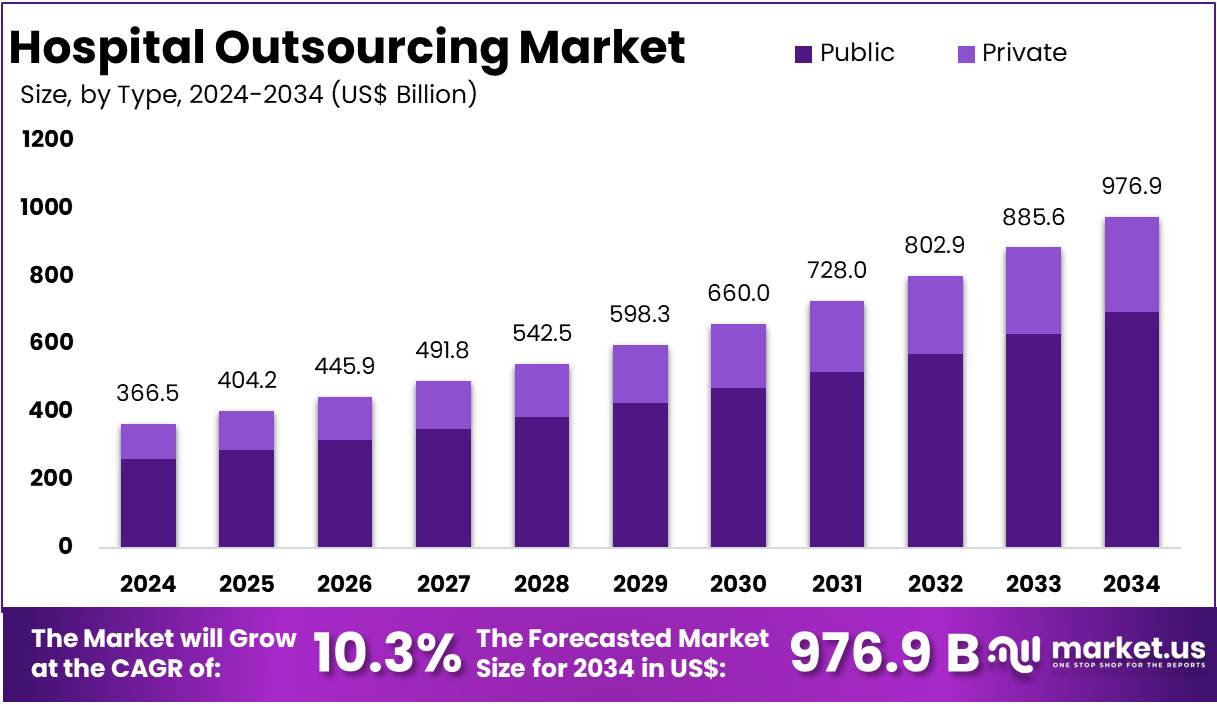
The Global Hospital Outsourcing Market Size is expected to be worth around US$ 976.9 Billion by 2034, from US$ 366.5 Billion in 2024, growing at a CAGR of 10.3% during the forecast period from 2025 to 2034. North America held a dominant market position, capturing more than a 65.6% share and holds US$ 240.4 Billion market value for the year.
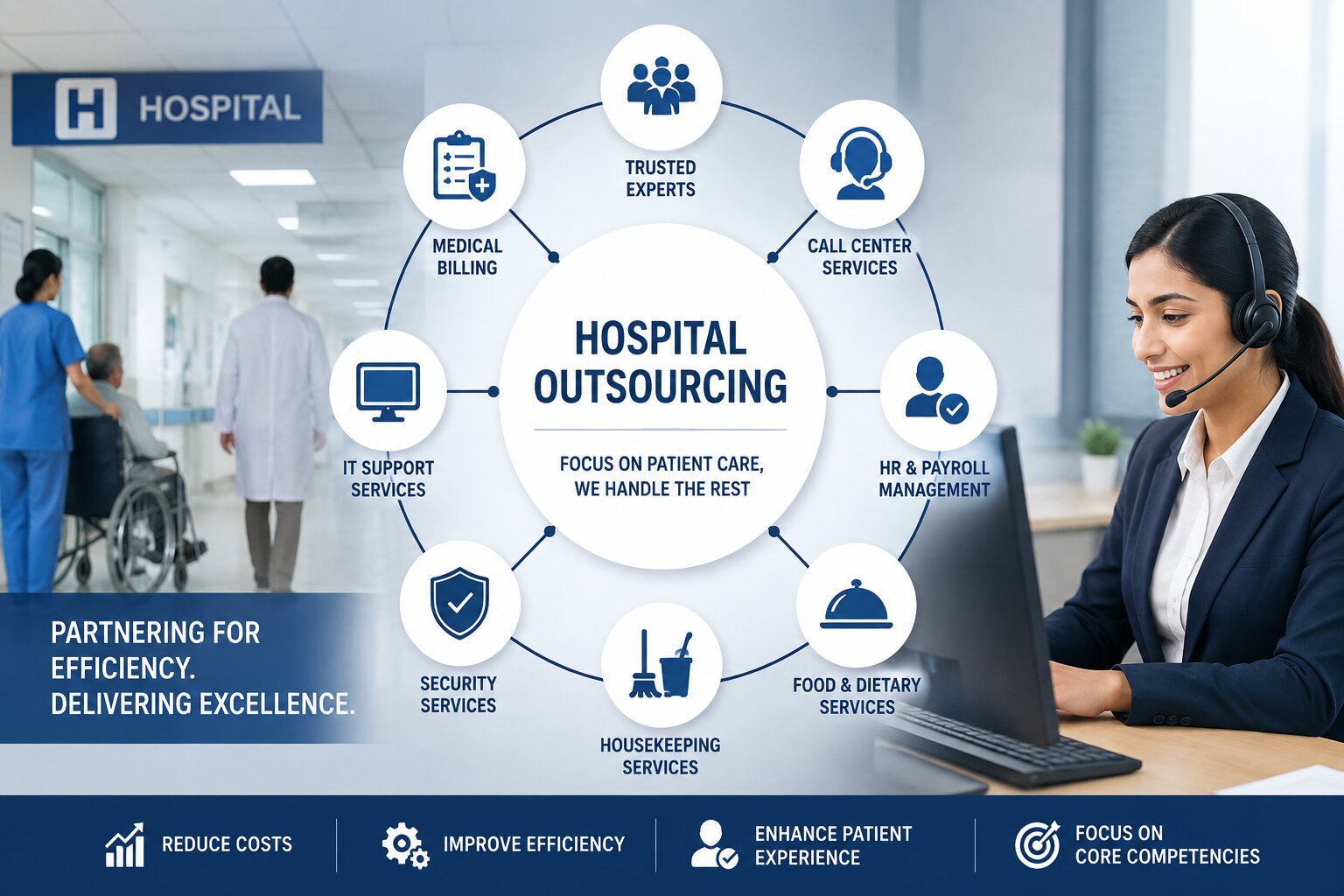
The global hospital outsourcing landscape is gaining importance as healthcare providers increasingly evaluate external partners for non-core and specialized functions, including revenue-cycle management, medical billing, information technology, facilities management, clinical support, and supply-chain operations. The trend is being supported by rising hospital operating costs, workforce pressures, administrative complexity, and the need to maintain high-quality patient services.
Recent data from the American Hospital Association (AHA) highlights the financial pressure facing hospitals. In 2025, total hospital expenses increased 7.5%, while workforce-related spending accounted for approximately 60% of total hospital expenses. Workforce costs alone increased 5.6% compared with the previous year. These pressures are encouraging healthcare organizations to examine outsourcing strategies that can improve operational flexibility and access to specialized expertise.
Administrative workloads are another important factor. AHA reported that U.S. hospitals spent approximately US$ 43 billion in 2025 attempting to collect payments from insurers for care that had already been delivered. Such financial and administrative burdens are increasing interest in external revenue-cycle, claims-management, coding, and documentation services.
Government data further demonstrates the scale of healthcare activity. According to the Centers for Medicare & Medicaid Services (CMS), U.S. national health expenditures reached US$ 5.3 trillion in 2024, while hospital expenditures totaled approximately US$ 1.63 trillion. Overall, hospital outsourcing is becoming a strategic tool for improving productivity, controlling operational complexity, supporting workforce requirements, and allowing providers to focus greater resources on patient care.
Key Takeaways
- The global Hospital Outsourcing Market is projected to reach US$ 976.9 Billion by 2034, rising from US$ 366.5 Billion in 2024 and expanding at a 10.3% CAGR during the forecast period.
- In 2024, Private Hospitals dominated the type segment of the Hospital Outsourcing Market, accounting for more than 71.3% of the overall market share.
- The Healthcare IT segment held the leading position in the service category in 2024, representing more than 28.3% of the global Hospital Outsourcing Market.
- Based on hospital size, Small and Medium hospitals accounted for the largest share in 2024, capturing more than 58.8% of the overall outsourcing market.
- North America maintained its leadership in the global Hospital Outsourcing Market in 2024, securing more than 65.6% of the market and reaching a value of US$ 240.4 Billion.
Statistical Information
- 71% of U.S. hospitals reported using predictive AI integrated with their EHRs in 2024, up from 66% in 2023, supporting opportunities for outsourced AI implementation, management, and integration services.
- The use of predictive AI for simplifying or automating billing increased from 36% to 61% between 2023 and 2024, highlighting strong potential for AI-enabled revenue-cycle and billing outsourcing.
- Predictive AI use for hospital scheduling increased from 51% to 67% between 2023 and 2024, creating opportunities for outsourced scheduling, workforce optimization, and patient-flow solutions.
- In 2024, 80% of hospitals using predictive AI sourced it from their EHR developer, while 20% relied on other sources, demonstrating opportunities for specialized third-party technology providers.
- Physicians complete an average of 40 prior-authorization requests per week, with the process consuming approximately 13 hours of physician and staff time each week, creating a significant opportunity for outsourced administrative support.
- 32% of physicians reported that prior-authorization requests are often or always denied, strengthening demand for outsourced authorization processing, documentation, appeals, and denial-management services.
- 40% of physicians employ staff dedicated exclusively to prior authorization, demonstrating how healthcare organizations are already allocating personnel to administrative functions that could potentially be supported by specialized outsourcing providers.
- A 2025 HHS investigation involving healthcare billing and collection provider Comstar found that a ransomware breach affected 585,621 individuals, underscoring the importance of cybersecurity, risk assessment, compliance, and security services for outsourced healthcare vendors.
Market Segmentation Analysis
Type Analysis
In 2024, the Private Segment dominated the Type Segment of the Hospital Outsourcing Market, capturing more than 71.3% of the total market share. Its leadership reflects the growing adoption of outsourcing by private hospitals seeking to improve operational efficiency, control costs, and enhance patient services. Private healthcare providers generally have greater flexibility in engaging third-party specialists for facility management, diagnostics, medical billing, information technology, and other non-core functions.
Outsourcing enables these hospitals to access specialized expertise without maintaining large internal teams. Meanwhile, the Public Segment represented a smaller share as government hospitals often face budget limitations and lengthy procurement processes. However, increasing healthcare modernization and the adoption of outsourcing for non-core activities are expected to gradually strengthen public-sector demand.
Service Analysis
In 2024, the Healthcare IT Segment led the service category, accounting for more than 28.3% of the global Hospital Outsourcing Market. Growing adoption of electronic health records, cloud infrastructure, cybersecurity, telehealth, and digital healthcare platforms has increased hospitals’ dependence on specialized external technology providers. Outsourcing enables healthcare organizations to improve IT capabilities while managing costs and reducing internal infrastructure requirements.
Clinical services also represented a significant outsourcing area, covering diagnostic testing, pathology, and radiology interpretation. Meanwhile, business services such as medical billing, coding, and revenue-cycle management are increasingly outsourced to manage complex reimbursement and compliance requirements. Non-clinical functions, including transportation, waste management, and facility maintenance, further contribute to outsourcing demand by improving operational efficiency and allowing hospitals to focus on patient care.
Hospital Size Analysis
In 2024, Small & Medium Hospitals dominated the hospital size segment, capturing more than 58.8% of the overall Hospital Outsourcing Market. Their leading position is primarily associated with limited internal infrastructure, financial constraints, workforce shortages, and difficulties in maintaining specialized departments.
Outsourcing allows these hospitals to access professional expertise in billing, healthcare IT, diagnostics, supply-chain management, equipment maintenance, and facility operations without establishing costly in-house teams. The model is particularly valuable for hospitals serving semi-urban and rural communities, where access to specialized resources can be limited.
As patient volumes and regulatory requirements increase, third-party providers can support compliance, administrative workflows, and service quality. Consequently, outsourcing continues to serve as a strategic approach for smaller healthcare facilities seeking greater efficiency, flexibility, and sustainable operational performance.
Regional Analysis
In 2024, North America maintained a leading position in the Hospital Outsourcing Market, accounting for more than 65.6% of the global share and reaching US$ 240.4 Billion in market value. The region’s established healthcare infrastructure, advanced hospital systems, and strong adoption of digital technologies continue to support outsourcing demand.
Financial and workforce pressures are also encouraging hospitals to rely on specialized external providers. According to the American Hospital Association, workforce spending represented approximately 60% of total U.S. hospital expenses in 2025, while total hospital expenses increased during the year.
Workforce shortages are another important factor. Statistics Canada reported a hospital job vacancy in the fourth quarter of 2024, compared with 2.9% across all industries. These pressures are increasing demand for outsourced IT, revenue-cycle management, diagnostics, staffing, facility management, and other specialized services. Growing administrative complexity and rising patient volumes further strengthen the region’s outsourcing environment.
Business Opportunities
The Hospital Outsourcing Market offers diverse opportunities for companies that can help healthcare providers simplify operations, improve service quality, and access specialized expertise. Healthcare IT outsourcing remains an important opportunity, particularly in electronic health records, cloud infrastructure, interoperability, cybersecurity, data management, and digital platforms. HHS emphasizes the growing need for stronger cybersecurity capabilities as hospitals increasingly depend on connected technologies and digital systems.
Revenue cycle management also presents strong opportunities for specialized providers offering medical billing, coding, claims processing, denial management, documentation, and workflow optimization. The American Hospital Association highlights the increasing complexity of revenue-cycle operations and the role of technology, standardized processes, and specialized teams in improving performance.
Additional opportunities exist in clinical outsourcing, including diagnostics, pathology, radiology, laboratory support, and telehealth services. Hospitals can also partner with external providers for procurement, supply-chain management, facility maintenance, transportation, waste management, and equipment servicing. Specialized outsourcing models that combine automation, artificial intelligence, human expertise, and secure data management can further differentiate providers and support long-term hospital partnerships.
Emerging Trends
- AI-Enabled Hospital Operations: Hospitals are increasingly moving beyond basic automation toward AI-supported administrative and clinical workflows. External providers can help implement AI for scheduling, documentation, decision support, and operational management. This trend is creating demand for specialized vendors that can integrate AI into existing hospital systems.
- FHIR-Based Interoperability: Hospital outsourcing is shifting toward standardized data exchange as healthcare organizations connect EHRs with external platforms. CMS is promoting FHIR-based APIs for patient, provider, payer, and prior-authorization data, creating opportunities for outsourcing firms specializing in integration, API development, and interoperability support.
- Outsourced Cybersecurity Services: Cybersecurity is becoming a strategic outsourcing area as hospitals and healthcare business associates face growing ransomware risks. HHS continues to enforce HIPAA Security Rule requirements, encouraging organizations to use specialized support for risk assessments, security monitoring, incident response, and data protection.
- Digital Administrative Workflows: Hospital outsourcing is moving toward electronic handling of traditionally manual processes such as prior authorization, scheduling, quality reporting, and documentation. CMS requirements are accelerating this transition, encouraging providers and technology partners to build automated workflows around standardized APIs.
- Third-Party Technology Integration: Hospitals are increasingly connecting external technology with their EHR environments for clinical and administrative activities. ONC reports that Hospitals integrated third-party data for at least one clinical purpose, supporting opportunities for specialized technology and managed-service providers.
Use Cases
- Revenue-Cycle Automation: Hospitals can outsource billing-related technology and workflows to specialized providers that manage documentation, claims processes, payment workflows, and administrative data. AI and interoperability tools can further connect these activities with hospital information systems, reducing manual work and improving coordination across financial operations.
- Prior-Authorization Management: External providers can support hospitals with electronic prior-authorization workflows, documentation collection, status tracking, and payer communication. CMS is requiring standardized Prior Authorization APIs, creating a practical use case for outsourcing companies that combine healthcare expertise with automation and interoperability capabilities.
- Remote Patient Monitoring: Hospitals can use external technology providers to manage data flows from remote monitoring platforms into EHR systems. ONC identifies remote patient monitoring as an established third-party technology use case, creating opportunities for outsourced monitoring platforms, integration services, and clinical-support operations.
- Cybersecurity and Compliance: Hospitals can outsource security monitoring, vulnerability assessment, incident response, HIPAA compliance support, and workforce security training to specialized vendors. HHS ransomware investigations demonstrate that healthcare organizations and their business associates require stronger security controls to protect electronic protected health information.
- Telehealth and Digital Care Support: Outsourcing providers can support telehealth infrastructure, EHR integration, patient data exchange, platform maintenance, and technical assistance. ONC identifies telehealth as one of the clinical areas where hospitals exchange information with third-party technology, supporting continued demand for specialized digital-care services.
Recent Developments
- In May 2026, Infosys completed its acquisition of Optimum Healthcare IT, strengthening its U.S. healthcare provider capabilities through health-record advisory, implementation and support services, while combining Optimum’s provider expertise with Infosys Topaz AI and Cobalt cloud capabilities for large-scale healthcare transformation.
- In March 2026, Accenture completed its acquisition of UK-basedFaculty, adding more than 400 AI professionals and integrating Faculty’s Frontier decision-intelligence product into its portfolio to support AI-driven transformation of critical business processes; Faculty CEO Marc Warner also became Accenture’s Chief Technology Officer.
- In November 2025, TCS’s NHS Supply Chain transformation was designed to support more than 1,000 suppliers and over 8 million annual orders across more than 17,000 locations, with the program targeting improved operational efficiency and more resilient healthcare supply-chain services.
- In July 2025, Siemens Healthineers and Prisma Health expanded their U.S. Value Partnership through a US$ 50 million investment in cancer care across South Carolina and Tennessee, including Ethos adaptive radiotherapy, clinical oncology services, professional support and workflow technologies.
- In June 2025, Genpact completed its acquisition of Pennsylvania-based XponentL Data, bringing its employees into Genpact and strengthening data, AI and intelligent-agent capabilities. The transaction closed on June 5, 2025, with financial terms undisclosed.
- In March 2025, Wipro introduced AI-driven autonomous agents for healthcare through Salesforce Agentforce, targeting provider-network onboarding and credentialing, including automated verification of NPI, CAQH ID, specialty and role information to reduce manual administrative work.
- In February 2025, HCLTech entered a strategic agreement with Children’s Minnesota to modernize healthcare operations using its AI Force platform, focusing on operational-system optimization, reduced manual tasks, scalable digital infrastructure and data-driven decision-making.
Conclusion
The Hospital Outsourcing Market is evolving as healthcare providers seek greater efficiency, specialized expertise, and technology-enabled operations. Rising workforce expenses, administrative complexity, cybersecurity requirements, and increasing patient demand are encouraging hospitals to use external partners across IT, revenue-cycle management, clinical services, and non-core operations. AI, interoperability, cloud platforms, and digital workflows are further expanding outsourcing opportunities.
Recent investments, acquisitions, and healthcare partnerships indicate continued industry transformation and stronger integration of technology with hospital services. North America remains a major market, supported by advanced healthcare infrastructure and high outsourcing adoption. Overall, hospital outsourcing is becoming an important strategic approach for improving operational flexibility, controlling complexity, and enabling healthcare organizations to focus more effectively on patient care.




















