


Overview
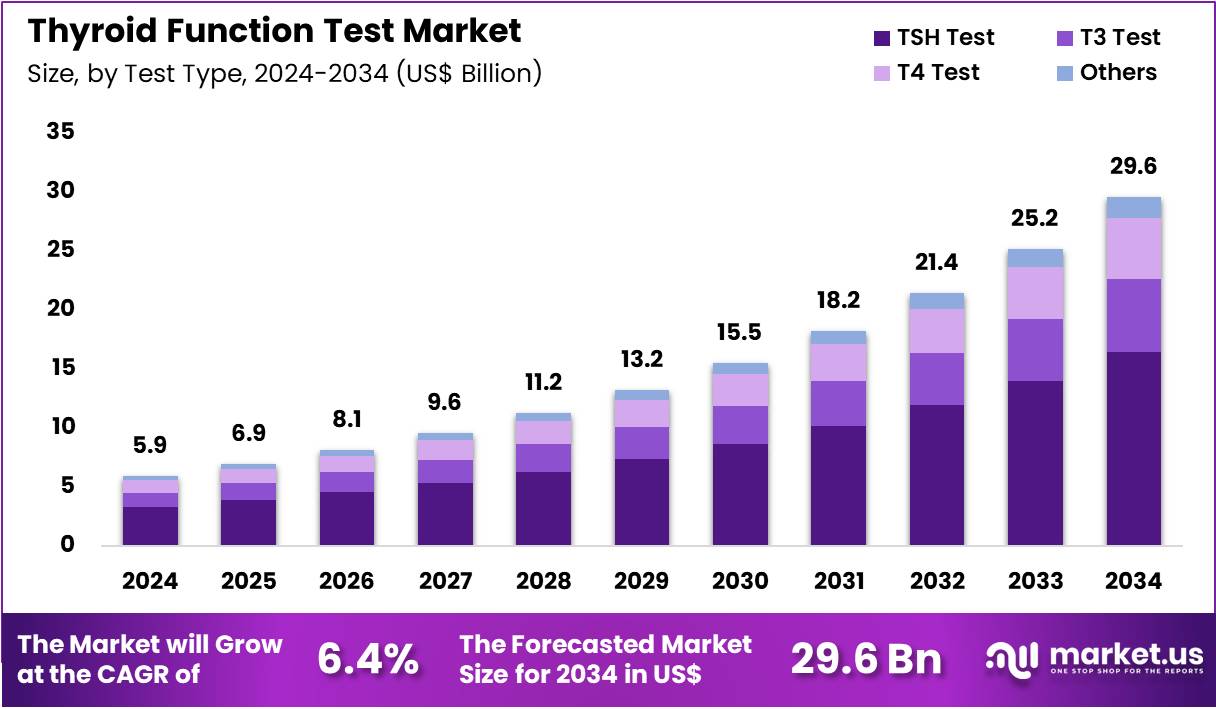
The Global Thyroid Function Test Market size is expected to be worth around US$ 29.6 Billion by 2034 from US$ 5.1 Billion in 2024, growing at a CAGR of 6.4% during the forecast period 2025 to 2034. In 2024, North America led the market, achieving over 41.1% share with a revenue of US$ 2.4 Billion.
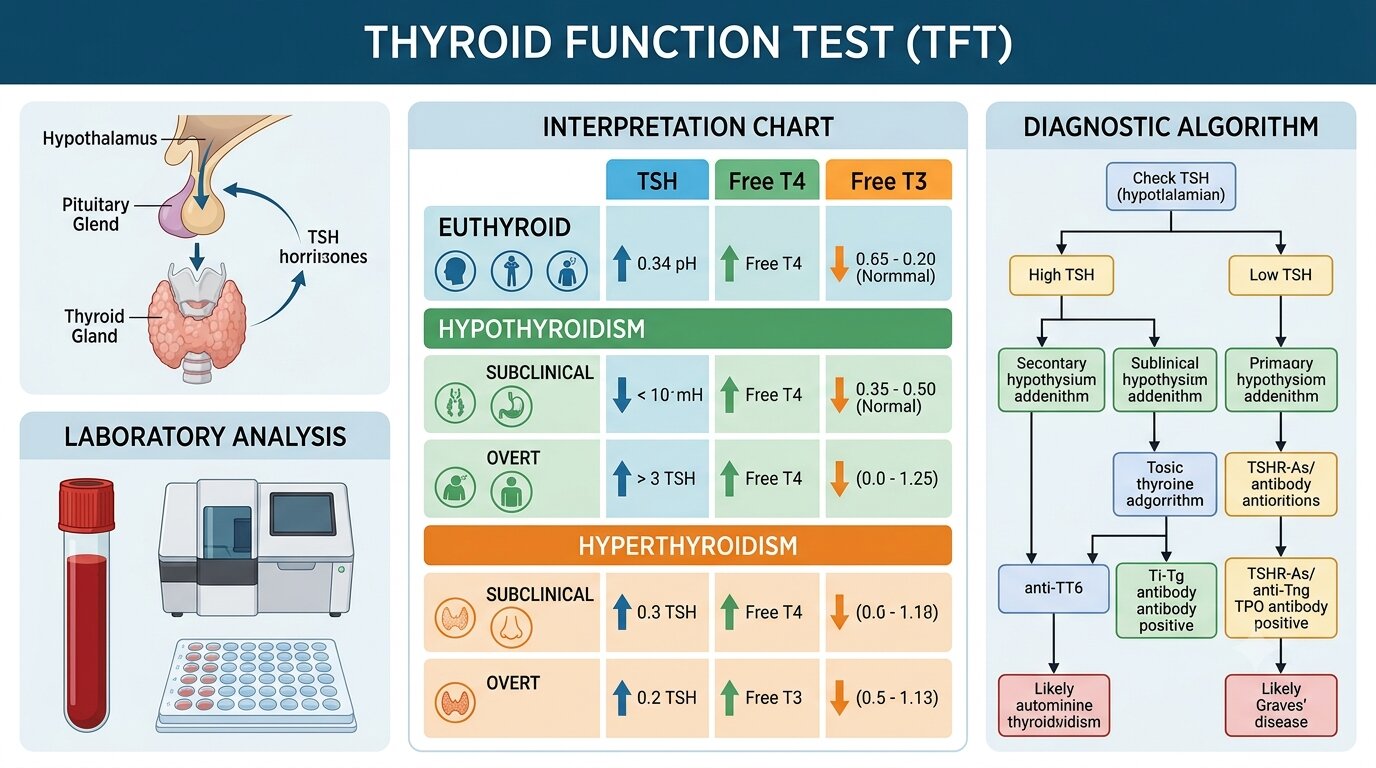
Thyroid Function Test is expanding due to the increasing prevalence of thyroid disorders, growing awareness of preventive screening, and rising adoption of advanced diagnostic technologies. Thyroid function tests, including Thyroid-Stimulating Hormone (TSH), Free T4, Free T3, and thyroid antibody tests, are essential for diagnosing and monitoring hypothyroidism, hyperthyroidism, and autoimmune thyroid diseases.
Thyroid disorders represent a major global health concern, affecting more than 1.6 billion people worldwide who are at risk of thyroid conditions, according to international healthcare estimates. Hypothyroidism affects approximately 5% of the global population, while another 5% remain undiagnosed, creating significant demand for routine thyroid screening. In the United States, around 20 million Americans have some form of thyroid disease, and approximately 1 in 8 women may develop a thyroid disorder during their lifetime.
The market is driven by increasing diagnostic testing volumes, with millions of thyroid-related blood tests performed annually across hospitals and clinical laboratories. The rising geriatric population is also supporting demand, as thyroid dysfunction becomes more common with age. Approximately 12% of adults aged 80 years and older experience thyroid abnormalities requiring clinical evaluation.
Technological advancements in automated immunoassay analyzers and point-of-care testing are improving testing efficiency, with modern platforms reducing turnaround times from several days to less than 24 hours in many clinical settings. Increasing pregnancy screening programs, where thyroid monitoring is recommended due to maternal and fetal health risks, are further supporting market growth.
With growing healthcare investments, increasing chronic disease monitoring, and rising demand for early diagnosis, the Thyroid Function Test Market is expected to witness sustained expansion through innovative testing solutions, automation, and wider accessibility across healthcare systems.
Key Takeaways
- In 2024, the Thyroid Function Test Market generated revenue of US$ 5.1 Billion and is projected to grow at a CAGR of 6.4%, reaching approximately US$ 29.6 Billion by 2034.
- Based on test type, the market is segmented into TSH tests, T3 tests, T4 tests, and others. The TSH test segment dominated the market in 2024, accounting for a 55.6% market share due to its widespread use in thyroid disorder screening and monitoring.
- Based on end-user, the market is categorized into hospitals, clinics, diagnostic laboratories, and research laboratories & institutes. Among these, hospitals held a leading position in 2024, capturing a significant 52.4% market share.
- Regionally, North America dominated the Thyroid Function Test Market in 2024, accounting for a 41.1% market share, supported by advanced healthcare infrastructure, high diagnostic testing adoption, and increasing thyroid disease screening.
Market Segmentation Overview
- Test Type Analysis: The TSH test segment dominated the thyroid function test market, accounting for a 55.6% market share, due to its critical role in diagnosing thyroid disorders, including hypothyroidism and hyperthyroidism. As the primary thyroid biomarker, TSH testing is widely used by endocrinologists. Rising thyroid disease prevalence among women and elderly individuals, along with advancements in automation and testing accuracy, continues to support segment expansion.
- End-User Analysis: Hospitals represented the leading end-user segment in the thyroid function test market, holding a 52.4% market share, driven by high diagnostic testing volumes and comprehensive patient care capabilities. Hospitals conduct routine TSH, T3, and T4 assessments for thyroid disorder diagnosis and monitoring. Increasing disease prevalence, adoption of automated laboratory platforms, and expanding healthcare infrastructure are strengthening demand for hospital-based thyroid testing services.
Statistical Information
- Global prevalence of abnormal thyroid function test results: A multicenter adult study found a 11% prevalence of abnormal thyroid function tests, categorizing cases into hyperthyroidism (26.4%), hypothyroidism (20.8%), subclinical hyperthyroidism (14.7%), and subclinical hypothyroidism (38.1%) among abnormal results. This indicates roughly one in nine adults tested had some thyroid dysfunction, underpinning substantial diagnostic demand for TSH, T4 and T3 assays globally.
- Contribution of thyroid tests to global diagnoses: Clinical summaries indicate around 65% of thyroid conditions worldwide are now detected through simple blood tests, primarily TSH and T4/T3 assays, rather than solely clinical signs. Additionally, over 55% of patients undergo testing in the early stages of dysfunction, improving outcomes and increasing test volumes in diagnostic laboratories and hospital outpatient departments.
- Americans with thyroid disease and lifetime risk: Statistics indicate 20 million Americans currently have some form of thyroid disease, and >12% of the U.S. population are expected to develop a thyroid condition over their lifetime. Up to 60% of individuals with thyroid disease are unaware of their condition, underscoring the need for regular thyroid function testing and broad screening in primary care.
- Large specimen set and euthyroid proportions in TFTs: A Korean utilization study reviewed 69,575 specimens with thyroid tests. Among TSH‑only tests, 55,686 (80.0%) suggested euthyroid status and 6,207 (8.9%) were suspicious for hyperthyroidism. For specimens with TSH and free T4, 71.2% were euthyroid, while with all three tests (TSH, FT4, T3), 64.2% were euthyroid, showing extensive testing even when many patients are ultimately normal.
- High euthyroid proportion among heavily tested patients: In the Korean utilization study, of 69,575 specimens with thyroid function tests, 55,686 (80.0%) were euthyroid when only TSH was measured, while 8.9% suggested hyperthyroidism and 11.1% hypothyroidism. Despite most results being normal, this high testing rate of nearly 70,000 specimens illustrates that large populations undergo thyroid testing as a precaution, fueling test volumes.
- High Global Prevalence of Thyroid Disorders Increasing Testing Demand: Thyroid disease represents a significant healthcare burden, increasing demand for thyroid function testing such as TSH, T3, and T4 assays. The American Thyroid Association (ATA) estimates that more than 20 million Americans have some form of thyroid disease, while over 12% of the U.S. population will develop a thyroid condition during their lifetime. Additionally, up to 60% of individuals with thyroid disease remain unaware of their condition, creating demand for diagnostic screening.
- Subclinical Thyroid Dysfunction Supporting Additional Diagnostic Testing: Subclinical thyroid abnormalities contribute to increased demand for confirmatory thyroid testing. A review conducted for the U.S. Preventive Services Task Force (USPSTF) reported that approximately 5% of women and 3% of men in the United States have subclinical thyroid dysfunction, while around 0.5% of the population may have undiagnosed overt thyroid disease.
- Thyroid Cancer Diagnosis Increasing Demand for Thyroid Function Evaluation: Thyroid disorders associated with cancer diagnosis require thyroid-related laboratory assessments before and after treatment. According to the National Cancer Institute (NCI), approximately 44,020 new thyroid cancer cases were estimated in the United States in 2024, including 12,500 cases among men and 31,520 cases among women. Thyroid function monitoring supports patient management during treatment pathways.
Regional Analysis
North America led the market by securing a market share of 41.1% in 2024.
North America dominated the thyroid function test market due to advanced healthcare infrastructure, widespread adoption of diagnostic technologies, and increasing awareness regarding thyroid disorders. The region has high demand for TSH, T3, and T4 testing, supported by routine screening programs and disease monitoring. According to the National Institute of Diabetes and Digestive and Kidney Diseases (NIDDK), around 20 million people in the United States have thyroid disease, creating significant demand for diagnostic services.
Increasing adoption of automated immunoassay systems and rising cases of autoimmune thyroid disorders further support market expansion. Asia Pacific is projected to witness strong growth due to improving healthcare access, expanding laboratory networks, and rising awareness of early thyroid diagnosis. Increasing healthcare investments, urbanization, and adoption of advanced diagnostic platforms are encouraging thyroid testing across hospitals and clinics. Growing preventive healthcare initiatives are expected to further increase regional demand.
Business Opportunities
The thyroid function test market offers significant business opportunities due to rising demand for early diagnosis, advanced laboratory technologies, and personalized healthcare solutions. Increasing adoption of automated immunoassay analyzers presents opportunities for diagnostic companies to develop high-throughput systems that improve testing accuracy and efficiency in hospitals and laboratories. Growth in point-of-care testing creates potential for portable thyroid diagnostic devices that enable faster results in outpatient and remote healthcare settings.
The expansion of digital health platforms and home-based testing services provides opportunities to improve patient access and continuous thyroid monitoring. Additionally, increasing awareness of thyroid disorders and healthcare infrastructure development in emerging regions supports market expansion through affordable diagnostic solutions and laboratory partnerships.
Integration of artificial intelligence and data analytics into thyroid diagnostics can further enhance disease detection, result interpretation, and personalized treatment planning, creating new opportunities for technology-driven healthcare providers.
Emerging Trends
- Increasing Adoption of Point-of-Care Thyroid Testing: Rapid TSH testing technologies are gaining popularity as healthcare providers seek faster diagnosis and improved access to thyroid screening, especially in outpatient and decentralized healthcare settings.
- Integration of Artificial Intelligence in Thyroid Diagnostics: AI-based tools are emerging to support thyroid disease detection, laboratory data analysis, and personalized treatment decisions by combining patient records, imaging data, and hormone test results.
- Growing Demand for Preventive Thyroid Screening Programs: Rising awareness of thyroid disorders is increasing routine screening demand, as more than 20 million people in the United States are estimated to have thyroid disease, with many cases remaining undiagnosed.
- Expansion of Digital Health-Based Thyroid Monitoring: Digital platforms and remote healthcare solutions are supporting continuous monitoring of thyroid hormone levels, improving patient follow-up and enabling better management of long-term thyroid conditions.
- Advancement of Automated Immunoassay Technologies: Automated laboratory systems are becoming more widely adopted for TSH, T3, and T4 testing due to improved accuracy, faster turnaround times, and the ability to process high sample volumes in hospitals and laboratories.
Use Cases
- Early Detection of Hypothyroidism and Hyperthyroidism: Thyroid function tests, especially TSH, T3, and T4 assays, are widely used for identifying abnormal thyroid hormone levels. Early diagnosis supports timely treatment and helps prevent complications associated with untreated thyroid disorders.
- Pregnancy and Maternal Health Monitoring: Thyroid testing is increasingly used during pregnancy to monitor hormone balance and reduce risks linked to thyroid dysfunction. The American Thyroid Association recommends thyroid evaluation for pregnant women with risk factors to support maternal and fetal health.
- Routine Health Screening and Preventive Care: Healthcare providers use thyroid function tests during routine medical checkups, particularly for high-risk groups such as women, elderly individuals, and patients with family history of thyroid disease. The American Thyroid Association estimates more than 20 million Americans have thyroid disease, increasing screening demand.
- Monitoring Long-Term Thyroid Treatment: Patients receiving thyroid medications require regular TSH and hormone level monitoring to ensure proper dosage adjustments. The National Health Service (NHS) recommends periodic blood testing for people with hypothyroidism to maintain effective treatment control.
- Autoimmune Thyroid Disease Diagnosis: Thyroid function tests combined with antibody testing are used to detect autoimmune conditions such as Hashimoto’s thyroiditis and Graves’ disease. These tests help physicians determine disease type and develop appropriate treatment strategies.
Recent Development
- In 2026, Abbott Laboratories continued strengthening its diagnostics portfolio by expanding advanced laboratory and rapid diagnostic capabilities. The company focused on improving high-throughput testing solutions and integrated diagnostic platforms. Abbott’s thyroid testing portfolio includes assays for TSH, Free T4, Free T3, Anti-TPO, and Anti-Tg, supporting clinical decision-making in thyroid disorder diagnosis and monitoring.
- In 2026, Roche Diagnostics continued investing in integrated in-vitro diagnostics, immunoassays, laboratory automation, and digital diagnostic solutions. The company expanded its global diagnostics capabilities across more than 100 countries, supporting clinical chemistry and immunoassay testing workflows used for endocrine and thyroid disease management.
- In 2026, Siemens Healthineers continued advancing laboratory diagnostics through automated immunoassay systems, including the Atellica Solution and IMMULITE platforms. The company focused on laboratory automation and workflow optimization to help healthcare providers manage increasing diagnostic testing volumes, including thyroid hormone analysis.
- In 2026, Thermo Fisher Scientific, Inc. continued expanding its clinical diagnostics and laboratory solutions portfolio through innovations in analytical technologies and laboratory workflow solutions. The company focused on supporting healthcare laboratories with advanced testing capabilities, automation, and research-driven diagnostic technologies.
- In 2026, DiaSorin S.p.A. continued strengthening its immunodiagnostics business by developing specialized assay solutions and enhancing laboratory diagnostic capabilities. The company maintained focus on chemiluminescence immunoassay platforms, supporting hormone and endocrine testing applications, including thyroid-related diagnostics.
- In 2026, Danaher Corporation continued advancing life sciences and diagnostics innovation through its operating companies, including Beckman Coulter Diagnostics. The company focused on automated laboratory systems, clinical chemistry, and immunoassay technologies that support high-volume diagnostic testing environments.
Conclusion
The Thyroid Function Test Market is expected to experience steady growth due to the rising prevalence of thyroid disorders, increasing awareness of early diagnosis, and growing adoption of advanced diagnostic technologies. TSH testing continues to dominate due to its importance in thyroid evaluation, while hospitals remain major end-users because of high testing volumes and advanced laboratory capabilities.
North America leads the market with strong healthcare infrastructure and diagnostic adoption. Future growth opportunities are driven by automation, point-of-care testing, digital health integration, and personalized medicine approaches. Continuous innovation in thyroid diagnostics will further improve disease detection, monitoring, and patient outcomes globally.




















