Report Overview
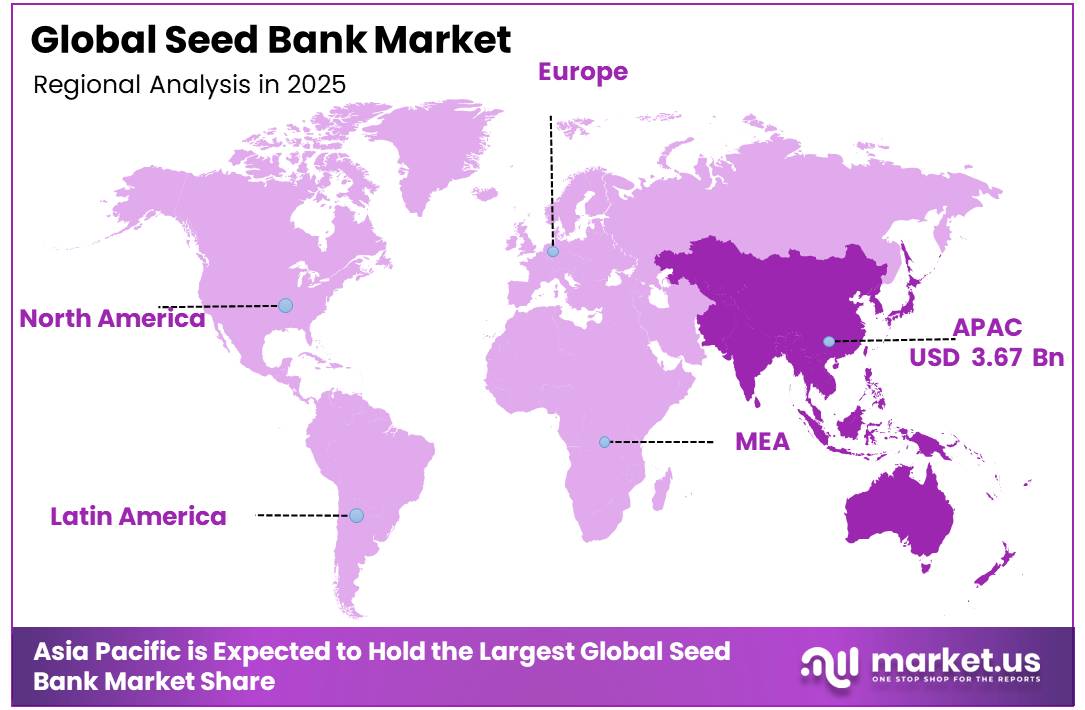
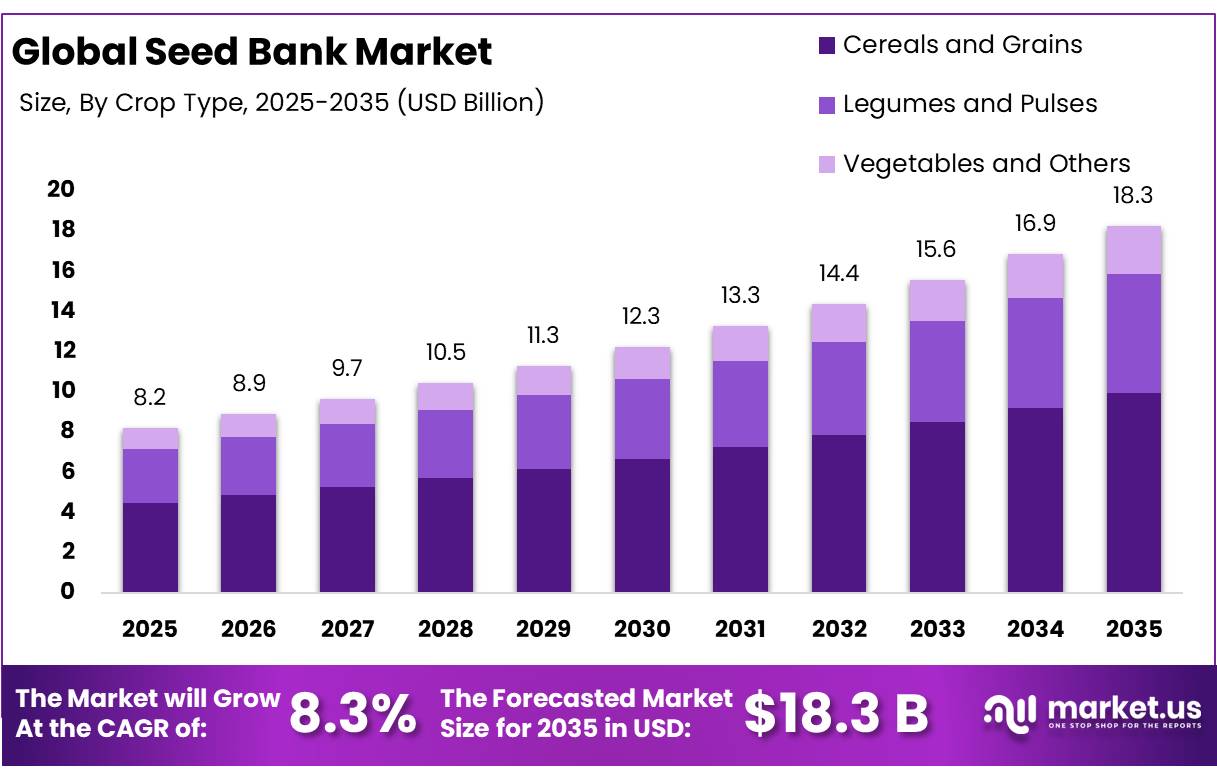
In 2025, the Global Seed Bank Market was valued at USD 8.2 Billion, and between 2026 and 2035, this market is estimated to register a CAGR of 8.3%, reaching about USD 18.3 Billion by 2035. Asia Pacific held a dominant market position, capturing more than a 44.56% share, holding USD 3.67 Billion in revenue.
The global seed bank market covers ex situ conservation of plant genetic resources through specialized vaults, genebanks, and repositories safeguarding crop diversity against climate change, conflict, and natural disasters. Seed banks store dried, frozen, or cryopreserved seeds representing food crops, wild relatives, and forage species, ensuring availability for breeding and restoration
- As of October 2025, the Svalbard Global Seed Vault held more than 1.3 million seed samples following a deposit of over 18,000 accessions from eighteen genebanks across nearly 90 countries, per Norway’s Ministry of Agriculture and Food. The Kew Millennium Seed Bank Partnership has banked nearly 2.5 billion seeds representing over 40,000 plant species through 279 partners across more than 100 countries, per the Royal Botanic Gardens Kew. The United States Department of Agriculture National Plant Germplasm System curates over 600,000 active germplasm accessions, per its Agricultural Research Service.
Key Takeaways
- The Global Seed Bank Market was valued at USD 8.2 billion in 2025.
- The global seed bank market is projected to grow at a CAGR of 8.3% and is estimated to reach USD 18.3 billion by 2035.
- On the basis of crop type, Cereals and Grains dominated the market, constituting 54.56% of the total market share.
- Based on seed biology, Orthodox Seeds dominated the market, accounting for 62.34% of the total market share.
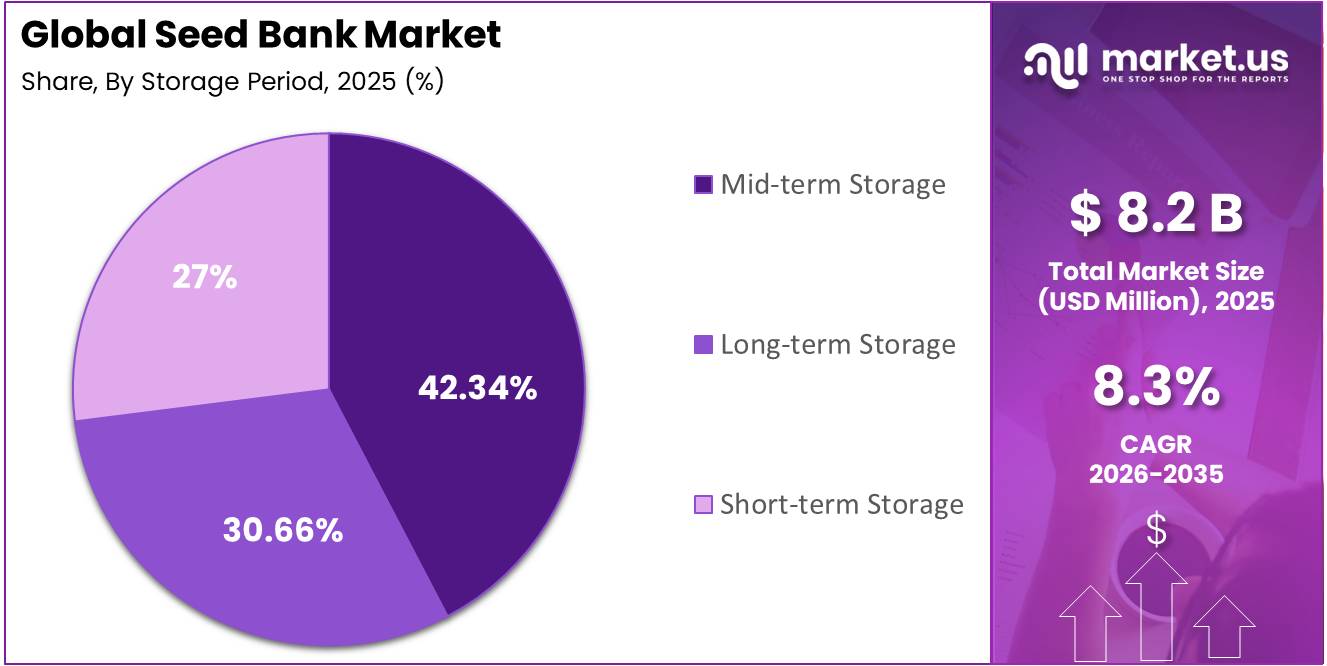
- Based on storage period, Mid-term Storage dominated the market, accounting for 42.34% of the total market share.
- In 2025, Asia-Pacific was the most dominant region in the seed bank market, accounting for 44.56% of the global market.
Rising threats from climate change, biodiversity loss, and geopolitical conflict are accelerating investment in genebank infrastructure, as humans have historically cultivated over 6,000 food plants while current global food systems depend on fewer than 200 species, per the Food and Agriculture Organization. Growth opportunities lie in cryopreservation for recalcitrant seeds, digitizing germplasm databases, and strengthening duplication partnerships among genebanks worldwide.
Government backed initiatives continue expanding the sector. The Norwegian government, which owns and funds the Svalbard vault, reported that 130 genebanks across nearly 90 countries now use the facility for seed backup. The Food and Agriculture Organization’s International Treaty on Plant Genetic Resources for Food and Agriculture supports its Benefit sharing Fund, which financed deposits from Georgia’s Scientific Research Center of Agriculture, contributing 210 crop varieties.
By Crop Type
Cereals and Grains dominates with a 54.56% share due to its importance in seed preservation and crop production.
In 2025, Cereals and Grains held a dominant market position, capturing more than a 54.56% share of the Seed Bank Market by crop type. Seed banks play an important role in maintaining and preserving cereal and grain seed resources for future agricultural use. The strong position of this segment reflects the continued importance of cereals and grains within crop-related seed preservation activities. Seed banks help maintain these seed resources under controlled storage conditions, supporting their availability for future cultivation, research, and conservation purposes.
Legumes and Pulses are growing within the Seed Bank Market as seed preservation activities continue to cover a wider range of important food crops. In 2025, the segment was identified as Growing, indicating increasing attention toward the conservation and storage of legume and pulse seed resources. Seed banks support the long-term availability of these crop varieties by maintaining their genetic resources for future agricultural and research needs. This growing position shows the expanding role of legumes and pulses in crop-focused seed conservation.
By Seed Biology
Orthodox Seeds dominate with a 62.34% share due to their suitability for seed storage and preservation.
In 2025, Orthodox Seeds held a dominant market position, capturing more than a 62.34% share of the Seed Bank Market by seed biology. Their leading position reflects their strong suitability for seed banking and preservation activities. Orthodox seeds can be stored as part of seed conservation programs, making them an important seed type for maintaining crop genetic resources. Their established role in seed storage supports their continued dominance within the segment.
Recalcitrant Seeds represent the fastest-growing segment of the Seed Bank Market in 2025. Their growth reflects increasing attention toward the conservation of seed types that require different preservation approaches. Seed banks and conservation programs continue to consider suitable methods for maintaining these seeds and protecting their genetic resources. The fastest-growing position indicates rising focus on the preservation of Recalcitrant Seeds within seed conservation activities.
By Storage Period
Mid-term Storage dominates with a 42.34% share due to its important role in maintaining seeds for planned conservation and future use.
In 2025, Mid-term Storage held a dominant market position, capturing more than a 42.34% share of the Seed Bank Market by storage period. Its leading position reflects the importance of maintaining seeds for a defined period while keeping them available for future conservation, research, and agricultural requirements. Seed banks use storage systems to protect seed resources and maintain their availability over time, supporting the continued preservation of crop varieties.
Short-term Storage is the growing segment of the Seed Bank Market in 2025. Its growth reflects the continued need for temporary seed preservation before seeds are moved, used, or placed under longer storage conditions. Seed banks use short-term storage as part of their overall conservation activities, helping maintain seed resources during different stages of handling and preservation. This growing position highlights the ongoing role of short-term storage within seed banking operations.
Key Market Segments
By Crop Type
- Cereals and Grains
- Legumes and Pulses
- Vegetables and Others
By Seed Biology
- Orthodox Seeds
- Recalcitrant Seeds
By Storage Period
- Short-term Storage
- Mid-term Storage
- Long-term Storage