


Overview
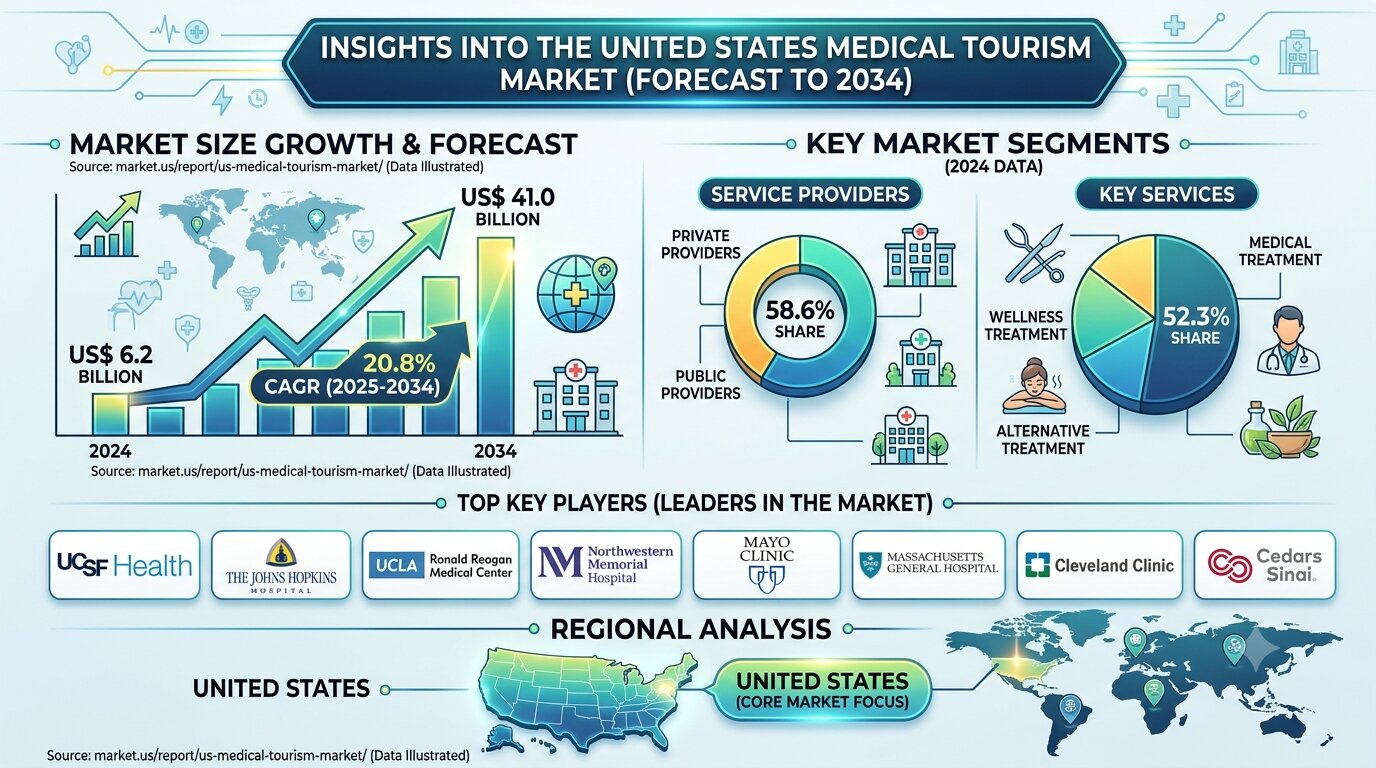
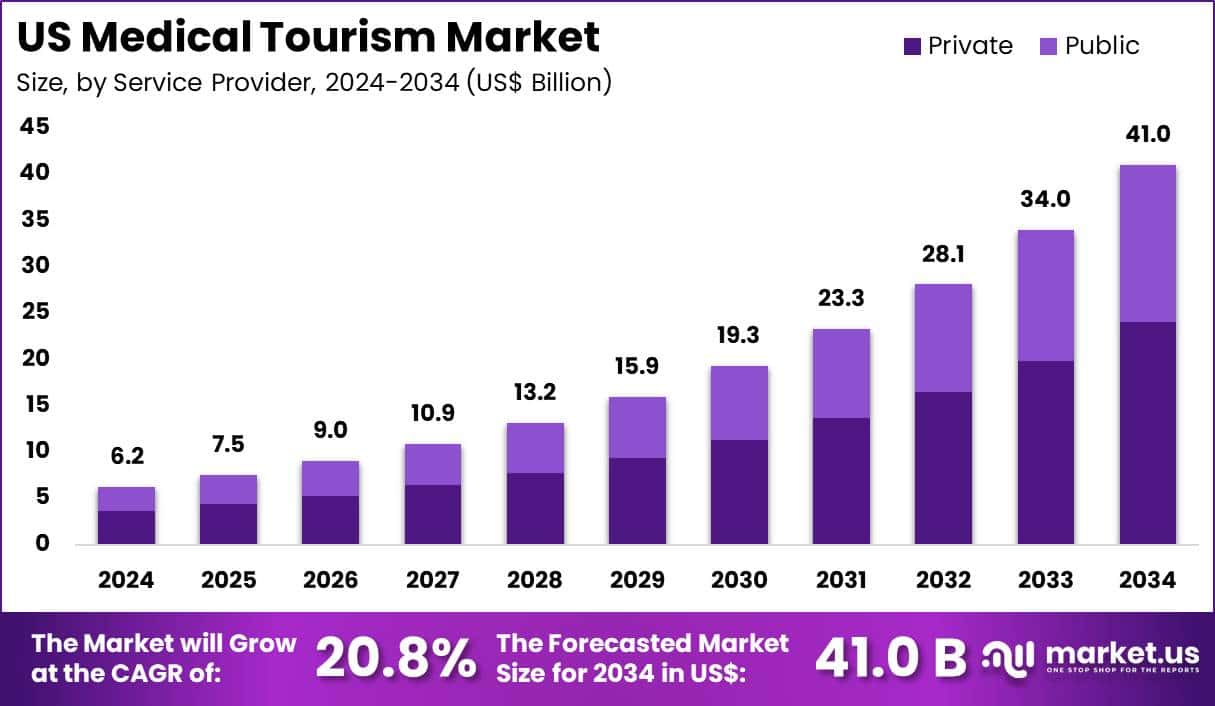
The US Medical Tourism Market Size is expected to be worth around US$ 41.0 Billion by 2034 from US$ 6.2 Billion in 2024, growing at a CAGR of 20.8% during the forecast period 2025 to 2034
Medical tourism in the United States is gaining momentum as healthcare providers expand specialized treatment offerings, improve digital patient services, and strengthen international partnerships. The market is supported by the country’s advanced healthcare infrastructure, internationally recognized hospitals, and expertise in complex procedures such as oncology, cardiology, orthopedics, organ transplantation, and precision medicine. Growing adoption of telehealth for pre-treatment consultations and post-procedure follow-up is also making cross-border care more accessible for international patients.
According to the U.S. Centers for Disease Control and Prevention (CDC), millions of U.S. residents travel abroad for medical care each year, highlighting the growing global demand for cross-border healthcare services and the increasing importance of quality, safety, and coordinated patient care. The CDC also notes that common medical tourism procedures include cosmetic surgery, dental care, fertility treatment, cancer care, and organ transplantation.
Furthermore, the agency recommends that patients consult healthcare professionals 4–6 weeks before international travel and ensure routine vaccinations are up to date to reduce health risks associated with medical travel. These recommendations emphasize the importance of patient safety, informed decision-making, and continuity of care across borders.
The United States continues to attract international patients by combining cutting-edge medical technologies, highly trained specialists, and rigorous clinical standards. As healthcare systems invest in digital health, personalized medicine, and international patient support programs, the country’s medical tourism ecosystem is expected to strengthen further, creating new opportunities for hospitals, specialty clinics, insurers, and healthcare facilitators while improving patient experience and treatment outcomes.
Key Takeaways
- In 2024, the U.S. medical tourism market generated US$ 6.2 billion in revenue and is projected to reach US$ 41.0 billion by 2034, expanding at a CAGR of 20.8% during the forecast period.
- By service provider, the market is segmented into public and private providers, with the private segment dominating the market in 2024, accounting for a 58.6% share.
- Based on service, the market is categorized into medical treatment, wellness treatment, and alternative treatment, with the medical treatment segment leading the market by securing a 52.3% share in 2024.
Statistical Information
- The U.S. Centers for Disease Control and Prevention (CDC) states that millions of U.S. residents travel internationally for medical care each year, demonstrating the scale of cross-border healthcare utilization.
- According to CDC surveillance data from the Behavioral Risk Factor Surveillance System (BRFSS), 1.32% of surveyed adults reported traveling abroad for medical care, making it one of the largest population-based analyses of U.S. medical tourism behavior.
- The same CDC-supported BRFSS analysis found that 55% of medical tourism treatments sought by U.S. travelers were for dental care, making it the most common procedure category.
- Among surveyed U.S. medical tourists, 41% traveled to Mexico for healthcare services, making it the leading destination for outbound medical travel.
- CDC surveillance showed that 5% of surveyed medical tourists experienced complications following treatment received abroad, highlighting the importance of quality assurance and follow-up care.
- Following overseas treatment, 67% of patients who experienced complications sought additional medical care after returning to the United States, demonstrating continued reliance on domestic healthcare providers for recovery.
- CDC data found that individuals without current health insurance were 2.70 times more likely to seek medical care abroad than insured individuals, indicating cost remains an important consumer behavior driver.
- The CDC reports that common reasons patients pursue medical tourism include lower treatment costs, access to procedures unavailable domestically, and receiving care from providers who share their language or cultural background.
- The U.S. Department of State advises that U.S. citizens are generally responsible for all hospital and medical costs incurred abroad, making travel medical insurance and financial planning important considerations for medical tourists.
Market Segmentation Analysis
Service Provider Analysis
The private service provider segment accounted for the largest share of the U.S. medical tourism market, capturing 58.6% in 2024. This leadership is driven by growing patient preference for high-quality healthcare, shorter treatment timelines, and access to advanced medical technologies. Private hospitals and specialty clinics continue to attract international patients by offering personalized treatment plans, internationally accredited facilities, and dedicated support services.
Rising demand for elective procedures, complex surgeries, oncology care, orthopedic treatments, and cardiovascular interventions is further strengthening the segment’s position. Additionally, investments in digital health, multilingual patient coordination, and premium healthcare experiences are improving patient satisfaction.
As global demand for specialized and efficient healthcare services grows, private providers are expected to remain the preferred choice for medical tourists seeking high-quality treatment in the United States.
Service Analysis
The medical treatment segment held a dominant 52.3% share of the U.S. medical tourism market in 2024, reflecting strong demand for specialized and advanced healthcare services. International patients increasingly travel to the United States for complex procedures, including cancer treatment, organ transplantation, cardiovascular care, neurological surgeries, and orthopedic interventions. The country’s advanced medical infrastructure, highly skilled specialists, and access to innovative treatment options continue to support segment growth.
Rising prevalence of chronic diseases worldwide and increasing demand for precision medicine are encouraging more patients to seek treatment in leading U.S. healthcare facilities. In addition, improvements in telehealth consultations, patient navigation services, and post-treatment follow-up are enhancing the overall care experience, reinforcing the medical treatment segment’s leadership within the U.S. medical tourism market.
Business Opportunities
The U.S. medical tourism market presents significant opportunities for hospitals, specialty clinics, digital health providers, insurers, and medical travel facilitators as demand for cross-border healthcare continues to expand. Healthcare organizations can strengthen international patient programs by offering multilingual care coordination, visa assistance, virtual consultations, and personalized treatment pathways before and after travel.
The growing adoption of telehealth enables providers to conduct remote pre-treatment assessments and post-discharge follow-up, improving continuity of care and patient satisfaction.
According to the U.S. Centers for Disease Control and Prevention (CDC), medical tourism is a global multibillion-dollar industry, with millions of U.S. residents traveling internationally for medical care each year, demonstrating the increasing importance of coordinated international healthcare services.
In addition, investments in internationally accredited facilities, digital patient engagement platforms, AI-enabled scheduling, electronic health record integration, and concierge services can help healthcare organizations attract more international patients while improving operational efficiency, treatment outcomes, and overall patient experience.
Emerging Trends
- Telehealth is becoming part of international patient care. U.S. hospitals are using virtual consultations before travel and after treatment to improve continuity of care. According to HHS, 95% of HRSA-funded health centers used telehealth for primary care in 2024, showing strong digital health adoption across the healthcare system.
- International accreditation is becoming a major competitive advantage. More healthcare organizations are adopting global quality standards to attract overseas patients. Joint Commission International supports hospitals in more than 100 countries, while the Joint Commission enterprise works with over 24,000 healthcare organizations to improve patient safety and quality.
- Multilingual patient services are expanding rapidly. Hospitals are investing in qualified interpreters and language-access programs to improve communication with international patients. The Joint Commission updated its language access requirements in 2026, emphasizing effective communication as a key component of patient-centered care.
- Digital care coordination is strengthening medical tourism services. Healthcare providers are integrating telehealth, electronic records, and remote monitoring to manage international patients more efficiently. JCI Telehealth Certification promotes standardized virtual care, better communication, and data-driven quality improvement across healthcare organizations.
- Continuity of care is becoming a strategic priority. Healthcare providers, employers, and insurers are placing greater emphasis on coordinated follow-up after patients return home. The American Medical Association recommends arranging post-treatment care before travel, reducing complications and improving long-term clinical outcomes.
Use Cases
- Cancer centers are attracting international patients for specialized therapies. Many overseas patients travel to U.S. hospitals seeking access to advanced oncology treatments, multidisciplinary care teams, and clinical expertise that may not be available in their home countries.
- Telehealth is used for pre-travel medical evaluations. Hospitals increasingly conduct virtual consultations before patients travel, helping review medical records, confirm treatment plans, and reduce unnecessary travel. HHS reports that 25% of Medicare fee-for-service users received a telehealth service in 2024, reflecting continued digital care adoption.
- Hospitals use interpreter services to improve international patient experience. Certified interpreters and bilingual clinicians help patients understand diagnoses, consent forms, and treatment plans, supporting safer care and higher patient satisfaction while meeting recognized quality standards.
- Medical concierge programs simplify international patient journeys. Hospitals coordinate appointments, travel planning, accommodation, medical records, and post-treatment follow-up through dedicated international patient departments, creating a smoother experience for overseas visitors.
- Healthcare providers use international accreditation to build patient trust. Hospitals with recognized global accreditation demonstrate compliance with rigorous patient safety and quality standards, making them more attractive to international patients seeking reliable healthcare services.
Recent Developments
- In December 2025, Cedars-Sinai announced expanded deployment of artificial intelligence across clinical, research, and administrative operations through multiple AI initiatives led by its AI Council. The initiative focuses on improving patient care, healthcare innovation, and operational efficiency through responsible AI adoption.
- In December 2025, Cedars-Sinai partnered with University Health Network (UHN) in Canada to host the second Artificial Intelligence in Medicine Symposium, bringing together more than 200 healthcare experts from over 40 institutions to advance practical AI applications in medicine.
- In June 2025, Mayo Clinic and Arizona State University MedTech Accelerator completed their latest accelerator cohort, supporting 10 health technology companies from five countries focused on innovations in diagnostics, artificial intelligence, and digital health solutions.
- In March 2025, Mayo Clinic announced a US$1.9 billion expansion of its Phoenix, Arizona campus under the “Bold. Forward. Unbound.” strategy. The investment will expand clinical capacity, increase specialty care infrastructure, and strengthen Mayo Clinic’s ability to serve complex-care patients, including international visitors.
Conclusion
The U.S. medical tourism market is positioned for strong expansion as international patients increasingly seek advanced treatments, specialized medical expertise, and high-quality healthcare services. Growth opportunities are emerging through digital health adoption, telehealth-enabled consultations, international patient programs, and investments in advanced healthcare infrastructure.
Leading hospitals and healthcare organizations are strengthening their global presence through technology integration, strategic partnerships, and improved patient coordination services. As demand rises for complex procedures, personalized medicine, and reliable care experiences, the U.S. healthcare ecosystem is expected to remain a preferred destination for medical travelers while creating new opportunities for providers, insurers, and healthcare service companies.




















