


Overview
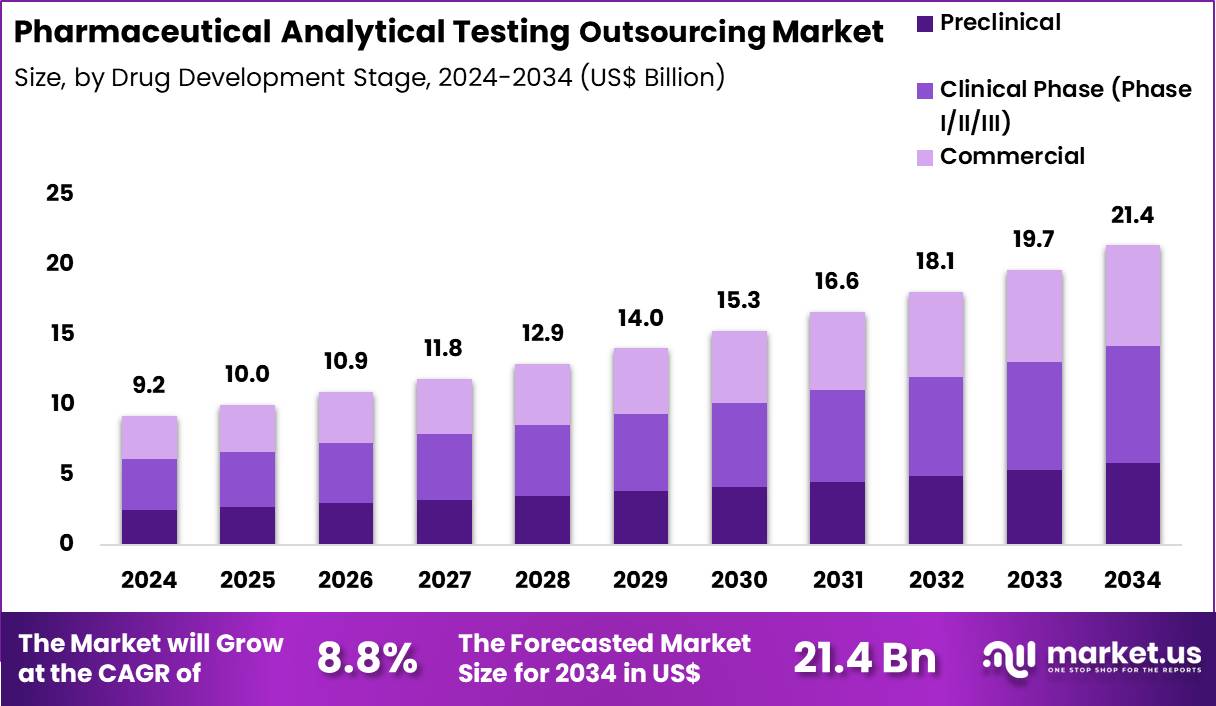
The Global Pharmaceutical Analytical Testing Outsourcing Market size is expected to be worth around US$ 21.4 Billion by 2034 from US$ 9.2 Billion in 2024, growing at a CAGR of 8.8% during the forecast period 2025 to 2034. In 2024, North America led the market, achieving over 24.8% share with a revenue of US$ 4.4 Billion.
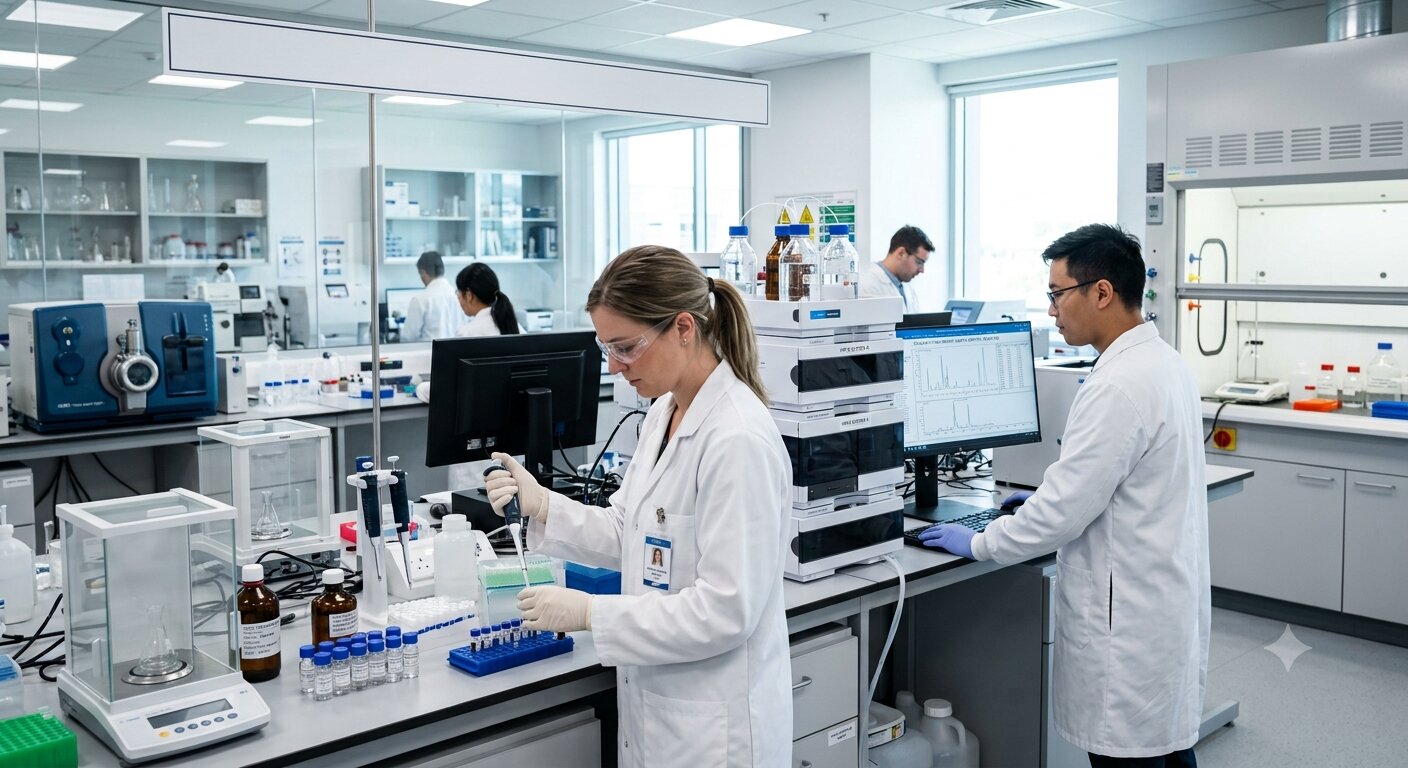
The pharmaceutical analytical testing outsourcing market is gaining momentum as pharmaceutical and biotechnology companies increasingly rely on specialized external laboratories to ensure product quality, regulatory compliance, and faster development timelines.
Outsourcing analytical testing enables manufacturers to access advanced technologies, experienced scientific personnel, and validated testing capabilities while reducing operational costs and improving efficiency across drug development and commercial manufacturing.
According to the U.S. Food and Drug Administration (FDA), analytical testing laboratories play a critical role in evaluating the identity, strength, quality, purity, and potency of drug substances and finished pharmaceutical products. The agency requires validated analytical methods and robust laboratory practices to support regulatory submissions and product approvals.
Similarly, the European Medicines Agency (EMA) emphasizes that outsourced testing activities must operate under formal quality agreements and comply with Good Manufacturing Practice (GMP) requirements to maintain data integrity and product quality.
The increasing complexity of biologics, biosimilars, cell and gene therapies, and personalized medicines is driving demand for highly specialized analytical services. In 2024, the EMA coordinated over 1,000 inspections across GMP, GCP, GLP, and pharmacovigilance activities within the European medicines regulatory network, reflecting the industry’s strong focus on compliance and quality assurance.
Key Takeaways
- In 2024, the Pharmaceutical Analytical Testing Outsourcing Market generated a revenue of US$ 9.2 Billion and is projected to grow at a CAGR of 8.8%, reaching US$ 21.4 Billion by 2034.
- Based on services, the market is segmented into bioanalytical testing, method development, transfer, validation, and qualification, stability testing, microbiological testing, and other services. Among these, bioanalytical testing emerged as the leading segment in 2024, accounting for a market share of 39.1% due to its growing importance in drug development and regulatory evaluation.
- By drug development stage, the market is categorized into preclinical, clinical phase, and commercial stages. The clinical phase (Phase I/II/III) segment held a significant market position in 2024, capturing a share of 39.3%, driven by increasing clinical trial activities and the need for specialized analytical testing support.
- In terms of end users, the market is divided into large pharmaceutical & biopharma companies, small and mid-size pharmaceutical & biotech companies, and CROs, CDMOs, & CMOs. Among these, large pharmaceutical & biopharma companies dominated the market with the highest revenue share of 48.6% in 2024, supported by extensive outsourcing requirements and global drug development programs.
- Regionally, North America led the Pharmaceutical Analytical Testing Outsourcing Market in 2024, securing a market share of 24.8%, supported by advanced pharmaceutical infrastructure, strong regulatory frameworks, and high adoption of outsourced testing services.
Statistical Information
- The U.S. FDA approved 50 novel drugs in 2024, creating increased demand for analytical testing services such as method validation, impurity profiling, stability testing, and product characterization throughout drug development and commercialization.
- The U.S. FDA approved 46 novel drugs in 2025, reflecting continued pharmaceutical innovation and the need for advanced analytical testing capabilities to support regulatory submissions and quality evaluations.
- The FDA introduced the final Q2(R2) Validation of Analytical Procedures guidance in March 2024, updating global expectations for analytical method validation and strengthening the need for specialized validation expertise among pharmaceutical manufacturers.
- The FDA’s Q14 Analytical Procedure Development guidance was also issued in March 2024, establishing science- and risk-based approaches for developing analytical procedures and improving lifecycle management of testing methods.
- In 2024, the FDA’s Center for Drug Evaluation and Research (CDER) approved 50 new therapies across multiple disease areas, including oncology, rare diseases, infectious diseases, and chronic conditions, increasing demand for complex analytical characterization and quality testing.
- FDA-approved novel medicines increased by 96 approvals combined across 2024 and 2025, highlighting sustained drug development activity requiring outsourced analytical support.
- The FDA’s updated analytical validation framework covers key testing requirements including analytical procedure performance, lifecycle management, and evaluation of modern analytical technologies, supporting greater adoption of specialized contract testing laboratories.
- The FDA’s 2024 novel drug approvals included therapies from multiple advanced categories, such as biologics and targeted treatments, increasing demand for specialized analytical services including bioanalysis, potency testing, stability studies, and molecular characterization.
Regional Analysis
North America dominated the Pharmaceutical Analytical Testing Outsourcing Market in 2024, supported by a strong pharmaceutical ecosystem, advanced laboratory infrastructure, and increasing demand for specialized analytical services. The region’s growth is driven by rising drug development activities, strict regulatory quality requirements, and growing adoption of outsourced testing solutions among pharmaceutical and biotechnology companies.
The U.S. FDA’s approval of 50 novel drugs in 2024 highlights the increasing need for comprehensive analytical testing, including method validation, stability studies, and quality assessments throughout the drug development process.
Asia Pacific is projected to experience significant growth during the forecast period, fueled by expanding pharmaceutical manufacturing capabilities, rising clinical research activities, and increasing investments in contract research and testing infrastructure.
Growing demand for generic drugs, biosimilars, and advanced therapies is encouraging companies to outsource analytical procedures to specialized laboratories. The region’s expanding clinical trial landscape and improving regulatory frameworks are expected to further support market growth by increasing the need for bioanalytical testing, validation services, and quality control solutions.
Emerging Trends
- AI-Based Analytical Data Management: Pharmaceutical testing laboratories are adopting artificial intelligence and automation to improve data review, detect testing errors, and accelerate analytical workflows. The FDA has highlighted increasing use of advanced technologies in pharmaceutical manufacturing, with more than 100 FDA-regulated AI-related drug and biologic submissions reported since 2016, supporting digital transformation in analytical operations.
- Lifecycle-Based Analytical Method Development: Companies are shifting from traditional validation approaches toward continuous analytical procedure improvement. The FDA’s Q14 Analytical Procedure Development and Q2(R2) Validation guidelines issued in 2024 encourage risk-based methods, increasing demand for outsourced experts specializing in analytical development and validation.
- Expansion of Biosimilar Testing Services: Biosimilar development is increasing the need for comparative analytical testing, structural characterization, and functional assays. The FDA has approved 76 biosimilars to date, creating demand for specialized outsourcing partners capable of performing complex similarity assessments and quality evaluations.
- Advanced Characterization for Biologics: Growing biologic drug pipelines are increasing demand for outsourced protein analysis, impurity testing, and molecular characterization. FDA guidance emphasizes analytical studies as a foundation for biosimilar evaluation, requiring detailed structural and functional comparisons before approval.
- Growth of Precision Medicine Testing: Personalized medicines are creating new analytical requirements, including biomarker analysis, molecular profiling, and patient-specific testing. Pharmaceutical companies are increasingly using specialized contract laboratories to access advanced platforms without building expensive internal testing infrastructure.
Use Cases
- Bioanalytical Testing in Clinical Trials: Contract laboratories are increasingly supporting pharmacokinetic, pharmacodynamic, and biomarker testing during clinical development. These services help pharmaceutical companies analyze biological samples efficiently, especially for complex therapies requiring high-sensitivity analytical techniques.
- Biosimilar Comparability Studies: Outsourced laboratories are being used for comparative analytical assessments between reference biologics and biosimilars. FDA requires analytical evidence demonstrating similarity in structure, purity, and potency, making external testing providers important for biosimilar development programs.
- Cell and Gene Therapy Quality Testing: Developers are outsourcing specialized testing such as vector characterization, potency assays, sterility evaluation, and genetic analysis for advanced therapies. FDA continues expanding regulatory frameworks for these products, increasing demand for specialized analytical capabilities.
- Stability Testing for Drug Commercialization: Pharmaceutical manufacturers use outsourcing partners for long-term stability studies, accelerated stability testing, and storage condition evaluations. These services support regulatory submissions and help companies maintain product quality throughout the drug lifecycle.
- Impurity Profiling and Contaminant Detection: External analytical laboratories are increasingly used for detecting trace impurities, elemental contaminants, and degradation products. Advanced chromatography and mass spectrometry techniques help manufacturers meet strict quality requirements before product release and regulatory approval.
Frequently Asked Questions About Pharmaceutical Analytical Testing Outsourcing
- What is pharmaceutical analytical testing outsourcing?
Pharmaceutical analytical testing outsourcing involves hiring external laboratories to perform drug quality evaluations, including purity testing, stability studies, method validation, microbiological analysis, and bioanalytical services. It enables pharmaceutical companies to access specialized expertise, advanced instruments, and regulatory-compliant testing capabilities without expanding internal laboratory infrastructure. - Why are pharmaceutical companies outsourcing analytical testing services?
Companies outsource analytical testing to improve operational efficiency, reduce laboratory investment requirements, and access experienced scientists with specialized technologies. Outsourcing supports complex drug development programs by providing validated testing solutions for clinical and commercial products while helping manufacturers maintain regulatory compliance. - What services are covered under pharmaceutical analytical testing outsourcing?
Pharmaceutical analytical testing outsourcing includes analytical method development, method transfer, validation, qualification, stability testing, impurity analysis, bioanalysis, microbiological testing, and product characterization. These services support pharmaceutical development activities from early research stages through regulatory approval and commercial manufacturing. - What factors are driving growth in the pharmaceutical analytical testing outsourcing market?
The market is driven by increasing drug complexity, rising biologics and biosimilar development, stricter quality standards, and growing demand for specialized testing capabilities. Pharmaceutical companies increasingly collaborate with contract laboratories to manage advanced analytical requirements and accelerate product development timelines. - How do FDA guidelines impact pharmaceutical analytical testing outsourcing?
FDA guidelines require pharmaceutical manufacturers to use reliable analytical procedures that demonstrate accuracy, precision, specificity, and suitability for intended use. The introduction of ICH Q2(R2) and Q14 guidelines in 2024 strengthened science-based analytical development and validation practices across the industry. - What technologies are commonly used in outsourced pharmaceutical testing?
Outsourced laboratories use advanced analytical technologies such as chromatography, mass spectrometry, spectroscopy, molecular characterization tools, and biological assays. These technologies help evaluate drug composition, impurities, stability, and performance while supporting regulatory approval and quality assurance activities. - What is the future outlook for pharmaceutical analytical testing outsourcing?
The future of pharmaceutical analytical testing outsourcing is expected to be influenced by biologics, personalized medicines, advanced therapies, automation, and digital laboratory solutions. Increasing regulatory focus on analytical reliability and lifecycle management will continue creating opportunities for specialized testing service providers.
Conclusion
The Pharmaceutical Analytical Testing Outsourcing Market is expected to witness strong expansion as pharmaceutical companies increasingly depend on specialized laboratories for quality assurance, regulatory compliance, and faster drug development. Rising demand for biologics, biosimilars, personalized medicines, and advanced therapies is creating new opportunities for analytical testing providers.
Regulatory initiatives such as FDA’s Q2(R2) and Q14 guidelines are encouraging science-based validation and advanced testing approaches. With growing adoption of automation, digital laboratory solutions, and outsourced quality testing services, contract analytical laboratories will play a critical role in supporting pharmaceutical innovation, improving efficiency, and ensuring safe, high-quality medicines globally.




















