


Overview
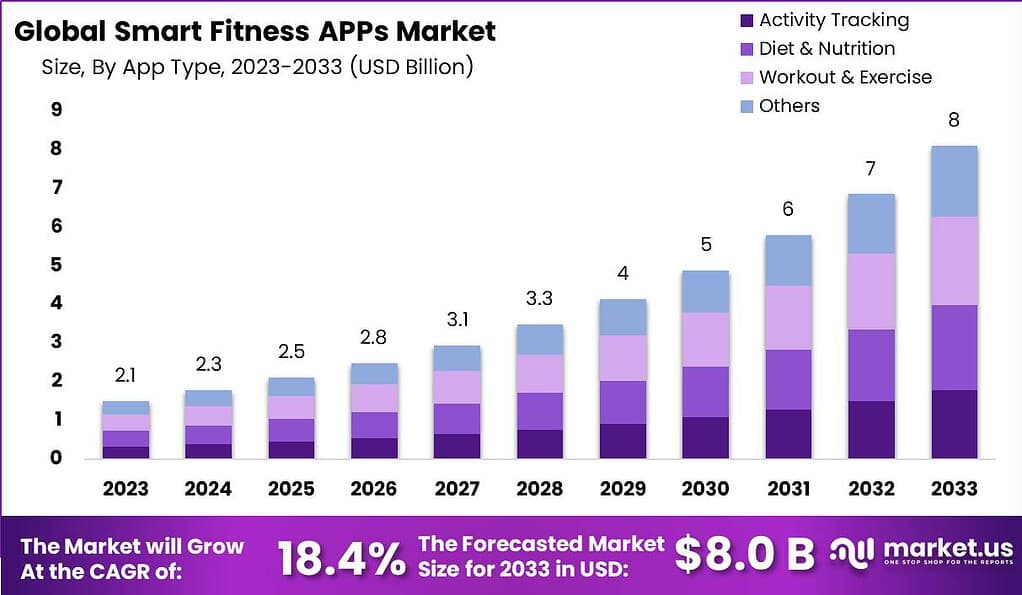
The Global Smart Fitness APPs Market size is expected to be worth around USD 8.0 Billion By 2033, from USD 2.1 Billion in 2023, growing at a CAGR of 18.4% during the forecast period from 2024 to 2033.
The growing adoption of digital health technologies is transforming how individuals monitor fitness, maintain active lifestyles, and manage personal wellness. Smart fitness applications are becoming an important part of preventive healthcare by offering features such as activity tracking, workout guidance, nutrition monitoring, sleep analysis, and personalized health recommendations. These applications integrate with smartphones, wearable devices, and connected sensors to provide users with real-time insights into physical activity and health behaviors.
Increasing awareness about the importance of regular physical activity is supporting the expansion of smart fitness platforms. The World Health Organization (WHO) highlights that physical activity plays a key role in preventing and managing noncommunicable diseases, including cardiovascular diseases, cancer, and diabetes. However, around 31% of adults globally do not meet recommended physical activity levels, creating demand for accessible digital solutions that encourage healthier routines.
Government health organizations are also emphasizing the importance of reliable digital health tools. The U.S. National Center for Complementary and Integrative Health (NCCIH) notes that mobile health applications, including physical activity and wellness apps, are increasingly used but should maintain strong data privacy and evidence-based health information standards.
The integration of artificial intelligence, wearable connectivity, and personalized coaching is expected to enhance user engagement in smart fitness applications. In 2023, nearly two-thirds (63.4%) of U.S. adults reported using a mobile health application, reflecting growing consumer acceptance of digital wellness solutions. As healthcare systems continue focusing on prevention and lifestyle management, smart fitness apps are expected to play a greater role in supporting long-term health improvement.
Key Takeaways
- The Global Smart Fitness Apps Market is expected to reach USD 8.0 Billion by 2033, growing from USD 2.1 Billion in 2023, at a CAGR of 18.4% during the forecast period from 2024 to 2033.
- In 2023, the Workout & Exercise segment led the Smart Fitness Apps Market, accounting for a market share of more than 28.4%.
- In 2023, the Android segment dominated the Smart Fitness Apps Market, capturing a market share of over 56.8%.
- In 2023, North America held the leading position in the Smart Fitness Apps Market, securing more than 34.6% market share, with revenue of approximately USD 0.7 Billion.
Statistical Information
- In the United States, 91% of adults own a smartphone, creating a strong foundation for smart fitness app adoption through mobile-based workout tracking, health monitoring, and digital wellness services.
- Around 98% of U.S. adults own a cellphone, showing the widespread availability of mobile technology that supports access to fitness applications and connected health platforms.
- Approximately 16% of U.S. adults are smartphone-dependent internet users, meaning they rely on smartphones without a home broadband connection, highlighting the importance of mobile-first fitness and wellness solutions.
- Among younger adults in the U.S., smartphone adoption remains particularly high, with 97% of adults aged 18–29 owning smartphones, supporting strong engagement with app-based fitness experiences and digital health tools.
- The U.S. healthcare ecosystem is increasingly integrating digital health technologies, including mobile applications and connected devices, to improve health monitoring, patient engagement, and personalized wellness management.
Regional Analysis
North America held a leading position in the Smart Fitness Apps Market in 2023, driven by high smartphone penetration, advanced digital infrastructure, and growing consumer interest in health and fitness technologies. The region’s strong adoption of wearable devices and mobile health solutions has encouraged the use of fitness applications for activity tracking, workout planning, nutrition management, and personalized wellness monitoring.
The U.S. Food and Drug Administration (FDA) highlights the growing importance of digital health technologies, including mobile applications and connected devices, in supporting healthcare innovation and user engagement.
Rising awareness about preventive healthcare and lifestyle management is further increasing demand for smart fitness platforms. Additionally, the presence of leading technology companies, fitness app developers, and health-tech startups in the United States and Canada is accelerating innovation in AI-based coaching and personalized fitness solutions. These factors continue to strengthen North America’s role as a major contributor to the global smart fitness apps industry.
Emerging Trends
- AI-Powered Personalized Fitness Coaching: Smart fitness apps are increasingly adopting AI to provide customized workout recommendations, adaptive training plans, and real-time feedback. AI systems analyze user activity, exercise performance, and wearable sensor data to improve personalization. Research on smart devices for tele-exercise shows AI can analyze wearable data and generate personalized recommendations for users.
- Wearable Device Integration for Real-Time Tracking: Integration with smartwatches, fitness bands, and health sensors is becoming a major trend in fitness applications. These connected platforms allow users to monitor steps, heart rate, sleep, and exercise performance continuously. FDA recognizes sensor-based digital health technologies, including wearable devices, as important tools for collecting health-related information outside traditional clinical settings.
- Preventive Healthcare and Wellness Management: Smart fitness apps are expanding from workout tracking into preventive health solutions by supporting daily activity management, lifestyle improvement, and long-term wellness goals. The CDC recommends adults achieve at least 150 minutes of moderate-intensity physical activity per week, increasing demand for digital tools that encourage regular movement and healthy habits.
- Integration With Remote Health Monitoring Systems: Fitness applications are increasingly being connected with broader digital healthcare ecosystems to support remote monitoring and personalized care. Wearable-generated data combined with mobile apps can help track health trends and provide insights for users and healthcare professionals. Studies show wearable devices are being used for continuous monitoring of health metrics and lifestyle behaviors.
- Growth of Data-Driven Fitness Analytics: Smart fitness apps are moving toward advanced analytics by converting user-generated activity data into meaningful health insights. Platforms now focus on tracking multiple wellness indicators, including physical activity, sleep patterns, and biometric information. Recent consumer data shows biometrics, physical activity, and sleep remain among the most commonly tracked health metrics through digital tools.
Use Cases
- Personalized Workout Planning: Smart fitness apps are used to create customized exercise programs based on user goals, fitness levels, and performance history. These applications help users follow structured workouts while adjusting recommendations according to progress. AI-based analysis of wearable and app data enables more individualized coaching experiences.
- Chronic Disease Lifestyle Support: Fitness applications are increasingly used to support lifestyle improvements for people managing health risks linked with inactivity. By tracking exercise habits, movement levels, and daily routines, these apps help users maintain healthier behaviors alongside medical guidance. Digital health tools are being explored for supporting continuous health monitoring.
- Corporate Wellness Programs: Companies are adopting fitness applications to encourage employee wellness, physical activity, and healthier workplace habits. These platforms support challenges, activity tracking, and engagement programs while helping organizations promote preventive health initiatives. Digital wellness programs are increasingly combining mobile apps with wearable technology for employee participation.
- Virtual Fitness Training and Remote Exercise: Smart fitness apps enable users to access virtual workouts, guided training sessions, and exercise programs without visiting physical gyms. Connected fitness solutions using mobile devices and sensors are helping users participate in remote exercise programs with real-time feedback and performance tracking.
- Nutrition and Lifestyle Monitoring: Many smart fitness platforms are expanding into complete wellness management by combining exercise tracking with nutrition logging, sleep monitoring, and lifestyle analysis. These applications help users understand relationships between daily habits and overall wellness. More than 40% of U.S. adults use health-related smartphone apps, showing strong consumer engagement with digital health tools.
Frequently Asked Questions About Smart Fitness Apps
- How do Smart Fitness Apps support fitness tracking?
Smart fitness apps collect data from smartphones, smartwatches, and connected sensors to measure activities such as steps, workouts, calories, and exercise performance. These insights help users monitor progress, set goals, and maintain consistent fitness routines through digital guidance. - What features are available in Smart Fitness Apps?
Smart fitness apps commonly provide workout programs, activity tracking, goal management, exercise instructions, nutrition monitoring, and wearable integration. Advanced applications also include AI-based recommendations, performance analysis, and personalized coaching features to improve user engagement and fitness outcomes. - How does AI improve Smart Fitness Apps?
Artificial intelligence improves smart fitness apps by analyzing user activity patterns, fitness history, and health data to deliver customized recommendations. AI-powered platforms can support adaptive workouts, automated coaching, and personalized fitness insights based on individual goals and progress. - Why are wearable devices important for Smart Fitness Apps?
Wearable devices strengthen smart fitness apps by providing continuous information on movement, exercise intensity, sleep, and other wellness indicators. Integration with sensors allows applications to deliver more accurate tracking, real-time feedback, and personalized recommendations for users. - Are Smart Fitness Apps part of digital healthcare?
Smart fitness apps are considered part of the broader digital health ecosystem when they support wellness management, activity monitoring, and healthy lifestyle improvement. The FDA recognizes digital health technologies, including mobile applications and wearable solutions, as tools supporting modern healthcare innovation. - What factors are driving the Smart Fitness Apps Market?
The Smart Fitness Apps Market is growing due to increasing smartphone usage, wearable technology adoption, rising health awareness, and demand for convenient digital fitness solutions. Consumers are increasingly using mobile platforms to access workouts, monitor progress, and manage personal wellness goals. - What is the future outlook for Smart Fitness Apps?
The future of smart fitness apps will focus on AI-driven coaching, advanced wearable connectivity, personalized wellness solutions, and integration with broader digital health platforms. These developments are expected to improve user engagement and provide more intelligent fitness management experiences.
Conclusion
The Smart Fitness Apps Market is witnessing strong transformation as digital health, wearable technology, and artificial intelligence reshape personal fitness management. The increasing focus on preventive healthcare, personalized workout experiences, and real-time health monitoring is driving wider adoption among consumers. Smart fitness applications are evolving beyond basic activity tracking by integrating AI coaching, connected devices, and advanced analytics to support healthier lifestyles.
Government initiatives and digital health advancements are further strengthening the role of these applications in wellness management. As consumers increasingly demand convenient and personalized fitness solutions, smart fitness apps are expected to become an essential component of the connected healthcare ecosystem.




















