


Overview
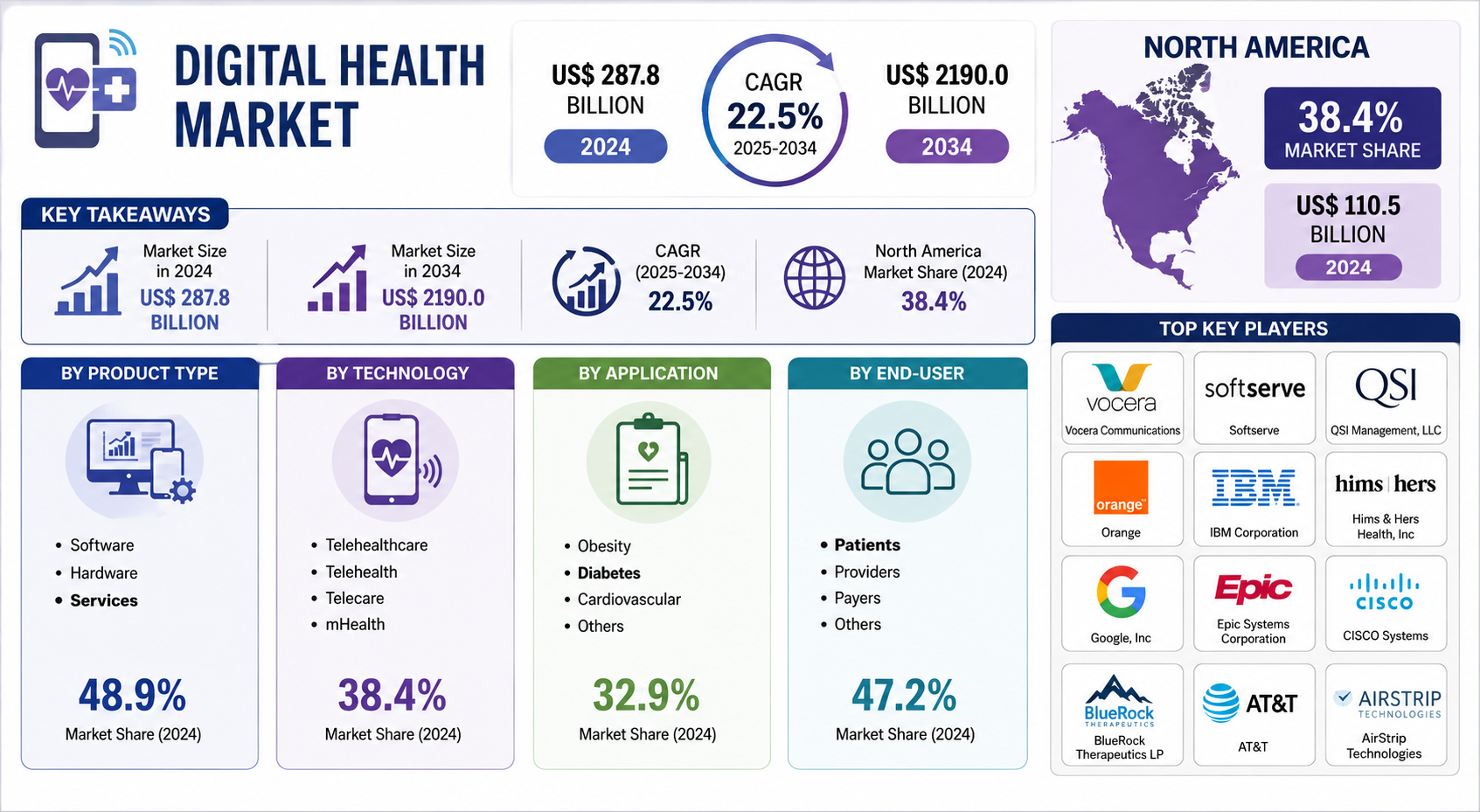
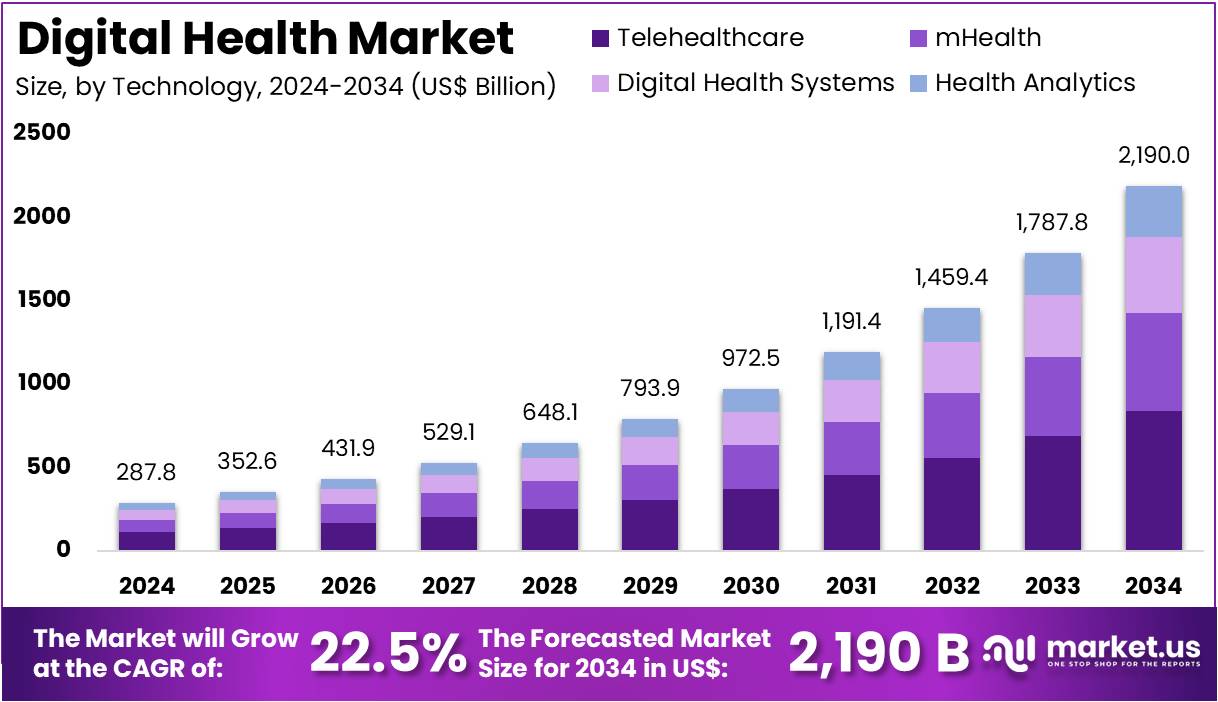
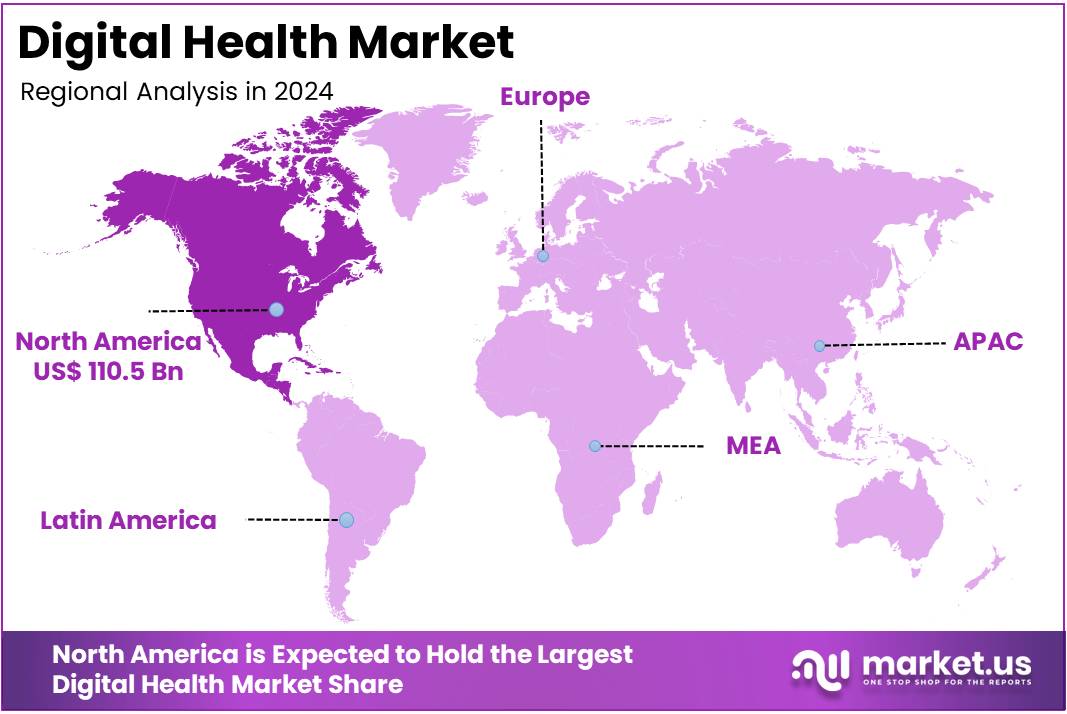
The Digital Health Market size is expected to be worth around US$ 2190.0 Billion by 2034 from US$ 287.8 Billion in 2024, growing at a CAGR of 22.5% during the forecast period 2025 to 2034. North America held a dominant market position, capturing more than a 38.4% share and holds US$ 110.5 Billion market value for the year.
Digital health is reshaping healthcare delivery by improving access, efficiency, and patient engagement through technologies such as telemedicine, electronic health records (EHRs), artificial intelligence, mobile health applications, and remote patient monitoring.
Governments and healthcare organizations are increasingly investing in digital infrastructure to address rising healthcare demand, workforce shortages, and the need for more coordinated care. The continued integration of connected devices and data-driven clinical decision-making is expected to accelerate innovation across hospitals, primary care, and home healthcare settings.
The World Health Organization (WHO) continues to strengthen global digital health adoption through its Global Strategy on Digital Health 2020–2027, which aims to support countries in building secure, interoperable, and people-centered digital health systems. In 2025, the World Health Assembly extended the strategy through 2027 and approved work toward a new strategy for 2028–2033.
According to WHO, 129 countries have established national digital health strategies, while more than 1,600 government officials from over 100 countries have received training in digital health and artificial intelligence, highlighting the growing international commitment to digital transformation in healthcare.
Furthermore, the Global Digital Health Certification Network is supporting secure health data exchange across 80 countries, benefiting approximately 1.8 billion people. These initiatives are expected to strengthen cross-border interoperability, improve healthcare accessibility, and enhance public health preparedness while encouraging innovation through trusted digital ecosystems.
Key Takeaways
- In 2024, the global digital health market was valued at US$ 287.8 billion and is projected to reach approximately US$ 2,190.0 billion by 2034, expanding at a CAGR of 22.5% during the forecast period.
- Based on product type, the market is segmented into software, hardware, and services. Among these, the services segment emerged as the leading category in 2024, accounting for 48.9% of the total market share.
- By technology, the market is categorized into telehealthcare, mHealth, digital health systems, and health analytics. The telehealthcare segment dominated the market in 2024, capturing a 38.4% revenue share owing to the growing adoption of remote healthcare services.
- In terms of application, the market is classified into obesity, diabetes, cardiovascular, and other applications. The diabetes segment held the largest share in 2024, contributing 32.9% of the overall market revenue, supported by the increasing prevalence of diabetes and the demand for digital disease management solutions.
- Based on end user, the digital health market is segmented into patients, providers, payers, and others. The patients segment led the market in 2024, representing 47.2% of the total revenue, driven by rising adoption of patient-centric digital health platforms and remote monitoring tools.
- Regionally, North America maintained its leadership in the global digital health market in 2024, accounting for 38.4% of the total market share, supported by advanced healthcare infrastructure, high digital technology adoption, and favorable regulatory initiatives.
Statistical Information
- According to the WHO Executive Board, more than 25,000 health workers, policymakers, and students from 175 countries have completed the OpenWHO online course on Ethics and Governance of Artificial Intelligence for Health, reflecting the rapid expansion of digital health and AI capacity building worldwide.
- The WHO Global Digital Health Monitor reports that 58 countries submitted digital health maturity data, with the global average reaching Phase 3 digital health maturity in 2023, indicating that many health systems have established core digital health governance and implementation capabilities.
- Across OECD countries, teleconsultations increased from 0.5 consultations per patient in 2019 to 1.3 consultations per patient in 2021, more than doubling digital healthcare utilization.
- By 2023, telemedicine use across OECD countries stabilized at 1.0 teleconsultation per patient, remaining twice the pre-pandemic level and indicating sustained consumer adoption.
- Israel recorded 2.8 teleconsultations per patient in 2023, the highest utilization rate among OECD countries.
- In 2024, the average availability of online digital health services reached 82% across OECD countries, increasing from 79% in 2023.
- According to the WHO European Region, 78% (40 of 51) Member States explicitly include telehealth in their national digital health or broader health strategies.
Market Segmentation Analysis
Product Type Analysis
The services segment dominated the digital health market in 2024, accounting for 48.9% of total revenue. Its leadership is driven by growing demand for telemedicine, remote patient monitoring, virtual consultations, and digital care management services. The U.S. Centers for Medicare & Medicaid Services (CMS) continues to support expanded access to telehealth, while the World Health Organization (WHO) recognizes digital health services as an essential tool for improving healthcare accessibility and continuity of care. These initiatives are expected to sustain strong demand for digital health services worldwide.
Technology Analysis
The telehealthcare segment held the largest technology share of 38.4% in 2024, supported by increasing adoption of remote healthcare delivery. According to the World Health Organization (WHO), digital technologies improve access to healthcare, particularly for underserved populations and chronic disease management.
The Office of the National Coordinator for Health Information Technology (ONC) also promotes interoperable digital health systems that enhance virtual care. Continued integration of telehealth with electronic health records and remote monitoring solutions is expected to strengthen this segment’s market position.
Application Analysis
The diabetes segment led the digital health market by application with a 32.9% revenue share in 2024. Rising diabetes prevalence has accelerated demand for digital glucose monitoring, connected insulin management, and remote disease management platforms. According to the Centers for Disease Control and Prevention (CDC), over 38 million Americans have diabetes, emphasizing the need for technology-enabled disease management.
Digital health tools improve patient engagement, enable continuous monitoring, and support personalized treatment decisions, reinforcing the segment’s long-term growth potential.
End-User Analysis
The patients segment accounted for the largest end-user share of 47.2% in 2024, reflecting increasing consumer adoption of mobile health applications, wearable devices, and virtual healthcare services. The World Health Organization (WHO) encourages people-centered digital health systems that empower individuals to actively manage their health.
Similarly, the U.S. Food and Drug Administration (FDA) continues to support innovation in digital health technologies through regulatory frameworks for software and connected medical devices. These developments are expected to drive continued patient adoption and market expansion.
Regional Analysis
North America dominated the global digital health market in 2024, accounting for 38.4% of total revenue. The region’s leadership is supported by advanced healthcare infrastructure, widespread adoption of telehealth, strong electronic health record (EHR) implementation, and favorable government initiatives.
The U.S. Centers for Medicare & Medicaid Services (CMS) and the Office of the National Coordinator for Health Information Technology (ONC) continue to promote digital healthcare delivery and interoperability, while the U.S. Food and Drug Administration (FDA) supports innovation through digital health regulatory frameworks.
Asia Pacific is expected to register the fastest growth during the forecast period due to expanding digital healthcare infrastructure and government-led digital transformation programs. Countries including Australia, Singapore, and India are accelerating electronic health record adoption and telehealth services.
India’s Ayushman Bharat Digital Mission (ABDM) is strengthening a nationwide digital health ecosystem through interoperable health records and digital health IDs, while the World Health Organization (WHO) continues to encourage countries to develop resilient, people-centered digital health systems that improve healthcare access and quality.
Business Opportunities
The digital health market offers substantial opportunities as governments and healthcare providers continue investing in connected, patient-centered healthcare systems. Demand is increasing for cloud-based electronic health records (EHRs), telehealth platforms, remote patient monitoring, AI-powered clinical decision support, cybersecurity solutions, and healthcare interoperability services.
According to the World Health Organization (WHO), digital technologies remain underutilized globally, creating significant opportunities for companies that can deliver secure, interoperable, and scalable health solutions.
In the United States, the Centers for Medicare & Medicaid Services (CMS) is accelerating digital healthcare modernization by expanding interoperability, enhancing patient access APIs, improving provider directories, and supporting trusted health data exchange. These initiatives create growth opportunities for software developers, cloud service providers, digital therapeutics companies, medical device manufacturers, and AI solution providers.
Growing adoption of value-based care, chronic disease management, and virtual care is also increasing demand for predictive analytics, digital pharmacy platforms, wearable health technologies, and personalized patient engagement solutions. Businesses that prioritize data privacy, interoperability, and regulatory compliance while developing innovative digital health ecosystems are expected to gain a strong competitive advantage as healthcare systems worldwide continue their digital transformation.
Emerging Trends
- AI-Driven Healthcare Workflows are Expanding: Healthcare providers are increasingly integrating artificial intelligence into clinical and administrative workflows. According to the OECD, analysis of 55.5 million online job postings (2018–2023) shows growing demand for digital and AI skills across healthcare occupations, reflecting increased adoption of AI-enabled healthcare technologies.
- Governments are Investing More in Digital Health Infrastructure: Digital infrastructure investment continues to accelerate globally. The WHO European Region reported that 73% of Member States allocated dedicated funding to strengthen digital health infrastructure during the COVID-19 period, while 86% have enacted laws giving patients access to their personal electronic health data.
- Secure Health Data Sharing is Becoming a Priority: Healthcare organizations are focusing on interoperability and secure data exchange. The WHO found that 98% of Member States responded to its regional digital health survey, with most prioritizing stronger governance frameworks to improve health data sharing, privacy protection, and AI readiness across healthcare systems.
- Demand for Digital Healthcare Skills is Rising: Healthcare employers increasingly seek professionals with expertise in electronic health records, telehealth, cybersecurity, and data analytics. According to the OECD, digital-related vacancies represented 2–6% of frontline healthcare job postings and 6–13% of non-clinical healthcare positions between 2018 and 2023.
- AI Governance is Emerging as a Healthcare Priority: Healthcare systems are strengthening governance before deploying AI solutions. The WHO notes that ethical health data governance is essential for developing reliable AI systems, while many countries are updating national frameworks to ensure secure, transparent, and trustworthy use of patient data.
Use Cases
- Electronic Health Records Improve Care Coordination: Electronic Health Records are enabling clinicians to access complete patient histories, reducing duplicate testing and improving treatment decisions. Governments across Europe continue expanding patient access to digital records, with 86% of WHO European Member States now legislating access to personal health information.
- Telehealth Supports Remote Chronic Disease Management: Telehealth platforms are increasingly used for follow-up visits, chronic disease monitoring, and specialist consultations. According to the OECD, digital health employers are showing increasing demand for telehealth expertise across the United States, Canada, and the United Kingdom as virtual care becomes routine.
- AI Assists Clinical Documentation and Decision Support: Healthcare providers are deploying AI to summarize medical records, improve documentation, and support clinical decisions. The OECD found that AI-related healthcare job demand reached 0.2%–0.3% of all healthcare vacancies in 2023, indicating steady growth in AI implementation.
- Cybersecurity Solutions Protect Digital Health Systems: As healthcare data becomes increasingly digital, organizations are investing in stronger cybersecurity and governance frameworks. The WHO highlights that improving health data governance supports secure interoperability, better data quality, and safer deployment of AI-enabled healthcare applications across health systems.
- Remote Monitoring Enhances Home-Based Patient Care: Connected health technologies are helping clinicians monitor patients outside hospitals, improving care for chronic illnesses and older adults. The OECD reports growing employer demand for Internet of Things (IoT), data analytics, and telehealth skills, reflecting wider adoption of connected healthcare solutions across developed health systems.
Recent Developments
- In June 2025, Hims & Hers Health, Inc. announced an agreement to acquire ZAVA, a leading European digital health platform, expanding operations into Germany, France, Ireland, and strengthening its UK presence to accelerate its international digital healthcare strategy.
- In May 2025, Hims & Hers Health, Inc. completed an US$870 million convertible senior notes offering. The company stated that the proceeds will support strategic acquisitions, technology investments, AI capabilities, and international expansion of its digital health platform.
- In March 2025, Google Cloud introduced new healthcare AI capabilities at HIMSS 2025, including Vertex AI Search for Healthcare and expanded partnerships with MEDITECH, Suki, Counterpart Health, and Freenome to improve clinical documentation and patient data retrieval.
- In March 2025, IBM showcased new watsonx-powered healthcare AI solutions at HIMSS 2025, focusing on generative AI, healthcare automation, interoperability, and secure digital transformation for hospitals and health systems.
Conclusion
The global digital health market is entering a phase of sustained expansion, driven by rapid advances in telehealth, artificial intelligence, electronic health records, remote patient monitoring, and connected healthcare technologies. Increasing government support, healthcare digitization initiatives, and investments in interoperable digital infrastructure are accelerating adoption across hospitals, clinics, and home care settings. The growing focus on patient-centered care, chronic disease management, and data-driven clinical decision-making is creating significant opportunities for technology providers and healthcare organizations.
As highlighted by the World Health Organization (WHO), continued progress in national digital health strategies, cross-border interoperability, and AI governance is strengthening the foundation for scalable, secure, and equitable healthcare systems worldwide. With ongoing innovation, supportive regulatory frameworks, and rising demand for accessible healthcare services, the digital health market is expected to remain one of the fastest-growing segments of the global healthcare industry over the coming decade.




















