


Overview
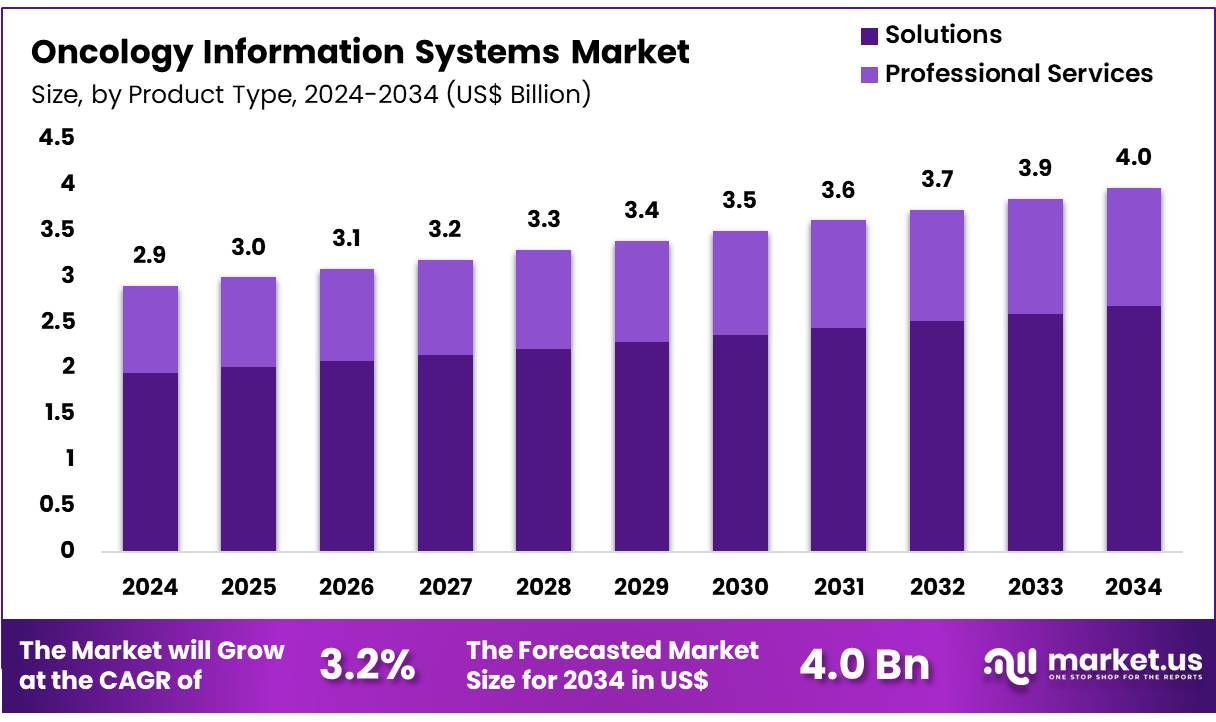
Global Oncology Information Systems Market size is expected to be worth around US$ 4.0 Billion by 2034 from US$ 2.9 Billion in 2024, growing at a CAGR of 3.2% during the forecast period 2025 to 2034. In 2024, North America led the market, achieving over 39.9% share with a revenue of US$ 1.2 Billion.
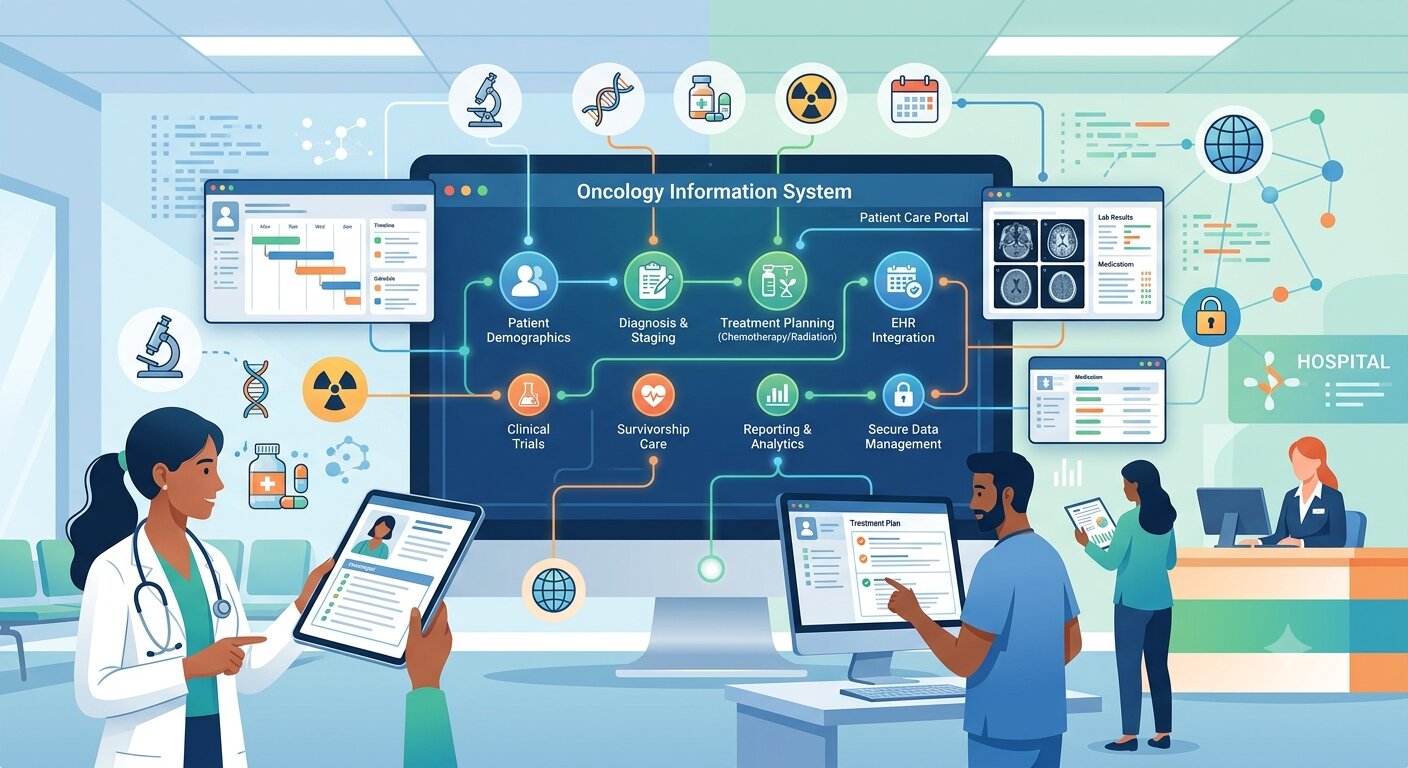
The rising global burden of cancer is increasing the demand for advanced digital solutions that help healthcare providers improve oncology care delivery, treatment coordination, and clinical decision-making. Oncology Information Systems (OIS) are becoming important tools for hospitals and cancer centers by enabling centralized management of patient information, treatment workflows, clinical documentation, and care planning. These platforms support healthcare professionals in improving operational efficiency, enhancing collaboration among oncology teams, and delivering more coordinated patient care.
Cancer remains a major global health challenge, with nearly 10 million people dying from cancer worldwide, highlighting the growing need for effective cancer management strategies and improved healthcare infrastructure. Healthcare organizations are increasingly focusing on digital transformation initiatives that strengthen data integration, support personalized treatment approaches, and improve access to quality oncology services.
Government healthcare agencies and research organizations continue to emphasize the importance of technology-driven cancer care. The integration of electronic health records, clinical decision-support tools, and advanced analytics within oncology workflows is helping providers manage complex treatment pathways more effectively.
The expansion of oncology services, increasing focus on precision medicine, and the need for streamlined cancer care coordination are encouraging healthcare institutions to adopt comprehensive information systems. As cancer treatment becomes more complex, oncology information platforms are expected to play a vital role in supporting healthcare professionals, improving workflow management, and advancing patient-centered cancer care.
Key Takeaways
- In 2024, the Oncology Information Systems Market generated US$ 2.9 billion in revenue and is projected to grow at a CAGR of 3.2%, reaching US$ 4.0 billion by 2034.
- Based on product type, the market is categorized into solutions and professional services. The solutions segment dominated in 2024, accounting for a 67.4% market share.
- By application, the Oncology Information Systems Market is segmented into medical oncology, surgical oncology, and radiation oncology. Among these, the medical oncology segment held the leading position in 2024, capturing a 42.1% share.
- Based on end users, the market is divided into hospitals & diagnostic imaging centers, research facilities, and others. The hospitals & diagnostic imaging centers segment emerged as the dominant segment, holding the largest share of 52.3% in 2024.
- Regionally, North America led the global Oncology Information Systems Market in 2024, accounting for a 39.9% market share.
Statistical Information
- The U.S. is expected to record 2,041,910 new cancer cases and 618,120 cancer deaths in 2025, highlighting the continued requirement for advanced oncology data management, treatment coordination, and clinical workflow solutions.
- The U.S. cancer incidence rate was 445.8 cases per 100,000 people annually, based on data from 2018–2022, demonstrating the ongoing need for technology-enabled cancer care infrastructure.
- As of 2024, more than 99% of U.S. non-federal acute care hospitals had adopted certified electronic health records (EHRs), creating a strong digital foundation for integrating specialized oncology information systems.
- The percentage of hospitals using the same EHR developer across inpatient and outpatient settings increased to over 90% in 2024, supporting smoother data exchange and coordinated patient management.
- In 2024, 91% of office-based physicians in the United States had adopted certified EHR systems, improving access to structured clinical information and supporting digital oncology workflows.
- The U.S. National Cancer Institute reported that the number of cancer survivors reached an estimated 18.1 million in January 2022 and is projected to increase to 26 million by 2040, increasing demand for long-term cancer monitoring and information management platforms.
- The World Health Organization’s Global Initiative on Digital Health reported that more than 70% of countries have a national digital health strategy, reflecting global momentum toward healthcare digital transformation and interoperable systems.
- WHO’s Global Initiative on Digital Health has expanded into a network supporting digital health transformation, with 90 institutional members as of June 2026, including governments, international organizations, academia, and private-sector partners.
- The WHO emphasizes that digital health adoption can strengthen interoperability, data sharing, and evidence-based decision-making, which are key requirements for oncology information platforms managing complex cancer pathways.
- The National Cancer Institute’s SEER program collects cancer incidence and survival information from population-based registries covering approximately 48% of the U.S. population, demonstrating the importance of large-scale cancer data infrastructure for research and healthcare planning.
- The Office of the National Coordinator for Health Information Technology (ONC) reported that the adoption of certified EHR systems increased from less than 10% of hospitals in 2008 to nearly universal adoption by 2024, showing rapid digitalization of hospital information management.
Regional Analysis
North America Leads the Oncology Information Systems Market
North America accounted for the largest share of the Oncology Information Systems Market, supported by the growing cancer burden, advanced healthcare infrastructure, and strong adoption of digital health technologies. Healthcare providers across the region are increasingly implementing integrated information systems to improve oncology workflows, manage complex patient data, and support coordinated cancer care.
The rising focus on electronic health records, precision medicine, and data-driven treatment planning continues to strengthen demand for oncology information platforms. The National Cancer Institute (NCI) highlights the continued impact of cancer in the United States, creating a strong need for advanced cancer management solutions.
Asia Pacific Shows Strong Growth Potential
Asia Pacific is expected to witness significant growth due to increasing cancer cases, healthcare modernization, and government-led digital transformation initiatives. Countries across the region are investing in digital healthcare infrastructure to improve patient management and treatment accessibility.
The World Health Organization’s Global Initiative on Digital Health supports countries in accelerating digital health transformation through improved infrastructure, collaboration, and technology adoption. These developments are expected to encourage wider adoption of oncology information systems across hospitals and cancer care facilities in the region.
Emerging Trends
- AI-Powered Oncology Decision Support Systems: Artificial intelligence is becoming an important trend in oncology information systems by helping clinicians analyze complex cancer data, identify patterns, and support treatment decisions. The FDA launched its Oncology AI Program in 2023 to advance AI applications in cancer drug development and regulatory science.
- Real-World Data Integration for Cancer Management: Oncology information systems are increasingly incorporating real-world data from electronic health records, registries, and patient-generated information. The FDA’s Oncology Real-World Evidence Program focuses on improving the use of real-world data for cancer research and regulatory decisions, supporting better treatment evaluation.
- Precision Oncology Data Platforms: The shift toward personalized cancer treatment is increasing demand for systems that combine genomic, clinical, and molecular information. The National Cancer Institute highlights AI approaches that integrate multiple patient data types, including pathology and molecular data, to improve cancer care decisions.
- Clinical Trial Data Management Solutions: Oncology information systems are being used to improve clinical trial efficiency through better patient identification, data collection, and outcome tracking. FDA initiatives such as QCARD focus on improving the quality and reliability of oncology real-world data studies to support faster evidence generation.
- AI-Based Data Extraction from Medical Records: Healthcare organizations are adopting advanced analytics and machine learning tools to convert unstructured oncology notes into usable clinical information. NCI programs are developing AI methods to improve EHR data completeness, extraction, and standardization for cancer research.
Use Cases
- Personalized Treatment Planning: Oncology information systems help physicians create individualized treatment plans by combining patient history, biomarkers, imaging information, and clinical outcomes. NCI research shows AI can integrate different cancer data sources to improve prediction models and support more informed treatment decisions.
- Cancer Registry and Population Health Management: These systems support cancer registries by organizing large-scale patient information for research and healthcare planning. NCI’s Real-World Data Program focuses on improving cancer data quality, interoperability, and reuse across healthcare ecosystems.
- Multidisciplinary Care Coordination: Oncology information platforms enable collaboration between medical oncologists, surgeons, radiologists, and researchers by providing centralized access to patient records. This improves communication, reduces information gaps, and supports coordinated decision-making throughout the cancer treatment journey.
- Drug Development and Regulatory Research: Oncology information systems support pharmaceutical research by providing structured clinical data for evaluating treatment effectiveness and safety. FDA programs use real-world evidence approaches to improve oncology product development and regulatory processes.
- Automated Clinical Data Analysis: Healthcare providers are using oncology information systems with analytics capabilities to evaluate treatment outcomes, patient responses, and disease patterns. AI-based methods are helping process large volumes of oncology information, including electronic records and clinical reports, for faster insights.
Frequently Asked Questions About Oncology Information Systems
- How do Oncology Information Systems support cancer treatment planning?
These systems assist physicians by organizing patient records, treatment protocols, scheduling information, and clinical data. By integrating different healthcare data sources, oncology platforms help specialists develop accurate treatment plans and monitor patient progress throughout the cancer care journey. - What technologies are used in Oncology Information Systems?
Modern Oncology Information Systems use technologies such as electronic health records, cloud computing, artificial intelligence, analytics, and data exchange standards. These technologies help healthcare organizations manage large volumes of cancer-related information and improve clinical decision-making processes. - How does artificial intelligence impact Oncology Information Systems?
Artificial intelligence enhances Oncology Information Systems by analyzing medical data, supporting clinical decisions, and identifying patterns within patient records. AI-based solutions are being explored by organizations such as the National Cancer Institute to improve cancer research, data management, and healthcare outcomes. - How do Oncology Information Systems support clinical research?
Oncology Information Systems help researchers collect, organize, and analyze cancer-related data from clinical workflows. These platforms support real-world evidence generation, clinical investigations, and research activities by improving access to structured healthcare information. - What is the role of electronic health records in Oncology Information Systems?
Electronic health records provide essential patient information that can be integrated with oncology platforms. They support treatment planning, clinical documentation, research activities, and communication between healthcare providers managing complex cancer cases. - What factors are driving the Oncology Information Systems Market?
The Oncology Information Systems Market is driven by increasing cancer care complexity, rising adoption of digital healthcare solutions, demand for integrated patient data management, and the need for efficient oncology workflows across hospitals and research organizations. - What is the future outlook for Oncology Information Systems?
The future of Oncology Information Systems will focus on advanced analytics, artificial intelligence, interoperability, and personalized cancer care. These developments are expected to improve data accessibility, research capabilities, treatment coordination, and overall efficiency in oncology healthcare delivery.
Conclusion
The Oncology Information Systems Market is expected to witness steady growth as healthcare organizations increasingly adopt digital solutions to improve cancer care management, data integration, and clinical decision-making. Rising cancer prevalence, growing adoption of electronic health records, and advancements in artificial intelligence and precision medicine are driving demand for advanced oncology platforms.
These systems are becoming essential for improving workflow efficiency, supporting multidisciplinary collaboration, and enabling personalized treatment strategies. With continued investments in healthcare digital transformation and data-driven oncology solutions, Oncology Information Systems are expected to play a critical role in enhancing patient outcomes and strengthening cancer care infrastructure worldwide.




















