


Overview
The Global Mobile Imaging Services Market Size is expected to be worth around US$ 30 Billion by 2034, from US$ 18.1 Billion in 2024, growing at a CAGR of 5.2% during the forecast period from 2025 to 2034.
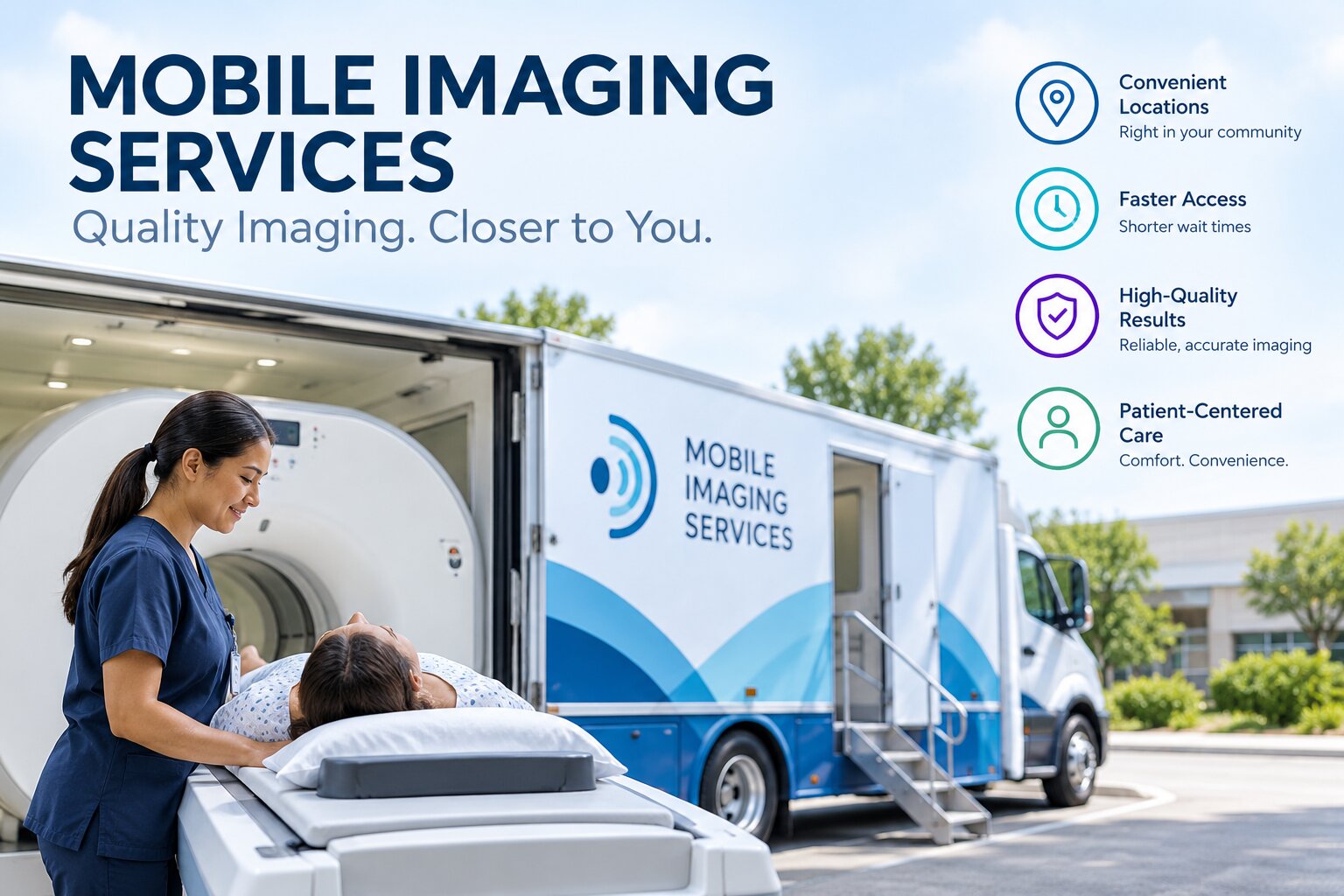
The growing need to extend diagnostic capabilities beyond conventional hospitals is supporting greater adoption of mobile imaging services. These services use portable or vehicle-based imaging equipment to bring diagnostic examinations closer to patients in rural communities, outpatient settings, long-term care facilities, emergency locations, and other underserved areas. The World Health Organization recognizes mobile radiographic units as suitable for outreach programs, mobile clinics, home care, screening campaigns, emergency settings, and teleradiology applications in remote areas.
Access challenges remain an important factor behind this model. The U.S. Health Resources and Services Administration reported 5,521 rural primary medical Health Professional Shortage Area designations as of June 30, 2026, highlighting continuing healthcare-access gaps across rural communities. The CDC also identifies limited healthcare access and inadequate infrastructure as persistent challenges for rural populations.
Mobile imaging can support X-ray, ultrasound, mammography, CT, and other diagnostic workflows depending on equipment configuration and regulatory requirements. Advances in battery-powered systems, digital image capture, wireless connectivity, and remote interpretation are improving operational flexibility. WHO has specifically highlighted teleradiology as a means of enabling imaging services at lower-level facilities that lack specialist interpretation capabilities.
Regulatory compliance and radiation protection remain essential. The U.S. FDA emphasizes minimizing unnecessary radiation exposure while ensuring clinically appropriate imaging, with mobile and portable X-ray systems subject to applicable performance and safety requirements.

Key Takeaways
- In 2024, the Mobile Imaging Services Market generated US$ 18.1 billion and is projected to reach US$ 30.0 billion by 2033, growing at a 5.2% CAGR.
- By product type, X-ray dominated the Mobile Imaging Services Market in 2023, accounting for a 38.5% market share.
- By application, Orthopedics held the leading position, capturing a significant 35.6% share of the Mobile Imaging Services Market.
- Among end-users, Diagnostic imaging centers dominated the market, accounting for the largest revenue share of 41.7%.
- Regionally, North America led the Mobile Imaging Services Market in 2024, securing a 39.3% market share.
Statistical Information
- 15.2% of U.S. adults aged 45 and older living in nonmetropolitan areas had experienced heart disease in 2024, compared with 9.8% in large central metropolitan areas, highlighting the diagnostic needs of rural populations.
- 18.3% of U.S. adults aged 45 and older in nonmetropolitan areas had ever been diagnosed with cancer in 2024, compared with 14.8% in large central metropolitan areas, supporting demand for accessible diagnostic imaging.
- 10.2% of rural Medicare beneficiaries used telehealth in Q1 2025, compared with 13.9% of urban beneficiaries. This demonstrates continued adoption of remote-care infrastructure that can complement mobile imaging and remote diagnostic interpretation.
- CMS data show that rural Medicare telehealth utilization increased from 5.5% in Q1 2020 to 10.2% in Q1 2025, indicating sustained use of connected healthcare services beyond the pandemic period.
- FDA requirements specify that mobile or portable non-dental X-ray systems must maintain a source-to-skin distance of at least 30 cm, demonstrating the importance of radiation-safety compliance for mobile imaging providers.
- GE HealthCare reports that its mobile X-ray AI system can detect 96% of large pneumothoraces and 75% of small pneumothoraces, while providing 94% specificity, demonstrating the growing role of AI-assisted mobile imaging.
- GE HealthCare’s AMX Navigate uses AI-based quality checks designed to improve image quality and workflow efficiency across 85% of mobile X-ray exams, creating opportunities for automated quality-control capabilities.
- Philips’ Lumify handheld ultrasound can operate for up to 7.5 hours and supports real-time collaboration with off-site colleagues, demonstrating how portable ultrasound can combine point-of-care imaging with remote clinical expertise.
Market Segmentation Analysis
Product Type Analysis
The X-ray segment dominated the Mobile Imaging Services Market, accounting for a 38.5% market share. Its leading position is supported by extensive use in diagnosing fractures, respiratory conditions, infections, and structural abnormalities.
The portability of modern X-ray systems allows healthcare providers to deliver imaging services in emergency departments, remote communities, nursing facilities, and other locations where conventional equipment may be unavailable. Growing demand for rapid, non-invasive diagnostic procedures is further supporting segment expansion.
Technological advancements in digital X-ray systems are improving image quality, workflow efficiency, and connectivity while helping reduce radiation exposure. These benefits are encouraging healthcare facilities to adopt portable imaging solutions for faster diagnosis and more flexible patient care across diverse clinical environments.
Application Analysis
The orthopedics segment held a significant 35.6% market share in the Mobile Imaging Services Market. Its strong position is associated with the increasing need for diagnostic imaging to identify fractures, arthritis, dislocations, and other musculoskeletal disorders.
Mobile imaging technologies, particularly portable X-ray and ultrasound systems, enable healthcare professionals to conduct rapid assessments in hospitals, clinics, rehabilitation facilities, and other care settings. Growing elderly populations are contributing to demand as age-related bone and joint conditions become more prevalent.
Meanwhile, participation in sports and physical activities continues to increase the need for orthopedic evaluations. Mobile imaging also provides valuable support during orthopedic procedures and post-operative monitoring, offering greater convenience, faster assessments, and improved accessibility for patients requiring frequent diagnostic examinations.
End-User Analysis
The diagnostic imaging centers segment represented the largest end-user category, holding a 41.7% revenue share in the Mobile Imaging Services Market. Growth is being supported by increasing demand for diagnostic procedures in outpatient and specialized healthcare environments. These centers commonly provide X-ray, ultrasound, CT, and other imaging examinations, while mobile solutions can expand their ability to serve patients across different locations.
Mobile imaging equipment offers greater flexibility and can help address accessibility challenges for individuals who have difficulty traveling to conventional healthcare facilities. The continued shift toward outpatient care is creating additional opportunities for mobile imaging services. Furthermore, improvements in equipment portability, image quality, digital connectivity, and workflow efficiency are enabling diagnostic centers to deliver timely imaging services while optimizing operational flexibility.
Regional Analysis
North America accounted for 39.3% of the Mobile Imaging Services Market in 2024, supported by demand for accessible diagnostic services and the growing use of portable imaging technologies. The WHO notes that portable digital radiography systems are particularly useful for outreach, emergency, home-care, and remote-area applications, helping extend imaging beyond conventional facilities.
Increasing adoption of digital and portable imaging, alongside demand for timely diagnosis, is expected to sustain regional growth. Mobile services can also support elderly and mobility-limited patients by bringing diagnostic capabilities closer to care locations.
Asia Pacific is expected to register the highest CAGR during the forecast period, driven by improving diagnostic access and expanding healthcare infrastructure. WHO reports that limited access to imaging and shortages of trained specialists remain challenges in many settings, while teleradiology can connect lower-level facilities with imaging interpretation services.
Recent initiatives further demonstrate regional adoption: WHO reported that the Philippines plans to screen 12 million people by 2026, using AI-powered portable X-ray units closer to communities. These developments, combined with portable ultrasound, X-ray, and remote interpretation, are expected to create opportunities for mobile imaging services across underserved and rural areas.
Business Opportunities
The Mobile Imaging Services Market presents significant business opportunities as healthcare providers seek flexible diagnostic solutions for hospitals, outpatient centers, long-term care facilities, rural communities, and home-based care. WHO identifies portable digital radiography as particularly useful when diagnostic or screening activities are located far from established health facilities, creating opportunities for specialized mobile imaging operators and equipment providers.
A major opportunity lies in mobile X-ray and ultrasound services, supported by demand for rapid imaging and portable equipment. Companies can develop subscription, pay-per-scan, or contract-based models for hospitals, diagnostic centers, and nursing facilities. Teleradiology integration also offers strong potential by enabling remote interpretation and extending specialist expertise to facilities with limited radiology resources. WHO specifically recognizes teleradiology as a mechanism for expanding access to diagnostic imaging.
Additional opportunities exist in AI-assisted image analysis, cloud-based image management, equipment leasing, preventive maintenance, and rural outreach programs. Government investment in rural healthcare and telehealth can further support partnerships with mobile imaging providers. Providers must also prioritize radiation safety and regulatory compliance, particularly for mobile X-ray systems.
Emerging Trends
- Portable MRI is moving beyond fixed imaging departments. The FDA cleared Hyperfine’s Swoop Portable MR Imaging System in 2025, showing continued development of lower-mobility-barrier MRI solutions. This trend can support bedside neurological imaging and diagnostic services where conventional MRI infrastructure is difficult to provide.
- AI-assisted imaging is becoming part of mobile equipment. GE HealthCare’s Critical Care Suite includes AI for automated measurements, case prioritization, and quality control. Its endotracheal-tube positioning application addresses a clinical problem where up to 25% of non-operating-room intubations can involve misplaced tubes.
- Handheld ultrasound is becoming more connected and easier to deploy. WHO highlights portable ultrasound for bedside care, while newer systems can transmit examinations to remote specialists. This creates a trend toward compact imaging devices that combine scanning, communication, and clinical decision support in one workflow.
- Remote-supervised imaging is developing into a practical service model. Recent research describes teleultrasound systems that allow specialists to guide examinations remotely, including through low-bandwidth connections. This can reduce the need for an imaging expert to physically travel with every mobile diagnostic service.
- Imaging is increasingly being integrated into wider point-of-care services. Philips describes a breast-care model combining consultation, ultrasound, biopsy, day surgery, and diagnosis in one center. This signals a shift from mobile imaging as a standalone service toward integrated diagnostic and treatment pathways.
Use Cases
- Rural emergency assessment: Portable ultrasound can provide immediate bedside information in emergency departments and rural clinics. WHO reports its use in Samoa for real-time assessment where formal radiology access is limited, helping clinicians make faster decisions without waiting for conventional imaging services.
- Maternal care in underserved communities: Handheld ultrasound can support pregnancy assessment outside major hospitals. Philips reports AI-enabled Lumify technology designed to help frontline workers identify important antenatal parameters, with the goal of improving referral decisions for higher-risk pregnancies.
- Interventional pain procedures: Mobile or compact imaging can support procedures requiring real-time visualization. The VA’s 2025 Brockton facility added a C-arm system and ultrasound for pain interventions, allowing clinicians to obtain detailed images during procedures and improve positioning without repeatedly repositioning patients.
- Remote specialist consultation: Teleultrasound can connect clinicians performing scans with specialists located elsewhere. Real-time image streaming allows remote experts to provide acquisition guidance and interpretation, making the model useful for communities, prehospital environments, and locations without on-site imaging specialists.
- Point-of-care breast assessment: Portable ultrasound can be incorporated directly into breast-care workflows. Philips describes its use within a one-stop model combining consultation, imaging, biopsy, surgery, and diagnosis, allowing clinicians to evaluate patients without moving them between multiple diagnostic locations.
Recent Developments
- In April 2026, Canon Medical Systems began marketing its photon-counting CT system in Europe after the system, initially launched in Japan in April 2026, received European certification. Canon said the technology incorporates proprietary photon-counting technology and is being expanded internationally.
- In March 2026, GE HealthCare completed its US$ 2.3 billion acquisition of Intelerad, adding cloud-enabled medical imaging software to its portfolio. The acquisition is intended to expand enterprise imaging across hospitals, outpatient and ambulatory settings, and remote-reading environments.
- In December 2025, Jefferson Health launched its second Mobile Stroke Unit in the Philadelphia region, equipped with a CT scanner and supported by telestroke specialists and remote radiologists. The unit’s field team includes a CT technologist, critical-care nurse, paramedic, and emergency medical technician.
- In November 2025, Carestream introduced enhancements to its DRX-Revolution Mobile X-ray System, including intelligent technologist alerts, inching-drive controls, Align Assist for tube-detector positioning, and Smart Noise Cancellation for clearer images.
- In October 2025, Philips announced the installation of its 5,000th Zenition mobile C-arm system, marking a major milestone for its mobile surgical and interventional imaging portfolio. Philips said the milestone reflected continued global deployment of Zenition systems for surgical and image-guided procedures.
- In June 2025, DispatchHealth completed its merger with Medically Home, with the transaction closing in late May 2025. The combined company created a broader platform for complex care at home, strengthening the infrastructure for delivering hospital-level services outside traditional facilities. Financial terms were not disclosed.
- In May 2025, Siemens Healthineers announced a US$ 150 million investment in new and expanded U.S. facilities, focused on increasing production, creating jobs, and strengthening customer support. The investment covered multiple healthcare technologies and was directed toward the company’s largest global market, the United States.
Conclusion
The Mobile Imaging Services Market is evolving as healthcare systems increasingly seek flexible, accessible, and technology-enabled diagnostic solutions. Portable X-ray, ultrasound, CT, MRI, and digitally connected imaging platforms are expanding diagnostic capabilities across hospitals, diagnostic centers, rural communities, emergency settings, and homecare environments.
Growing healthcare-access challenges, demand for faster diagnosis, teleradiology adoption, AI integration, and advances in portable equipment are creating new opportunities for service providers and technology companies.
North America currently represents a major regional market, while Asia Pacific offers strong future growth potential. Continued investment in connected imaging, regulatory compliance, remote interpretation, and patient-centered care is expected to strengthen the market’s long-term development.




















