


Overview
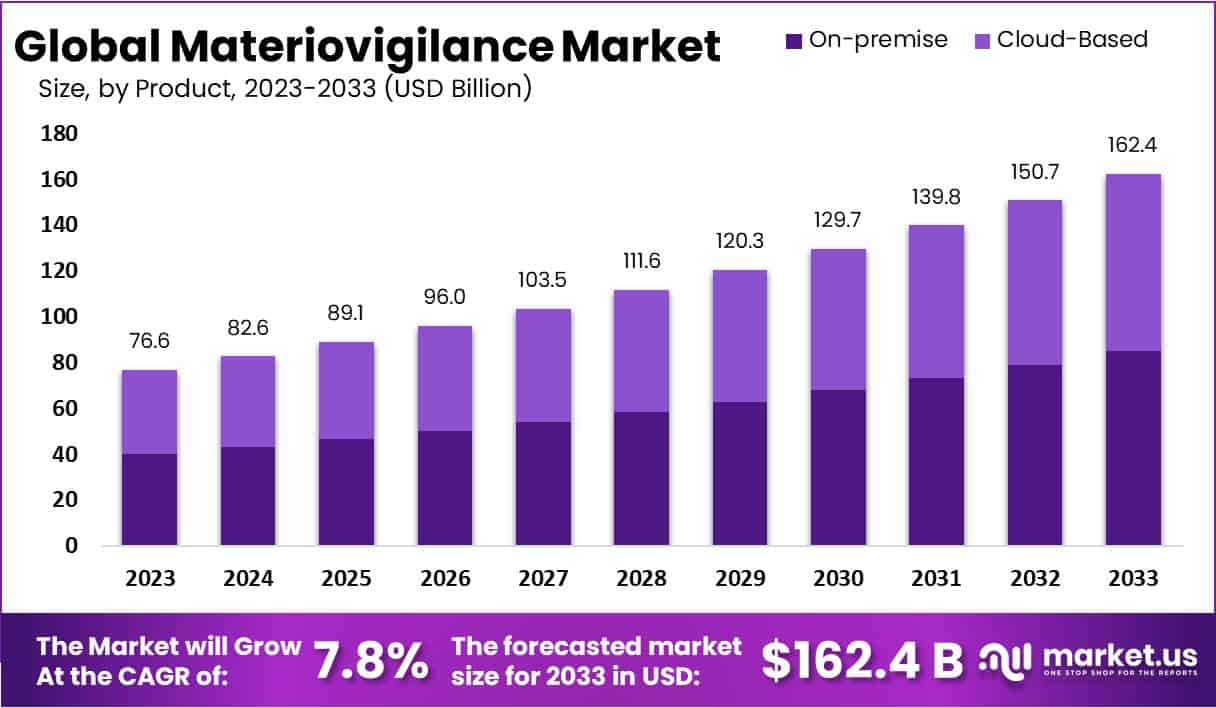
The Global Materiovigilance Market size is expected to be worth around US$ 162.4 Billion by 2033, from US$ 76.6 Billion in 2023, growing at a CAGR of 7.8% during the forecast period from 2024 to 2033.
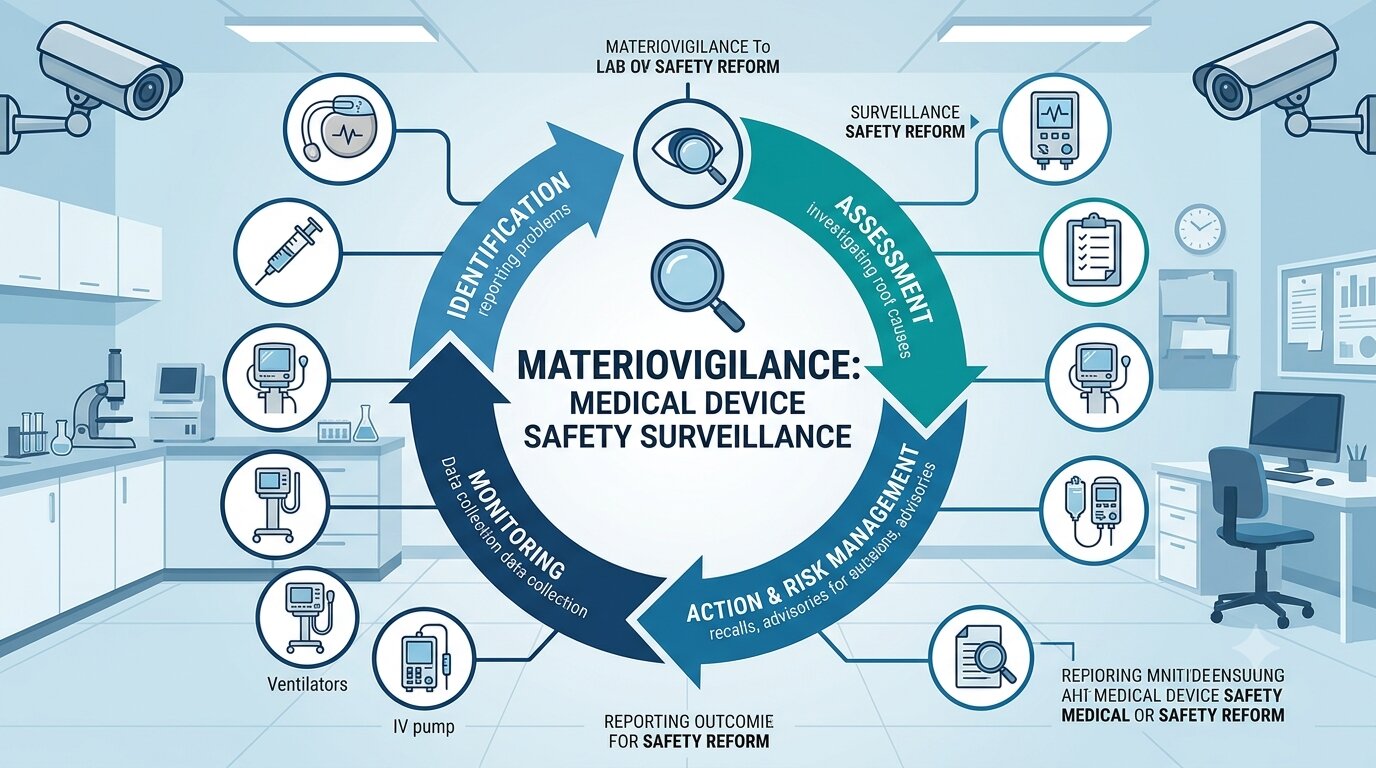
The global materiovigilance market is experiencing steady growth as healthcare systems place greater emphasis on monitoring the safety, quality, and performance of medical devices throughout their lifecycle. Materiovigilance involves the collection, assessment, and reporting of adverse events associated with medical devices, helping manufacturers, healthcare providers, and regulators identify risks early and improve patient safety.
The increasing use of implantable devices, diagnostic equipment, and digital health technologies has strengthened the need for robust post-market surveillance systems across hospitals and healthcare facilities. Governments and regulatory authorities are also expanding reporting frameworks and encouraging healthcare professionals to promptly report device-related incidents, creating a more transparent safety ecosystem.
Healthcare organizations are increasingly adopting digital reporting platforms, automated safety monitoring tools, and standardized vigilance practices to strengthen regulatory compliance and improve patient safety.
According to the U.S. Food and Drug Administration (FDA), it receives more than 2 million medical device reports each year covering suspected device-related deaths, serious injuries, and malfunctions through its Medical Device Reporting (MDR) program. These reports support early detection of safety signals, product evaluations, and regulatory actions.
In addition, the World Health Organization (WHO) promotes global medical device incident reporting to improve surveillance, facilitate timely corrective actions, and strengthen patient safety across healthcare systems.
Key Takeaways
- The Materiovigilance Market is projected to grow at a CAGR of 7.8%, increasing from US$ 76.6 billion in 2023 to approximately US$ 162.4 billion by 2033.
- In 2023, the on-premise delivery mode accounted for the largest market share of 52.3%, supported by its strong data security, reliability, and greater control over system management.
- The diagnostic application segment led the market in 2023 with a 32.6% share, reflecting the growing focus on monitoring the safety and performance of diagnostic medical devices and materials.
- Among end users, Original Equipment Manufacturers (OEMs) held the dominant position in 2023, capturing 46.8% of the market due to their critical role in device quality monitoring and post-market compliance.
- North America emerged as the leading regional market in 2023, accounting for 46.2% of the global market and generating approximately US$ 35.3 billion in revenue.
Statistical Information
- The U.S. FDA receives more than 2 million Medical Device Reports (MDRs) every year involving suspected deaths, serious injuries, and device malfunctions, highlighting the scale of post-market medical device surveillance.
- The FDA’s MAUDE database contains medical device reports dating back to 1991 for user facilities, providing one of the world’s longest-running repositories for device safety monitoring.
- Voluntary medical device adverse event reports have been collected since June 1993, expanding the participation of healthcare professionals, patients, and consumers in materiovigilance activities.
- Mandatory manufacturer reports have been recorded since August 1996, strengthening regulatory oversight of medical device performance after commercialization.
- The FDA’s public medical device recall database includes all classified recalls from November 1, 2002, onward, allowing long-term monitoring of product safety trends.
- Since January 2017, the FDA has included certain manufacturer-initiated correction and removal actions in its recall database before formal recall classification, improving transparency in post-market surveillance.
- The FDA’s openFDA Medical Device Recall API covers records from 2002 through 2026 and is updated every week, enabling near real-time monitoring of safety actions.
- The FDA’s legacy Device Experience Network (DEN) preserves medical device reports submitted between 1984 and 1996, providing historical safety data spanning more than four decades.
Regional Analysis
In 2023, North America accounted for the largest share of the global Materiovigilance Market, representing 46.2% of total revenue and reaching a market value of US$ 35.3 billion. The region’s leadership is supported by its mature healthcare infrastructure, widespread adoption of advanced medical technologies, and comprehensive regulatory oversight for medical devices.
The United States plays a central role in regional growth through the U.S. Food and Drug Administration (FDA), which enforces strict post-market surveillance requirements, including Medical Device Reporting (MDR), device tracking, recalls, and post-market studies to continuously monitor the safety and performance of medical devices. These regulatory measures encourage healthcare providers and manufacturers to strengthen materiovigilance practices.
Additionally, the World Health Organization (WHO) emphasizes that effective post-market surveillance systems are essential for ensuring the continued safety, quality, and performance of medical devices after commercialization.
North America’s strong collaboration among regulators, manufacturers, hospitals, and research institutions enables faster adverse event reporting, timely corrective actions, and continuous product improvements. Ongoing investments in digital health, real-world evidence, and surveillance technologies are expected to reinforce the region’s leadership in the global materiovigilance market.
Emerging Trends
- Unique Device Identification (UDI) is strengthening traceability. The FDA’s openFDA UDI database covers records from 2013 to 2026 and is updated weekly, enabling manufacturers and healthcare providers to identify affected devices faster during safety investigations and recalls, improving post-market surveillance efficiency.
- Medical device identification databases are expanding rapidly. The FDA updates AccessGUDID daily, giving healthcare providers and manufacturers immediate access to standardized device identification information. This supports faster incident reporting, improved inventory management, and better traceability throughout the device lifecycle.
- Europe is accelerating digital vigilance systems. Since 28 May 2026, four EUDAMED modules Actor Registration, UDI/Device Registration, Notified Bodies & Certificates, and Market Surveillance have become mandatory, improving transparency and coordination for medical device monitoring across EU Member States.
- Electronic health records are becoming part of materiovigilance. In 2026, the U.S. CMS proposed incorporating Unique Device Identifiers (UDI) into certified electronic health records, allowing hospitals to better track implantable devices and generate stronger real-world safety evidence.
- Manufacturers are increasingly using centralized device databases. FDA’s GUDID Data Trends are published multiple times each year, helping manufacturers monitor submission quality, device classifications, and compliance trends while improving regulatory reporting and post-market surveillance practices.
Use Cases
- Hospitals use UDI systems for implant tracking. The FDA requires device labelers to submit UDI information into GUDID, enabling hospitals to identify implanted devices accurately, improve recall management, and reduce delays when safety concerns arise.
- Manufacturers monitor product performance after commercialization. The FDA maintains a 522 Postmarket Surveillance Studies database that is updated weekly, allowing companies to evaluate long-term device safety and collect evidence for regulatory compliance and product improvements.
- Regulators improve recall coordination through digital surveillance. EUDAMED combines six integrated modules, including vigilance and post-market surveillance, enabling European regulators to exchange safety information quickly and coordinate corrective actions across multiple countries.
- Healthcare providers improve patient safety using searchable device records. AccessGUDID allows users to search devices by company, device identifier, product name, and safety attributes, helping clinicians verify device information before clinical use and during adverse event investigations.
- Medical device companies automate regulatory submissions. FDA allows manufacturers to submit GUDID records individually through a web portal or in bulk using HL7 Structured Product Labeling (SPL), reducing manual workload and improving the accuracy of regulatory data management.
Frequently Asked Questions About Materiovigilance
- Why is materiovigilance important in healthcare?
Materiovigilance is essential because medical devices are used in diagnosis, treatment, surgery, and patient monitoring throughout healthcare systems. Continuous surveillance helps detect unexpected device failures, reduces patient risks, supports timely recalls when needed, and provides evidence that improves future product quality and regulatory decision-making. - What factors are driving the growth of the Materiovigilance Market?
The market is growing due to increasing use of sophisticated medical devices, stricter regulatory requirements, greater awareness of patient safety, and wider adoption of digital reporting systems. Healthcare organizations are investing more in post-market surveillance solutions to improve compliance, risk management, and device lifecycle monitoring. - Who participates in materiovigilance activities?
Materiovigilance involves collaboration among medical device manufacturers, hospitals, healthcare professionals, regulatory authorities, distributors, and patients. Manufacturers investigate reported incidents, healthcare providers report adverse events, and regulators evaluate safety data to determine whether corrective actions or recalls are necessary. - How does materiovigilance improve patient safety?
Materiovigilance improves patient safety by identifying device-related risks after commercialization, allowing organizations to implement corrective actions before problems become widespread. Continuous monitoring also supports product improvements, enhances clinical confidence, and reduces the likelihood of repeated safety incidents affecting future patients. - What technologies are supporting the Materiovigilance Market?
The market increasingly relies on digital adverse event reporting systems, Unique Device Identification (UDI), electronic health records, artificial intelligence, and centralized regulatory databases. These technologies improve traceability, accelerate incident investigations, and enable regulators and manufacturers to analyze safety trends more efficiently. - Which industries benefit from materiovigilance solutions?
Materiovigilance solutions benefit medical device manufacturers, hospitals, ambulatory surgical centers, diagnostic laboratories, research organizations, and regulatory agencies. These stakeholders use surveillance systems to ensure regulatory compliance, monitor product performance, improve quality management, and strengthen patient safety throughout the device lifecycle. - What is the future outlook for the Materiovigilance Market?
The market is expected to expand as healthcare systems emphasize proactive risk management, digital health integration, and stronger global regulatory cooperation. Increasing adoption of connected medical devices and real-world evidence collection will further strengthen post-market surveillance and support continuous improvements in device safety and performance.
Conclusion
The global materiovigilance market is set for sustained growth as healthcare providers, manufacturers, and regulators prioritize medical device safety throughout the product lifecycle. Rising adoption of advanced medical technologies, stronger post-market surveillance requirements, and digital reporting platforms are improving the detection and management of device-related risks.
Regulatory initiatives led by organizations such as the U.S. FDA and WHO continue to strengthen vigilance frameworks, encouraging timely adverse event reporting and corrective actions. Emerging technologies including Unique Device Identification (UDI), electronic health records, and centralized surveillance databases are expected to further enhance traceability, regulatory compliance, patient safety, and overall healthcare quality worldwide.




















