


Market Overview
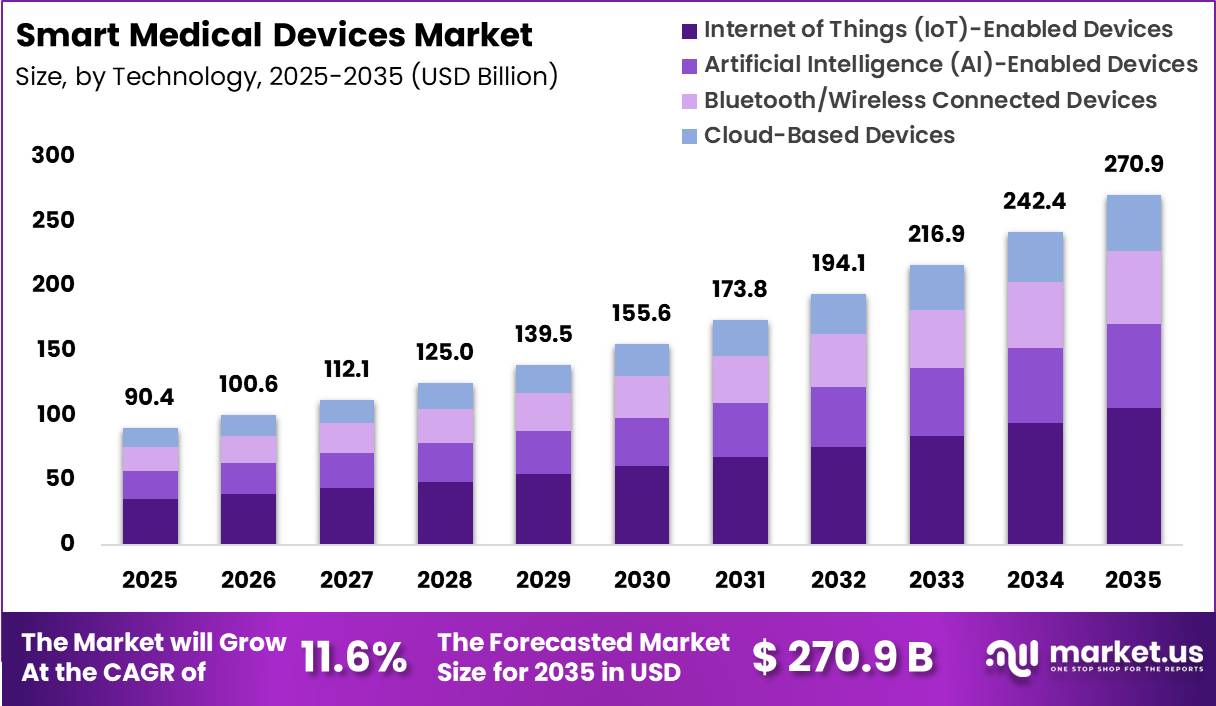
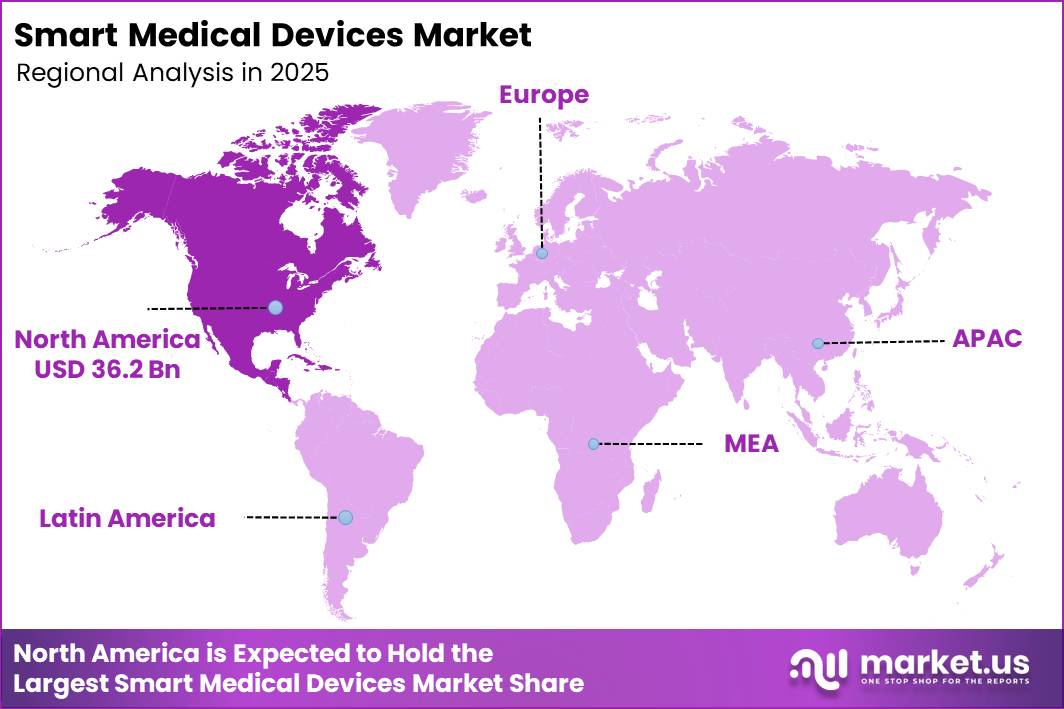
Global Smart Medical Devices Market size is expected to be worth around US$ 270.9 Billion by 2035 from US$ 90.4 Billion in 2025, growing at a CAGR of 11.6% during the forecast period from 2026 to 2035. In 2025, North America led the market, achieving over 40% share with a revenue of US$ 36.2 Billion.
Smart medical devices are transforming healthcare delivery by enabling continuous monitoring, early diagnosis, and improved management of chronic diseases. According to the World Health Organization (WHO), noncommunicable diseases account for approximately 43 million deaths annually, representing nearly 75% of global deaths, highlighting the growing demand for connected monitoring technologies and personalized healthcare solutions.
Rising cases of cardiovascular disorders, diabetes, and respiratory illnesses continue to accelerate the adoption of wearable sensors, remote monitoring systems, and smart therapeutic devices.
Healthcare digitalization initiatives are also supporting market expansion. The U.S. Centers for Disease Control and Prevention (CDC) estimates that more than 38 million Americans are living with diabetes, increasing the need for advanced glucose monitoring and connected care platforms.
Additionally, the International Telecommunication Union (ITU) reports that global internet penetration surpassed 68% in 2025, strengthening the infrastructure required for telehealth and device connectivity.
Technological advancements in artificial intelligence, cloud computing, and wireless communication are enhancing device capabilities, allowing real-time patient data transmission and predictive analytics. Government-backed investments in digital health ecosystems, combined with increasing healthcare expenditure worldwide, are fostering innovation in smart medical technologies.
Furthermore, aging populations and the preference for home-based care solutions are creating substantial opportunities for manufacturers to develop next-generation medical devices that improve patient outcomes, reduce hospital admissions, and enhance overall healthcare efficiency.
Key Takeaway
- Market Size: Smart Medical Devices Market size is expected to be worth around US$ 270.9 Billion by 2035 from US$ 90.4 Billion in 2025.
- Market Share: The Market is growing at a CAGR of 11.6% during the forecast period from 2026 to 2035.
- Product Type Analysis: Diagnostic & Monitoring Devices dominated the Smart Medical Devices Market in 2025, accounting for 42% of the total market share.
- Technology Analysis: Internet of Things (IoT)-Enabled Devices led the Smart Medical Devices Market in 2025, holding a 39% market share.
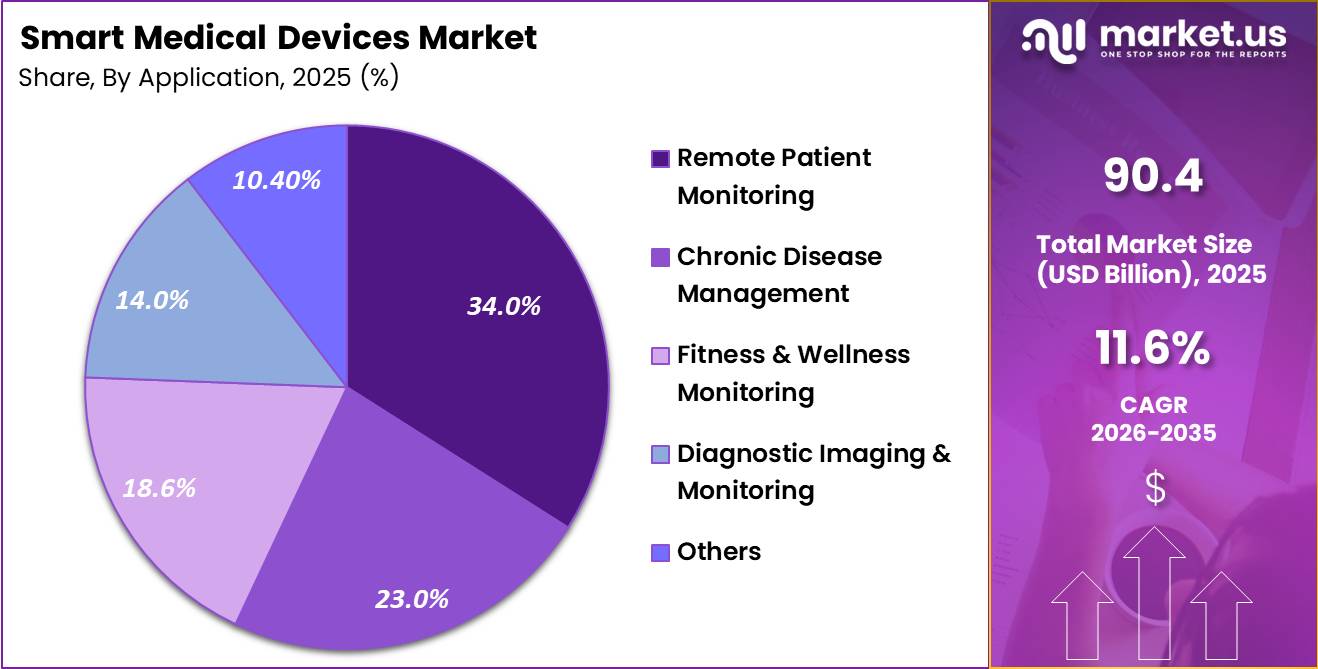
- Application Analysis: Remote Patient Monitoring emerged as the leading application segment in the Smart Medical Devices Market accounting for 34% of the market share in 2025.
- End User Analysis: Hospitals & Clinics dominated the Smart Medical Devices Market in 2025, capturing 46% of the overall market share.
- Connectivity Analysis: Wireless Devices held the largest share of the Smart Medical Devices Market accounting for 74% of total revenue in 2025.
- Regional Analysis: In 2025, North America led the market, achieving over 40% share with a revenue of US$ 36.2 Billion.
Product Type Analysis
Diagnostic & Monitoring Devices dominated the Smart Medical Devices Market in 2025, accounting for 42% of the total market share. The segment’s leadership is driven by growing demand for continuous health monitoring, early disease detection, and real-time patient data collection.
Smart glucose monitors, cardiac monitoring systems, blood pressure devices, and digital diagnostic tools are increasingly being adopted by healthcare providers and patients. The rising burden of chronic diseases and the expansion of telehealth services further support segment growth.
Therapeutic Devices represented 28% of the market and continue to gain traction due to increasing use of connected infusion pumps, insulin delivery systems, and smart respiratory devices. These technologies improve treatment precision and patient adherence.
Wearable Medical Devices captured 22% of the market, supported by rising consumer interest in preventive healthcare and fitness tracking. Smartwatches, biosensors, and wearable ECG devices are becoming widely accepted for personal health management.
Smart Implantable Devices accounted for 8% of the market, benefiting from advancements in miniaturization, wireless communication, and remote monitoring capabilities. Increasing focus on personalized medicine is expected to support growth across all product categories.
Technology Analysis
Internet of Things (IoT)-Enabled Devices led the Smart Medical Devices Market in 2025, holding a 39% market share. The dominance of this segment is attributed to the increasing need for interconnected healthcare systems that enable seamless data exchange between patients, caregivers, and healthcare facilities. IoT-enabled technologies facilitate real-time monitoring, remote diagnostics, and improved patient management, making them essential components of modern healthcare ecosystems.
Artificial Intelligence (AI)-Enabled Devices accounted for 24% of the market and are witnessing significant adoption due to their ability to support predictive analytics, automated diagnosis, and personalized treatment planning. AI integration is enhancing clinical decision-making and operational efficiency.
Bluetooth/Wireless Connected Devices represented 21% of the market, driven by their convenience, portability, and compatibility with smartphones and healthcare applications. These devices are increasingly preferred for home-based monitoring and wellness management.
Cloud-Based Devices captured 16% of the market as healthcare organizations increasingly adopt cloud platforms for secure storage, data sharing, and remote access to patient information. Growing investments in digital health infrastructure continue to strengthen demand across these technology segments.
Application Analysis
Remote Patient Monitoring emerged as the leading application segment in the Smart Medical Devices Market in 2025, accounting for 34% of the market share. The increasing preference for home-based healthcare services, combined with the growing prevalence of chronic illnesses, has accelerated the adoption of remote monitoring solutions. Connected devices allow healthcare professionals to track patient health conditions in real time, reducing hospital visits and improving treatment outcomes.
Chronic Disease Management is another significant segment, supported by the increasing incidence of diabetes, cardiovascular diseases, and respiratory disorders worldwide. Smart medical devices help patients maintain regular monitoring and improve medication adherence.
Fitness & Wellness Monitoring is experiencing strong growth due to rising health awareness and increasing consumer interest in preventive healthcare solutions. Wearable technologies and mobile health applications continue to expand this segment.
Diagnostic Imaging & Monitoring also represents an important application area, benefiting from advancements in imaging technologies, data analytics, and digital diagnostics. The Others category includes rehabilitation, medication management, and post-operative monitoring applications, which are gaining attention as healthcare providers seek efficient and patient-centric care solutions.
End User Analysis
Hospitals & Clinics dominated the Smart Medical Devices Market in 2025, capturing 46% of the overall market share. The segment benefits from high patient volumes, growing adoption of digital healthcare technologies, and increasing investments in advanced medical infrastructure.
Hospitals are actively integrating connected devices to enhance patient monitoring, improve clinical workflows, and support data-driven healthcare decisions. The rising emphasis on patient safety and efficient healthcare delivery continues to drive demand within this segment.
Home Healthcare has emerged as an important growth area due to increasing demand for convenient and cost-effective care solutions. Aging populations and the preference for treatment outside traditional healthcare settings are supporting the adoption of smart devices in homes. Ambulatory Surgical Centers are also witnessing increasing utilization of connected technologies to improve surgical outcomes and patient management.
Diagnostic Centers represent another growing segment as these facilities invest in advanced monitoring systems and digital diagnostic tools to improve operational efficiency and deliver faster results. The expansion of telemedicine services and remote care models is expected to create additional opportunities for all end-user categories in the coming years.
Connectivity Analysis
Wireless Devices held the largest share of the Smart Medical Devices Market in 2025, accounting for 74% of total revenue. The segment’s dominance is primarily driven by increasing demand for mobility, ease of use, and continuous health monitoring capabilities.
Wireless technologies enable seamless communication between medical devices, smartphones, cloud platforms, and healthcare providers, supporting efficient patient management and real-time data access. The rapid expansion of telehealth services and remote patient care programs has further strengthened adoption.
Advancements in Bluetooth, Wi-Fi, cellular networks, and low-power communication technologies have improved device performance, reliability, and connectivity. Wireless solutions also provide greater flexibility for patients, allowing them to monitor health conditions from home or while on the move. These benefits are particularly valuable for chronic disease management, elderly care, and post-treatment monitoring.
Wired Devices accounted for the remaining 26% of the market in 2025 and continue to be used in hospital settings where stable and uninterrupted data transmission is critical. Despite the growing popularity of wireless solutions, wired devices remain important for specialized medical applications requiring high-speed connectivity, enhanced security, and consistent performance in clinical environments.
Market Segmentations
Product Type
- Diagnostic & Monitoring Devices
- Therapeutic Devices
- Wearable Medical Devices
- Smart Implantable Devices
Technology
- Internet of Things (IoT)-Enabled Devices
- Artificial Intelligence (AI)-Enabled Devices
- Bluetooth/Wireless Connected Devices
- Cloud-Based Devices
Application
- Remote Patient Monitoring
- Chronic Disease Management
- Fitness & Wellness Monitoring
- Diagnostic Imaging & Monitoring
- Others
End User
- Hospitals & Clinics
- Home Healthcare
- Ambulatory Surgical Centers
- Diagnostic Centers
Connectivity
- Wireless Devices
- Wired Devices
Drivers
Chronic disease monitoring demand expansion
The demand for smart medical devices is increasing as the global disease burden shifts from acute illnesses to chronic conditions that require continuous monitoring instead of occasional treatment. According to global health estimates, noncommunicable diseases (NCDs) caused at least 43 million deaths in 2021, accounting for nearly 75% of all non-pandemic-related deaths, while cardiovascular diseases alone were responsible for more than 19 million deaths.
In the United States, 76.4% of adults were living with at least one chronic condition in 2023, and 51.4% had multiple chronic diseases. This expanding patient population is driving the adoption of connected medical technologies such as continuous glucose monitors, cardiac rhythm monitoring systems, respiratory monitoring devices, smart infusion pumps, and medication adherence solutions.
The growing use of these devices is transforming market dynamics by shifting revenue models from one-time equipment sales to recurring income through software subscriptions, data analytics, consumables, and integrated care platforms that improve patient outcomes, reduce hospital readmissions, and enhance clinical efficiency.
| Driver | (~) % Impact on CAGR Forecast | Geographic Relevance | Impact Timeline |
|---|---|---|---|
| Chronic disease monitoring demand expansion | +2.4% | North America core, EU, Japan, urban China, GCC | Medium term (2-4 years) |
| RPM/RTM reimbursement broadening and care-at-home economics | +1.9% | US core, Canada selective, EU pilots, APAC private-provider corridors | Short term (≤ 2 years) |
| Cybersecurity-by-design becoming mandatory for connected devices | +1.5% | US core, EU, UK, advanced APAC hospitals | Short term (≤ 2 years) |
| AI-enabled diagnostics and decision support under regulated deployment | +1.7% | US, EU, Japan, South Korea, China tertiary-care hubs | Medium term (2-4 years) |
| Ageing population and long-term care digitization | +1.8% | Japan, EU, North America, China coastal provinces | Long term (≥ 4 years) |
| Health-data interoperability and platform integration monetization | +1.3% | EU core, US IDN networks, Nordic markets, developed APAC | Medium term (2-4 years) |
Challenges
Persistent interoperability gaps
Interoperability remains a major challenge in the smart healthcare ecosystem because smart medical devices, electronic health records (EHRs), and hospital IT systems continue to evolve at different rates. Regulatory agencies such as the FDA emphasize the importance of secure, reliable, and standardized interoperability, requiring manufacturers to validate multiple interface configurations for different healthcare environments.
For a mid-sized vendor serving approximately 200–400 hospitals, this often involves supporting 15–25 unique integration scenarios across various EHR platforms, alarm management systems, and remote monitoring solutions. Each integration can require 300–600 engineering and testing hours and extend deployment by 8–12 weeks, increasing overall implementation timelines from an ideal 6–8 weeks to approximately 4–6 months for complex installations.
Hospitals also face significant infrastructure limitations, including inconsistent network capabilities, incomplete API deployment, and non-standardized data formats, all of which slow large-scale adoption of connected medical technologies. Consequently, healthcare providers typically implement smart devices in phased deployments over 18–36 months instead of organization-wide rollouts.
This delays product installations and software activations, reducing the market’s achievable growth rate by deferring revenue rather than eliminating demand. Addressing these challenges requires sustained investment in standards-based APIs, reusable integration platforms, and hospital IT modernization, while long infrastructure replacement cycles indicate that interoperability barriers are expected to remain a long-term market constraint.
| Challenge | (~) % CAGR Friction Drag | Geographic Relevance | Mitigation Horizon |
|---|---|---|---|
| Persistent interoperability gaps | -1.6% | US, EU, advanced APAC | Long term (≥ 4 years) |
| Escalating cybersecurity burden | -1.4% | US, EU, global digital hubs | Long term (≥ 4 years) |
| Complex SaMD / AI regulation | -1.5% | US, EU, Japan, Korea | Long term (≥ 4 years) |
| Clinical digital skills deficit | -1.2% | US, EU, emerging APAC | Medium term (2–4 years) |
| Supply chain and logistics fragility | -1.0% | Global manufacturing corridors | Medium term (2–4 years) |
Restraints
Escalating cybersecurity and data privacy compliance
Cybersecurity and data privacy obligations are exerting a structurally negative drag on smart medical device economics as regulators embed security by design into premarket review and post market expectations, with the FDA’s 2026 cybersecurity guidance now requiring detailed threat models, SBOM documentation, and long term patching roadmaps as part of submissions.
For connected infusion pumps, cardiac monitors, and AI enabled diagnostics, manufacturers are reporting that security engineering and validation can add 8–12 months to development cycles and inflate non recurring engineering costs by 15–25%, as teams must integrate encryption, secure boot, over the air update mechanisms, and continuous vulnerability testing into devices that often have life cycles exceeding 7–10 years.
With software or cybersecurity now implicated in an estimated 15% of device recall events, executive teams are over allocating to penetration testing, red teaming, and SOC integration, lifting annual OpEx by 1–2 percentage points of revenue and compressing EBIT margins by roughly 80–120 basis points for security sensitive portfolios.
The resulting impact on market growth comes via delayed product launches (frequent 6–9 month slippage on AI and cloud connected devices), higher per unit costs (security components and licenses adding USD 8–20 per device in high volume wearables), and heightened buyer scrutiny as hospital CISOs insist on third party security certifications, which in turn elongate sales cycles from 6–9 months to 12–15 months for enterprise scale deployments.
Strategically, this restraint forces re prioritization of CapEx towards cybersecurity platforms and lifetime patch management infrastructure, crowding out investment in next generation form factors and clinical features and shaving an estimated 2.3 percentage points from the otherwise achievable CAGR through 2030, particularly in North America and the EU where privacy regimes and breach penalties are most stringent.
| Restraint | (~) % Impact on CAGR Forecast | Geographic Relevance | Impact Timeline |
|---|---|---|---|
| Escalating cybersecurity & data-privacy compliance | -2.3% | North America core, EU, APAC metros | Medium term (2–4 years) |
| Stricter EU MDR & global regulatory burden | -1.9% | EU, UK, export-oriented APAC | Medium term (2–4 years) |
| Semiconductor & sensor supply constraints | -1.7% | North America, EU, East Asia hubs | Short term (≤ 2 years) |
| Reimbursement & cost-containment pressure | -1.5% | North America core, EU payors | Long term (≥ 4 years) |
| Connectivity & infrastructure gaps | -1.2% | APAC emerging, LatAm, MEA | Long term (≥ 4 years) |
| Post-market vigilance & recall risk | -1.0% | Global high-risk device clusters | Medium term (2–4 years) |
Opportunity
Smart implant lifecycle revenue
This opportunity sits beyond today’s baseline because most implant manufacturers still monetize at procedure point of sale, while the larger white space is post implant lifecycle monetization through remote diagnostics, predictive maintenance alerts, firmware support, digital follow up modules, and outcome linked service contracts.
With aging populations accelerating toward 1.4 billion people aged 60+ by 2030 and health systems under pressure to avoid readmissions and revision procedures, smart orthopedic, cardiac, neurostimulation, and drug delivery implants can be repositioned from capital products into 5 to 10 year digital service annuities.
The upside model is compelling: if manufacturers can attach recurring service revenue equal to just 8% to 12% of implant ASP annually, improve failure prediction enough to cut avoidable follow up interventions by 10% to 15%, and secure 200 to 400 basis points of price premium through outcome evidence, the result is a plausible +1.9% point CAGR uplift, particularly in the US and EU where hospital systems are most capable of integrating longitudinal device data into care pathways.
| Opportunity | (~) % Potential CAGR Upside | Geographic Relevance | Execution Window |
|---|---|---|---|
| RPM-to-care platforms | +2.4% | North America core, EU, Japan | Short term (≤ 2 years) |
| Smart implant lifecycle revenue | +1.9% | US, EU5, South Korea | Medium term (2-4 years) |
| Emerging-market affordability stack | +2.1% | India, SEA, LATAM, MEA | Medium term (2-4 years) |
| Device-plus-therapeutics bundles | +1.6% | US, Germany, Nordics, Australia | Short term (≤ 2 years) |
| Cybersecure device OS licensing | +1.3% | US, EU, Israel, Singapore | Medium term (2-4 years) |
| Roll-up of niche connected medtech | +2.0% | North America, Western Europe | Long term (≥ 4 years) |
Regional Analysis
North America dominated the Smart Medical Devices Market in 2025, accounting for more than 40% of the global market and generating revenue of US$ 36.2 billion. The region’s leadership is supported by advanced healthcare infrastructure, high adoption of connected health technologies, and increasing utilization of remote patient monitoring solutions.
Strong investments in digital healthcare transformation, favorable reimbursement frameworks, and widespread integration of artificial intelligence into medical devices continue to drive market expansion across the United States and Canada. The growing prevalence of chronic diseases, including diabetes, cardiovascular disorders, and respiratory conditions, has further increased demand for wearable monitoring devices and smart therapeutic systems.
Europe represented the second-largest regional market, supported by rising healthcare digitization initiatives, expanding elderly populations, and government programs promoting telemedicine and home healthcare services. Countries such as Germany, the United Kingdom, and France are witnessing increased adoption of connected medical technologies to enhance patient outcomes and reduce healthcare costs.
Asia Pacific is projected to record the fastest growth during the forecast period owing to improving healthcare infrastructure, growing healthcare expenditure, and rising awareness regarding preventive healthcare.
Emerging economies, including China, India, Japan, and South Korea, are experiencing significant demand for smart medical devices due to increasing smartphone penetration, expanding internet connectivity, and ongoing investments in digital health ecosystems.
Key Regions and Countries
North America
- The US
- Canada
Europe
- Germany
- France
- The U.K.
- Italy
- Spain
- Russia & CIS
- Rest of Europe
Asia Pacific
- China
- India
- Japan
- South Korea
- ASEAN
- Australia & New Zealand
- Rest of Asia Pacific
Middle East & Africa
- GCC
- South Africa
- Rest of Middle East & Africa
Latin America
- Brazil
- Mexico
- Rest of Latin America
Key Player Analysis
Leading companies in the Smart Medical Devices Market are focusing on innovation, connected healthcare solutions, and advanced monitoring technologies to strengthen their market presence. Medtronic plc remains a major participant with its broad portfolio of implantable devices, remote patient monitoring systems, and diabetes management solutions.
Abbott Laboratories has expanded its position through continuous advancements in wearable health technologies and connected diagnostic devices. Johnson & Johnson is investing in digital surgery platforms and smart medical technologies aimed at improving treatment precision and patient care.
Philips Healthcare focuses on integrated patient monitoring systems, telehealth applications, and connected care solutions for hospitals and home settings. GE HealthCare continues to enhance its smart imaging and data-driven healthcare offerings, while Siemens Healthineers AG emphasizes artificial intelligence-enabled diagnostics, digital healthcare platforms, and advanced imaging systems.
These companies are strengthening their competitive positions through product development, technology integration, and strategic collaborations.
Top Key Players
- Medtronic plc
- Abbott Laboratories
- Johnson & Johnson
- Philips Healthcare
- GE HealthCare
- Siemens Healthineers AG
- Boston Scientific Corporation
- Dexcom Inc.
- ResMed Inc.
- Masimo Corporation
- Baxter International Inc.
- Omron Healthcare Inc.
- Biotronik SE & Co. KG
- iRhythm Technologies Inc.
- AliveCor Inc.
Recent Developments
- In March 2026, MiniMed raised approximately US$560 million through its U.S. IPO, providing capital to expand insulin-pump technologies, continuous glucose-monitoring integration, and next-generation digital diabetes-management solutions.
- In February 2026, Boston Scientific agreed to acquire Penumbra in a transaction valued at approximately US$14.5 billion, strengthening its position in thrombectomy, stroke intervention, and vascular medical-device markets while expanding its neurovascular treatment portfolio.
- In November 2025, GE HealthCare signed an agreement to acquire Intelerad for approximately US$2.3 billion, expanding its cloud-based enterprise imaging, radiology workflow management, and AI-enabled diagnostic software capabilities.
- In July 2025, Siemens AG completed its US$5.1 billion acquisition of Dotmatics, expanding its AI-enabled scientific software and digital R&D capabilities that support healthcare, life sciences, and connected medical technology innovation
Report Scope
| Report Features | Description |
|---|---|
| Market Value (2025) | US$ 90.4 Billion |
| Forecast Revenue (2035) | US$ 270.9 Billion |
| CAGR (2026-2035) | 11.6% |
| Base Year for Estimation | 2025 |
| Historic Period | 2020-2024 |
| Forecast Period | 2026-2035 |
| Report Coverage | Revenue Forecast, Market Dynamics, Competitive Landscape, Recent Developments |
| Segments Covered | Product Type (Diagnostic & Monitoring Devices, Therapeutic Devices, Wearable Medical Devices, Smart Implantable Devices), Technology (Internet of Things (IoT)-Enabled Devices, Artificial Intelligence (AI)-Enabled Devices, Bluetooth/Wireless Connected Devices, Cloud-Based Devices), Application (Remote Patient Monitoring, Chronic Disease Management, Fitness & Wellness Monitoring, Diagnostic Imaging & Monitoring, Others), End User (Hospitals & Clinics, Home Healthcare, Ambulatory Surgical Centers, Diagnostic Centers), Connectivity (Wireless Devices, Wired Devices) |
| Regional Analysis | North America – The US, Canada; Europe – Germany, France, U.K., Italy, Spain, Russia & CIS, Rest of Europe; Asia Pacific – China, India, Japan, South Korea, ASEAN, Australia & New Zealand, Rest of Asia Pacific; Middle East & Africa – GCC, South Africa, Rest of Middle East & Africa; Latin America – Brazil, Mexico, Rest of Latin America |
| Competitive Landscape | Medtronic plc, Abbott Laboratories, Johnson & Johnson, Philips Healthcare, GE HealthCare, Siemens Healthineers AG, Boston Scientific Corporation, Dexcom Inc., ResMed Inc., Masimo Corporation, Baxter International Inc., Omron Healthcare Inc., Biotronik SE & Co. KG, iRhythm Technologies Inc., AliveCor Inc. |
| Customization Scope | Customization for segments, region/country-level will be provided. Moreover, additional customization can be done based on the requirements. |
| Purchase Options | We have three licenses to opt for: Single User License, Multi-User License (Up to 5 Users), Corporate Use License (Unlimited User and Printable PDF) |





































