


Overview
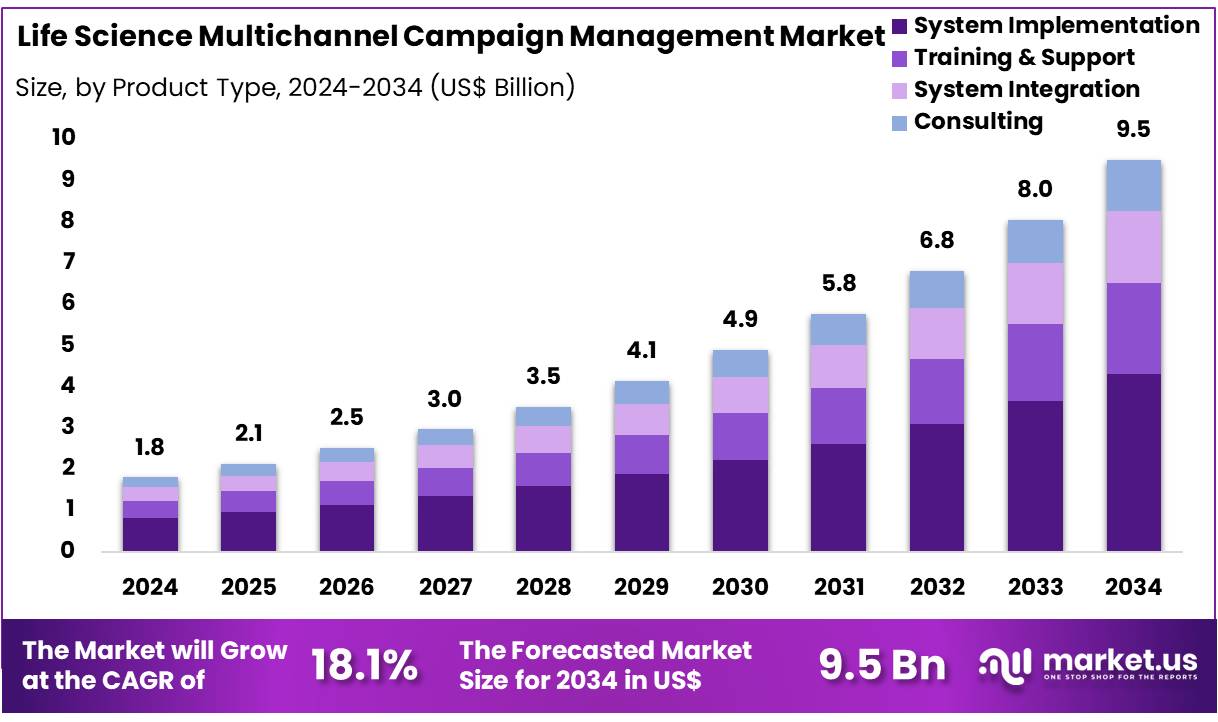
Global Life Science Multichannel Campaign Management Market size is expected to be worth around US$ 9.5 Billion by 2034 from US$ 1.8 Billion in 2024, growing at a CAGR of 18.1% during the forecast period 2025 to 2034. In 2024, North America led the market, achieving over 42.6% share with a revenue of US$ 0.8 Billion.
The life science multichannel campaign management market is expanding as pharmaceutical, biotechnology, and medical device companies strengthen their digital engagement strategies with healthcare professionals, patients, and caregivers.
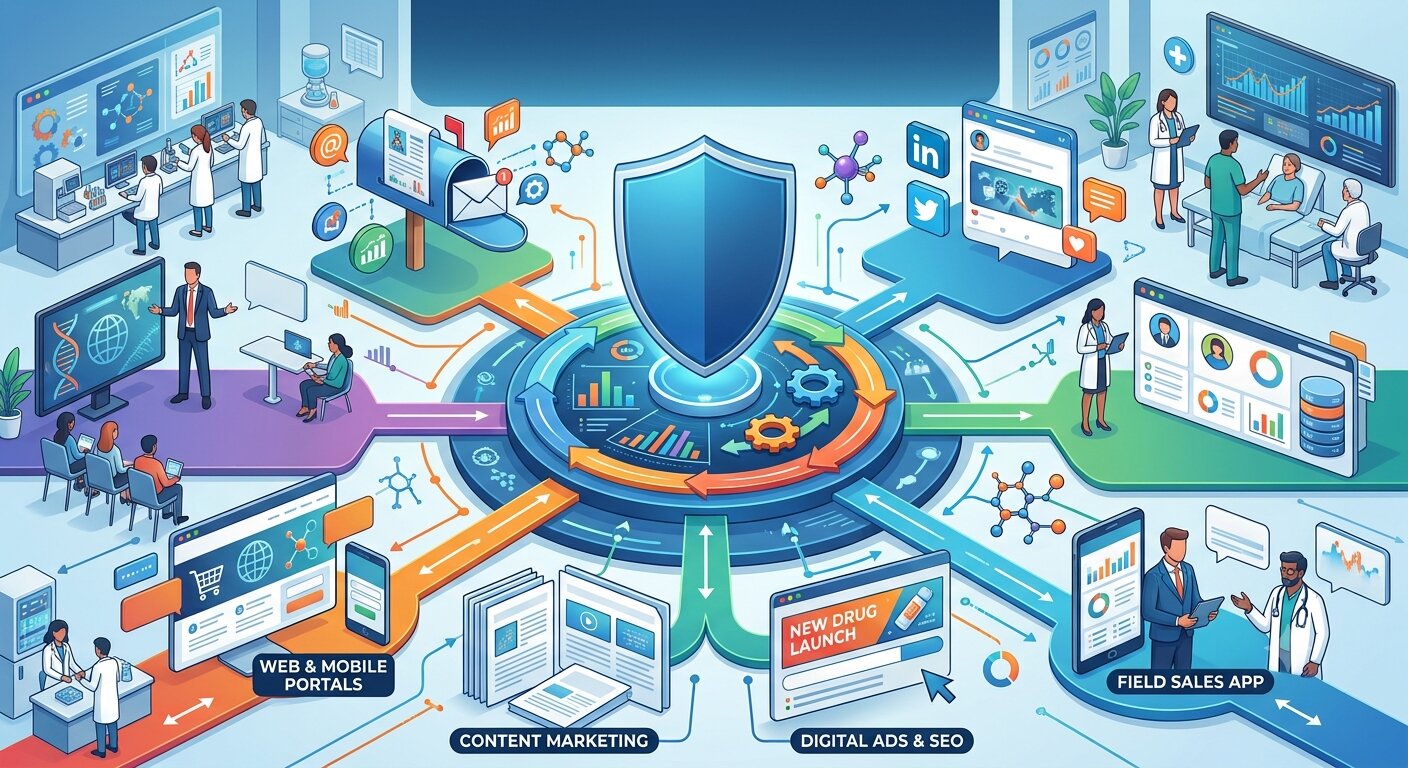
These platforms help organizations deliver personalized communications across email, websites, webinars, mobile applications, social media, and field teams while ensuring message consistency and regulatory compliance. By integrating customer data, analytics, and automation, companies can optimize campaign performance, improve stakeholder engagement, and support better commercial and medical decision-making.
Digital transformation continues to reshape healthcare delivery worldwide. The U.S. Food and Drug Administration (FDA) states that digital health technologies including software, connected platforms, wearable devices, and telehealth solutions are improving healthcare delivery, enabling remote monitoring, and supporting more personalized care.
These innovations also facilitate decentralized clinical research by allowing data collection outside traditional healthcare settings, creating new opportunities for life sciences organizations to enhance engagement with healthcare stakeholders.
The growing reliance on digital communication is further driving demand for integrated campaign management solutions. According to research published by the U.S. National Institutes of Health, 70.1% of U.S. adults searched for health information online, while 35.6% used digital communication to interact with healthcare providers, highlighting the increasing role of digital channels in healthcare engagement.
These trends encourage life sciences companies to adopt omnichannel platforms that deliver personalized, data-driven, and compliant communications. As healthcare systems continue embracing digital innovation, multichannel campaign management solutions are expected to play an increasingly important role in strengthening customer relationships, improving engagement strategies, and supporting better healthcare experiences.
Key Takeaways
- In 2024, the global Life Science Multichannel Campaign Management market was valued at US$ 1.8 billion and is projected to reach US$ 9.5 billion by 2034, expanding at a CAGR of 18.1% during the forecast period.
- Based on product type, the market is segmented into system implementation, training & support, system integration, and consulting. Among these, the system implementation segment dominated the market, accounting for a 45.3% share.
- By application, the market is categorized into advertising, selling, promotion, and branding. The advertising segment emerged as the leading category, capturing 39.2% of the overall market share.
- On the basis of end user, the market is classified into pharmaceuticals, transportation, telecommunications, retail, information technology, healthcare, and tourism. The pharmaceuticals segment held the largest revenue share at 41.6%, reflecting the growing adoption of multichannel campaign management solutions within the life sciences industry.
- Regionally, North America maintained its leading position in the global market, accounting for a 42.6% market share in 2024.
Statistical Information
- 65% of U.S. individuals accessed their online medical records or patient portals in 2024, more than doubling from 25% in 2014. This reflects the rapid adoption of digital healthcare engagement and personalized communication.
- 57% of patients used a smartphone app to access their medical records in 2024, up from 38% in 2020. The trend highlights growing demand for mobile-first healthcare communication platforms.
- 89% of patients reported being encouraged by their healthcare provider to use a patient portal. Among them, 87% accessed their records, compared with 57% of those who were not encouraged.
- 59% of U.S. consumers had access to multiple patient portals in 2024, while only 16% reported having no online medical record. This increases the need for integrated omnichannel engagement solutions.
- 99% of U.S. hospitals enabled patients to electronically view their health information in 2024, and 96% allowed patients to download their records, demonstrating widespread digital healthcare adoption.
- 92% of hospitals supported secure messaging between patients and providers, enabling continuous digital communication beyond in-person visits and strengthening patient engagement.
- 81% of hospitals offered patient access through API-enabled applications, while 70% supported FHIR-based APIs, improving interoperability and seamless health information exchange across digital platforms.
- 51% of caregivers accessed patient portals in 2024, more than doubling from 24% in 2020. The increase reflects growing reliance on shared digital health information for coordinated patient care.
Regional Analysis
North America dominated the Life Science Multichannel Campaign Management market in 2024, supported by its advanced pharmaceutical industry, mature digital healthcare ecosystem, and widespread adoption of omnichannel engagement strategies. Pharmaceutical companies are increasingly using campaign management platforms to deliver personalized communications while meeting strict regulatory requirements.
According to the U.S. Food and Drug Administration (FDA), 50 novel drugs were approved in 2024, increasing the need for coordinated promotional and medical communication across multiple digital channels. These factors continue to strengthen the region’s market leadership.
Asia Pacific is projected to register the fastest growth during the forecast period due to expanding healthcare infrastructure, rising pharmaceutical investments, and accelerating digital transformation across countries such as China, India, Japan, and South Korea.
Governments are increasing investments in digital health, while healthcare providers continue adopting connected technologies and patient-centric care models. Growing internet penetration, digital engagement among healthcare professionals, and the modernization of healthcare systems are expected to drive the adoption of multichannel campaign management platforms throughout the region.
Emerging Trends
- Decentralized engagement is becoming a standard practice. In 2024, the FDA issued final guidance supporting decentralized clinical trials that use telehealth, remote visits, and digital platforms. This is accelerating demand for multichannel campaign tools that coordinate communication across patients, investigators, and healthcare professionals.
- Digital health technologies are expanding real-time communication. The FDA states that digital health technologies can capture continuous or frequent patient measurements, enabling life science companies to deliver more personalized and timely engagement throughout clinical development and patient support programs.
- Modular digital platforms are improving campaign flexibility. Recent research shows that modular digital trial platforms allow organizations to customize workflows, centralize data collection, and remotely monitor participants, making multichannel communication more efficient across global studies.
- Patient-centric communication is gaining priority. FDA guidance encourages remote participation through telehealth, electronic consent, home visits, and local healthcare providers, helping life science companies reach broader and more diverse patient populations with personalized messaging.
- Data quality and compliance are becoming competitive advantages. FDA emphasizes that digital health technologies require strong validation, algorithm testing, and data integrity measures, increasing the importance of compliant multichannel campaign management systems for regulated industries.
Use Cases
- Pharmaceutical product launches. Companies use multichannel platforms to coordinate emails, webinars, sales representatives, and digital content, ensuring healthcare professionals receive consistent information during new drug launches while meeting regulatory requirements.
- Clinical trial participant engagement. Sponsors use omnichannel communication to send appointment reminders, telehealth updates, electronic consent information, and study notifications, improving participant retention and simplifying decentralized clinical trial management.
- Medical affairs communication. Medical science liaison teams use integrated campaign platforms to distribute scientific updates, educational materials, and safety information across multiple digital channels while maintaining compliant communication with healthcare professionals.
- Patient support programs. Life science companies use multichannel engagement to deliver medication reminders, disease education, onboarding materials, and follow-up communications, creating a more connected patient experience through digital platforms.
- Remote safety monitoring and follow-up. Organizations integrate wearable devices, telehealth, and digital platforms to collect patient data remotely, enabling faster follow-up, continuous monitoring, and timely communication throughout treatment and clinical research.
Frequently Asked Questions About Life Science Multichannel Campaign Management
- What is Life Science Multichannel Campaign Management?
Life Science Multichannel Campaign Management (MCCM) is a digital strategy that helps pharmaceutical, biotechnology, and medical device companies communicate consistently with healthcare professionals and patients across channels such as email, webinars, websites, mobile apps, and field representatives. It improves engagement while supporting regulatory compliance. - Why is multichannel campaign management important for life sciences?
Life science companies operate in highly regulated environments where consistent and personalized communication is essential. MCCM platforms centralize campaign planning, customer data, and engagement analytics, enabling organizations to deliver relevant content while maintaining compliance with healthcare regulations and improving customer experiences. - Which industries are the primary users of MCCM solutions?
The primary users include pharmaceutical manufacturers, biotechnology companies, medical device firms, contract research organizations (CROs), and healthcare organizations. These users rely on multichannel platforms to support product launches, medical education, patient engagement, clinical trial communication, and healthcare professional outreach. - What technologies are driving the Life Science Multichannel Campaign Management market?
The market is being driven by cloud computing, artificial intelligence, customer relationship management (CRM), marketing automation, digital analytics, and interoperable health information systems. These technologies enable personalized communications, real-time campaign monitoring, and improved decision-making across commercial and medical teams. - How does MCCM improve patient engagement?
MCCM platforms help organizations deliver timely reminders, educational content, treatment updates, and support services through multiple digital channels. This personalized approach improves patient communication, encourages treatment adherence, and creates a more connected healthcare experience throughout the patient journey. - How does multichannel campaign management benefit healthcare professionals?
Healthcare professionals receive relevant scientific information, educational resources, product updates, and event invitations through their preferred communication channels. This improves access to accurate medical information while reducing communication gaps and supporting informed clinical decision-making. - What factors are supporting the growth of the Life Science Multichannel Campaign Management market?
Growing digital transformation, expanding telehealth services, increasing use of healthcare data, rising patient expectations for personalized communication, and stronger regulatory focus on digital health are accelerating demand for multichannel campaign management solutions across the global life sciences industry. - What is the future outlook for the Life Science Multichannel Campaign Management market?
The market is expected to benefit from continued investments in digital health, AI-enabled engagement, interoperable healthcare systems, and personalized customer experiences. As life science companies expand digital commercialization strategies, multichannel campaign management will remain a critical tool for compliant and data-driven engagement.
Conclusion
The Life Science Multichannel Campaign Management market is poised for sustained growth as pharmaceutical, biotechnology, and medical device companies continue accelerating their digital transformation initiatives.
Rising adoption of omnichannel engagement, cloud-based platforms, artificial intelligence, and digital health technologies is enabling organizations to deliver more personalized, compliant, and data-driven communication across multiple touchpoints.
Supportive regulatory initiatives from the U.S. FDA and continued investments in digital healthcare infrastructure are further strengthening market adoption. As patient-centric care, decentralized clinical trials, and connected healthcare ecosystems expand globally, multichannel campaign management solutions will become increasingly important for improving stakeholder engagement, operational efficiency, regulatory compliance, and overall commercial performance across the life sciences industry.




















