


Overview
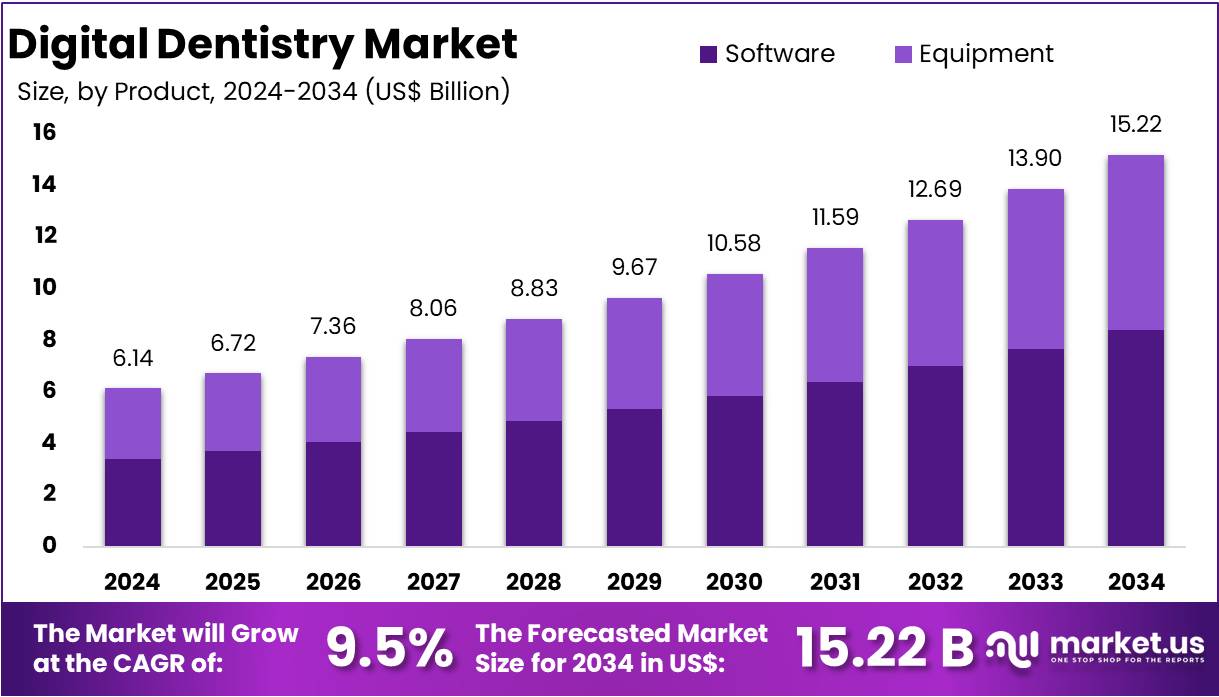
The Global Digital Dentistry Market Size is expected to be worth around US$ 15.22 Billion by 2034, from US$ 6.14 Billion in 2024, growing at a CAGR of 9.5% during the forecast period from 2025 to 2034. North America held a dominant market position, capturing more than a 39.2% share and holds US$ 2.40 Billion market value for the year.
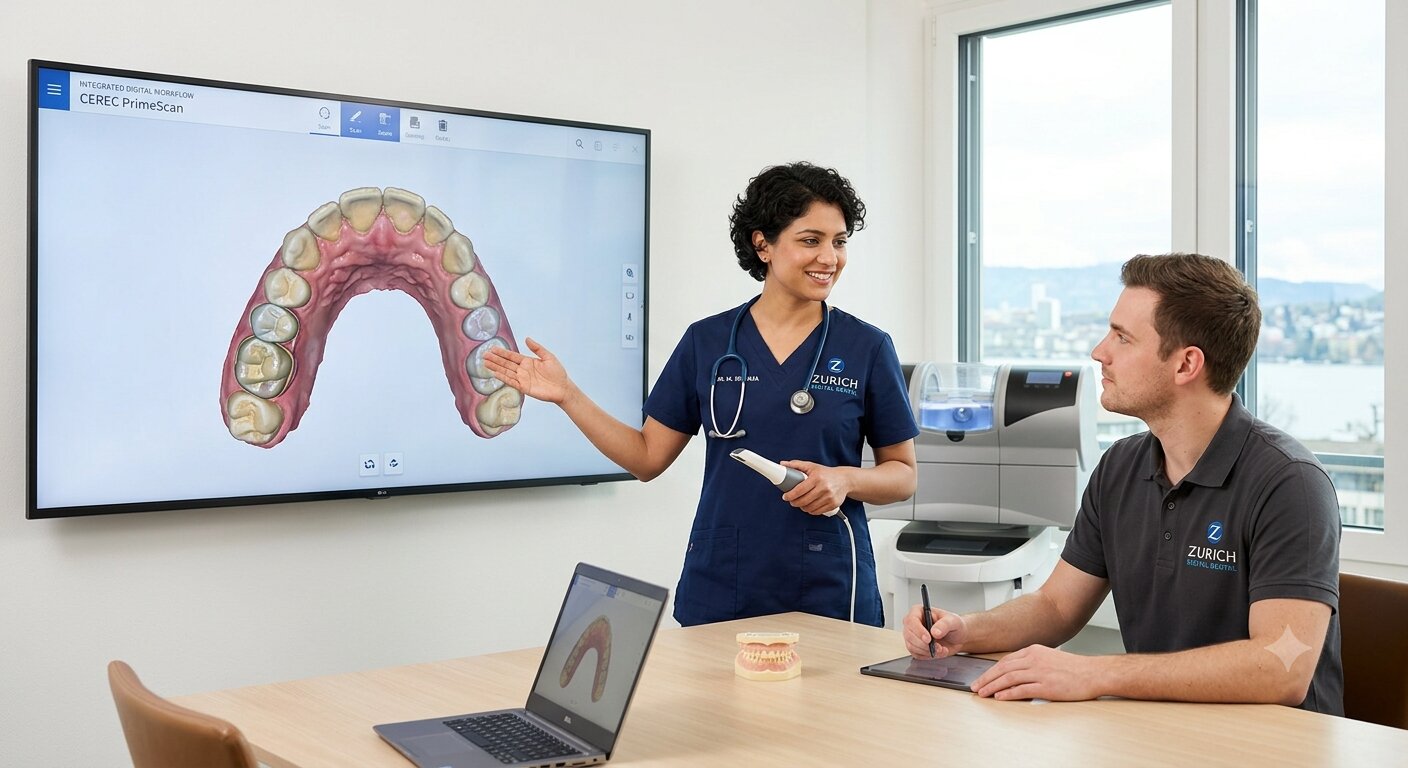
Digital transformation is reshaping modern dental care as clinics increasingly adopt computer-assisted technologies to improve diagnosis, treatment planning, restoration, and patient communication. Digital dentistry encompasses technologies such as intraoral scanners, computer-aided design and manufacturing (CAD/CAM), digital radiography, cone-beam computed tomography (CBCT), 3D printing, and artificial intelligence-enabled applications.
The growing need for efficient and precise dental procedures is encouraging providers to replace conventional impressions and manual workflows with digitally integrated solutions. Intraoral scanners can capture detailed optical impressions and generate virtual dental models, supporting applications across restorative dentistry, orthodontics, prosthodontics, and implant treatment. Research indexed by the U.S. National Library of Medicine highlights the increasing integration of scanners with other digital tools to improve workflow efficiency and functionality.
Demand is also supported by the continuing global burden of oral diseases. According to the U.S. Centers for Disease Control and Prevention (CDC), 20.5% of dentate adults aged 20–64 years had at least one permanent tooth with untreated decay based on 2017–March 2020 NHANES data. The CDC also reports that 57% of U.S. adolescents aged 12–19 years had experienced cavities in their permanent teeth, underscoring the need for accessible preventive and restorative dental services.
Advancements in digital imaging, automated design, 3D manufacturing, and AI are expected to further enhance personalized treatment planning and streamline dental workflows. As dental practices continue investing in connected and precision-oriented technologies, digital dentistry is becoming an increasingly important component of contemporary oral healthcare delivery.
Key Takeaways
- The Global Dental Dentistry Market reached US$ 6.14 billion in 2024, reflecting the expanding adoption of digital solutions across dental care.
- By product type, Software emerged as the leading segment, securing a 55.2% share of market revenue.
- In terms of specialty area, Orthodontics represented the largest segment, commanding 37.5% of the overall market.
- Among end users, Dental Hospitals and Clinics led the market with a 66.8% share, supported by increasing adoption of advanced dental technologies.
- North America remained the leading regional market, accounting for more than 39.2% of the global market share.
Statistical Information
- 43.3% of U.S. dentists were already using AI for at least one task in their dental practices in 2026, while another 26.4% planned to adopt AI.
- 22.8% of U.S. dentists reported using AI for imaging and diagnostics, while 25.4% of non-users planned to adopt AI for this application, highlighting strong potential for AI-enabled diagnostic software.
- 34.8% of U.S. dentists planned to use AI for charting and note-taking, making clinical documentation one of the most promising areas for dental software adoption.
- A global survey of 1,072 dentists from 109 countries found that 78.8% used intraoral scanners in their daily work, while 51.5% used them every day.
- 38.6% of dentists in the international intraoral-scanner survey also used CAD software, demonstrating the growing connection between digital scanning and computer-aided dental design workflows.
- In a patient clinical-perception study, 94% of participants said being examined with an intraoral scanner motivated them to obtain dental treatment, while all participants supported incorporating intraoral scanning into routine examinations.
- A 2025 transnational survey found that approximately three-quarters of dental professionals believed additive manufacturing technologies were more accurate than traditional methods, supporting continued adoption of dental 3D printing.
- In the same 3D-printing survey, 24.7% of dental professionals expressed concerns about the long-term stability of printed products, while 19.8% cited biocompatibility and another 19.8% cited resin toxicity.
- Align Technology reported more than 121,000 active iTero intraoral scanner units and more than 70,000 exocad CAD/CAM licenses by the end of 2025, demonstrating substantial adoption of digital scanning and design technologies.
- Align Technology reported approximately 22.1 million Invisalign patients treated, more than 295,000 Invisalign-trained doctors, and over 2.4 billion aligners manufactured worldwide by the end of 2025, highlighting the scale of digitally enabled orthodontic care.
Market Segmentation Analysis
Product Type Analysis
The Software segment dominated the Digital Dentistry Market, accounting for 55.2% of the market share. Its strong position is supported by the growing adoption of CAD/CAM systems, AI-powered diagnostic applications, digital imaging, and practice management platforms. These technologies help dental professionals improve treatment planning, diagnostic accuracy, workflow efficiency, and patient record management. Software solutions also enable personalized treatment through digital models and automated design capabilities.
AI and machine learning are further strengthening software applications by supporting image analysis and clinical decision-making. The integration of these technologies reduces manual processes, improves operational efficiency, and enhances patient experiences, making software an increasingly essential component of modern digital dental practices.
Specialty Area Analysis
The Orthodontics segment accounted for 37.5% of the Digital Dentistry Market, making it the leading specialty area. Increasing adoption of 3D imaging, CBCT, intraoral scanning, digital models, and virtual treatment simulations is improving orthodontic diagnosis and treatment planning. Digital workflows enable practitioners to develop customized solutions such as clear aligners and braces with greater precision. These technologies also support better patient communication by allowing visualization of expected treatment outcomes.
Remote monitoring and AI-based orthodontic solutions are further expanding digital capabilities within the specialty. The growing demand for aesthetic dental treatments and personalized orthodontic care is encouraging practices to integrate digital technologies, strengthening orthodontics’ leading position across the market.
End-User Analysis
Dental Hospitals and Clinics represented the largest end-user segment, capturing 66.8% of the Digital Dentistry Market. Their dominance is driven by extensive adoption of CAD/CAM systems, intraoral scanners, digital imaging, and 3D technologies across diagnostic, restorative, and surgical procedures. These facilities manage diverse patient requirements, from routine examinations to complex dental treatments, creating strong demand for integrated digital workflows.
High patient volumes, availability of trained professionals, and access to advanced infrastructure also support technology adoption. Furthermore, growing demand for customized and aesthetic dental procedures encourages hospitals and clinics to invest in precision-oriented digital solutions. As digital technologies continue improving workflow efficiency and treatment quality, dental hospitals and clinics are expected to remain the leading end-user segment.
Regional Analysis
North America dominated the Digital Dentistry Market with a 39.2% market share. The region benefits from advanced healthcare infrastructure, widespread adoption of digital dental technologies, and strong demand for accurate, customized treatments. Dental practices increasingly integrate CAD/CAM systems, intraoral scanners, digital imaging, 3D technologies, and AI-supported solutions to improve diagnosis, treatment planning, and workflow efficiency. Strong technological capabilities, skilled dental professionals, and growing demand for aesthetic dentistry further support regional adoption.
Asia-Pacific is expected to record the fastest growth during the forecast period. Expanding healthcare infrastructure, increasing awareness of oral health, and rising demand for aesthetic dental procedures are encouraging the adoption of digital technologies. Dental providers are increasingly implementing digital imaging, CAD/CAM, intraoral scanning, and 3D printing to enhance treatment precision.
Improving healthcare accessibility, economic development, and investments in modern dental facilities are also supporting market expansion. The region’s large patient population and growing preference for personalized dental care create significant opportunities for digital dentistry providers.
Business Opportunities
The Digital Dentistry Market presents significant business opportunities as dental practices increasingly transition from conventional workflows to connected, technology-driven care. AI-powered dental software represents a promising area, particularly for imaging analysis, diagnostics, charting, treatment documentation, and administrative automation. The American Dental Association reports growing AI adoption among dentists, creating opportunities for developers to build practical and interoperable solutions.
Intraoral scanners, CAD/CAM platforms, and 3D printing offer further opportunities across dental clinics and laboratories. Integrated solutions that connect scanning, imaging, treatment planning, design, and manufacturing can help providers streamline workflows and deliver personalized restorations and appliances.
Another opportunity lies in cloud-based connected dentistry, enabling secure integration of clinical records, imaging, practice management, and treatment planning. Companies can also pursue partnerships, licensing, and collaborative product development in areas such as additive manufacturing, dental materials, AI, and digital imaging.
Emerging Trends
- AI-powered dental imaging is becoming more standardized. New dental AI standards are focusing on how 2D radiographs are annotated and used for image-analysis systems, supporting safer and more consistent diagnostic software across providers and clinical settings.
- Multimodal digital dentistry is gaining momentum. Dental platforms are increasingly combining intraoral scans, CBCT images, CAD/CAM data, and AI rather than using separate systems. This creates more complete digital models and supports better treatment planning across multiple dental specialties.
- Virtual and augmented reality are moving into dental education. Recent evidence shows AR, VR, and haptic systems are being used for simulated procedures, repetitive practice, real-time feedback, and surgical training, reducing dependence on patient-based training for early skill development.
- Digital prosthodontic workflows are becoming more integrated. Scanning, digital design, milling, and 3D printing are increasingly connected within clinical and laboratory workflows. This trend is moving dentistry toward end-to-end digital production rather than isolated technology adoption.
- Teledentistry is evolving beyond video consultations. Modern digital dentistry increasingly uses secure sharing of radiographs, photographs, videos, digital impressions, and other patient information, allowing dentists to support consultations, referrals, education, and remote monitoring.
Use Cases
- AI-assisted radiograph analysis can support dentists by identifying and highlighting findings in dental images. Standardized AI image-analysis datasets are being developed to improve how radiographic information is annotated, exchanged, and incorporated into clinical decision-making.
- Digital denture production is becoming a practical clinical application of CAD/CAM. Digital workflows can connect clinical scanning with computer-based denture design and manufacturing, helping dental laboratories and clinics create customized prostheses through repeatable digital processes.
- Computer-guided implant treatment combines digital imaging and virtual planning to support implant positioning. Digital workflows can connect 3D patient information with surgical planning and manufacturing, helping clinicians prepare customized procedures before treatment begins.
- Virtual dental skills training allows students to practice procedures in simulated environments before working with patients. Haptic and immersive systems can provide tactile interaction, repeated exercises, and immediate feedback, supporting development of technical skills in a controlled setting.
- Remote dental assessment and follow-up can use digital photographs, radiographs, videos, and other electronically transmitted information. Dentists can review these materials remotely for consultations, referrals, education, and selected follow-up activities, helping reduce unnecessary in-person visits.
Recent Developments
- In July 2026, Align Technology reported Q2 2026 revenue of US$ 1.06 billion, up 4.3% year over year, while Clear Aligner revenue increased 8.2%. The company also highlighted continued expansion of its digitally enabled Invisalign, iTero intraoral-scanning, and exocad CAD/CAM ecosystem.
- In June 2026, Planmeca released Romexis 7 software version 6.5.3 with support for the new Planmeca Onyx intraoral scanner. The integration allows scanning to be performed directly within Romexis, connecting digital impressions with diagnostics, treatment planning, and CAD/CAM workflows.
- In February 2026, Dentsply Sirona expanded its U.S. distribution partnership with Burkhart Dental Supply to include its full dental technology portfolio. Effective April 1, 2026, Burkhart began offering technologies including CEREC, strengthening access to Dentsply Sirona’s connected-dentistry solutions in the U.S.
- In October 2025, Carestream Dental launched CS 3D Imaging Premium, an AI-powered software solution for implant planning and case sharing. The platform is designed to automate parts of implant-planning workflows while making 3D cases easier to share between dental professionals.
- In August 2025, Straumann Group announced the acquisition of full ownership of maxon dental GmbH after increasing its stake from 49% to 100%. The German company specializes in ceramic injection molding for dental implant components, giving Straumann a proprietary platform for expanding ceramic implant solutions.
- In March 2025, Medit formally partnered with Pearl to integrate AI-powered dental diagnostics into Medit Link. The companies stated that the integration is intended to enhance intraoral-scanning workflows, diagnostic capabilities, and patient communication through AI-supported visual tools.
Conclusion
The Digital Dentistry Market is entering a phase of sustained technological transformation, supported by increasing adoption of AI, intraoral scanning, CAD/CAM, digital imaging, and 3D printing. Software remains central to this transition as dental practices seek more connected and efficient workflows. Current industry evidence shows AI adoption is expanding, although interoperability, data standards, privacy, and implementation costs remain important considerations.
North America maintains a strong position, while Asia-Pacific offers significant expansion potential. Overall, continued innovation, integrated digital workflows, personalized treatment, and growing investment in dental technology are expected to create substantial opportunities for technology providers and dental care organizations.




















