


Overview
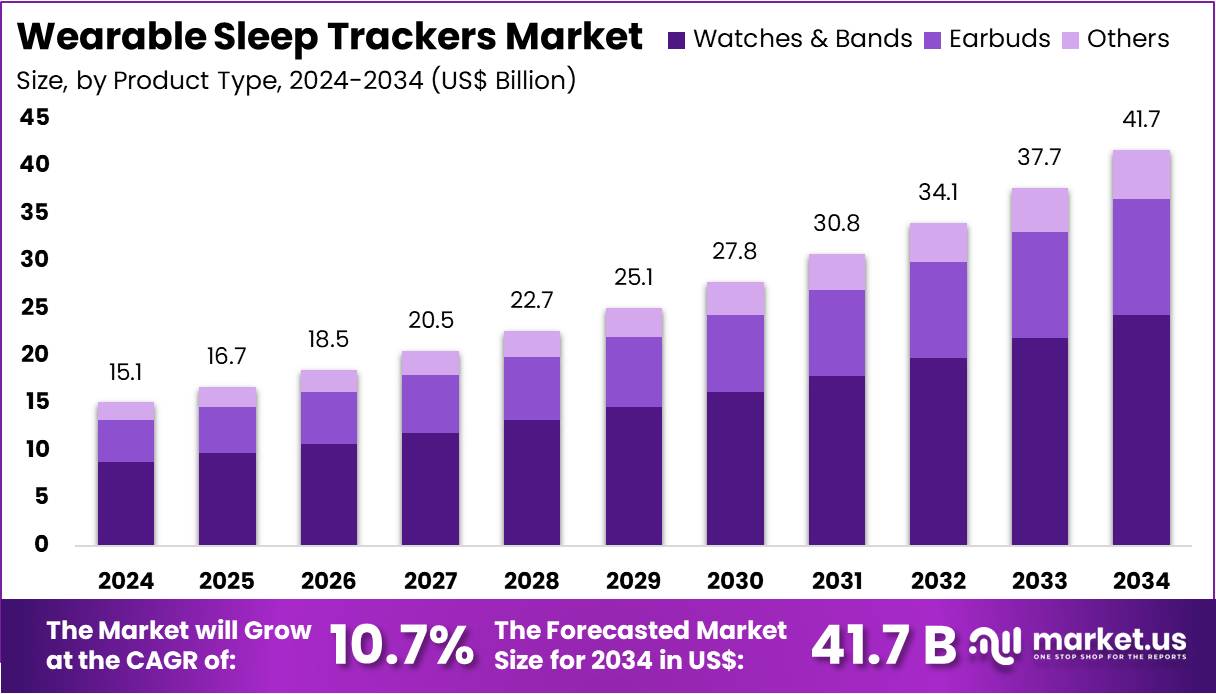
The Wearable Sleep Trackers Market size is expected to be worth around US$ 41.7 Billion by 2034 from US$ 15.1 Billion in 2024, growing at a CAGR of 10.7% during the forecast period 2025 to 2034. North America held a dominant market position, capturing more than a 43.2% share and holds US$ 6.5 Billion market value for the year.
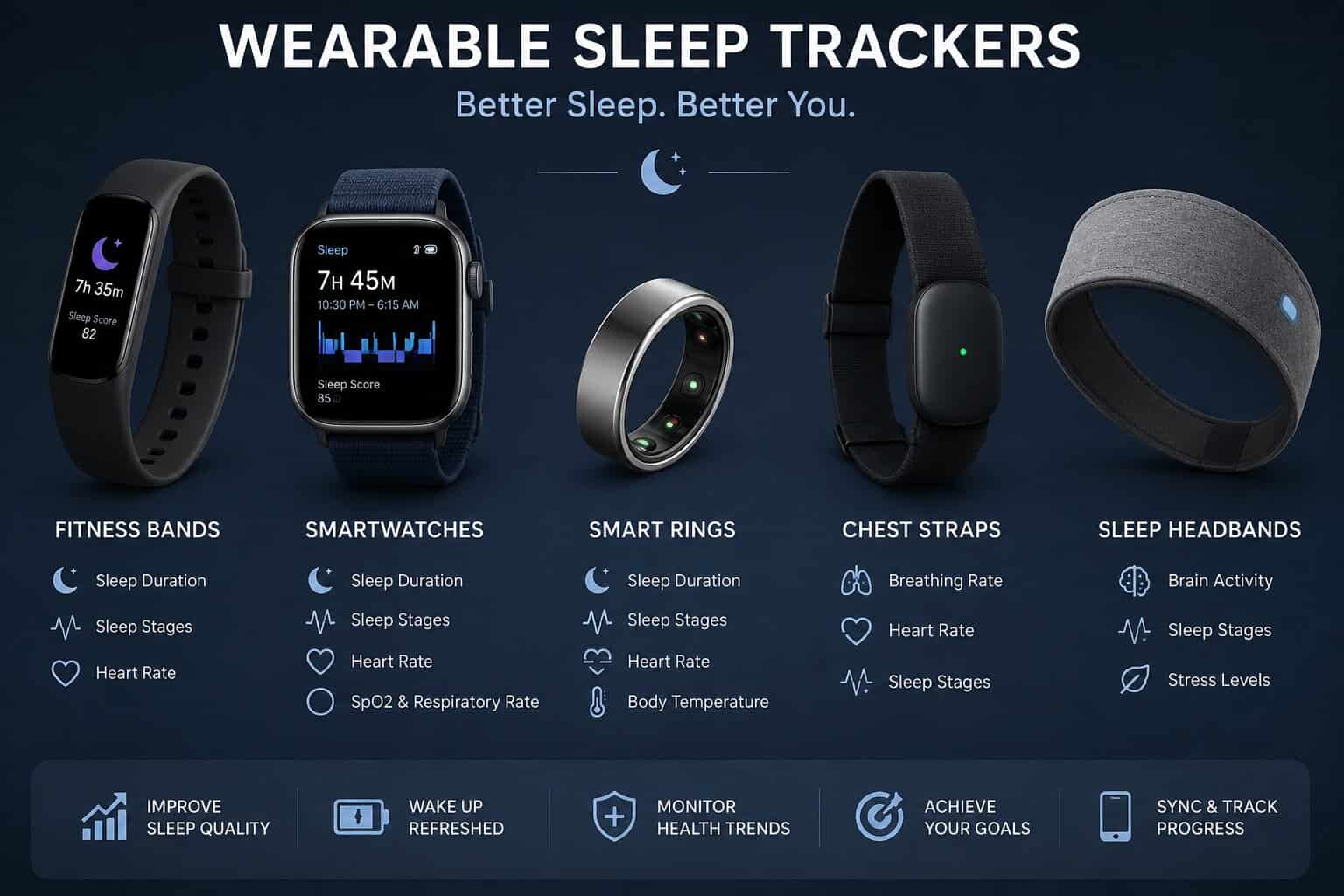
Growing awareness of sleep quality and the increasing use of connected health technologies are supporting the adoption of wearable sleep trackers among consumers and healthcare users. These devices can monitor indicators such as sleep duration, movement, heart rate and other physiological signals, helping individuals better understand their sleep patterns and daily routines.
The need for accessible sleep-monitoring solutions is reinforced by public-health data. According to the U.S. Centers for Disease Control and Prevention (CDC), 30.5% of U.S. adults slept less than seven hours per day in 2024, highlighting the continuing prevalence of insufficient sleep. The CDC recommends that adults obtain at least seven hours of sleep each day.
Consumer engagement with sleep-tracking technology is also increasing. A 2025 American Academy of Sleep Medicine (AASM) survey of 2,007 U.S. adults found that 48% had used a sleep-tracking device, including smartphones, smartwatches, wristbands and rings. Technological advancements in sensors, wearable form factors, mobile applications and data analytics are expanding the functionality of these products. However, the AASM emphasizes that consumer sleep technologies have limitations and should not replace appropriate clinical evaluation or diagnosis.
Key Takeaways
- In 2024, the global wearable sleep trackers market generated US$ 15.1 billion in revenue and is projected to reach US$ 41.7 billion by 2034, expanding at a CAGR of 10.7% during the forecast period.
- By product type, the market is segmented into watches & bands, earbuds, and others. Watches & bands dominated the product type segment in 2024, accounting for a 58.2% market share.
- Based on application, the wearable sleep trackers market is categorized into insomnia, sleep apnea, and others. The insomnia segment held the leading position in 2024, representing a 52.3% share of the market.
- Regionally, North America maintained its leading position in the global wearable sleep trackers market in 2024, capturing a 43.2% market share.
Statistical Information
- A 2023 Samsung analysis found that 50% of Galaxy Watch users tracked their sleep at least once a week, while 40% of those users did so more than three times weekly, indicating frequent engagement with wearable sleep-monitoring features.
- A clinical study comparing three commercial wearables with polysomnography included 35 participants and found that all three devices achieved at least 95% sensitivity for distinguishing sleep from wakefulness.
- A multicenter validation study assessed 11 consumer sleep trackers among 75 participants, generating 3,890 hours of sleep-tracker recordings and 543 hours of polysomnography recordings for comparison.
- The same study analyzed 349,114 sleep epochs, with macro F1 scores ranging from 0.26 to 0.69, demonstrating substantial differences in sleep-stage classification performance between consumer devices.
- A randomized crossover study involving 32 participants found that wearable feedback was associated with improved nighttime sleep quality, with a reported sleep-disturbance coefficient of −1.69.
- A validation study of six wrist-worn wearable devices involving 62 adults found that all devices detected more than 90% of sleep epochs, although specificity for identifying sleep was substantially lower, ranging from 29.39% to 52.15%.
- A meta-analysis covering 24 studies and 798 participants found that consumer wrist-worn trackers differed from polysomnography by an average of 16.85 minutes in total sleep time, highlighting the importance of interpreting wearable measurements appropriately.
- Apple Watch provides users with 14 days of sleep history, including sleep stages, sleep duration, and time asleep, enabling consumers to monitor changes in their sleep patterns over multiple nights.
Market Segmentation Analysis
Product Type Analysis
The watches & bands segment dominated the wearable sleep trackers market in 2024, accounting for 58.2% of the total market. This leadership is supported by the widespread adoption of smartwatches and fitness bands equipped with advanced sleep-monitoring capabilities. These wearable devices allow users to conveniently track sleep duration, sleep stages, heart rate, and other health indicators through integrated sensors and connected applications.
Growing consumer interest in preventive health and personalized wellness is further encouraging the use of wearable technologies for daily sleep monitoring. As awareness of the relationship between quality sleep and overall well-being increases, demand for watches and bands is expected to remain strong, supported by their convenience, portability, and multifunctional health-tracking features.
Application Analysis
The insomnia segment held a significant 52.3% market share in 2024, making it the leading application segment in the wearable sleep trackers market. Increasing awareness of sleep disturbances and growing interest in monitoring personal sleep patterns are contributing to segment expansion. Wearable trackers enable users to collect information about sleep duration, consistency, nighttime movement, and other indicators, helping them identify changes in their sleeping habits.
The growing emphasis on self-care and preventive wellness is also encouraging consumers to adopt technology-based approaches to understand and manage sleep concerns. As demand for convenient, non-invasive monitoring solutions rises, wearable sleep trackers are expected to gain greater acceptance among individuals seeking actionable insights into their sleep routines and overall sleep quality.
Regional Analysis
North America is leading the Wearable Sleep Trackers Market
North America continues to lead the wearable sleep trackers market, supported by strong consumer awareness of sleep health and widespread adoption of connected health technologies. Wearable devices, including smartwatches and fitness trackers, are increasingly used to monitor sleep duration, consistency, and nighttime patterns. The American Academy of Sleep Medicine reports growing consumer engagement with sleep-tracking technologies, reflecting broader interest in understanding personal sleep habits.
Asia Pacific is expected to experience the highest CAGR during the forecast period
Asia Pacific is expected to witness rapid growth as digital healthcare adoption, smartphone connectivity, and consumer interest in personalized wellness continue to expand. Wearable technologies are becoming increasingly integrated with mobile health applications, enabling convenient monitoring of sleep and other health indicators. Rising awareness of sleep quality and preventive health is encouraging consumers to adopt technology-driven monitoring solutions. Continued innovation in sensors, mobile platforms, and wearable designs is expected to further support regional adoption.
Business Opportunities
The wearable sleep trackers market presents significant opportunities for companies developing advanced sensors, AI-powered analytics, and personalized sleep-monitoring platforms. Modern wearables can collect multiple physiological signals, creating opportunities to develop solutions that combine sleep information with broader wellness and health insights.
Healthcare integration is another promising area. Companies can develop platforms that allow sleep data to be securely shared with clinicians, supporting patient engagement, longitudinal monitoring, and sleep-care programs. Research also highlights opportunities to use consumer wearables in insomnia interventions and wellness programs, creating potential for partnerships between technology providers, healthcare organizations, and digital health companies.
Further opportunities exist in clinical-grade wearable development, validation studies, and AI-assisted interpretation. The World Sleep Society has highlighted the need for practical guidance around consumer sleep trackers, while ongoing research emphasizes improving device accuracy and clinical utility. Companies that address data reliability, interoperability, privacy, and evidence-based applications can strengthen their position as wearable sleep technology moves closer to healthcare use.
Emerging Trends
- AI-Based Sleep Analysis: Wearable sleep tracking is moving beyond basic sleep-duration measurement toward AI-driven analysis. Research shows AI models increasingly use respiratory signals, heart rate, and body movement to identify sleep disorders and generate more personalized sleep insights.
- Sleep Apnea Screening: Wearables are increasingly incorporating breathing-disturbance monitoring and sleep-apnea risk assessment. The FDA cleared Apple’s Sleep Apnea Notification Feature, showing a shift toward wearable technologies that can identify patterns potentially associated with moderate-to-severe sleep apnea.
- Multi-Sensor Monitoring: Newer devices are combining multiple biosignals rather than relying on movement alone. Research identifies heart rate, heart-rate variability, skin conductance, temperature, activity, and respiratory measurements as important inputs for more comprehensive sleep assessment.
- Greater Clinical Integration: Wearable sleep data is increasingly being considered as patient-generated health information that can support discussions between patients and clinicians. Professional recommendations now emphasize appropriate interpretation, validation, and responsible integration into healthcare.
- Evidence-Based Wearable Development: The industry is moving toward stronger clinical validation and standardized evaluation. Recent research emphasizes the need for better algorithms, transparent performance testing, and clearer boundaries between consumer wellness tracking and medical applications.
Use Cases
- Sleep Apnea Risk Identification: Wearables can monitor nighttime breathing disturbances and identify patterns that may indicate sleep apnea risk. Apple’s system evaluates breathing disturbances over a 30-day period before generating a notification, creating a practical screening-oriented use case.
- Cardiovascular Risk Research: Wearable-derived sleep information is increasingly being studied alongside cardiovascular outcomes. A 2026 study used Fitbit sleep data and electronic health records from 23,413 adults, demonstrating the potential of wearable sleep measurements for large-scale cardiovascular research.
- Personalized Sleep Management: Continuous sleep information can help users identify changes in sleep routines and support more informed conversations with healthcare professionals. This makes wearable tracking useful for longitudinal monitoring rather than relying only on occasional clinical assessments.
- Home-Based Sleep Screening: Wearable sensors can support more accessible sleep assessment outside traditional laboratories. Research into oxygen-saturation monitoring highlights applications including individual apnea-event detection, apnea severity classification, and prediction of apnea-hypopnea measures.
- Research and Population Health: Wearables can generate large volumes of real-world sleep and physiological data for research. Their ability to continuously collect information creates opportunities for studying relationships between sleep patterns, disease risk, behavior, and long-term health outcomes.
Recent Developments
- In July 2026, Garmin launched CIRQA Smart Band, a screen-free health and fitness tracker designed for continuous biometric monitoring. The launch expands Garmin’s wearable portfolio toward discreet, screenless devices that can support health, recovery, and sleep-related monitoring.
- In May 2026, ResMed and ŌURA announced a partnership to expand access to sleep-health education and care pathways. The collaboration uses wearable-derived sleep insights to help people recognize potential sleep concerns and connect with appropriate healthcare resources.
- In May 2026, Google introduced Fitbit Air as a screenless wearable priced from $99.99, offering 24/7 health monitoring, sleep tracking, and up to a week of battery life through the Google Health ecosystem.
- In April 2026, ŌURA acquired Galen AI’s technology and welcomed its team, strengthening its AI-powered connected-health strategy. Galen AI combines medical records, laboratory results, medications, and wearable data into a unified health platform.
- In March 2026, ŌURA acquired Doublepoint, a Helsinki-based company specializing in AI-powered biometric gesture recognition. The transaction is intended to strengthen Oura’s wearable interaction capabilities and support more natural, adaptive technology experiences.
- In March 2026, Garmin launched its first Asia-specific research grant with Fitrockr, supporting researchers using Garmin wearable data. The initiative addresses barriers involving wearable hardware costs and access to high-resolution physiological data, including sleep-related research.
- In September 2025, Apple launched Apple Watch Series 11 with Sleep Score, giving users a new way to assess sleep quality and restorative sleep patterns. The device also provides up to 24 hours of battery life, supporting overnight health monitoring.
- In June 2025, ŌURA acquired Veri, a personalized metabolic-health company. Veri had helped nearly 50,000 people worldwide, and its team joined ŌURA to strengthen the company’s capabilities in metabolic health alongside its existing sleep and wellness platform.
- In May 2025, ResMed acquired VirtuOx, a U.S. independent diagnostic testing facility specializing in sleep, respiratory, and cardiac conditions. VirtuOx became a wholly owned subsidiary, strengthening ResMed’s home-based diagnostics and remote patient-monitoring capabilities.
Conclusion
The wearable sleep trackers market is evolving as consumers and healthcare stakeholders increasingly prioritize sleep health, personalized monitoring, and connected wellness technologies. Advanced sensors, AI-powered analytics, multi-sensor platforms, and sleep-apnea screening capabilities are expanding the functionality of wearable devices beyond basic sleep tracking. Watches and bands remain the leading product category, while insomnia represents a major application area.
North America maintains a strong market position, whereas Asia Pacific offers significant growth opportunities through expanding digital-health adoption and wearable technology use. Strategic partnerships, acquisitions, clinical validation, and healthcare integration are further strengthening the competitive landscape, creating opportunities for companies to develop reliable, personalized, and evidence-based sleep-monitoring solutions.




















