


Overview
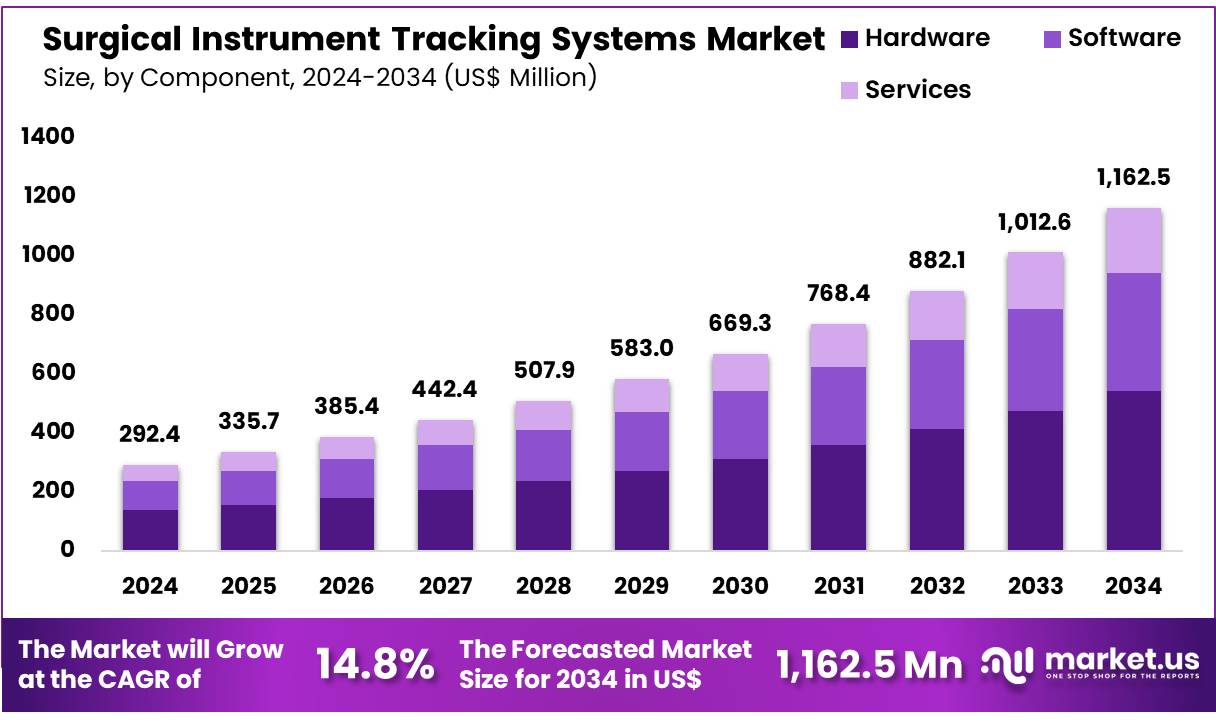
Global Surgical Instrument Tracking Systems Market size is expected to be worth around US$ 1,162.5 Million by 2034 from US$ 292.4 Million in 2024, growing at a CAGR of 14.8% during the forecast period 2025 to 2034. In 2024, North America led the market, achieving over 37.4% share with a revenue of US$ 109.4 Million.
Healthcare providers are increasingly adopting surgical instrument tracking systems to improve patient safety, strengthen sterilization workflows, and enhance inventory visibility across operating rooms and sterile processing departments. Hospitals are under growing pressure to minimize preventable surgical errors, comply with regulatory standards, and optimize the lifecycle management of reusable surgical instruments.
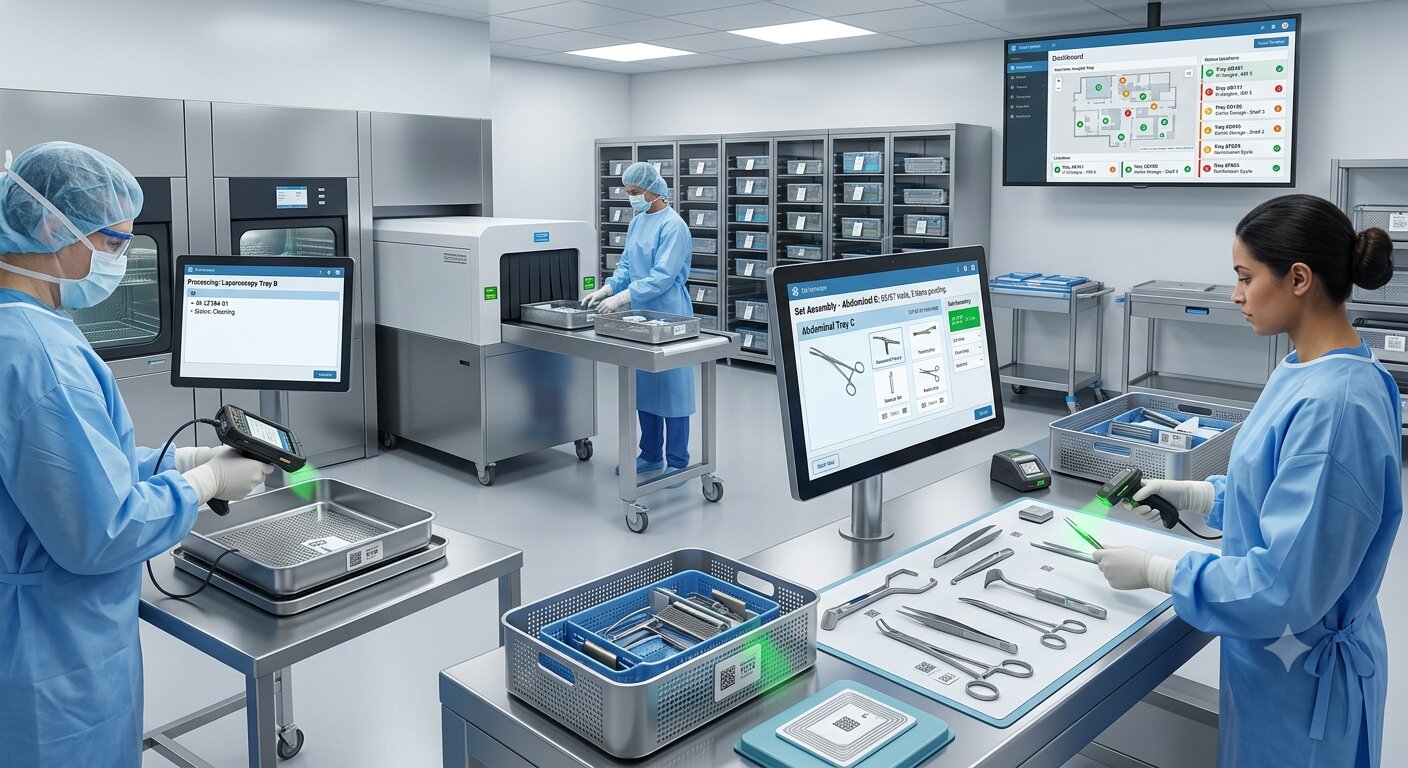
Barcode and RFID-based tracking technologies are helping healthcare facilities automate documentation, reduce manual errors, and improve operational efficiency from sterilization through surgical use. The growing integration of digital health infrastructure and hospital asset management platforms is also supporting wider adoption of these systems.
Patient safety remains one of the strongest drivers for this market. According to the World Health Organization (WHO), retained surgical instruments and sponges remain a serious but preventable surgical complication, with published estimates ranging from 1 in 5,000 to 1 in 19,000 inpatient operations. WHO recommends standardized counting procedures and encourages validated automated technologies, including barcode and radiofrequency identification (RFID), to strengthen surgical safety practices.
Meanwhile, the U.S. Food and Drug Administration (FDA) continues to advance its Unique Device Identification (UDI) system, requiring reusable medical devices to carry permanent identifiers that improve traceability, support regulatory compliance, and enhance post-market surveillance. These initiatives are accelerating investments in intelligent tracking platforms that improve workflow transparency, reduce instrument loss, support infection prevention, and enable more efficient healthcare operations.
Key Takeaways
- In 2024, the Surgical Instrument Tracking Systems Market generated revenue of US$ 292.4 Million and is projected to reach US$ 1,162.5 Million by 2034, expanding at a CAGR of 14.8% during the forecast period.
- Based on components, the market is segmented into Hardware, Software, and Services, with Hardware dominating in 2024 by capturing a 46.7% market share.
- By technology, the Surgical Instrument Tracking Systems Market is categorized into Barcode Tracking, Radio Frequency Identification (RFID), and Electronic Tracking, with Radio Frequency Identification (RFID) leading the segment with a 51.3% market share in 2024.
- Based on end users, the market is divided into Hospitals, Ambulatory Surgical Centers (ASCs), Research Centers, and Others, where Hospitals held the largest share, accounting for 54.5% of the market revenue in 2024.
- Regionally, North America dominated the Surgical Instrument Tracking Systems Market in 2024, securing a 37.4% market share.
Statistical Information
- The U.S. FDA established the Unique Device Identification (UDI) system to improve identification and tracking of medical devices throughout the entire lifecycle, from manufacturing and distribution to patient use. The system requires device information submission into the FDA-managed Global Unique Device Identification Database (GUDID).
- The FDA’s GUDID database contains medical device identification records submitted by manufacturers, with data coverage available from 2013 through 2026 through FDA open data platforms.
- The CDC reports that approximately 1 in 31 hospital patients has at least one healthcare-associated infection (HAI) on any given day in U.S. healthcare facilities, increasing the importance of accurate sterilization documentation and surgical instrument management.
- CDC surveillance data showed that among U.S. acute care hospitals, several major healthcare-associated infections declined between 2023 and 2024, including a 4% reduction in surgical site infections (SSIs) following colon surgery.
- The CDC’s National Healthcare Safety Network (NHSN) tracks surgical site infections across U.S. hospitals using standardized surveillance systems, supporting infection prevention programs and quality improvement initiatives.
- In U.S. hospitals, infection prevention programs rely on CDC NHSN reporting systems to monitor surgical site infections, device-associated infections, and other healthcare safety indicators across thousands of healthcare facilities.
- FDA data infrastructure enables healthcare organizations and researchers to access standardized medical device identification information through public databases, improving transparency across the medical device ecosystem.
- The growing use of electronic medical records, automated documentation, and connected healthcare systems is increasing the value of digital tracking solutions that improve visibility of reusable surgical instruments.
- Healthcare facilities using digital identification and tracking approaches can better manage reusable surgical assets by improving visibility across sterilization departments, storage areas, and operating rooms.
Regional Analysis
North America holds a leading position in the Surgical Instrument Tracking Systems Market, supported by advanced healthcare infrastructure, increasing adoption of digital hospital solutions, and strong regulatory focus on medical device traceability. The United States represents a major contributor due to the presence of large hospital networks, high surgical procedure volumes, and growing investments in healthcare information technology. Healthcare facilities are increasingly implementing barcode and RFID-based tracking solutions to improve instrument visibility, optimize sterilization processes, and enhance operating room efficiency.
The region’s market growth is further supported by regulatory initiatives such as the U.S. Food and Drug Administration’s (FDA) Unique Device Identification (UDI) system, which aims to improve medical device identification, enhance patient safety, and strengthen post-market surveillance through better tracking and documentation. The rising emphasis on infection prevention, accreditation standards, and workflow automation across hospitals and ambulatory surgical centers is accelerating demand for advanced surgical instrument management technologies.
Additionally, continuous innovation from technology providers and healthcare IT companies is strengthening regional adoption. Solutions integrating RFID, cloud-based analytics, and automated inventory management are helping healthcare organizations reduce instrument loss, improve operational efficiency, and support data-driven decision-making. North America’s established healthcare ecosystem and strong focus on patient safety continue to drive its dominance in the global market.
Emerging Trends
- Smart Sterile Processing Automation Using AI and Robotics: Hospitals are moving toward automated sterile processing departments where AI, computer vision, and robotics assist with instrument identification, inspection, and tray preparation. A recent research system trained on 6,975 annotated surgical instrument images demonstrated the growing role of automated recognition technologies in improving processing accuracy and reducing manual workload.
- Robotic Surgery Instrument Lifecycle Tracking: The increasing use of robotic-assisted procedures is creating demand for specialized tracking solutions that monitor instrument usage limits, cleaning cycles, and reprocessing history. A 2024 AORN Journal quality improvement project showed barcode-based tracking improved documentation accuracy and reduced untraceable sterilization records for robotic instruments.
- 3D Vision-Based Surgical Tool Tracking in Operating Rooms: Advanced computer vision systems are emerging as a future application for real-time surgical tool tracking. New research focuses on 3D identification of instruments without requiring traditional CAD models, helping improve navigation, workflow analysis, and operating room intelligence. Some experimental systems achieved tracking accuracy improvements over previous approaches.
- Digital Infection Prevention and Instrument Traceability: Hospitals are strengthening instrument tracking to support infection control programs and improve sterilization records. CDC data shows that increasing demand for reliable documentation of reusable surgical device processing.
- Advanced Tracking for Complex Surgical Instrument Inventories: Healthcare facilities are adopting digital tracking systems to manage growing numbers of reusable surgical instruments across operating rooms and sterile processing units. CDC guidance highlights that critical items such as surgical instruments must be sterile before use, supporting the need for accurate monitoring throughout cleaning and sterilization workflows.
Use Cases
- RFID-Enabled Real-Time Location Tracking of Surgical Assets: RFID technology is increasingly used to provide real-time visibility of surgical instruments, trays, and medical assets without requiring direct line-of-sight scanning. Hospitals are integrating RFID systems to reduce manual searches, improve inventory accuracy, and strengthen asset utilization across healthcare facilities.
- Electronic Documentation Replacing Manual Instrument Records: Healthcare organizations are shifting from paper-based instrument tracking toward electronic records that capture sterilization history, usage cycles, and movement data. Digital documentation helps reduce missing records and improves compliance monitoring during repeated instrument processing activities.
- Surgical Instrument Tracking Supporting Operating Room Efficiency: Tracking systems are increasingly being used to improve operating room coordination by providing information about instrument availability, location, and readiness status. Barcode-based lifecycle management projects have reported improvements in inventory time management and reduced tracking-related workflow issues.
- Integration of Surgical Tracking Data With Hospital Digital Platforms: Hospitals are connecting instrument tracking solutions with broader healthcare information systems to create better visibility across sterilization, inventory, and surgical workflows. The FDA emphasizes that standardized medical device identification improves data exchange, device management, and healthcare decision-making.
- Automated Instrument Recognition for Future Smart Operating Rooms: Future operating rooms are expected to use AI-based recognition technologies that identify instruments automatically during procedures and generate workflow data. Research in intelligent operating rooms is exploring automated tracking of surgical environments to improve safety, efficiency, and clinical decision support.
Frequently Asked Questions About Surgical Instrument Tracking Systems
- What are Surgical Instrument Tracking Systems?
Surgical Instrument Tracking Systems are digital solutions used by hospitals to monitor surgical tools throughout their lifecycle, including usage, cleaning, sterilization, storage, and maintenance. These systems use technologies such as barcode, RFID, and electronic identification to improve traceability and workflow control. - Why are hospitals adopting Surgical Instrument Tracking Systems?
Hospitals are adopting tracking systems to improve instrument visibility, reduce manual documentation errors, strengthen sterile processing workflows, and support patient safety initiatives. Digital tracking also helps healthcare facilities maintain accurate records of reusable devices and improve operational efficiency across departments. - What technologies are used in Surgical Instrument Tracking Systems?
The major technologies include barcode tracking, Radio Frequency Identification (RFID), and electronic tracking platforms. RFID enables automatic identification and monitoring, while barcode solutions provide efficient scanning and documentation. These technologies support better inventory management and instrument traceability. - How does FDA UDI support surgical instrument tracking?
The FDA Unique Device Identification (UDI) system improves medical device identification by requiring standardized identifiers on applicable devices. UDI information helps healthcare organizations track devices, improve documentation, support recalls, and strengthen medical device safety monitoring. - What are the emerging trends in the Surgical Instrument Tracking Systems Market?
Emerging trends include AI-based instrument recognition, robotic sterile processing automation, cloud-based tracking platforms, and advanced computer vision systems. Research initiatives are exploring automated tray assembly using AI models trained with thousands of instrument images to improve sterile processing efficiency. - How do Surgical Instrument Tracking Systems support robotic surgery?
Tracking systems help manage robotic surgical instruments by monitoring usage cycles, processing history, and availability. As robotic procedures increase, hospitals require better lifecycle management solutions to ensure instruments are properly maintained, sterilized, and ready for clinical use. - What factors are driving the growth of the Surgical Instrument Tracking Systems Market?
The market is driven by increasing healthcare digitalization, demand for better surgical safety, regulatory focus on device identification, and the need for efficient reusable instrument management. Hospitals are investing in automated tracking solutions to improve workflow transparency and resource utilization.
Conclusion
The Surgical Instrument Tracking Systems Market is experiencing strong growth as healthcare organizations prioritize patient safety, operational efficiency, and accurate management of reusable surgical instruments. The increasing adoption of RFID, barcode tracking, AI-based recognition, and digital workflow solutions is transforming sterilization and operating room processes.
Regulatory initiatives such as FDA’s UDI framework are further encouraging healthcare facilities to improve device traceability and documentation. With hospitals leading adoption and North America maintaining a strong market position, continued investments in healthcare automation, smart technologies, and integrated tracking platforms are expected to drive future market expansion and enhance surgical workflow management globally.




















