


Overview
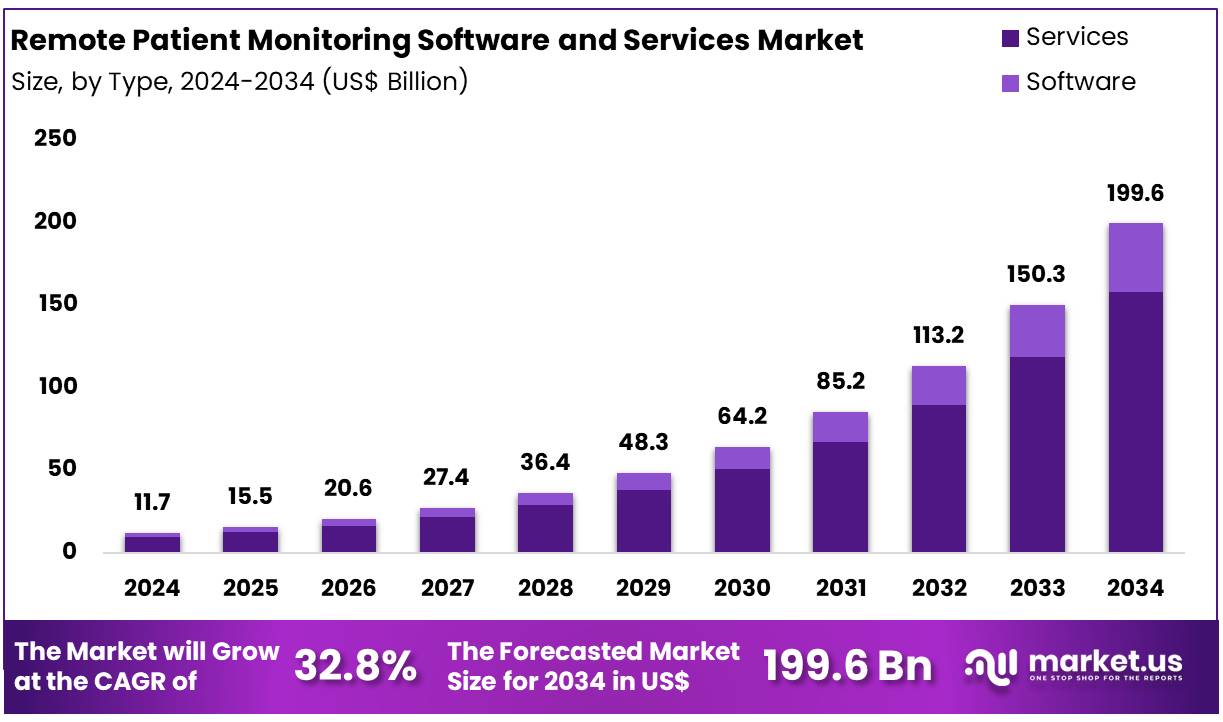
Global Remote Patient Monitoring (RPM) Software and Services Market size is forecasted to be valued at US$ 199.6 Billion by 2034 from US$ 11.7 Billion in 2024, growing at a CAGR of 32.8% during the forecast period 2025 to 2034. In 2024, North America led the market, achieving over 48.5% share with a revenue of US$ 5.7 Billion.
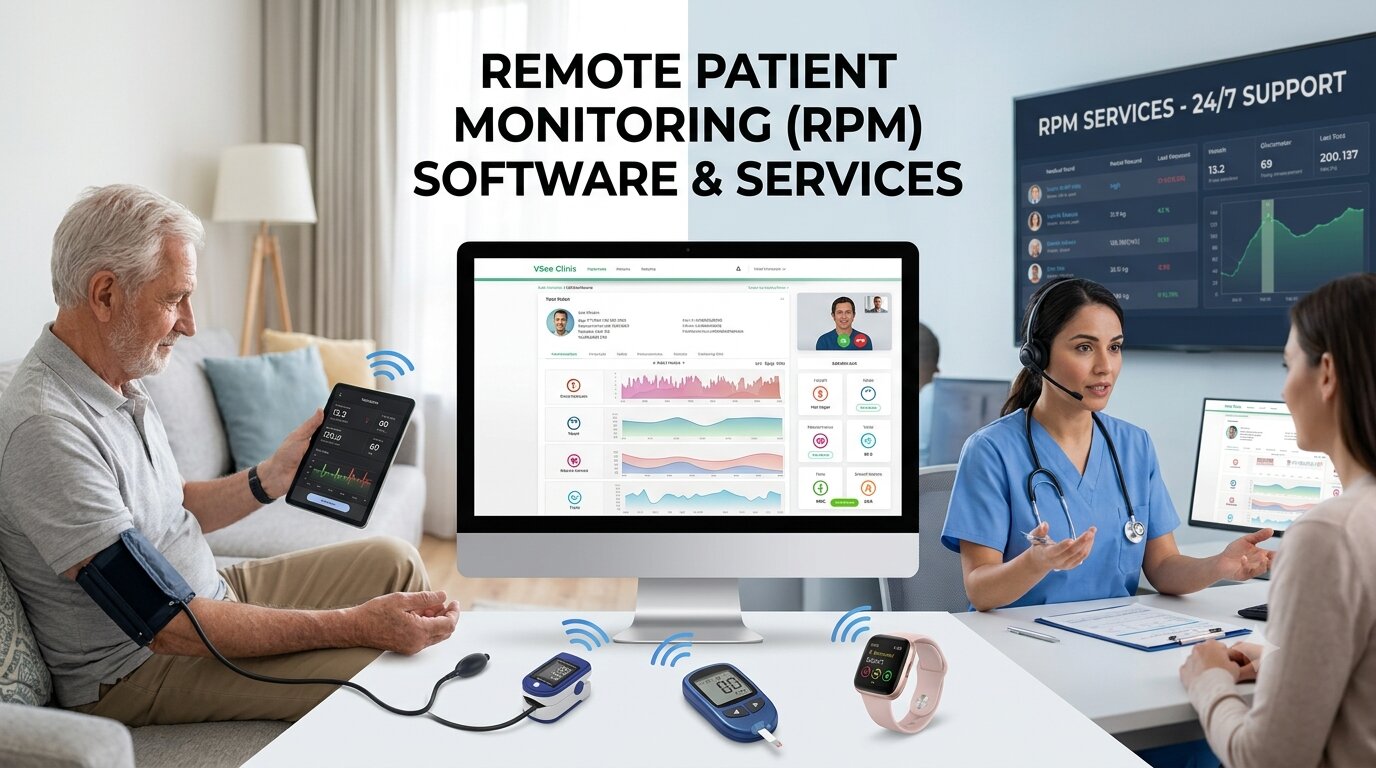
The increasing adoption of digital healthcare technologies is transforming patient care by enabling continuous monitoring beyond traditional healthcare facilities. Remote Patient Monitoring (RPM) software and services allow healthcare providers to collect, analyze, and manage patient health information through connected devices such as blood pressure monitors, glucose meters, pulse oximeters, and wearable sensors. These solutions support early intervention, chronic disease management, and improved coordination between patients and healthcare professionals.
Government healthcare programs are supporting the expansion of RPM adoption by integrating remote monitoring into modern care delivery models. The U.S. Centers for Medicare & Medicaid Services (CMS) provides coverage for remote patient monitoring services that collect physiological data from connected medical devices for both chronic and acute conditions. CMS specifies that RPM devices must transmit patient health information regularly to enable healthcare providers to review data and manage treatment decisions.
The growing prevalence of chronic diseases, increasing demand for home-based care, and advancements in artificial intelligence, cloud computing, and connected medical devices are driving the need for RPM platforms. According to the U.S. Department of Health and Human Services Office of Inspector General, Medicare payments for remote patient monitoring exceeded $500 million in 2024, highlighting the rapid expansion of RPM utilization within healthcare systems.
Healthcare organizations are increasingly using RPM solutions to reduce avoidable hospital visits, improve patient engagement, and support value-based care initiatives. These platforms are becoming especially important for managing conditions such as diabetes, hypertension, cardiovascular disorders, and respiratory diseases.
As healthcare systems continue adopting digital-first strategies, RPM software and services are expected to become an essential component of connected and patient-centered healthcare delivery.
Key Takeaways
- In 2024, the Remote Patient Monitoring Software and Services Market generated revenue of US$ 11.7 Billion and is projected to reach US$ 199.6 Billion by 2034, expanding at a CAGR of 32.8% during the forecast period.
- Based on Type, Services dominated the market in 2024, accounting for the largest revenue share of 79.1%.
- By Application, Cardiovascular Disease represented the leading segment, capturing a significant revenue share of 15.8% in 2024.
- Based on End-User, Healthcare Providers held the highest market share in 2024, contributing 45.6% of total revenue.
- Regionally, North America led the global Remote Patient Monitoring Software and Services Market in 2024, accounting for a revenue share of 48.5%.
Statistical Information
- 90% of the United States’ US$ 5.3 trillion annual healthcare expenditure is associated with people living with chronic and mental health conditions.
- More than 850,000 Americans died from heart disease and stroke in 2024, accounting for more than 1 in 4 deaths in the United States.
- Medicare Remote Patient Monitoring services require connected devices to collect and transmit patient health data at least 2 days within a 30-day period.
- More than 90% of adults aged 65 years and older in the United States have at least one chronic condition.
- More than 75% of adults aged 35–64 years in the United States live with at least one chronic condition.
- Around 60% of adults aged 18–34 years in the United States have at least one chronic condition.
- CMS began Medicare coverage for Remote Patient Monitoring in 2018.
- Medicare RPM eligibility requires an FDA-defined medical device capable of digitally uploading patient health data.
- RPM services are covered by Medicare for both chronic and acute conditions.
- Connected RPM devices commonly include blood pressure cuffs, weight scales, and pulse oximeters.
- The U.S. healthcare system spends approximately US$ 223.2 billion annually on direct healthcare costs related to heart disease and stroke.
- Chronic diseases contribute to approximately 90% of healthcare costs in the United States.
Regional Analysis
North America Leads the Remote Patient Monitoring Software and Services Market
North America accounted for the largest share of the Remote Patient Monitoring Software and Services Market in 2024, supported by advanced healthcare infrastructure, increasing chronic disease burden, and strong adoption of digital health technologies.
The region benefits from favorable reimbursement policies, with the U.S. Centers for Medicare & Medicaid Services (CMS) covering RPM services that use connected medical devices to collect and transmit patient health data for chronic and acute conditions. Medicare utilization of remote monitoring has expanded significantly, with more than 13.5 million remote monitoring services recorded between 2019 and 2023, highlighting increasing adoption across U.S. healthcare systems.
Asia Pacific Expected to Register Fastest Growth During the Forecast Period
Asia Pacific is witnessing rapid growth due to rising healthcare digitization, increasing smartphone penetration, and growing demand for accessible healthcare services. Governments across the region are promoting telehealth and digital healthcare initiatives to improve care delivery. In India, the National Tele Mental Health Programme (Tele-MANAS) has expanded nationwide, with 53 Tele-MANAS cells across 36 States and Union Territories and more than 32.84 lakh calls handled since inception, reflecting the growing role of remote healthcare solutions.
The increasing adoption of connected healthcare technologies, AI-based monitoring systems, and home-based care models is expected to accelerate RPM market expansion across Asia Pacific.
Emerging Trends
- AI-Powered Predictive Monitoring for Early Disease Detection: Remote patient monitoring platforms are increasingly integrating artificial intelligence to identify abnormal health patterns before clinical deterioration occurs. AI algorithms analyze continuous data from glucose monitors, ECG devices, and wearables to support early intervention, especially for heart failure, diabetes, and hypertension management.
- Expansion of Hospital-at-Home and Virtual Care Models: Healthcare providers are using remote monitoring software to shift suitable treatments from hospitals to patients’ homes. Virtual care models combine connected devices, video consultations, and digital dashboards. CMS recognizes RPM as a technology-based service for managing acute and chronic conditions, supporting broader home-based healthcare adoption.
- Chronic Disease Management Through Continuous Data Tracking: The rising burden of chronic diseases is accelerating RPM adoption, with platforms supporting long-term monitoring of blood pressure, weight, oxygen levels, and glucose. CDC reports that three in four U.S. adults have at least one chronic condition, creating demand for continuous digital care solutions.
- Growth of Wearable Device Integration and Connected Care Ecosystems: RPM software is expanding beyond traditional medical devices by connecting smartwatches, biosensors, pulse oximeters, and home diagnostic tools. These ecosystems enable real-time data sharing between patients and clinicians. CMS highlights connected devices such as blood pressure cuffs, weight scales, and pulse oximeters as key RPM components.
- Increased Focus on Remote Monitoring Reimbursement and Healthcare Economics: Reimbursement policies are becoming a major growth driver for RPM services. Medicare began covering RPM in 2018, and HHS reported Medicare RPM payments in 2024, indicating stronger provider adoption and increasing integration of RPM into healthcare delivery systems.
Use Cases
- RPM Adoption in Rural and Underserved Healthcare Settings: Remote monitoring solutions are increasingly used to improve healthcare access in rural regions where specialist availability is limited. Connected devices combined with digital coaching help patients manage chronic conditions without frequent hospital visits. Studies show RPM programs can improve blood pressure and diabetes outcomes in underserved communities.
- Integration With Electronic Health Records and Clinical Workflows: Future RPM growth depends on seamless integration with electronic health records (EHRs), allowing clinicians to view patient-generated health data alongside medical histories. Interoperable platforms help reduce manual data entry, improve decision-making, and support coordinated care among multiple healthcare providers.
- Remote Monitoring for Post-Acute Care and Recovery Management: Healthcare organizations are expanding RPM use after surgeries, hospital discharge, and rehabilitation programs. Monitoring vital signs remotely helps identify complications earlier, reduces unnecessary readmissions, and improves recovery tracking. This trend supports value-based healthcare models focused on outcomes rather than only treatment volume.
- Advanced Analytics for Personalized Patient Care Plans: RPM platforms are moving from simple data collection toward personalized healthcare recommendations. Analytics tools evaluate patient trends, medication adherence, and lifestyle patterns to create individualized care pathways. This approach supports preventive healthcare by identifying risks before symptoms become severe.
- Stronger Cybersecurity Requirements for Patient Monitoring Platforms: As RPM systems collect sensitive health information from connected devices, cybersecurity is becoming a critical market focus. Healthcare organizations are investing in secure data transmission, device authentication, and privacy protection. FDA and cybersecurity agencies have highlighted the importance of protecting connected medical devices from security risks.
Frequently Asked Questions About Remote Patient Monitoring (RPM) Software and Services
- How does Remote Patient Monitoring Software work?
RPM software collects patient health information through internet-connected medical devices and transfers data to healthcare providers through secure digital platforms. Clinicians review dashboards, track changes in vital signs, and provide timely interventions without requiring patients to visit healthcare facilities frequently. - What are the major applications of Remote Patient Monitoring Services?
Remote Patient Monitoring services are mainly used for chronic disease management, including diabetes, hypertension, cardiovascular diseases, and respiratory disorders. Healthcare providers also use RPM for post-discharge monitoring, elderly care, preventive healthcare programs, and hospital-at-home models. - Why is the Remote Patient Monitoring Software and Services Market growing?
The market is growing due to increasing adoption of digital healthcare, rising chronic disease cases, demand for home-based care, and expansion of telehealth services. Healthcare organizations are using RPM platforms to improve patient outcomes, reduce hospital visits, and provide continuous monitoring. - What role does Artificial Intelligence play in Remote Patient Monitoring?
Artificial intelligence enhances RPM platforms by analyzing large volumes of patient data, identifying abnormal health patterns, generating alerts, and supporting predictive healthcare decisions. AI-powered monitoring helps clinicians detect potential complications earlier and deliver more personalized treatment approaches. - Is Remote Patient Monitoring covered by healthcare reimbursement programs?
Yes, reimbursement support has accelerated RPM adoption, especially through Medicare programs in the United States. CMS provides coverage frameworks for remote physiologic monitoring services involving connected devices, patient data collection, and healthcare provider review and management activities. - What are the major challenges in the Remote Patient Monitoring Market?
Key challenges include cybersecurity risks, patient data privacy concerns, device interoperability issues, and difficulties in technology adoption among some patient groups. Healthcare organizations must ensure secure data management, reliable connectivity, and user-friendly platforms for successful RPM implementation. - What is the future outlook of the Remote Patient Monitoring Software and Services Market?
The future of RPM is expected to focus on AI-driven analytics, wearable technology integration, cloud-based healthcare platforms, and personalized care models. Increasing demand for remote healthcare delivery and digital health transformation will continue expanding RPM adoption across hospitals and home-care settings.
Conclusion
The Remote Patient Monitoring Software and Services Market is rapidly transforming healthcare delivery by enabling continuous, data-driven, and patient-centered care beyond traditional clinical settings. Rising chronic disease prevalence, increasing adoption of connected medical devices, supportive reimbursement policies, and advancements in AI and cloud technologies are accelerating market expansion.
Healthcare providers are increasingly leveraging RPM solutions to improve outcomes, reduce hospital burden, and support value-based care models. With growing demand for home-based healthcare, digital monitoring platforms are expected to become an essential part of future healthcare ecosystems, enhancing accessibility, personalized treatment, and proactive disease management worldwide.




















