


Overview
Global Radiology Information Systems Market size is expected to be worth around US$ 3.6 Billion by 2034 from US$ 1.4 Billion in 2024, growing at a CAGR of 9.8% during the forecast period 2025 to 2034. In 2024, North America led the market, achieving over 41.2% share with a revenue of US$ 0.6 Billion.
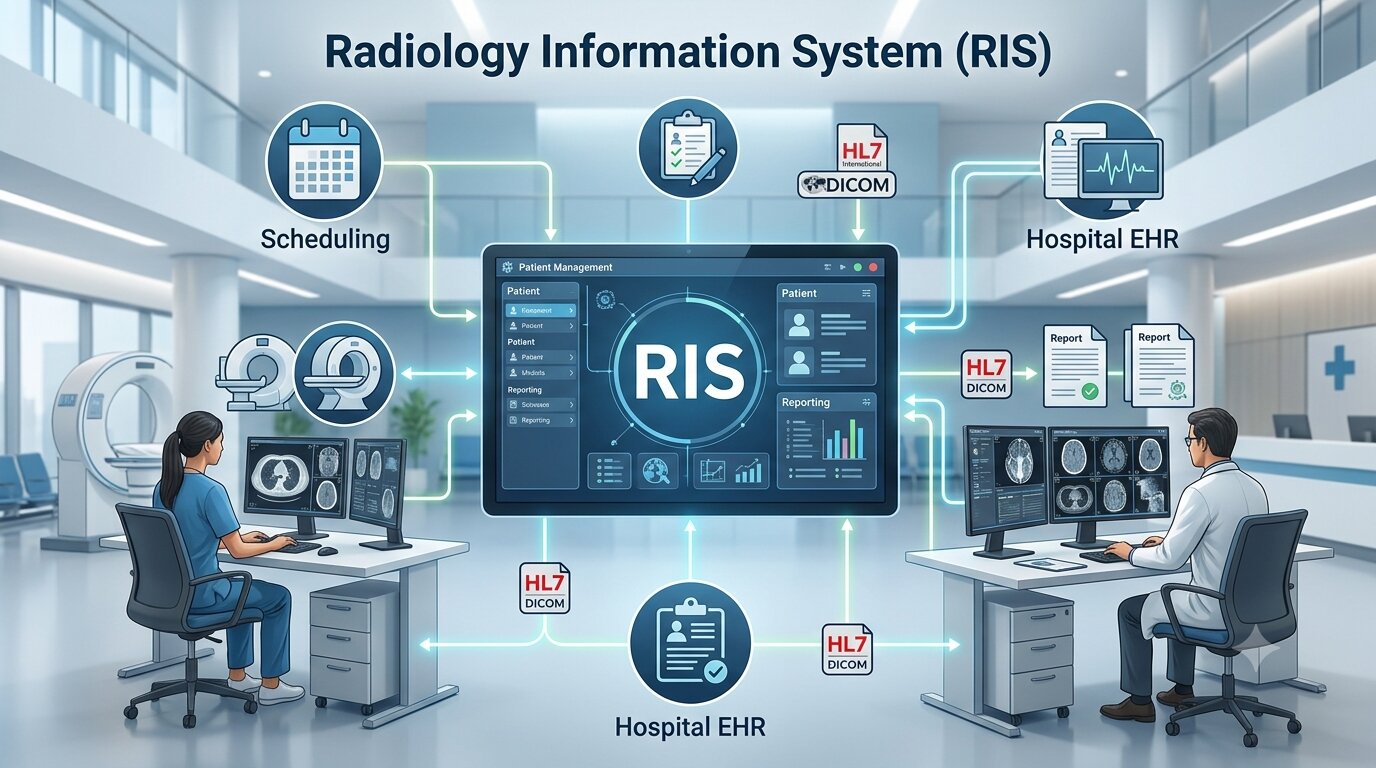
The global Radiology Information Systems (RIS) Market is expanding steadily as healthcare providers continue to adopt digital technologies that improve imaging workflow efficiency and patient care. Radiology information systems have become an integral part of modern healthcare by supporting patient scheduling, registration, image tracking, reporting, billing, and data management within radiology departments. The increasing demand for streamlined clinical operations and faster access to diagnostic information is encouraging hospitals, imaging centers, and specialty clinics to implement advanced RIS solutions.
The growing burden of chronic diseases, including cancer, cardiovascular disorders, neurological conditions, and orthopedic diseases, has significantly increased the demand for diagnostic imaging procedures. This trend is driving the adoption of integrated radiology information systems that enable seamless communication between radiologists, physicians, laboratory systems, and electronic health records.
The integration of cloud computing, artificial intelligence, machine learning, and advanced analytics is further improving workflow automation, report accuracy, resource utilization, and clinical decision-making.
Healthcare organizations are also focusing on interoperable platforms that enable secure data exchange, strengthen care coordination, and improve patient outcomes while meeting evolving regulatory requirements. Increasing investments in healthcare information technology infrastructure, rising demand for value-based healthcare, and the rapid digital transformation of diagnostic services are creating new growth opportunities for the market.
Continuous product innovation, strategic collaborations, and technological advancements are expected to accelerate the adoption of radiology information systems and support sustained market growth over the coming years.

Key Takeaways
- In 2024, the global Radiology Information Systems Market was valued at US$ 1.4 billion and is projected to reach US$ 3.6 billion by 2034, expanding at a CAGR of 9.8% during the forecast period.
- By product type, the market is segmented into Integrated RIS and Standalone RIS, with Integrated RIS dominating the market by accounting for 68.5% of the total market share in 2024.
- Based on deployment mode, the market is categorized into Web-based, On-premise, and Cloud-based solutions. Among these, the Web-based segment held the largest share of 57.2% in 2024.
- In terms of end users, the market is classified into Hospitals & Clinics, Outpatient Department (OPD) Clinics, and Others. The Hospitals & Clinics segment led the market with a 74.6% revenue share in 2024.
- North America emerged as the leading regional market, capturing 41.8% of the global Radiology Information Systems Market share in 2024.
Statistical Information
- The U.S. Office of the National Coordinator for Health Information Technology (ONC) reported that more than 96% of non-federal acute care hospitals in the United States had adopted certified Electronic Health Record (EHR) technology by 2021, with adoption reaching more than 99% by 2023. This widespread digital infrastructure supports the integration of RIS with EHR, PACS, and hospital information systems.
- The ONC reported that over 80% of hospitals electronically sent, received, found, and integrated patient health information with external healthcare organizations, demonstrating increased interoperability requirements for connected healthcare systems, including radiology information platforms.
- The ONC Health IT statistics showed that 91% of office-based physicians in the United States used certified EHR technology, highlighting the growing need for radiology departments to provide digital reports and imaging information through interoperable systems.
- The American Hospital Association (AHA) reported that the United States had approximately 6,100 hospitals in 2024, representing a large healthcare infrastructure base requiring digital solutions for clinical documentation, patient management, imaging workflows, and reporting.
- The National Cancer Institute (NCI) estimated approximately 2,001,140 new cancer cases and 611,720 cancer deaths in the United States in 2024. The increasing need for cancer diagnosis and monitoring drives demand for imaging procedures and efficient radiology workflow management.
- The American Heart Association (AHA) reported that cardiovascular disease caused approximately 928,741 deaths in the United States in 2020, highlighting the continued need for diagnostic imaging services such as CT, MRI, and ultrasound supported by radiology information systems.
- The U.S. Food and Drug Administration (FDA) reported that the number of authorized AI-enabled medical devices exceeded 1,000 by 2024, with radiology being one of the largest application areas. The expansion of AI-based imaging technologies increases demand for RIS platforms capable of supporting advanced workflows.
- The World Health Organization (WHO) reported that digital health has become a global healthcare priority, with more than 120 WHO Member States developing national digital health strategies, supporting long-term adoption of healthcare information technologies.
Regional Analysis
North America Leads the Radiology Information Systems Market
North America dominates the Radiology Information Systems (RIS) Market due to its advanced healthcare infrastructure, strong adoption of healthcare IT solutions, and focus on interoperability. According to the U.S. Office of the National Coordinator for Health Information Technology (ONC), more than 80% of hospitals in the United States electronically sent, received, found, and integrated patient health information with external healthcare organizations, highlighting the region’s strong demand for connected healthcare platforms such as RIS.
Government initiatives by the Centers for Medicare & Medicaid Services (CMS) promoting secure health information exchange are further supporting digital workflow adoption. Increasing investments in artificial intelligence-based medical imaging technologies and healthcare data management solutions are also strengthening RIS implementation.
Asia Pacific Expected to Show Strong Growth
Asia Pacific is expected to witness significant growth due to improving healthcare infrastructure, rising digital health investments, and increasing adoption of electronic healthcare systems. Government-led digital transformation initiatives and growing diagnostic imaging demand are encouraging hospitals and imaging centers to adopt advanced RIS solutions.
Emerging Trends
- Artificial Intelligence Integration in RIS: Radiology Information Systems are increasingly integrating AI technologies to support image analysis, workflow automation, and clinical decision support. AI integration enables RIS platforms to connect with multiple imaging tools using standards such as DICOM, HL7, and IHE frameworks.
- Cloud-Based RIS Adoption: Cloud-based RIS solutions are becoming more common as healthcare providers require flexible systems for managing growing imaging data volumes. These platforms support remote access, centralized radiology operations, and integration with cloud-based imaging environments.
- Interoperability with PACS and EHR Systems: Modern RIS platforms are focusing on stronger interoperability with PACS, EHR, and other healthcare information systems. The use of DICOM, HL7, and FHIR standards helps improve data exchange between radiology departments and healthcare networks.
- Generative AI-Based Radiology Reporting: Generative AI is emerging in RIS workflows to assist with report drafting, clinical summaries, and structured documentation. These technologies aim to reduce manual reporting efforts while keeping radiologists involved in final decision-making.
- Growth of Tele-Radiology Supported RIS Platforms: RIS platforms are evolving to support tele-radiology by enabling digital case distribution, remote reporting, and secure access to imaging information across different healthcare locations.
Use Cases
- Patient Scheduling and Workflow Management: RIS is used to manage radiology appointments, patient registration, examination orders, and workflow tracking within hospitals and diagnostic centers.
- Radiology Report Management: RIS enables radiologists to create, store, update, and share diagnostic reports through structured reporting tools and digital documentation systems.
- RIS-PACS Integration for Imaging Access: RIS connects patient information with PACS imaging systems, allowing radiologists to access medical images and related clinical information during diagnosis.
- Emergency Radiology Case Prioritization: RIS supports emergency imaging workflows by organizing cases, tracking examination status, and helping radiology teams manage urgent diagnostic requests.
- Remote Radiology Reporting: RIS enables remote radiologists to receive cases, review imaging information, and submit reports without being physically present at the healthcare facility.
Conclusion
The Radiology Information Systems Market is experiencing steady growth as healthcare organizations increasingly adopt digital solutions to improve radiology workflows, reporting efficiency, and data management. The rising demand for diagnostic imaging, interoperability with EHR and PACS platforms, and integration of AI, cloud computing, and advanced analytics are transforming RIS into intelligent healthcare infrastructure.
Growing investments in digital health technologies and secure information exchange are further supporting market expansion. With increasing adoption across hospitals, clinics, and diagnostic centers, Radiology Information Systems are expected to play a crucial role in improving connected care, operational efficiency, and future-ready radiology services.




















