


Overview
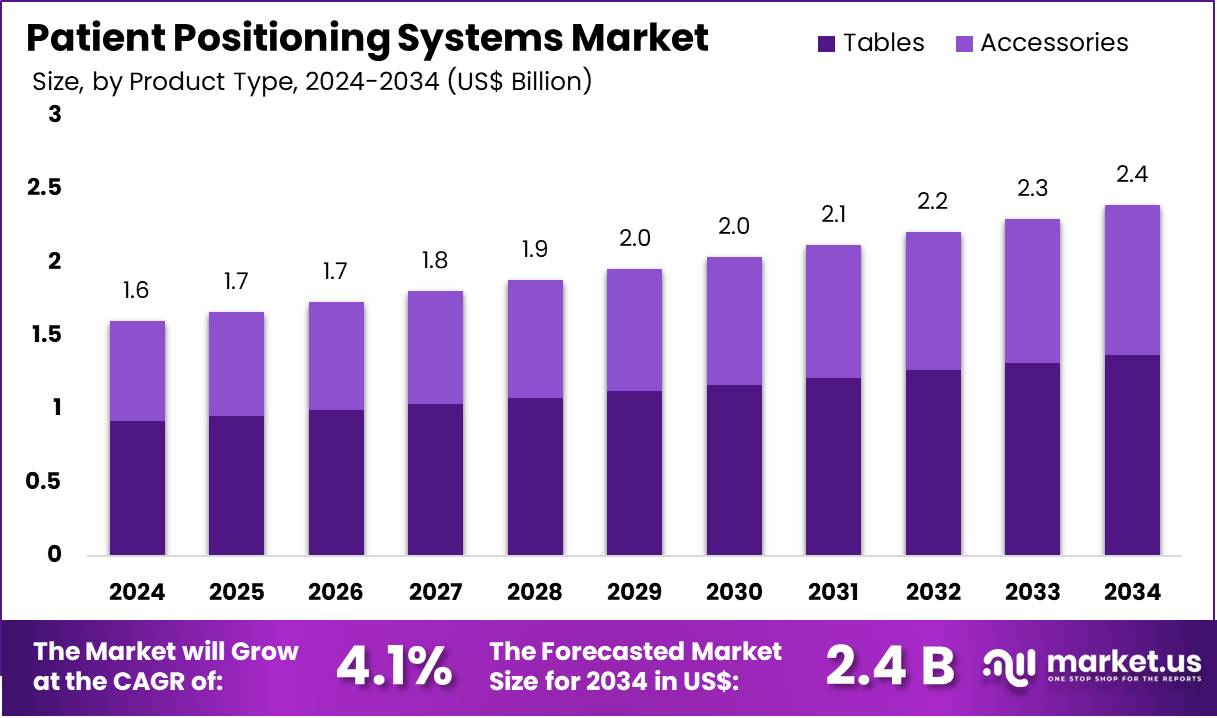
The Global Patient Positioning Systems Market size is expected to be worth around US$ 2.4 Billion by 2034, from US$ 1.6 Billion in 2024, growing at a CAGR of 4.1% during the forecast period from 2025 to 2034.
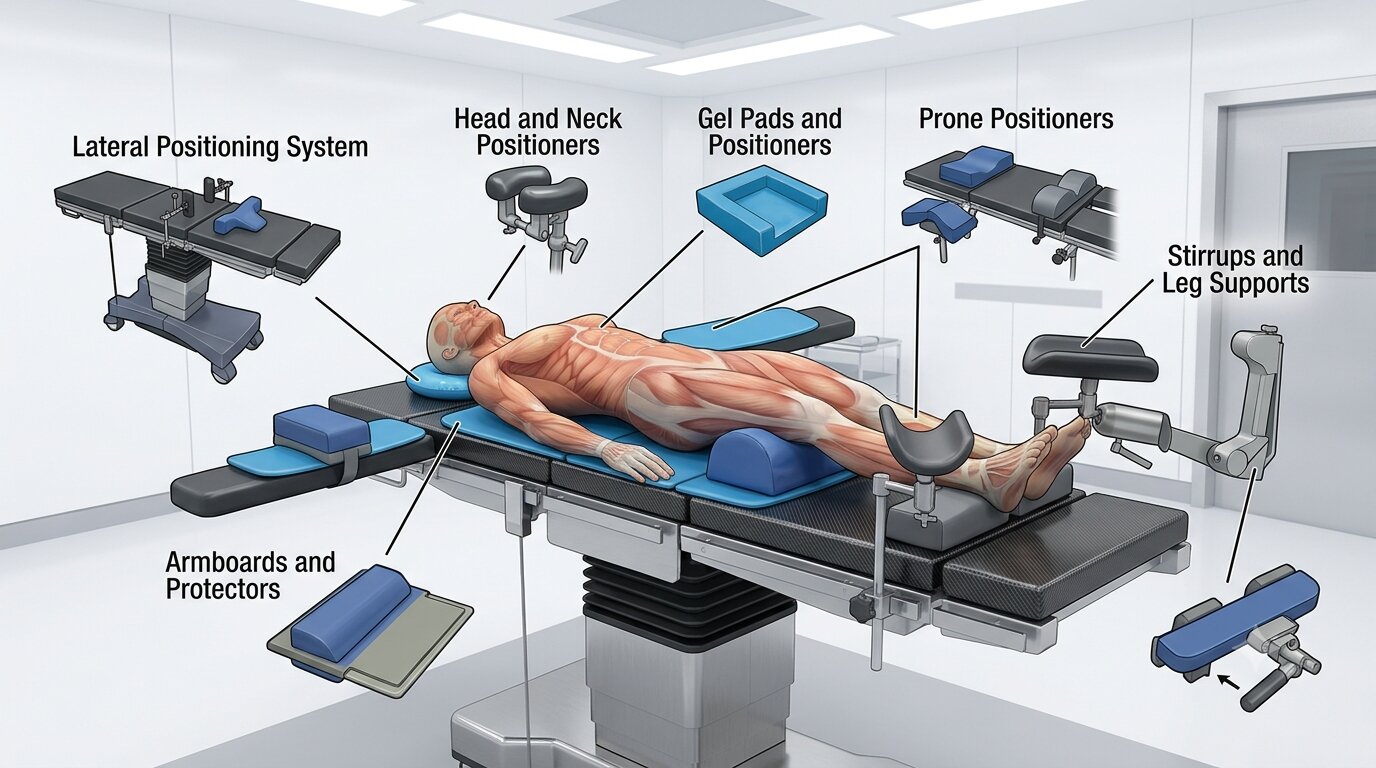
Rising emphasis on surgical safety, operating-room efficiency, and prevention of procedure-related complications is strengthening demand for patient positioning systems across hospitals and surgical centers. These systems help clinicians maintain anatomical alignment, improve surgical access, and support patient stability during procedures.
The World Health Organization (WHO) identifies surgery as a patient-safety priority and reports that more than 300 million surgical procedures are performed worldwide each year. Its Surgical Safety Checklist is designed to improve communication and safety at critical stages before anesthesia, before incision, and before the patient leaves the operating room.
Recent evidence highlights the importance of positioning technology. A 2025 study published through PubMed found that 25.7% of patients in a 140-patient hospital cohort developed Stage I pressure injuries after surgery, with supine positioning identified as a significant risk factor. Such findings reinforce the role of pressure-distributing supports, positioning accessories, transfer solutions, and adjustable operating tables in reducing complications.
Market opportunities are also being shaped by increasing surgical volumes, adoption of minimally invasive procedures, and hospitals’ focus on standardized perioperative protocols. Manufacturers are emphasizing ergonomic designs, radiolucent components, modular accessories, and solutions that improve clinician workflow while supporting patient safety. As healthcare providers prioritize quality outcomes and safer operating environments, patient positioning systems are expected to remain a component of surgical infrastructure.
Key Takeaways
- In 2024, the Patient Positioning Systems Market generated revenue of US$ 1.6 billion and is projected to reach US$ 2.4 billion by 2034, expanding at a CAGR of 4.1% during the forecast period.
- By product type, the market is segmented into tables and accessories, with tables dominating in 2024 with a 57.4% market share, driven by their essential role in supporting patients during surgical and diagnostic procedures.
- Based on application, the market is categorized into surgery, diagnostics, and others. The surgery segment accounted for a leading 63.5% share in 2024, reflecting the growing use of positioning systems in surgical procedures.
- By end user, the market is segmented into hospitals, ambulatory centers, and others. Hospitals held the dominant position in 2024, accounting for 59.8% of the market revenue, supported by their extensive surgical infrastructure and high procedure volumes.
- Regionally, North America dominated the Patient Positioning Systems Market with a 39.6% share in 2024, supported by advanced healthcare infrastructure, substantial surgical activity, and increasing adoption of specialized positioning technologies.
Statistical Information
- More than 300 million surgical procedures are performed worldwide each year, highlighting the enormous clinical need for safe and accurate patient positioning.
- Up to 25% of patients undergoing inpatient operations experience complications, reinforcing the importance of technologies that support safer positioning and perioperative care.
- More than 7 million surgical patients experience complications annually, according to WHO, with approximately 1 million deaths occurring as a result of surgical complications.
- Surgical care accounts for approximately 10% of preventable patient harm in healthcare, making operating-room safety an important area for technology investment.
- More than 3.6 billion X-ray examinations are conducted globally each year, alongside more than 37 million radiotherapy procedures, creating substantial demand for accurate positioning during imaging and radiation treatment.
- CMS’s latest Ambulatory Surgical Center Quality Reporting dataset contains 5,711 ASC facilities, demonstrating the scale of the U.S. outpatient surgical infrastructure that can represent a customer base for positioning equipment.
- CMS’s national OAS CAHPS program measures patient experiences across ambulatory surgical centers and hospital outpatient departments, including whether patients received clear communication about what to expect during and after their procedure, demonstrating the growing importance of patient-centered surgical care.
- FDA records for operating-room pneumatic tables show 12 medical-device report events from 2021–2025, including 8 reports involving unintended movement and 1 involving a positioning problem, highlighting opportunities for manufacturers to improve table stability, safety mechanisms, and positioning precision.
Market Segmentation Analysis
Product Type Analysis
The tables segment held the leading position with a 57.4% market share in 2024, supported by increasing demand for advanced and adaptable surgical tables. These systems are essential for maintaining accurate patient positioning, particularly during complex and lengthy medical procedures. Growing adoption of motorized, height-adjustable, and ergonomically designed tables is improving surgical workflow, accessibility, and patient comfort.
Hospitals and surgical centers are increasingly upgrading operating-room infrastructure with flexible positioning solutions that support different procedures and clinical requirements.
In addition, the rising volume of surgical interventions and greater emphasis on procedural precision are strengthening demand for advanced tables. Technological improvements, including enhanced adjustability and compatibility with modern surgical equipment, are expected to further support the segment’s growth and reinforce its leading position.
Application Analysis
The surgery segment accounted for a 63.5% market share in 2024, making it the dominant application area for patient positioning systems. Its strong position is primarily associated with the growing volume and complexity of surgical procedures worldwide. Accurate patient positioning is essential during surgery because it provides surgeons with better procedural access while supporting patient stability and safety. The increasing adoption of minimally invasive procedures, robotic-assisted surgery, and technologically advanced surgical techniques is further creating demand for precise and reliable positioning solutions.
Patient positioning systems can also help operating-room teams maintain appropriate anatomical alignment throughout procedures and potentially reduce positioning-related complications. As healthcare providers continue prioritizing surgical efficiency, precision, and patient outcomes, demand for positioning technologies across operating rooms is expected to remain strong.
End-User Analysis
The hospitals segment dominated the market with a 59.8% revenue share in 2024, reflecting the extensive use of patient positioning systems across hospital operating rooms and specialized surgical departments. Hospitals perform a wide range of procedures, including orthopedic, cardiovascular, neurological, and general surgeries, creating sustained demand for reliable positioning equipment. The growing adoption of robotic-assisted and minimally invasive procedures is further increasing the need for highly adjustable and precise positioning solutions.
Hospitals are also focusing on improving patient safety, surgical efficiency, and operating-room workflow, encouraging investments in technologically advanced systems. Rising surgical volumes and continuous modernization of healthcare infrastructure are expected to support further adoption. As hospitals remain major providers of complex surgical care, their continued investment in advanced positioning technologies will contribute significantly to overall market expansion.
Regional Analysis
North America led the Patient Positioning Systems Market with a 39.6% share in 2024, supported by high surgical volumes, advanced hospital infrastructure, and widespread adoption of imaging, radiation therapy, and robotic-assisted surgical technologies. Healthcare providers across the region continue investing in equipment that improves patient alignment, procedural accuracy, and operating-room efficiency, while regulatory oversight from agencies such as the U.S. Food and Drug Administration supports the adoption of innovative medical technologies.
Asia-Pacific is expected to record the fastest growth during the forecast period, driven by expanding healthcare infrastructure, increasing cancer incidence, and rising investments in hospitals and diagnostic imaging. Government healthcare modernization programs and growing demand for surgical and radiation therapy services are encouraging hospitals to adopt advanced positioning solutions.
Countries including China, Japan, and India are expanding medical facilities and diagnostic capabilities, creating favorable conditions for increased use of patient positioning systems across hospitals and specialized treatment centers.
Business Opportunities
The Patient Positioning Systems Market presents significant business opportunities as healthcare providers prioritize surgical precision, patient safety, and operating-room efficiency. Demand is particularly strong for motorized, adjustable, and modular operating tables that can accommodate complex procedures and integrate with modern surgical equipment.
The FDA highlights the importance of appropriate training, maintenance, and safe operation of electrical operating-room tables, creating opportunities for manufacturers to differentiate through safety features, staff-training services, and preventive maintenance programs.
Another promising opportunity lies in robotic-assisted and minimally invasive surgery, where precise patient positioning is increasingly important for procedural access and workflow. The FDA notes that robotically assisted systems are used across multiple surgical specialties, supporting demand for compatible positioning infrastructure.
Companies can also expand through specialized accessories, including head, limb, spine, and pressure-management supports tailored to different procedures. Recent FDA records for intra-operative positioning systems demonstrate continued development of technology-enabled positioning solutions.
Geographically, manufacturers can pursue opportunities in emerging healthcare markets by offering cost-efficient, scalable systems for hospitals, ambulatory surgical centers, and diagnostic facilities. Integration with imaging, navigation, and robotic platforms can further create premium product opportunities.
Emerging Trends
- Smart positioning and tracking: Patient positioning is moving toward digitally guided systems that combine tracking, imaging, and procedural navigation. FDA-cleared intra-operative positioning technology in 2024–2025 shows increasing use of computer-assisted tools to improve anatomical alignment during complex procedures.
- Robotic-surgery compatible tables: Operating tables are increasingly designed around robotic workflows, where table tilt, patient orientation, and robotic-arm access must work together. Research reports robotic docking times ranging from 4 to 29 minutes, creating demand for faster and more coordinated positioning.
- Greater focus on positioning safety: Hospitals are placing more emphasis on preventing positioning-related injuries. Recent clinical literature identifies patient factors such as BMI, age, comorbidities, and procedure position as important considerations when selecting positioning devices and protection strategies.
- Connected and flexible operating tables: Modern positioning systems increasingly emphasize multiple powered movements, including height adjustment, lateral tilt, Trendelenburg, back and leg movement, while radiolucent surfaces support imaging during procedures. This creates opportunities for multifunctional table platforms.
- Positioning integrated with quality programs: U.S. healthcare facilities are increasingly evaluated through formal quality and patient-safety programs. CMS’s ASC program collects facility-level measures and publicly reports performance, encouraging facilities to adopt equipment and processes that support safer, measurable care.
Use Cases
- Robotic-assisted surgery: Positioning systems help align patients before robotic docking and maintain appropriate orientation while robotic instruments are connected. Surgical-technology guidelines emphasize carefully aligning the robotic patient cart, operating table, and patient anatomy to avoid contact or injury during setup.
- Radiation therapy: Specialized positioning systems are used to reproduce the patient’s treatment position accurately across radiation sessions. FDA records include dedicated patient-positioning systems classified for radiation therapy, demonstrating their role in maintaining consistent treatment alignment.
- Cardiovascular procedures: Intra-operative positioning technology can support cardiovascular interventions by helping clinicians track and align devices relative to patient anatomy. FDA cleared an intra-operative positioning system for cardiovascular applications in 2024, illustrating this specialized use.
- Minimally invasive procedures: Positioning systems provide controlled table movement and stable patient orientation while surgeons work through small access points. This is particularly important when changing table angles or coordinating instruments, imaging equipment, and surgical teams during complex procedures.
- Ambulatory surgery: ASCs increasingly use positioning equipment for short-stay procedures where efficient room turnover and consistent patient-safety practices are important. CMS’s ASC quality program publicly reports facility performance and includes measures related to patient safety, outcomes, and care processes.
Recent Developments
- In May 2026, Stryker completed its acquisition of Amplitude Vascular Systems, adding next-generation intravascular lithotripsy technology to its peripheral vascular portfolio. The acquisition supports Stryker’s strategy of expanding technologies for treating complex peripheral arterial disease.
- In March 2026, Smith+Nephew showcased its advanced orthopedic handheld robotics, reconstruction, and trauma technologies at AAOS 2026, highlighting continued expansion of technology-enabled surgical workflows and its CORI robotics platform for orthopedic procedures.
- In December 2025, Medtronic received FDA clearance for its Hugo™ robotic-assisted surgery system for urologic procedures in the United States. The clearance covers minimally invasive urologic procedures and marked a major step toward commercial deployment of Hugo in U.S. medical centers.
- In December 2025, LEONI expanded its production footprint in Egypt by inaugurating the Badr 4 facility and laying the foundation for Badr 5. Together with partner Luxshare, the company is introducing more advanced automation and machine-human interaction at the new facilities.
- In November 2025, FluidAI Medical announced an acquisition agreement with Emmetros Limited, developer of SparxConnect. The transaction expands FluidAI’s patient-engagement capabilities by strengthening Stream Inara™, its AI-powered patient education and engagement platform designed to extend care beyond the hospital.
- In August 2025, Medline launched Pack 360 Analysis, a perioperative optimization solution that analyzes surgical workflow and supply utilization. The program is designed to identify opportunities to improve efficiency and optimize surgical packs and procedure supplies within operating-room environments.
- In July 2025, FluidAI Medical secured a US$ 2 million investment from the Government of Canada through FedDev Ontario to accelerate global commercialization of its AI-driven postoperative-care technology and strengthen the company’s manufacturing and commercialization capabilities.
- In February 2025, Stryker completed its approximately US$ 4.9 billion acquisition of Inari Medical through a merger, providing Stryker with entry into the peripheral vascular segment and adding Inari’s portfolio of venous and thromboembolic disease technologies.
Conclusion
The Patient Positioning Systems Market is positioned for steady expansion as healthcare providers place greater emphasis on surgical precision, patient safety, and efficient operating-room workflows. Demand is being supported by advanced surgical procedures, robotic-assisted interventions, imaging, and radiation therapy, while hospitals remain important users of positioning technologies.
Innovation is increasingly focused on adjustable, multifunctional, digitally guided, and integrated systems that improve procedural accuracy and workflow. FDA activity also demonstrates continued development of technologies supporting precise intraoperative positioning and navigation. As healthcare systems modernize their procedural infrastructure, manufacturers can capitalize on opportunities across hospitals, ambulatory centers, specialized surgical departments, and technology-enabled treatment environments.




















