


Overview
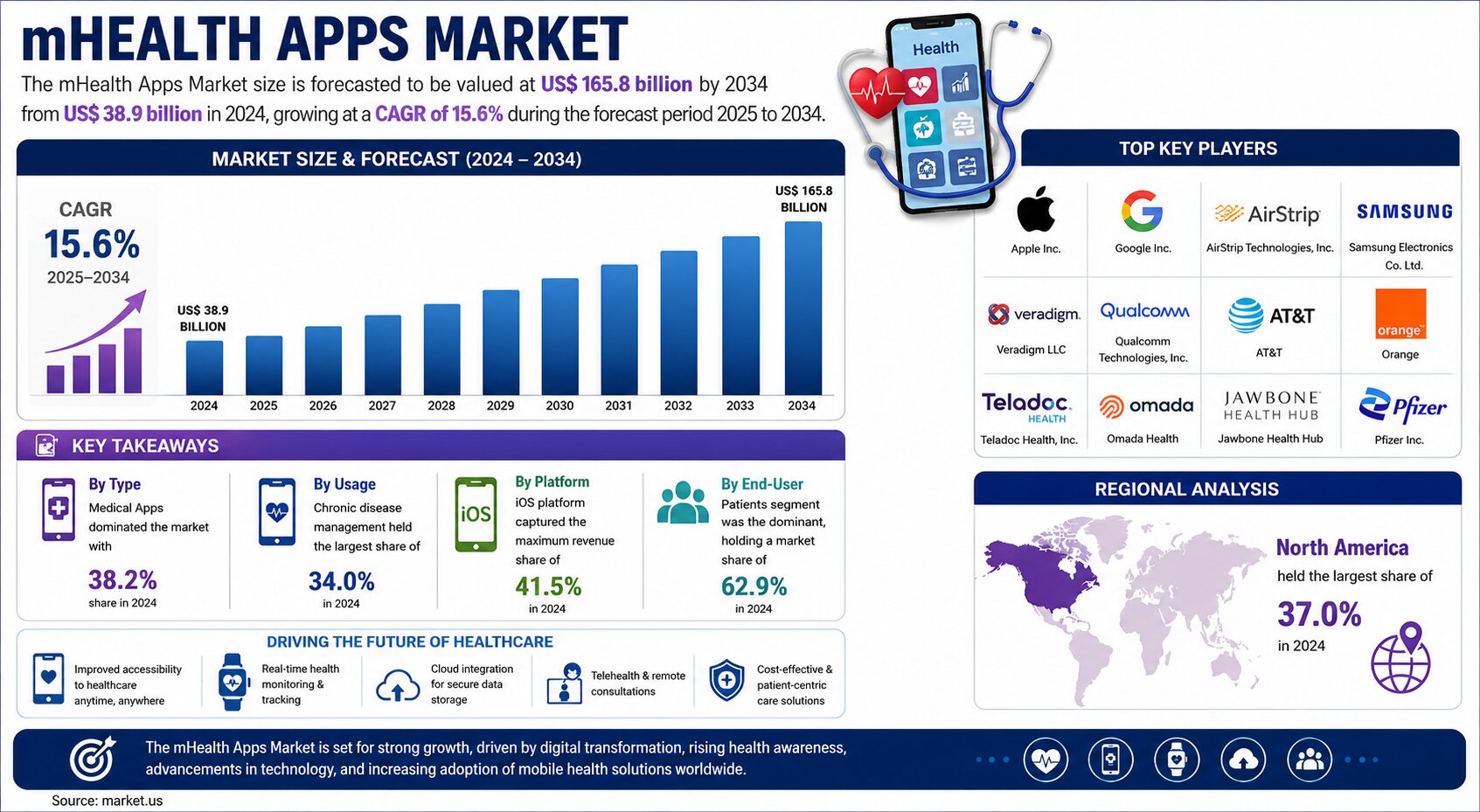
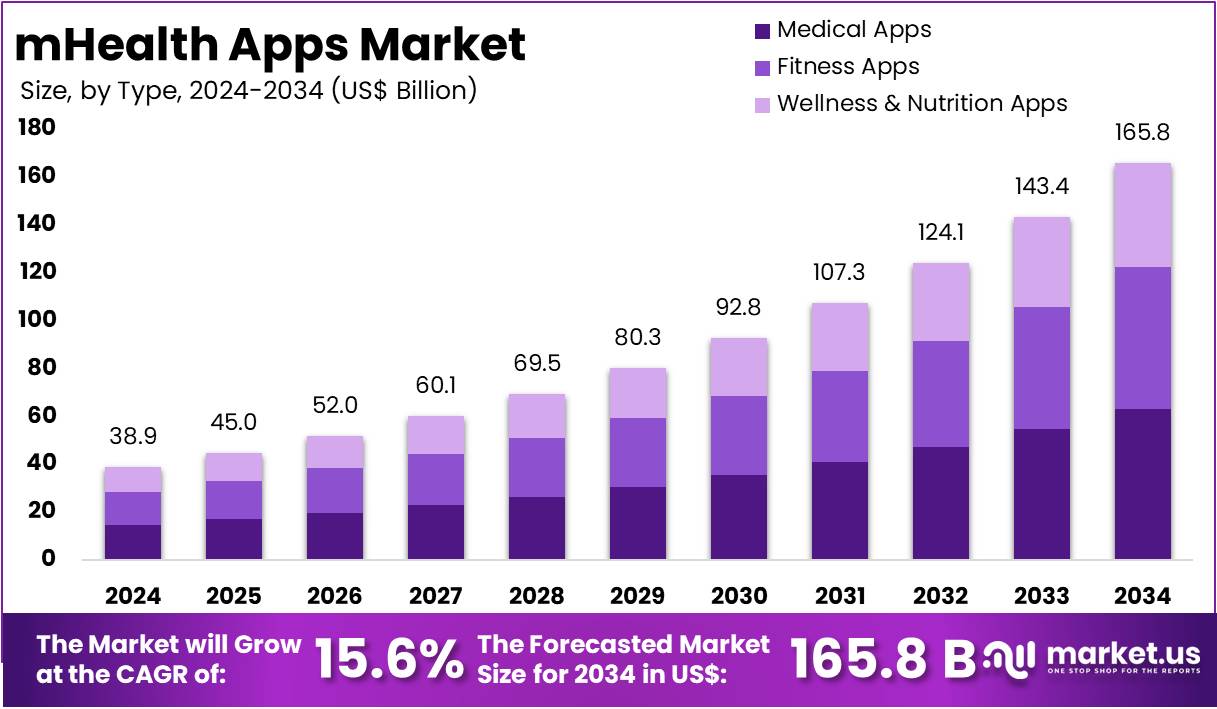
The mHealth Apps Market size is forecasted to be valued at US$ 165.8 Billion by 2034 from US$ 38.9 Billion in 2024, growing at a CAGR of 15.6% during the forecast period 2025 to 2034.
Mobile health (mHealth) applications are becoming a cornerstone of digital healthcare by enabling patients and healthcare professionals to monitor health, manage chronic diseases, access virtual care, and support preventive wellness through smartphones and connected devices.
Rising smartphone penetration, expanding internet connectivity, and increasing demand for remote healthcare services are accelerating adoption across developed and emerging economies. Governments and healthcare organizations are also promoting digital transformation to improve healthcare accessibility, patient engagement, and care coordination.
According to the World Health Organization (WHO), more than 70% of countries now have a national digital health strategy, with scaled digital health programmes underway across every WHO region. This growing policy support is accelerating the adoption of mobile health (mHealth) applications for remote patient monitoring, chronic disease management, preventive care, and improved access to healthcare services through smartphones and connected devices.
The U.S. Food and Drug Administration (FDA) states that digital health encompasses mobile health (mHealth), wearable technologies, telehealth, and health information technologies that improve diagnosis, treatment, disease management, and patient access to care. The agency notes that mobile medical applications can empower patients to better manage their health while supporting healthcare providers with more comprehensive patient information.
The FDA further emphasizes that digital health technologies can reduce healthcare inefficiencies, improve access to medical services, lower costs, enhance care quality, and enable more personalized treatment. As healthcare systems continue integrating mobile technologies with connected medical devices and electronic health records, mHealth applications are expected to play an increasingly important role in preventive care, chronic disease management, and patient-centered healthcare delivery.
Key Takeaways
- In 2024, the global mHealth Apps market was valued at US$ 38.9 billion and is projected to reach US$ 165.8 billion by 2034, expanding at a CAGR of 15.6% during the forecast period.
- The Medical Apps segment emerged as the leading type category, accounting for 38.2% of the global market in 2024.
- Among usage segments, Chronic Disease Management represented the largest share, contributing 34.0% of the market in 2024.
- The iOS platform led the market by platform, capturing a 41.5% revenue share in 2024.
- By end user, the Patients segment dominated the market with a 62.9% share in 2024.
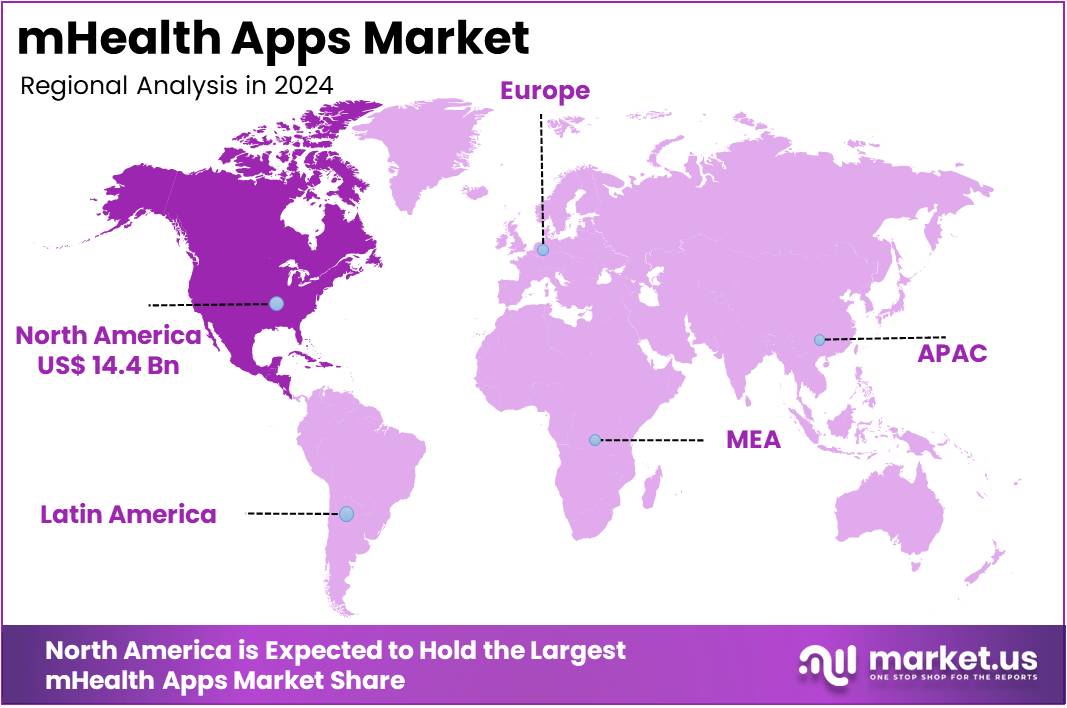
- North America remained the leading regional market, securing a 37.0% share of the global mHealth Apps market in 2024.
Statistical Information
- 65% of individuals in the U.S. were offered and accessed their online medical records or patient portal in 2024, up from 25% in 2014, showing a substantial rise in digital health engagement.
- The share of people using a smartphone app to access their online medical records increased from 38% in 2020 to 57% in 2024, reflecting rapid adoption of mobile health applications.
- 89% of patients who were offered online access to their medical records reported that their healthcare provider encouraged them to use a patient portal in 2024.
- 87% of individuals encouraged by their healthcare provider accessed their patient portal at least once during the past year, compared with 57% of those who were not encouraged.
- 59% of individuals had multiple online medical records or patient portals in 2024, highlighting growing demand for unified mobile health platforms.
- Proxy or caregiver access to patient portals increased from 24% in 2020 to 51% in 2024, demonstrating rising use of digital health tools for family caregiving and chronic disease management.
- Among people who accessed their patient portal, 92% viewed test results and 82% viewed clinical notes when encouraged by their healthcare provider, indicating strong engagement with mobile-enabled health information.
- Only 7% of individuals with multiple patient portals used a portal-organizing application in 2024 to combine records from different healthcare providers, revealing a significant opportunity for integrated mHealth app solutions.
Market Segmentation Analysis
Type Analysis
The Medical Apps segment accounted for the largest share of the global mHealth apps market, capturing 38.2% in 2024. Its leadership is driven by the growing demand for digital solutions that support disease prevention, diagnosis, treatment, medication management, remote patient monitoring, and telemedicine. The increasing burden of chronic illnesses and rising consumer preference for self-care have accelerated adoption of these applications.
Integration with wearable devices such as smartwatches and fitness trackers further enhances their value by enabling continuous monitoring of health metrics. Ongoing technological advancements, including AI-powered analytics and personalized health insights, continue to improve patient engagement and encourage broader adoption, reinforcing the segment’s dominant position.
Usage Analysis
The Chronic Disease Management segment held the largest market share of 34.0% in 2024, reflecting the growing need for continuous monitoring of conditions such as diabetes, cardiovascular diseases, hypertension, and respiratory disorders. mHealth apps help patients track symptoms, receive medication reminders, monitor vital signs, and communicate with healthcare providers remotely, improving treatment adherence and health outcomes.
Digital platforms designed for chronic care are increasingly being adopted by healthcare systems to reduce hospital visits and support preventive care. The rising prevalence of long-term diseases, combined with growing awareness of self-management tools and remote healthcare services, continues to strengthen demand for chronic disease management applications worldwide.
Platform Analysis
The iOS platform dominated the mHealth apps market with a 41.5% revenue share in 2024, supported by its strong ecosystem, high user engagement, and emphasis on security and privacy. Apple’s integration of iPhones, Apple Watch, and HealthKit enables seamless collection and synchronization of health data, providing users with a comprehensive health management experience.
Healthcare providers and developers also favor the platform due to its consistent performance and strict app quality standards. The expanding global iPhone user base, combined with increasing adoption of wearable devices and connected health technologies, continues to support the growth of iOS-based medical applications and reinforces the platform’s leadership in the market.
End-User Analysis
The Patients segment led the global mHealth apps market with a 62.9% share in 2024, driven by rising smartphone adoption, increasing health awareness, and greater demand for convenient digital healthcare solutions. Patients are increasingly relying on mobile applications to manage chronic diseases, schedule virtual consultations, monitor fitness, track medications, and access personalized health information. The expansion of telehealth services and remote patient monitoring has further encouraged patient engagement through mobile platforms.
Growing consumer preference for preventive healthcare and self-management tools, along with improvements in app functionality and accessibility, continues to drive widespread adoption, making patients the largest and fastest-growing end-user group in the mHealth apps market.
Regional Analysis
North America accounted for the largest share of 37.0% of the global mHealth apps market in 2024, driven by advanced healthcare infrastructure, widespread smartphone adoption, and strong digital health integration. The region has witnessed rapid adoption of telemedicine, remote patient monitoring, electronic health records, and wearable technologies, creating a favorable environment for mHealth applications.
Government support for digital healthcare, high healthcare spending, and strong data security regulations continue to encourage innovation and consumer confidence. Growing demand for chronic disease management, preventive care, and virtual healthcare services is further accelerating app adoption. Continuous investments by healthcare providers and technology companies in AI-enabled digital health solutions are expected to sustain North America’s market leadership throughout the forecast period.
The Asia Pacific region is expected to register the fastest CAGR during the forecast period, supported by expanding smartphone penetration, improved internet connectivity, and rapid digital transformation across healthcare systems. Governments are increasingly promoting digital health initiatives to improve healthcare accessibility, particularly in underserved communities.
Rising healthcare expenditure, growing awareness of preventive care, and increasing adoption of telemedicine and wearable devices are boosting demand for mHealth applications. The integration of artificial intelligence, cloud technologies, and remote patient monitoring is enhancing healthcare delivery and patient engagement.
With a large population base, increasing chronic disease burden, and continuous investment in digital healthcare infrastructure, Asia Pacific is expected to offer significant growth opportunities for mHealth app providers.
Business Opportunities
The mHealth apps market presents significant business opportunities as healthcare systems increasingly adopt digital technologies to improve patient access, clinical efficiency, and long-term disease management. One of the largest opportunities lies in remote patient monitoring, where mobile applications integrated with wearable devices enable continuous tracking of vital signs and support early intervention for chronic diseases.
The U.S. Food and Drug Administration (FDA) recognizes mobile health, wearable technologies, and AI-enabled software as important digital health tools that can improve healthcare access, enhance care quality, reduce costs, and support personalized medicine.
Another major opportunity is the development of AI-powered and interoperable mHealth platforms. The World Health Organization (WHO) is promoting global standards for interoperability, digital health infrastructure, and secure data sharing, creating favorable conditions for developers offering integrated healthcare solutions.
The growing adoption of electronic health records, telemedicine, digital therapeutics, medication management, and preventive health applications is expanding commercial opportunities across hospitals, insurers, employers, and home healthcare providers.
WHO also continues to support the scaling of digital health innovations through initiatives such as the Global Initiative on Digital Health and open, standards-based digital health ecosystems, encouraging broader implementation of secure and scalable mobile healthcare solutions worldwide.
Emerging Trends
- AI is becoming a core feature of mHealth apps. The U.S. FDA has authorized more than 1,000 AI-enabled medical devices (as of August 2025), many of which integrate with mobile platforms for imaging, diagnostics, and patient monitoring, accelerating AI-driven healthcare delivery.
- Wearable health monitoring is expanding rapidly. A 2026 peer-reviewed U.S. study estimated 107 million adults used wearable health devices in 2024, with 74 million reporting routine use, creating significant opportunities for mHealth apps that collect and analyze real-time health data.
- Data sharing between patients and clinicians is increasing. The same study found 78 million U.S. adults were willing to share wearable-generated health data with healthcare providers, encouraging greater integration of mobile apps into clinical decision-making.
- Governments are standardizing digital health ecosystems. In 2026, the World Health Organization joined the Open Health Stack Software Foundation to promote interoperable, standards-based digital health systems, supporting future growth of cross-platform mHealth applications worldwide.
- Digital health services continue to expand globally. According to the OECD, the average availability of online digital health services across reporting countries reached 82% in 2024, up from 79% in 2023, supporting wider adoption of mobile health applications.
Use Cases
- Cardiovascular monitoring is a growing use case, with mHealth apps connected to smartwatches enabling continuous heart rhythm and heart-rate monitoring, allowing healthcare professionals to detect abnormalities earlier and improve long-term cardiac care.
- Cancer care support is expanding through wearable-connected mHealth platforms. The 2026 U.S. wearable study estimated 8 million adults with cancer were using wearable devices, creating opportunities for symptom monitoring and remote follow-up through mobile applications.
- Mental health management is increasingly supported by mHealth apps. The same study estimated 31 million U.S. adults with depression or anxiety used wearable devices in 2024, enabling digital tracking of activity, sleep, and wellness indicators.
- Hypertension management is becoming a major application area. Approximately 30 million U.S. adults with hypertension were estimated to use wearable devices in 2024, allowing mHealth apps to monitor health metrics and support medication adherence.
- Physical activity tracking is evolving into a clinical use case. In 2025, the WHO convened international experts to develop global guidance for measuring physical activity using wearable technologies, highlighting the increasing role of mHealth apps in standardized health monitoring.
Recent Developments
- In February 2025, Apple Inc. launched the Apple Health Study in collaboration with Brigham and Women’s Hospital through the Research app. The study uses data from iPhone, Apple Watch, AirPods, and third-party devices to understand how technology can predict, detect, monitor, and manage physical and mental health conditions.
- In November 2025, Sanofi opened applications for the 2025–2026 iDEA-TECH Awards across North America and Europe. The program offers up to US$150,000 in seed funding (North America) for one-year projects focused on AI, digital health, data science, and other emerging technologies to accelerate healthcare R&D and innovation.
- In May 2025, Google announced the global rollout of Medical Records APIs within Health Connect, enabling Android developers to securely integrate FHIR-based medical records including allergies, medications, immunizations, and laboratory results into mobile health applications to improve interoperability.
Conclusion
The global mHealth Apps market is poised for strong long-term growth as digital technologies continue to reshape healthcare delivery and patient engagement. Increasing smartphone adoption, expanding telehealth services, and the integration of artificial intelligence, wearable devices, and remote patient monitoring are driving widespread adoption across healthcare systems.
Supportive government initiatives, growing demand for chronic disease management, and advancements in interoperable digital health platforms are creating new opportunities for developers, providers, and technology companies. As healthcare increasingly shifts toward personalized, preventive, and connected care, mHealth applications are expected to play a central role in improving healthcare accessibility, efficiency, patient outcomes, and overall digital health transformation worldwide.




















