


Overview
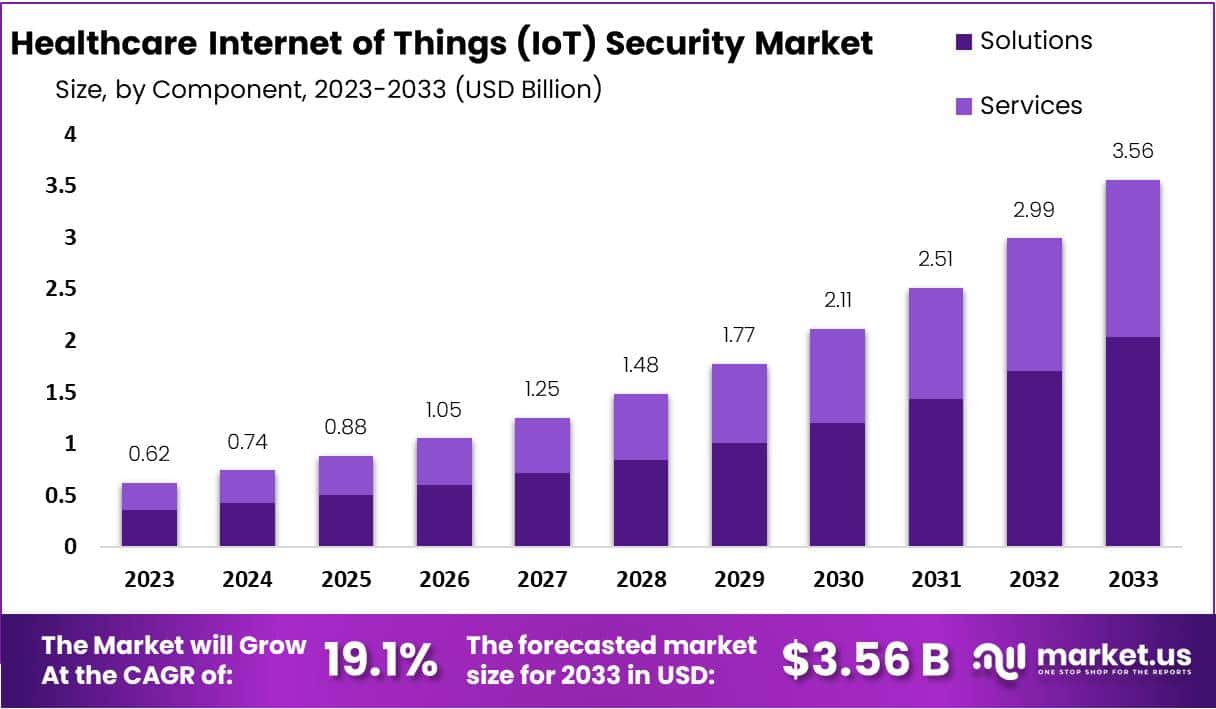
The Healthcare Internet of Things (IoT) Security Market Size is anticipated to reach a value of approximately USD 3.56 Billion by the year 2033, showing significant growth from its 2023 valuation of USD 0.62 Billion. This represents a compound annual growth rate (CAGR) of 19.1% during the forecast period spanning from 2024 to 2033.
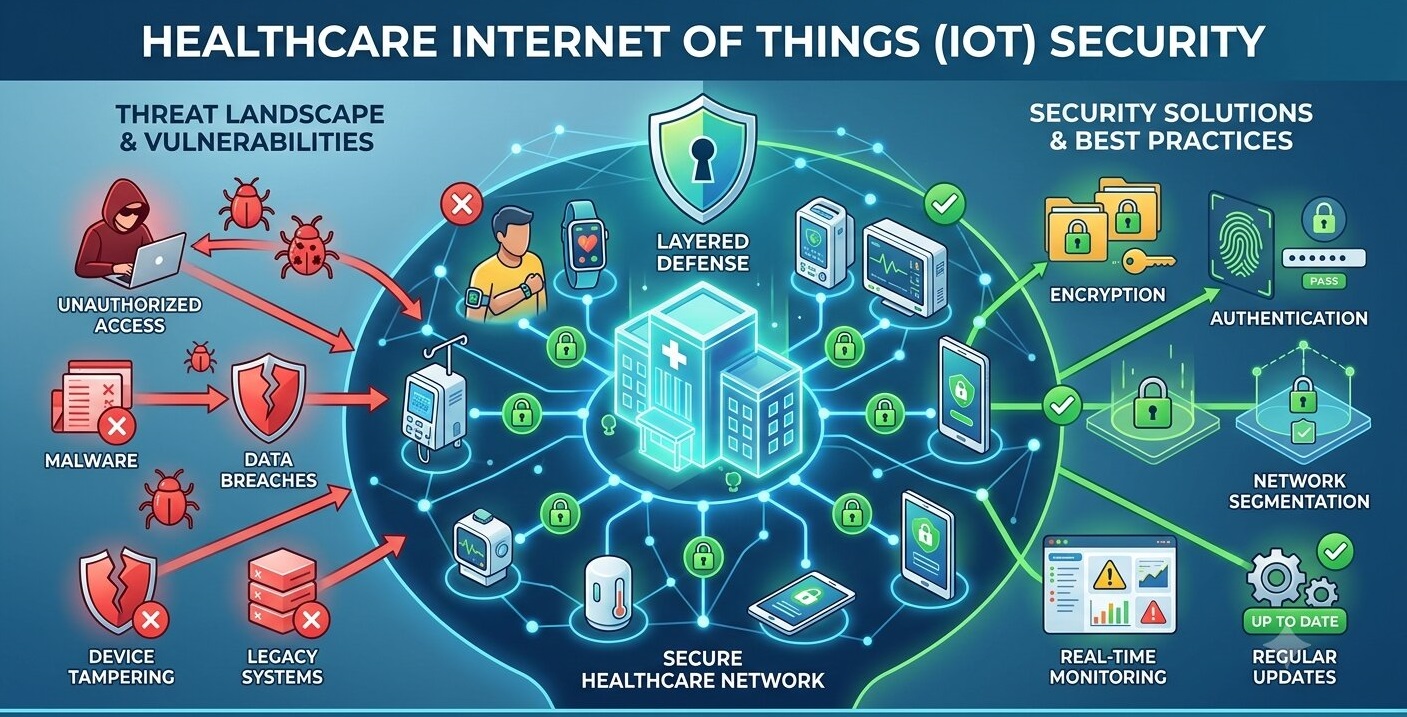
The growing adoption of connected healthcare technologies is increasing the demand for advanced security solutions that protect medical devices, healthcare networks, and sensitive patient information. Hospitals and healthcare providers are rapidly implementing IoT-enabled solutions, including remote patient monitoring systems, connected medical equipment, and digital healthcare platforms, creating a stronger need for cybersecurity protection.
The expansion of connected healthcare infrastructure has increased risks associated with ransomware, unauthorized access, and data breaches. According to the U.S. Department of Health and Human Services (HHS), government reports have identified approximately 4,000 ransomware attacks per day since early 2016, demonstrating the rising cybersecurity challenges faced by organizations managing healthcare data.
Regulatory initiatives are also supporting improvements in medical device security. The U.S. Food and Drug Administration (FDA) added Section 524B to the Federal Food, Drug, and Cosmetic Act, with cybersecurity requirements becoming applicable from March 29, 2023, for certain cyber devices. These requirements encourage manufacturers to develop vulnerability management plans, maintain secure device processes, and provide software component transparency.
Healthcare organizations are increasingly investing in encryption, identity management, network monitoring, vulnerability assessment, and threat detection solutions to strengthen IoT ecosystems. The rising use of telehealth, remote monitoring, cloud-based healthcare platforms, and smart medical devices is expected to create significant opportunities for cybersecurity providers.
As healthcare systems continue digital transformation, IoT security has become a key priority for improving patient safety, protecting health information, and ensuring reliable operation of connected medical technologies.
Key Takeaways
- The Healthcare IoT Security Market is projected to reach USD 3.56 Billion by 2033, expanding at a strong CAGR of 19.1% during the forecast period from 2024 to 2033, driven by increasing cybersecurity concerns across connected healthcare systems.
- The Solutions segment emerged as the leading segment in 2023, accounting for more than 57.1% of the market share, highlighting the growing adoption of advanced security solutions to protect healthcare IoT environments.
- Cloud Security held a significant position in 2023 with a 35.8% market share, reflecting the increasing importance of cloud-based protection measures for securing healthcare data and connected digital platforms.
- Hospitals and Clinics represented the leading end-use segment in 2023, capturing 61.8% of the market share, as healthcare providers increasingly prioritize data security, compliance, and protection against cyber threats.
- North America dominated the Healthcare IoT Security Market in 2023 with a 46.2% market share, valued at USD 0.28 Billion, supported by advanced healthcare infrastructure, high IoT adoption, and strong regulatory cybersecurity frameworks.
Statistical Information
- In 2024, 95% of U.S. office-based physicians adopted any type of Electronic Health Record (EHR) system, while 91% used certified EHR technology, showing the strong digital foundation supporting demand for healthcare cybersecurity and connected system protection.
- More than 99% of U.S. non-federal acute care hospitals have adopted certified EHR systems, demonstrating widespread dependence on interconnected healthcare IT infrastructure that requires advanced security management.
- The percentage of U.S. physicians using any EHR system increased from 42% in 2008 to 95% in 2024, reflecting the rapid transition toward digital healthcare environments and increased need for protecting electronic health information.
- Among large physician practices with 51 or more physicians, 99.1% reported using any EHR system and 98.5% adopted certified EHR technology in 2024, highlighting greater cybersecurity requirements within complex healthcare networks.
- Healthcare data breaches continue to affect large numbers of individuals, with HHS breach reporting records showing individual incidents impacting hundreds of thousands to more than one million patients, emphasizing the importance of stronger healthcare IoT security controls.
- In 2025, healthcare organizations continued reporting major cybersecurity incidents, including breaches affecting 934,326 individuals from a single healthcare provider incident, highlighting vulnerabilities across healthcare networks and connected systems.
- According to ONC data, certified EHR adoption among office-based physicians reached 91% in 2024, nearly doubling from earlier adoption levels and increasing the requirement for secure data exchange, identity management, and access protection.
- The U.S. healthcare sector’s near-universal digital adoption, combined with increasing electronic information exchange between providers, has created a larger connected ecosystem where cybersecurity measures such as encryption, monitoring, and vulnerability management are becoming essential.
Regional Analysis
North America dominated the Healthcare IoT Security Market in 2023, accounting for a 46.2% market share with a valuation of USD 0.28 Billion. The region’s leadership is supported by advanced healthcare IT infrastructure, widespread adoption of connected medical devices, and strong investments in cybersecurity technologies.
Healthcare providers across North America are increasingly focusing on protecting network-connected medical equipment, patient data, and digital healthcare platforms from evolving cyber threats. The U.S. FDA has emphasized the importance of cybersecurity for connected medical devices, highlighting the need for manufacturers and healthcare organizations to implement effective security practices throughout device lifecycles.
Strict regulatory requirements and rising awareness of healthcare data protection continue to strengthen demand for IoT security solutions in the region. Meanwhile, Europe and Asia-Pacific are also witnessing growth due to expanding healthcare digitization, increasing IoT adoption, and greater focus on cybersecurity compliance across healthcare systems.
Emerging Trends
- AI-Powered Healthcare IoT Threat Monitoring: Artificial intelligence is becoming an important trend in healthcare IoT security as hospitals require faster identification of abnormal device activity. AI-based monitoring systems help analyze connected device behavior, detect unusual access patterns, and support quicker cybersecurity responses across complex healthcare networks. Research supported by NIST emphasizes advanced monitoring and risk management approaches for connected IoT environments.
- Hospital-at-Home IoT Security Solutions: The growth of hospital-at-home care is increasing the use of connected medical devices outside traditional healthcare facilities. NIST highlights that home-based healthcare environments introduce additional cybersecurity challenges because hospitals have less control over patient-side networks and personal IoT devices. Security solutions focusing on authentication, network segmentation, and continuous monitoring are becoming essential for safe remote care delivery.
- Medical Device Cybersecurity by Design: Healthcare manufacturers are increasingly integrating cybersecurity features during medical device development instead of adding protection after deployment. The FDA’s cybersecurity guidance focuses on secure device design, vulnerability management, software transparency, and lifecycle protection. The FDA reported that connected devices such as pacemakers, insulin pumps, and monitoring systems increasingly exchange data through networks, increasing the need for built-in security measures.
- Zero-Trust Security for Connected Healthcare Networks: Healthcare organizations are moving toward zero-trust approaches where every device, user, and connection requires verification before accessing sensitive systems. This trend is gaining importance as hospitals connect more medical equipment, cloud platforms, and digital applications. NIST-supported cybersecurity practices emphasize stronger authentication, access controls, and continuous monitoring to reduce risks from compromised IoT devices.
- Remote Patient Monitoring Device Protection: Remote monitoring is expanding through connected wearables, glucose monitoring systems, cardiac devices, and home-based healthcare technologies. The FDA notes that many modern medical devices connect with smartphones, hospital networks, or the internet to share health information, improving care delivery while creating new cybersecurity requirements for protecting patient data and device reliability.
Use Cases
- Connected Patient Monitoring Systems: Hospitals are using IoT-enabled patient monitors to track vital signs such as heart rate, oxygen levels, and blood pressure in real time. These devices require advanced security controls because unauthorized access could affect device operation, patient information, and healthcare network safety. The FDA has highlighted cybersecurity concerns related to connected patient monitoring technologies.
- Smart Medical Equipment Protection: IoT security solutions are increasingly applied to protect infusion pumps, imaging systems, diagnostic devices, and other network-connected medical equipment. The FDA recognizes that internet-connected medical devices improve healthcare capabilities but may also introduce cybersecurity vulnerabilities requiring coordinated protection from manufacturers and healthcare providers.
- Secure Telehealth and Remote Care Platforms: Telehealth services increasingly depend on connected devices and digital communication platforms, creating demand for secure data transmission and identity management. NIST identifies telehealth and smart home integrations as areas requiring cybersecurity controls, including authentication, data protection, and network separation to reduce privacy risks.
- Cloud-Based Healthcare Data Security: Healthcare IoT platforms increasingly rely on cloud infrastructure to collect, process, and analyze medical device information. Security applications such as encryption, access management, and continuous monitoring help protect sensitive healthcare data moving between connected devices, cloud environments, and clinical systems.
- Medical Device Vulnerability Management: Healthcare organizations are adopting IoT security tools to identify vulnerabilities, monitor connected assets, and manage software updates throughout device lifecycles. FDA recommendations encourage manufacturers and healthcare providers to maintain cybersecurity processes that address vulnerabilities before they impact device performance or patient safety.
Frequently Asked Questions About Healthcare IoT Security
- Why is Healthcare IoT Security important for healthcare organizations?
Healthcare IoT Security is important because connected devices such as patient monitors, smart wearables, and medical equipment exchange sensitive health information through networks. Protecting these systems helps prevent unauthorized access, data breaches, device manipulation, and disruptions that may impact patient care. - What are the major cybersecurity risks affecting healthcare IoT devices?
Healthcare IoT devices face risks including malware, ransomware, unauthorized access, weak authentication, outdated software, and network vulnerabilities. Since many devices connect with hospital networks, mobile applications, and cloud platforms, cybersecurity weaknesses can create risks for both healthcare operations and patient safety. - How does the FDA support Healthcare IoT Security?
The FDA supports medical device cybersecurity by providing guidance for manufacturers and healthcare organizations on secure device design, risk management, vulnerability handling, and lifecycle protection. These recommendations help ensure connected medical devices remain reliable and protected against evolving cybersecurity threats. - Which healthcare devices require IoT security protection?
IoT security protection is required for various connected healthcare devices, including remote patient monitoring systems, insulin pumps, implantable devices, smart wearables, imaging equipment, and network-connected clinical systems. These technologies improve healthcare delivery but require security measures to protect device functionality and patient data. - What technologies are used in Healthcare IoT Security solutions?
Healthcare IoT Security solutions commonly use technologies such as encryption, identity and access management, endpoint protection, network monitoring, threat detection, and vulnerability assessment tools. These technologies help healthcare providers secure connected ecosystems and manage cybersecurity risks throughout device operation. - What factors are driving the growth of the Healthcare IoT Security Market?
The Healthcare IoT Security Market is growing due to increasing adoption of connected medical devices, expansion of telehealth services, rising cybersecurity concerns, and stricter regulatory requirements. Healthcare providers are investing in security solutions to protect digital infrastructure and ensure safe operation of IoT-enabled healthcare technologies. - What role does remote patient monitoring play in Healthcare IoT Security demand?
Remote patient monitoring increases the use of connected devices that collect and transmit health information outside traditional healthcare facilities. This creates demand for secure communication, device authentication, and continuous monitoring solutions to protect patient data and maintain reliable healthcare services. - What is the future outlook for the Healthcare IoT Security Market?
The future of the Healthcare IoT Security Market is expected to focus on advanced cybersecurity approaches, including artificial intelligence-based monitoring, zero-trust security models, automated vulnerability detection, and stronger medical device protection. Increasing digital healthcare adoption will continue creating demand for comprehensive IoT security solutions.
Conclusion
The Healthcare IoT Security Market is becoming a critical component of modern healthcare infrastructure as connected medical devices, digital platforms, and remote care technologies continue expanding. Increasing cybersecurity risks, regulatory initiatives, and the need to protect sensitive patient information are encouraging healthcare organizations to adopt advanced security solutions.
Technologies such as AI-based threat detection, zero-trust frameworks, cloud security, and vulnerability management are shaping the future of connected healthcare protection. Regulatory support from organizations such as the FDA further strengthens cybersecurity practices for medical devices. As healthcare systems continue digital transformation, IoT security will remain essential for ensuring patient safety, data privacy, and reliable healthcare operations.




















