


Overview
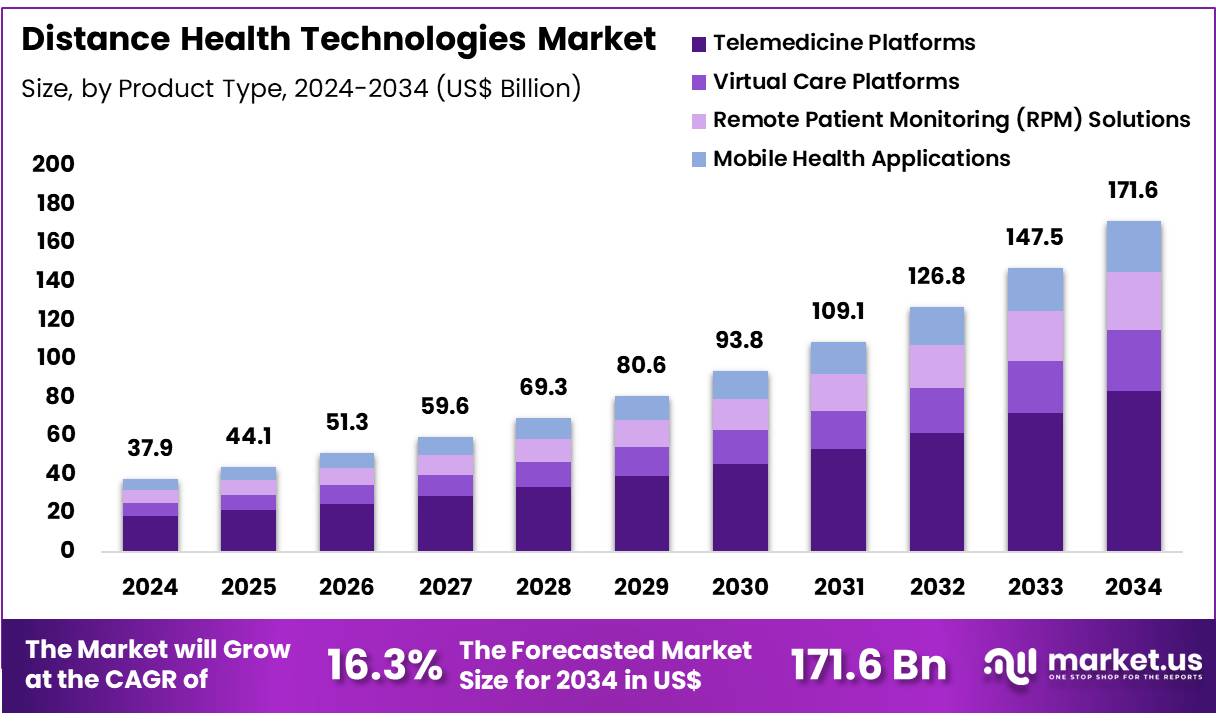
Global Distance Health Technologies Market size is expected to be worth around US$ 171.6 Billion by 2034 from US$ 37.9 Billion in 2024, growing at a CAGR of 16.3% during the forecast period 2025 to 2034. In 2024, North America led the market, achieving over 41.4% share with a revenue of US$ 15.7 Billion.
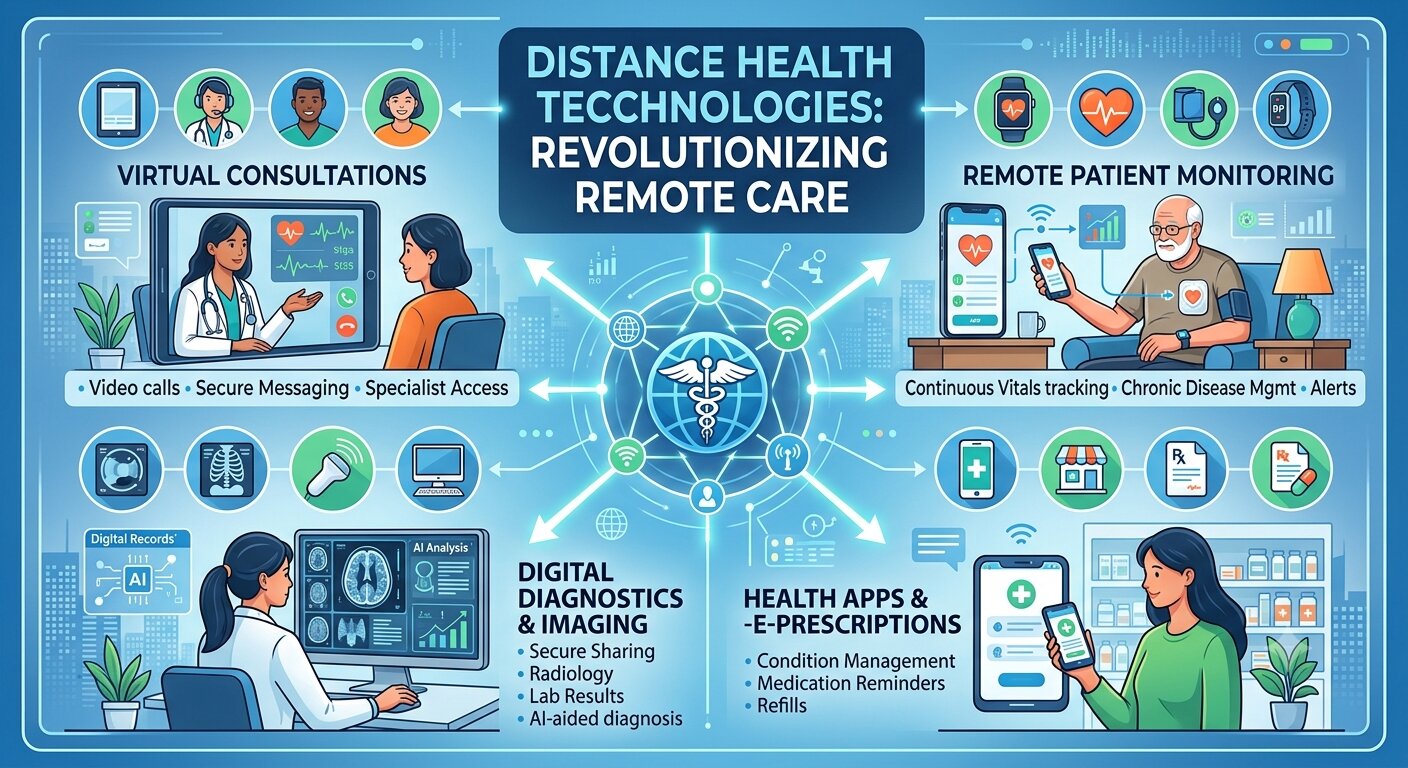
The increasing adoption of digital healthcare solutions is transforming the delivery of medical services beyond traditional clinical environments. Distance health technologies, including telemedicine platforms, remote patient monitoring systems, connected devices, and virtual care solutions, are helping healthcare providers improve accessibility, enhance care coordination, and support continuous patient engagement.
According to the World Health Organization (WHO), telemedicine adoption has expanded significantly, with the number of countries in the WHO European Region using telehealth services more than doubling since 2015.
The rising prevalence of chronic diseases, growing demand for convenient healthcare services, and advancements in digital infrastructure are encouraging healthcare organizations to implement remote care solutions.
These technologies allow physicians to monitor patient conditions, provide virtual consultations, and improve healthcare access for populations in remote and underserved areas. WHO highlights digital health as an important approach for strengthening healthcare systems through improved data use, interoperability, and innovation.
Remote monitoring solutions are increasingly being integrated into healthcare workflows, enabling real-time tracking of vital health indicators such as blood pressure, glucose levels, heart activity, and other clinical parameters. The expansion of connected medical devices and mobile health applications is supporting more personalized and preventive healthcare approaches.
Government initiatives and healthcare digital transformation programs are expected to further accelerate the adoption of distance health technologies. The World Health Assembly extended the WHO Global Strategy on Digital Health through 2027, reflecting continued global commitment toward digital healthcare advancement.
Key Takeaways
- In 2024, the Distance Health Technologies Market generated revenue of US$ 37.9 Billion and is projected to expand significantly, registering a CAGR of 16.3% to reach US$ 171.6 Billion by 2034.
- Based on product type, the market is categorized into telemedicine platforms, virtual care platforms, remote patient monitoring (RPM) solutions, and mobile health applications. Among these segments, telemedicine platforms emerged as the leading segment in 2023, accounting for a market share of 48.7%, driven by increasing adoption of virtual consultations and digital healthcare services.
- By application, the market is segmented into teleconsultation, remote patient monitoring, post-acute care, emergency care, and chronic disease management. Teleconsultation represented a major segment in 2023, capturing a significant market share of 27.6% due to the rising demand for accessible and convenient healthcare delivery models.
- In terms of end users, the market is classified into hospitals & clinics, pharmaceutical companies, long-term care facilities, and home care providers. The hospitals & clinics segment dominated the market, holding the largest revenue share of 47.9% in 2023, supported by the growing integration of remote healthcare technologies into clinical workflows.
- Regionally, North America maintained its leading position in the Distance Health Technologies Market, accounting for a 41.4% market share in 2023, supported by advanced healthcare infrastructure, widespread digital health adoption, and increasing investment in remote care solutions.
Statistical Information
- According to the U.S. Department of Health and Human Services (HHS), more than 20% of U.S. adults reported having a telehealth visit in July 2022, showing continued consumer acceptance of virtual healthcare services.
- HHS reported that 95% of HRSA-funded health centers used telehealth services for primary care delivery in 2024, highlighting the integration of virtual healthcare into community-based healthcare systems.
- Medicare data from HHS showed that 25% of Medicare fee-for-service beneficiaries used at least one telehealth service in 2024, reflecting strong adoption among aging populations requiring frequent healthcare access.
- HHS analysis found that Medicare fee-for-service beneficiary telehealth visits increased by 63 times in 2020 compared with pre-pandemic levels, demonstrating the rapid expansion of remote healthcare adoption.
- CDC National Health Interview Survey data showed that 39.4% of U.S. adults diagnosed with diabetes used telemedicine services in 2022, supporting the growing role of remote care in chronic disease management.
- CDC data indicated that 37.6% of adults with diagnosed prediabetes used telemedicine services in 2022, highlighting demand for digital monitoring and preventive healthcare solutions.
- CDC research reported that in 2022, 28.2% of U.S. adults without diagnosed diabetes or prediabetes used telemedicine services, showing broad consumer adoption beyond chronic disease groups.
- Teladoc Health reported US$2.57 billion in total revenue for 2024, reflecting continued commercial growth of virtual healthcare platforms and digital care services.
Regional Analysis
North America Dominates the Distance Health Technologies Market
North America held a leading position in the Distance Health Technologies Market in 2024, supported by strong digital healthcare infrastructure, rising chronic disease management needs, and favorable reimbursement policies for virtual care services.
The U.S. healthcare system has expanded the use of telehealth and remote patient monitoring, with Medicare covering remote monitoring solutions that allow providers to track patient data such as blood pressure, glucose levels, and weight through connected devices. CMS also continued supporting telehealth access by maintaining coverage pathways for virtual healthcare services, strengthening adoption among providers and patients.
Asia Pacific Expected to Register the Fastest Growth
The Asia Pacific region is projected to witness significant growth in distance health technologies due to increasing healthcare digitization, expanding internet connectivity, and government-led digital health initiatives. Countries across the region are investing in telehealth platforms and remote monitoring solutions to improve healthcare access in rural and underserved areas.
Australia’s government allocated approximately US$107.2 million toward digital health programs and innovations to modernize healthcare delivery and strengthen digital care capabilities. The growing adoption of mobile health applications, AI-enabled healthcare tools, and connected devices is expected to accelerate regional market expansion.
Emerging Trends
- AI Integration in Remote Healthcare: Artificial intelligence is becoming a key trend in distance health technologies by improving patient monitoring, virtual consultations, and clinical decision support. Healthcare providers are using AI tools to analyze health data, identify risks earlier, and enhance personalized care delivery. WHO continues to emphasize AI and digital health governance as important areas for future healthcare transformation.
- Expansion of Interoperable Digital Health Systems: Healthcare systems are increasingly focusing on secure data exchange between electronic health records, telehealth platforms, and connected devices. OECD reported that the average availability of online digital health services among countries with comparable data reached 82% in 2024, supporting broader adoption of connected healthcare infrastructure.
- Growth of Consumer Digital Health Engagement: Patients are showing higher acceptance of digital healthcare tools, including patient portals, mobile health applications, and online medical records. ONC continues tracking increasing consumer access and use of electronic health information, highlighting the shift toward patient-driven healthcare management.
- Remote Monitoring for Chronic Disease Management: Distance health technologies are increasingly used for continuous monitoring of chronic conditions such as cardiovascular diseases, diabetes, and hypertension. Healthcare providers are integrating connected devices and digital platforms to collect patient data remotely and support proactive interventions outside traditional care settings.
- Government Support for Telehealth Infrastructure: Public healthcare programs are strengthening digital care adoption through reimbursement policies, technology investments, and telehealth integration initiatives. HHS reported that HRSA-funded health centers used telehealth for primary care delivery in 2024, reflecting strong institutional adoption of remote healthcare models.
Use Cases
- Virtual Primary Care and Teleconsultation: Distance health technologies are widely used for remote physician consultations, follow-up visits, and healthcare guidance. Telemedicine platforms help patients access medical professionals without traveling, improving healthcare availability for individuals in rural areas and reducing pressure on physical healthcare facilities. WHO identifies telemedicine as an important approach for delivering accessible and patient-centered care.
- Remote Patient Monitoring (RPM): RPM solutions enable healthcare providers to track patient health conditions through connected devices measuring vital signs such as blood pressure, glucose, and heart activity. These technologies support early detection of health changes and allow clinicians to manage high-risk patients remotely. HHS highlights RPM as an expanding component of modern telehealth services.
- Hospital-at-Home and Post-Acute Care: Healthcare organizations are increasingly using distance health technologies to provide hospital-level monitoring at patients’ homes. Digital platforms support recovery tracking, medication management, and virtual nursing services, helping reduce unnecessary hospital visits while improving continuity of care after discharge.
- Digital Support for Elderly Care: Aging populations are creating demand for remote healthcare solutions that support independent living. Distance health technologies help caregivers and healthcare providers monitor elderly patients through connected devices, virtual check-ins, and digital health platforms, improving safety and reducing the need for frequent facility visits.
- Clinical Research and Remote Trials: Pharmaceutical companies and research organizations are increasingly using digital healthcare technologies for decentralized clinical trials. Remote monitoring devices, virtual visits, and digital data collection tools help improve participant access, reduce trial barriers, and support faster collection of real-world health information.
Frequently Asked Questions About Distance Health Technologies
- What are Distance Health Technologies?
Distance health technologies refer to digital solutions that enable healthcare services to be delivered remotely using telecommunications, internet platforms, mobile applications, video consultations, and connected devices. These technologies support remote diagnosis, monitoring, education, and healthcare management without requiring frequent physical visits. - How do Distance Health Technologies work?
Distance health technologies use digital platforms to connect patients and healthcare providers through video calls, mobile applications, wearable devices, and remote monitoring systems. Patient health information is collected through connected tools and shared securely with providers for evaluation and treatment decisions. - What are the major components of Distance Health Technologies?
The major components include telemedicine platforms, virtual care solutions, remote patient monitoring systems, mobile health applications, wearable devices, and digital healthcare communication tools. These solutions help improve healthcare accessibility, support continuous monitoring, and enable better coordination between patients and medical professionals. - What is the role of Remote Patient Monitoring in Distance Health Technologies?
Remote patient monitoring uses digital devices to collect health information such as blood pressure, glucose levels, weight, and heart rate from patients outside healthcare facilities. Providers review this data to monitor conditions, identify risks, and adjust care plans when required. - Which healthcare conditions benefit most from Distance Health Technologies?
Distance health technologies are widely used for chronic disease management, including diabetes, cardiovascular diseases, hypertension, and pulmonary conditions. They help healthcare providers continuously track patient conditions, reduce unnecessary hospital visits, and support early intervention through remote monitoring solutions. - What factors are driving the growth of the Distance Health Technologies Market?
The market growth is supported by increasing demand for virtual healthcare, rising chronic disease cases, healthcare accessibility challenges, advancements in connected devices, and greater adoption of digital health platforms. Government support for telehealth infrastructure is also encouraging healthcare organizations to expand remote care services.
Conclusion
The Distance Health Technologies Market is witnessing rapid transformation as healthcare systems increasingly adopt telemedicine, remote patient monitoring, connected devices, and virtual care solutions to improve accessibility and patient outcomes. Growing digital health investments, chronic disease management needs, and advancements in AI and data interoperability are strengthening market expansion.
Government initiatives and global digital health strategies, including WHO’s extension of the Global Strategy on Digital Health through 2027, highlight continued commitment toward technology-enabled healthcare delivery. As hospitals, patients, and healthcare providers embrace remote care models, distance health technologies are expected to play a crucial role in creating more efficient, personalized, and accessible healthcare ecosystems worldwide.




















