


Overview
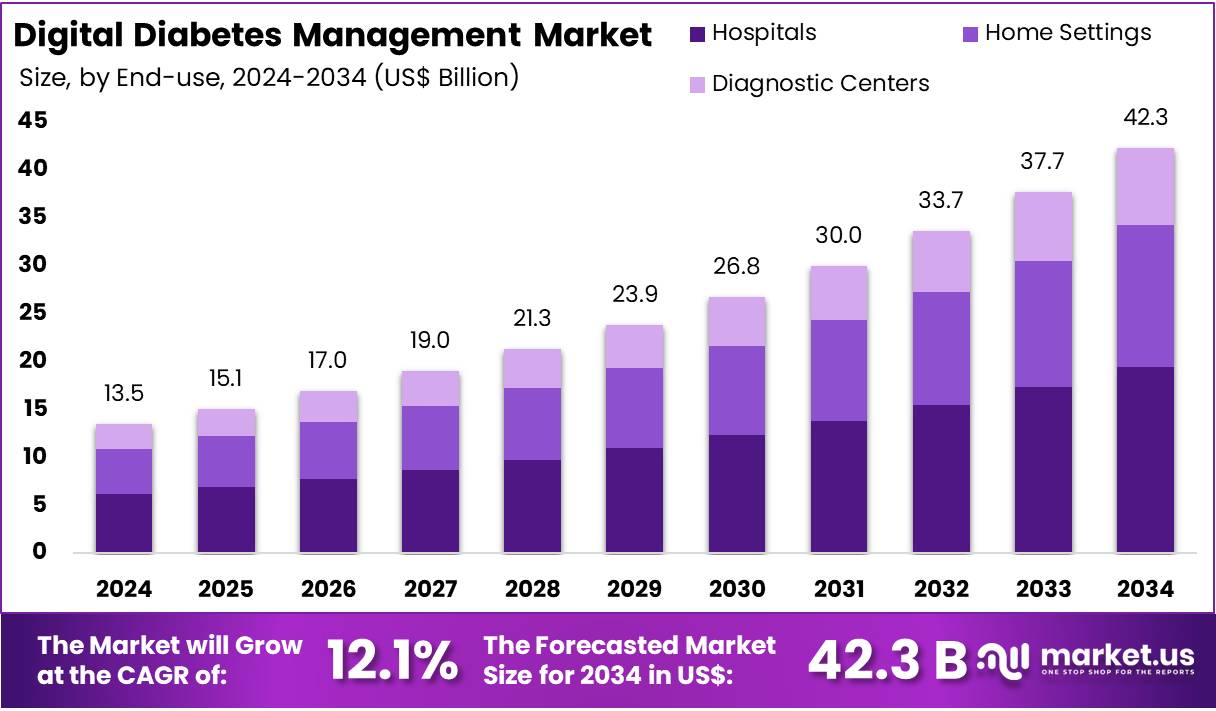
The Global Digital Diabetes Management Market size is expected to be worth around US$ 42.3 Billion by 2034, from US$ 13.5 Billion in 2024, growing at a CAGR of 12.1% during the forecast period from 2025 to 2034. North America held a dominant market position, capturing more than a 43.2% share and holds US$ 5.8 Billion market value for the year.
Growing diabetes prevalence, expanding access to connected healthcare technologies, and increasing emphasis on continuous disease monitoring are strengthening demand for digital diabetes management solutions worldwide. The World Health Organization (WHO) reports that the number of people living with diabetes increased to 830 million globally in 2022, highlighting the need for scalable approaches that support long-term monitoring, treatment adherence, and disease management.
In the United States, the latest Centers for Disease Control and Prevention (CDC) National Diabetes Statistics Report estimates that 40.1 million people were living with diagnosed or undiagnosed diabetes in 2023. The substantial patient population is encouraging healthcare providers and patients to adopt connected tools that can support more frequent monitoring and personalized diabetes care.
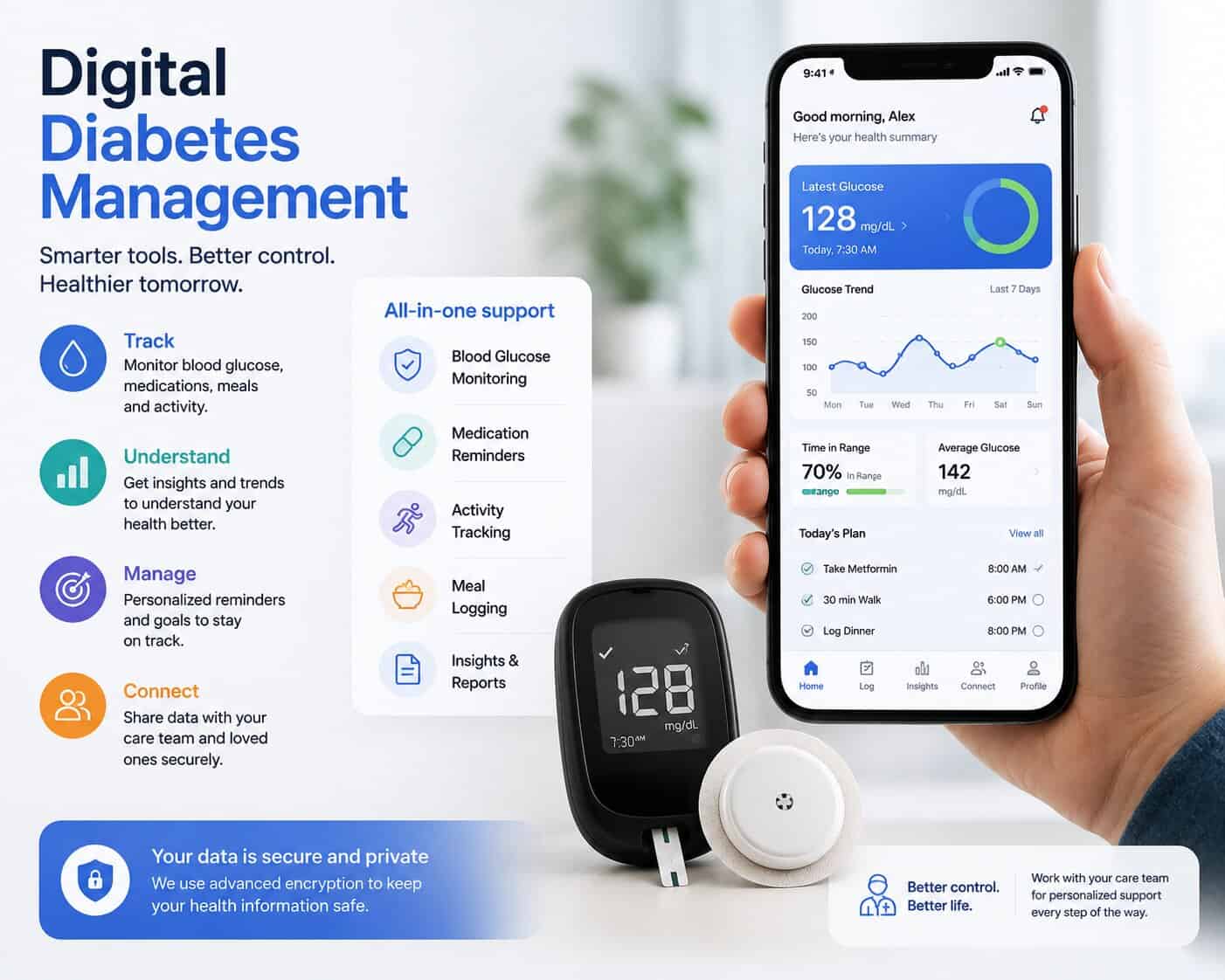
Continuous glucose monitoring (CGM) is becoming an important component of digitally enabled diabetes management. According to the CDC, CGMs can provide real-time glucose readings, automatically transmit information to smartphones or other connected devices, and generate alerts when glucose levels rise or fall rapidly. These capabilities can help patients better understand glucose patterns and support treatment decisions.
Regulatory development is also supporting technology integration. The U.S. Food and Drug Administration recognizes digitally connected CGM systems designed to communicate glucose data with connected devices and services for diabetes management. WHO further emphasizes the integration of digital health technologies, data systems, and innovative monitoring approaches to strengthen diabetes prevention, care, and health-system decision-making.
Key Takeaways
- By 2034, the global digital diabetes management market is projected to reach US$ 42.3 billion, up from US$ 13.5 billion in 2024. The market is expected to expand at a CAGR of 12.1% during 2025–2034.
- In 2024, continuous glucose monitoring (CGM) systems dominated the product segment with more than 39.4% share. Strong demand for real-time and continuous blood glucose monitoring supported segment growth.
- Wearable devices led the type segment in 2024, accounting for over 58.3% of the market. Rising adoption of smart, connected diabetes management technologies contributed to their leading position.
- The hospitals segment held the largest share of the end-use category in 2024, exceeding 45.7%. High patient volumes and established healthcare infrastructure supported its dominance.
- North America maintained its leading position in 2024, generating US$ 5.8 billion and capturing more than 43.2% market share. Advanced healthcare systems and increasing diabetes-management awareness supported regional growth.
Statistical Information
- 48.1% of U.S. adults with diabetes reported using telehealth within the previous 12 months, demonstrating substantial consumer acceptance of digitally delivered diabetes care.
- 60% of adults with diabetes in a recent U.S. study reported using the internet to search for health information, while 42% used it to review test results, highlighting strong digital engagement.
- 50.8% of adults with type 1 diabetes in a T1D Exchange survey were using automated insulin delivery (AID), showing significant adoption of connected insulin-management technologies.
- 55% of participants in a T1D Exchange analysis had used continuous glucose monitoring (CGM) for five years or longer, indicating sustained rather than short-term adoption of wearable glucose-monitoring technology.
- Among U.S. adults aged 65 and older covered by Medicare, 22.4% had diagnosed diabetes, while another 4.7% were estimated to have undiagnosed diabetes.
- Medicare requires qualifying CGM users to have an in-person or approved telehealth visit every 6 months for continued coverage and documentation of adherence, supporting recurring digital-care interactions.
- Approximately 90%–95% of diabetes cases in the United States are type 2 diabetes, representing a substantial potential user population for digital glucose monitoring, connected devices, and personalized management platforms.
- U.S. diabetes-related economic evaluations cited by CMS estimate US$ 237 billion in direct medical expenditure annually, alongside another US$ 90 billion in lost productivity, strengthening the business case for technologies designed to improve disease management and reduce complications.
Market Segmentation Analysis
Product Analysis
In 2024, Continuous Glucose Monitoring (CGM) Systems dominated the product segment of the digital diabetes management market, accounting for more than 39.4% share. Their leading position reflects rising demand for continuous, real-time glucose monitoring and improved diabetes self-management. CGM devices provide timely glucose readings, trend information, and alerts that can help patients identify fluctuations and make informed treatment decisions.
Smart Glucose Meters held the second-largest position, supported by smartphone connectivity, user-friendly interfaces, and convenient home monitoring. Smart insulin pens and pumps are also gaining adoption through dose tracking, reminders, and automated insulin delivery capabilities. Mobile diabetes applications further strengthen digital management by integrating glucose, nutrition, activity, and wearable-device data for more personalized care.
Type Analysis
In 2024, Wearable Devices held the leading position in the type segment of the digital diabetes management market, capturing more than 58.3% share. Their dominance was supported by increasing adoption of continuous glucose monitors, smart insulin pumps, and connected diabetes technologies.
Wearables provide real-time glucose information, alerts, Bluetooth connectivity, and integration with mobile applications, making diabetes monitoring more convenient and data-driven. Their compact design and ability to support continuous tracking have encouraged patients to shift away from traditional monitoring approaches.
Handheld Devices, including blood glucose meters, digital logbooks, and smart insulin pens, remain important because of their affordability and accessibility. However, comparatively lower connectivity and greater dependence on manual data entry limit their growth versus wearable solutions.
End-use Analysis
In 2024, Hospitals dominated the end-use segment of the digital diabetes management market, accounting for more than 45.7% share. Their leadership was supported by increasing adoption of digital monitoring technologies, connected insulin delivery systems, and electronic health records for diabetes care. Hospitals benefit from real-time patient data, enabling healthcare professionals to monitor glucose levels and make timely treatment decisions.
Home settings represented another important end-use category as patients increasingly adopted connected glucose meters, mobile health applications, and wearable devices for self-monitoring. Remote care capabilities have improved convenience and reduced the need for frequent clinical visits. Diagnostic centers also contribute to market demand through digital testing, faster reporting, and cloud-based systems that streamline diabetes screening and ongoing monitoring.
Regional Analysis
In 2024, North America remained the leading region in the digital diabetes management market, accounting for more than 43.2% share and generating US$ 5.8 Billion. Strong healthcare infrastructure, advanced digital technologies, and widespread adoption of connected monitoring solutions support regional demand.
The United States is a major contributor, with the CDC estimating more than 39 million people had diagnosed or undiagnosed diabetes in 2023, strengthening the need for effective digital management tools. Canada is also advancing connected healthcare infrastructure, including a US$ 100 Million investment in the VITAL health data platform to improve secure clinical data connectivity and support digital innovation.
Asia-Pacific is emerging as a high-growth market as diabetes prevention, early detection, and long-term management become healthcare priorities. WHO highlights digital health and information systems as scalable approaches for strengthening diabetes services across the South-East Asia Region.
Business Opportunities
The digital diabetes management market presents significant opportunities for companies developing connected glucose-monitoring ecosystems, particularly CGMs that integrate with smartphones, insulin pumps, and clinical platforms. The CDC notes that CGMs provide real-time glucose readings, trend information, and alerts, creating opportunities for device manufacturers to develop more affordable, longer-duration, and user-friendly solutions.
AI-powered diabetes platforms represent another promising opportunity. Businesses can combine glucose, nutrition, activity, and medication data to deliver personalized insights, predictive alerts, and treatment-support tools. The FDA’s recent digital-health initiatives also demonstrate growing interest in technologies combining real-time data with AI-driven guidance.
There is also room for remote patient monitoring and healthcare-provider platforms that allow clinicians to securely access connected glucose data and manage patients outside traditional clinical settings. FDA classifications specifically recognize CGM systems designed to communicate with digitally connected devices and services.
Additional opportunities include digital therapeutics, diabetes coaching, subscription-based monitoring, interoperable health-data platforms, and affordable solutions for underserved populations, creating multiple avenues for technology companies, healthcare providers, and device manufacturers.
Emerging Trends
- AI-Based Glucose Pattern Analysis: AI is moving digital diabetes management from simple data collection toward predictive and personalized care. New CGM-analysis approaches use artificial intelligence and machine learning to identify glucose patterns and metabolic changes that conventional CGM metrics may miss. This can support more individualized treatment and lifestyle recommendations.
- Plug-and-Play Device Interoperability: Interoperability is becoming an important technology trend as CGMs increasingly need to communicate with smartphones, computers, insulin pumps, and other digital platforms. FDA-recognized standards now define common communication methods for CGM devices, supporting easier integration and reducing dependence on closed technology ecosystems.
- Broader CGM Eligibility and Adoption: CGM use is expanding beyond traditional intensive insulin therapy. The American Diabetes Association’s 2026 Standards of Care recommends considering CGM at diabetes diagnosis and at any time afterward for people who could benefit from it. This broadens the potential user base for connected glucose-management technologies.
- Greater Focus on Smartphone Safety: As diabetes devices become increasingly smartphone-connected, cybersecurity and alert reliability are becoming major priorities. In February 2025, the FDA warned that phone settings, operating-system changes, and connected hardware could interfere with critical diabetes-device alerts. Manufacturers are therefore placing greater emphasis on software validation and dependable notifications.
- Expansion of Digital Diabetes Education: Telehealth is becoming a stronger channel for diabetes self-management education and support. The CDC identifies telehealth as a scalable and reimbursable approach that can reduce transportation barriers and provider shortages while allowing patients to participate through smartphones, applications, and other connected technologies.
Use Cases
- Automated Insulin Delivery: Digital diabetes platforms are increasingly connecting CGMs with insulin pumps and control algorithms. Automated insulin delivery systems can adjust insulin delivery according to glucose information in real time. The ADA recognizes these systems as an important component of modern diabetes technology, particularly for improving glucose management in type 1 diabetes.
- Remote Diabetes Education and Follow-Up: Healthcare providers can use telehealth to deliver diabetes self-management education without requiring every patient to visit a clinic. This is particularly useful for people facing transportation difficulties, provider shortages, or geographic barriers. Smartphone-based access also allows providers to maintain follow-up and education between conventional appointments.
- Caregiver and Family Monitoring: Connected diabetes technologies can extend monitoring beyond the patient. CGM information can be transmitted to compatible smartphones and digital platforms, allowing caregivers and healthcare professionals to receive relevant glucose information. This supports earlier intervention and is particularly valuable when patients require additional monitoring or assistance.
- Personalized Treatment Decisions: Digital platforms can combine continuous glucose information with insulin-delivery data and other patient information to support more personalized treatment. The ADA notes that automated insulin delivery integrates a CGM, insulin pump, and algorithm to adjust insulin delivery in real time, creating a practical use case for data-driven diabetes management.
- Digital Management Across the Diabetes Journey: Digital diabetes tools are increasingly being positioned for use from diagnosis through long-term management rather than only during intensive treatment. The ADA’s 2026 guidance supports CGM use at diabetes onset and afterward when beneficial, while the CDC states that CGMs can benefit people with different diabetes-management needs.
Recent Developments
- In July 2026, Dexcom received Health Canada authorization for Dexcom G7 15 Day, providing adults with diabetes in Canada with up to 15.5 days of wear. The system also offers direct-to-Apple-Watch connectivity and Dexcom Clarity integration, reducing sensor-change frequency and supporting continuous digital glucose management.
- In May 2026, Insulet expanded Omnipod 5 and Omnipod Discover into five Middle Eastern countries, bringing Omnipod 5 availability to 19 countries. The geographic expansion strengthens the company’s international automated insulin-delivery ecosystem and extends access to connected diabetes-management technology.
- In April 2026, Abbott reported results from the FreeDM randomized controlled trial, showing that FreeStyle Libre 3 improved glucose management compared with blood-glucose-meter testing among people with type 2 diabetes using basal insulin. The findings support broader digital glucose monitoring in type 2 diabetes care.
- In February 2026, LifeScan partnered with i-SENS to launch the OneTouch Vita CGM in Europe, initially targeting Germany, Ireland, Portugal, and Belgium by early 2027. The partnership combines LifeScan’s OneTouch brand and distribution network with i-SENS’s CGM technology and manufacturing capabilities.
- In February 2026, Medtronic received FDA 510(k) clearance for its MiniMed Go Smart MDI system featuring Abbott’s Instinct sensor, integrating the InPen smart insulin pen, Abbott CGM sensor, and MiniMed Go app. The development creates a connected multiple-daily-injection ecosystem for insulin-treated diabetes management.
- In November 2025, Ascensia Diabetes Care and Senseonics agreed to unite Eversense R&D, manufacturing, and commercial activities within Senseonics, targeting implementation from January 1, 2026, subject to a definitive agreement. The restructuring was intended to accelerate Eversense growth by consolidating its development and commercialization activities.
- In January 2025, Bayer expanded its partnership with Huma in Saudi Arabia, supporting a diabetes-care pathway through the Seha Virtual Hospital. The initiative combines digital health and virtual-care capabilities to improve diabetes management and access within Saudi Arabia’s healthcare transformation program.
Conclusion
The global digital diabetes management market is entering a strong phase of expansion as connected devices, continuous glucose monitoring, automated insulin delivery, mobile applications, and AI-powered platforms become increasingly integrated into diabetes care. Rising diabetes prevalence and growing consumer acceptance of digital health technologies are creating opportunities across home care, hospitals, remote monitoring, and personalized treatment.
North America remains a leading market, while Asia-Pacific offers substantial growth potential through expanding digital healthcare infrastructure. Recent product launches, partnerships, regulatory approvals, and international expansions by major companies further demonstrate industry momentum. Continued innovation, interoperability, affordability, data security, and patient engagement will shape the market’s long-term development.




















