


Overview
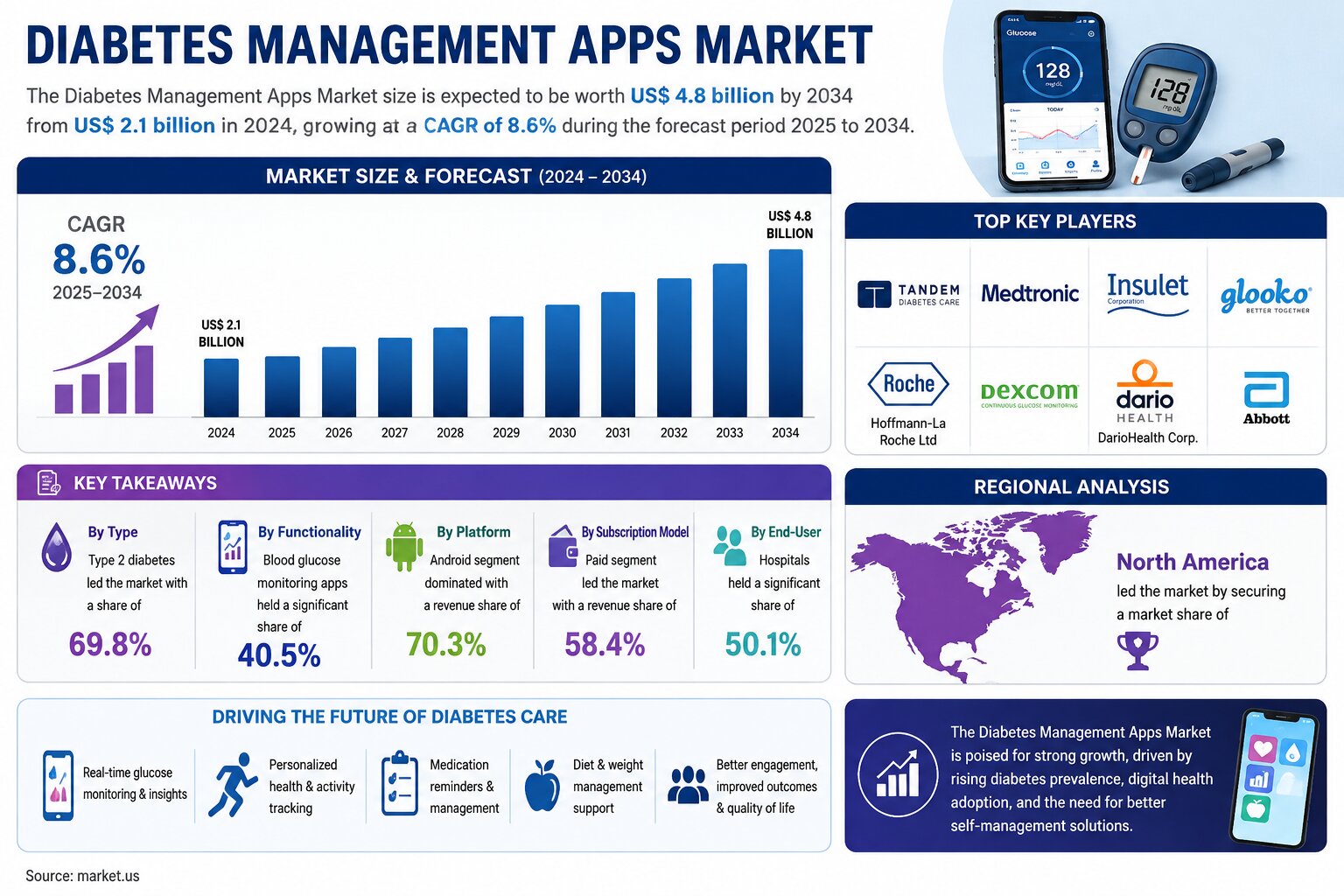
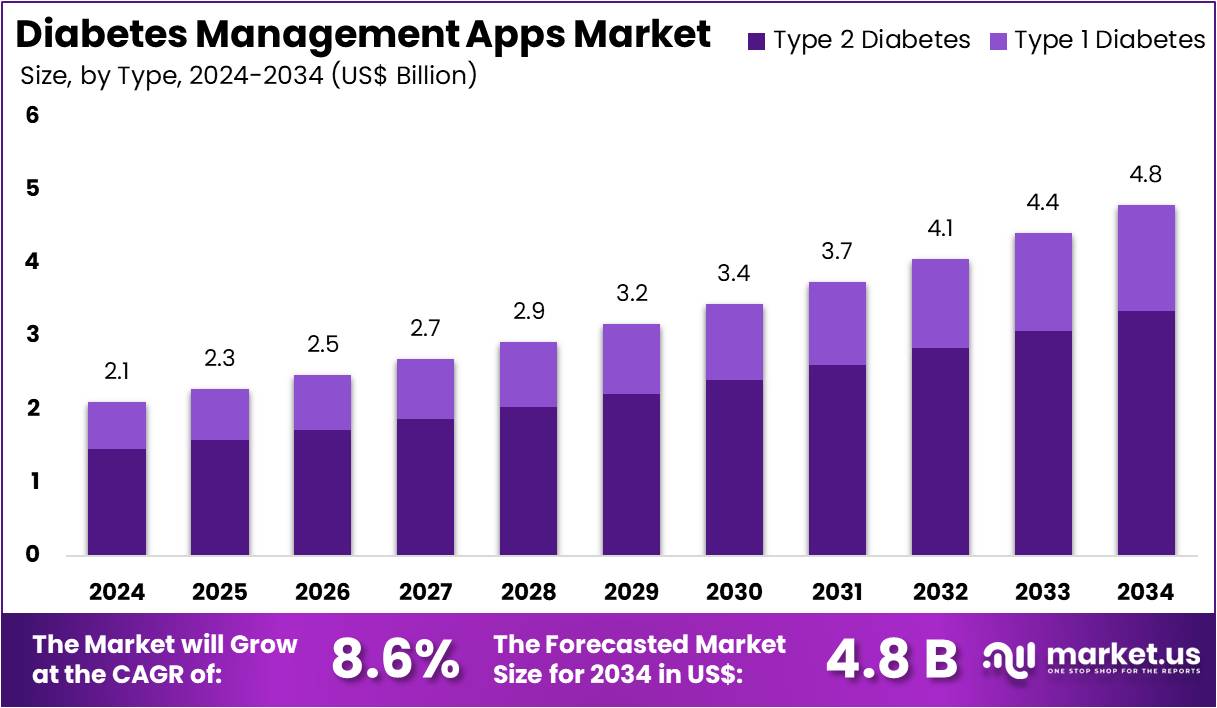
The Diabetes Management Apps Market size is expected to be worth around US$ 4.8 Billion by 2034 from US$ 2.1 Billion in 2024, growing at a CAGR of 8.6% during the forecast period 2025 to 2034.
The growing adoption of diabetes management apps reflects the increasing role of digital health technologies in supporting people with diabetes through continuous monitoring, personalized coaching, medication reminders, nutrition tracking, and integration with connected glucose monitoring devices.
As healthcare systems place greater emphasis on preventive care and self-management, mobile applications are becoming valuable tools that enable patients to monitor blood glucose trends, share health data with clinicians, and make informed lifestyle decisions between clinical visits. Government agencies and healthcare organizations continue to recognize digital self-management solutions as an important complement to traditional diabetes care.
According to the U.S. Centers for Disease Control and Prevention (CDC), an estimated 40.1 million people in the United States were living with diagnosed or undiagnosed diabetes in 2023, representing 12.0% of the population, highlighting the growing need for scalable digital management solutions.
Furthermore, CDC reports that only 52% of adults with diabetes have received Diabetes Self-Management Education and Support (DSMES), indicating significant opportunities for digital platforms to expand access to education and ongoing care. Individuals receiving DSMES are more likely to follow recommended self-care practices, including regular blood glucose monitoring, physical activity, and preventive health screenings.
Additionally, the Community Preventive Services Task Force recommends mobile phone applications used within healthcare systems for people with type 2 diabetes, citing evidence that such apps can improve blood glucose control and support better long-term disease management.
Key Takeaways
- In 2024, the Diabetes Management Apps market generated US$ 2.1 billion in revenue and is projected to reach US$ 4.8 billion by 2034, expanding at a CAGR of 8.6% during the forecast period.
- By type, Type 2 Diabetes dominated the market, accounting for 69.8% of the total market share in 2023, driven by its higher global prevalence.
- Based on functionality, Blood Glucose Monitoring Apps held the leading position with a 40.5% market share, supported by increasing demand for real-time glucose tracking.
- By platform, Android emerged as the dominant segment, capturing 70.3% of the Diabetes Management Apps market due to its widespread global user base.
- Based on the subscription model, the Paid segment led the market with a 58.4% revenue share, reflecting growing demand for premium health management features.
- By end user, Hospitals accounted for the largest share at 50.1%, supported by the integration of digital diabetes management into clinical care.
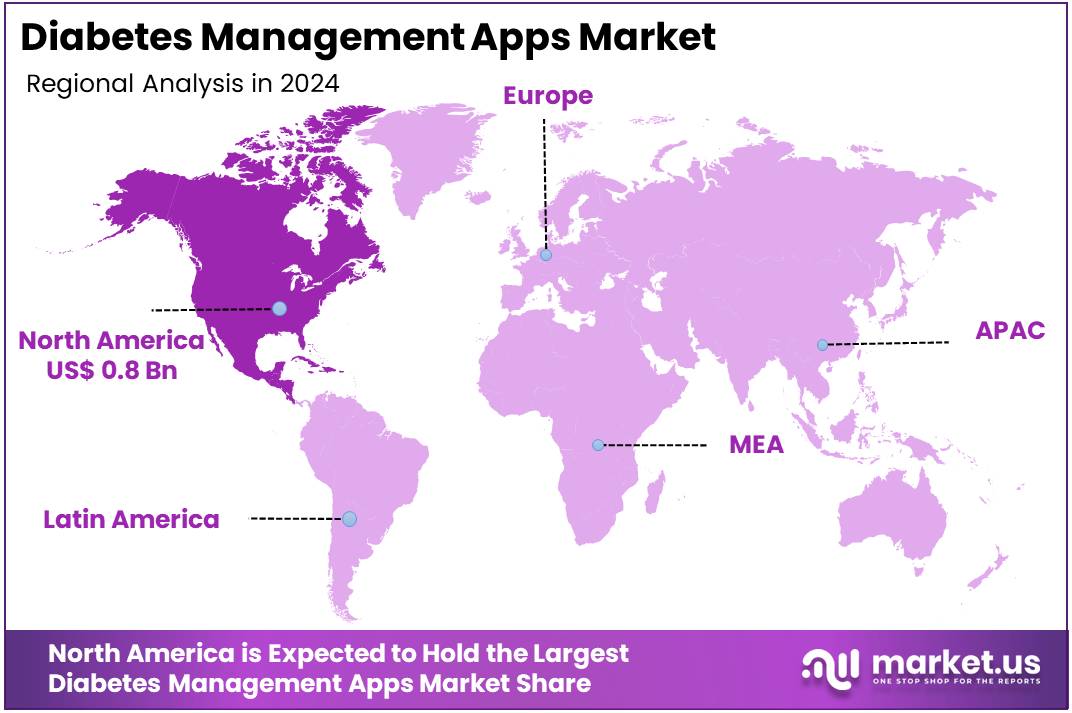
- North America dominated the global Diabetes Management Apps market, securing a 38.6% market share in 2023 owing to high digital health adoption and diabetes prevalence.
Statistical Information
- 31.3 million people in the United States were living with diagnosed diabetes in 2022, while 2.03 million new diabetes cases were reported during the year, highlighting the growing need for scalable digital self-management tools.
- The CDC reports that only 980,255 people with diabetes had at least one encounter with an accredited or recognized Diabetes Self-Management Education and Support (DSMES) provider, despite more than 2,090 recognized DSMES service providers being available across the U.S.
- According to the CDC, less than 5% of Medicare beneficiaries and only 6.8% of privately insured individuals with diabetes receive DSMES within the first year after diagnosis, indicating a significant opportunity for diabetes management apps to bridge education and care gaps.
- The CDC found that only 52% of U.S. adults with diabetes reported receiving diabetes self-management education, even though those who received it were more likely to follow recommended preventive care and self-care practices.
- The CDC National Diabetes Prevention Program had enrolled more than 745,000 participants through 1,502 CDC-recognized organizations, demonstrating strong consumer acceptance of digital and lifestyle-based diabetes prevention initiatives.
- The U.S. FDA cleared the first over-the-counter continuous glucose monitor (CGM) in March 2024, allowing adults who do not use insulin to purchase a CGM without a prescription, significantly expanding the addressable market for diabetes management apps integrated with CGM devices.
- Research presented at the American Diabetes Association (ADA) Scientific Sessions found that CGM use among eligible Medicare beneficiaries increased from 15% in March 2023 to 24% in September 2023 after expanded CMS coverage, demonstrating how reimbursement policies directly influence adoption of connected diabetes technologies.
- The CDC reports that 37 U.S. states have established Diabetes Action Plans, reflecting continued public health investment in digital disease management, education, and chronic care improvement initiatives.
- According to the CDC, the total direct medical cost attributed to diabetes in the United States reached US$361 billion, reinforcing healthcare providers’ focus on technologies that improve adherence and reduce avoidable complications.
- The National Electronic Health Records Survey (NEHRS) continues to monitor nationwide physician adoption of interoperable EHR systems, supporting broader integration between diabetes management apps, connected medical devices, and clinical workflows.
Market Segmentation Analysis
Type Analysis
The Type 2 diabetes segment accounted for the largest share of 69.8% in the diabetes management apps market, reflecting the significantly higher prevalence of this condition worldwide. The increasing incidence of obesity, aging populations, sedentary lifestyles, and poor dietary habits continues to drive the need for digital diabetes management solutions tailored to Type 2 patients. These apps support users with blood glucose tracking, medication reminders, nutrition guidance, and lifestyle coaching, helping improve long-term disease management.
Growing adoption of remote patient monitoring, connected glucose sensors, and telehealth services is further strengthening demand. As healthcare providers increasingly encourage self-management and personalized care, Type 2 diabetes apps are expected to remain the leading segment throughout the forecast period.
Functionality Analysis
Blood glucose monitoring apps dominated the functionality segment with a 40.5% market share, supported by rising demand for continuous glucose tracking and better diabetes self-management. These applications allow users to record blood sugar readings, identify trends, receive alerts for abnormal glucose levels, and share data with healthcare professionals. Integration with continuous glucose monitoring (CGM) devices, wearable technologies, and cloud-based health platforms has significantly enhanced their effectiveness and user convenience.
Increasing awareness of preventive healthcare and the need for real-time monitoring among people with diabetes continue to support market growth. As digital health technologies become more advanced, blood glucose monitoring apps are expected to remain the preferred functionality across diabetes management platforms.
Platform Analysis
The Android platform held the leading position in the diabetes management apps market, accounting for 70.3% of total revenue. Its dominance is driven by the widespread global adoption of Android smartphones, particularly in developing economies where affordable devices have expanded access to mobile healthcare applications. Android’s open ecosystem enables developers to launch innovative diabetes management solutions compatible with a broad range of devices and connected health technologies.
The extensive availability of healthcare applications through the Google Play Store further supports user adoption. As smartphone penetration continues to rise worldwide and digital health becomes more accessible, Android is expected to maintain its leadership in delivering diabetes management applications.
Subscription Model Analysis
The paid subscription segment captured 58.4% of the diabetes management apps market, reflecting strong consumer demand for premium digital health services. Paid applications typically provide advanced capabilities such as personalized health insights, detailed glucose analytics, medication scheduling, physician connectivity, cloud data storage, and enhanced privacy features. Many users view these additional services as valuable for improving diabetes management and achieving better long-term health outcomes.
Healthcare providers and insurers are also increasingly recognizing the benefits of premium digital health platforms in supporting chronic disease management and preventive care. As users seek more comprehensive and personalized experiences, paid subscription models are expected to sustain their market leadership.
End-User Analysis
Hospitals emerged as the largest end-user segment, accounting for 50.1% of the diabetes management apps market. Healthcare institutions are increasingly integrating mobile health applications into clinical workflows to improve diabetes monitoring, treatment planning, and patient engagement. These applications enable healthcare professionals to access real-time patient data, monitor treatment adherence, and communicate more effectively with patients between visits.
Integration with electronic health records (EHRs), connected medical devices, and remote patient monitoring systems has further strengthened their value in hospital settings. As hospitals continue investing in digital transformation and value-based healthcare initiatives, adoption of diabetes management apps is expected to increase, reinforcing the segment’s dominant market position.
Regional Analysis
North America accounted for the largest share of the Diabetes Management Apps market, capturing 38.6% of global revenue. The region’s leadership is supported by the high prevalence of diabetes, advanced digital healthcare infrastructure, widespread smartphone adoption, and growing use of connected medical devices. Healthcare providers are increasingly integrating mobile applications with continuous glucose monitoring (CGM), electronic health records (EHRs), and remote patient monitoring platforms to improve treatment adherence and patient outcomes.
Additionally, the Centers for Medicare & Medicaid Services (CMS) continues to support interoperable patient-facing health applications that securely connect diabetes data across healthcare systems, encouraging broader adoption of digital disease management solutions. Favorable reimbursement policies, continuous innovation by digital health companies, and increasing patient preference for personalized, app-based diabetes care are expected to sustain North America’s leadership throughout the forecast period.
Business Opportunities
The Diabetes Management Apps market presents significant business opportunities as healthcare systems increasingly prioritize digital chronic disease management, preventive care, and patient-centered services. A major growth opportunity lies in integrating mobile applications with continuous glucose monitoring (CGM) devices, wearable sensors, insulin delivery systems, and electronic health records (EHRs), enabling real-time data sharing and personalized treatment.
The U.S. Centers for Medicare & Medicaid Services (CMS) is actively promoting interoperable patient-facing applications that securely connect clinical data for diabetes and obesity management, creating new opportunities for app developers, digital health providers, and healthcare organizations.
Another opportunity is expanding telehealth-enabled diabetes self-management education and support (DSMES) services. According to the CDC, telehealth-based DSMES is scalable, reimbursable, and improves access for underserved populations by allowing education and follow-up through smartphones and digital platforms.
Growing insurance coverage for CGMs also supports market expansion. The CDC notes that Medicare, Medicaid, and many private insurers now cover CGMs for eligible patients, encouraging greater adoption of connected diabetes management applications. Further opportunities include AI-powered personalized coaching, predictive analytics, multilingual patient engagement, corporate wellness programs, and value-based care partnerships, allowing technology companies to deliver integrated digital solutions that improve clinical outcomes while reducing long-term healthcare costs.
Emerging Trends
- Integration with Continuous Glucose Monitors (CGMs) is accelerating. Modern diabetes apps now receive glucose readings automatically every few minutes from connected CGMs, enabling real-time alerts and trend analysis. The CDC recommends a Time in Range (TIR) goal of 70% (about 17 hours per day) for most people with diabetes, making app-based monitoring increasingly valuable for daily disease management.
- Healthcare systems are prioritizing interoperable digital health platforms. The CDC and the U.S. ASTP/ONC are advancing nationwide adoption of FHIR and TEFCA standards so health apps can securely exchange patient information with hospitals and public health systems. This trend is encouraging developers to build diabetes apps that integrate seamlessly with EHRs and connected devices.
- Diabetes apps are expanding beyond insulin users. Following the FDA’s approval of the first over-the-counter continuous glucose monitor in 2024, digital health companies are developing apps for people with prediabetes, wellness users, and those managing lifestyle changes, significantly broadening the potential user base for diabetes management platforms.
- AI-powered glucose insights are becoming a key differentiator. Healthcare researchers are increasingly applying artificial intelligence to continuous glucose monitoring data to identify glucose patterns, predict fluctuations, and deliver personalized recommendations. These capabilities are expected to improve treatment decisions and support more individualized diabetes management through mobile applications.
- Growing diabetes prevalence continues to support digital adoption. According to the CDC, approximately 115.2 million U.S. adults had prediabetes in 2023, while 11.0 million adults with diabetes remained undiagnosed. These figures are encouraging healthcare providers and technology companies to invest in accessible mobile applications for early detection, monitoring, and long-term disease management.
Use Cases
- Real-time glucose monitoring and alerts remain the primary use case. Diabetes apps connected to CGMs automatically notify users when glucose levels rise or fall, helping reduce the risk of severe hypoglycemia or hyperglycemia. The FDA has also issued guidance encouraging users to regularly verify smartphone alert settings to ensure critical notifications are received.
- Remote patient monitoring for clinical care is expanding across hospitals and physician practices. Diabetes apps allow clinicians to review glucose trends, medication adherence, and patient-generated health data between appointments, enabling faster treatment adjustments while reducing unnecessary in-person visits through connected digital care pathways.
- Personalized lifestyle coaching is becoming a standard feature. Mobile applications combine glucose readings with meal logging, exercise tracking, sleep monitoring, and medication schedules to deliver customized recommendations that help users improve glycemic control and maintain healthier daily routines.
- Diabetes care scheduling and preventive reminders are emerging as an important use case for diabetes management apps. The CDC recommends daily blood sugar checks, daily foot inspections, 150 minutes of physical activity per week, and regular A1C, eye, kidney, and foot examinations. Apps that automate reminders, track completion, and notify users of upcoming preventive care can improve adherence and reduce the risk of diabetes-related complications while supporting long-term disease management.
- Secure data sharing across healthcare ecosystems is becoming an important clinical application. Modern diabetes apps are increasingly designed to exchange standardized health information with electronic health records and provider systems, improving care coordination, reducing duplicate records, and supporting data-driven treatment decisions across healthcare organizations.
Recent Developments
- In December 2025, Glooko, Inc. introduced major enhancements to its Glooko Mobile App, including a redesigned food tracker, improved insulin cards, and GLP-1 medication tracking, enabling care teams to make more informed treatment decisions using patient-generated data.
- In November 2025, Tandem Diabetes Care received U.S. FDA clearance enabling the Tandem Mobi insulin pump to be fully controlled using compatible Android smartphones, expanding mobile accessibility for automated insulin delivery.
- In September 2025, Dexcom, Diabeloop, SOOIL Development, and Mediq partnered to launch the DBLG1 automated insulin delivery system with the Dana-i insulin pump in Germany, expanding connected diabetes management solutions across the German market.
- In March 2025, Tandem Diabetes Care launched Control-IQ+ automated insulin delivery technology in the U.S. for the Tandem Mobi and t:slim X2 insulin pumps. The updated algorithm supports more people with Type 1 diabetes and enhances smartphone-enabled diabetes management.
Conclusion
The Diabetes Management Apps market is witnessing steady growth as healthcare providers and patients increasingly embrace digital solutions for chronic disease management. Rising diabetes prevalence, expanding adoption of continuous glucose monitoring (CGM), telehealth, and connected healthcare technologies are accelerating demand for intelligent mobile applications that improve treatment adherence and patient engagement.
Advances in artificial intelligence, interoperability with electronic health records, and personalized coaching are further enhancing the value of these platforms. Supportive government initiatives, favorable reimbursement policies, and ongoing product innovation by leading technology companies are expected to strengthen market expansion, making diabetes management apps an essential component of future patient-centered diabetes care worldwide.




















