


Overview
The Global Clinical Decision Support System Market Size is expected to be worth around US$ 16.2 Billion by 2034 from US$ 5.8 Billion in 2024, growing at a CAGR of 10.8% during the forecast period 2025 to 2034. North America held a dominant market position, capturing more than a 40.3% share and holds US$ 2.3 Billion market value for the year.
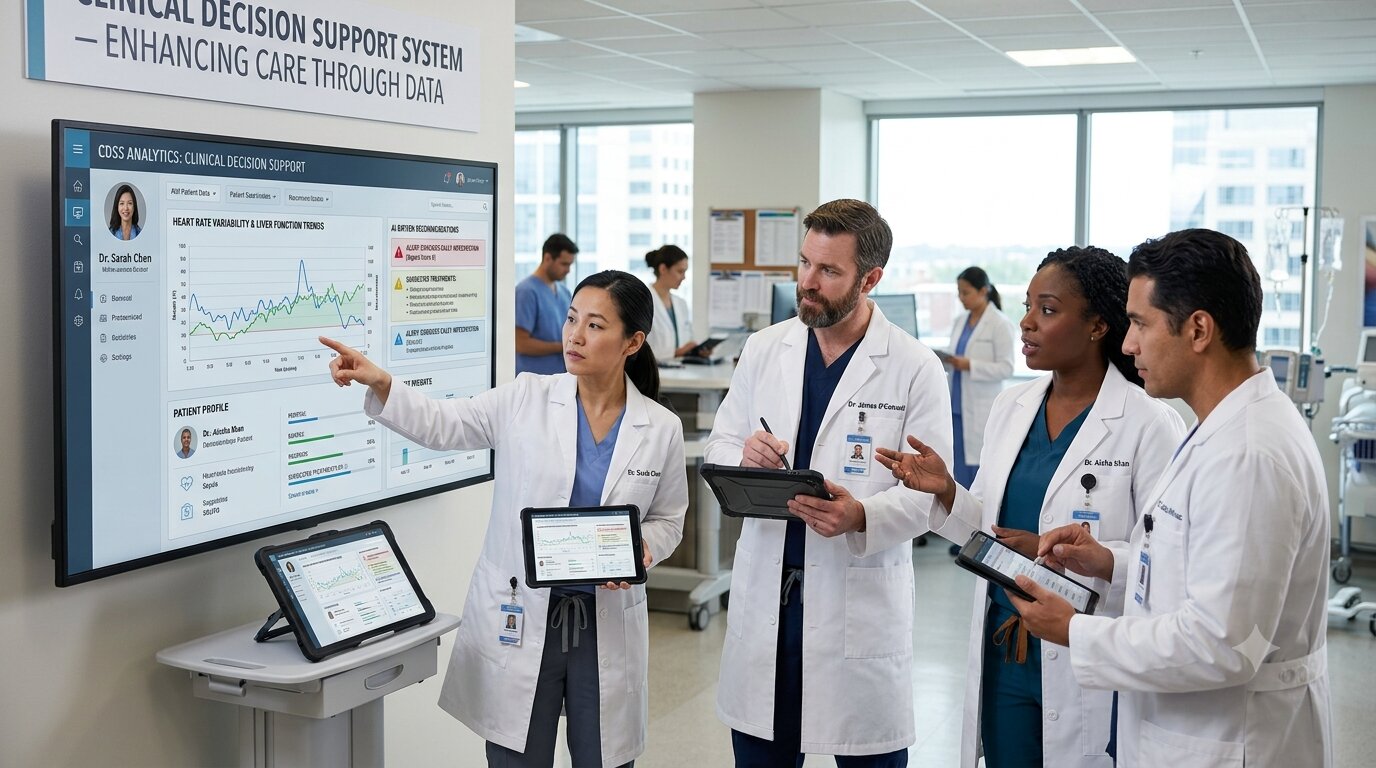
Clinical decision support systems are becoming an increasingly important component of digital healthcare infrastructure as providers seek to deliver timely, evidence-based information at the point of care. The U.S. Office of the National Coordinator for Health Information Technology (ONC) describes clinical decision support (CDS) as technology that provides relevant, person-specific information to healthcare professionals and patients to support better care decisions. Applications include medication alerts, clinical guidelines, condition-specific order sets, reminders, diagnostic support, and patient-centered decision tools.
The growing integration of electronic health records, interoperable health information, predictive analytics, and artificial intelligence is expanding the capabilities of CDS platforms. ONC notes that interoperability standards are evolving to support more sophisticated CDS applications and improved use of routinely captured clinical data.
In January 2026, ONC released Draft United States Core Data for Interoperability Version 7, adding proposed data elements designed to advance nationwide health information exchange and support evolving clinical use cases.
Regulatory clarity is also shaping development. In January 2026, the U.S. Food and Drug Administration issued final guidance on Clinical Decision Support Software, clarifying which software functions may fall outside the medical-device definition and which remain subject to FDA oversight.
The agency subsequently held a dedicated CDS guidance town hall on March 11, 2026. The FDA also emphasizes transparency, including clear descriptions of intended use, input data, algorithm development, validation, and relevant patient-specific information, helping clinicians independently assess recommendations before making decisions.

Key Takeaways
- In 2024, the Clinical Decision Support System market generated US$ 5.8 billion in revenue and is projected to reach US$ 16.2 billion by 2034, expanding at a CAGR of 10.8% during the forecast period.
- By product type, the market is segmented into standalone CDSS, integrated EHR with CDSS, integrated CPOE with CDSS, and integrated CDSS with CPOE & EHR. Among these, standalone CDSS dominated in 2024, accounting for a 40.7% market share.
- Based on delivery mode, the Clinical Decision Support System market is categorized into web-based, cloud-based, and on-premise solutions. The on-premise segment held the leading position in 2024, capturing a 46.8% share of the market.
- By application, the market is segmented into several categories, with drug allergy alerts emerging as the leading segment in 2024 and accounting for the largest revenue share of 38.5%.
- By end user, the market is classified into hospitals & clinics, diagnostic centers, and others. The hospitals & clinics segment held the dominant position in 2024, representing 53.4% of the total market revenue.
- Regionally, North America maintained its leading position in the Clinical Decision Support System market in 2024, accounting for a 40.3% market share.
Statistical Information
- 71% of U.S. hospitals reported using predictive AI integrated into their EHRs in 2024, up from 66% in 2023. These AI applications include risk prediction, early disease detection, and treatment recommendations, directly supporting the expansion of AI-enabled clinical decision support.
- 81% of U.S. physicians reported using AI professionally in 2026, more than double the 38% reported in 2023, demonstrating rapidly increasing physician adoption of AI technologies in clinical practice.
- 39% of physicians used AI to summarize medical research and standards of care in 2026, making evidence retrieval the most frequently reported professional AI use among surveyed physicians.
- 17% of physicians reported using AI for assistive diagnosis in 2026, providing a direct indicator of AI adoption in clinical decision-making and diagnostic workflows.
- More than 1.5 million emergency-department visits occur annually in the U.S. because of adverse drug events, while almost 500,000 people require hospitalization. This highlights the continuing need for medication-safety and drug-alert decision-support technologies.
- Anticoagulants account for approximately 21% of U.S. emergency-department visits related to adverse drug events, making medication-risk identification and drug-alert functionality important areas for clinical decision-support applications.
- 30% of physicians used AI to create discharge instructions, care plans, or progress notes in 2026, showing that AI-supported clinical workflows are expanding beyond diagnosis into care planning and documentation.
- 28% of physicians used AI to generate chart summaries in 2026, highlighting demand for technologies capable of processing and summarizing complex patient information for clinical review.
- Oracle Health reported that its Clinical AI Agent was being used by more than 300 organizations and had saved doctors more than 200,000 hours of documentation time, while reducing average documentation time per patient by approximately 40%. This provides a real-world example of large-scale AI integration into clinical workflows.
Market Segmentation Analysis
Product Type Analysis
The standalone CDSS segment dominated the Clinical Decision Support System market in 2024, accounting for a 40.7% market share. Its leadership is supported by its accessibility, relatively lower implementation costs, and suitability for smaller healthcare facilities that may not have fully integrated EHR or CPOE infrastructure.
Standalone solutions enable providers to access clinical recommendations and decision-support capabilities without undertaking complex system integration. Growing emphasis on improving patient safety, reducing clinical errors, and supporting evidence-based decisions is encouraging adoption across outpatient and smaller healthcare settings.
Furthermore, healthcare organizations seeking flexible and cost-effective decision-support technologies can benefit from straightforward deployment and maintenance. These advantages are expected to sustain demand for standalone CDSS solutions as providers increasingly prioritize efficient clinical decision-making.
Delivery Mode Analysis
The on-premise segment held a significant position in the Clinical Decision Support System market in 2024, capturing a 46.8% share. Its strong adoption is largely associated with enhanced data control, security, customization, and integration capabilities. Healthcare organizations handling sensitive patient information often prefer on-premise deployment because it enables greater control over infrastructure and data management. The model can also support organizations with strict internal security policies and compliance requirements.
In addition, on-premise systems may provide reliable performance and faster access to clinical information when supported by dedicated healthcare infrastructure. As providers continue strengthening cybersecurity and seeking customized solutions for managing sensitive clinical data, demand for on-premise CDSS platforms is expected to remain substantial. Continued investment in healthcare IT infrastructure may further support segment expansion.
Application Analysis
The drug allergy alerts segment accounted for the largest application share in the Clinical Decision Support System market in 2024, representing 38.5% of revenue. Its leading position reflects growing emphasis on medication safety and preventing adverse drug reactions during clinical care. As patients increasingly receive multiple medications, identifying potential allergies and contraindications has become an important component of safe prescribing.
CDSS platforms equipped with drug allergy alerts can notify healthcare professionals about potential risks before medication administration, supporting timely intervention and informed prescribing decisions.
These capabilities are particularly valuable in hospitals, emergency departments, and other high-risk clinical environments where rapid decisions are required. Increasing focus on patient safety, medication management, and reducing preventable errors is expected to encourage healthcare providers to adopt advanced drug allergy alert functionalities.
End-user Analysis
The hospitals & clinics segment dominated the Clinical Decision Support System market in 2024, accounting for a 53.4% revenue share. Hospitals and clinics represent major users of CDSS technologies because they manage diverse patient populations, complex medical conditions, and large volumes of clinical information. These facilities increasingly rely on decision-support tools to improve workflow efficiency, assist healthcare professionals, and strengthen patient safety.
CDSS platforms can provide real-time alerts, clinical recommendations, and relevant patient information during care delivery, helping clinicians make more informed decisions. Rising patient volumes and increasing pressure to improve healthcare quality are further encouraging healthcare facilities to adopt digital decision-support technologies. Moreover, investments in electronic health records, interoperability, and connected clinical systems are expected to create additional opportunities for CDSS adoption across hospitals and clinics.
Regional Analysis
North America maintained its leading position in the Clinical Decision Support System market, accounting for a 40.3% share in 2024. The region benefits from widespread digital health infrastructure, expanding EHR interoperability, and increasing use of AI in clinical care. In January 2026, the U.S. ONC released Draft USCDI v7 to advance the access, exchange, and use of electronic health information, supporting more interoperable clinical applications.
Growing emphasis on responsible AI, data exchange, and technology-enabled healthcare is expected to sustain regional demand. WHO also recognizes AI’s potential to strengthen diagnosis and clinical care while emphasizing appropriate governance and safety.
Asia Pacific is projected to register the fastest CAGR during the forecast period, supported by accelerating digitalization, AI adoption, and healthcare modernization. WHO reports that digital technologies and AI are transforming healthcare delivery across South-East Asia, while regional initiatives increasingly focus on interoperability, data governance, and responsible AI. In 2023, AffaMed Therapeutics and the Chinese PLA General Hospital released a headache CDSS using AI-assisted diagnostic support.
Business Opportunities
The Clinical Decision Support System market presents significant business opportunities as healthcare organizations accelerate digital transformation and demand for data-driven clinical workflows. AI-powered CDSS platforms represent a major opportunity, enabling providers to support diagnosis, risk assessment, medication management, and personalized treatment decisions. WHO highlights AI’s potential to strengthen clinical care and decision-making while emphasizing safe, ethical, and evidence-based implementation.
EHR-integrated and interoperable CDSS solutions offer another attractive opportunity as healthcare systems prioritize data exchange and connected workflows. WHO identifies interoperability and data sharing as key objectives for scaling digital health solutions. Vendors can also develop specialized tools for drug-allergy alerts, medication safety, chronic disease management, and diagnostic support, creating opportunities across hospitals, clinics, and specialty-care settings.
The regulatory environment is creating opportunities for compliance, validation, transparency, and AI-governance services. The FDA issued final Clinical Decision Support Software guidance in January 2026, clarifying which software functions may qualify as non-device CDS and which remain subject to medical-device oversight.
Cloud deployment, cybersecurity, clinical analytics, and subscription-based software models can further expand commercial opportunities as providers seek scalable and secure decision-support infrastructure.
Emerging Trends
- Algorithm Transparency Is Becoming Standard: Healthcare organizations are increasingly demanding transparent AI models that explain how recommendations are produced. ONC’s HTI-1 rule requires greater information about predictive algorithms, including their intended use, validity, fairness, and safety, encouraging CDSS developers to build more explainable and trustworthy solutions.
- CDSS Is Moving Toward Patient-Centered Decision Support: CDSS is expanding beyond clinician-only tools toward systems that involve patients and caregivers in healthcare decisions. ONC recognizes patient-centered CDS as an approach that can improve engagement by presenting understandable, person-specific information and supporting collaboration between patients and healthcare professionals.
- Continuous AI Performance Monitoring Is Gaining Importance: CDSS development is shifting from one-time model validation toward continuous monitoring after deployment. ONC’s framework emphasizes ongoing evaluation of predictive systems, including performance, fairness, and safety, creating demand for tools that can detect changes in algorithm behavior and clinical effectiveness over time.
- Workflow-Focused CDSS Design Is Emerging: Healthcare providers increasingly need decision-support recommendations that appear at the right point in clinical workflows rather than through separate applications. ONC emphasizes that CDS information should be clearly organized and presented when clinicians can act on it, encouraging more workflow-integrated solutions.
- Regulatory Classification Is Shaping Product Development: CDSS developers are increasingly designing products according to their intended clinical function and regulatory status. FDA guidance distinguishes between certain non-device CDS functions and software that remains subject to medical-device oversight, encouraging companies to incorporate regulatory assessment earlier in product development.
Use Cases
- Patient-Specific Care Recommendations: CDSS can combine patient information with clinical knowledge to present recommendations relevant to an individual encounter. AHRQ describes CDS as using patient-specific information to help healthcare teams make informed decisions, supporting personalized diagnostic and therapeutic planning across different clinical settings.
- Preventive Care Reminders: Healthcare organizations can use CDSS to identify patients who may need preventive services and deliver reminders to clinicians or patients. AHRQ specifically identifies preventive-care reminders as a CDS application, helping care teams address recommended interventions during routine healthcare encounters.
- Condition-Specific Order Sets: CDSS can provide predefined order sets tailored to particular diseases, patient groups, or clinical situations. These tools help clinicians organize appropriate tests, treatments, and care activities within workflows, reducing the need to manually search for every relevant clinical option during an encounter.
- Clinical Information Retrieval at the Point of Care: CDSS can connect clinicians with relevant clinical knowledge while they are treating patients. Instead of requiring separate searches, systems can surface appropriate information within the workflow, helping healthcare professionals review evidence and patient-specific details when making care decisions.
- Patient and Caregiver Decision Support: CDSS can support shared decision-making by presenting patients and caregivers with relevant health information alongside clinician guidance. This approach can help patients participate more actively in decisions and improve communication between care teams and the people receiving care.
Recent Developments
- In March 2026, Wolters Kluwer partnered with Microsoft to integrate UpToDate clinical intelligence into Microsoft Dragon Copilot, Microsoft 365 Copilot, and Teams, enabling clinicians to access evidence-based medical information within existing productivity and clinical workflows. The collaboration is focused on delivering trusted clinical guidance at the point of care.
- In February 2026, Oracle Health expanded its Clinical AI Agent with automated order creation in the U.S., allowing physicians to generate proposed laboratory, imaging, medication, and follow-up orders from patient conversations. Oracle’s platform is designed to combine chart summarization, clinical information retrieval, documentation, and order workflows.
- In February 2026, GE HealthCare confirmed its planned US$ 2.3 billion acquisition of Intelerad, with completion expected during the first half of 2026, subject to regulatory approvals. The acquisition is intended to expand cloud-enabled enterprise imaging and connected imaging workflows across healthcare settings.
Conclusion
The Clinical Decision Support System market is positioned for strong expansion as healthcare providers increasingly adopt AI, interoperable EHRs, predictive analytics, and digital clinical workflows. Rising physician use of AI, growing demand for medication safety, and increasing emphasis on evidence-based care are strengthening adoption across hospitals and clinics. North America remains a major market, while Asia Pacific offers significant growth potential through healthcare digitalization and AI implementation.
Emerging opportunities include AI-powered recommendations, patient-centered support, interoperability, cybersecurity, and workflow automation. Meanwhile, evolving FDA and ONC frameworks are encouraging greater transparency, safety, and accountability, supporting the development of reliable and clinically useful decision-support technologies.




















