


Overview
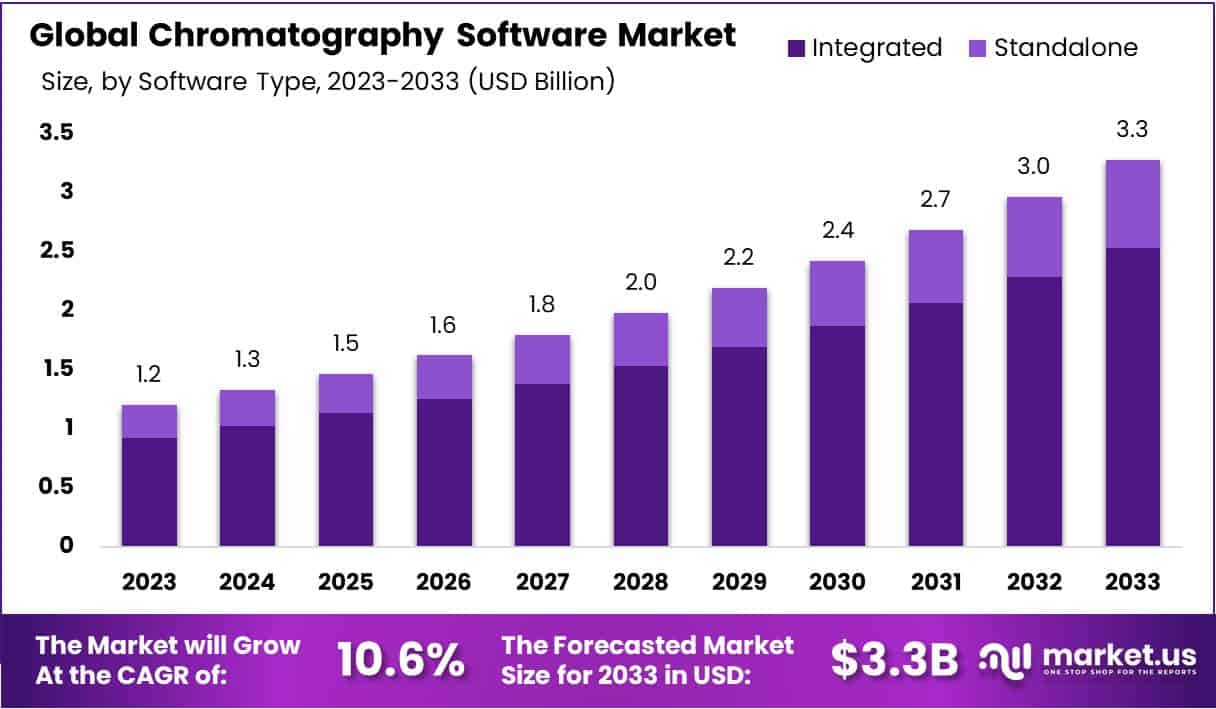
The Global Chromatography Software Market size is expected to be worth around USD 3.3 Billion by 2033, from USD 1.2 Billion in 2023, growing at a CAGR of 10.6% during the forecast period from 2024 to 2033.
The global chromatography software market is gaining momentum as laboratories and research organizations increasingly adopt digital platforms to manage complex analytical workflows, improve data accuracy, and strengthen regulatory compliance.
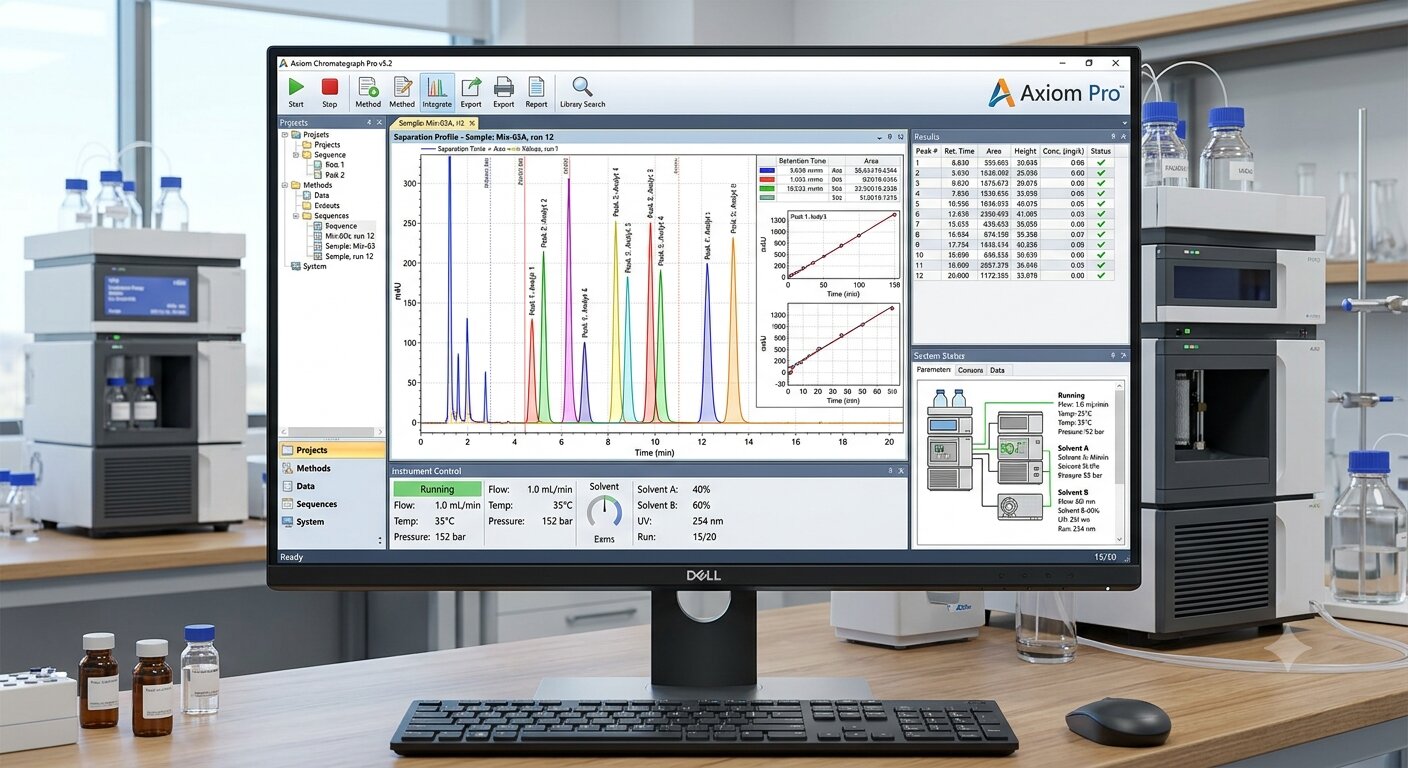
Chromatography software solutions are widely used with analytical techniques such as high-performance liquid chromatography (HPLC) and gas chromatography to support sample analysis, instrument control, reporting, and secure data storage across pharmaceutical, biotechnology, environmental, and academic research applications. The National Center for Biotechnology Information (NCBI) highlights chromatography as an important analytical technique used for separating and analyzing chemical and biological compounds.
Growing demand for reliable laboratory data management is encouraging the adoption of advanced chromatography data systems. The U.S. Food and Drug Administration (FDA) emphasizes the importance of electronic records, computerized system validation, and data integrity practices in regulated industries. FDA guidance on electronic records highlights the need for secure, reliable, and traceable computerized systems to maintain record authenticity and integrity.
Pharmaceutical manufacturers are increasingly integrating chromatography software with laboratory information management systems (LIMS) to improve workflow automation and enhance quality control processes. FDA data integrity guidance specifically references chromatography workflows, including HPLC data records, where audit trails help track user actions, processing parameters, and analytical results.
In addition, research institutions are adopting automated analytical solutions to handle increasing volumes of experimental data. A study from the National Institutes of Health database indicates that chromatography-based methods continue to support applications in biomedical and clinical research, including analysis of metabolites, proteins, and therapeutic compounds.
Key Takeaways
- The chromatography software market is projected to reach USD 3.3 billion by 2033, expanding at a CAGR of 10.6% during the forecast period from 2024 to 2033, driven by increasing adoption of digital laboratory solutions and advanced analytical workflows.
- Integrated software remains the leading segment, accounting for 77.1% of the market share, while cloud-based deployment continues to gain traction with a dominant 68.9% share due to improved accessibility, scalability, and data management capabilities.
- The pharmaceutical sector represents the largest end-use segment, capturing 35.2% of the market share, supported by rising demand for drug development, quality testing, and regulatory compliance.
- North America dominates the chromatography software market with a 45% share, supported by advanced healthcare infrastructure, increasing laboratory automation, strong research activities, and strict regulatory standards across the region.
Statistical Information
- The U.S. FDA’s data integrity guidance identifies chromatography workflows such as HPLC runs as requiring secure electronic records, where audit trails capture details including user information, run date/time, integration parameters, and data processing changes.
- FDA regulations under 21 CFR Part 11 establish requirements for electronic records and electronic signatures, encouraging pharmaceutical laboratories to adopt validated software systems with controls for security, traceability, and record reliability.
- Thermo Fisher Scientific reports that its Chromeleon Chromatography Data System can improve routine laboratory testing efficiency by up to 33% through workflow automation, simplified data processing, and reduced manual operations.
- FDA guidance states that chromatography electronic records must preserve complete analytical information, including chromatograms, instrument methods, injection sequences, processing methods, and audit trails rather than relying only on printed chromatogram reports.
- Modern chromatography data systems from Thermo Fisher Scientific support integration across multiple analytical platforms, including chromatography and mass spectrometry workflows, helping laboratories manage connected instrument environments and centralized data processing.
- FDA’s electronic records framework highlights that audit trails must maintain a chronological record of data creation, modification, and deletion activities, supporting compliance requirements in pharmaceutical quality-control laboratories.
- Thermo Fisher Scientific’s Chromeleon CDS platform is designed to scale from individual workstations to enterprise-level laboratory deployments, supporting multi-site laboratory operations with centralized data management capabilities.
- Pharmaceutical laboratories are increasingly prioritizing software solutions that combine instrument control, automated reporting, compliance monitoring, and data integrity features, as regulatory expectations continue to increase across drug manufacturing and quality testing environments.
Regional Analysis
North America held a leading position in the chromatography software market in 2023, supported by advanced laboratory infrastructure, strong pharmaceutical research activities, and increasing adoption of digital analytical solutions. The region’s well-established pharmaceutical and biotechnology industries rely heavily on chromatography technologies for drug development, quality testing, and research applications, creating significant demand for advanced software platforms.
The U.S. Food and Drug Administration (FDA) plays an important role in driving adoption, as pharmaceutical laboratories must maintain accurate electronic records, validated computerized systems, and strong data integrity practices. FDA guidelines emphasize secure handling of laboratory data, including chromatography-related records, to ensure reliability and regulatory compliance.
Growing investments in life science research, laboratory automation, and precision healthcare are expected to support continued market expansion across North America. Pharmaceutical manufacturers and research organizations are increasingly integrating chromatography software with laboratory systems to improve efficiency, traceability, and compliance. The region is likely to maintain its market leadership through ongoing technological advancements and increasing demand for high-quality analytical testing solutions.
Emerging Trends
- Artificial Intelligence-Based Data Processing: AI integration is becoming a key trend in chromatography software as laboratories focus on faster interpretation of complex analytical results. AI-powered tools help automate peak detection, improve pattern recognition, and support advanced research workflows. Mass spectrometry-based research increasingly generates large datasets, creating demand for intelligent analytical platforms.
- Cloud Laboratory and Remote Data Access: Cloud-based chromatography software is gaining adoption as laboratories require flexible access to analytical information, centralized storage, and collaboration across different locations. Modern platforms support secure data sharing and remote monitoring, helping research organizations improve workflow management while maintaining regulatory requirements for electronic records.
- Automated Chromatography Workflow Management: Laboratory automation is transforming chromatography operations by reducing manual processing and improving analytical consistency. Software platforms now connect instruments, manage sample workflows, and automate reporting activities. Research laboratories are increasingly combining robotics, analytical instruments, and informatics systems to increase productivity and reproducibility.
- Regulatory Compliance and Data Integrity Solutions: Regulatory compliance remains a major trend driving chromatography software adoption in pharmaceutical laboratories. The FDA emphasizes secure electronic records, audit trails, and traceable data management. FDA guidance states that chromatography records should include details such as user activity, processing parameters, and reprocessing information to maintain data integrity.
- Integration With Laboratory Information Systems: Chromatography software is increasingly integrated with laboratory information management systems (LIMS) and enterprise platforms. This trend enables better sample tracking, automated data transfer, and improved quality control. FDA regulations under 21 CFR Part 11 continue encouraging laboratories to implement validated computerized systems for managing electronic records.
Use Cases
- Pharmaceutical Quality Control Testing: Pharmaceutical companies use chromatography software for drug purity analysis, stability testing, and batch release activities. Software solutions help quality-control laboratories manage chromatographic results, maintain electronic documentation, and support regulatory inspections. FDA data integrity guidance highlights chromatography workflows such as HPLC runs as requiring secure and traceable records.
- Drug Discovery and Biotechnology Research: Biotechnology organizations apply chromatography software during biomolecule analysis, protein characterization, and therapeutic development. Advanced software platforms help researchers process complex biological samples, compare analytical results, and improve decision-making during early-stage drug research and development activities.
- Environmental Monitoring Applications: Environmental laboratories use chromatography software to analyze pollutants, chemicals, and contaminants in water, soil, and air samples. These platforms support automated reporting, large-scale data processing, and accurate measurement workflows, helping organizations meet environmental testing standards and improve monitoring efficiency.
- Food Safety and Quality Analysis: Food testing laboratories utilize chromatography software to detect contaminants, additives, pesticides, and chemical compounds in food products. Automated analytical workflows allow laboratories to process higher sample volumes while maintaining accuracy, traceability, and standardized reporting requirements for food safety programs.
- Clinical Research and Biomarker Analysis: Chromatography software supports clinical research applications by helping scientists analyze metabolites, biomarkers, and complex biological samples. Research institutions use chromatography-linked informatics platforms to organize analytical data, improve reproducibility, and support discoveries in areas such as precision medicine and molecular diagnostics.
Frequently Asked Questions About Chromatography Software
- How does chromatography software improve laboratory operations?
Chromatography software improves laboratory efficiency by automating data processing, instrument control, calculations, reporting, and result reviews. These platforms reduce manual tasks, support consistent workflows, and allow scientists to manage complex analytical information from multiple chromatography instruments through a unified environment. - Why is chromatography software important in pharmaceutical research?
Chromatography software is important in pharmaceutical research because it supports drug testing, quality control, method development, and regulatory documentation. It enables laboratories to securely process analytical results while maintaining traceability, data integrity, and compliance with industry standards. - What is a chromatography data system (CDS)?
A chromatography data system (CDS) is specialized software designed to acquire, process, store, and report chromatography data. CDS platforms can manage liquid chromatography, gas chromatography, and mass spectrometry workflows while supporting instrument integration and secure laboratory data management. - What factors are driving the chromatography software market growth?
The chromatography software market is growing due to increasing laboratory automation, rising demand for digital data management, pharmaceutical quality requirements, and the need for efficient analytical workflows. Organizations are adopting advanced software platforms to improve productivity, compliance, and research capabilities. - How does chromatography software support regulatory compliance?
Chromatography software supports regulatory compliance through features such as audit trails, electronic records management, user access control, and secure data storage. These capabilities help laboratories maintain accurate analytical documentation and meet requirements for data integrity in regulated environments. - What are the emerging trends in the chromatography software market?
Major trends include cloud-enabled laboratory platforms, artificial intelligence-based analysis, automated workflows, multi-instrument connectivity, and advanced data security features. These developments help laboratories handle increasing analytical data volumes while improving operational efficiency and research productivity. - How does chromatography software integrate with laboratory instruments?
Chromatography software integrates with analytical instruments such as liquid chromatography and gas chromatography systems to control operations, capture results, and process experimental data. Modern platforms also support multi-vendor instrument connectivity, allowing laboratories to manage diverse equipment within one system. - What is the future outlook of the chromatography software market?
The future of the chromatography software market is expected to focus on intelligent automation, connected laboratories, cloud-based solutions, and advanced analytics. As research organizations generate more complex analytical datasets, software platforms will play a greater role in improving laboratory performance and decision-making.
Conclusion
The chromatography software market is experiencing steady growth as laboratories increasingly adopt digital solutions for analytical data management, automation, and regulatory compliance. Rising demand from pharmaceutical, biotechnology, environmental, and research sectors is accelerating the use of advanced chromatography data systems. Regulatory requirements from agencies such as the FDA are encouraging organizations to implement secure electronic records, validated systems, and improved data integrity practices.
With advancements in artificial intelligence, cloud platforms, and laboratory automation, chromatography software is becoming a critical tool for improving efficiency, accuracy, and decision-making. The market is expected to benefit from continued investments in precision research, quality control, and connected laboratory technologies worldwide.




















