


Overview
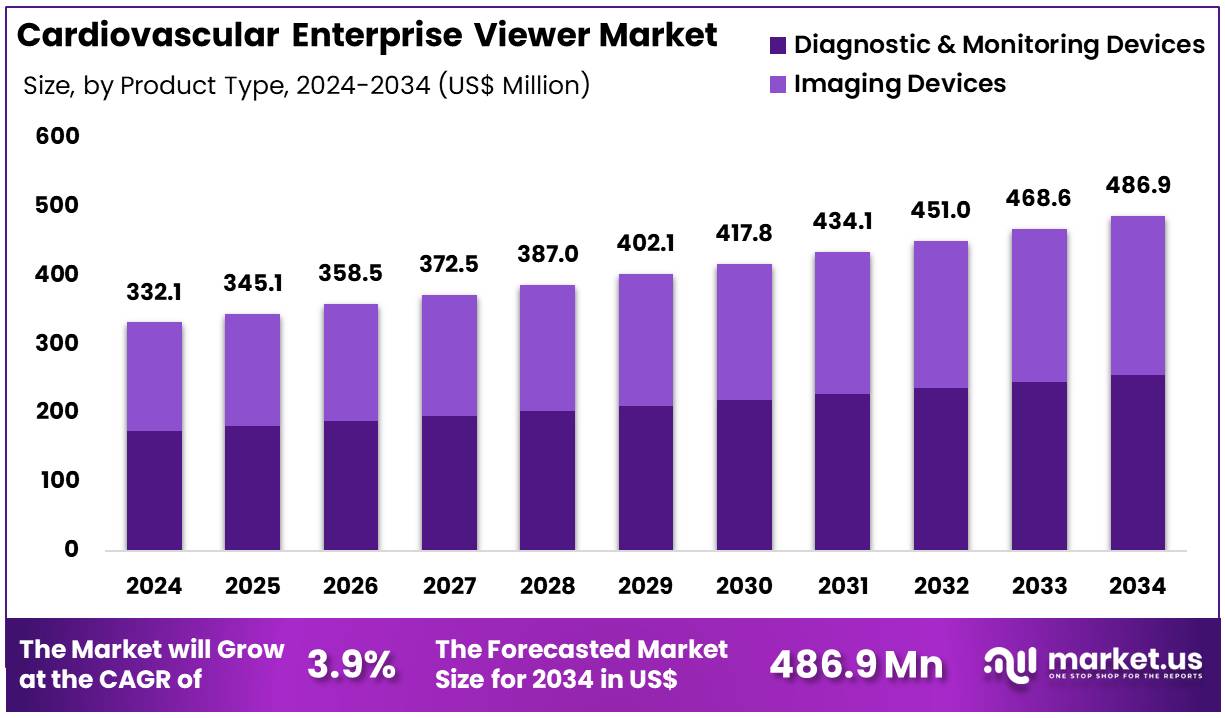
Global Cardiovascular Enterprise Viewer Market size is expected to be worth around US$ 486.9 Million by 2034 from US$ 332.1 Million in 2024, growing at a CAGR of 3.9% during the forecast period 2025 to 2034. In 2024, North America led the market, achieving over 38.6% share with a revenue of US$ 128.2 Million.
Cardiovascular diseases continue to place a significant burden on healthcare systems worldwide, increasing the need for advanced digital imaging platforms that enable clinicians to access, review, and share cardiovascular images across departments.
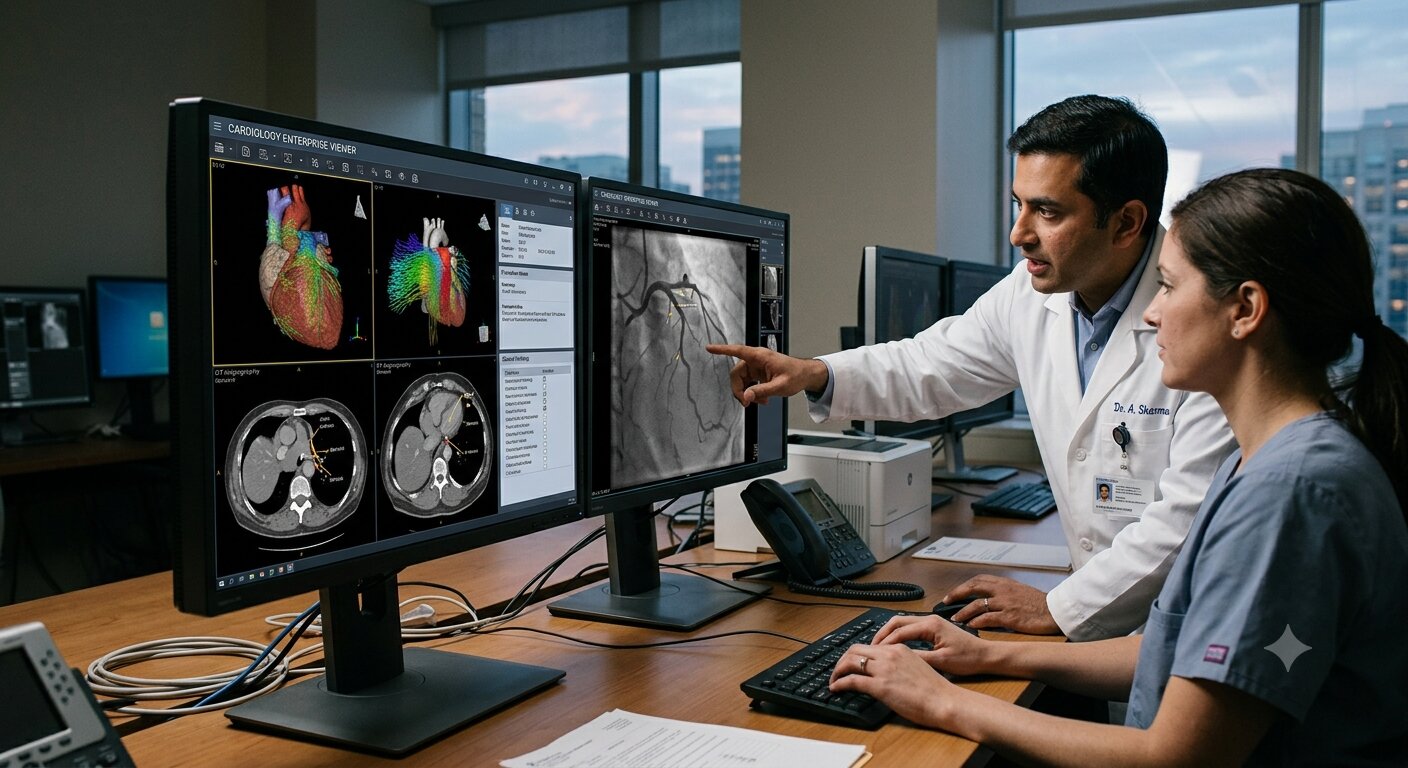
Cardiovascular enterprise viewers are becoming an essential component of modern healthcare IT infrastructure by integrating echocardiography, cardiac CT, MRI, angiography, and other imaging data into a single platform. These systems improve clinical collaboration, accelerate diagnosis, and support informed treatment decisions while reducing reliance on isolated imaging workstations.
The growing prevalence of cardiovascular disease is reinforcing demand for efficient imaging management solutions. According to the World Health Organization (WHO), cardiovascular diseases caused approximately 19.8 million deaths globally in 2022, accounting for around 32% of all deaths worldwide.
Additionally, the U.S. Centers for Disease Control and Prevention (CDC) reports that 919,032 people died from cardiovascular disease in the United States in 2023, highlighting the continued need for technologies that support timely diagnosis and coordinated cardiac care.
Healthcare providers are increasingly adopting enterprise viewing solutions as hospitals expand digital imaging networks and implement interoperable electronic health record systems. These platforms enable cardiologists, radiologists, surgeons, and referring physicians to securely access cardiac images from multiple locations, improving workflow efficiency and supporting multidisciplinary care.
Continuous investments in cloud-based healthcare infrastructure, AI-assisted image analysis, and standardized data sharing are expected to further strengthen adoption of cardiovascular enterprise viewer solutions across hospitals and diagnostic centers.
Key Takeaways
- The global Cardiovascular Enterprise Viewer market generated US$ 332.1 million in revenue in 2024 and is projected to reach US$ 486.9 million by 2034, expanding at a CAGR of 3.9% during the forecast period.
- Based on product type, the market is segmented into diagnostic & monitoring devices and imaging devices. Among these, the diagnostic & monitoring devices segment dominated the market in 2023, accounting for 52.5% of the total market share.
- By application, the market is categorized into coronary artery diseases, structural heart diseases, heart failure, and others. The coronary artery diseases segment emerged as the leading application, capturing 45.2% of the market share in 2023.
- In terms of end users, the market is segmented into hospitals, research & academic institutes, and diagnostic centers. Hospitals held the largest revenue share, accounting for 58.6% of the market in 2023, driven by the increasing adoption of advanced cardiovascular imaging and diagnostic technologies.
- Regionally, North America dominated the global Cardiovascular Enterprise Viewer market, securing a 38.6% market share in 2023.
Statistical Information
- Cardiovascular disease caused approximately 19.41 million deaths globally in 2021, while an estimated 612.06 million people were living with cardiovascular disease worldwide, highlighting the growing need for advanced cardiac imaging and enterprise viewing technologies.
- The American Heart Association (2025) reported that 941,652 cardiovascular disease-related deaths occurred in the United States in 2022, making cardiovascular disease the nation’s leading cause of death.
- According to the Office of the National Coordinator for Health IT (ONC), 77% of system-affiliated U.S. hospitals used APIs to exchange data between electronic health records and third-party applications in 2024, supporting greater interoperability for enterprise imaging platforms.
- The American Heart Association has invested more than US$6 billion in cardiovascular research since its founding, accelerating innovation in cardiac diagnosis, digital health, and imaging technologies.
- The 2025 AHA Statistics Update identifies coronary heart disease, heart failure, valvular heart disease, congenital heart disease, stroke, and arrhythmias among the major cardiovascular conditions requiring advanced imaging and longitudinal clinical management.
- The OECD reported that more than 1,000 AI-enabled medical devices and algorithms had been authorized by the U.S. FDA by the end of 2024, with cardiovascular imaging representing one of the leading areas of adoption.
- The 2025 Heart Disease & Stroke Statistics Update estimates that cardiovascular disease affected 612.06 million people worldwide in 2021, emphasizing the increasing demand for scalable enterprise imaging systems capable of managing large imaging volumes.
- The American Heart Association reports that cardiovascular disease remains the leading cause of death in the United States for more than a century, despite advances in prevention and treatment, reinforcing continued investment in digital cardiovascular care infrastructure.
Regional Analysis
North America dominated the global cardiovascular enterprise viewer market in 2024, accounting for 38.6% of the market share. The region’s leadership is supported by widespread adoption of digital imaging technologies, advanced healthcare IT infrastructure, and increasing integration of cardiovascular imaging with electronic health records (EHRs).
Hospitals and cardiac centers continue to invest in enterprise imaging platforms that enable clinicians to securely access and share echocardiography, CT, MRI, and angiography images across multiple departments, improving workflow efficiency and patient care.
The U.S. Food and Drug Administration (FDA) continued to support innovation through approvals of several cardiovascular medical devices in 2024, reinforcing the expansion of advanced cardiac imaging and visualization technologies.
Asia Pacific is expected to register the fastest CAGR during the forecast period, driven by expanding healthcare digitization, rising cardiovascular disease prevalence, and growing government investments in healthcare infrastructure.
Countries such as China, India, Japan, and Australia are strengthening digital health capabilities and promoting advanced diagnostic technologies to improve cardiac care.
Australia’s Cardiovascular Health Mission has committed to accelerate cardiovascular research and innovation, further supporting the adoption of digital cardiovascular technologies across the region.
Emerging Trends
- AI-powered cardiovascular image analysis is becoming mainstream. Recent scientific guidance from the American Heart Association highlights that hundreds of FDA-cleared AI healthcare tools are now available, helping clinicians analyze cardiac CT, MRI, echocardiography, and ECG data faster while improving diagnostic consistency and supporting clinical decision-making.
- Healthcare providers are shifting toward interoperable enterprise imaging. The U.S. Office of the National Coordinator for Health IT (ONC) released USCDI Version 6 in 2025 to strengthen nationwide health data exchange. This supports enterprise viewers that securely connect imaging systems with electronic health records across hospitals and care networks.
- Multimodality cardiac imaging is gaining rapid adoption. New clinical findings presented at the AHA Scientific Sessions 2025 showed AI-assisted coronary CT, cardiac MRI, echocardiography, and nuclear imaging are increasingly combined to improve disease detection, personalized treatment planning, and long-term cardiovascular risk assessment.
- Cloud-based enterprise imaging is reducing dependence on physical media. In 2026, the American Hospital Association supported replacing CDs and printed images with secure electronic image exchange. Hospitals are investing in cloud-connected enterprise viewers to improve image accessibility, reduce duplicate scans, and accelerate clinical workflows.
- Integration of wearable cardiovascular data is creating new opportunities. The American Heart Association emphasizes that growing use of wearable ECG monitors, smartwatches, and remote cardiac sensors is driving demand for enterprise viewing platforms capable of integrating imaging, monitoring, and clinical records into one digital ecosystem.
Use Cases
- Hospitals are centralizing cardiac imaging across departments. Enterprise viewers allow cardiologists, radiologists, emergency physicians, and surgeons to access the same cardiovascular images from a single platform, improving collaboration and reducing delays in diagnosis and treatment planning.
- Remote cardiac consultation is expanding through digital image sharing. Enterprise viewers enable specialists to securely review echocardiograms, angiograms, and cardiac CT scans from different healthcare facilities, supporting faster expert consultation and better access to specialized cardiovascular care.
- AI-assisted risk assessment is improving coronary disease management. Research presented at the American Heart Association 2025 demonstrated that AI-based plaque quantification on coronary CT can identify patients at greater risk of future cardiovascular events, supporting earlier intervention and personalized treatment decisions.
- Long-term patient monitoring is becoming more efficient. Enterprise viewers combine historical cardiovascular images with electronic medical records and follow-up studies, allowing clinicians to compare disease progression over time and make more informed treatment decisions during routine cardiac care.
- Enterprise imaging is supporting minimally invasive cardiovascular procedures. High-quality visualization from integrated imaging platforms assists clinicians during catheter-based interventions and structural heart procedures by providing rapid access to multimodal images that improve procedural planning and workflow efficiency.
Frequently Asked Questions About Cardiovascular Enterprise Viewer
- Why are hospitals investing in cardiovascular enterprise viewers?
Hospitals are investing in cardiovascular enterprise viewers because they eliminate isolated imaging systems by bringing cardiac images, reports, and multimedia data into one platform. This improves physician collaboration, reduces duplicate imaging, speeds diagnosis, and provides clinicians with secure access to patient records across multiple departments and locations. - Which healthcare facilities are the primary users of cardiovascular enterprise viewers?
The primary users include hospitals, cardiac specialty centers, diagnostic imaging centers, academic medical institutions, and integrated healthcare networks. Cardiologists, radiologists, surgeons, emergency physicians, and referring clinicians use these platforms to review diagnostic-quality cardiovascular images and support treatment planning through shared digital access. - How does cloud technology benefit cardiovascular enterprise viewers?
Cloud technology enables clinicians to securely access cardiovascular images from desktops, tablets, and mobile devices without local software installation. It simplifies image sharing across healthcare organizations, reduces IT infrastructure costs, supports remote consultations, and improves disaster recovery while maintaining centralized image management. - What role does interoperability play in cardiovascular enterprise viewers?
Interoperability enables cardiovascular enterprise viewers to exchange information with electronic health records, PACS, vendor-neutral archives, and other hospital systems. This allows healthcare professionals to access complete patient imaging histories through one interface, improving care coordination and supporting faster clinical decision-making. - How is artificial intelligence influencing cardiovascular enterprise viewers?
Artificial intelligence is improving cardiovascular enterprise viewers by assisting with image interpretation, automated measurements, disease detection, workflow prioritization, and clinical decision support. AI tools help clinicians analyze large imaging datasets more efficiently while supporting faster and more consistent cardiovascular diagnoses. - What factors are driving the growth of the cardiovascular enterprise viewer market?
Market growth is supported by rising cardiovascular disease prevalence, increasing use of digital imaging, expansion of electronic health records, greater demand for remote image access, and healthcare organizations’ focus on enterprise-wide imaging interoperability, secure data exchange, and integrated patient care workflows.
Conclusion
The cardiovascular enterprise viewer market is steadily evolving as healthcare organizations prioritize integrated imaging, interoperability, and digital transformation to improve cardiovascular care.
Rising cardiovascular disease prevalence, increasing adoption of electronic health records, cloud-based imaging, and AI-enabled diagnostic tools are driving demand for enterprise viewing platforms that enhance clinical collaboration and workflow efficiency. Hospitals remain the leading end users due to their growing investment in centralized imaging systems and multidisciplinary care.
Continued regulatory support, expanding interoperability standards, and advances in multimodality cardiac imaging are expected to strengthen market growth, enabling healthcare providers to deliver faster diagnoses, improve patient outcomes, and support data-driven cardiovascular care across diverse clinical settings.




















