


Overview
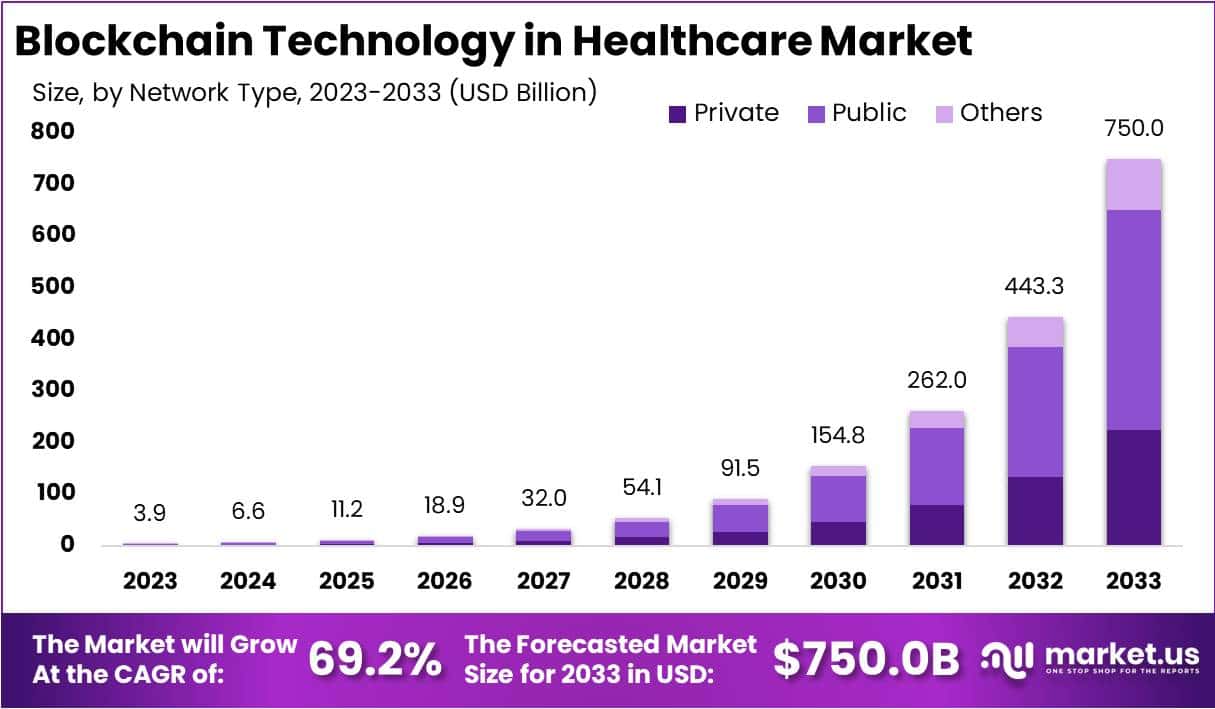
The Global Blockchain Technology in Healthcare Market size is expected to be worth around US$ 750 Billion by 2033, from US$ 3.9 Billion in 2023, growing at a CAGR of 69.2% during the forecast period from 2024 to 2033.
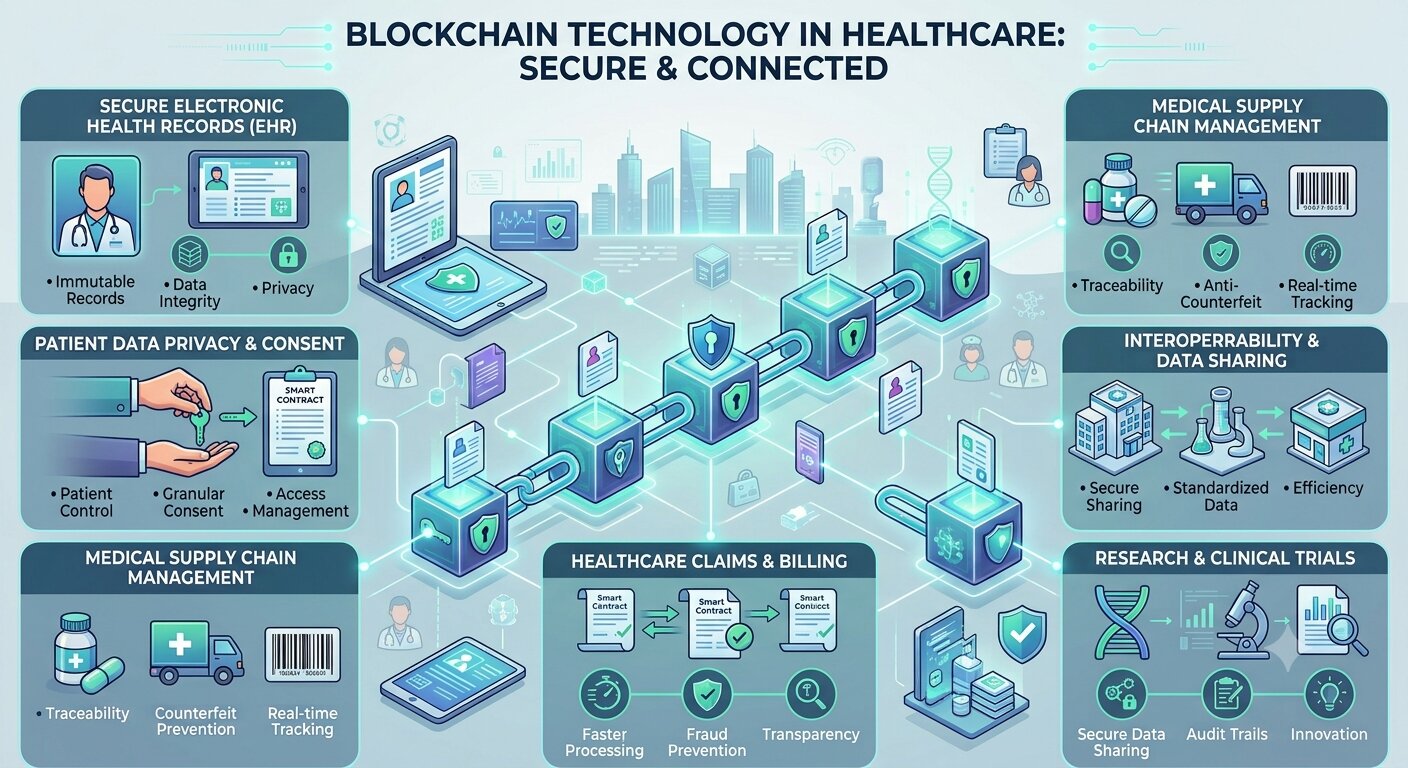
The global healthcare industry is rapidly adopting blockchain technology to improve data security, interoperability, and transparency across healthcare networks. Blockchain-based solutions enable healthcare providers, researchers, and organizations to securely manage electronic health records, verify medical information, improve clinical trial data integrity, and enhance pharmaceutical supply chain tracking. The technology supports decentralized data management, helping reduce risks associated with fragmented healthcare information systems.
Growing concerns regarding patient data privacy, cybersecurity threats, and the need for seamless health information exchange are encouraging healthcare organizations and governments to explore blockchain-enabled platforms. Digital health initiatives worldwide are emphasizing secure and interoperable healthcare ecosystems, creating opportunities for blockchain applications in identity management, consent management, claims processing, and medical record sharing.
Government-led digital healthcare programs are also accelerating the demand for advanced data management technologies. For example, India’s Ayushman Bharat Digital Mission has connected more than 100 crore health records with Ayushman Bharat Health Accounts, highlighting the increasing focus on large-scale digital healthcare infrastructure and secure data exchange.
Healthcare organizations are increasingly investing in blockchain solutions to strengthen trust between patients, providers, payers, and life sciences companies. Additionally, blockchain adoption is expanding in pharmaceutical traceability and clinical research, where maintaining accurate and tamper-resistant records is essential.
With continuous advancements in digital healthcare infrastructure, regulatory support, and demand for secure data-sharing solutions, blockchain technology is expected to become an important component of future healthcare information systems.
Key Takeaways
- The blockchain technology in healthcare market is projected to achieve significant expansion, reaching USD 750 billion by 2033 with a strong CAGR of 69.2% during 2024–2033, compared with its USD 3.9 billion valuation in 2023.
- Based on network type, the public blockchain segment accounted for the leading position with a 56.8% market share, supported by its ability to enable transparent and secure healthcare data sharing across multiple stakeholders.
- In terms of application, supply chain management emerged as the dominant segment, capturing 26.2% of the market share due to increasing demand for traceability, authentication, and efficiency across healthcare product distribution networks.
- By end user, biopharmaceutical and medical device companies represented the leading segment with a 41.4% market share, driven by the adoption of blockchain solutions for clinical research, regulatory compliance, and product tracking.
- Regionally, Europe held the largest market position with a 33% share and a market value of USD 1.3 billion, supported by advanced healthcare infrastructure, strong digital transformation initiatives, and strict data protection regulations such as GDPR.
Statistical Information
- The European Union’s digital healthcare transformation reached a major milestone, with the EU-27 achieving an 87% average eHealth maturity score in 2025, reflecting improvements in electronic health record accessibility, healthcare provider connectivity, and secure health data exchange capabilities.
- Europe is progressing toward its goal of providing 100% of EU citizens with access to electronic health records by 2030, creating strong demand for secure interoperability technologies that can support trusted healthcare data sharing and patient-controlled information access.
- The World Health Organization reported that 129 countries have established national digital health strategies, demonstrating global government commitment toward digital healthcare infrastructure, data governance, and secure health information systems.
- More than 1,600 government officials from over 100 countries have received digital health and artificial intelligence training through WHO-supported initiatives, highlighting the growing focus on building expertise for advanced healthcare technologies.
- WHO’s Global Digital Health Certification Network has expanded to support approximately 1.8 billion people across 80 countries, showing the increasing importance of secure digital identity and verification frameworks in healthcare ecosystems.
- The European Commission’s 2025 eHealth assessment showed that the EU-27 achieved an 83% average eHealth maturity score in 2024, with 16 EU countries plus Iceland and Norway improving their maturity levels, driven by stronger data availability and healthcare provider connectivity.
- The U.S. Food and Drug Administration’s Drug Supply Chain Security Act (DSCSA) pilot program evaluated technologies and processes for improving prescription drug traceability and verification across the supply chain, involving stakeholders from multiple healthcare supply chain sectors to strengthen electronic interoperability.
- The European healthcare digitalization framework continues to expand, with all EU member states having online access services for electronic health records, while blockchain-based approaches are being explored for improving data integrity, privacy management, pharmaceutical traceability, and secure information exchange.
Regional Analysis
Europe held a leading position in the global blockchain technology in healthcare market, supported by its advanced healthcare infrastructure, strong digital health ecosystem, and increasing focus on secure healthcare data management. The region’s healthcare systems are actively adopting digital solutions to improve interoperability, patient data access, and cross-border health information exchange. The European Health Data Space (EHDS) initiative is strengthening the framework for secure sharing and reuse of electronic health data across European countries, creating favorable conditions for blockchain-based healthcare applications.
The implementation of strict data protection regulations, including GDPR, has increased demand for technologies that provide transparency, security, and controlled access to sensitive healthcare information. Blockchain solutions support these requirements by enabling trusted data exchange, maintaining data integrity, and improving privacy management within healthcare networks.
Collaboration among healthcare providers, technology companies, and research organizations is further accelerating blockchain adoption in Europe. Initiatives focused on electronic health records, clinical research, and pharmaceutical supply chain management are encouraging innovation across the region. Meanwhile, North America and Asia-Pacific are expanding investments in blockchain-based healthcare infrastructure, research programs, and digital transformation strategies to strengthen their market presence.
Emerging Trends
- Growing Adoption of Permissioned Blockchain Networks: Healthcare organizations are increasingly shifting toward permissioned blockchain models that allow verified participants such as hospitals, insurers, and researchers to securely exchange information. Research highlights platforms such as Hyperledger Fabric and other permissioned networks as important solutions for improving healthcare data privacy, interoperability, and governance.
- Integration of Blockchain with Artificial Intelligence and Healthcare Analytics: Blockchain is emerging as a supporting technology for AI-driven healthcare by improving data reliability, ownership tracking, and model transparency. Studies show blockchain can help secure distributed medical datasets used in AI applications, addressing concerns related to data trust and verification.
- Expansion of Blockchain-Based Digital Identity Systems: Digital identity management is becoming a major healthcare trend as providers focus on secure patient authentication and consent-based data access. The European Commission’s blockchain healthcare analysis identifies medical credentialing and trusted identity verification as important areas where blockchain can improve healthcare operations.
- Increasing Focus on Interoperable Healthcare Data Ecosystems: Healthcare systems are moving toward connected digital platforms where patient information can be exchanged securely between different organizations. Blockchain is gaining attention because it can support trusted data sharing across fragmented healthcare networks. Research identifies interoperability as one of the major challenges blockchain can help address.
- Blockchain Adoption in Internet of Medical Things (IoMT): The combination of blockchain with connected medical devices and wearable technologies is becoming an emerging trend. Healthcare researchers are exploring blockchain-based IoMT systems to improve device authentication, protect patient-generated data, and enable secure real-time health monitoring.
Use Cases
- Electronic Health Record (EHR) Data Sharing: Blockchain is being explored to create secure healthcare data-sharing networks where patients, hospitals, and physicians can access verified medical information. Research identifies blockchain-based EHR systems as a solution for reducing fragmented records and improving continuity of care across healthcare providers.
- Pharmaceutical Supply Chain Transparency: Drug traceability is one of the strongest blockchain applications in healthcare. The European Commission highlights pharmaceutical supply chain management as a major blockchain use case, helping organizations improve product verification, reduce counterfeit risks, and strengthen medicine tracking processes.
- Clinical Trial Data Management: Blockchain is being applied in clinical research to maintain accurate, tamper-resistant trial records and improve trust between sponsors, researchers, and regulators. Studies identify clinical trial management as a key application area because blockchain can provide transparent tracking of research data changes.
- Healthcare Insurance Claims Processing: Blockchain-based smart contracts are being tested for automating healthcare transactions, improving claims verification, and reducing administrative complexity. Research on healthcare blockchain applications identifies insurance claims management as a potential area for improving efficiency and reducing processing delays.
- Medical Credential Verification and Provider Management: Blockchain is being used to explore faster verification of healthcare professional credentials and institutional information. The European Commission’s blockchain healthcare report identifies medical credentialing as a practical application where distributed records can improve trust and reduce manual verification processes.
Frequently Asked Questions About Blockchain Technology in Healthcare
- Why is blockchain important for the healthcare industry?
Blockchain is important because healthcare systems handle large volumes of sensitive patient data requiring strong security and accuracy. The technology helps reduce data manipulation risks, improves trust between stakeholders, and supports secure sharing of medical information among authorized healthcare participants. - How does blockchain improve healthcare data security?
Blockchain improves healthcare data security by creating tamper-resistant records and controlling access through secure verification methods. Healthcare providers can use blockchain networks to track data changes, manage permissions, and maintain reliable patient information while supporting privacy requirements. - What are the major applications of blockchain technology in healthcare?
Major applications include electronic health record management, pharmaceutical supply chain monitoring, clinical trial data protection, insurance claim processing, medical credential verification, and healthcare data exchange. These applications aim to increase transparency, reduce inefficiencies, and improve healthcare system reliability. - How is blockchain used in pharmaceutical supply chains?
Blockchain supports pharmaceutical supply chains by improving medicine traceability, product verification, and transparency from manufacturing to distribution. Healthcare organizations can use blockchain-based systems to track product movements, reduce counterfeit risks, and strengthen compliance across complex pharmaceutical networks. - What are the key factors driving the blockchain technology in healthcare market?
The market growth is driven by increasing healthcare cybersecurity concerns, rising demand for interoperable data systems, digital health adoption, and the need for transparent healthcare operations. Organizations are exploring blockchain to improve patient data management and operational efficiency. - How does blockchain support patient data ownership?
Blockchain supports patient data ownership by enabling individuals to control access permissions for their health information. Patients can authorize specific healthcare providers or researchers to access selected data, improving transparency and encouraging patient-centered healthcare management. - What is the future outlook for blockchain technology in healthcare?
The future of blockchain in healthcare is expected to focus on secure digital ecosystems, advanced interoperability, AI integration, and trusted health information exchange. Governments, healthcare organizations, and technology providers are continuing to explore blockchain for improving healthcare delivery and data governance.
Conclusion
The blockchain technology in healthcare market is entering a transformative phase as healthcare organizations increasingly prioritize secure data exchange, interoperability, and transparency. Blockchain solutions are enabling advanced applications across electronic health records, pharmaceutical supply chains, clinical trials, and digital identity management. Government initiatives, rising cybersecurity concerns, and expanding digital health infrastructure are accelerating adoption worldwide.
Europe’s strong regulatory framework and digital healthcare investments highlight the technology’s growing importance, while other regions continue developing blockchain-based healthcare ecosystems. As healthcare data complexity increases, blockchain is expected to become a key technology for building secure, efficient, and patient-centered healthcare systems.




















