


Overview
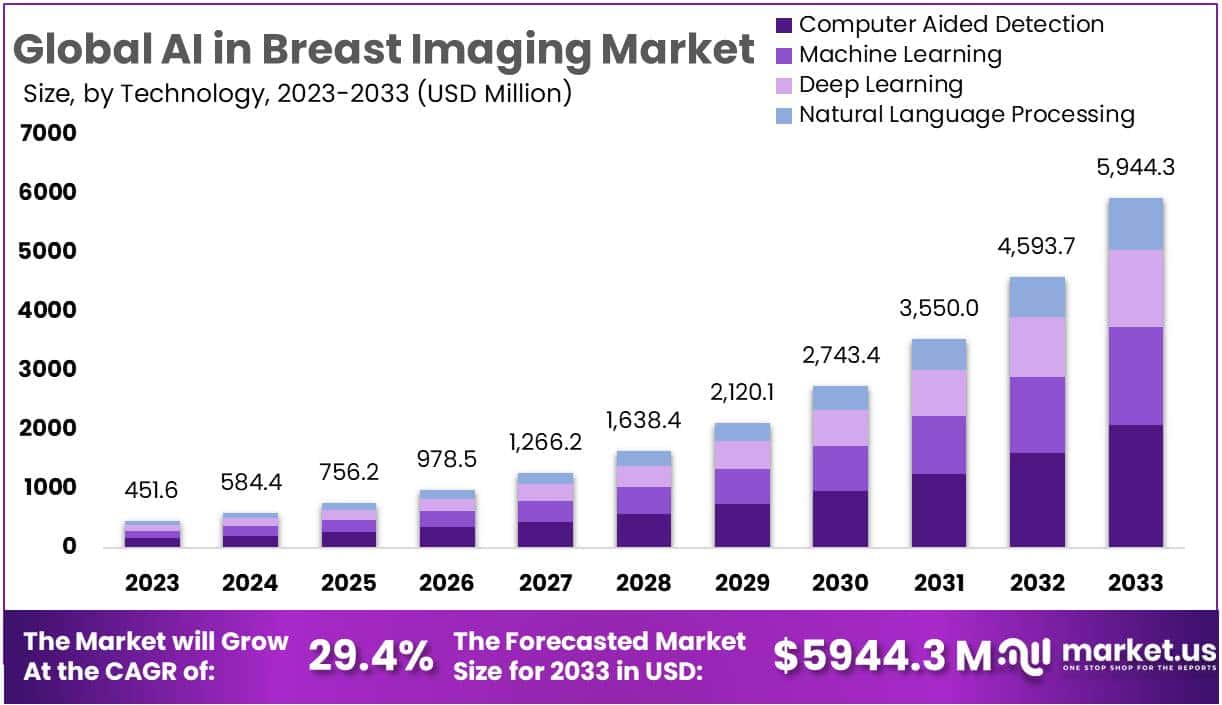
The Global AI In Breast Imaging Market size is expected to be worth around USD 5944.3 Million by 2033, from USD 451.6 Million in 2023, growing at a CAGR of 29.4% during the forecast period from 2024 to 2033.
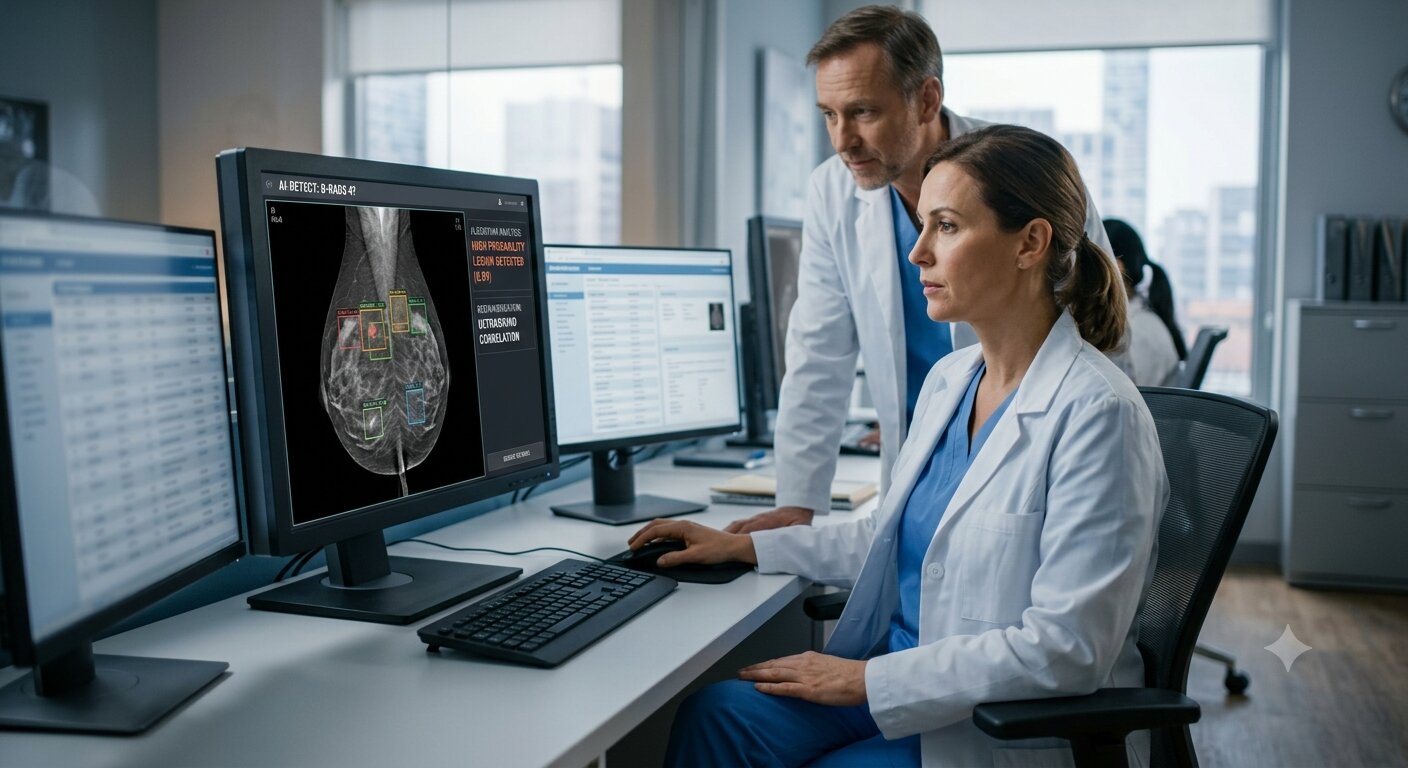
Artificial intelligence is reshaping breast imaging by helping radiologists identify suspicious findings faster, improve workflow efficiency, and support earlier breast cancer detection. AI-powered software is increasingly being integrated with digital mammography and breast tomosynthesis, enabling healthcare providers to prioritize high-risk cases while maintaining consistent image interpretation.
Rather than replacing clinicians, these tools are designed to assist radiologists in making more informed decisions, reducing reading time, and improving confidence in screening programs. Continued advances in machine learning, cloud-based imaging platforms, and clinical decision support are expected to strengthen the role of AI in breast imaging across hospitals and diagnostic centers.
Growing awareness of breast cancer screening, expanding adoption of digital imaging technologies, and supportive regulatory frameworks are encouraging healthcare systems to evaluate AI-assisted imaging solutions. According to the U.S. Food and Drug Administration (FDA), mammography remains the most effective primary screening method for early breast cancer detection, while AI-based software is being developed to complement not replace standard screening practices.
The FDA also reported that certified mammography facilities in the United States performed approximately 44.7 million mammography procedures annually, highlighting the scale of imaging services where AI can enhance efficiency. Additionally, FDA data show 9,099 certified mammography facilities operating nationwide, reflecting a strong infrastructure for adopting advanced imaging technologies.
These developments, combined with ongoing clinical validation and regulatory oversight, are expected to accelerate the integration of AI into breast imaging workflows and improve patient care outcomes.
Key Takeaways
- The global AI in Breast Imaging market was valued at USD 451.6 million in 2023 and is projected to reach USD 5,944.3 million by 2033, expanding at a CAGR of 29.4% during the forecast period.
- Based on technology, the Computer-Aided Detection (CAD) segment emerged as the leading category in 2023, accounting for 35.1% of the global market share.
- By application, the screening segment held the largest revenue share, representing 43.1% of the AI in Breast Imaging market in 2023.
- Among end users, hospitals dominated the market, capturing 53.2% of the total revenue owing to the widespread adoption of AI-assisted breast imaging solutions.
- North America led the global AI in Breast Imaging market in 2023, contributing 45.5% of the overall market revenue.
Statistical Information
- According to the CDC, 80.0% of U.S. women aged 50–74 had a mammogram within the previous 2 years, reflecting strong participation in breast cancer screening programs that support demand for AI-assisted breast imaging.
- The CDC also reports that 62.1% of women aged 40–49 underwent a mammogram within the past 2 years, highlighting growing adoption of routine screening among younger eligible women.
- The CDC estimates that physicians in the United States ordered or provided approximately 27.3 million mammography-related office visits in a single year, demonstrating the high volume of breast imaging services.
- The FDA states that approximately half of women aged 40 years and older have dense breast tissue, a factor that can reduce mammography sensitivity and increase the value of AI-assisted image interpretation.
- The CDC classifies breast density into four BI-RADS categories, with about 40% of women having heterogeneously dense breasts and 10% having extremely dense breasts.
- The FDA now requires all certified mammography facilities in the United States to inform patients whether their breast tissue is dense or not dense, strengthening personalized breast cancer screening and follow-up decisions.
- A prospective clinical study involving approximately 500,000 mammography examinations found that a multimodal AI system reduced recall rates by 31.7% and radiologist workload by 43.8% while maintaining high diagnostic performance.
- The National Cancer Institute (NCI) reports that nearly half of women aged 40 years and older who undergo mammography have dense breasts, reinforcing the need for advanced technologies such as AI to improve cancer detection accuracy.
Regional Analysis
North America accounted for the largest share of the AI in Breast Imaging market, supported by its advanced healthcare infrastructure, widespread adoption of digital mammography, and strong regulatory environment for artificial intelligence-based medical devices. The region benefits from established breast cancer screening programs and high utilization of FDA-approved imaging technologies.
The U.S. Food and Drug Administration (FDA) continues to support innovation by evaluating and authorizing AI-enabled breast imaging solutions while maintaining strict quality standards for mammography facilities. In addition, recommendations from the U.S. Centers for Disease Control and Prevention (CDC) encourage routine mammography screening for women aged 40 to 74, creating sustained demand for AI-assisted diagnostic tools.
Asia Pacific is projected to register the fastest growth during the forecast period due to expanding healthcare infrastructure, increasing awareness of early breast cancer detection, and rising investments in diagnostic imaging technologies. Countries such as China, India, Japan, and South Korea are strengthening national cancer screening initiatives while improving access to digital healthcare services.
Government efforts to promote early diagnosis, combined with growing adoption of AI-powered imaging platforms and a rising burden of breast cancer, are expected to accelerate market expansion across the region. The World Health Organization (WHO) also emphasizes that effective screening and early diagnosis significantly improve breast cancer outcomes, supporting continued investment in advanced imaging technologies.
Emerging Trends
- AI is expanding beyond mammography into multimodal breast imaging. Modern AI models are now being developed for mammography, digital breast tomosynthesis (3D mammography), ultrasound, MRI, and nuclear imaging, helping radiologists improve lesion detection, risk assessment, and treatment planning through a single AI-supported workflow.
- Deep learning is improving the quality of 3D breast imaging. In 2025, the FDA approved an updated deep learning reconstruction algorithm for GE HealthCare’s Senographe Pristina 3D system, enhancing soft-tissue visualization while correcting motion and image artifacts during digital breast tomosynthesis.
- AI is moving toward explainable and privacy-preserving models. Healthcare providers are increasingly exploring foundation AI models, self-supervised learning, and federated learning, enabling hospitals to build accurate breast imaging systems while protecting patient data and supporting collaboration across multiple institutions.
- AI-supported screening is improving cancer detection in real clinical practice. The ASSURE study evaluated 579,583 digital breast tomosynthesis examinations and found that an AI-driven workflow increased the cancer detection rate by 21.6%, demonstrating growing confidence in AI-assisted screening programs.
- Regulatory approvals are expanding AI adoption in breast imaging. The FDA continues to authorize innovative AI-enabled breast imaging technologies, including systems that assist physicians during diagnosis and surgery, reflecting growing confidence in clinically validated AI applications across breast care.
Use Cases
- AI is helping radiologists identify suspicious breast lesions faster. Computer-aided AI systems automatically highlight abnormal regions on mammograms, allowing radiologists to focus on high-priority findings while improving reading efficiency and supporting earlier clinical decisions.
- AI is supporting breast cancer surgery through real-time imaging. The FDA-approved Claire™ OCT System combines optical coherence tomography with AI to identify suspicious cancer margins during lumpectomy procedures, helping surgeons assess excised tissue before completing surgery.
- AI is enabling personalized breast cancer risk prediction. New AI models analyze routine mammograms to estimate a woman’s 5-year breast cancer risk, allowing clinicians to tailor screening frequency and preventive strategies based on individual risk rather than age alone.
- AI is improving breast imaging for women with dense breast tissue. Since the FDA now requires breast density reporting, healthcare providers are increasingly using AI tools to assist interpretation of dense breast images, where cancers are more difficult to identify using conventional mammography alone.
- AI is streamlining breast screening workflows across healthcare systems. AI-assisted review platforms automatically prioritize higher-risk examinations, helping radiologists manage increasing imaging volumes while maintaining consistent interpretation quality across large screening programs.
Frequently Asked Questions About AI In Breast Imaging
- How does AI improve breast cancer screening?
AI analyzes breast images to highlight areas that may require closer examination, helping radiologists prioritize suspicious cases and reduce interpretation time. It is increasingly used alongside digital mammography and 3D breast tomosynthesis to improve screening accuracy and support consistent diagnostic decisions in clinical practice. - What is driving the growth of the AI in Breast Imaging market?
Market growth is supported by rising breast cancer screening programs, increasing adoption of digital mammography, expanding use of AI-enabled medical devices, and continuous regulatory approvals. Healthcare providers are investing in AI solutions to improve workflow efficiency, diagnostic confidence, and patient outcomes in breast imaging services. - Which healthcare facilities are the primary users of AI in breast imaging?
Hospitals, dedicated breast imaging centers, diagnostic imaging clinics, and academic medical institutions are the major adopters of AI-based breast imaging solutions. These organizations integrate AI into existing imaging systems to support radiologists, improve reporting efficiency, and manage growing screening volumes. - Can AI replace radiologists in breast imaging?
No. Regulatory authorities emphasize that AI is designed to assist radiologists rather than replace them. AI provides decision-support by identifying suspicious image patterns, while qualified healthcare professionals remain responsible for interpreting results, confirming diagnoses, and determining appropriate patient management. - What imaging technologies are commonly used with AI?
AI is widely integrated with digital mammography, digital breast tomosynthesis (3D mammography), breast ultrasound, and magnetic resonance imaging (MRI). These technologies enable AI algorithms to support lesion detection, breast density assessment, image classification, and risk prediction across multiple imaging modalities. - Why is North America a major market for AI in breast imaging?
North America benefits from advanced healthcare infrastructure, widespread breast cancer screening programs, strong regulatory oversight, and early adoption of AI-enabled medical devices. Continuous FDA approvals and certified mammography facilities further encourage integration of AI into routine breast imaging workflows. - What is the future outlook for the AI in Breast Imaging market?
The market is expected to advance through greater use of predictive AI, cloud-based imaging platforms, explainable AI, and personalized breast cancer risk assessment. Continued innovation, clinical validation, and regulatory support are likely to expand AI adoption across global breast imaging services.
Conclusion
The AI in Breast Imaging market is positioned for strong long-term growth as healthcare providers increasingly adopt artificial intelligence to enhance breast cancer detection, improve diagnostic accuracy, and streamline radiology workflows.
Continued advancements in machine learning, multimodal imaging, and clinical decision-support tools are expanding AI applications across mammography, ultrasound, MRI, and breast surgery. Regulatory support, including FDA approvals for innovative AI-enabled imaging systems, along with rising participation in breast cancer screening programs, is accelerating technology adoption across healthcare facilities.
While challenges related to implementation, validation, and interoperability remain, ongoing research and clinical evidence continue to strengthen confidence in AI-assisted breast imaging. As healthcare systems prioritize earlier diagnosis and personalized patient care, AI is expected to become an essential component of breast imaging services, supporting radiologists with faster, more consistent, and data-driven clinical decision-making.




















