


Overview
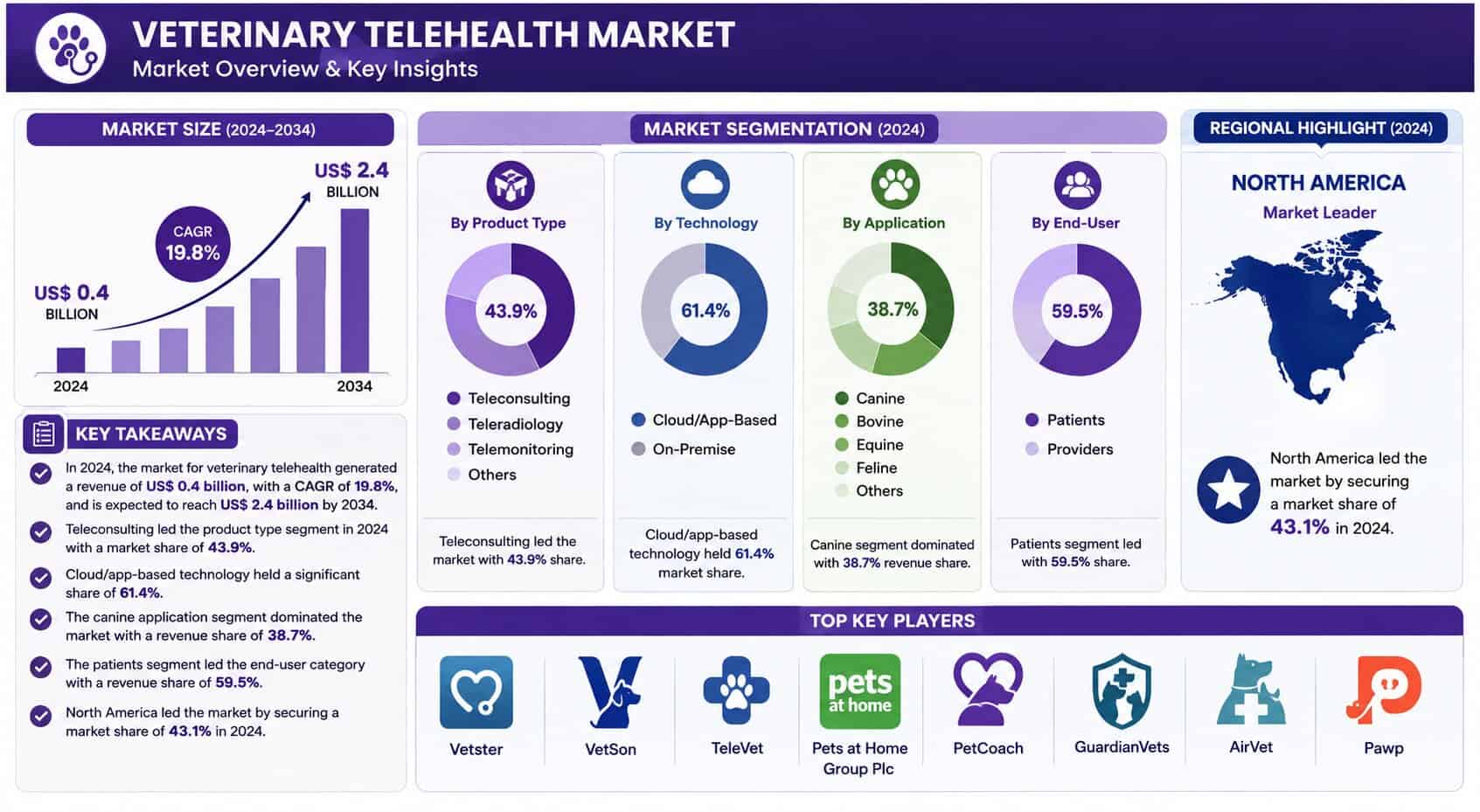
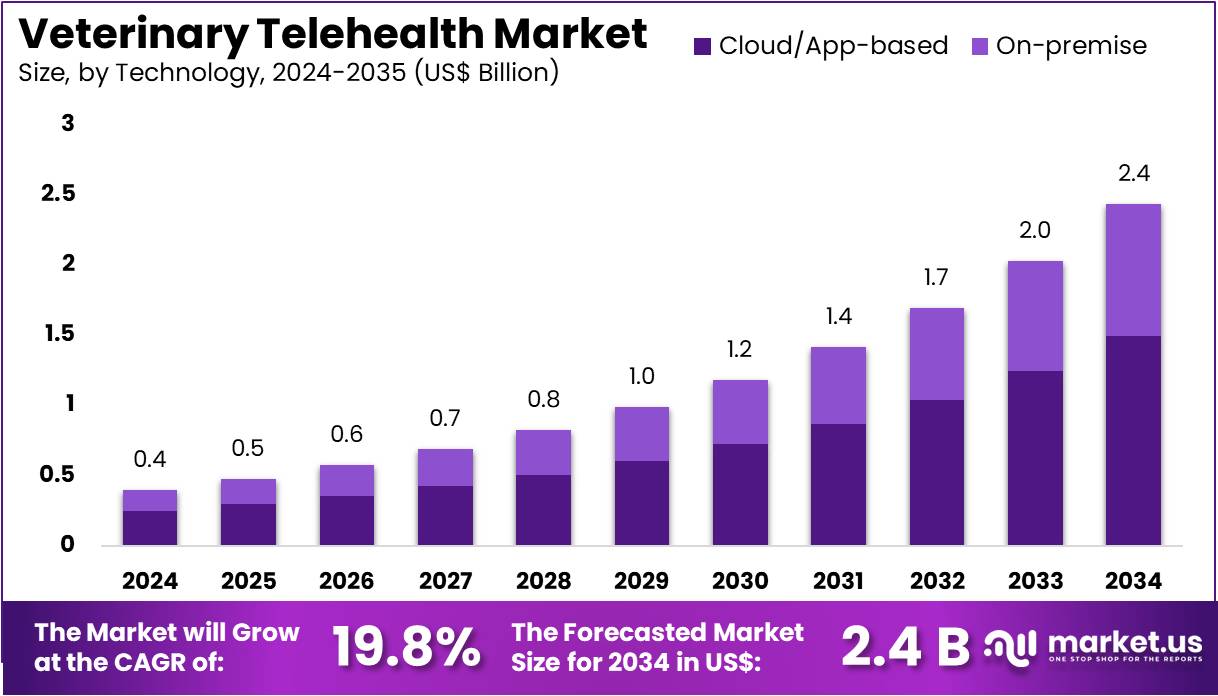
The Veterinary Telehealth Market Size is expected to be worth around US$ 2.4 Billion by 2034 from US$ 0.4 Billion in 2024, growing at a CAGR of 19.8% during the forecast period 2025 to 2034.
The veterinary healthcare landscape is increasingly adopting digital technologies to improve communication between veterinarians and animal owners. Veterinary telehealth enables remote consultations, follow-up communication, monitoring, and other virtual interactions, supporting more convenient access to veterinary expertise while complementing in-person examinations.
The American Veterinary Medical Association (AVMA) reported that telehealth was used by 29.2% of veterinary practices surveyed, making it one of the emerging digital tools being incorporated into veterinary practice. The same report found that 59.9% of practices used client communication software integrated with practice management systems, highlighting the growing role of connected digital communication in veterinary care.
Regulatory considerations are also shaping the development of veterinary telehealth. The U.S. Food and Drug Administration (FDA) states that, under the federal definition, a valid veterinarian-client-patient relationship cannot be established solely through telemedicine. However, once an appropriate relationship has been established, telemedicine can support its maintenance. State and local requirements may also apply.
Veterinary telehealth is increasingly relevant within the broader One Health framework. The Centers for Disease Control and Prevention (CDC) emphasizes the important role veterinarians play in preventing disease transmission at the intersection of human, animal, and environmental health. As pet owners and veterinary professionals increasingly adopt digital communication tools, telehealth is positioned to complement traditional veterinary services through convenient follow-ups, remote communication, and ongoing care coordination.
Key Takeaways
- In 2024, the Veterinary Telehealth Market generated US$ 0.4 billion in revenue and is projected to reach US$ 2.4 billion by 2034, expanding at a 19.8% CAGR.
- By product type, teleconsulting dominated the Veterinary Telehealth Market in 2024, accounting for a 43.9% market share, ahead of teleradiology, telemonitoring, and other services.
- By technology, cloud/app-based solutions held the leading position in 2024, capturing a significant 61.4% share of the Veterinary Telehealth Market.
- By application, the canine segment dominated the Veterinary Telehealth Market in 2024, accounting for the largest revenue share of 38.7%, followed by bovine, equine, feline, and other applications.
- By end user, the patients segment led the Veterinary Telehealth Market in 2024, holding a revenue share of 59.5%, compared with veterinary providers.
- Regionally, North America dominated the Veterinary Telehealth Market in 2024, securing the largest regional market share of 43.1%.
Statistical Information
- 69% of pet owners who had an unmet veterinary-care need in the previous two years said they would be interested in using veterinary telemedicine if it were available, indicating substantial latent consumer demand.
- 66% of surveyed pet owners said they would visit a veterinarian more often if telemedicine were available, suggesting that virtual services could improve ongoing engagement with veterinary care.
- 40% of surveyed pet owners reported using telehealth for their pets at least once during the pandemic, while 44% had not used it but were interested in doing so.
- 88% of pet owners who had used telehealth said they were likely to continue using veterinary telehealth services even as pandemic restrictions eased, supporting potential long-term consumer acceptance.
- 80% of customers who used Chewy’s Connect with a Vet service gave their experience a 10/10 rating, demonstrating strong satisfaction with digital veterinary interactions.
- 63.4% of veterinary professionals surveyed believed that expanding telemedicine would increase access to veterinary care for underserved populations, highlighting an opportunity for platforms designed to address geographic and access barriers.
- 72.5% of surveyed pet owners said they would feel comfortable seeing a veterinarian through a telemedicine appointment, while 64.0% said access to telemedicine would somewhat or greatly increase their likelihood of contacting a veterinarian.
- Chewy’s 2026 acquisition of Modern Animal adds 29 veterinary clinics and 24/7 virtual care, with the deal expected to increase Chewy Vet Care’s footprint from 18 to 47 locations and add more than US$125 million in annualized run-rate revenue.
Market Segmentation Analysis
Product Type Analysis
The teleconsulting segment accounted for a 43.9% market share, supported by the growing demand for convenient and timely veterinary consultations. Increasing pet ownership and greater awareness of animal healthcare are encouraging owners to seek professional advice remotely, particularly for routine consultations, follow-ups, and non-emergency concerns. Teleconsulting reduces geographical barriers and allows veterinarians to communicate with pet owners through digital platforms.
Improvements in video consultations, messaging, and connected veterinary technologies are further strengthening adoption. In addition, the convenience and potential cost savings associated with remote consultations improve client engagement. Growing investments in veterinary digital infrastructure and evolving telehealth practices are also contributing to the segment’s continued development.
Technology Analysis
The cloud/app-based segment held a significant 61.4% market share, driven by the increasing adoption of flexible and scalable digital veterinary platforms. Cloud-based solutions allow veterinary professionals to access patient information, consultation records, and monitoring data across connected devices, supporting more efficient care delivery.
Mobile applications further improve accessibility by enabling communication between veterinarians and pet owners from virtually any location. The growing use of cloud infrastructure can also reduce dependence on extensive on-site IT systems while simplifying software updates and integration.
Enhanced cybersecurity capabilities and stronger data protection practices are helping build user confidence. Furthermore, interoperability with veterinary practice management systems supports streamlined workflows and encourages wider adoption of cloud/app-based telehealth solutions.
Application Analysis
The canine segment represented the largest application category, accounting for a 38.7% revenue share. The segment benefits from the substantial population of companion dogs and increasing spending on preventive and specialized veterinary care. Pet humanization is encouraging owners to seek convenient healthcare solutions for conditions requiring regular monitoring, follow-up consultations, and behavioral support.
Veterinary telehealth can facilitate communication with professionals while helping owners manage ongoing health concerns from home. The growing availability of connected wearables and remote monitoring technologies is also supporting canine health tracking. Additionally, increased awareness of preventive care and early intervention is strengthening demand for digital veterinary services. These factors are expected to support continued adoption of telehealth solutions for canine healthcare.
End-user Analysis
The patients segment accounted for a leading 59.5% revenue share, reflecting increasing acceptance of digital veterinary services among pet owners. Telehealth provides greater convenience by reducing travel requirements and enabling faster communication with veterinary professionals. This is particularly beneficial for owners in remote locations or those seeking follow-up guidance after in-person visits. Increasing awareness of animal health and preventive care is also encouraging owners to explore virtual veterinary services.
Smartphone adoption, improved internet connectivity, and user-friendly mobile platforms are making digital consultations more accessible. In addition, the continued preference for convenient healthcare experiences following the pandemic has supported the use of virtual veterinary services. These developments are strengthening patient-side demand for veterinary telehealth platforms.
Regional Analysis
North America held the leading position in the Veterinary Telehealth Market, accounting for a 43.1% revenue share in 2024. The region benefits from established veterinary infrastructure, high digital adoption, and growing acceptance of remote veterinary services. The American Veterinary Medical Association (AVMA) provides guidance on telehealth implementation, including telemedicine, teletriage, technology considerations, and veterinarian-client-patient relationships.
Regulatory developments are also supporting broader access in some U.S. jurisdictions, while organizations such as the ASPCA recognize telemedicine’s potential to reduce logistical and financial barriers to veterinary care. These factors are supporting continued integration of virtual consultations and digital communication into veterinary practices across the region.
Asia Pacific is expected to register the fastest growth during the forecast period, supported by expanding digital connectivity, increasing pet ownership, and growing access to mobile-based services. India’s telecommunications infrastructure provides a strong foundation for digital veterinary platforms, with 913.34 million mobile wireless internet subscribers reported in March 2024 by the Telecom Regulatory Authority of India (TRAI).
Across the region, cloud platforms, mobile applications, connected devices, and remote monitoring technologies can improve access to veterinary expertise, particularly in areas where conventional veterinary services are less accessible. Rising digital adoption among consumers and veterinary professionals is therefore creating favorable conditions for teleconsultations, remote monitoring, and virtual follow-up services across Asia Pacific.
Business Opportunities
The Veterinary Telehealth Market presents significant business opportunities as pet owners increasingly seek convenient, accessible, and technology-enabled veterinary services. Teleconsulting platforms offer strong potential for businesses to connect pet owners with licensed veterinarians for routine consultations, follow-ups, behavioral guidance, and preventive care. Companies can also develop cloud-based veterinary platforms that integrate electronic medical records, appointment scheduling, video consultations, billing, and remote monitoring.
The growing adoption of connected technologies creates opportunities for wearable devices and IoT-enabled monitoring solutions that track activity, vital signs, and other health indicators in companion animals. Integration of these devices with veterinary platforms can support continuous monitoring and early intervention.
Another opportunity lies in mobile veterinary applications, particularly platforms offering appointment booking, medication reminders, health records, and direct communication with veterinary professionals. Businesses can also target underserved and rural markets where access to veterinary clinics may be limited.
Partnerships among veterinary practices, technology providers, pet insurers, pharmaceutical companies, and animal-health organizations can further expand digital service ecosystems. Data analytics and AI-enabled tools also offer opportunities to improve triage, monitoring, and personalized veterinary care.
Emerging Trends
- AI-Powered Veterinary Care: AI is moving beyond basic chat tools toward diagnostic support, patient-data analysis, and clinical decision assistance. AAHA notes that AI can help analyze large volumes of veterinary data, support triage, and identify patterns that may assist earlier diagnosis and personalized treatment.
- Growth of Remote Patient Monitoring: Veterinary telehealth is increasingly combining virtual consultations with continuous monitoring. Connected devices can collect temperature, pulse, respiratory rate, activity, sleep, and other information, allowing veterinarians to track patients between clinic visits and identify changes requiring intervention.
- Smart Wearables and Connected Pet Devices: Smart collars, activity trackers, connected litterboxes, and other devices are creating new sources of veterinary data. Some devices can monitor heart rate, respiration, activity, weight, and litterbox behavior, supporting earlier identification of potential health or behavioral changes.
- Virtual-First and Hybrid Veterinary Care: Veterinary practices are moving toward hybrid models that combine physical examinations with virtual follow-ups, messaging, teletriage, and remote monitoring. AAHA identifies virtual-first care as an important direction, particularly for services that do not always require hands-on examination.
- Greater Integration With Veterinary Teams: Telehealth is increasingly becoming a team-based service rather than only a veterinarian-to-owner video call. Veterinary technicians can support client communication, monitoring, triage, and follow-up, helping practices use staff time more efficiently while maintaining ongoing patient engagement.
Use Cases
- Post-Surgery Follow-Up: Virtual consultations can support postoperative check-ins when a physical examination is not necessary. Owners can share photographs, videos, or updates about recovery, while veterinarians can assess progress and determine whether an in-person visit is required.
- Chronic Disease Monitoring: Remote monitoring can support animals with conditions such as diabetes, heart disease, and arthritis. Connected devices provide ongoing health information that veterinarians can use to evaluate treatment response and identify warning signs before conditions become acute.
- Behavioral Consultations: Telehealth allows veterinarians to observe pets in their normal home environment, where behaviors may be easier to identify than inside a clinic. Video, cameras, wearable data, and AI-based analysis can support behavioral assessment and follow-up care.
- Specialist Teleconsultations: Telehealth can connect general veterinary practices with specialists when specialized expertise is difficult to access locally. AAHA notes that remote specialist consultations can support patient care, with photos, audio, videos, and medical information transmitted electronically for professional review.
- Teletriage and Emergency Assessment: Teletriage can help determine how urgently an animal needs veterinary attention. Veterinary professionals can use phone, text, live chat, or video to assess symptoms and guide owners on whether immediate emergency care, a scheduled appointment, or monitoring at home is appropriate.
Recent Developments
- In July 2026, Zoetis announced an agreement to acquire VitalRADS, a veterinary teleradiology company, to expand its virtual diagnostic capabilities. The transaction is expected to close in Q3 2026, subject to approvals; financial terms were not disclosed.
- In March 2026, Airvet became a strategic Workday Wellness partner, integrating its pet-care benefit with Workday’s wellness ecosystem. The partnership is intended to provide employers with more personalized pet-care benefits and broaden access to Airvet’s virtual veterinary services.
- In March 2026, Airvet expanded telehealth services into Ireland, marking its second international expansion of 2026 at that point. The move extended its employer-sponsored veterinary telehealth model to another European market.
- In October 2025, Healthy Paws, a Chubb company, partnered with Airvet to provide policyholders with 24/7 access to Airvet’s network of licensed veterinarians through the Airvet app at no additional cost. The U.S. partnership connects pet insurance with veterinary telehealth.
- In April 2025, Airvet raised US$11 million in an oversubscribed Series B-2 financing round led by HighlandX. The funding was directed toward expanding Airvet’s enterprise pet-benefits platform and scaling access to virtual veterinary care.
Conclusion
The Veterinary Telehealth Market is evolving rapidly as pet owners and veterinary professionals increasingly adopt digital solutions for accessible and convenient animal healthcare. Strong consumer interest, growing use of remote monitoring, cloud-based platforms, AI, and connected devices are creating new opportunities across teleconsultation, chronic disease management, behavioral care, and specialist support.
North America remains a leading market, while Asia Pacific offers significant growth potential through expanding digital connectivity and veterinary service access. Strategic partnerships, funding, international expansion, and acquisitions are further strengthening the competitive landscape. Going forward, regulatory compliance, technology integration, data security, and hybrid care models will remain important factors shaping the market’s development.




















