


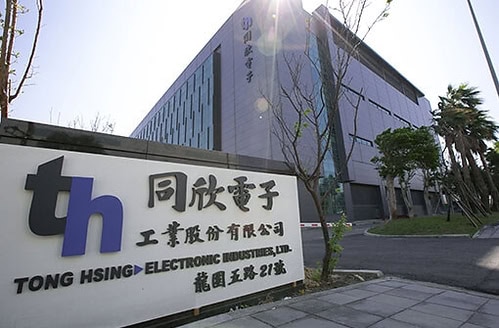
SINGAPORE, March 3, 2026: Tong Hsing Electronic has announced a strategic partnership with Singapore-based AI solutions provider SixSense to support its smart factory development. Announced on March 3, 2026, the collaboration will initially focus on using artificial intelligence to classify defects in semiconductor manufacturing.
The semiconductor assembly and testing company selected SixSense after a comprehensive evaluation of available solutions. According to the announcement, classification accuracy, deployment flexibility, and integration with existing production systems were important factors in the decision.
AI Technology to Analyze Manufacturing Defect Images
Tong Hsing Electronic plans to adopt SixSense’s automated defect classification, or ADC, solution to analyze and categorize large volumes of defect images. These images are generated across its production lines.
The company says the technology is intended to reduce reliance on manual inspection and improve classification consistency. Moreover, it will shorten cycle times and help engineering teams identify and address manufacturing process issues more effectively.
The announcement identifies labor costs, consistency, and efficiency as growing challenges for traditional manual inspection. This is especially true as semiconductor production becomes more complex and increases in volume.
Partnership Supports Smart Factory Development
Tong Hsing Electronic said the collaboration aligns with its long-term digital transformation and smart manufacturing strategy. It views the agreement as a milestone in its smart factory roadmap rather than simply a system deployment.
Skid Chiu, Senior Assistant Vice President of Tong Hsing, said reducing labor-intensive work while maintaining quality is important for sustainable growth. He expects SixSense’s ADC solution to help the company use resources more effectively. As inspection demand increases, this will be even more valuable.
Akanksha Jagwani, Co-Founder and CEO of SixSense, said the company aims to help semiconductor manufacturers expand operations without increasing complexity or cost. She added that results validated by Tong Hsing Electronic demonstrate how AI can reduce dependence on manual labor. It can also improve cycle efficiency in high-volume manufacturing.
Companies Plan Broader AI Applications
Beyond the initial defect classification application, Tong Hsing Electronic and SixSense plan to expand their collaboration across additional manufacturing stages and product lines. Furthermore, the companies say this broader use of AI is intended to strengthen manufacturing resilience and competitiveness.


