


Overview
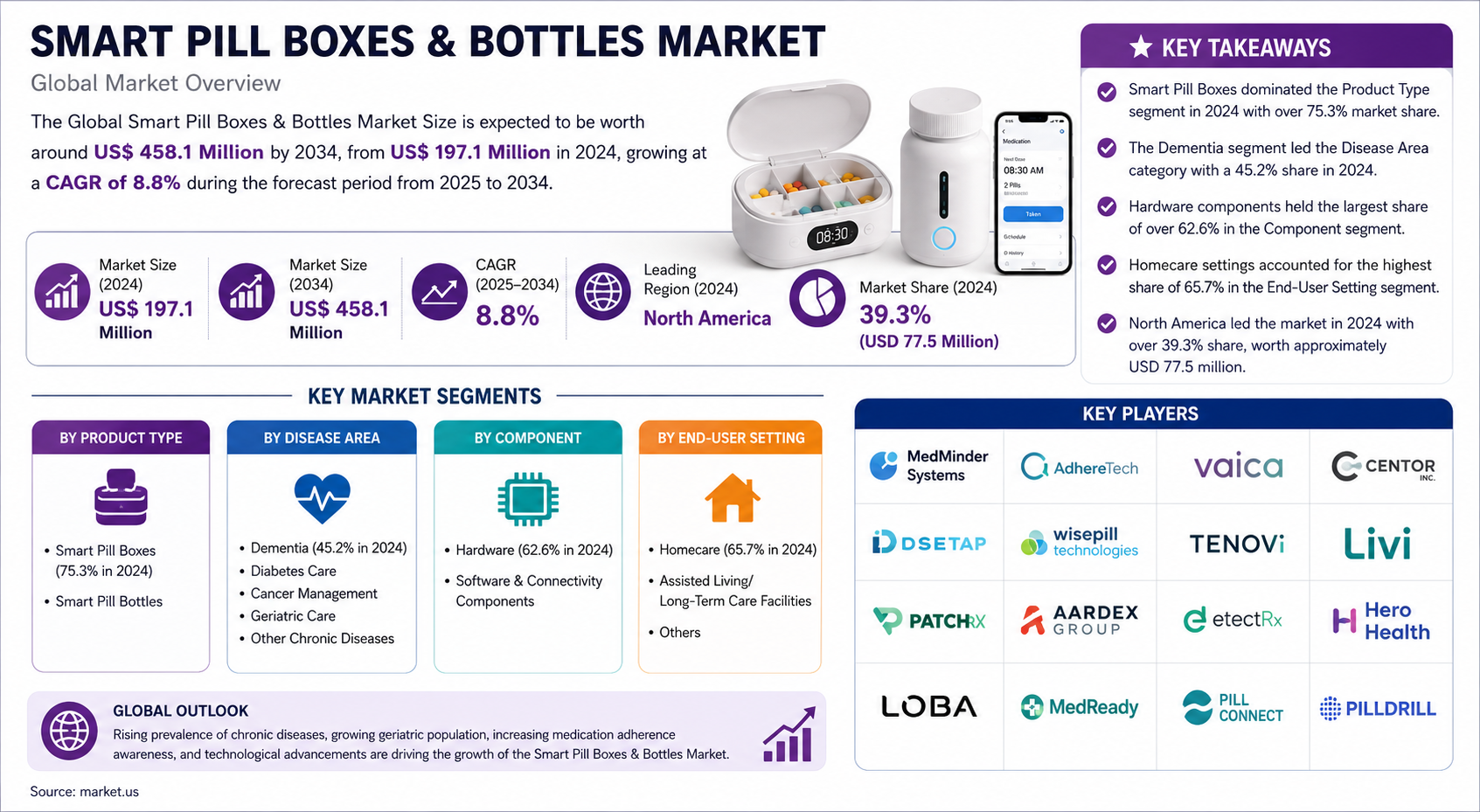
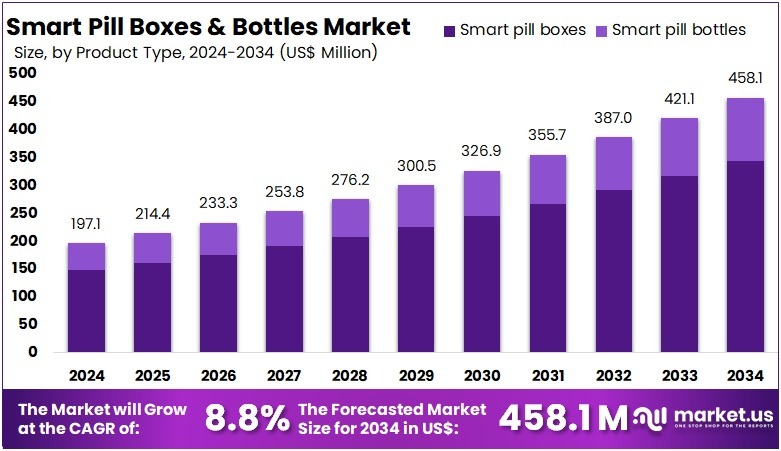
The Global Smart Pill Boxes & Bottles Market Size is expected to be worth around US$ 458.1 Million by 2034, from US$ 197.1 Million in 2024, growing at a CAGR of 8.8% during the forecast period from 2025 to 2034. North America held a dominant market position, capturing more than a 39.3% share and reaching a market value of USD 77.5 million for the year.
Smart pill boxes and bottles are becoming an important part of medication management as healthcare systems focus on improving adherence, reducing medication errors, and supporting independent living for older adults and people with chronic diseases. These connected devices provide scheduled reminders, track missed doses, and can notify caregivers or healthcare professionals when medications are not taken as prescribed. Their integration with mobile applications and remote monitoring platforms is strengthening digital healthcare delivery, particularly in home care settings.
Medication non-adherence remains a significant public health challenge. According to the U.S. Centers for Disease Control and Prevention (CDC), approximately 50% of patients with chronic diseases do not take medications as prescribed, increasing the risk of poor health outcomes and avoidable hospitalizations. The CDC also highlights that pill organizers and electronic medication reminders are effective tools for improving adherence among patients with long-term conditions.
Growing aging populations and the increasing prevalence of chronic diseases such as diabetes, cardiovascular disorders, and neurological conditions are encouraging healthcare providers to adopt digital medication management solutions. The U.S. Food and Drug Administration (FDA) recognizes medication adherence as a major healthcare priority and supports the development of innovative technologies that help patients follow prescribed treatment plans more effectively.
The market is also benefiting from wider adoption of telehealth and remote patient monitoring, where connected pill boxes and smart bottles enable caregivers to monitor medication usage in real time. As healthcare organizations continue investing in patient-centered digital care, these intelligent adherence solutions are expected to play a larger role in improving treatment outcomes, reducing preventable medication errors, and enhancing overall healthcare efficiency.
Key Takeaways
- The Global Smart Pill Boxes & Bottles Market is expected to reach approximately USD 458.1 million by 2034, growing at a CAGR of 8.8% during the forecast period.
- In 2024, Smart Pill Boxes emerged as the leading product type, capturing more than 75.3% of the overall market share due to increasing demand for medication adherence solutions.
- The Dementia segment held a prominent position within the Disease Area category in 2024, accounting for around 45.2% of the market share, driven by the growing need for advanced medication management among dementia patients.
- Hardware components dominated the Component segment in 2024, representing over 62.6% of the total market share due to the increasing adoption of connected medication devices.
- The Homecare segment secured the largest share among end users in 2024, accounting for approximately 65.7% of the global market, supported by the rising preference for remote medication monitoring and independent patient care.
- North America maintained its leadership in the Smart Pill Boxes & Bottles Market in 2024, holding more than 39.3% of the market share, with revenue reaching nearly USD 77.5 million.
Statistical Information
- Three in four U.S. adults have at least one chronic condition, and more than half have two or more chronic conditions, according to the CDC. This high chronic disease burden increases the need for medication tracking, reminders, and adherence-support technologies.
- The U.S. Census Bureau reported that the population aged 65 years and older reached 61.2 million in 2024, increasing by 3.1% compared with 2023. The growing senior population creates demand for smart medication management solutions that support independent living.
- Adults aged 65 years and older represented 18.0% of the total U.S. population in 2024, rising from 12.4% in 2004, showing a significant demographic shift toward an aging population requiring long-term healthcare support.
- Chronic diseases account for a major healthcare burden in the United States, with conditions such as heart disease, cancer, and diabetes contributing to $5.3 trillion in annual healthcare costs, according to the CDC. Smart medication adherence systems can support better disease management.
- The FDA classifies Remote Medication Management Systems as Class II medical devices under Regulation 880.6315, creating a defined regulatory pathway for connected medication devices that provide scheduling, reminders, medication dispensing support, and event tracking.
- FDA-recognized remote medication management systems consist of three major elements: clinical and communication software, medication delivery units, and medication packaging, creating opportunities for integrated hardware and software solutions.
- The U.S. Census Bureau found that the number of adults aged 65 and older increased by more than 1.8 million people between 2023 and 2024, highlighting continued growth in the elderly population segment that commonly requires medication support technologies.
- FDA-regulated remote medication management systems are designed to allow healthcare professionals to remotely schedule medications, notify patients when doses are due, release medication doses, and record medication events, supporting adoption in homecare and clinical environments.
Market Segmentation Analysis
Product Type Analysis
In 2024, Smart Pill Boxes dominated the Product Type segment with over 75.3% market share, supported by advanced reminder systems, Bluetooth connectivity, and automated medication tracking features. These devices help improve adherence among elderly and chronic disease patients. According to the U.S. Food and Drug Administration, digital health technologies are increasingly supporting patient monitoring and medication management. Smart Pill Bottles are also growing due to affordability and portability, but limited storage and connectivity features restrict wider adoption.
Disease Area Analysis
The Dementia segment led the Disease Area category in 2024, accounting for approximately 45.2% market share, driven by increasing demand for medication reminders among Alzheimer’s and dementia patients. Connected devices help caregivers track medication schedules and reduce missed doses. The National Institute on Aging highlights the importance of supportive technologies for improving care among older adults. Diabetes, cancer management, and geriatric care segments are also expanding as chronic disease management increasingly shifts toward digital solutions.
Component Analysis
The Hardware segment held the leading position in 2024, capturing more than 62.6% market share due to increasing adoption of sensors, wireless modules, microcontrollers, and automated dispensing systems. These components enable accurate tracking and real-time medication monitoring. The Office of the National Coordinator for Health Information Technology emphasizes the growing role of connected health technologies in improving healthcare data exchange. Software and connectivity solutions are gaining momentum through mobile applications, cloud platforms, and remote monitoring capabilities.
End-User Setting Analysis
The Homecare segment dominated the End-User category in 2024, accounting for around 65.7% market share, driven by rising preference for remote medication management and independent patient care. Smart pill devices support caregivers through alerts, tracking features, and digital monitoring tools. The Centers for Disease Control and Prevention highlights medication adherence as an important factor in managing chronic conditions. Assisted living facilities and long-term care centers are also adopting these technologies to reduce medication errors and improve patient safety.
Regional Analysis
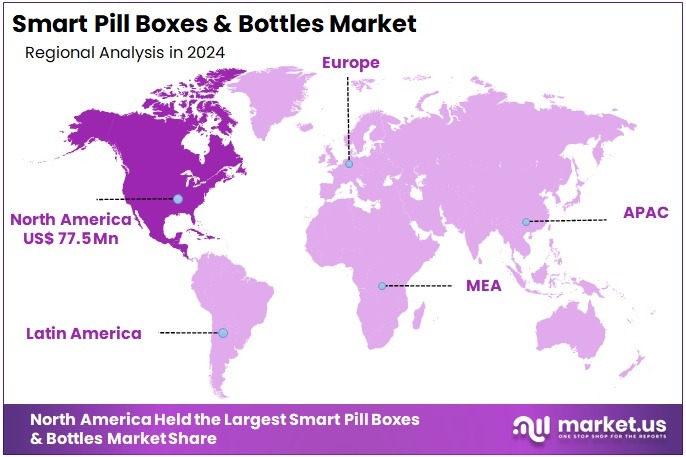
In 2024, North America dominated the Smart Pill Boxes & Bottles Market with over 39.3% share, reaching approximately USD 77.5 million. The region’s growth is supported by high prescription medication usage, an aging population, and increasing adoption of digital healthcare solutions. According to the Centers for Disease Control and Prevention, prescription medicines are widely used for disease management, creating demand for technologies that improve medication adherence and monitoring.
The rising elderly population has further increased the need for connected medication management systems. Older adults often manage multiple prescriptions, making smart pill boxes useful for reminders, dose tracking, and caregiver support. Additionally, the U.S. Food and Drug Administration supports innovation in digital health technologies, including software-based healthcare solutions that improve patient care and monitoring.
Strong healthcare infrastructure, widespread smartphone adoption, and growing remote care programs continue to accelerate regional adoption. Pharmacy networks, healthcare providers, and caregivers are increasingly integrating smart medication devices into patient support programs. With continued advancements in connected health platforms and regulatory support, North America is expected to maintain its leading position in the global smart pill boxes and bottles market.
Business Opportunities
The Smart Pill Boxes & Bottles Market presents strong business opportunities through the integration of IoT, artificial intelligence, and remote patient monitoring technologies. Companies can develop advanced medication management solutions with real-time alerts, automated dispensing, caregiver notifications, and cloud-based health data platforms. The U.S. FDA recognizes remote medication management systems as connected healthcare devices that support healthcare professionals in managing treatment routines for patients at home or in clinical settings, creating opportunities for innovative manufacturers.
Healthcare providers, pharmacies, and digital health companies can expand services by incorporating smart adherence tools into chronic disease management programs. Growing demand for mobile health applications and connected devices also creates opportunities for software developers to build platforms that integrate medication data with electronic health records and telehealth systems.
Manufacturers can further target elderly care, assisted living facilities, and homecare markets by developing user-friendly devices for dementia, diabetes, and multi-medication management. Partnerships with pharmacies and healthcare organizations can accelerate adoption by improving patient engagement and medication compliance. Future opportunities will emerge from AI-based adherence analytics, personalized reminders, and secure data-sharing solutions that strengthen connected healthcare ecosystems.
Emerging Trends
- AI-Based Medication Adherence Prediction: Artificial intelligence is becoming a key trend in smart pill boxes by analyzing medication-taking patterns and predicting missed doses. AI-enabled systems can provide personalized reminders and support healthcare decisions. FDA has highlighted the increasing role of AI-enabled digital health technologies for improving patient monitoring and healthcare outcomes.
- Remote Medication Management Integration: Smart pill boxes are increasingly being integrated with remote medication management platforms that allow healthcare professionals to schedule doses, send reminders, and review medication event histories. The FDA classifies remote medication management systems as Class II devices consisting of software, medication delivery units, and packaging components.
- IoT and Connected Healthcare Ecosystems: Internet-connected pill bottles using Bluetooth, Wi-Fi, and cloud platforms are becoming more common as healthcare shifts toward continuous monitoring. These devices allow medication data sharing between patients, caregivers, pharmacies, and providers, supporting remote care models and improving treatment visibility.
- Personalized Medication Management for Chronic Care: Smart pill systems are increasingly designed for patients requiring long-term treatment plans, including those managing multiple medications. Digital adherence studies show that technology-supported reminders and monitoring tools can improve medication-taking behavior, although effectiveness varies by patient group and intervention design.
- AI Voice Assistance and Elder-Friendly Designs: Manufacturers are focusing on simpler interfaces such as voice alerts, large displays, and caregiver-connected applications to improve usability among older adults. These designs address challenges related to memory loss, complex medication schedules, and independent living among senior populations.
Use Cases
- Dementia and Alzheimer’s Medication Support: Smart pill boxes are increasingly used to support dementia patients by providing automated reminders, dose alerts, and caregiver notifications. These systems help families monitor medication routines remotely and reduce dependence on manual tracking. Digital adherence tools are being explored as supportive solutions for memory-related healthcare challenges.
- Home Healthcare and Remote Patient Monitoring: Homecare is one of the major use cases for smart medication devices because patients can manage prescriptions while healthcare providers monitor adherence remotely. FDA-approved remote medication management systems are specifically designed to assist healthcare professionals in managing medication schedules in home or clinical environments.
- Pharmacy Medication Management Programs: Pharmacies are using connected medication solutions to improve refill management, patient engagement, and adherence support. Smart pill bottles can provide medication-use information that helps pharmacists identify patients who may require additional counseling or intervention.
- Clinical Trial Medication Tracking: Smart medication devices are being used in research settings to collect remote medication-use data. FDA guidance on digital health technologies supports the use of hardware and software tools for remote data collection in clinical investigations, improving trial participation and monitoring efficiency.
- Assisted Living and Long-Term Care Facilities: Smart pill dispensers are being adopted in assisted living environments to reduce medication errors and support healthcare staff. Automated dispensing, electronic records, and real-time alerts help improve medication administration accuracy for elderly residents requiring multiple prescriptions.
Recent Developments
- In August 2025, AARDEX Group and Pill Connect announced a strategic partnership to support a multi-cohort Phase 2A dose selection trial, combining Pill Connect’s connected dispenser with AARDEX’s MEMS Mobile app and MEMS AS software for real-time adherence monitoring.
- In July 2025, AdhereTech raised a growth equity round from Argentum to expand its sales and partnerships team and hire additional software engineers for its smart pill bottle adherence platform.
- In April 2025, Centor Inc. launched a new smart weekly pill organizer that monitors medication intake in real time and was made available to U.S. pharmacies through Centor’s remote monitoring service, strengthening its connected adherence portfolio.
Conclusion
The Smart Pill Boxes & Bottles Market is gaining importance as healthcare systems prioritize medication adherence, remote monitoring, and patient-centered care. Increasing chronic disease prevalence, aging populations, and digital health adoption are accelerating demand for connected medication solutions. Advanced technologies such as AI, IoT, cloud platforms, and automated reminders are creating new opportunities for manufacturers, healthcare providers, and pharmacies.
Regulatory support from the FDA for remote medication management systems is further strengthening innovation in this sector. With expanding homecare adoption and improved connectivity, smart pill devices are expected to become an essential component of future medication management ecosystems.




















