


Overview
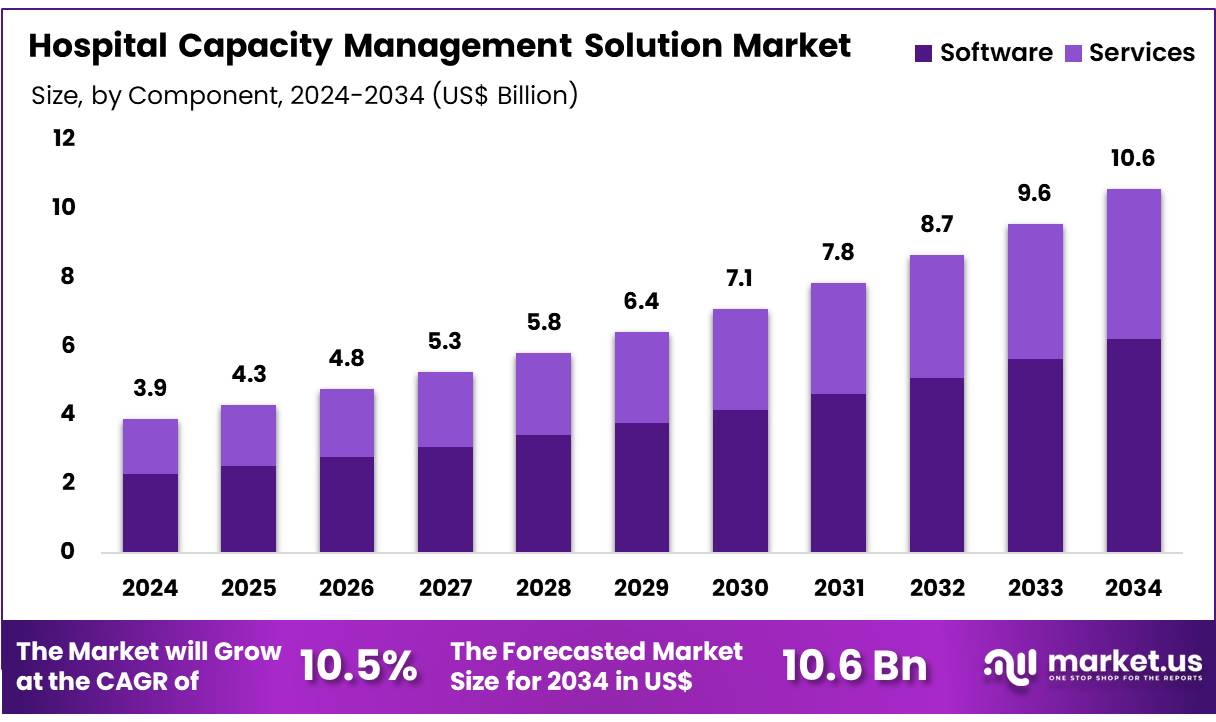
Global Hospital Capacity Management Solution Market size is expected to be worth around US$ 10.6 Billion by 2034 from US$ 3.9 Billion in 2024, growing at a CAGR of 10.5% during the forecast period 2025 to 2034. In 2024, North America led the market, achieving over 53.3% share with a revenue of US$ 2.1 Billion.
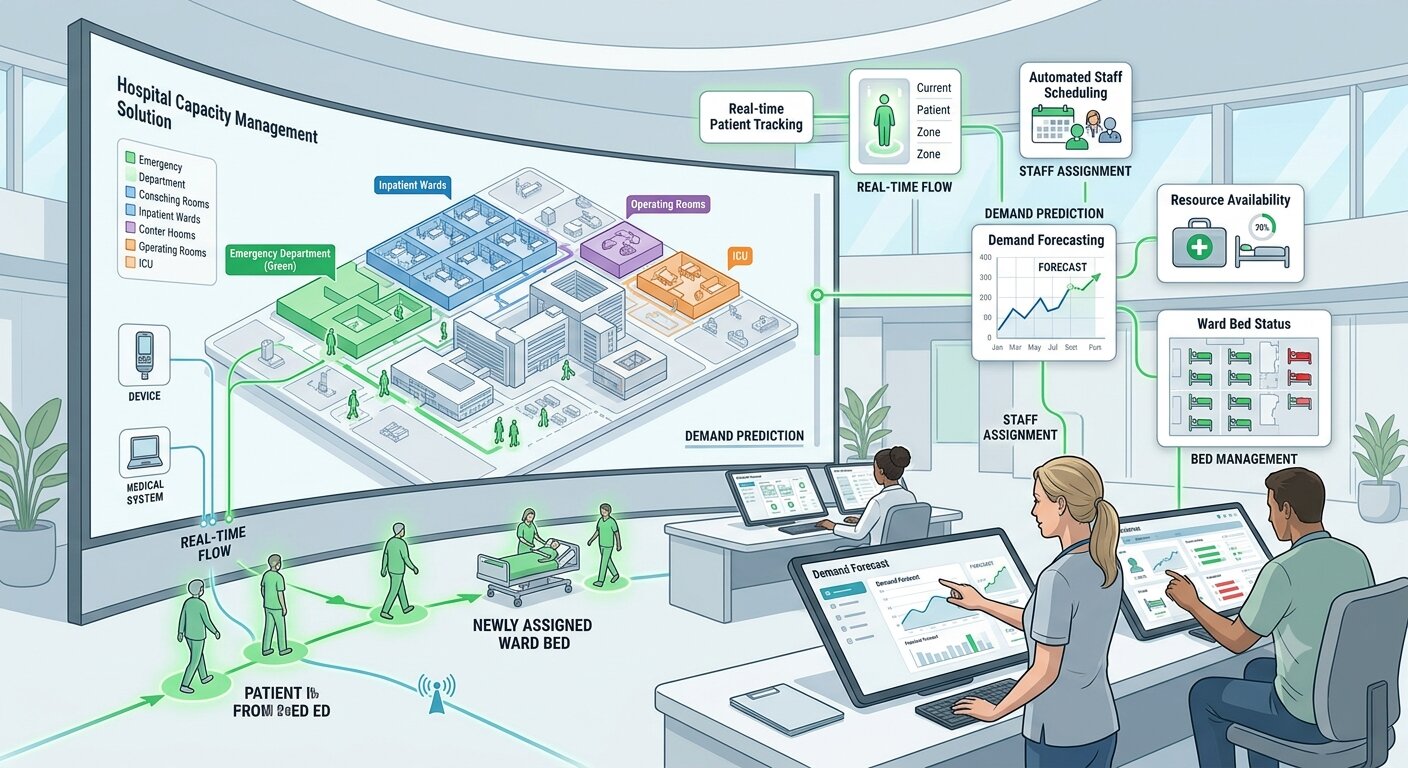
The growing pressure on healthcare systems to manage increasing patient volumes, limited resources, and operational challenges is accelerating the adoption of hospital capacity management solutions. These digital platforms help hospitals optimize bed availability, staff allocation, patient transfers, emergency department flow, and resource utilization through real-time data insights.
According to the Agency for Healthcare Research and Quality (AHRQ), nearly half of emergency departments report operating at or above capacity, while 9 out of 10 hospitals experience patient boarding in emergency departments while waiting for inpatient beds. These challenges highlight the importance of efficient capacity planning and patient flow management technologies.
Hospitals are increasingly integrating artificial intelligence, predictive analytics, cloud-based platforms, and electronic health record systems to improve operational decision-making. Advanced capacity management tools enable healthcare providers to forecast demand, reduce patient wait times, improve bed turnover, and enhance coordination between clinical departments. HIMSS highlights that healthcare organizations are focusing on digital transformation strategies to strengthen data-driven operations and improve care delivery.
The demand for these solutions is also supported by the need to address emergency department overcrowding and improve hospital-wide patient flow. AHRQ emphasizes that structured patient flow improvement strategies can help hospitals reduce congestion and enhance healthcare quality and safety.
With increasing investments in healthcare IT infrastructure and smart hospital technologies, capacity management solutions are becoming an essential component of modern healthcare operations. These platforms are expected to support hospitals in achieving better resource utilization, improved patient experiences, and more resilient healthcare delivery systems.
Key Takeaways
- In 2024, the Hospital Capacity Management Solution Market generated a revenue of US$ 3.9 Billion and is projected to expand at a CAGR of 10.5%, reaching approximately US$ 10.6 Billion by 2034.
- Based on product type, the market is categorized into asset management, patient flow management solutions, nursing & staff scheduling solutions, and patient care management solutions. Among these, the asset management segment dominated the market in 2023, accounting for a 28.3% share, driven by the growing need for efficient utilization and tracking of healthcare resources.
- By delivery mode, the market is segmented into web-based, cloud-based, and on-premises solutions. The web-based segment held a leading position with a 39.2% market share, supported by increasing adoption of easily accessible and scalable digital healthcare platforms.
- In terms of components, the market is divided into software and services. The software segment emerged as the dominant contributor, capturing the largest revenue share of 58.7%, due to rising demand for advanced analytics, automation, and real-time hospital management systems.
- Based on end users, the market is classified into hospitals, ambulatory surgical centers (ASCs), and others. The hospitals segment led the market with a 60.5% revenue share, as hospitals increasingly implement capacity management solutions to improve patient flow and operational efficiency.
- Regionally, North America dominated the Hospital Capacity Management Solution Market with a 53.3% market share in 2023, supported by advanced healthcare infrastructure and widespread adoption of healthcare IT solutions.
Regional Analysis
North America Leads the Hospital Capacity Management Solution Market
North America dominated the Hospital Capacity Management Solution Market in 2024, supported by advanced healthcare infrastructure, increasing adoption of digital hospital systems, and growing demand for efficient patient flow management.
Healthcare providers across the region are implementing predictive analytics, real-time dashboards, and automated capacity planning tools to improve bed utilization, reduce operational delays, and enhance care coordination.
The focus on value-based healthcare models from organizations such as the Centers for Medicare & Medicaid Services (CMS) is encouraging hospitals to adopt technologies that improve quality outcomes and operational efficiency.
The expansion of remote care capabilities has also supported capacity optimization, with U.S. hospitals offering remote patient monitoring services increasing from 33.0% in 2018 to 46.3% in 2022.
Asia Pacific Expected to Witness Strong Market Growth
The Asia Pacific region is projected to experience significant growth due to rising healthcare demand, expanding hospital networks, and increasing investments in healthcare digitalization. Countries such as China, Japan, India, Singapore, and Australia are focusing on smart hospital infrastructure and technology-enabled resource management.
Growing healthcare expenditure and modernization initiatives are encouraging hospitals to adopt cloud-based capacity management platforms for improving patient flow and workforce utilization. In Australia, hospital spending increased by US$4.8 billion (4.7%) in 2022–23, reflecting continued investment in healthcare infrastructure.
Government support for digital transformation and the integration of electronic health records are expected to further accelerate adoption of hospital capacity management solutions across the region.
Emerging Trends
- Artificial Intelligence-Based Capacity Forecasting: AI-powered analytics is becoming an important trend in hospital capacity management as healthcare providers use predictive models to forecast admissions, bed demand, and resource requirements. These tools help hospitals make proactive decisions, improve operational planning, and reduce pressure during sudden increases in patient volumes.
- Real-Time Hospital Bed Capacity Monitoring: Healthcare systems are increasingly adopting automated bed monitoring platforms to gain real-time visibility into occupancy levels and available resources. The CDC’s Hospital Bed Capacity Project focuses on automated collection and exchange of near real-time capacity data to strengthen healthcare preparedness and resource allocation.
- Integration of Capacity Platforms with Healthcare Data Systems: Integration with electronic health records, hospital information systems, and analytics platforms is emerging as a major trend. Connected systems allow hospitals to combine patient flow data, operational information, and resource availability to improve coordination and accelerate decision-making across departments.
- Growth of Hospital Command Centers: Healthcare organizations are developing centralized command centers that combine operational data from multiple departments. These platforms provide administrators with real-time insights into beds, patient movement, and staffing requirements, helping hospitals improve response times and manage complex operational challenges.
- Cloud-Based and Scalable Healthcare Operations Platforms: Cloud-based capacity management solutions are gaining adoption as hospitals seek flexible digital infrastructure. These platforms enable remote access, faster data sharing, and easier expansion across multi-site healthcare networks, supporting efficient management of growing patient volumes and operational requirements.
Use Cases
- Emergency Department Overcrowding Management: Hospitals use capacity management solutions to monitor emergency department demand, identify bottlenecks, and improve patient movement. Real-time capacity information helps healthcare teams allocate beds faster, coordinate transfers, and reduce delays during periods of high emergency care demand.
- Bed Allocation and Patient Flow Optimization: A major use case is optimizing hospital bed utilization through automated tracking and forecasting tools. These systems help identify available beds, support admission planning, and improve discharge coordination, allowing hospitals to increase efficiency and provide timely care.
- Disaster and Pandemic Preparedness: Capacity management platforms support hospitals during public health emergencies by providing visibility into available beds, occupancy rates, and resource shortages. CDC highlights that near real-time hospital capacity data improves emergency response planning, patient transfers, and regional healthcare coordination.
- Workforce and Resource Scheduling: Hospitals are applying capacity management solutions to align staffing levels with patient demand. These systems analyze operational requirements and help administrators schedule nurses, physicians, and support teams more effectively, improving workforce utilization and reducing operational stress.
- Multi-Hospital Network Coordination: Healthcare networks use capacity management platforms to coordinate patient transfers and balance workloads between facilities. Shared visibility across hospitals enables better distribution of patients, improves access to available resources, and strengthens healthcare system resilience during regional demand fluctuations.
Frequently Asked Questions About Hospital Capacity Management Solution
- How does Hospital Capacity Management Solution improve patient flow?
These solutions improve patient flow by tracking admissions, transfers, discharges, and bed availability in real time. Hospitals can identify bottlenecks, speed up patient placement, coordinate departments effectively, and reduce waiting times by using centralized operational insights. - What are the key features of Hospital Capacity Management Solutions?
Major features include bed management, patient flow tracking, workforce scheduling, asset monitoring, predictive analytics, reporting dashboards, and integration with hospital information systems. These capabilities help healthcare organizations make faster decisions and improve resource utilization across facilities. - How does artificial intelligence support hospital capacity management?
Artificial intelligence supports hospital capacity management by analyzing historical and real-time healthcare data to predict patient demand, optimize resource allocation, and identify operational challenges. AI-enabled platforms help hospitals prepare for demand fluctuations and improve strategic capacity planning. - How are cloud-based solutions transforming hospital capacity management?
Cloud-based solutions are transforming hospital operations by enabling scalable infrastructure, remote accessibility, and easier data sharing across multiple healthcare locations. These platforms allow hospitals to manage capacity digitally while reducing dependency on traditional IT infrastructure. - What are the major use cases of Hospital Capacity Management Solutions?
Major use cases include emergency department management, bed allocation, patient flow optimization, staff scheduling, asset tracking, and healthcare network coordination. These applications help hospitals improve operational control and maintain better resource availability during changing demand conditions. - What factors are driving the growth of the Hospital Capacity Management Solution Market?
Market growth is driven by increasing patient admissions, healthcare digital transformation, demand for efficient resource utilization, adoption of AI and cloud technologies, and the need for improved hospital workflow management. These factors are encouraging healthcare providers to invest in advanced operational platforms. - What is the future outlook for the Hospital Capacity Management Solution Market?
The future outlook is positive as hospitals continue investing in smart healthcare infrastructure, predictive analytics, and connected digital systems. Increasing demand for efficient patient management and resilient healthcare operations is expected to support continued adoption of capacity management solutions worldwide.
Conclusion
The Hospital Capacity Management Solution Market is becoming a critical part of modern healthcare operations as hospitals focus on improving patient flow, resource utilization, and operational efficiency. Increasing adoption of AI, predictive analytics, cloud platforms, and integrated health IT systems is enabling healthcare providers to make faster and more informed capacity decisions.
Government initiatives supporting real-time healthcare data exchange and digital transformation are further strengthening adoption. As hospitals continue addressing challenges such as emergency department congestion, workforce limitations, and demand fluctuations, capacity management solutions will play an essential role in building efficient, flexible, and resilient healthcare delivery systems worldwide.




















