


Overview
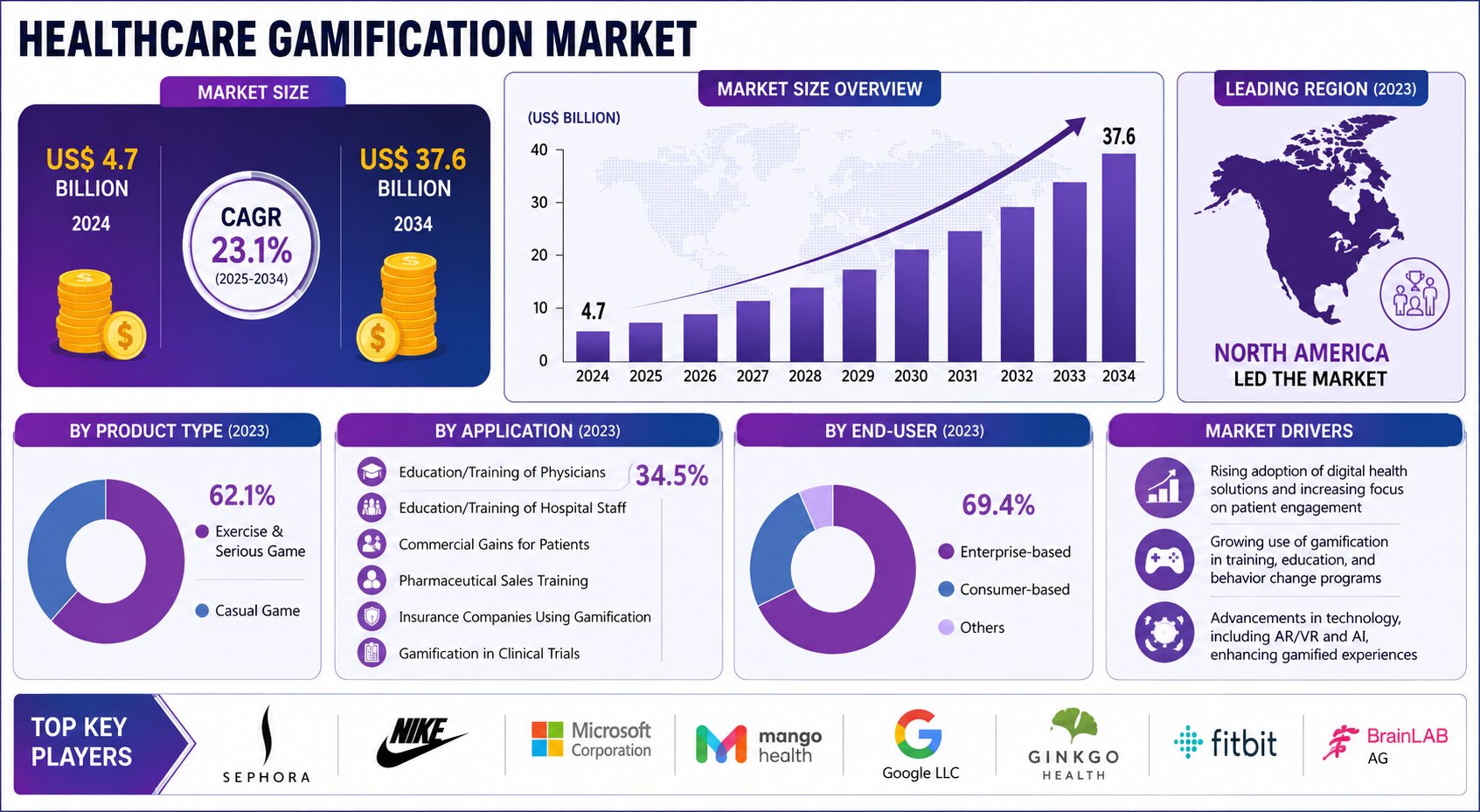
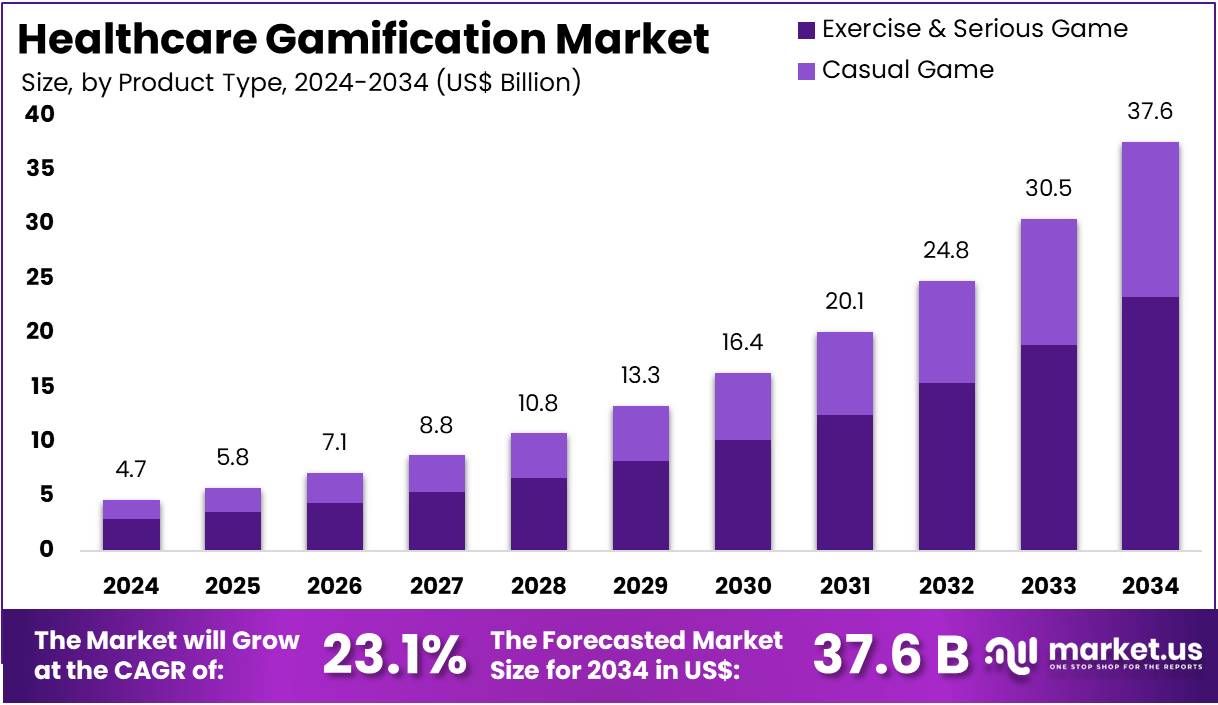
The Healthcare Gamification Market Size is expected to be worth around US$ 37.6 Billion by 2034 from US$ 4.7 Billion in 2024, growing at a CAGR of 23.1% during the forecast period 2025 to 2034.
Healthcare gamification is emerging as an effective approach to improve patient engagement, encourage healthy behaviors, and strengthen long-term disease management through game-based digital experiences. Healthcare providers, insurers, and digital health companies are increasingly integrating rewards, progress tracking, challenges, leaderboards, and personalized goals into mobile applications and wellness platforms to motivate users to follow treatment plans, increase physical activity, and adopt healthier lifestyles.
The growing use of smartphones, wearable devices, and connected health technologies is making gamified healthcare solutions more accessible across both preventive care and chronic disease management. Healthcare organizations are also exploring gamification to improve medication adherence, patient education, rehabilitation programs, and employee wellness initiatives.
The market is benefiting from growing recognition that sustained patient participation is essential for improving healthcare outcomes. According to the World Health Organization (WHO), 31% of adults and 80% of adolescents worldwide do not meet recommended physical activity levels, highlighting the need for innovative digital engagement tools that encourage healthier behaviors.
WHO also estimates that physical inactivity could cost global healthcare systems around US$ 300 billion between 2020 and 2030 if current trends continue. These findings are encouraging healthcare providers to adopt digital engagement strategies, including gamification, to support preventive care and lifestyle improvement.
Additionally, the U.S. Centers for Disease Control and Prevention (CDC) reports that only 1 in 4 U.S. adults meets the recommended aerobic and muscle-strengthening activity guidelines, reinforcing demand for interactive health technologies that motivate long-term behavioral change. Together, these trends are expected to support continued innovation and adoption of healthcare gamification solutions across global healthcare systems.
Key Takeaways
- In 2024, the global healthcare gamification market was valued at US$ 4.7 billion and is projected to reach US$ 37.6 billion by 2034, expanding at a CAGR of 23.1% during the forecast period.
- Based on product type, the market is categorized into exercise & serious games and casual games. Among these, the exercise & serious games segment dominated the market in 2023, accounting for 62.1% of the total market share.
- By application, the market is segmented into education and training of physicians, education and training of hospital staff, commercial gains for patients, pharmaceutical sales training, insurance companies using gamification, and gamification in clinical trials. The education and training of physicians segment emerged as the leading application, capturing 34.5% of the market share.
- In terms of end users, the healthcare gamification market is classified into enterprise-based, consumer-based, and others. The enterprise-based segment held the dominant position, contributing 69.4% of the overall market revenue.
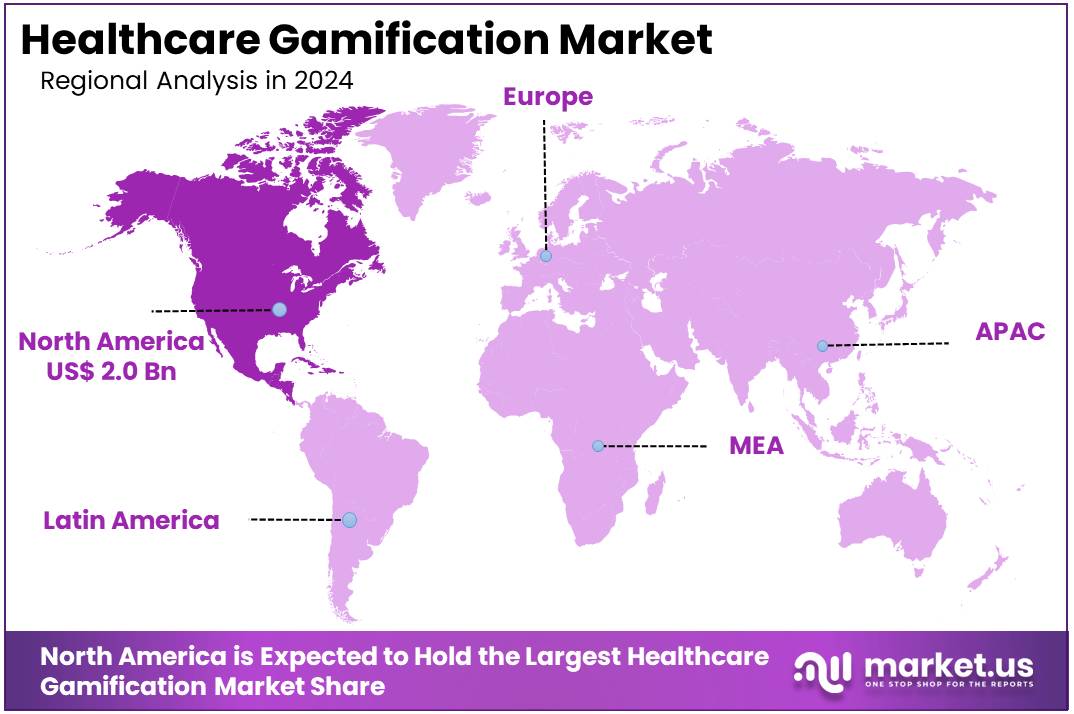
- Regionally, North America remained the leading market in 2023, representing 41.8% of the global healthcare gamification market share.
Statistical Information
- 95.0% of U.S. office-based physicians had adopted an Electronic Health Record (EHR) system in 2024, while 83.6% were using a certified EHR. The widespread use of digital clinical systems creates a strong foundation for integrating gamified patient engagement and physician training platforms.
- 91% of Medicare beneficiaries living in the community had internet access in 2024, 65% used the internet to search for health information, and 33% used it to fill prescriptions online. This reflects growing acceptance of digital healthcare services among older adults, supporting gamified health applications.
- According to the CDC National Health Interview Survey, 47.2% of U.S. adults met federal aerobic physical activity guidelines in 2024, while participation declined to 38.4% among adults aged 65 years and older, highlighting opportunities for gamified fitness and rehabilitation programs targeting older populations.
- The CDC reports that only 25% of U.S. adults and 16% of adolescents meet recommended physical activity guidelines, while around 40% of adults have obesity. These trends support demand for digital wellness platforms that encourage sustained healthy behaviors through rewards and challenges.
- A National Institutes of Health (All of Us Research Program) analysis of 13,947 U.S. adults using Fitbit data found that only 21.6% consistently achieved recommended weekly physical activity levels, demonstrating substantial room for engagement technologies that motivate regular exercise.
- The CDC notes that wearable technologies have become widely used for tracking physical activity and health metrics, with all devices sold in the U.S. required to comply with Federal Communications Commission (FCC) radiofrequency exposure limits, supporting confidence in long-term wearable adoption.
- The CDC reports that more than half of surveyed consumers searched online for information about diet, weight, and physical activity, while nearly half communicated electronically with healthcare providers, reflecting increasing consumer reliance on digital health platforms where gamification can improve engagement.
- The World Health Organization reports that 58% of Member States have established a national eHealth strategy, demonstrating continued government investment in digital health infrastructure that supports broader deployment of patient engagement and gamification technologies.
Market Segmentation Analysis
Product Type Analysis
The exercise & serious games segment dominated the healthcare gamification market in 2023, capturing 62.1% of the total market share. Its leadership is driven by growing demand for structured, goal-oriented digital tools that support fitness, rehabilitation, and chronic disease management. Healthcare providers are increasingly adopting these solutions to improve patient participation and treatment adherence.
The integration of artificial intelligence (AI), wearable devices, and personalized health tracking further enhances user engagement, supporting continued expansion of this segment across preventive and home-based healthcare applications.
Application Analysis
The education and training of physicians segment accounted for the largest application share, representing 34.5% of the healthcare gamification market in 2023. Gamified learning platforms help physicians strengthen clinical decision-making, diagnostic accuracy, and procedural skills through realistic simulations and interactive training.
Hospitals, medical schools, and continuing medical education (CME) programs are increasingly implementing these technologies to improve learning outcomes. Real-time performance feedback and immersive educational experiences are expected to further accelerate adoption and support workforce development across healthcare systems.
End-User Analysis
The enterprise-based segment led the healthcare gamification market with a 69.4% revenue share in 2023. Hospitals, pharmaceutical companies, insurance providers, and other healthcare organizations are increasingly using gamification to enhance employee training, patient engagement, and operational efficiency. Interactive platforms improve staff participation, encourage healthy behaviors, and support chronic disease management programs.
As organizations continue investing in digital transformation and workforce development, enterprise-based gamification is expected to witness sustained demand, reinforcing its dominant position in the global healthcare gamification market.
Regional Analysis
North America dominated the healthcare gamification market with 41.8% of the global revenue share in 2023, supported by strong digital health adoption, advanced healthcare infrastructure, and widespread use of connected technologies. Healthcare providers and insurers are increasingly using gamified platforms to improve patient engagement, medication adherence, wellness programs, and chronic disease management.
The World Health Organization (WHO) continues to encourage the adoption of digital health solutions to strengthen healthcare delivery and improve health outcomes, supporting regional innovation in gamified healthcare. Additionally, high internet penetration and extensive use of smartphones and wearable devices continue to accelerate market growth across the U.S. and Canada.
Asia Pacific is expected to register the fastest CAGR during the forecast period, driven by expanding digital infrastructure, government-backed digital health initiatives, and rising smartphone adoption. India’s Ayushman Bharat Digital Mission (ABDM) is creating an integrated digital health ecosystem through interoperable health records and digital healthcare services, encouraging the development of innovative patient engagement platforms.
Increasing investments in digital healthcare across China, India, Japan, and Southeast Asia are expected to further accelerate the adoption of healthcare gamification solutions.
Business Opportunities
The healthcare gamification market presents significant business opportunities as healthcare systems increasingly invest in digital technologies that improve patient engagement, preventive care, and long-term disease management. The World Health Organization (WHO) states that digital health remains largely untapped, creating substantial opportunities for companies developing interactive health applications, AI-enabled wellness platforms, and remote patient engagement solutions.
Growing adoption of wearable devices, mobile health applications, and connected healthcare ecosystems creates demand for gamified platforms that encourage medication adherence, physical activity, rehabilitation, and chronic disease management. Healthcare providers, insurers, employers, and pharmaceutical companies can integrate reward-based programs and personalized health challenges to improve clinical outcomes while reducing avoidable healthcare costs.
WHO-supported implementation research has also demonstrated that gamified mobile applications can strengthen treatment adherence and patient self-management, particularly for long-term conditions such as tuberculosis, highlighting broader commercial opportunities across chronic care programs.
Another major opportunity lies in physician education and workforce training, where gamified simulations improve clinical learning and employee engagement. Companies offering cloud-based platforms integrated with artificial intelligence, wearable technologies, and electronic health records can expand partnerships with hospitals and government-backed digital health initiatives.
As countries continue investing in digital health infrastructure and interoperability, healthcare gamification providers are well positioned to develop scalable enterprise solutions for hospitals, payers, pharmaceutical companies, and public health organizations worldwide.
Emerging Trends
- Gamification is becoming part of digital health ecosystems rather than standalone wellness apps. The World Health Organization (WHO) introduced an updated classification covering multiple digital health intervention categories in 2023, encouraging integration of patient engagement, remote monitoring, and self-management tools into healthcare systems.
- Gamified mobile health applications are increasingly targeting cardiometabolic health. A 2024 PubMed systematic review and meta-analysis evaluated randomized controlled trials lasting 8 weeks or longer, showing growing clinical interest in using game elements such as badges, leaderboards, challenges, and rewards to improve physical activity and healthy lifestyle behaviors.
- Healthcare providers are combining wearable devices with automated reminders to improve patient engagement. A recent rehabilitation study involving 135 patients with stroke or chronic obstructive pulmonary disease demonstrated that automated digital monitoring systems can support long-term participation while reducing staff workload for remote care programs.
- Electronic health record (EHR) maturity is enabling gamified clinical workflows. According to the CDC, 95.0% of U.S. office-based physicians had adopted EHR systems by 2024, creating greater opportunities to integrate gamified patient education, medication adherence, and preventive care directly into clinical practice.
- Long-term digital engagement strategies are becoming a competitive focus. A decentralized digital health study reported 92% participant completion over 12 months among 298 participants, with average wearable adherence of 77.4%, highlighting the importance of engagement techniques, personalized feedback, and digital support for sustained healthcare participation.
Use Cases
- Chronic disease management is a major use case where gamification encourages patients to complete daily activities, medication schedules, and rehabilitation exercises. Digital platforms increasingly combine wearable tracking, progress dashboards, and personalized rewards to improve long-term adherence for chronic conditions.
- Remote rehabilitation programs are adopting gamified engagement to maintain patient participation outside hospitals. Research involving 73 patients using an automated rehabilitation monitoring application demonstrated improved adherence through digital reminders and continuous wearable-based activity tracking, supporting home-based rehabilitation services.
- Preventive wellness programs increasingly use gamification within employer and healthcare organization initiatives. A 2024 review found that health applications commonly integrate goal setting, competitions, rewards, personalized feedback, and social challenges to encourage healthier daily behaviors and increase physical activity.
- Medical education and professional training are expanding through digital learning platforms that simulate clinical scenarios using interactive game mechanics. WHO’s digital health framework recognizes digital applications supporting healthcare workforce education, decision support, and service delivery across multiple healthcare environments.
- Wearable-connected health engagement is becoming an important commercial application. A 2025 U.S. national survey found wearable device use increased from 30.2% in 2020 to 41.1% in 2024, creating new opportunities for gamified coaching, personalized wellness challenges, and clinician-supported digital health programs.
Recent Developments
- In May 2026, Google LLC officially rebranded the Fitbit app as Google Health, introducing a unified platform that combines wearable data, medical records, AI-powered health coaching, customizable wellness dashboards, and restored social fitness challenges to improve long-term health engagement.
- In March 2025, Google LLC introduced medical records support in Health Connect, enabling Android users to securely integrate Fast Healthcare Interoperability Resources (FHIR)-based medical records with health and fitness applications. The update strengthens interoperability for digital health and gamified wellness platforms.
- In March 2025, CVS Health and Google Cloud announced a strategic partnership to develop an AI-native consumer engagement platform. The collaboration aims to improve personalized healthcare experiences, digital engagement, and connected care using Google Cloud’s AI capabilities.
Conclusion
The healthcare gamification market is poised for strong growth as healthcare providers increasingly adopt digital engagement strategies to improve patient outcomes, preventive care, and workforce training. Rising use of smartphones, wearable devices, artificial intelligence, and connected health platforms is expanding opportunities for personalized, interactive healthcare experiences. Government support for digital health transformation, growing electronic health record adoption, and increasing demand for remote care further strengthen market potential.
As hospitals, insurers, pharmaceutical companies, and employers continue investing in gamified solutions, the market is expected to witness sustained innovation, broader adoption, and enhanced patient participation, making healthcare delivery more efficient, engaging, and outcome-focused over the coming years.




















