


Overview
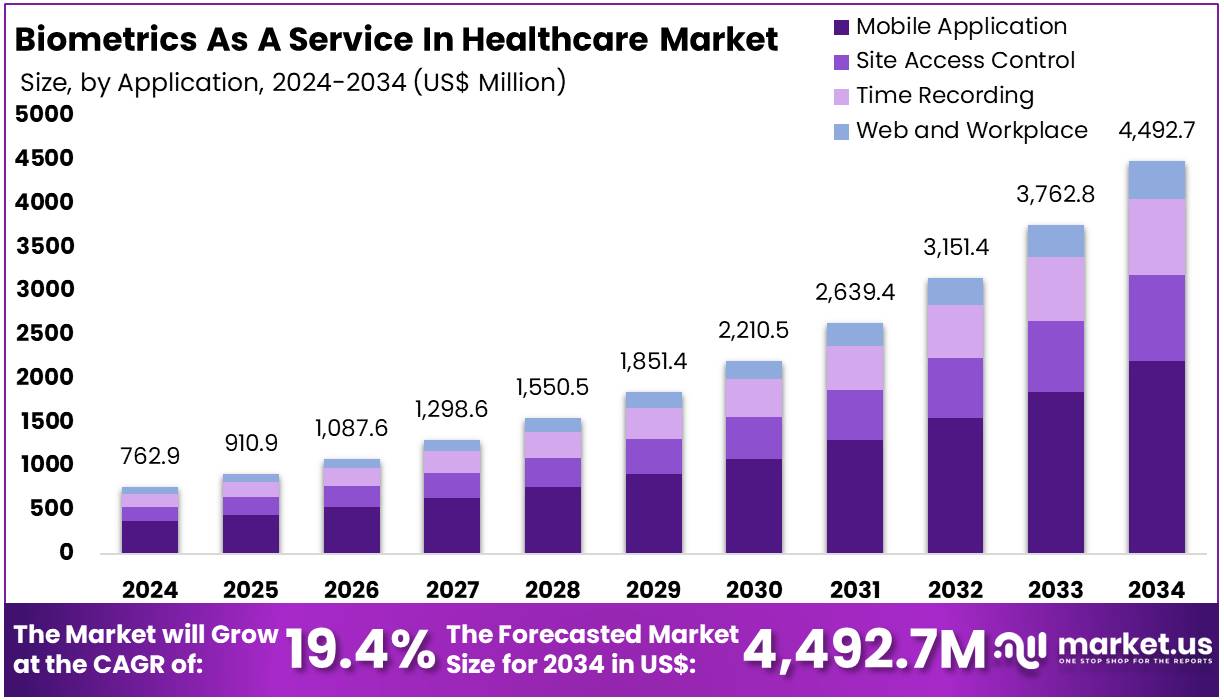
The Global Biometrics As A Service In Healthcare Market size is expected to be worth around US$ 4492.7 Million by 2034, from US$ 762.9 Million in 2024, growing at a CAGR of 19.4% during the forecast period from 2025 to 2034. North America held a dominant market position, capturing more than a 47.1% share and holds US$ 359.3 Million market value for the year.
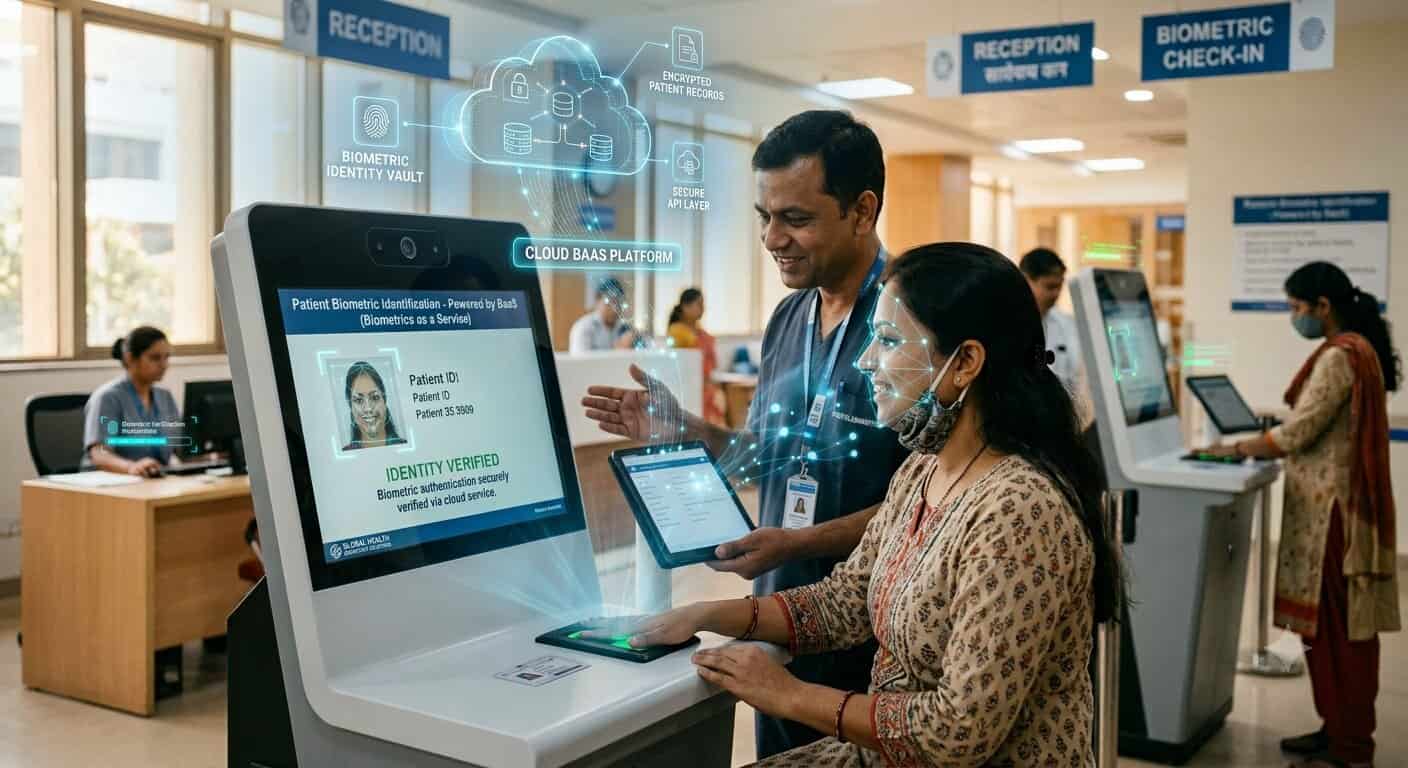
The global Biometrics as a Service in Healthcare Market is gaining attention as healthcare organizations increasingly prioritize secure patient identification, digital authentication, and protection of sensitive health information. Cloud-based biometric services can support healthcare providers by enabling identity verification through modalities such as fingerprints, facial recognition, iris patterns, and voice recognition.
The National Institute of Standards and Technology (NIST) identifies biometrics as measurable physiological or behavioral characteristics used to recognize or verify an individual. Its biometric research covers fingerprint, facial, iris, voice, and multimodal technologies, highlighting the importance of accuracy, interoperability, and secure implementation.
Security requirements are also becoming increasingly significant as healthcare organizations expand digital services. The U.S. Department of Health and Human Services (HHS) states that the HIPAA Security Rule requires appropriate administrative, physical, and technical safeguards to protect electronic protected health information.
In 2025, HHS reported that more than 167 million individuals were affected by large healthcare data breaches recorded in 2023, while hacking and ransomware-related large breaches had increased substantially since 2019. These security pressures may encourage healthcare providers to strengthen identity and access-management capabilities.
Key Takeaways
- The global Biometrics as a Service in Healthcare market is projected to reach US$ 4,492.7 million by 2034, expanding at a CAGR of 19.4%. This growth reflects increasing adoption of biometric technologies across healthcare environments.
- In 2024, the Multimodal type dominated the market, accounting for more than 54.2% share. Its strong position is supported by enhanced accuracy and layered authentication capabilities.
- The Mobile Application segment led the application category in 2024, capturing more than 41.6% share. Growth is driven by the expansion of remote healthcare services and mHealth applications.
- Fingerprint Recognition dominated the scanner type segment in 2024, holding a 48.3% share. Its leadership is attributed to cost-efficiency, ease of use, and widespread deployment across healthcare settings.
- North America maintained its leading position in 2024, capturing over 47.1% of the global market and reaching a value of US$ 359.3 million. Strong healthcare technology adoption supports the region’s market leadership.
Statistical Information
- HHS reached a US$ 600,000 settlement with PIH Health following a phishing attack that exposed electronic protected health information belonging to nearly 200,000 individuals. This is a strong financial indicator of the economic consequences of healthcare identity and security weaknesses.
- By 2024, more than 99% of U.S. non-federal acute-care hospitals had adopted certified electronic health records. This creates a broad digital infrastructure for integrating biometric authentication and patient-identification services.
- In 2024, 91% of U.S. office-based physicians used certified EHRs, while 95% used any type of EHR. This indicates strong readiness among physician practices for digitally integrated authentication technologies.
- Among U.S. physician practices with 51+ physicians, certified EHR adoption reached 98.5% in 2024. Large healthcare organizations therefore represent a particularly strong enterprise opportunity for biometric identity platforms.
- The NHS App recorded 77,258,823 login sessions in June 2026, representing a 46% year-over-year increase. The scale and rapid growth of mobile healthcare engagement strengthens the opportunity for secure biometric authentication.
- 15,144,846 people logged into the NHS App during June 2026, up 28% from June 2025. This demonstrates substantial consumer adoption of mobile healthcare platforms where convenient identity verification can be valuable.
- NHS App users ordered 7,387,605 repeat prescriptions in June 2026, an increase of 31% year over year. Increasingly frequent digital healthcare transactions create opportunities for stronger patient authentication and identity protection.
- 460,916 distinct users viewed prescription-tracking updates through the NHS App in June 2026, representing a 129% increase from June 2025. This rapid growth demonstrates expanding consumer interaction with authenticated digital healthcare services.
Market Segmentation Analysis
Type Analysis
In 2024, Multimodal biometrics dominated the Type Segment of the Biometrics as a Service in Healthcare Market, capturing more than 54.2% share. Its leadership was supported by higher accuracy, stronger security, and the ability to combine multiple biometric traits, including facial, fingerprint, and voice recognition. Multimodal systems reduce identification errors and provide dependable authentication for sensitive healthcare workflows.
Hospitals and clinics increasingly use these solutions for patient verification, secure facility access, and digital healthcare services. Their contactless capabilities also support infection-control requirements. Meanwhile, unimodal biometrics remain relevant in cost-sensitive healthcare settings because of their simpler deployment and lower costs. However, concerns regarding spoofing and false matches may limit their adoption in highly sensitive applications.
Application Analysis
In 2024, Mobile Applications dominated the Application Segment of the Biometrics as a Service in Healthcare Market, accounting for more than 41.6% share. The segment benefited from growing smartphone adoption, remote healthcare services, and mHealth platforms that increasingly use biometric authentication. Mobile biometric solutions enable patients and healthcare professionals to securely access portals, telemedicine platforms, and medical information. Site Access Control also recorded strong adoption as hospitals deployed biometrics to secure restricted areas and prevent unauthorized entry.
Time Recording solutions supported accurate employee attendance and workforce management across healthcare facilities. Meanwhile, Web and Workplace applications continued expanding as providers adopted cloud-based systems and digital health platforms requiring secure identity verification. Overall, application diversification is strengthening biometric adoption across healthcare operations.
Scanner Type Analysis
In 2024, Fingerprint Recognition held the leading position in the Scanner Type Segment of the Biometrics as a Service in Healthcare Market, capturing more than 48.3% share. Its dominance was driven by affordability, reliability, ease of deployment, and widespread use in patient identification, secure access, and workforce attendance systems. Fingerprint solutions can also integrate effectively with healthcare information systems and electronic records.
Facial Recognition represented another important segment, supported by growing demand for contactless authentication and streamlined patient check-ins. Other technologies, including iris, palm, and voice recognition, continued gaining adoption in specialized healthcare applications. Voice biometrics are particularly useful for remote and hands-free authentication. Emerging vein-pattern and behavioral technologies are also expected to create additional opportunities as healthcare security requirements evolve.
Regional Analysis
In 2024, North America held a dominant position in the Biometrics as a Service in Healthcare Market, capturing more than 47.1% share and reaching US$ 359.3 million in market value. The region benefits from advanced healthcare IT infrastructure, strong cybersecurity priorities, and increasing emphasis on secure patient identification. In the U.S., the HIPAA Security Rule requires safeguards protecting the confidentiality, integrity, and availability of electronic protected health information, supporting demand for secure authentication technologies.
The U.S. also continues advancing nationwide health information interoperability. The Office of the National Coordinator for Health IT identifies patient matching as critical to healthcare interoperability and health information infrastructure.
Canada is strengthening digital healthcare connectivity through initiatives such as the Connected Care for Canadians Act, which promotes common standards for secure health-information exchange. These developments, combined with healthcare modernization and rising data-security requirements, are expected to support continued adoption of biometric services across North America.
Business Opportunities
The Biometrics as a Service in Healthcare Market presents significant opportunities as healthcare providers strengthen digital identity, cybersecurity, and patient authentication. The U.S. healthcare sector offers strong potential for biometric authentication solutions across hospitals, clinics, telehealth platforms, and connected medical systems. FDA guidance recognizes biometrics as an authentication method for limiting unauthorized access to medical devices and digital systems, creating opportunities for vendors offering secure identity platforms.
Another opportunity lies in patient identity and record matching. The Office of the National Coordinator for Health IT identifies patient matching as a critical component of interoperability and healthcare IT infrastructure, creating demand for biometric solutions that can improve identification accuracy across healthcare systems.
Cloud-based biometric platforms also offer opportunities for telemedicine, remote patient verification, workforce authentication, and access control. Vendors can differentiate through multimodal authentication, mobile biometric applications, privacy-preserving technologies, and interoperability with electronic health records. Rising cybersecurity concerns further strengthen demand, following major healthcare cyber incidents that exposed weaknesses in conventional authentication practices.
Emerging Trends
- Privacy-Preserving Biometrics: Healthcare providers are moving toward biometric systems that protect templates and limit exposure of raw biometric data. NIST’s 2025 guidelines emphasize privacy requirements, transparency, and biometric-template protection, making privacy-by-design an important trend for healthcare authentication platforms.
- Phishing-Resistant Authentication: Biometrics are increasingly being combined with stronger authentication methods rather than used alone. NIST’s latest digital-identity guidance emphasizes stronger authenticators and phishing-resistant approaches, creating opportunities for healthcare platforms that combine biometrics with secure credentials and device-based authentication.
- Biometric Identity for Hospital-at-Home: Hospital-at-home programs are creating new authentication requirements outside traditional healthcare facilities. NIST specifically highlights biometric devices used in home-based care and recommends authentication, access control, monitoring, and network segmentation to protect connected healthcare environments.
- Federated Digital Healthcare Identity: Healthcare identity is increasingly moving toward systems that can securely authenticate users across multiple services and organizations. NIST’s 2025 federation guidance supports sharing verified authentication assertions between separately administered systems, creating opportunities for interoperable biometric identity services.
- AI-Enhanced Biometric Verification: Biometric verification is becoming more sophisticated through improved presentation-attack detection and automated identity assessment. NIST notes that biometric systems need stronger safeguards against spoofing, while its 2025 face-recognition work demonstrated standards-based verification with very high accuracy.
Use Cases
- Patient Identity Matching: Biometrics can help healthcare organizations accurately connect a patient with the correct medical record. ONC identifies patient matching as a critical part of interoperability and healthcare infrastructure, making biometric verification useful for reducing identity errors across connected healthcare systems.
- Secure EHR Access: Hospitals can use biometric authentication to verify clinicians before allowing access to electronic health records. This can strengthen identity assurance while reducing dependence on passwords. NIST’s identity guidelines specifically address authentication, identity proofing, and secure access across digital systems.
- Telehealth Authentication: Biometrics can verify patients and healthcare professionals during remote consultations and virtual-care interactions. This becomes particularly relevant for hospital-at-home services, where medical and biometric devices operate outside direct hospital control and require stronger authentication and security measures.
- Healthcare Workforce Access: Biometric authentication can provide secure access for doctors, nurses, contractors, and other healthcare workers. NHS England’s Care Identity Service 2 already supports alternatives to traditional smartcards, including security keys, Windows Hello, and Microsoft Authenticator, demonstrating the broader shift toward modern authentication.
- Remote Patient Identity Proofing: Biometrics can support digital enrollment by linking an individual to verified identity evidence. NIST’s 2025 identity-proofing guidance specifically covers live facial images and fingerprints for identity verification, credential binding, and deduplication, creating opportunities for remote healthcare onboarding.
Recent Developments
- In July 2026, BIO-key partnered with Maktabi Tech to expand identity security across Saudi Arabia’s education sector, bringing BIO-key’s passwordless and identity-bound biometric authentication capabilities into the Saudi market. The partnership strengthens BIO-key’s Middle East channel presence, although the announced application is education rather than healthcare.
- In July 2026, BIO-key announced that the Central Bank of Jordan selected its technology for a national biometric authentication initiative. The project expands BIO-key’s biometric identity platform into a national-scale authentication environment and strengthens its regional presence in the Middle East.
- In June 2026, Thales announced that Availity selected its OneWelcome Identity Platform to modernize identity infrastructure. The U.S. healthcare technology company is using the platform to move away from legacy identity systems and strengthen identity management across its healthcare information network.
- In May 2026, IDEX Biometrics signed a definitive commercial agreement with ID Centric, formalizing the exclusive technology partnership announced in March. The agreement establishes the contractual framework for commercialization of IDEX biometric technology through the APAC-focused partnership.
- In March 2026, IDEX Biometrics announced a NOK 90 million private placement together with an exclusive technology partnership with an APAC biometric-ID solutions provider. The financing and partnership were intended to support commercialization and expansion of IDEX’s biometric authentication technology.
- In January 2026, Suprema previewed new AI-powered biometric devices and access-control platforms at Intersec 2026. The company’s product development combines AI with biometric authentication and access control, supporting its expansion of cloud and on-premise biometric security solutions across enterprise environments.
- In October 2025, Imprivata acquired Verosint, an Identity Threat Detection and Response company. The acquisition added AI-powered risk signaling to Imprivata’s enterprise access-management platform and strengthened its strategy around advanced, passwordless, and risk-aware identity security for healthcare and other mission-critical sectors.
Conclusion
The Biometrics as a Service in Healthcare Market is positioned for strong expansion as healthcare organizations increasingly prioritize secure digital identity, patient verification, and cybersecurity. The market’s growth is supported by expanding digital healthcare infrastructure, mobile health adoption, and rising authentication requirements. NIST’s 2025 Digital Identity Guidelines further emphasize secure identity proofing, authentication, privacy, and federation, reinforcing the importance of robust biometric solutions.
Going forward, opportunities will center on multimodal authentication, privacy-preserving biometrics, telehealth, EHR access, remote identity verification, and cloud-based platforms, while security, interoperability, and regulatory compliance will remain key factors shaping adoption.




















