Overview
The Global 3D Printed Prosthetics Market Size is expected to be worth around USD 3 Billion by 2033, from USD 1.4 Billion in 2023, growing at a CAGR of 8% during the forecast period from 2024 to 2033.
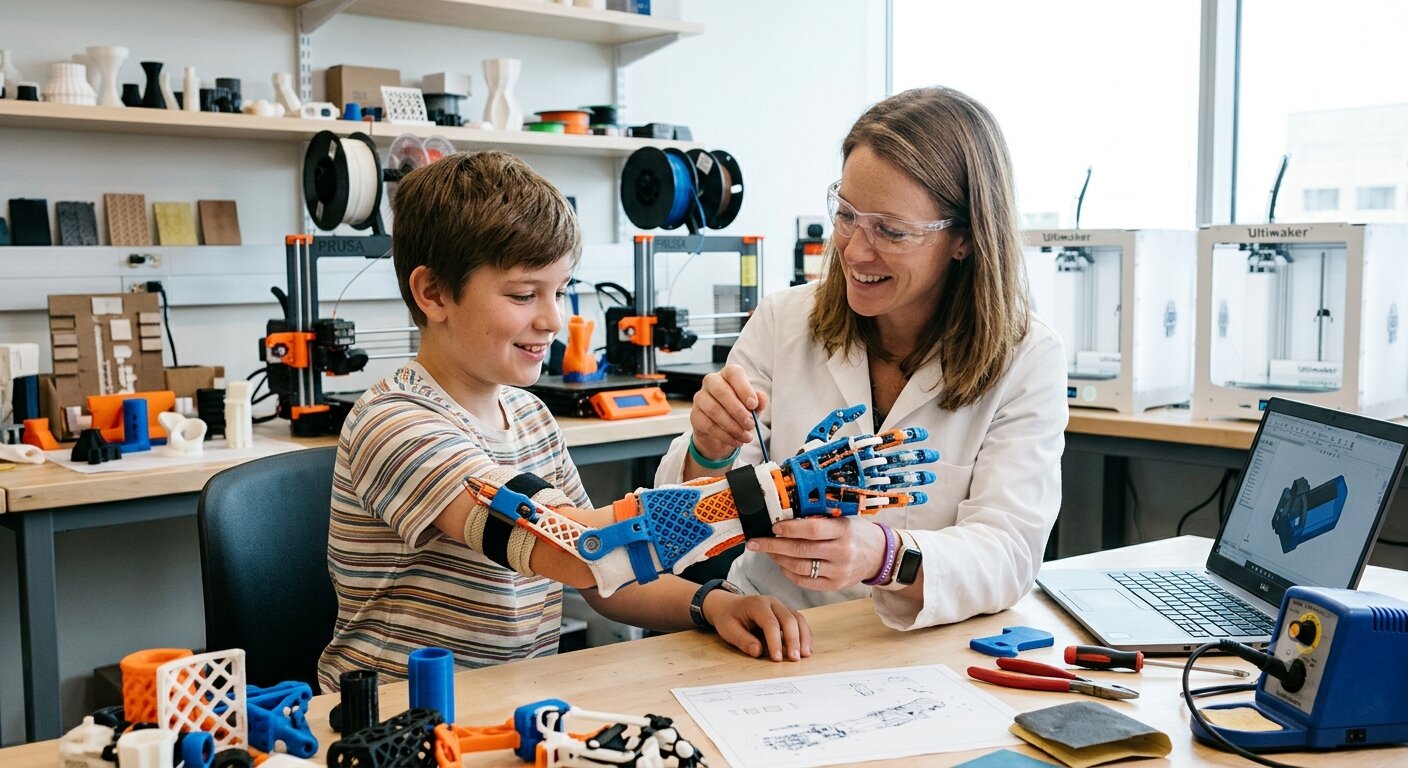
The growing adoption of 3D printing in healthcare is transforming the prosthetics industry by enabling faster production, personalized designs, and lower manufacturing costs. Unlike conventional fabrication methods, additive manufacturing allows prosthetic devices to be customized using digital scans, improving fit, comfort, and patient satisfaction.
The technology is also reducing material waste while shortening production timelines, making prosthetic care more accessible for both hospitals and rehabilitation centers. The U.S. Food and Drug Administration (FDA) recognizes external prosthetics as one of the established medical applications of 3D printing and continues to provide regulatory guidance to ensure the safety and quality of additively manufactured medical devices.
Healthcare providers and research organizations are increasingly collaborating with engineers and digital manufacturing specialists to expand the use of patient-specific prosthetic solutions. The NIH 3D Print Exchange supports open-source prosthetic innovation through the e-NABLE community, which shares validated 3D-printable prosthetic and assistive device designs to improve global accessibility.
The need for affordable prosthetic solutions remains significant worldwide. According to the World Health Organization, only 5% to 15% of people in lower-income countries who require prosthetic devices currently have access to them.
In the United States alone, approximately 600,000 people live with partial hand amputations, highlighting the ongoing demand for innovative, cost-effective prosthetic technologies. These factors are encouraging continued investment in 3D printing, advanced materials, and digital healthcare manufacturing to improve rehabilitation outcomes and expand access to customized prosthetic care.

Key Takeaways
- The global 3D Printed Prosthetics Market was valued at USD 1.4 billion in 2023 and is projected to reach USD 3.0 billion by 2033, expanding at a CAGR of 8.0% during the forecast period.
- In 2023, the limbs segment led the market, accounting for 35.1% of the total revenue due to increasing demand for customized upper and lower limb prosthetic solutions.
- The polypropylene segment held the largest material share in 2023, contributing 34.4% of the global market revenue, supported by its durability, lightweight properties, and cost-effectiveness.
- Based on end use, hospitals dominated the market in 2023, capturing 41.7% of total revenue, driven by the growing adoption of advanced prosthetic technologies and specialized rehabilitation services.
- North America remained the leading regional market in 2023, accounting for more than 42.0% of global revenue, supported by advanced healthcare infrastructure, favorable reimbursement policies, and widespread adoption of 3D printing technologies.
Statistical Information
- More than 2.5 billion people globally require at least one assistive product today, and this figure is projected to reach 3.5 billion by 2050, creating long-term demand for affordable prosthetic technologies, including 3D-printed devices.
- In some low-income countries, only 3% of people who need assistive products have access to them, compared with up to 90% in some high-income countries, highlighting a major opportunity for cost-effective 3D-printed prosthetics.
- According to WHO, 80 million people worldwide require a wheelchair, yet only 5%–35% have access depending on their country, reflecting broader gaps in mobility and rehabilitation services that also affect prosthetic access.
- The WHO estimates that only 1 in 10 people who need prosthetic and orthotic services currently receive appropriate assistive products because of high costs, limited availability, and shortages of trained professionals.
- More than 170 countries have ratified the UN Convention on the Rights of Persons with Disabilities (CRPD), committing to improve access to affordable prostheses and other assistive technologies through national healthcare systems.
- The World Health Organization reports that 1.5 billion people worldwide live with hearing loss, while current hearing-aid production meets less than 10% of global demand, demonstrating the broader unmet need for personalized assistive technologies manufactured through advanced production methods.
- WHO estimates that 3.5 billion people nearly 1 in 3 people globally will require one or more assistive products by 2050, driven by population ageing and the increasing prevalence of chronic diseases.
- The World Health Organization has issued 10 priority recommendations to governments for improving access to assistive technologies, including expanding research, strengthening workforce capacity, and ensuring affordable access to prosthetic products through national health systems.
Market Segmentation Analysis
Type Analysis: The limbs segment dominated the global 3D printed prosthetics market in 2023, accounting for 35.1% of total revenue. Growth is driven by increasing demand for customized upper- and lower-limb prostheses, rising amputation cases, and advancements in additive manufacturing.
The U.S. FDA recognizes external prostheses as an established application of 3D printing, supporting the production of patient-specific sockets and joint components that improve comfort, fit, and mobility while reducing manufacturing time and material waste.
Material Analysis: The polypropylene segment held the largest market share of 34.4% in 2023, supported by its lightweight structure, durability, chemical resistance, and cost-effectiveness for prosthetic manufacturing. Polypropylene enables the production of strong yet comfortable prosthetic components through additive manufacturing.
Other materials, including polyethylene, acrylics, and polyurethane, are also gaining traction for specialized prosthetic applications. The FDA emphasizes that materials used in 3D-printed medical devices must meet established safety and performance requirements before clinical use.
End-Use Analysis: The hospitals segment led the global 3D printed prosthetics market in 2023, capturing 41.7% of total revenue. Hospitals are increasingly adopting 3D printing technologies to produce patient-specific prosthetic devices, improve rehabilitation outcomes, and streamline clinical workflows.
Growing investments in digital manufacturing and multidisciplinary care are supporting wider adoption of customized prosthetics. The U.S. FDA identifies external prostheses among the established medical applications of 3D printing, reinforcing the expanding role of hospitals in advanced prosthetic care.
Regional Analysis
North America dominated the global 3D printed prosthetics market in 2023, supported by its advanced healthcare infrastructure, strong adoption of additive manufacturing technologies, and favorable regulatory environment. The region benefits from continuous innovation in patient-specific medical devices, with the U.S. Food and Drug Administration (FDA) recognizing external prostheses as an established application of 3D printing.
Growing investments in research, rehabilitation programs, and digital healthcare manufacturing are accelerating product development and clinical adoption. The increasing prevalence of diabetes-related amputations and traumatic injuries further strengthens demand for customized prosthetic solutions.
The Asia Pacific region is projected to register the fastest growth during the forecast period, driven by expanding healthcare access, rising investments in medical technology, and increasing awareness of affordable prosthetic solutions. Governments and healthcare organizations are focusing on improving rehabilitation services and access to assistive technologies for people with disabilities.
According to the World Health Organization, access to prosthetic and orthotic services remains a global priority, encouraging countries across Asia Pacific to strengthen rehabilitation infrastructure. The growing adoption of cost-effective 3D printing technologies and local manufacturing capabilities is expected to support rapid market expansion across the region.
Business Opportunities
The 3D printed prosthetics market presents significant business opportunities as healthcare providers increasingly adopt personalized and cost-effective medical devices. Manufacturers can expand by developing patient-specific prosthetic limbs, sockets, and joint components using advanced additive manufacturing technologies that reduce production time and material waste.
The U.S. Food and Drug Administration (FDA) recognizes external prostheses as an established application of 3D printing, creating opportunities for companies to introduce innovative products that meet regulatory standards.
Another promising area lies in digital healthcare solutions that integrate 3D body scanning, computer-aided design (CAD), and decentralized manufacturing, enabling hospitals and prosthetic clinics to deliver customized devices more efficiently. Open-source initiatives such as the NIH 3D Print Exchange and the e-NABLE community are also encouraging collaboration among engineers, clinicians, and manufacturers to accelerate innovation and improve accessibility.
Emerging economies offer strong growth potential as governments and healthcare organizations invest in rehabilitation services and affordable assistive technologies. Expanding local manufacturing and distribution networks can help companies address this gap while creating long-term commercial opportunities.
Emerging Trends
- Patient-specific prosthetics are becoming the industry standard. The U.S. FDA recognizes patient-matched medical devices created from CT and MRI imaging, enabling prosthetic sockets and limbs that offer improved comfort, fit, and function. This trend is accelerating the shift toward customized rather than standardized prosthetic manufacturing.
- Open-source innovation is expanding product development. The NIH 3D Print Exchange hosts hundreds of prosthetic and assistive device models through its e-NABLE collection, allowing engineers, clinicians, and researchers to improve and share printable prosthetic designs for faster innovation.
- Healthcare is adopting digital manufacturing workflows. Hospitals and medical device manufacturers increasingly combine 3D scanning, CAD software, and additive manufacturing to shorten design cycles, reduce production steps, and manufacture highly personalized prosthetic devices with greater precision.
- Clinical evidence supporting 3D printing is growing rapidly. A 2025 systematic review evaluated clinical outcomes using evidence gathered from six major scientific databases, reflecting the increasing number of studies assessing the safety, comfort, and effectiveness of 3D-printed rehabilitation devices.
- Advanced materials are improving prosthetic performance. Research is expanding beyond conventional plastics to develop lighter, stronger, and more durable prosthetic components, supporting improved mobility while maintaining patient comfort and long-term device reliability.
Use Cases
- Customized upper-limb prostheses are increasingly produced using 3D printing to match an individual’s anatomy, reducing fitting adjustments while improving grip, usability, and overall comfort for daily activities. The FDA lists external prostheses among established medical applications of additive manufacturing.
- Patient-specific prosthetic sockets are a major clinical application because digital scanning enables precise anatomical fitting. Better socket design helps improve walking stability, reduces pressure points, and enhances long-term prosthesis acceptance among users.
- Pediatric prosthetics benefit significantly from 3D printing because children outgrow devices quickly. Digital designs can be modified and reprinted efficiently, reducing replacement time and supporting continuous adaptation as children develop.
- Surgical planning and prosthetic preparation increasingly use patient imaging such as CT and MRI to design customized prosthetic components before fabrication, improving manufacturing accuracy and supporting better clinical outcomes.
- Community-based prosthetic development is expanding through the NIH-supported e-NABLE network, where volunteers, engineers, physicians, and designers collaborate to create and refine printable prosthetic devices, increasing accessibility and accelerating innovation worldwide.
Recent Developments
- In May 2026, 3D Systems Corporation announced the full commercial release in the U.S. of its multi-material monolithic jetted dentures solution, describing it as a durable prosthetic for the “replacement” market and citing the U.S. dental replacement market as expected to reach $600 million by 2029.
- In March 2026, Open Bionics received a £600,000 IP-backed loan from NatWest to open six more clinics in the U.S., using the financing to expand access to its Hero Arm prosthetic platform in the U.S. and DACH regions.
- In December 2025, 3D Systems Corporation announced a $31 million equitization transaction through exchange agreements for about $30.8 million of its 2026 convertible notes, continuing its capital restructuring while it kept its growth pipeline in medical 3D printing active.
Frequently Asked Questions About 3D Printed Prosthetics
- Why is the demand for 3D printed prosthetics increasing?
Demand is rising because 3D printing enables faster production, personalized designs, and reduced material waste compared with traditional manufacturing. Growing awareness of rehabilitation services and the increasing need for affordable assistive technologies are also encouraging wider adoption across healthcare systems. - What factors are driving the 3D printed prosthetics market?
The market is supported by advances in additive manufacturing, increasing adoption of patient-specific medical devices, greater investments in rehabilitation, and expanding healthcare access. Regulatory guidance from agencies such as the FDA is also helping manufacturers develop safe and effective 3D printed prosthetic devices. - Which end users benefit the most from 3D printed prosthetics?
Hospitals, rehabilitation centers, prosthetic clinics, and specialized orthopedic facilities are the primary users of 3D printed prosthetics. These organizations use digital imaging and customized manufacturing to improve patient outcomes while reducing production time for personalized prosthetic devices. - What materials are commonly used in 3D printed prosthetics?
Common materials include polypropylene, polyethylene, nylon, polyurethane, and advanced engineering polymers selected for strength, durability, and lightweight performance. Material selection depends on the intended clinical application and must satisfy regulatory requirements for safety and mechanical performance. - How does 3D printing improve prosthetic care?
3D printing allows healthcare professionals to produce patient-matched prosthetic sockets and components using medical imaging and digital design. This improves comfort, shortens fitting time, enables easier modifications, and supports better rehabilitation outcomes compared with conventional manufacturing methods. - What challenges does the 3D printed prosthetics market face?
Despite technological progress, many countries continue to face shortages of trained professionals, limited reimbursement, and restricted access to prosthetic services. The World Health Organization states that only few people who need assistive products currently have access to them, highlighting ongoing challenges. - What is the future outlook for the 3D printed prosthetics market?
The market is expected to benefit from expanding digital healthcare, improved additive manufacturing technologies, and stronger government support for rehabilitation services. Growing use of personalized medical devices and continued innovation in materials are expected to improve accessibility and long-term adoption worldwide.
Conclusion
The global 3D printed prosthetics market is witnessing steady growth as healthcare providers increasingly adopt personalized, cost-effective, and digitally manufactured prosthetic solutions. Advances in additive manufacturing, improved materials, and patient-specific designs are enhancing comfort, functionality, and rehabilitation outcomes while reducing production time. S
upportive regulatory guidance from the U.S. FDA and global initiatives led by the World Health Organization are encouraging wider adoption of safe and accessible prosthetic technologies. As healthcare infrastructure expands and investments in rehabilitation continue to rise, 3D printed prosthetics are expected to play an increasingly important role in improving mobility, accessibility, and quality of life for individuals with limb loss worldwide.