


Report Overview
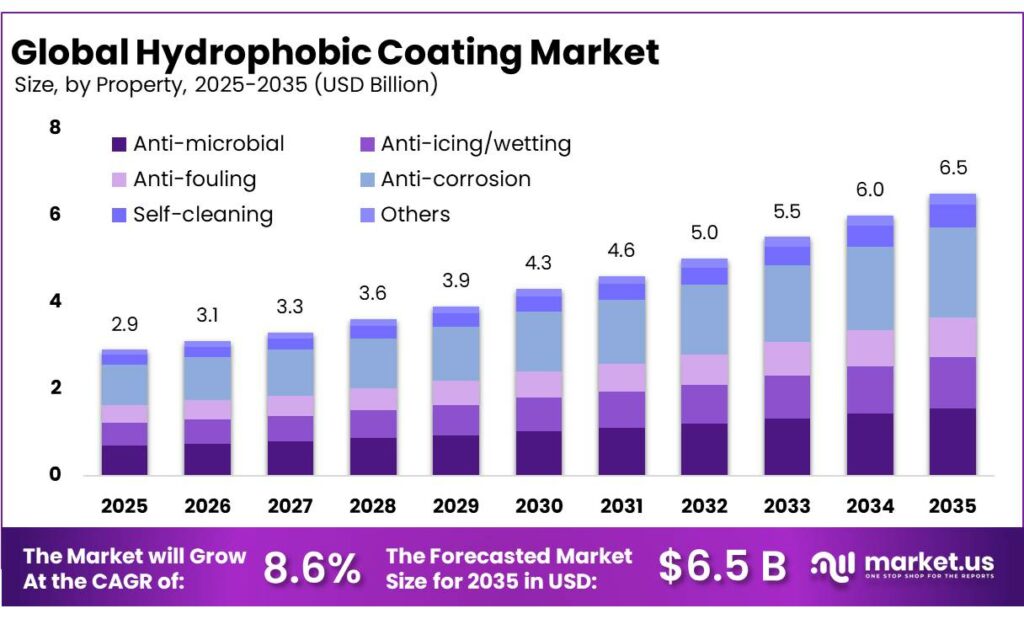
The Global Hydrophobic Coating Market size is expected to be worth around USD 6.5 Billion by 2035, from USD 2.9 Billion in 2025, growing at a CAGR of 8.6% during the forecast period from 2026 to 2035. In 2025, Asia-Pacific held a dominant market position, capturing more than a 39.7% share, holding USD 1.1 Billion revenue.
Key Takeaways
- Hydrophobic Coating Market size is expected to be worth around USD 6.5 Billion by 2035, from USD 2.9 Billion in 2025, growing at a CAGR of 8.6%.
- Anti-corrosion held a dominant market position, capturing more than a 32.8% share.
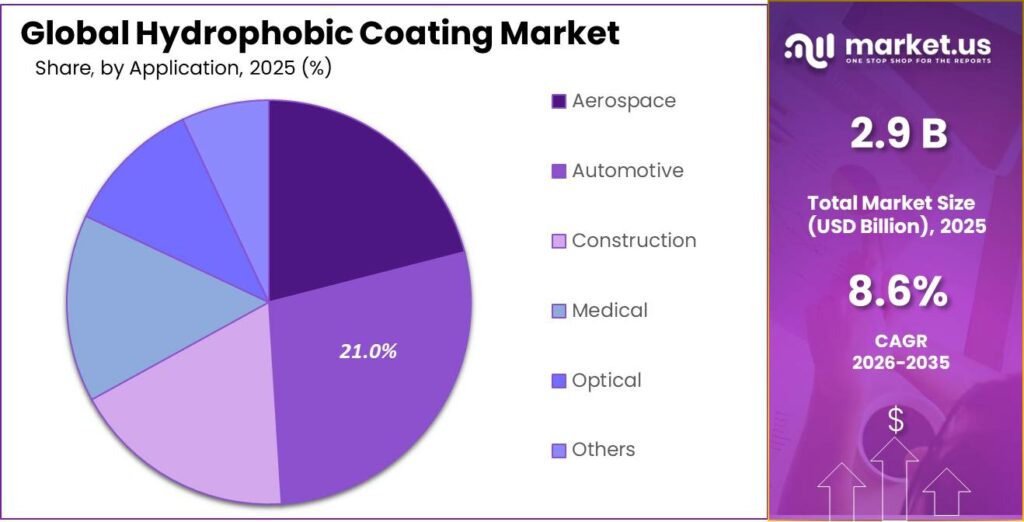
- Automotive held a dominant market position, capturing more than a 28.4% share.
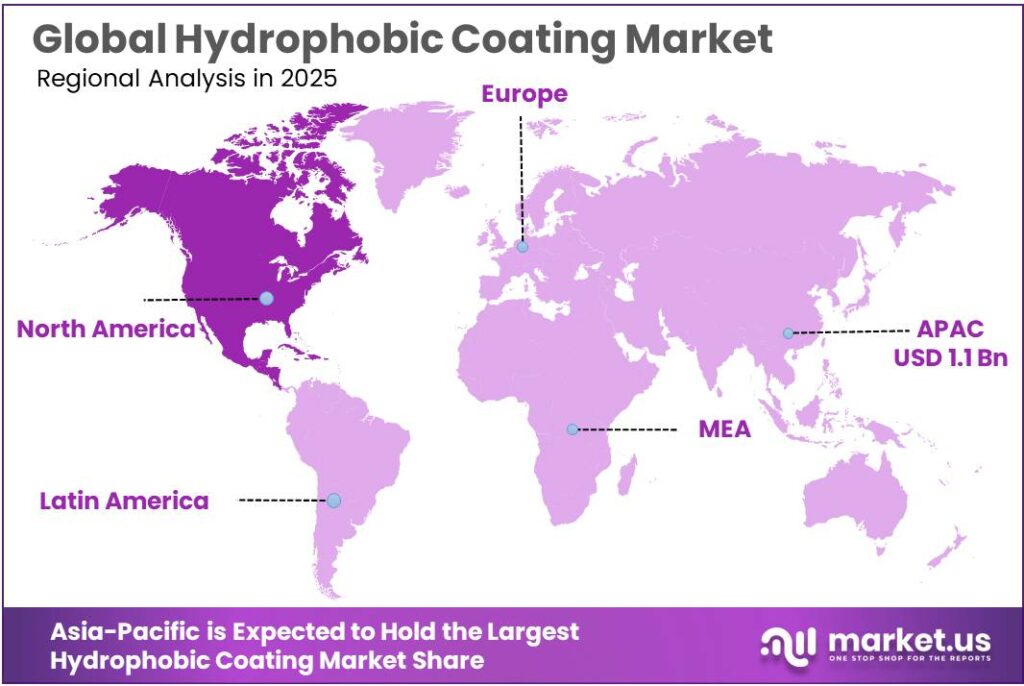
- Asia-Pacific emerged as the dominating region in the hydrophobic coating market, accounting for 39.7% share and reaching a value of around USD 1.1 Bn.
By Property Analysis
Anti-corrosion dominates with 32.8% driven by strong demand from infrastructure and industrial protection needs
In 2025, Anti-corrosion held a dominant market position, capturing more than a 32.8% share. This strong lead was mainly supported by rising demand from industries such as construction, marine, oil & gas, and automotive, where protecting metal surfaces from rust and chemical damage is critical. Hydrophobic coatings with anti-corrosion properties have been increasingly preferred because they create a moisture-resistant barrier, extending the life of equipment and structures while reducing maintenance costs.
By Application Analysis
Automotive leads with 28.4% as demand grows for surface protection and visibility enhancement
In 2025, Automotive held a dominant market position, capturing more than a 28.4% share. This growth was largely driven by the increasing use of hydrophobic coatings on windshields, mirrors, and vehicle exteriors to improve water repellency and visibility during harsh weather. Automakers and consumers alike showed strong interest in coatings that help reduce dirt buildup and make cleaning easier, which added to the segment’s steady rise.
Key Market Segments
By Property
- Anti-microbial
- Anti-icing/wetting
- Anti-fouling
- Anti-corrosion
- Self-cleaning
- Others
By Application
- Aerospace
- Automotive
- Construction
- Medical
- Optical
- Others
Emerging Trends
Rise of antimicrobial and self-cleaning coatings for safer food environments
One of the latest trends in hydrophobic coatings is the shift toward multifunctional surfaces that not only repel water but also prevent microbial growth. This trend is strongly influenced by the growing concern around food safety. According to the World Health Organization, unsafe food causes more than 200 different diseases, showing how serious contamination issues have become in food systems. Because of this, industries are now moving beyond basic coatings and looking for solutions that combine water repellency with antimicrobial properties.
This trend is also supported by stricter hygiene regulations and global food safety frameworks, which are pushing manufacturers to adopt preventive technologies rather than reactive cleaning methods. As a result, coatings are no longer just protective layers but are becoming part of a broader hygiene strategy in food and beverage industries. This shift is expected to continue, especially as companies focus on reducing contamination risks and improving operational efficiency at the same time.
Growing focus on sustainable and food-safe coating materials
Another important trend shaping the hydrophobic coating market is the move toward sustainable and food-safe materials. Traditional coatings often rely on synthetic chemicals, but with rising environmental concerns and strict government oversight, industries are now shifting toward eco-friendly alternatives. Agencies like the U.S. Food and Drug Administration actively monitor chemical contaminants in food and enforce limits on harmful substances, making safer coating materials a priority
Drivers
Rising infrastructure protection needs pushing demand for hydrophobic coatings
One of the strongest driving factors for hydrophobic coatings is the growing need to protect infrastructure from water damage and corrosion. Across the world, governments are investing heavily in roads, bridges, railways, and smart cities, and all these structures are exposed to rain, humidity, and pollution. Over time, this leads to cracks, rust, and expensive repairs. Hydrophobic coatings help by forming a water-repellent layer that keeps moisture out and extends the life of these assets.
These coatings are now widely used on concrete, glass, and metal surfaces to reduce long-term damage. In simple terms, instead of repairing structures again and again, industries are choosing preventive solutions like hydrophobic coatings. This shift is not just about cost savings, but also about safety and sustainability, which is why infrastructure-related demand continues to push the market forward.
High cost of corrosion driving industries toward protective coatings
Another major reason behind the growth of hydrophobic coatings is the huge cost linked to corrosion worldwide. Industries such as oil & gas, marine, transportation, and even food processing rely heavily on metal equipment. When these materials come in contact with water or chemicals, corrosion starts, leading to frequent maintenance or replacement. Hydrophobic coatings act as a barrier, helping reduce this damage significantly.
Studies show that corrosion leads to massive global losses every year, including repair and replacement of damaged infrastructure and equipment. Because of this, companies are now focusing more on prevention rather than fixing problems later. By 2025 and 2026, industries have increasingly adopted advanced coatings to extend equipment life and reduce downtime. This is especially important in sectors where even small failures can cause big financial losses.
Restraints
High cost and performance limitations slowing wider adoption
One of the key restraining factors for hydrophobic coatings is the gap between expected performance and real-world durability. While these coatings are designed to repel water and protect surfaces, they do not always perform consistently under extreme industrial conditions like high temperature, pressure, or chemical exposure. Over time, coatings can degrade, peel, or lose effectiveness, which increases maintenance needs rather than reducing them.
This becomes a serious concern when industries already face huge financial losses from corrosion. According to data from global corrosion studies, corrosion costs account for around 3.4% of the world’s GDP, showing how critical the issue is across sectors like infrastructure, food processing equipment, and transportation. Even more concerning, about 38% of these corrosion costs are linked to coating failure, meaning coatings themselves can become part of the problem if not properly designed
High initial cost and regulatory pressure limiting market growth
Another major challenge is the high upfront cost associated with hydrophobic coatings, especially advanced nano-based or multi-layer coatings. Compared to traditional coatings, these solutions require specialized materials, controlled application processes, and skilled labor, which increases the overall cost. For industries like food manufacturing, packaging, and agriculture equipment, where margins are often tight, this becomes a key barrier.
At the same time, global industries are already dealing with high operational losses. Reports suggest corrosion alone costs the global economy over $2.2 trillion annually, which is more than 3% of global GDP, highlighting the financial pressure industries face. Instead of investing in expensive new coatings, many companies choose lower-cost maintenance solutions.
Opportunity
Growing demand from food processing hygiene and safety standards
One clear growth opportunity for hydrophobic coatings is coming from the food processing industry, where hygiene is becoming stricter year by year. Food factories deal with water, oils, and residues on a daily basis, which makes cleaning difficult and increases contamination risks. Hydrophobic coatings help here by creating surfaces where liquids and food particles do not stick easily, reducing cleaning time and improving safety.
In sectors like seafood processing, environments are highly humid and prone to bacteria such as Salmonella and Listeria, making sanitation extremely challenging. Hydrophobic coatings offer a simple solution by preventing water retention and residue buildup. As food safety standards continue to tighten globally, especially under frameworks like GMP and FDA regulations, the demand for such coatings is expected to rise steadily, creating a strong opportunity for market growth.
Shift toward food-grade and eco-friendly coating solutions
Another important opportunity lies in the development of food-grade and environmentally safe hydrophobic coatings. The food industry is under pressure to use materials that are both safe for human contact and sustainable. This is where newer coating technologies are gaining attention. Manufacturers are now creating coatings that meet strict food-contact standards while still offering water-repellent benefits.
For instance, certain hydrophobic coatings have already been tested and cleared under FDA food-contact regulations like 21 CFR 175.300, ensuring they are safe for use on equipment handling food products. This opens the door for wider adoption in food processing plants, packaging units, and storage systems. At the same time, there is growing interest in coatings that reduce the need for harsh cleaning chemicals, which supports both environmental goals and cost savings.
Regional Insights
Asia-Pacific leads with 39.7% share driven by strong industrial and infrastructure growth
In 2025, Asia-Pacific emerged as the dominating region in the hydrophobic coating market, accounting for 39.7% share and reaching a value of around USD 1.1 Bn, supported by strong industrial expansion and rising demand for protective surface technologies.
The region’s leadership is mainly driven by countries like China, India, Japan, and South Korea, where rapid urbanization and manufacturing growth continue to create consistent demand for water-repellent and anti-corrosion coatings. Large-scale infrastructure development, including smart cities, highways, and industrial zones, has further accelerated the adoption of hydrophobic coatings across construction and engineering applications.
Key Regions and Countries Insights
- North America
- US
- Canada
- Europe
- Germany
- France
- The UK
- Spain
- Italy
- Rest of Europe
- Asia Pacific
- China
- Japan
- South Korea
- India
- Australia
- Rest of APAC
- Latin America
- Brazil
- Mexico
- Rest of Latin America
- Middle East & Africa
- GCC
- South Africa
- Rest of MEA
Key Players Analysis
3M is a major innovator in advanced coating technologies, including hydrophobic and protective films. In 2025, the company generated approximately $32 billion in global revenue, supported by strong demand from automotive, electronics, and industrial segments. Around 30% of its revenue comes from its Safety and Industrial division, which includes coatings and surface protection products. The company invests heavily in innovation, spending nearly $1.9 billion annually on R&D, helping it maintain a strong position in high-performance coating solutions.
Nippon Paint continues to grow steadily in the coatings market, especially across Asia-Pacific. In 2025, the company reported revenues of about ¥1.4 trillion (around $9 billion), driven largely by decorative and industrial coatings demand. The Asia region alone contributes over 60% of its total revenue, making it a dominant regional player. Its focus on eco-friendly and water-repellent coatings has helped it expand into construction and automotive sectors, where hydrophobic solutions are increasingly required for durability and protection.
Nippon Paint continues to grow steadily in the coatings market, especially across Asia-Pacific. In 2025, the company reported revenues of about ¥1.4 trillion (around $9 billion), driven largely by decorative and industrial coatings demand. The Asia region alone contributes over 60% of its total revenue, making it a dominant regional player. Its focus on eco-friendly and water-repellent coatings has helped it expand into construction and automotive sectors, where hydrophobic solutions are increasingly required for durability and protection.
Top Key Players Outlook
- BASF SE
- 3M
- Nippon Paint Private Limited.
- Akzo Nobel N.V.
- PPG Industries, Inc.
- Artekya Teknoloji
- ALLEGIANCE NANOSOLUTIONS
- HZO, INC.
- Aculon.
- Cytonix
- P2i Ltd.
- GVD Corporation
- Nanokote
- SilcoTek Corporation
- NanoSlic Smart Coatings
- NAONIX srl
- NEI Corporation
Recent Industry Developments
In 2025, 3M continued to strengthen its position in the hydrophobic coating space through its advanced materials and surface protection technologies used across automotive, electronics, and industrial applications. The company reported total revenue of around $24.9 billion in 2025, with steady growth of about 1.5% year-on-year, reflecting stable demand across its core segments.
In 2025, Nippon Paint Private Limited (part of Nippon Paint Holdings) continued to strengthen its role in the hydrophobic coating space through its wide portfolio of industrial, automotive, and decorative coatings designed for water resistance and durability. The company reported consolidated revenue of about ¥1,774,231 million (around $11–12 billion) in 2025, reflecting an 8.3% year-on-year growth, while operating profit reached ¥257,104 million.
Report Scope
| Report Features | Description |
|---|---|
| Market Value (2025) | USD 2.9 Bn |
| Forecast Revenue (2035) | USD 6.5 Bn |
| CAGR (2026-2035) | 8.6% |
| Base Year for Estimation | 2025 |
| Historic Period | 2020-2024 |
| Forecast Period | 2026-2035 |
| Report Coverage | Revenue Forecast, Market Dynamics, Competitive Landscape, Recent Developments |
| Segments Covered | By Property (Anti-microbial, Anti-icing/wetting, Anti-fouling, Anti-corrosion, Self-cleaning, Others), By Application (Aerospace, Automotive, Construction, Medical, Optical, Others) |
| Regional Analysis | North America – US, Canada; Europe – Germany, France, The UK, Spain, Italy, Rest of Europe; Asia Pacific – China, Japan, South Korea, India, Australia, Singapore, Rest of APAC; Latin America – Brazil, Mexico, Rest of Latin America; Middle East & Africa – GCC, South Africa, Rest of MEA |
| Competitive Landscape | BASF SE, 3M, Nippon Paint Private Limited., Akzo Nobel N.V., PPG Industries, Inc., Artekya Teknoloji, ALLEGIANCE NANOSOLUTIONS, HZO, INC., Aculon., Cytonix, P2i Ltd., GVD Corporation, Nanokote, SilcoTek Corporation, NanoSlic Smart Coatings, NAONIX srl, NEI Corporation |
| Customization Scope | Customization for segments, region/country-level will be provided. Moreover, additional customization can be done based on the requirements. |
| Purchase Options | We have three licenses to opt for: Single User License, Multi-User License (Up to 5 Users), Corporate Use License (Unlimited User and Printable PDF) |





































