


Report Overview
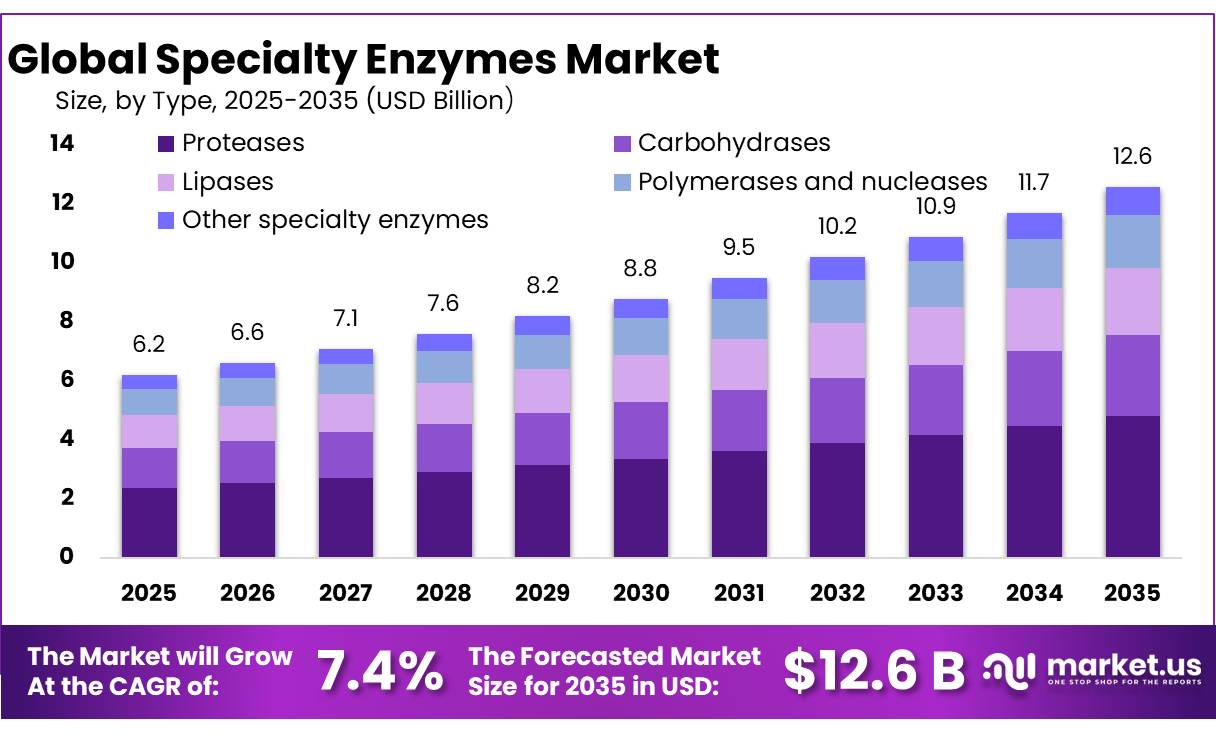
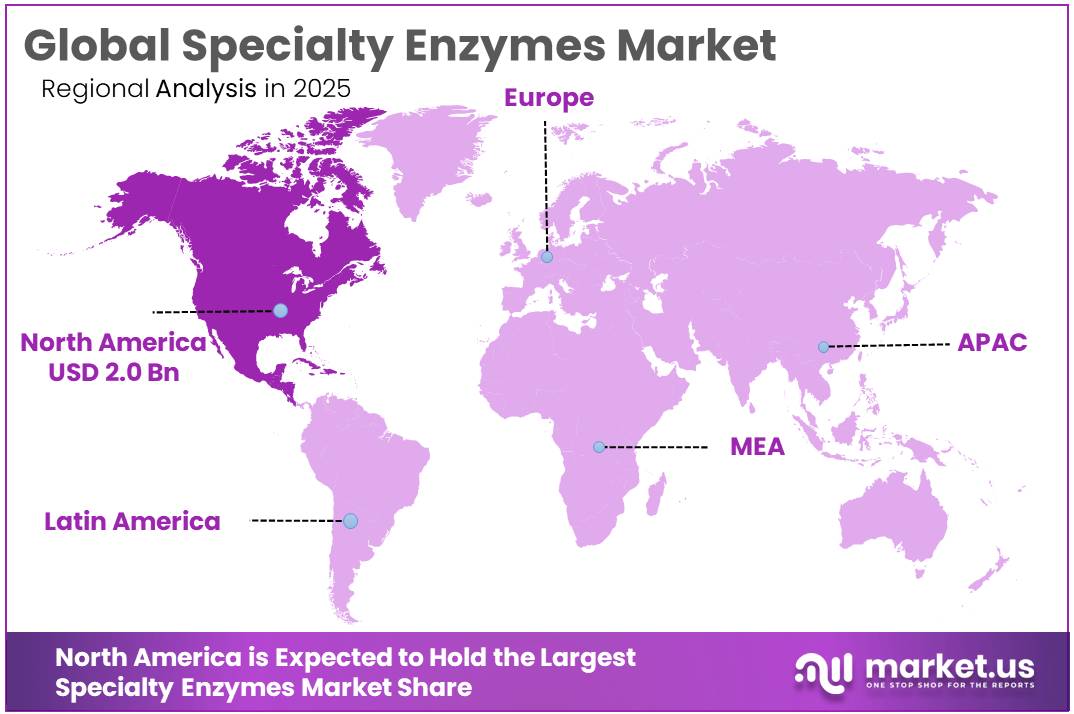
The Global Specialty Enzymes Market size is expected to be worth around USD 12.6 Billion by 2035, from USD 6.2 Billion in 2025, growing at a CAGR of 7.4% during the forecast period from 2026 to 2035. In 2025, North America held a dominant market position, capturing more than a 33.00% share, holding USD 2.0 Billion revenue.
Specialty enzymes are biological catalysts that accelerate specific chemical reactions and support efficient production across food processing, pharmaceuticals, detergents, textiles, pulp and paper, animal nutrition, and industrial biotechnology. Unlike conventional chemical catalysts, specialty enzymes can be developed for particular operating conditions, including defined temperatures, acidity levels, and substrate requirements.
Their ability to improve process accuracy, reduce unwanted by-products, and support lower-energy manufacturing makes them important for industries seeking higher productivity and more sustainable production methods. The European Commission identifies enzymes as important tools in detergents, textiles, pulp and paper, food processing, and biomass conversion.
The industrial scenario for specialty enzymes is shaped by demand for improved product quality, process efficiency, and alternatives to conventional chemical processing. In food manufacturing, enzymes are used in baking, fruit juice production, brewing, winemaking, cheese production, and starch conversion. The European Commission explains that enzyme-based processing can reduce energy consumption and generate fewer unwanted by-products because enzymes act on specific substances.
- In the United States, food and beverage manufacturing accounted for 16.8% of sales across all manufacturing establishments in 2021, according to the United States Department of Agriculture, illustrating the scale of an important end-use sector for food-processing enzymes.
Driving factors include rising demand for sustainable manufacturing, stricter environmental expectations, and the need to improve production yields. Specialty enzymes such as proteases, lipases, amylases, cellulases, and specialty oxidoreductases support applications ranging from cleaning formulations and food ingredients to pharmaceutical intermediates and biomass conversion.
The United States Department of Agriculture identifies enzymes as contributors to the production of detergents and bio-based chemicals. Its analysis of the United States bio-based products industry reported 3,670 direct jobs in the enzyme sector in Ohio and approximately US$916.9 million in direct value added in the state-level estimates presented in the report. These figures demonstrate the economic contribution of enzyme-related activities within the wider bio-based manufacturing industry.
Technological innovation is creating further opportunities for specialty enzymes. On July 1, 2026, the United States Department of Energy reported research combining artificial intelligence, synthetic biology, and automated laboratory systems to improve industrial enzyme performance. In a case study involving 2 enzymes, researchers increased enzyme activity by 16 times and 26 times, respectively.
Key Takeaways
- Specialty Enzymes Market size is expected to be worth around USD 12.6 Billion by 2035, from USD 6.2 Billion in 2025, growing at a CAGR of 7.4%.
- Proteases held a dominant market position, capturing more than a 38.00% share.
- Microorganisms held a dominant market position, capturing more than a 68.00% share.
- Dry held a dominant market position, capturing more than a 57.00% share.
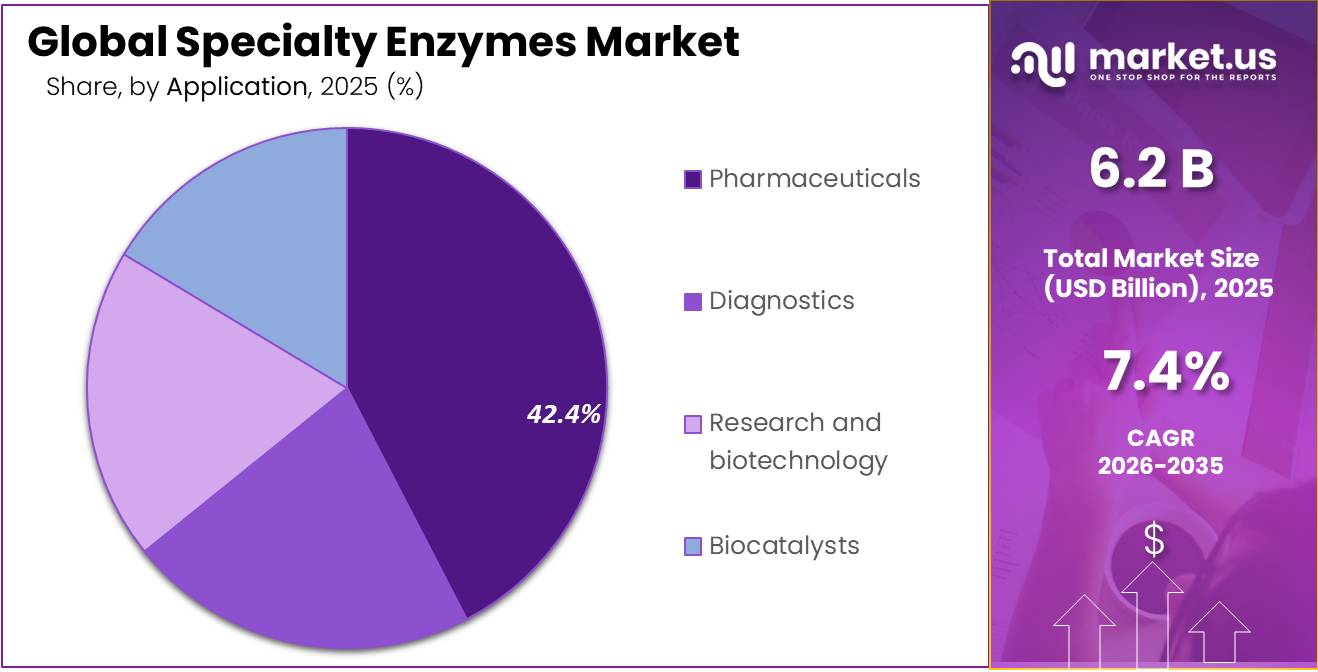
- Pharmaceuticals held a dominant market position, capturing more than a 42.00% share.
- North America held a dominant market position, accounting for a 33.00% share valued at USD 2.0 billion.
By Type Analysis
Proteases lead with a 38.00% share due to their wide use in industrial processing.
In 2025, “Proteases” held a dominant market position, capturing more than a 38.00% share of the Specialty Enzymes Market by type. Proteases break down proteins into smaller peptides and amino acids, making them useful in detergent formulations, food processing, leather treatment, and selected pharmaceutical applications. Their ability to remove protein-based stains and support controlled protein processing helps manufacturers improve product performance and production efficiency.
Carbohydrases play an important role in breaking down complex carbohydrates into simpler sugars, supporting applications in food processing, brewing, starch conversion, and biofuel production. In 2025, demand for these enzymes was supported by their ability to improve processing efficiency and produce useful carbohydrate ingredients. The United States Food and Drug Administration lists 3 relevant enzyme preparations in its food-additive regulations: amyloglucosidase for starch breakdown, carbohydrase and cellulase for seafood processing, and carbohydrase for producing dextrose from starch. These approved applications demonstrate the practical role of carbohydrases in commercial food production.
By Source Analysis
Microorganisms lead with a 68.00% share, supported by scalable production and broad industrial applications.
In 2025, “Microorganisms” held a dominant market position, capturing more than a 68.00% share of the Specialty Enzymes Market by source. Microorganisms, including bacteria and fungi, are widely used to produce enzymes because they can be cultivated under controlled conditions and support consistent, large-scale manufacturing. Microbial enzymes are used in food processing, detergents, pharmaceuticals, and industrial biotechnology, where manufacturers require reliable performance and efficient production. Their ability to support fermentation-based manufacturing also creates opportunities to develop enzymes with specific properties for different industrial processes.
Plants are an important source of specialty enzymes used in food processing and selected industrial applications. Plant-derived enzymes, including papain from papaya and bromelain from pineapple, are valued for their protein-breaking properties and are used in meat tenderisation and other processing applications. In 2025, demand for plant-based enzyme sources was supported by interest in naturally derived ingredients and specialised processing solutions. However, extraction efficiency, raw material availability, and variations in enzyme activity can influence production costs and consistency.
By Form Analysis
Dry enzymes lead with a 57.00% share due to their storage stability and convenient handling.
In 2025, “Dry” held a dominant market position, capturing more than a 57.00% share of the Specialty Enzymes Market by form. Dry enzymes are widely used in detergent manufacturing, food processing, animal nutrition, and industrial applications because they are convenient to transport, store, and incorporate into different formulations. Their concentrated form can help reduce shipping requirements, while suitable drying and packaging methods help maintain enzyme activity during storage.
Liquid enzymes are used in food and beverage processing, detergents, and industrial manufacturing because they can be measured and blended directly into liquid formulations. In 2025, their application was supported by demand for convenient dosing, rapid mixing, and integration into automated production processes. Liquid formulations can reduce the need for a separate dissolution step, although temperature control, storage conditions, and formulation stability remain important considerations. They are particularly useful where continuous processing and accurate enzyme addition are required.
By Application Analysis
Pharmaceuticals lead with a 42.00% share, supported by their role in drug manufacturing and biocatalysis.
In 2025, “Pharmaceuticals” held a dominant market position, capturing more than a 42.00% share of the Specialty Enzymes Market by application. Specialty enzymes support pharmaceutical manufacturing by helping produce active ingredients, improve reaction selectivity, and enable specific biochemical processes. They are also used in selected therapeutic applications and in the development of biologic medicines. Their ability to carry out targeted reactions under controlled conditions helps manufacturers improve process efficiency and reduce unwanted by-products.
Specialty enzymes are essential components in diagnostic testing because they help detect and measure specific biological substances. Enzymes such as polymerases, reverse transcriptases, and peroxidases are used in molecular testing, clinical chemistry, and laboratory analysis. In 2025, demand for diagnostic enzymes was supported by the continued use of molecular methods to identify pathogens and assess health conditions. Their performance depends on factors such as sensitivity, stability, purity, and compatibility with testing systems. The United States Centers for Disease Control and Prevention highlights the role of molecular methods, including polymerase chain reaction testing, in identifying infectious diseases.
Key Market Segments
By Type
- Carbohydrases
- Proteases
- Lipases
- Polymerases and nucleases
- Other specialty enzymes
By Source
- Microorganisms
- Plants
- Animals
By Form
- Dry
- Liquid
By Application
- Pharmaceuticals
- Diagnostics
- Research and biotechnology
- Biocatalysts
Driver Analysis
Food Processing Biocatalysis
Food manufacturers are increasing enzyme use because enzymes improve conversion yield, processing specificity, texture, shelf stability and raw-material flexibility while replacing less selective chemical processing steps; the European Commission identifies baking, fruit-juice manufacture, wine, brewing, cheese and starch conversion as major enzyme-use areas, and notes that enzymes can reduce energy use, improve biodegradability and reduce undesirable side reactions and waste by-products.
This alters supplier economics from selling a commodity activity unit to selling application-specific productivity: a 5–15% improvement in juice clarification yield, starch hydrolysis conversion, cheese throughput or dough handling can justify a premium enzyme formulation when the enzyme cost is less than 0.5–2.0% of processed-product value.
EU food-enzyme approval remains a major commercial catalyst because Regulation 1332/2008 establishes the future Union list, and EFSA’s complete-dossier assessment target is 9 months, incentivizing producers to build regulatory-grade dossiers, proprietary production strains and targeted use claims that create switching costs after qualification.
In the U.S., food enzyme preparations can be used through food-additive approval or GRAS status, where scientific GRAS support must meet evidence standards comparable to food-additive approval, encouraging formal safety and manufacturing documentation. The analyst model assigns +1.8 percentage points to specialty-enzyme CAGR because processors increasingly monetize higher yield, cleaner labels and lower energy intensity, especially across EU, North American and APAC food-production hubs through 2030.
Drivers Impact Analysis
| Driver | (~) % Impact on CAGR | Geographic Relevance | Impact Timeline |
|---|---|---|---|
| Food Processing Biocatalysis | +1.8 pp | EU; North America; APAC | Medium term (2–4 years) |
| Feed Efficiency Enzymes | +1.6 pp | EU; China; Brazil; India | Short term (≤ 2 years) |
| Detergent Reformulation Demand | +1.3 pp | EU; North America; APAC urban | Medium term (2–4 years) |
| Biofuel Conversion Enzymes | +1.2 pp | North America; Brazil; China | Long term (≥ 4 years) |
| Precision Fermentation Scale-Up | +1.1 pp | North America; EU; Singapore; China | Medium term (2–4 years) |
| Waste-Reduction Processing | +0.9 pp | EU; North America; APAC food hubs | Short term (≤ 2 years) |
Restraint Analysis
Regulatory Approval Delays
Specialty-enzyme commercialization is constrained by long and jurisdiction-specific safety, strain-characterization, toxicology, allergenicity, purity and intended-use approval processes, which can defer revenue even after a technically validated enzyme has completed pilot production. In the EU, food enzyme applications follow four stages pre-submission, submission, risk assessment and post-adoption—and a valid dossier should be assessed by EFSA within nine months, after which the European Commission and Member States decide authorization; however, the dossier must cover identity, characterization, production, genetic modification where relevant, use conditions and safety for consumers, users, animals and the environment.
The EU still has no finalized Union list of authorized food enzymes, leaving placement and use subject to national legislation until evaluations are completed, creating variable country-level routes, duplicated legal reviews and delayed pan-European launch sequencing. Feed enzymes face a separate system: EFSA generally has six months for an opinion after a valid application, but supplemental-data requests can extend the clock, and a 10-year authorization requires renewal filing at least one year before expiry.
In the U.S., GRAS status through scientific procedures requires the same quantity and quality of evidence as food-additive approval, while FDA proposed enhanced GRAS oversight in August 2026, increasing compliance uncertainty for new microbial production strains. An analyst model indicates that a 12–24-month regulatory delay on an enzyme programme requiring USD 5–15 million of development, validation and scale-up spend can reduce project IRR by 3–7 percentage points and defer annual capacity utilization by 10–25%, producing an estimated -1.7-percentage-point drag on specialty-enzyme market CAGR through 2030.
Restraint Impact Analysis
| Restraint | (~) % Impact on CAGR Forecast | Geographic Relevance | Impact Timeline |
|---|---|---|---|
| Regulatory Approval Delays | -1.7 pp | EU; North America; China | Medium term (2–4 years) |
| Feedstock Cost Volatility | -1.4 pp | Global fermentation hubs | Short term (≤ 2 years) |
| Customer Reformulation Costs | -1.2 pp | EU; North America; APAC | Medium term (2–4 years) |
| Low-Cost Enzyme Competition | -1.0 pp | China; India; Southeast Asia | Long term (≥ 4 years) |
| Scale-Up Yield Losses | -0.9 pp | Global biomanufacturing hubs | Long term (≥ 4 years) |
| Cold-Chain Distribution Limits | -0.7 pp | Africa; LatAm; South Asia | Medium term (2–4 years) |
Opportunity Analysis
Circular Plastics Biocatalysis
The EU Packaging and Packaging Waste Regulation entered into force on 11 February 2025 and applies from 12 August 2026, requiring all packaging on the EU market to be recyclable in an economically viable way by 2030; it also requires a 5% per-capita packaging-waste reduction by 2030 versus 2018, 65% overall packaging recycling by 2025 and 70% by 2030, creating a regulatory runway for enzymes that improve PET, polyester, polyurethane and mixed-waste recycling economics.
A commercial biocatalytic recycling plant processing 20,000 tonnes annually could require an analyst-estimated 20–80 tonnes of formulated enzyme depending on substrate contamination, residence time and enzyme reuse, while a 10–20% improvement in polymer conversion or catalyst reuse can reduce enzymatic operating cost by USD 30–100 per tonne of recovered monomer.
The strategic prize is not commodity enzyme volume but licensing of proprietary engineered enzymes, reactor integration, process-control software and performance royalties that can generate 50–70% gross margins after scale; suppliers that secure offtake partnerships with packaging converters can capture recurring demand tied to recycled-resin volumes. This opportunity could add +1.8 percentage points above baseline CAGR across the EU, North America, Japan and South Korea over four or more years if enzymatic systems reach contamination tolerance and throughput sufficient for industrial waste streams.
Opportunity Impact Analysis
| Opportunity | (~) % Potential CAGR | Geographic Relevance | Execution Window |
|---|---|---|---|
| Circular Plastics Biocatalysis | +1.8 pp | EU; North America; Japan; Korea | Long term (≥ 4 years) |
| AI-Designed Enzyme Platforms | +1.6 pp | North America; EU; China; Singapore | Medium term (2–4 years) |
| Enzyme-as-a-Service Contracts | +1.4 pp | EU; North America; APAC manufacturing | Medium term (2–4 years) |
| Sustainable Feedstock Biorefineries | +1.3 pp | Brazil; India; Southeast Asia; EU | Long term (≥ 4 years) |
| M&A Application Roll-Ups | +1.1 pp | North America; EU; India; China | Short term (≤ 2 years) |
| Decentralized Formulation Hubs | +0.9 pp | Africa; LatAm; South Asia | Medium term (2–4 years) |
Challenges Analysis
Scale-Up Transfer Losses
Specialty-enzyme manufacturers face a persistent scale-transfer problem because microbial performance at 1–10 L bench scale frequently degrades at 10,000–250,000 L commercial scale when oxygen-transfer coefficients, mixing time, heat removal, feed gradients, viscosity, morphology, foaming and contamination risk change simultaneously; an analyst model indicates that a strain generating 20 g/L at laboratory scale may yield only 14–17 g/L at production scale, causing a 15–30% titre loss, while a recovery decline from 85% to 75% through filtration, ultrafiltration and drying removes another 12% of saleable activity.
The U.S. Department of Energy continues to prioritize digital twins, high-performance computing and predictive biological-process design precisely because process integration and scale-up remain material barriers to rapid industrial biomanufacturing. For a 20,000-tonne annual specialty-enzyme plant operating at 85% nominal utilization, a 10% effective-yield shortfall can remove 1,700 tonnes of output, create USD 2–8 million of incremental fermentation, disposal and rework cost, and compel expensive toll-manufacturing or allocation to priority customers; each failed engineering batch can also consume 2–5 weeks of reactor time plus cleaning and revalidation.
Companies need pilot-scale bridges, process analytical technology, redundant seed trains, digital-twin models and 10–15% spare capacity, yet biological non-linearity means these investments reduce but do not eliminate risk, supporting an estimated -1.0-percentage-point CAGR friction drag across global fermentation hubs over more than four years.
Challenges Impact Analysis
| Challenge | (~) % CAGR Friction Drag | Geographic Relevance | Mitigation Horizon |
|---|---|---|---|
| Scale-Up Transfer Losses | -1.0 pp | Global fermentation hubs | Long term (≥ 4 years) |
| Application Scientist Scarcity | -0.9 pp | EU; North America; APAC | Long term (≥ 4 years) |
| Strain IP Leakage | -0.8 pp | China; India; Southeast Asia | Long term (≥ 4 years) |
| Fermentation Input Variability | -0.7 pp | Global biomanufacturing corridors | Medium term (2–4 years) |
| Regulatory Data Rework | -0.7 pp | EU; North America; China | Medium term (2–4 years) |
| Temperature-Controlled Delivery | -0.6 pp | Africa; LatAm; South Asia | Medium term (2–4 years) |
Geopolitical Impact Analysis
Geopolitical Impact of Ongoing Wars on the Specialty Enzymes Market
In 2026, ongoing conflicts in the Middle East and the Russia-Ukraine region are putting pressure on the specialty enzymes industry through higher energy costs, shipping delays, and uncertain supplies of industrial raw materials. Enzyme manufacturers depend on reliable access to fermentation nutrients, processing chemicals, packaging materials, and temperature-controlled transportation.
Disruptions to shipping routes can increase freight and insurance costs, delay deliveries, and raise production expenses. The United Nations reported that maritime disruptions in the Strait of Hormuz and the Red Sea were affecting the movement of energy, fertilizers, and other essential goods in August 2026.
The World Bank projected that global energy prices would rise by 24% in 2026, reflecting the impact of the Middle East conflict on commodity markets. World Bank source. Higher energy and transportation expenses can affect fermentation, drying, purification, storage, and distribution costs for specialty enzymes. Smaller producers may face greater pressure because they have less flexibility to absorb rising expenses or secure alternative suppliers.
However, the market may benefit from increased interest in enzyme-based processing that improves resource efficiency and reduces dependence on some conventional chemical methods. Manufacturers may strengthen regional sourcing, maintain safety stocks, and diversify shipping routes to limit disruption.
Regional Insights
Dominating Region: North America
In 2025, North America held a dominant market position, accounting for a 33.00% share valued at USD 2.0 billion, based on the provided market figures. The region benefits from established pharmaceutical manufacturing, advanced biotechnology research, and demand for specialised enzymes in diagnostics, food processing, and industrial applications.
The United States supports this market through its strong biomedical research infrastructure and established regulatory framework for pharmaceutical and food-related enzyme applications. According to the National Institutes of Health, its total budget for fiscal year 2025 was approximately USD 47 billion, supporting biomedical research across the United States. This research environment provides opportunities for enzyme innovation, therapeutic development, and improved diagnostic technologies.
Asia Pacific is expected to offer strong growth opportunities for specialty enzymes, supported by expanding pharmaceutical production, growing biotechnology capabilities, and increasing demand for efficient food and industrial processing. Investment in research infrastructure and biomanufacturing is encouraging the adoption of specialised enzymes for diagnostics, drug development, and biochemical manufacturing. Regional manufacturers are also exploring enzyme-based processes to improve yields and reduce waste. Government support for biotechnology, healthcare innovation, and advanced manufacturing is expected to strengthen demand.
Key Regions and Countries Insights
- North America
- US
- Canada
- Europe
- Germany
- France
- The UK
- Spain
- Italy
- Rest of Europe
- Asia Pacific
- China
- Japan
- South Korea
- India
- Australia
- Rest of APAC
- Latin America
- Brazil
- Mexico
- Rest of Latin America
- Middle East & Africa
- GCC
- South Africa
- Rest of MEA
Key Players Analysis
Novonesis A/S is a major biosolutions company that develops enzyme-based products for food, household care, agriculture, and industrial biotechnology. In 2025, the company reported net sales of approximately EUR 4.16 billion and organic sales growth of 7%. Its adjusted earnings before interest, taxes, depreciation, and amortisation margin reached 37.1%. Novonesis also launched 33 new products during the year, while innovations introduced over the previous 5 years contributed 25% of sales. These results highlight its focus on innovation and expanding industrial enzyme applications.
International Flavors & Fragrances Inc. (IFF) develops enzyme solutions through its Health and Biosciences business, serving food processing, grain processing, and other biotechnology applications. In 2025, IFF recorded total sales of USD 10.89 billion, while its Health and Biosciences segment generated USD 2.283 billion, an increase of 4% compared with 2024. The segment’s performance reflects demand for specialised ingredients and biological solutions. Its research capabilities and application expertise support the development of enzyme products for industrial customers.
BASF SE participates in the specialty enzymes industry through biotechnology, industrial fermentation, and enzyme-related solutions for selected industrial applications. Its broader chemical and biological technology capabilities support the development of products designed to improve process efficiency and resource utilisation. In 2025, BASF published its annual report covering financial performance, business operations, and sustainability activities, providing information on its investments and strategic priorities. The company’s established chemical manufacturing network and research capabilities support its position in industrial biotechnology.
Top Key Players Outlook
- Novonesis A/S
- International Flavors & Fragrances Inc.
- BASF SE
- dsm-firmenich AG
- Associated British Foods plc
- Kerry Group plc
- Merck KGaA
- Amano Enzyme Inc.
- Advanced Enzyme Technologies Limited
- Codexis, Inc.
- F. Hoffmann-La Roche Ltd.
- Sanofi S.A.
- Dyadic International, Inc.
- Biocatalysts Limited
Recent Developments
- In February 2026, dsm-firmenich agreed to sell its remaining Animal Nutrition & Health business to CVC Capital Partners for an enterprise value of approximately €2.2 billion, including a potential earn-out of up to €500 million.
- In April 2026, Kerry opened an expanded biotechnology manufacturing facility in Carrigaline, Ireland, increasing industrial-scale lactase production for lactose-free and reduced-sugar dairy applications. The facility supports more than 200 customers across over 80 countries, and its enzymes are used to process more than 2 million tonnes of milk annually, reaching an estimated 28 million consumers.
Report Scope
| Report Features | Description |
|---|---|
| Market Value (2025) | USD 6.2 Bn |
| Forecast Revenue (2035) | USD 12.6 Bn |
| CAGR (2026-2035) | 7.4% |
| Base Year for Estimation | 2025 |
| Historic Period | 2020-2024 |
| Forecast Period | 2026-2035 |
| Report Coverage | Revenue Forecast, Market Dynamics, Competitive Landscape, Recent Developments |
| Segments Covered | By Type (Carbohydrases, Proteases, Lipases, Polymerases and nucleases, Other specialty enzymes), By Source (Microorganisms, Plants, Animals), By Form (Dry, Liquid), By Application (Pharmaceuticals, Diagnostics, Research and biotechnology, Biocatalysts) |
| Regional Analysis | North America – US, Canada; Europe – Germany, France, The UK, Spain, Italy, Rest of Europe; Asia Pacific – China, Japan, South Korea, India, Australia, Singapore, Rest of APAC; Latin America – Brazil, Mexico, Rest of Latin America; Middle East & Africa – GCC, South Africa, Rest of MEA |
| Competitive Landscape | Novonesis A/S, International Flavors & Fragrances Inc., BASF SE, dsm-firmenich AG, Associated British Foods plc, Kerry Group plc, Merck KGaA, Amano Enzyme Inc., Advanced Enzyme Technologies Limited, Codexis, Inc., F. Hoffmann-La Roche Ltd., Sanofi S.A., Dyadic International, Inc., Biocatalysts Limited |
| Customization Scope | Customization for segments, region/country-level will be provided. Moreover, additional customization can be done based on the requirements. |
| Purchase Options | We have three licenses to opt for: Single User License, Multi-User License (Up to 5 Users), Corporate Use License (Unlimited User and Printable PDF) |





































