


Report Overview
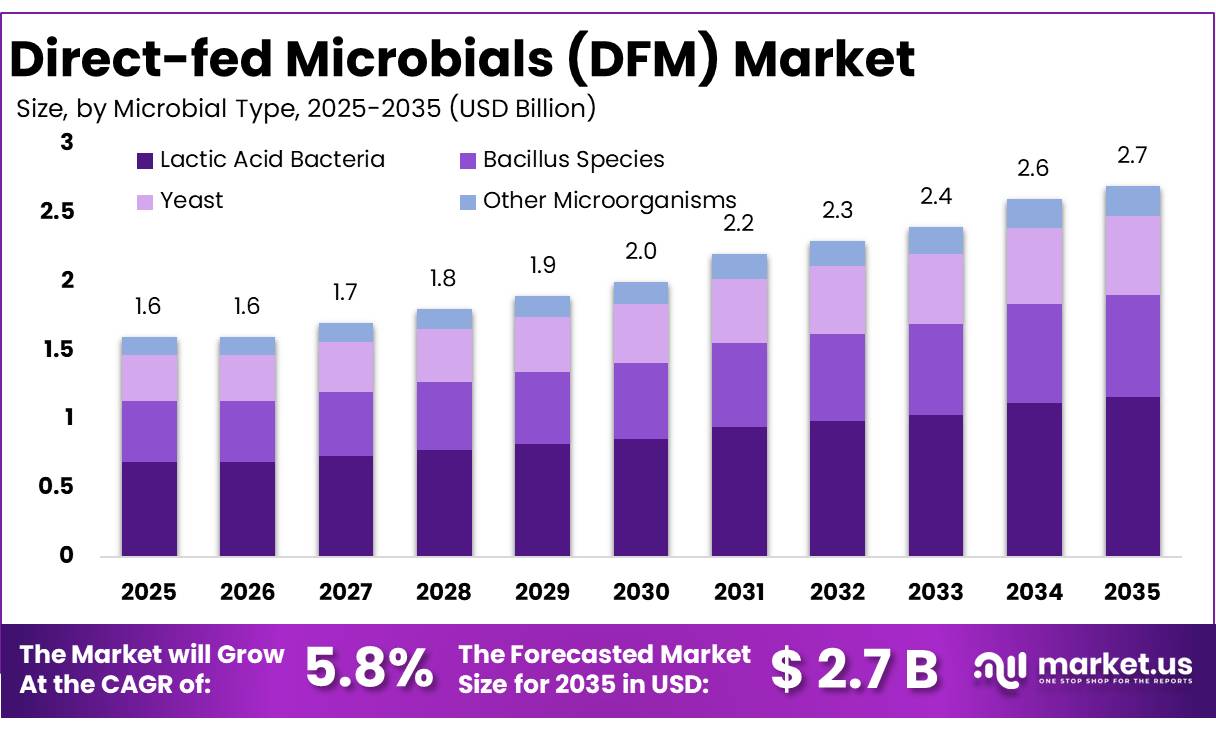
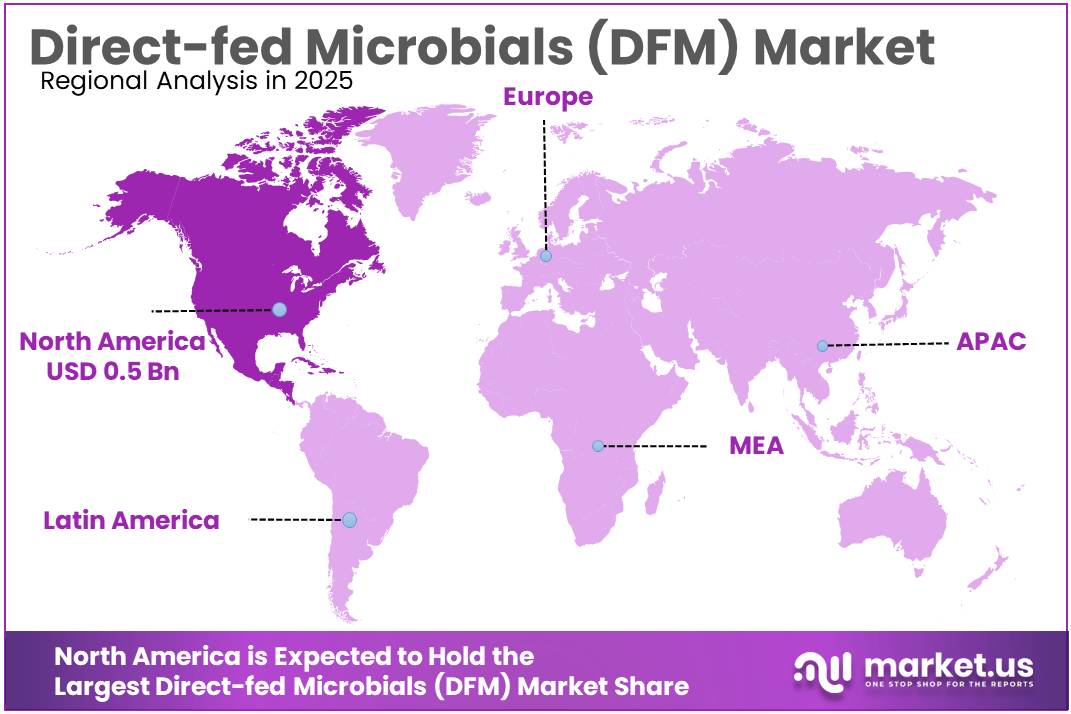
The Global Direct-fed Microbials (DFM) Market size is expected to be worth around USD 2.7 Billion by 2035, from USD 1.6 Billion in 2025, growing at a CAGR of 5.8% during the forecast period from 2026 to 2035. In 2025, North America held a dominant market position, capturing more than a 32.00% share, holding USD 0.5 Billion revenue.
Direct-fed microbials (DFMs) are live, viable microorganisms, including selected bacteria and yeasts, incorporated directly into animal feed to support a stable gastrointestinal microbial environment. The U.S. Food and Drug Administration recognizes DFM products as a subclass of fermentation or yeast products and requires viable microorganisms to be identified and guaranteed on labeling.
- Antimicrobial stewardship remains a major structural demand driver. FDA reported that U.S. sales of medically important antimicrobials for food-producing animals were 27% below their 2015 peak in 2024, even after a 16% year-over-year increase. The World Organisation for Animal Health separately reported a 5% decline in antimicrobial use across data representing 71% of global animal biomass. These trends strengthen the case for preventive nutrition, microbiome management, and non-antibiotic feed strategies.
Government policy is reinforcing the same direction. The European Commission has set a target to reduce overall EU sales of antimicrobials for farmed animals and aquaculture by 50% by 2030. European Commission EMA reported that 98% of veterinary antimicrobial sales in 2024 were for food-producing animals and that sales for this group increased 5% from 2023, highlighting the need for stewardship tools that complement disease prevention, vaccination, biosecurity, and improved feed management.
- Evonik states that its Ecobiol PRO spore-forming probiotic germinates on average 46% faster than other spore-forming probiotic products. Its GutPlus probiotic has also demonstrated stability in pelleted feed at temperatures up to 85°C for 1 minute. Improvements in strain selection, fermentation quality, heat tolerance, shelf life, and dosing consistency are important for scaling DFM use through modern feed mills and intensive livestock systems.
Future growth is supported by expanding animal-protein production. USDA projects U.S. broiler output to rise from 47.9 billion pounds in 2026 to 53.4 billion pounds by 2034, an 11.5% increase. USDA ERS USDA also counted 94.2 million cattle and calves on U.S. farms in July 2026, including 9.65 million milk cows. USDA NASS As producers pursue higher output under tighter feed-cost, welfare, and antimicrobial constraints, strong DFM opportunities are expected in strain-specific products, multi-species applications, precision microbiome platforms, heat-stable formulations, and combinations with enzymes, prebiotics, and organic acids.
Key Takeaways
- Direct-fed Microbials (DFM) Market size is expected to be worth around USD 2.7 Billion by 2035, from USD 1.6 Billion in 2025, growing at a CAGR of 5.8%.
- Lactic Acid Bacteria held a dominant market position, capturing more than a 43.00% share.
- Single-Strain held a dominant market position, capturing more than a 58.00% share.
- Dry held a dominant market position, capturing more than a 68.00% share.
- Poultry held a dominant market position, capturing more than a 45.70% share.
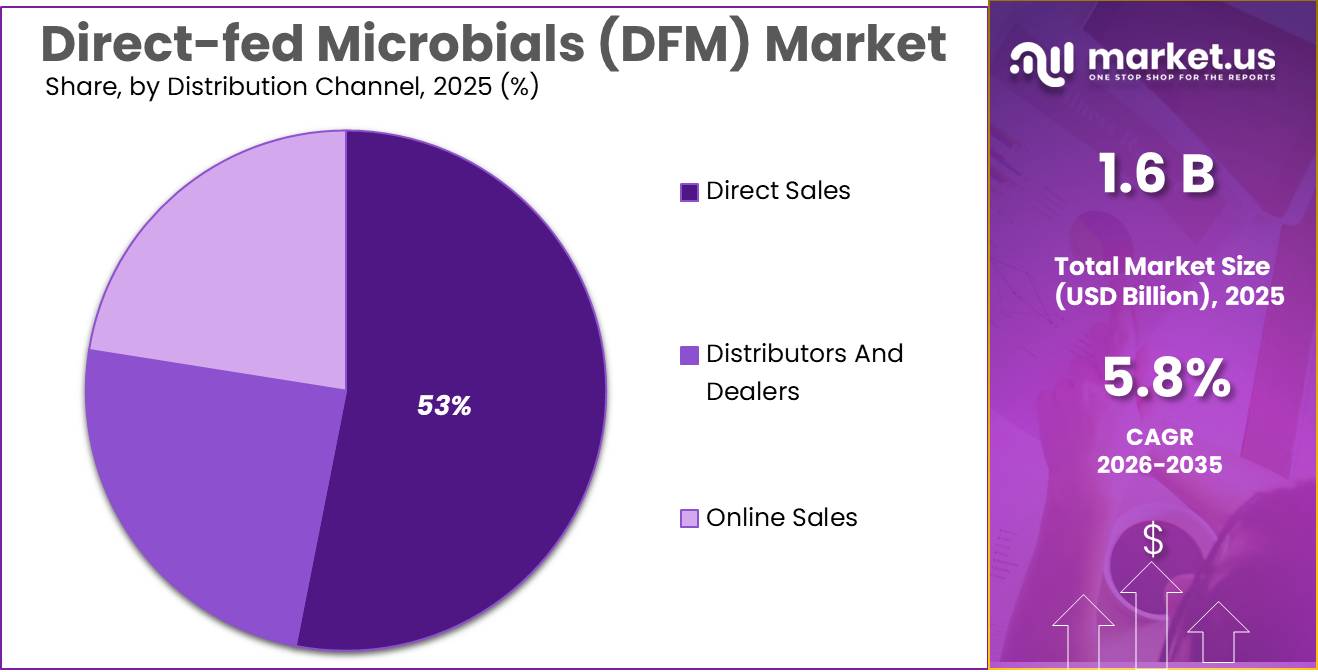
- Direct Sales held a dominant market position, capturing more than a 53.00% share.
- North America held the leading position in the Direct-fed Microbials market in 2025, accounting for 32.00% of the market and about USD 0.50 billion.
By Microbial Type Analysis
Lactic Acid Bacteria leads the DFM market with a 43.00% share, supported by its established role in animal gut health
In 2025, Lactic Acid Bacteria held a dominant market position, capturing more than a 43.00% share. The segment benefits from the wide use of lactic acid-producing microorganisms in animal nutrition to maintain a balanced intestinal environment and support digestive performance. These microorganisms are commonly incorporated into direct-fed microbial formulations for poultry, cattle, swine, and other livestock.
Bacillus Species is gaining a stronger position in the Direct-fed Microbials market as feed manufacturers increasingly favor robust microbial strains that can remain stable during feed processing and storage. Spore-forming Bacillus strains are particularly suitable for pelleted animal feed because of their ability to tolerate demanding manufacturing conditions.
By Product Composition Analysis
Single-Strain dominates the DFM market with a 58.00% share, supported by targeted formulation and consistent performance
In 2025, Single-Strain held a dominant market position, capturing more than a 58.00% share. Single-strain DFM products remain widely preferred because they allow feed producers to use a clearly identified microorganism with a defined function, controlled dosage, and consistent quality. Their simpler formulation also supports easier strain identification, safety assessment, production control, and inclusion in commercial animal feed.
In 2025, the European Food Safety Authority evaluated a single-strain feed additive containing Bacillus velezensis CECT 5940 and concluded that it has the potential to be effective in poultry when supplied at 1 × 10⁹ CFU/kg of complete feed. EFSA also concluded that the strain could be used across poultry, supporting the commercial relevance of targeted single-microbial formulations.
In 2025, EFSA assessed a multi-strain feed additive containing three Bacillus strains—Bacillus subtilis DSM 32324, Bacillus subtilis DSM 32325, and Bacillus amyloliquefaciens DSM 25840. The regulator concluded that the combination has the potential to be effective across poultry at 1.6 × 10⁹ CFU/kg of feed. EFSA also assessed a more concentrated formulation containing 3.2 × 10¹⁰ CFU/g, showing continued product development in higher-strength multi-strain microbial preparations.
By Form Analysis
Dry dominates the Direct-fed Microbials market with a 68.00% share, supported by easier handling and feed-mixing stability
In 2025, Dry held a dominant market position, capturing more than a 68.00% share. Dry direct-fed microbials are widely used because powder and granular formats are easier to store, transport, measure, and blend into premixes or complete animal feed. Their suitability for large feed mills also supports consistent microbial delivery across poultry and livestock operations. In 2025, the European Food Safety Authority evaluated GalliPro Fit 10 as a free-flowing powder containing three Bacillus strains with a minimum total concentration of 3.2 × 10¹⁰ CFU/g.
The formulation contained 20% active agents and 80% carriers, while tested batches recorded total bacterial counts of 5.8–6.2 × 10¹⁰ CFU/g. These characteristics show why concentrated dry microbial products are well suited to commercial feed production. European Food Safety Authority – GalliPro Fit 10 Assessment, 2025.
Liquid direct-fed microbials are gaining attention in animal production where producers require easy dispersion, rapid administration, and flexible dosing through drinking-water systems. This form can be useful in poultry operations and other intensive farming systems where microbial supplementation needs to be adjusted without reformulating complete feed.
By Livestock Analysis
Poultry leads the Direct-fed Microbials market with a 45.70% share, supported by large-scale commercial production
In 2025, “Poultry” held a dominant market position, capturing more than a 45.70% share. Poultry remains a major user of direct-fed microbials because commercial producers focus heavily on gut health, feed utilization, flock consistency, and maintaining performance under intensive production conditions.
The large size of the poultry industry also creates steady demand for microbial feed solutions. According to the U.S. Department of Agriculture, U.S. broiler production reached 48.003 billion pounds in 2025, increasing 2.1% from the previous year. Total broiler slaughter also increased 1.3% during the year.
Ruminants represent an important segment of the Direct-fed Microbials market, supported by growing attention to rumen function, digestive stability, nutrient utilization, and overall animal productivity. DFM formulations used in cattle feeding can contain bacterial or yeast cultures designed to support the microbial environment of the digestive system.
In July 2026, the U.S. Department of Agriculture reported 94.2 million cattle and calves on U.S. farms. This included 28.5 million beef cows and 9.65 million milk cows. The large beef and dairy populations create opportunities for DFM suppliers to develop strain-specific products for feedlots, dairy herds, young calves, and other ruminant production systems.
By Distribution Channel Analysis
Direct Sales leads the DFM market with a 53.00% share as large livestock producers favor direct technical support and bulk supply
In 2025, “Direct Sales” held a dominant market position, capturing more than a 53.00% share. Direct purchasing is widely preferred by large feed mills, poultry integrators, dairy farms, and commercial feedlots because DFM products often require precise strain selection, dosage guidance, storage support, and technical assistance. Large-volume buyers can also maintain closer quality control by sourcing directly from manufacturers.
The scale and concentration of commercial livestock production support this model. USDA reported that 13.8 million cattle were on feed in the United States on January 1, 2026, and feedlots with capacity of 1,000 head or more accounted for 82.7% of the total cattle-on-feed inventory. Such concentrated operations provide a strong customer base for direct, high-volume microbial feed supply.
Distributors And Dealers remain an important distribution channel in the Direct-fed Microbials market, particularly where livestock producers purchase feed additives through established local feed stores, agricultural suppliers, veterinarians, and regional feed dealers. This channel helps manufacturers reach smaller farms that may not require the volumes needed for direct contracts.
Key Market Segments
By Microbial Type
- Lactic Acid Bacteria
- Bacillus Species
- Yeast
- Other Microorganisms
By Product Composition
- Single-Strain
- Multi-Strain
By Form
- Dry
- Liquid
By Livestock
- Poultry
- Ruminants
- Swine
- Aquaculture
- Other Livestock
By Distribution Channel
- Direct Sales
- Distributors And Dealers
- Online Sales
Driver Analysis
Antibiotic Growth Promoter Bans and AMR Stewardship
The structural retreat from antibiotic growth promoters, banned across EU producers since January 1, 2006 and increasingly restricted under WOAH antimicrobial stewardship frameworks and FDA Guidance for Industry #213, has created a durable, non-cyclical substitution demand for microbial alternatives that does not depend on commodity price cycles.
Approximately 38 percent of commercial poultry production systems across North America and Europe had adopted antibiotic-free or reduced-antibiotic protocols by 2026, a segment tied to an estimated 1.18 billion dollars in direct-fed microbial demand specifically linked to poultry microbiome management, while the broader antibiotic-free transition is projected to generate around 1.42 billion dollars in incremental DFM opportunity by 2030.
This regulatory-driven substitution is restructuring supplier business models away from single-strain commodity sales toward bundled gut-health programs combining DFMs with prebiotics, organic acids, and enzymes sold as integrated protocols to poultry and swine integrators, since replacing an antibiotic’s broad-spectrum effect typically requires multi-strain synergy rather than a single-organism substitute.
Drivers Impact Analysis
| Driver | (~) % Impact on CAGR Forecast | Geographic Relevance | Impact Timeline |
|---|---|---|---|
| Antibiotic growth promoter bans and antimicrobial resistance stewardship | +2.3% | EU core, North America, APAC (China, India) | Medium term (2-4 years) |
| EU third-country antimicrobial-compliance import restrictions | +1.6% | South America (Brazil) core, EU enforcement, APAC spill-over | Short term (≤2 years) |
| US FDA GRAS notification reform tightening ingredient oversight | +1.1% | North America core | Medium term (2-4 years) |
| Feed conversion ratio economics amid volatile feed-grain costs | +1.9% | North America, EU, APAC (Southeast Asia) | Short term (≤2 years) |
| Poultry, swine, and aquaculture protein demand growth in APAC | +2.0% | APAC (China, India, Vietnam), Latin America | Medium term (2-4 years) |
| Encapsulation and strain-stabilization technology enabling post-pellet viability | +1.3% | North America, EU, APAC | Long term (≥4 years) |
Restraint Analysis
Strain-Approval Friction
In the EU, feed-additive authorization has traditionally operated with 10-year validity and renewal requirements, although the European Commission’s 2025 simplification proposal would remove systematic renewals for most additive categories; until adopted and operationalized, suppliers still face substantial documentation, dossier, identity, stability, antimicrobial-resistance, toxicology, and efficacy obligations across strains and applications.
For a typical new strain program, an analytical model indicates that multi-species efficacy studies, genomic screening, toxicological work, shelf-life validation, dossier preparation, regulatory consulting, and post-launch compliance can require USD 1.5–4.0 million before broad regional access, while a 24–48 month approval-to-commercialization cycle can defer revenue recognition by two to four budget cycles.
This is especially punitive in poultry and swine, where contract-feed manufacturers demand immediate proof of feed conversion ratio improvement before accepting a premium additive; the result is lower innovation throughput, concentration of approvals among multinational suppliers with established regulatory teams, slower local strain commercialization in China, India, Brazil, and Southeast Asia, and an estimated -1.4 percentage-point drag on the 2026 baseline DFM CAGR.
Restraint Impact Analysis
| Restraint | (~) % Impact on CAGR Forecast | Geographic Relevance | Impact Timeline |
|---|---|---|---|
| Strain-approval friction | -1.4 pp | EU, U.S., Japan, China | Medium term (2–4 years) |
| Variable on-farm efficacy | -1.8 pp | Global; APAC, LATAM | Short term (≤ 2 years) |
| Fermentation-cost volatility | -1.2 pp | China, EU, North America | Short term (≤ 2 years) |
| Viability loss in feed processing | -1.5 pp | APAC, MEA, LATAM | Medium term (2–4 years) |
| Livestock-margin pressure | -1.3 pp | China, EU, North America | Short term (≤ 2 years) |
| Logistics and trade disruption | -0.9 pp | EU–Asia, Middle East, Africa | Short term (≤ 2 years) |
Opportunity Analysis
Companion Animal and Pet-Humanization Line Extension
Current DFM commercial strategy remains almost entirely anchored to livestock feed-conversion and antibiotic-substitution use cases, leaving the adjacent companion-animal category as a largely unmonetized adjacency despite the pet probiotics supplements market independently reaching an estimated 1.3-1.7 billion dollars in 2026 and expanding near 9.7-11.4 percent CAGR, materially faster than legacy livestock DFM growth rates; this is a genuine white-space pivot rather than an extension of an existing driver because livestock.
DFM sales are transacted through feed-mill and integrator B2B channels at commodity-scale margins, whereas pet-product formulations command premium retail and e-commerce price points with gross margins of 60-75 percent versus 15-25 percent typical of bulk livestock additive sales, and specialized formulations targeting anxiety and stress modulation via strains such as Bifidobacterium longum are already the fastest-growing pet-probiotic sub-segment at nearly 14 percent CAGR, indicating DFM producers with existing strain libraries could repurpose already-approved, already-characterized organisms into a new direct-to-consumer product category without incurring the multi-year regulatory dossier cost of a novel strain, potentially cutting new-product time-to-market by 12-18 months relative to developing an entirely new livestock strain.
Opportunity Impact Analysis
| Opportunity | (~) % Potential CAGR | Geographic Relevance | Execution Window |
|---|---|---|---|
| Companion animal and pet-humanization DFM line extension | +2.2% | North America core, EU, APAC urban markets | Short to medium term |
| Enteric methane-reduction bundling for carbon-credit monetization | +2.8% | EU core, North America, Australia | Medium term (2-4 years) |
| AI-driven precision microbiome nutrition and strain-matching platforms | +2.5% | North America, EU, APAC (China, India) | Medium to long term |
| Shrimp and aquaculture gut-health probiotic vertical expansion | +1.9% | APAC (India, Vietnam, Indonesia), Latin America | Short to medium term |
| M&A consolidation of fragmented regional strain-IP holders | +1.6% | North America, EU, APAC | Medium term (2-4 years) |
| African and smallholder precision-nutrition policy roadmap entry | +1.3% | Africa, South Asia | Long term (≥4 years) |
Challenges Analysis
Strain-to-Farm Translation Gap
The central growth challenge for the DFM industry is translating controlled-trial outcomes into repeatable commercial performance across farms whose baseline microbiomes, feed formulations, pathogen loads, climate exposure, genetics, and management practices vary materially, causing customers to treat strain efficacy as a probabilistic operating result rather than a guaranteed productivity input.
The consequence is that a formulation capable of generating a 1.5–3.0% feed-conversion improvement in a tightly controlled broiler trial may deliver only 0–1.0% improvement across heterogeneous commercial sites, and a dairy or beef DFM that improves rumen indicators may not generate a statistically clear dry-matter-digestibility gain under a different forage-quality profile; for example, a 2026 cattle study found that a Bacillus-based DFM changed early gas production but did not improve in-vitro dry matter or fiber digestibility.
For suppliers, this increases the per-account technical burden from a single product sale to an ongoing program of baseline sampling, diet mapping, dose adjustment, veterinarian engagement, and multi-cycle validation, with a practical commercial protocol requiring 6–12 weeks in broilers, 10–16 weeks in swine, and 90–180 days in dairy or beef before repeat-purchase confidence forms.
Challenges Impact Analysis
| Challenge | (~) % CAGR Friction | Geographic Relevance | Mitigation Horizon |
|---|---|---|---|
| Strain-to-Farm Translation Gap | -1.4 pp | Global; APAC, LATAM, EU | Medium term (2–4 years) |
| Pellet-Process Viability Engineering | -1.1 pp | APAC, EU, North America | Medium term (2–4 years) |
| Fermentation Scale-Up Variability | -1.0 pp | China, EU, North America | Long term (≥ 4 years) |
| Microbiome Data Skills Deficit | -0.8 pp | North America, EU, APAC | Long term (≥ 4 years) |
| Feed-Mill Integration Complexity | -0.9 pp | APAC, LATAM, MEA | Medium term (2–4 years) |
| Volatile Cross-Border Fulfilment | -0.7 pp | Asia–EU, MEA, Africa | Short term (≤ 2 years) |
Geopolitical Impact Analysis
The ongoing Russia–Ukraine war and conflict-driven disruption across the Middle East are affecting the Direct-fed Microbials market through feed costs, energy prices, shipping delays, and livestock margins. DFM producers depend on fermentation inputs, carriers, packaging, and distribution, so higher transport and raw-material costs can raise production expenses and delay deliveries to feed mills.
The Red Sea and Strait of Hormuz disruptions have made this pressure more visible. UNCTAD reported in April 2026 that ship transits through the Strait of Hormuz had fallen by about 95%, while the route normally handles around one quarter of global seaborne oil trade. Higher fuel, insurance, and freight costs can therefore increase the delivered cost of microbial feed additives, especially for import-dependent livestock markets.
Feed economics are also important because livestock producers adjust additive spending when grain costs tighten. USDA reported in August 2026 that U.S. 2026/27 feed-grain ending stocks were projected at 44.4 million metric tons, down 7.9 million metric tons from the revised 2025/26 level. Despite these pressures, DFM demand remains supported as producers seek better feed efficiency, gut health, and lower antibiotic dependence.
Regional Insights
North America held the leading position in the Direct-fed Microbials market in 2025, accounting for 32.00% of the market and about USD 0.50 billion in revenue. The region benefits from a highly commercialized livestock industry, large feedlot operations, advanced feed manufacturing, and strong adoption of microbial nutrition products in poultry, dairy, and beef production.
In July 2026, the U.S. Department of Agriculture reported 94.2 million cattle and calves on U.S. farms, including 28.5 million beef cows and 9.65 million milk cows. Cattle on feed reached 13.2 million head, up 2% from 2025. This large production base supports steady demand for DFMs that help maintain digestive balance, feed utilization, and animal performance.
Asia Pacific is emerging as the fastest-growing regional market for Direct-fed Microbials, supported by expanding meat production, large livestock populations, and increasing use of scientifically formulated animal feed. China remains an important growth center because intensive poultry and swine production creates substantial demand for gut-health and feed-efficiency solutions.
According to China’s National Bureau of Statistics, total pork, beef, mutton, and poultry output reached 100.72 million tons in 2025, increasing 4.2% from the previous year. Poultry meat production rose 6.7% to 28.37 million tons, while 719.73 million pigs were slaughtered, up 2.4%. These production levels are encouraging feed manufacturers and livestock operators to adopt microbial additives that can support nutrient utilization and production consistency.
Key Regions and Countries Insights
- North America
- US
- Canada
- Europe
- Germany
- France
- The UK
- Spain
- Italy
- Rest of Europe
- Asia Pacific
- China
- Japan
- South Korea
- India
- Australia
- Rest of APAC
- Latin America
- Brazil
- Mexico
- Rest of Latin America
- Middle East & Africa
- GCC
- South Africa
- Rest of MEA
Key Players Analysis
Novonesis maintains a strong position in Direct-fed Microbials through its portfolio of probiotics, microbes, and enzymes for poultry, swine, cattle, and aquaculture. In 2025, the company recorded 7% organic sales growth, a 37.1% adjusted EBITDA margin, and launched 33 new products.
dsm-firmenich has been an important supplier of animal nutrition products covering feed additives, premixes, performance solutions, and livestock health technologies. Its Animal Nutrition & Health business generated approximately EUR 3.5 billion in sales and around EUR 0.5 billion in adjusted EBITDA in 2025. In June 2025, the company sold its 50% Feed Enzyme Alliance stake to Novonesis for EUR 1.5 billion.
Lallemand Animal Nutrition remains a specialist in microbial feed solutions, including live yeast, bacterial probiotics, silage inoculants, and yeast derivatives. Its products are marketed in more than 80 countries, while parent company Lallemand employs over 6,500 people across more than 45 countries and 5 continents.
Top Key Players Outlook
- Novonesis
- dsm-firmenich
- Lallemand Animal Nutrition
- Kemin Industries
- ADM
- Evonik Industries
- Cargill
- Alltech
- IFF/Danisco Animal Nutrition
- Novus International
- Adisseo
- Phibro Animal Health
- Lesaffre/Phileo
- Bio-Vet
- American Biosystems
Recent Developments
- In June 2026, ADM expanded production capacity by opening a new 7,500-square-meter premix and feed-additive plant in Brazil with capacity of about 40,000 tons per year and output of up to 10 tons per hour.
- In June 2026, Evonik highlighted further microbiome research at its Biotech Hub, noting that global animal-feed probiotic sales had reached about USD 4 billion in 2025 and were growing at roughly 7% annually.
Report Scope
| Report Features | Description |
|---|---|
| Market Value (2025) | USD 1.6 Bn |
| Forecast Revenue (2035) | USD 2.7 Bn |
| CAGR (2026-2035) | 5.8% |
| Base Year for Estimation | 2025 |
| Historic Period | 2020-2024 |
| Forecast Period | 2026-2035 |
| Report Coverage | Revenue Forecast, Market Dynamics, Competitive Landscape, Recent Developments |
| Segments Covered | By Microbial Type (Lactic Acid Bacteria, Bacillus Species, Yeast, Other Microorganisms), By Product ( Composition, Single-Strain, Multi-Strain), By Form (Dry, Liquid), By Livestock (Poultry, Ruminants, Swine, Aquaculture, Other Livestock), By Distribution Channel (Direct Sales, Distributors And Dealers, Online Sales) |
| Regional Analysis | North America – US, Canada; Europe – Germany, France, The UK, Spain, Italy, Rest of Europe; Asia Pacific – China, Japan, South Korea, India, Australia, Singapore, Rest of APAC; Latin America – Brazil, Mexico, Rest of Latin America; Middle East & Africa – GCC, South Africa, Rest of MEA |
| Competitive Landscape | Novonesis, dsm-firmenich, Lallemand Animal Nutrition, Kemin Industries, ADM, Evonik Industries, Cargill, Alltech, IFF/Danisco Animal Nutrition, Novus International, Adisseo, Phibro Animal Health, Lesaffre/Phileo, Bio-Vet, American Biosystems |
| Customization Scope | Customization for segments, region/country-level will be provided. Moreover, additional customization can be done based on the requirements. |
| Purchase Options | We have three licenses to opt for: Single User License, Multi-User License (Up to 5 Users), Corporate Use License (Unlimited User and Printable PDF) |





































