


Report Overview
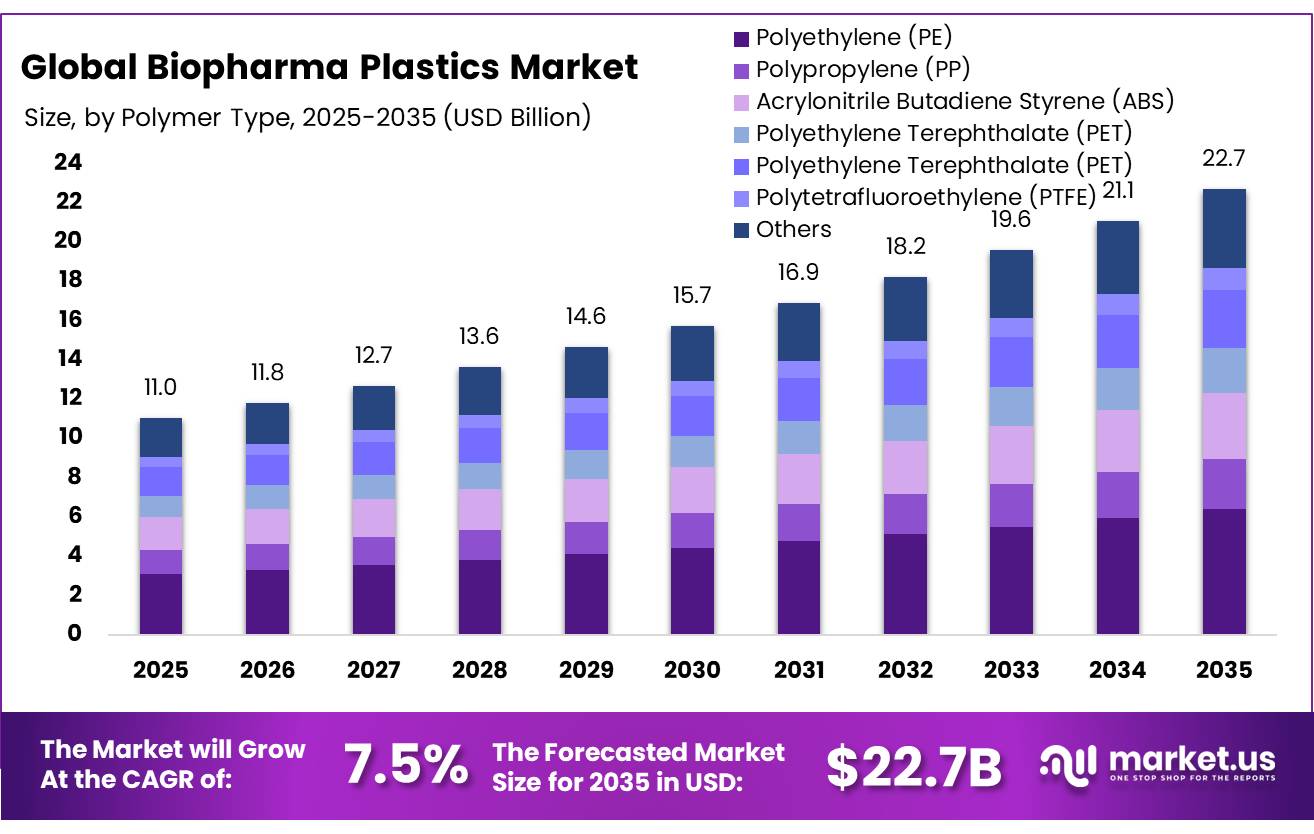
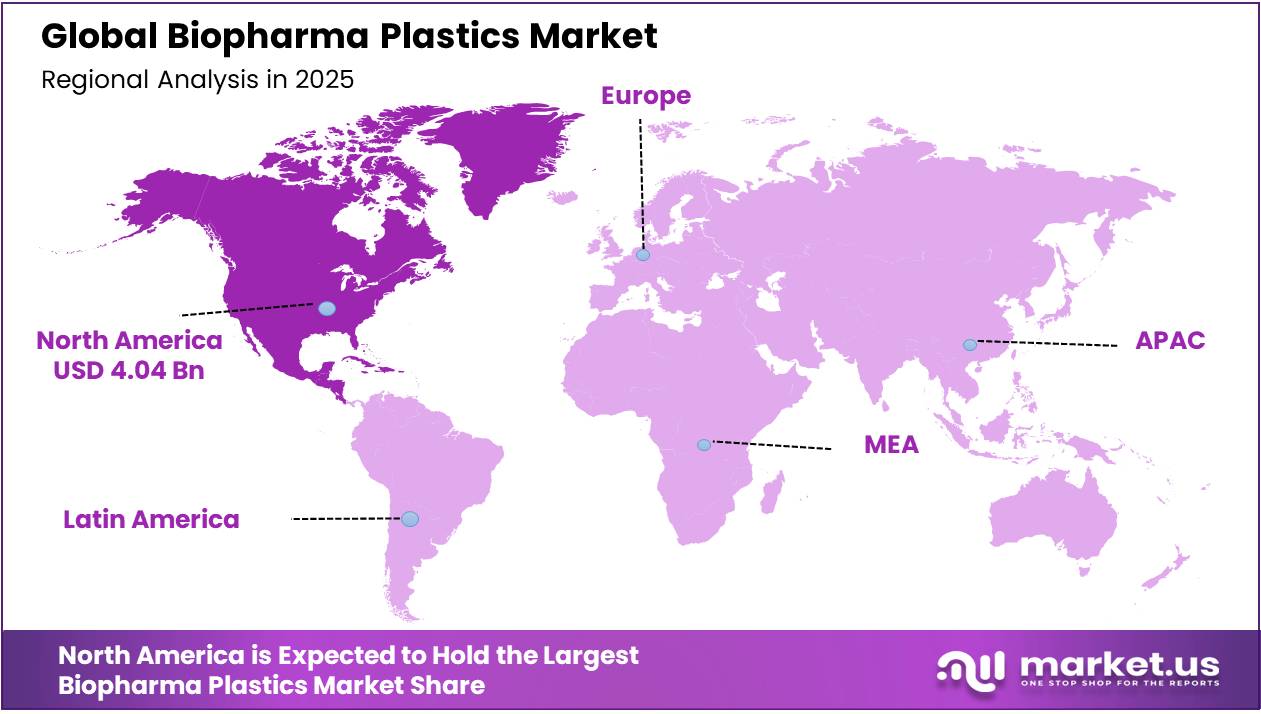
In 2025, the Global Biopharma Plastic Market was valued at USD 11.0 billion, and between 2026 and 2035, this market is estimated to register a CAGR of 7.5%, reaching about USD 22.7 billion by 2035. In 2025, North America held a dominant market position, capturing more than a 36.7% share, holding USD 4.4 Billion revenue.
The biopharma plastics market is shaped by the increasing adoption of single-use systems in biologics and vaccine manufacturing, driving demand for high-performance polymers such as polyethylene (PE), polypropylene (PP), and polyethylene terephthalate (PET). Regulatory compliance with USP Class VI and ISO 10993 standards ensures that these materials maintain sterility, chemical compatibility, and low leachables, which is critical for applications including bioreactor bags, syringes, tubing, and connectors.
- The U.S. FDA approved 46 novel drugs in 2025, including therapeutic biological products reviewed by its drug center. U.S. FDA – Novel Drug Approvals 2025 In Europe, biological medicines generated EUR 95 billion of sales in 2024 and represented 41% of pharmaceutical spending, demonstrating the growing production base requiring sterile polymer components and containment systems.
Single-use manufacturing is one of the strongest industry drivers. Sartorius reported that its Bioprocess Solutions division generated EUR 2.865 billion in 2025 revenue, increasing 9.5% in constant currencies, with filters and single-use bags forming a large majority of sales. The company invested EUR 442 million in research and production infrastructure during the same year. Sartorius – Full-Year 2025 Results Its French bioprocess expansion completed in June 2025 almost doubled cleanroom space and added automated single-use-bag production lines.
- Investment in biomanufacturing is creating further demand for disposable plastic systems. In April 2025, Thermo Fisher announced an additional USD 2 billion U.S. investment over 4 years, including USD 1.5 billion for manufacturing expansion and USD 500 million for R&D. The company operates 64 manufacturing facilities across 37 U.S. states, strengthening domestic pharmaceutical and life-science supply chains.
Drug-delivery plastics are another important growth area. In August 2025, SCHOTT Pharma introduced a ready-to-use cyclic olefin copolymer cartridge designed for sensitive biologics and injectable medicines. The company currently operates 17 production sites, employs around 4,800 people, and manufactures more than 13 billion pharmaceutical containers annually, showing the industrial scale available for polymer-based containment alongside glass.
The European Commission’s BioTechEU initiative is expected to mobilize up to EUR 10 billion for biotechnology investment during 2026–2027, while proposed strategic biotechnology projects could attract EUR 19–40 billion by 2038. European Commission European Biotech Act These developments should expand demand for clean, traceable, chemically stable, and increasingly sustainable plastic systems across biopharmaceutical production.
Key Takeaways
- The global biopharma plastic market was valued at USD 11.0 billion in 2025.
- The global market is projected to grow at a CAGR of 7.5% and is estimated to reach USD 22.7 billion by 2035.
- On the basis of polymer type, polyethylene (PE) biopharma plastic dominated the market, constituting 28.1% of the total market share.
- Among the processing technologies, injection molding held a major share in the biopharma plastic market, 43.5% of the market share.
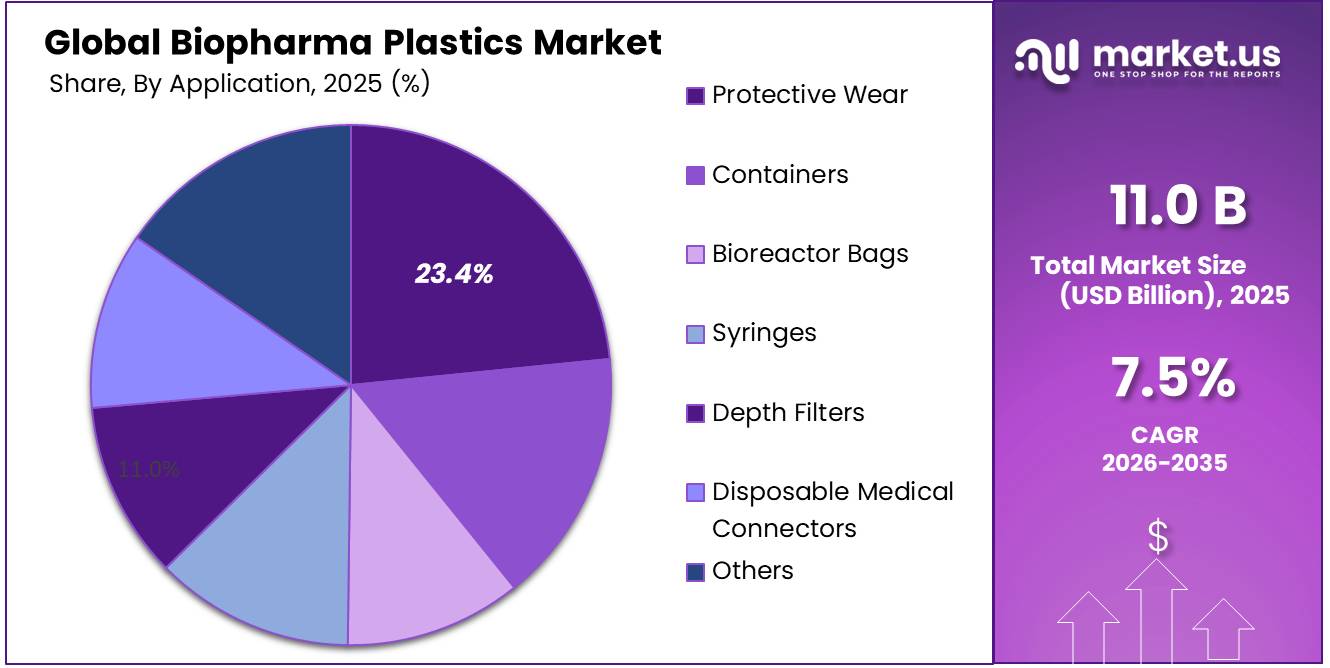
- Among the applications, protective wear is the most considerable within the market, accounting for around 23.4% of the revenue.
- In 2025, North America was the most dominant region in the biopharma plastic market, accounting for 36.7% of the total global consumption.
Polymer Type Analysis
Polyethylene (PE) Biopharma Plastic is a Prominent Segment in the Market.
Polyethylene (PE) emerges as the dominant polymer in the biopharma plastics market, accounting for 28.1% of the segment. Its widespread adoption is driven by its excellent chemical resistance, flexibility, and ability to maintain sterility under rigorous biopharmaceutical processing conditions. PE is extensively utilized in single-use systems, including bioreactor bags, tubing, connectors, and disposable containers, where contamination prevention and process reliability are critical.
The polymer’s compatibility with sterilization methods such as gamma irradiation and autoclaving ensures consistent performance across upstream and downstream processes. Regulatory compliance with USP Class VI and ISO 10993 standards further reinforces its suitability for biologics and vaccine production. The combination of mechanical stability, chemical inertness, and ease of processing positions polyethylene as the preferred material in applications requiring high-performance, disposable solutions in modern biopharmaceutical manufacturing.
Processing Technology Analysis
Injection Molding Held a Major Share of the Biopharma Plastic Market.
Injection Molding is the leading processing technology in the biopharma plastics market, accounting for 43.5% of the segment. Its dominance stems from the ability to produce high-precision, complex components such as connectors, syringes, and various disposable medical devices with consistent dimensional accuracy. The process allows for efficient material utilization of high-performance polymers while maintaining stringent quality standards required in biopharmaceutical applications.
Injection molding also supports scalability, enabling rapid production of sterile, single-use components that comply with USP Class VI and ISO 10993 biocompatibility requirements. Its versatility, combined with short cycle times and low defect rates, makes injection molding the preferred choice for manufacturers seeking reliable, reproducible, and high-quality plastic components essential for modern biologics and vaccine production.
Application Analysis
Biopharma Plastic Are Mostly Utilized for Protective Wear.
Protective Wear represents the leading application segment in the biopharma plastics market, accounting for 23.4% of the share. Its prominence is driven by the increasing emphasis on safety and contamination control in biopharmaceutical manufacturing environments. High-performance polymers are widely used in the production of gowns, gloves, face shields, and other disposable protective gear. These materials offer chemical resistance, durability, and compatibility with sterilization processes, ensuring compliance with USP Class VI and ISO 10993 standards.
The adoption of single-use protective wear reduces cross-contamination risks, supports aseptic processing, and aligns with regulatory requirements for cleanroom operations. Growing biologics production and stringent workplace safety mandates continue to reinforce the critical role of polymer-based protective wear in maintaining process integrity and safeguarding personnel in modern biopharmaceutical facilities.
Key Market Segments
By Polymer Type
- Polyethylene (PE)
- Polypropylene (PP)
- Acrylonitrile Butadiene Styrene (ABS)
- Polyethylene Terephthalate (PET)
- Polyvinyl Chloride (PVC)
- Polytetrafluoroethylene (PTFE)
- Others
By Processing Technology
- Injection Molding
- Extrusion
- Blow Molding
- Thermoforming
- Others
By Application
- Protective Wear
- Containers
- Bioreactor Bags
- Syringes
- Depth Filters
- Disposable Medical Connectors
- Others
Driver Analysis
Cell and Gene Therapy Scale-Up
Cell and gene therapies create disproportionate demand for highly engineered biopharma plastics because their manufacturing workflows rely on small-volume, closed, aseptic and highly segregated processing rather than large conventional stainless-steel bioreactors. Autologous therapies may require an individual patient-specific chain of custody, meaning each batch can involve dedicated sterile bags, cryogenic-compatible tubing, single-use connectors, cell-processing cartridges, vials, overwraps, labels, transport shippers and tamper-evident secondary packaging; an allogeneic product may consolidate scale but still requires stringent closed-system fluid management to minimize contamination risk.
FDA’s Center for Drug Evaluation and Research approved 46 novel drugs in 2025, while the Center for Biologics Evaluation and Research separately maintains annual biological-approval records, sustaining the addressable pipeline for specialized processing and packaging materials.
With North America and Europe retaining the deepest advanced-therapy pipelines and Japan, South Korea and China expanding local manufacturing capacity, cell and gene therapy adoption is estimated to contribute roughly +2.6 percentage points to forecast CAGR through 2028–2030.
Drivers Impact Analysis
| Driver | (~) % Impact on CAGR Forecast | Geographic Relevance | Impact Timeline |
|---|---|---|---|
| Single-use bioprocess expansion | +3.1% | North America, EU, China, India | Medium term (2–4 years) |
| Cell and gene therapy scale-up | +2.6% | North America core, EU, Japan, South Korea | Medium term (2–4 years) |
| Biologics approval pipeline | +2.2% | North America, EU, APAC corridors | Short term (≤2 years) |
| Aseptic fill-finish localization | +1.8% | India, China, Southeast Asia, Middle East | Medium term (2–4 years) |
| EU packaging-compliance redesign | +1.5% | EU core, UK spill-over, global exporters | Short term (≤2 years) |
| Cold-chain injectable growth | +1.3% | North America, EU, APAC urban markets | Long term (≥4 years) |
Restraint Analysis
Extractables-Leachables Qualification Cost
Biopharma plastics are restricted by the high qualification cost and long validation burden associated with extractables and leachables (E&L), because every drug-contact bag, tubing set, connector, stopper, filter housing, vial component, syringe part or polymer film must demonstrate that it is neither reactive, additive nor absorptive at levels that could compromise drug quality, efficacy or patient safety. FDA’s August 2025 draft Q3E guideline specifically addresses E&L assessment for single-use and multi-use manufacturing components and systems, while US Pharmacopeia General Chapter covers the characterization and qualification of plastic components used in biopharmaceutical manufacturing.
The analytical work requires controlled extraction under aggressive solvent, temperature and time conditions, followed by real-use leachables studies using LC-MS, GC-MS, ICP-MS, NMR and toxicological evaluation against analytical evaluation thresholds and permitted daily exposures. A packaging or process-component change that may cost only USD 0.50–5.00 more per assembly can therefore trigger studies costing roughly USD 100,000–500,000 per drug-product configuration and add 6–18 months of comparability, stability and regulatory-change-control work, making customers reluctant to replace incumbent plastic systems even where a lower-cost or more sustainable option is available.
Restraint Impact Analysis
| Restraint | (~) % Impact on CAGR Forecast | Geographic Relevance | Impact Timeline |
|---|---|---|---|
| Extractables-leachables qualification cost | -2.4% | North America, EU, Japan | Medium term (2–4 years) |
| PFAS substitution uncertainty | -1.9% | EU core, UK spill-over, global exporters | Medium term (2–4 years) |
| Polymer-feedstock cost volatility | -1.7% | Europe, North America, APAC importers | Short term (≤2 years) |
| Single-use waste compliance | -1.5% | EU, UK, North America, Japan | Medium term (2–4 years) |
| Tariff-driven supply fragmentation | -1.3% | North America, China, Mexico, EU | Short term (≤2 years) |
| Long biopharma validation cycles | -1.1% | Global regulated markets | Long term (≥4 years) |
Opportunity Analysis
Circular Single-Use Recovery
The largest unmonetized opportunity is to establish closed-loop recovery of qualified single-use bioprocess assemblies — bags, tubing, fittings, film, connectors and rigid polymer components through dedicated collection, decontamination, sorting and mechanical or chemical recycling partnerships; this is distinct from the present growth driver because the prevailing commercial model still treats sterile plastic assemblies as one-way consumables. Technical work indicates that plastics recovered from single-use assemblies can be redirected into second-use applications such as films, bags, pipes, fittings, profiles and flexible sheets when sorting and aggregation systems are sufficiently developed.
The EU Packaging and Packaging Waste Regulation, Regulation (EU) 2025/40, entered into force on 11 February 2025 and applies generally from 12 August 2026, creating a near-term incentive for pharmaceutical manufacturers to document packaging sustainability, recyclability and waste-management pathways. A supplier that combines take-back logistics with validated segregation can charge a recovery fee of approximately 3–8% of the original assembly value while recovering polymer feedstock or generating verified waste-diversion credits, reducing customer disposal cost by an estimated 15–30% where landfill or hazardous-waste incineration charges are high.
The white space lies in building regional aggregation density: a network serving 20–50 manufacturing sites within a 300–500 km radius can lower reverse-logistics cost per kilogram enough to create positive unit economics, whereas fragmented site-by-site recovery cannot. Early platform ownership in the EU, UK, US and Japan could therefore produce a +2.6 percentage-point CAGR upside through 2028–2030 and improve customer retention by integrating materials supply, waste documentation and sustainability reporting into one contract.
Opportunity Impact Analysis
| Opportunity | (~) % Potential CAGR Upside | Geographic Relevance | Execution Window |
|---|---|---|---|
| Circular single-use recovery | +2.6% | EU core, UK, North America, Japan | Medium term (2–4 years) |
| Advanced-therapy closed systems | +2.4% | North America, EU, Japan, South Korea | Medium term (2–4 years) |
| Compliance-data platform services | +2.0% | EU, North America, global exporters | Short term (≤2 years) |
| Regional sterile-component hubs | +1.8% | India, China, ASEAN, Gulf | Medium term (2–4 years) |
| Modular biomanufacturing kits | +1.5% | North America, EU, APAC emerging | Medium term (2–4 years) |
| Specialty polymer M&A roll-ups | +1.2% | North America, EU, Singapore, India | Short term (≤2 years) |
Challenges Analysis
Qualified Resin Concentration
Historic single-use shortages demonstrated the structural problem: surveyed biopharma users and suppliers identified component availability as a major issue, with 75% of end users and 70% of suppliers reporting single-use-system shortages or related supply concerns, while certain consumables faced delivery lead times as long as 14 months compared with only a few months for equipment.
The difficulty is not obtaining polyethylene, polypropylene, silicone or EVA in bulk; it is obtaining the exact USP-tested, extractables-characterized, irradiation-qualified, drug-master-file-supported formulation from a supplier already approved in a customer’s process. A 6–12-month disruption at one qualified film or resin source can compel customers to raise safety stock from 3–6 months to 9–12 months, tying up 15–30% more working capital in slow-moving sterile assemblies and raising inventory-obsolescence risk as product mixes change.
The strategic response requires dual-qualification of critical resins and film structures, geographic diversification of cleanroom conversion, reserved capacity contracts, supply-chain mapping to tier-3 feedstocks and validated substitution protocols, but because every alternate source requires quality-system alignment and E&L bridging, qualified-supplier concentration is expected to sustain roughly a -1.5 percentage-point CAGR friction drag through the 2026–2030 period.
Challenges Impact Analysis
| Challenge | (~) % CAGR Friction Drag | Geographic Relevance | Mitigation Horizon |
|---|---|---|---|
| Qualified resin concentration | -1.5% | North America, EU, China, India | Medium term (2–4 years) |
| E&L data harmonization | -1.4% | North America, EU, Japan, South Korea | Medium term (2–4 years) |
| Sterile assembly talent gap | -1.2% | North America, EU, India, Singapore | Long term (≥4 years) |
| Change-control data silos | -1.0% | Global regulated markets | Medium term (2–4 years) |
| Circularity versus sterility | -0.9% | EU, UK, North America, Japan | Long term (≥4 years) |
| Extreme-event supply resilience | -0.8% | US, Caribbean, EU, APAC corridors | Medium term (2–4 years) |
Geopolitical Impact Analysis
Geopolitical Influences on Biopharmaceutical Plastics Supply Chains and Production Continuity.
Recent geopolitical tensions have exerted tangible effects on the biopharma plastics sector, particularly in supply chain stability and material sourcing. The U.S. Department of Commerce reported that export controls on certain high-performance polymers, including polyethylene (PE) and polypropylene (PP), from specific countries have disrupted established supply routes, with shipment delays of 10–15 weeks documented in official customs reports during 2023.
Similarly, the European Chemicals Agency (ECHA) notes that import restrictions on fluoropolymers such as polytetrafluoroethylene (PTFE) have led to temporary shortages for applications in single-use bioreactor systems, affecting compliance with production schedules for vaccines and biologics. Government publications from India’s Ministry of Commerce indicate that reliance on imported raw polymer pellets has increased lead times by approximately 20% in local biologics manufacturing facilities.
The U.S. FDA guidance emphasizes that any substitution of polymer materials must undergo full validation to ensure sterility, chemical compatibility, and leachables control, creating additional procedural delays. These disruptions highlight the sensitivity of biopharma plastic supply chains to geopolitical developments, reinforcing the necessity for diversified sourcing strategies and validated material inventories to maintain continuous production of critical biologics and sterile medical components.
Regional Analysis
North America Held the Largest Share of the Global Biopharma Plastic Market.
In 2025, North America dominated the global biopharma plastic market, holding about 36.7% of the total global consumption. North America continues to lead in the adoption of biopharmaceutical plastics due to extensive biologics manufacturing infrastructure and stringent regulatory standards. According to the U.S. Food and Drug Administration (FDA), over 70% of commercial biologics production facilities in the United States employ single-use systems incorporating high-performance polymers. The U.S. Pharmacopeia (USP) emphasizes compliance with Class VI standards for plastics used in injectable and sterile applications, supporting widespread integration of disposable bioreactor bags, tubing, and connectors.
The National Institutes of Health (NIH) reports that more than 60 cell and gene therapy facilities were commissioned between 2019 and 2023, all relying on validated polymer components to maintain sterility and chemical compatibility. Additionally, the U.S. Centers for Disease Control and Prevention (CDC) highlights that North American vaccine production infrastructure increasingly utilizes modular, single-use systems, reinforcing the region’s reliance on high-performance plastics to support rapid scale-up and ensure process integrity in biologics manufacturing.
Key Regions and Countries
- North America
- The US
- Canada
- Europe
- Germany
- France
- The UK
- Spain
- Italy
- Russia & CIS
- Rest of Europe
- APAC
- China
- Japan
- South Korea
- India
- ASEAN
- Rest of APAC
- Latin America
- Brazil
- Mexico
- Rest of Latin America
- Middle East & Africa
- GCC
- South Africa
- Rest of MEA
Key Players Analysis
Manufacturers of biopharma plastics focus on several strategic activities to strengthen their competitive positioning and expand market presence. Investment in research and development is prioritized to create advanced polymer formulations with improved chemical resistance, reduced leachables, and enhanced barrier properties suitable for single-use systems and sterile applications. Companies emphasize compliance with regulatory standards such as USP Class VI and ISO 10993, ensuring materials meet stringent sterility and biocompatibility requirements.
Operational strategies include the adoption of modular and flexible manufacturing systems to reduce lead times and support rapid scale-up for biologics, vaccines, and cell and gene therapies. Strategic collaborations with biopharmaceutical companies facilitate co-development of application-specific consumables, while regional expansion initiatives target emerging markets to secure localized supply chains and enhance responsiveness to growing manufacturing infrastructure.
The Major Players in The Industry
- BASF SE
- LyondellBasell Industries Holdings B.V.
- SABIC
- LG Chem
- Toray Industries, Inc.
- Solvay SA
- Dow, Inc.
- DuPont de Nemours, Inc.
- Saint-Gobain Performance Plastics
- Tekni-Plex
- Chevron Phillips Chemical Co., LLC
- Exxon Mobil Corporation
- Formosa Plastics Corporation
- INEOS Group
- CHIMEI
- Other Key Players
Key Development
- In April 2025, DuPont introduced DuPont Liveo Pharma TPE Ultra-Low Temp Tubing, a thermoplastic elastomer tubing engineered to endure the extremely low temperatures commonly required in contemporary biopharmaceutical processing applications.
- In March 2026, AdvantaPure, a division of NewAge Industries, Inc. (NAI), launched EcoFlex, a sustainable thermoplastic elastomer (TPE) tubing aimed at promoting environmentally responsible manufacturing in biopharmaceutical and pharmaceutical applications.
Report Scope
| Report Features | Description |
|---|---|
| Market Value (2025) | US$11.0 Bn |
| Forecast Revenue (2035) | US$22.7 Bn |
| CAGR (2026-2035) | 7.5% |
| Base Year for Estimation | 2025 |
| Historic Period | 2020-2024 |
| Forecast Period | 2026-2035 |
| Report Coverage | Revenue Forecast, Market Dynamics, Competitive Landscape, Recent Developments |
| Segments Covered | By Polymer Type (Polyethylene (PE), Polypropylene (PP), Acrylonitrile Butadiene Styrene (ABS), Polyethylene Terephthalate (PET), Polyvinyl Chloride (PVC), Polytetrafluoroethylene (PTFE), and Others), By Processing Technology (Injection Molding, Extrusion, Blow Molding, Thermoforming, and Others), By Application (Protective Wear, Containers, Bioreactor Bags, Syringes, Depth Filters, Disposable Medical, Connectors, and Others) |
| Regional Analysis | North America – The US & Canada; Europe – Germany, France, The UK, Spain, Italy, Russia & CIS, Rest of Europe; APAC– China, Japan, South Korea, India, ASEAN & Rest of APAC; Latin America– Brazil, Mexico & Rest of Latin America; Middle East & Africa– GCC, South Africa, & Rest of MEA |
| Competitive Landscape | BASF SE, LyondellBasell Industries Holdings B.V., SABIC, LG Chem, Toray Industries, Inc., Solvay SA, Dow, Inc., DuPont de Nemours, Inc., Saint-Gobain Performance Plastics, Tekni-Plex, Chevron Phillips Chemical Co., LLC, Exxon Mobil Corporation, Formosa Plastics Corporation, INEOS Group, CHIMEI, and Other Players. |
| Customization Scope | Customization for segments, region/country-level will be provided. Moreover, additional customization can be done based on the requirements. |
| Purchase Options | We have three licenses to opt for: Single User License, Multi-User License (Up to 5 Users), Corporate Use License (Unlimited Users and Printable PDF) |





































