


Report Overview
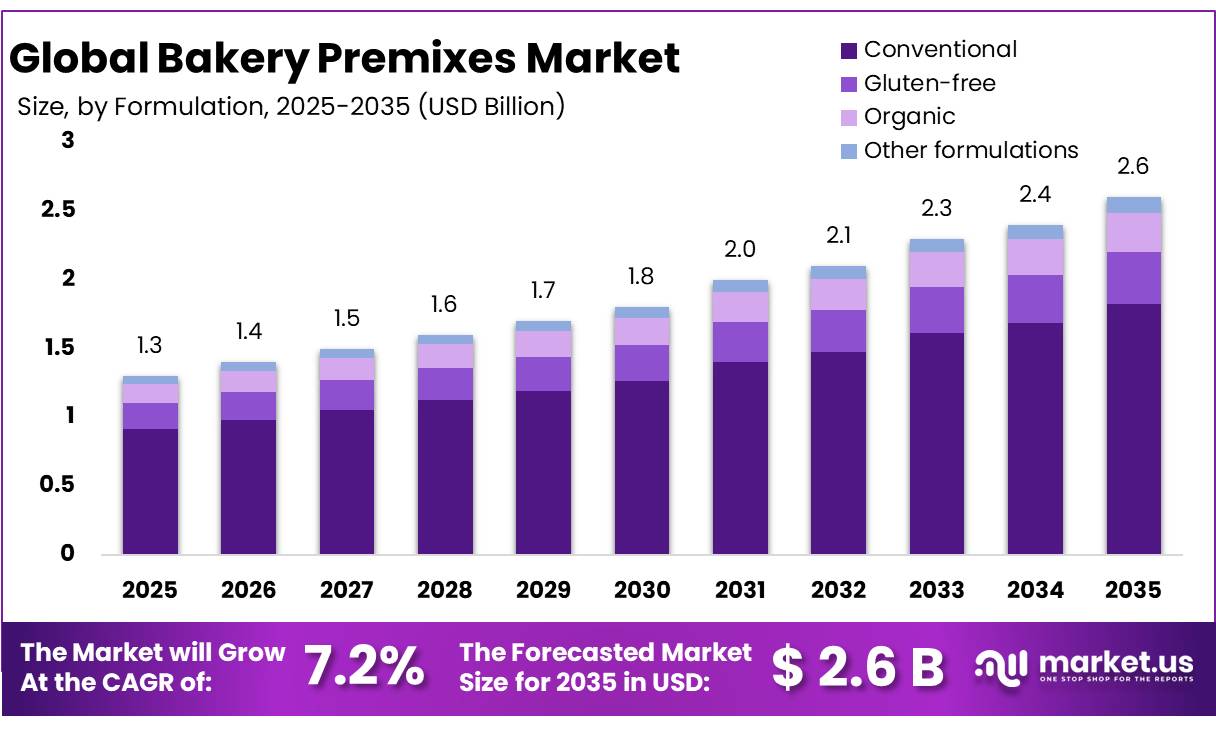
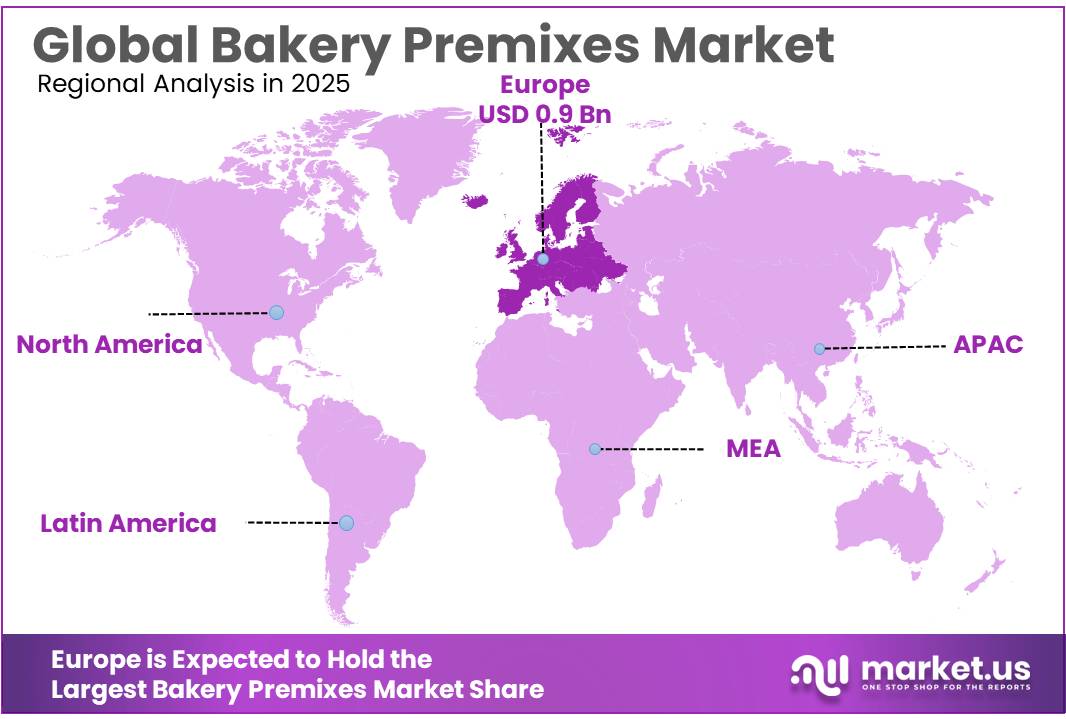
The Global Bakery Premixes Market size is expected to be worth around USD 2.6 Billion by 2035, from USD 1.3 Billion in 2025, growing at a CAGR of 7.2% during the forecast period from 2026 to 2035. In 2025, Europe held a dominant market position, capturing more than a 31.00% share, holding USD 0.9 Billion revenue.
Bakery premixes are prepared blends of ingredients used to simplify the production of bread, cakes, muffins, pastries, cookies, and other baked goods. Depending on the recipe, they may contain flour, sugar, leavening agents, milk solids, emulsifiers, enzymes, stabilizers, and flavoring ingredients. These blends help commercial bakeries, food manufacturers, hotels, and small baking businesses achieve consistent taste, texture, volume, and product quality while reducing ingredient handling and preparation time.
- The United States Department of Agriculture’s Economic Research Service reported that inflation-adjusted U.S. food spending reached USD 2.51 trillion in 2025, including USD 1.41 trillion spent on food away from home. This large foodservice sector provides relevant demand context for bakeries, restaurants, and commercial kitchens that value faster preparation and consistent results.
Demand is driven by the need to reduce preparation time, manage labor costs, minimize weighing errors, and maintain uniform output across multiple production batches. Premixes allow bakeries to standardize recipes and simplify training, particularly when supplying supermarkets, restaurant chains, hotels, and institutional kitchens. The United States Department of Agriculture reported that foodservice spending accounted for 56.3% of total U.S. food expenditure in 2025, indicating the importance of commercial food preparation in the wider food supply system.
Ingredient science is another important part of the industrial landscape. Baking formulations may use emulsifiers, leavening agents, dough conditioners, stabilizers, and enzymes to improve mixing, dough strength, volume, texture, and product consistency. The U.S. Food and Drug Administration identifies leavening agents as ingredients that help baked goods rise and describes how emulsifiers help ingredients mix and remain stable. Manufacturers must select ingredients according to the intended food application and applicable safety requirements.
Regulation creates both a compliance requirement and an opportunity for product differentiation. In the European Union, food additives must be authorised for specified uses, while food enzymes are subject to a separate safety and approval framework under Regulation (EC) No. 1332/2008. These requirements encourage premix manufacturers to maintain ingredient documentation, verify permitted uses, and adapt formulations to local rules.
Key Takeaways
- Bakery Premixes Market size is expected to be worth around USD 2.6 Billion by 2035, from USD 1.3 Billion in 2025, growing at a CAGR of 7.2%.
- Complete mix held a dominant market position, capturing more than a 55.00% share.
- Bread and roll premixes held a dominant market position, capturing more than a 46.00% share.
- Conventional held a dominant market position, capturing more than a 70.00% share.
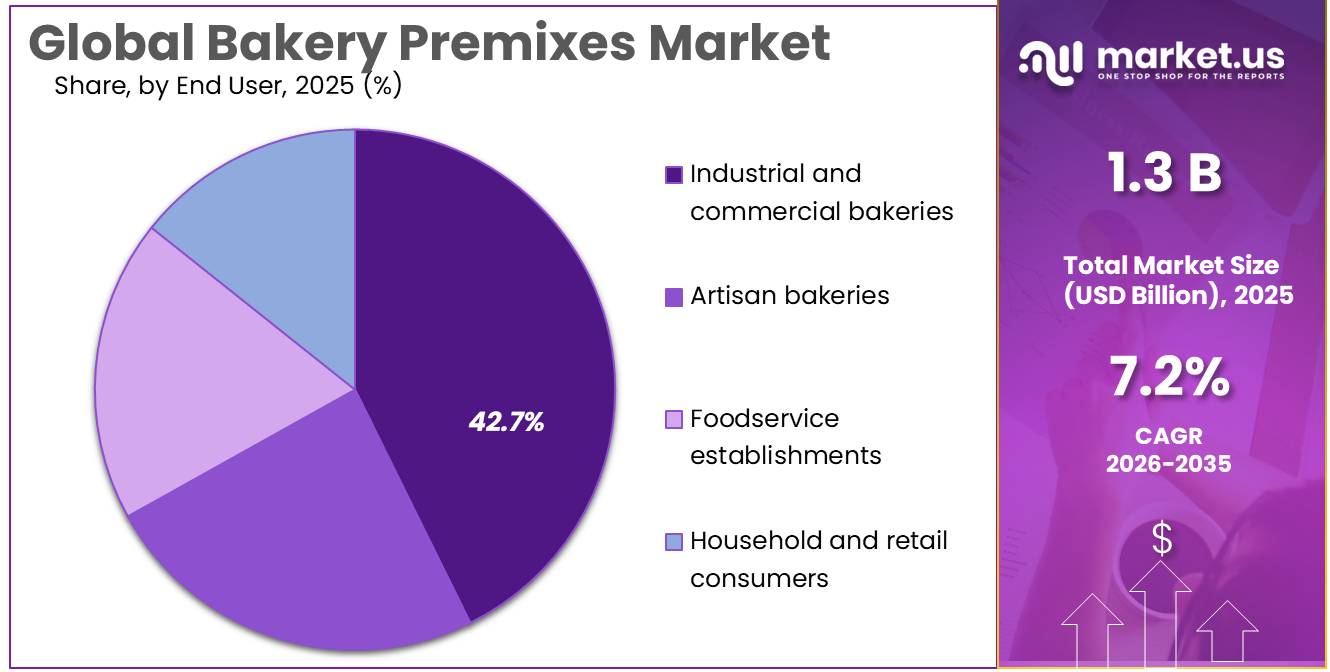
- Industrial and commercial bakeries held a dominant market position, capturing more than a 42.00% share.
- Distributors and wholesalers held a dominant market position, capturing more than a 35.00% share.
- Europe held a dominant position in the Bakery Premixes Market in 2025, accounting for 31.00% of the market, with a reported value of USD 0.9 billion.
By Type Analysis
Complete Mix Leads the Bakery Premixes Market with a 55.00% Share
In 2025, “Complete mix” held a dominant market position, capturing more than a 55.00% share. Complete mixes are widely used because they combine most of the essential ingredients required for baking in a single formulation, helping commercial bakeries and foodservice businesses simplify preparation and maintain consistent product quality.
These mixes reduce the need for separate ingredient measurement and can help control batch-to-batch variations in cakes, muffins, and other bakery products. Their convenience is particularly useful for businesses that need reliable output while managing preparation time and ingredient handling. The segment’s position is supported by the wider demand for efficient food preparation, although government sources do not provide a verified market-share figure for complete bakery premixes. For broader industry context, the U.S. Department of Agriculture Economic Research Service publishes data on U.S. food expenditure, including spending across food-at-home and food-away-from-home categories.
Dough-base mix is used in bakery production to simplify the preparation of products such as bread, rolls, pizza bases, and other dough-based goods. These mixes typically combine selected flour ingredients with functional components that support dough handling, fermentation, texture, and baking performance. For commercial bakeries, they can reduce the need for separate ingredient measurement and help maintain consistent results across production batches. In 2025, U.S. foodservice spending reached USD 1.41 trillion, representing 56.3% of total food expenditure, according to the U.S. Department of Agriculture Economic Research Service. This wider foodservice activity provides context for demand from restaurants and commercial kitchens, but it does not directly measure dough-base mix sales.
By Product Analysis
Bread and Roll Premixes Lead the Bakery Premixes Market with a 46.00% Share
In 2025, “Bread and roll premixes” held a dominant market position, capturing more than a 46.00% share. The segment benefits from demand for convenient and consistent bread production across commercial bakeries, foodservice outlets, and packaged-food manufacturers. These premixes combine selected baking ingredients to simplify dough preparation, reduce manual measuring, and support consistent texture, volume, and product quality.
They are useful for businesses producing bread and rolls in repeated batches, where stable results and efficient preparation are important. Demand is also supported by the role of bread as a staple food in many markets. The 46.00% share is the supplied market figure; government sources do not independently verify this specific segment share.
Cake and pastry premixes help bakeries prepare products with consistent texture, flavour, and appearance while reducing the need to measure each ingredient separately. They are used in cakes, pastries, cupcakes, and other sweet baked goods, making them suitable for commercial bakeries, cafés, hotels, and food manufacturers.
Demand is supported by the need for convenient preparation, repeatable recipes, and faster production. In 2025, the United States Department of Agriculture estimated annual wheat flour use at 126.6 pounds per person, reflecting the continued importance of wheat-based foods in the wider food supply. This figure provides general context for bakery ingredient demand and does not directly measure cake and pastry premix consumption.
By Formulation Analysis
Conventional Bakery Premixes Lead the Market with a 70.00% Share
In 2025, “Conventional” held a dominant market position, capturing more than a 70.00% share. Conventional bakery premixes remain widely used because they support familiar recipes, straightforward production methods, and consistent results across bread, cakes, pastries, and other baked products. Their established ingredient combinations make them suitable for commercial bakeries and food manufacturers that prioritise reliable quality, ease of preparation, and cost control.
These premixes also fit existing production processes, allowing manufacturers to maintain established recipes without major changes to equipment or staff procedures. The 70.00% share is based on the supplied market data and is not independently confirmed by a government source.
Gluten-free bakery premixes are developed for consumers who need or prefer baked products made without conventional gluten-containing ingredients. They commonly use alternative ingredients such as rice flour, corn starch, tapioca starch, and other gluten-free grains or starches to achieve suitable texture and structure. These mixes offer opportunities for manufacturers to serve specialised dietary needs while expanding product options across bread, cakes, and pastries.
In the United States, the Food and Drug Administration requires foods carrying a “gluten-free” claim to contain less than 20 parts per million (ppm) of gluten. In its product sampling programme, the agency tested 702 samples and reported that more than 99.5% complied with the applicable gluten limit. These figures demonstrate the importance of ingredient control, testing, and cross-contact prevention, rather than the size of the gluten-free premix market.
By End User Analysis
Industrial and Commercial Bakeries Lead the Market with a 42.00% Share
In 2025, “Industrial and commercial bakeries” held a dominant market position, capturing more than a 42.00% share. These bakeries use premixes to improve production efficiency, maintain consistent product quality, and reduce the time needed to measure and combine individual ingredients. Premixes are especially useful for large-scale production of bread, rolls, cakes, and pastries, where uniform results are important across repeated batches.
Standardised formulations also help manufacturers simplify staff training and manage ingredient handling across production lines. The segment’s leading position reflects the operational benefits of premixes for high-volume baking businesses. The 42.00% share is based on the supplied market data and is not independently verified by a government source. For wider industry context, the U.S. Department of Agriculture Economic Research Service provides official information on food expenditure in the United States, including spending on food consumed away from home.
Artisan bakeries use bakery premixes to simplify ingredient preparation while retaining control over recipes, product appearance, and baking methods. These businesses often focus on fresh bread, speciality rolls, pastries, and handcrafted cakes, creating opportunities for premix suppliers to offer tailored formulations for different flour types, textures, and production needs.
Premixes can help smaller bakeries reduce weighing time and maintain more consistent results without requiring extensive ingredient-handling processes. According to the U.S. Census Bureau, the United States had 9,219 retail bakery establishments in 2023, including 4,432 establishments with fewer than 5 employees. This shows the importance of small bakery businesses within the wider retail bakery sector, although the figures do not identify artisan bakeries separately or measure premix usage.
By Distribution Channel Analysis
Distributors and Wholesalers Lead Bakery Premix Distribution with a 35.00% Share
In 2025, “Distributors and wholesalers” held a dominant market position, capturing more than a 35.00% share. This channel plays an important role by connecting bakery premix manufacturers with industrial bakeries, commercial kitchens, independent bakeries, and foodservice businesses. Distributors and wholesalers can supply a range of premix formulations, manage repeat orders, and help customers access products without purchasing directly from several manufacturers.
Their established delivery networks also support inventory availability and regular supply, which is important for bakeries that depend on consistent ingredient quality and production schedules. The channel is particularly useful for serving customers across different locations and order sizes. The 35.00% share is based on the supplied market data and is not independently confirmed by a government source.
For supporting evidence, the U.S. Census Bureau reported that merchant wholesalers in the groceries category recorded approximately USD 85.4 billion in sales in October 2025. This figure reflects the broader grocery wholesale channel, not bakery premixes alone, but it illustrates the scale of established food distribution networks.
Direct sales allow bakery premix manufacturers to supply industrial bakeries, commercial baking businesses, and large foodservice customers without relying entirely on third-party distributors. This channel helps manufacturers understand customer requirements, recommend suitable formulations, provide technical support, and respond to specific production needs. Direct relationships can also support customised recipes, bulk purchasing arrangements, and regular supply agreements.
Key Market Segments
By Type
- Complete mix
- Dough-base mix
- Dough concentrates
By Product
- Bread and roll premixes
- Cake and pastry premixes
- Cookie and biscuit premixes
- Muffin premixes
- Other premixes
By Formulation
- Conventional
- Gluten-free
- Organic
- Other formulations
By End User
- Industrial and commercial bakeries
- Artisan bakeries
- Foodservice establishments
- Household and retail consumers
By Distribution Channel
- Direct sales
- Distributors and wholesalers
- Supermarkets and hypermarkets
- Specialty stores
- Online retail
- Other channels
Driver Analysis
Labor-Saving Production
Labor-saving production is the strongest 2026 demand driver because premixes compress weighing, sieving, ingredient staging, quality checks, and batch correction into one standardized addition, allowing industrial bakeries, in-store formats, and foodservice kitchens to operate with fewer skilled bakers and shorter training cycles.
An original 1,000-kg daily bread line using 8-12 separately weighed ingredients may require 45-75 minutes of formulation and staging per batch and generate 1-3% dosing or handling variation, while a pre-weighed premix can reduce staging time to 15-25 minutes and lower direct ingredient-handling touchpoints by 60-75%; at a fully loaded bakery labor rate of USD 15-30 per hour, two avoided skilled-labor hours per day creates USD 7,800-15,600 annual labor value before waste reduction.
Premix suppliers capture value by selling process reproducibility rather than flour alone: enzyme systems, emulsifiers, improvers, oxidants, stabilizers, and flavor components can be delivered as a consistent activity package, enabling centralized production of 20-50 store recipes from one regional facility. This alters customer economics from buying commodities by kilograms to purchasing assured batch yield, crumb structure, shelf life, and rapid product changeover, supporting an estimated +2.0 percentage-point short-term CAGR contribution across North America, Europe, Japan, and GCC markets.
Drivers Impact Analysis
| Driver | (~) % Impact on CAGR Forecast | Geographic Relevance | Impact Timeline |
|---|---|---|---|
| Labor-Saving Production | +2.0% | North America, EU, Japan, GCC | Short term (≤ 2 years) |
| QSR And Café Expansion | +1.7% | APAC, GCC, North America, LatAm | Medium term (2-4 years) |
| Healthier Recipe Reformulation | +1.5% | EU, North America, Australia, urban APAC | Medium term (2-4 years) |
| Gluten-Free Standardization | +1.3% | North America, EU, Australia, Japan | Medium term (2-4 years) |
| Fortified Bakery Demand | +1.1% | India, Africa, ASEAN, Middle East | Medium term (2-4 years) |
| Home And Micro-Bakery Growth | +0.9% | India, ASEAN, LatAm, Africa | Short term (≤ 2 years) |
Restraint Analysis
Restraint Impact Analysis
| Restraint | (~) % Impact on CAGR Forecast | Geographic Relevance | Impact Timeline |
|---|---|---|---|
| Commodity Cost Volatility | -1.9% | Global, import-dependent markets | Short term (≤ 2 years) |
| Clean-Label Resistance | -1.4% | EU, North America, Australia, Japan | Medium term (2-4 years) |
| Allergen Segregation Costs | -1.1% | North America, EU, GCC, APAC exports | Medium term (2-4 years) |
| EUDR Ingredient Traceability | -0.9% | EU, cocoa/palm supply corridors | Short term (≤ 2 years) |
| Artisan Scratch Competition | -0.8% | Europe, North America, urban APAC | Long term (≥ 4 years) |
| Fragmented Distribution Economics | -0.7% | India, ASEAN, Africa, LatAm | Medium term (2-4 years) |
Opportunity Analysis
Opportunity Impact Analysis
| Opportunity | (~) % Potential CAGR Upside | Geographic Relevance | Execution Window |
|---|---|---|---|
| Waste-Reduction Service Bundles | +2.0% | EU, North America, GCC, Japan | Short term (≤ 2 years) |
| Reformulation-as-a-Service | +1.8% | EU, North America, Australia, urban APAC | Medium term (2-4 years) |
| Fortification Platform Licensing | +1.5% | India, Africa, ASEAN, Middle East | Medium term (2-4 years) |
| Micro-Bakery Production Pods | +1.3% | India, ASEAN, Africa, LatAm | Medium term (2-4 years) |
| Traceable Cocoa-Palm Blends | +1.1% | EU, UK, North America, cocoa origins | Short term (≤ 2 years) |
| Regional Artisan Roll-Ups | +0.9% | Europe, North America, GCC, APAC cities | Long term (≥ 4 years) |
Challenges Analysis
Challenges Impact Analysis
| Challenge | (~) % CAGR Friction Drag | Geographic Relevance | Mitigation Horizon |
|---|---|---|---|
| Ingredient Volatility Management | -1.4% | Global, import-dependent markets | Long term (≥ 4 years) |
| Reformulation Performance Trade-offs | -1.2% | EU, North America, Australia, Japan | Medium term (2-4 years) |
| Allergen-Control Complexity | -1.0% | North America, EU, GCC, APAC exports | Long term (≥ 4 years) |
| Local Taste Fragmentation | -0.9% | India, ASEAN, Africa, LatAm, GCC | Long term (≥ 4 years) |
| Small-Batch Supply Economics | -0.8% | India, ASEAN, Africa, LatAm | Medium term (2-4 years) |
| Waste-Data Integration Gaps | -0.6% | EU, North America, Japan, GCC | Medium term (2-4 years) |
Geopolitical Impact Analysis
- The Food and Agriculture Organization of the United Nations reported that its Cereal Price Index rose 5.1% in September 2026 compared with August, while international wheat prices increased 6.3% during the month. The agency linked these movements partly to logistical constraints in the Black Sea region and dry weather affecting North American wheat planting.
Regional Insights
Key Regions and Countries Insights
- North America
- US
- Canada
- Europe
- Germany
- France
- The UK
- Spain
- Italy
- Rest of Europe
- Asia Pacific
- China
- Japan
- South Korea
- India
- Australia
- Rest of APAC
- Latin America
- Brazil
- Mexico
- Rest of Latin America
- Middle East & Africa
- GCC
- South Africa
- Rest of MEA
Key Players Analysis
Top Key Players Outlook
- Puratos Group
- Archer Daniels Midland Company
- Cargill, Incorporated
- Dawn Food Products, Inc.
- Kerry Group plc
- Bakels Group
- Lesaffre Group
- AB Mauri
- General Mills, Inc.
- Corbion N.V.
- CSM Ingredients
- Nisshin Seifun Group Inc.
- IREKS GmbH
- Zeelandia International
- Oy Karl Fazer Ab
Recent Developments
- Kerry’s 2025 results, published in February 2026, reported revenue of €6.758 billion, EBITDA of €1.208 billion, and volume growth of 3.0% from continuing operations.
- In February 2026, Lesaffre presented research on cassava-based sourdough, demonstrating its potential for gluten-free breads, brioches, baguettes, and cakes. The company reports 80 factories for yeast and ingredients and 53 Baking Centers™ worldwide, supporting formulation development and technical services for bakery customers.
Report Scope
| Report Features | Description |
|---|---|
| Market Value (2025) | USD 1.3 Bn |
| Forecast Revenue (2035) | USD 2.6 Bn |
| CAGR (2026-2035) | 7.2% |
| Base Year for Estimation | 2025 |
| Historic Period | 2020-2024 |
| Forecast Period | 2026-2035 |
| Report Coverage | Revenue Forecast, Market Dynamics, Competitive Landscape, Recent Developments |
| Segments Covered | By Type (Complete mix, Dough-base mix, Dough concentrates), By Product (Bread and roll premixes, Cake and pastry premixes, Cookie and biscuit premixes, Muffin premixes, Other premixes), By Formulation (Conventional, Gluten-free, Organic, Other formulations), By End Use (Industrial and commercial bakeries, Artisan bakeries, Foodservice establishments, Household and retail consumers), By Distribution Channel (Direct sales, Distributors and wholesalers, Supermarkets and hypermarkets, Specialty stores, Online retail, Other channels) |
| Regional Analysis | North America – US, Canada; Europe – Germany, France, The UK, Spain, Italy, Rest of Europe; Asia Pacific – China, Japan, South Korea, India, Australia, Singapore, Rest of APAC; Latin America – Brazil, Mexico, Rest of Latin America; Middle East & Africa – GCC, South Africa, Rest of MEA |
| Competitive Landscape | Puratos Group, Archer Daniels Midland Company, Cargill, Incorporated, Dawn Food Products, Inc., Kerry Group plc, Bakels Group, Lesaffre Group, AB Mauri, General Mills, Inc., Corbion N.V., CSM Ingredients, Nisshin Seifun Group Inc., IREKS GmbH, Zeelandia International, Oy Karl Fazer Ab |
| Customization Scope | Customization for segments, region/country-level will be provided. Moreover, additional customization can be done based on the requirements. |
| Purchase Options | We have three licenses to opt for: Single User License, Multi-User License (Up to 5 Users), Corporate Use License (Unlimited User and Printable PDF) |





































