


Report Overview
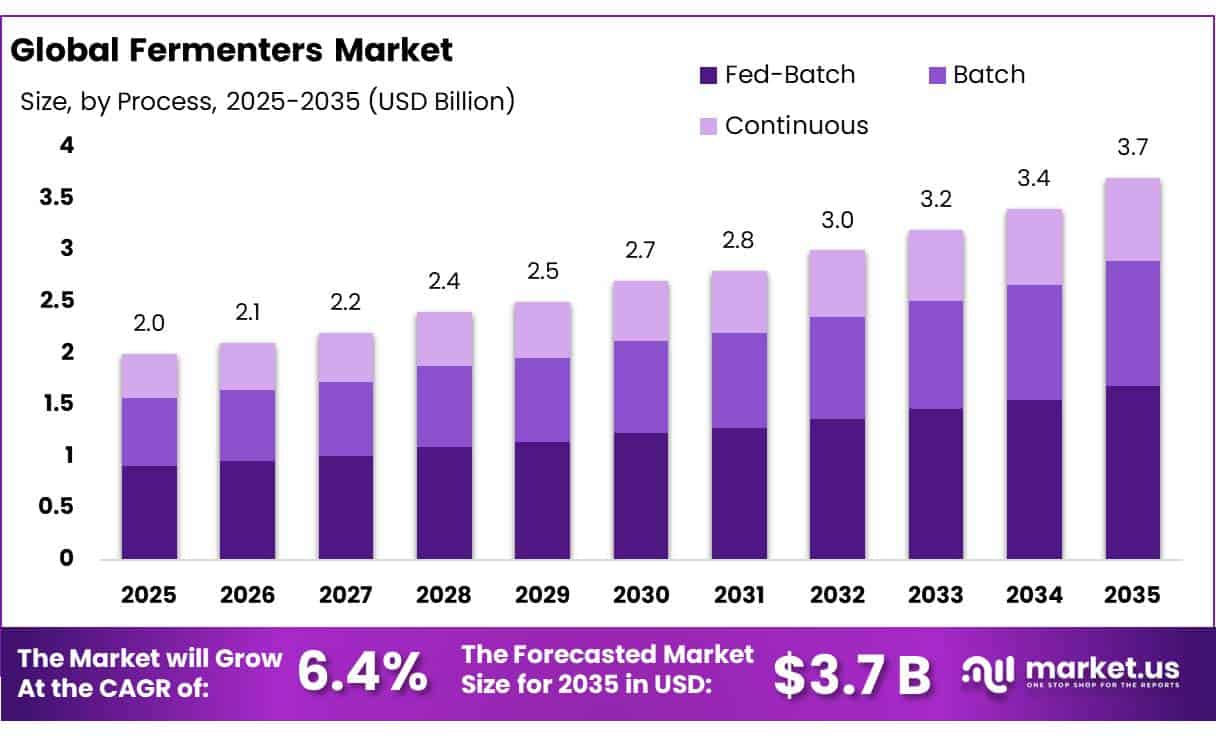
The Global Fermenters Market size is expected to be worth around USD 4.8 Billion by 2035, from USD 1.4 Billion in 2025, growing at a CAGR of 6.4% during the forecast period from 2026 to 2035. In 2025, North America held a dominant market position, capturing more than a 38.60% share, holding USD 0.5 Billion revenue.
Fermenters are closed processing vessels designed to maintain controlled conditions for microbial or cell-based production. They regulate temperature, pH, oxygen transfer, agitation, pressure, nutrient feeding, and sterility so microorganisms can convert biological feedstocks into pharmaceuticals, enzymes, organic acids, proteins, food ingredients, biofuels, and specialty chemicals.
- In the United States, BioMADE announced a US$132 million demonstration-scale biomanufacturing facility in Minnesota in 2025. The 122,000-square-foot facility is designed with 2 industrial fermenters of 25,000 liters each, providing companies with infrastructure to scale processes toward commercial manufacturing.
Another industrial capacity expansion is occurring in Iowa. BioMADE announced a US$40 million pilot-scale biomanufacturing facility covering approximately 15,000 square feet and including fermenters with capacities of up to 10,000 liters. The facility is intended to support agricultural bioproducts, chemicals, food ingredients, and downstream processing, showing how shared fermentation infrastructure is becoming an important bridge between laboratory innovation and industrial production.
- Government-supported bioeconomy programs are another strong driving factor. The Circular Bio-based Europe Joint Undertaking allocated €172 million across 13 funding topics in its 2025 program, including €14 million specifically for cost-effective and robust continuous biotechnology-based processes. Such programs can support advances in continuous fermentation, process intensification, automation, strain performance, and downstream integration, all of which raise the technical requirements placed on modern fermenters.
Demand is also supported by the broader biotechnology and pharmaceutical manufacturing base. According to the European Commission, biotechnology contributes almost €40 billion to the EU economy, with more than 80% coming from health biotechnology. In 2024, biological medicine sales reached €95 billion, representing 41% of pharmaceutical spending in the EU.
Chemical-industry transition toward renewable feedstocks provides another growth route. Cefic reports that the European chemical industry generated about €635 billion in turnover and employed 1.2 million people, while bio-based production is estimated to have a 3.6% compound annual growth rate.
Future opportunities are expected to develop around larger fermenter volumes, modular plants, continuous fermentation, automated cleaning and sterilization, advanced sensors, digital process control, and flexible multi-product facilities. Europe’s 2026 bioeconomy scale-up program illustrates this direction: 24 projects involving 332 beneficiaries from 32 countries received €172 million, including €68 million for industrial-scale flagship projects. Circular Bio-based Europe
Key Takeaways
- Fermenters Market size is expected to be worth around USD 4.8 Billion by 2035, from USD 1.4 Billion in 2025, growing at a CAGR of 6.4%.
- Fed-Batch held a dominant market position, capturing more than a 45.00% share.
- Automatic held a dominant market position, capturing more than a 65.00% share.
- Reusable Fermenters held a dominant market position, capturing more than a 68.00% share.
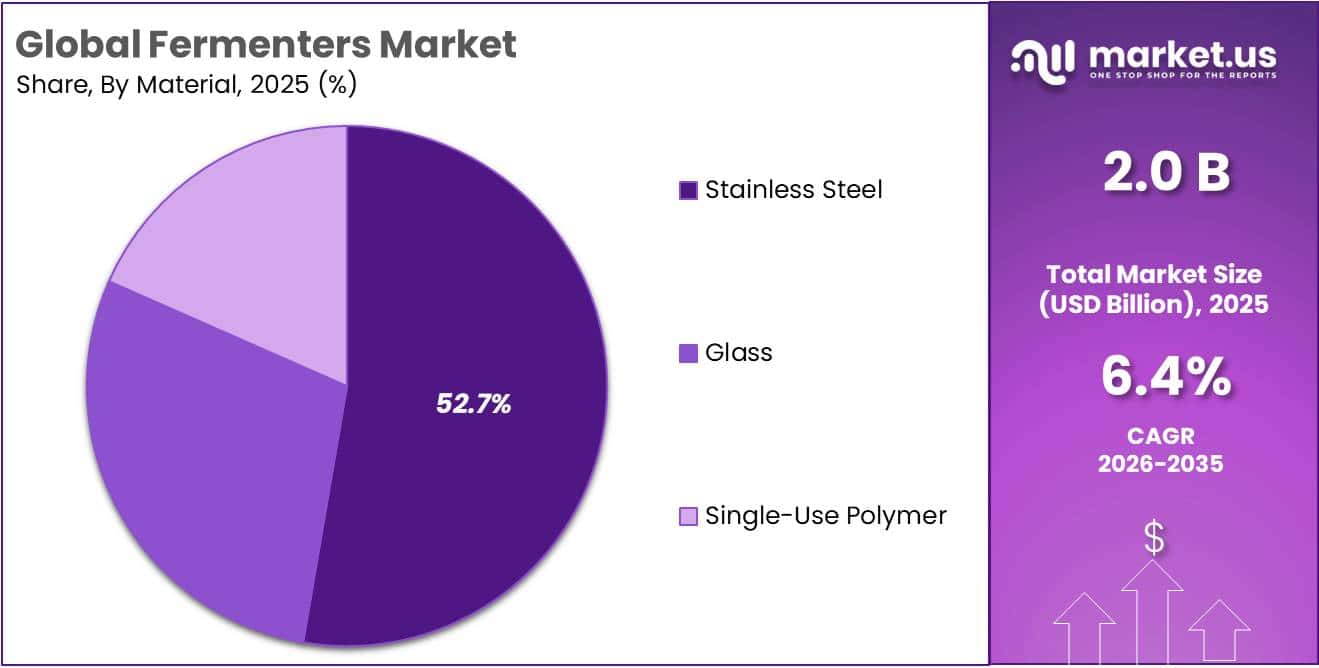
- Stainless Steel held a dominant market position, capturing more than a 52.00% share.
- Stirred-Tank Fermenters held a dominant market position, capturing more than a 55.00% share.
- Pharmaceuticals & Biotechnology held a dominant market position, capturing more than a 46.00% share.
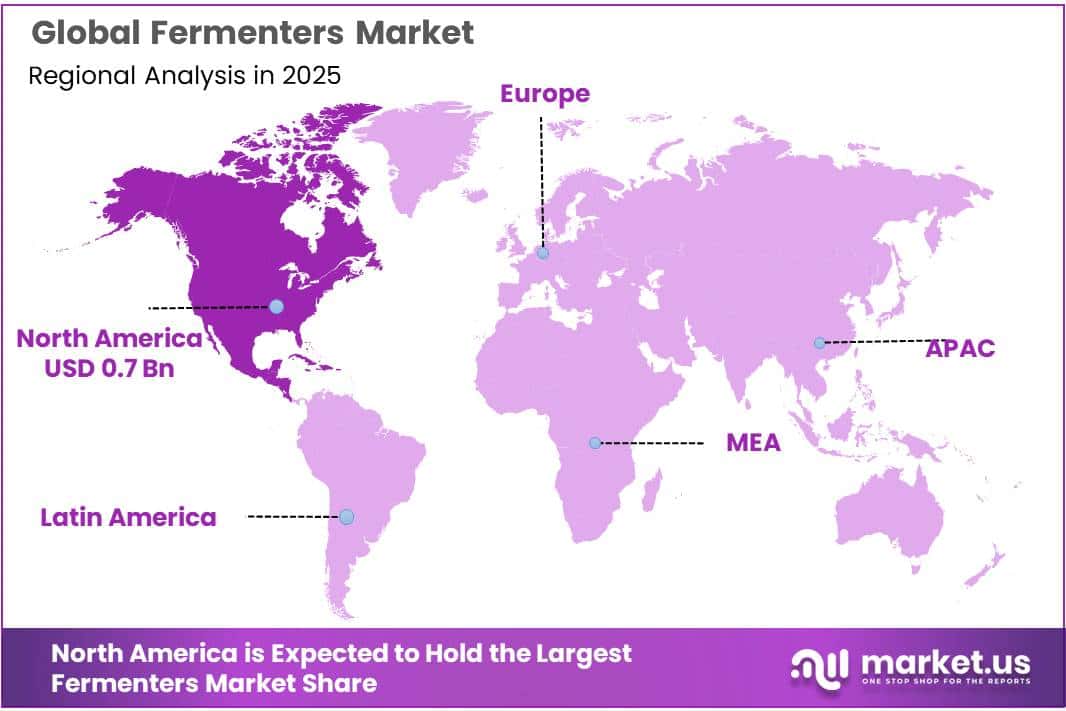
- North America held a dominant market position, capturing more than a 38.50% share and generating approximately USD 0.75 billion.
By Process Analysis
Fed-Batch Leads the Fermenters Market with More Than 45.00% Share Due to Better Nutrient Control and Higher Product Yield
In 2025, “Fed-Batch” held a dominant market position, capturing more than a 45.00% share. Fed-batch processing remains widely preferred in industrial fermenters because nutrients can be supplied gradually as microorganisms grow. This approach helps operators prevent excessive substrate accumulation, control oxygen demand, and extend productive fermentation periods.
Recent government-hosted scientific data also demonstrate the production benefits of this process. A 2026 study indexed by the U.S. National Library of Medicine’s PubMed database reported that optimized fed-batch fermentation of engineered Corynebacterium glutamicum delivered a 3.93-fold increase in production compared with the reference process. The optimized operation used 500 rpm agitation and achieved a heparosan concentration of 8.02 g/L, showing how controlled feeding and oxygen management can improve fermenter productivity.
Batch fermentation continues to hold an important position in the fermenters industry because the complete nutrient medium is generally loaded before fermentation begins. The process is comparatively straightforward to operate, clean, sterilize, validate, and repeat, making it useful for specialty chemicals, food ingredients, alcohol production, microbial products, research-scale production, and processes where contamination control is a major requirement.
By Operation Mode Analysis
Automatic Operation Leads the Fermenters Market with More Than 65.00% Share as Manufacturers Shift Toward Real-Time Process Control
In 2025, “Automatic” held a dominant market position, capturing more than a 65.00% share. Automatic fermenters are widely preferred because they can continuously control important parameters such as temperature, pH, dissolved oxygen, agitation, aeration, nutrient feeding, and foam formation with limited operator intervention. This makes the equipment particularly useful in pharmaceutical fermentation, enzyme production, recombinant proteins, industrial biotechnology, and high-value biochemical manufacturing, where small process deviations can affect final product quality.
The move toward automated fermentation is also supported by recent government-hosted scientific evidence. A 2026 study indexed by the U.S. National Library of Medicine demonstrated an automated Raman-based fermentation system that maintained glucose at 20 g/L using a real-time PID-controlled feeding system. The monitoring model achieved prediction errors of 2.7 g/L for glucose and 5.3 g/L for malic acid, showing how modern sensor-based fermenters can automatically react to changing microbial demand rather than relying only on manual sampling.
Semi-Automatic fermenters continue to serve laboratories, pilot plants, specialty fermentation facilities, and smaller industrial production lines where operators prefer a combination of automated controls and manual supervision. These systems can automatically regulate selected parameters such as temperature, agitation, pH, or aeration while allowing technicians to handle activities such as sampling, nutrient addition, inoculation, harvesting, and process adjustments.
By Product Type Analysis
Reusable Fermenters Lead with More Than 68.00% Share as Large-Scale Producers Prioritize Durability and Long Production Runs
In 2025, “Reusable Fermenters” held a dominant market position, capturing more than a 68.00% share. Reusable fermenters remain widely used in commercial biotechnology, pharmaceutical, food, enzyme, chemical, and bio-based material production because stainless-steel vessels can support repeated production cycles, high-pressure operation, steam sterilization, and large working volumes. Their long operating life also makes them suitable for facilities running standardized fermentation processes continuously over several years.
Government-supported U.S. biomanufacturing infrastructure highlights the importance of large reusable fermentation systems. Manufacturing.gov identifies BioMADE as a Manufacturing USA institute focused on moving biotechnology products from laboratory development toward commercial-scale manufacturing. BioMADE’s current pilot-plant network includes fermentation capacities of 25,000 liters in Minnesota, 10,000 liters in Iowa, and 4,000 liters in California, showing the scale required for industrial bio-based production.
Single-Use Fermenters are becoming increasingly important in biopharmaceutical, vaccine, recombinant protein, plasmid DNA, and specialty microbial applications where rapid batch changeover and lower cleaning requirements are valuable. Unlike permanent stainless-steel vessels, these systems use disposable product-contact components, reducing the need for extensive cleaning validation and helping operators lower cross-contamination risk when manufacturing several products in the same facility.
By Material Analysis
Stainless Steel Leads the Fermenters Market with More Than 52.00% Share Due to Its Durability
In 2025, “Stainless Steel” held a dominant market position, capturing more than a 52.00% share. Stainless steel remains the preferred material for industrial fermenters because it provides strong corrosion resistance, mechanical strength, cleanability, and compatibility with repeated sterilization cycles. These properties make stainless-steel vessels suitable for pharmaceutical fermentation, industrial biotechnology, enzymes, food ingredients, biofuels, and specialty biochemical production where equipment is operated repeatedly under controlled temperature and pressure conditions.
The material also supports large commercial fermentation systems because stainless-steel vessels can be fabricated at significantly higher capacities than typical laboratory glass units. The U.S. Department of Energy has highlighted stainless-steel tanks at the National Renewable Energy Laboratory’s Integrated Biorefinery Research Facility, where biological processes are used to convert biomass-derived sugars into fuels through fermentation.
Glass fermenters continue to play an important role in research laboratories, universities, pharmaceutical development facilities, and pilot-scale biotechnology operations. Their main advantage is visibility, as operators can directly observe mixing, foaming, biomass formation, and changes in the fermentation medium. Glass vessels are also useful for process development because they can be cleaned, sterilized, and reused while supporting precise monitoring of temperature, pH, dissolved oxygen, and agitation.
By Fermenter Type Analysis
Stirred-Tank Fermenters Lead with More Than 55.00% Share Due to Strong Mixing and Easy Industrial Scale-Up
In 2025, “Stirred-Tank Fermenters” held a dominant market position, capturing more than a 55.00% share. Stirred-tank fermenters remain widely used because their impellers provide effective mixing of microorganisms, nutrients, gases, and process liquids. They also allow close control over oxygen transfer, temperature, pH, and feeding conditions. These characteristics make the design suitable for enzymes, proteins, bio-based chemicals, food ingredients, pharmaceuticals, and other industrial fermentation products.
Government-backed U.S. biomanufacturing expansion demonstrates the importance of this reactor configuration. In April 2025, BioMADE announced a California pilot facility covering nearly 25,000 square feet with multiple aerated stirred tanks reaching 4,000 liters. The plant also includes centrifugation, membrane filtration, evaporation, and spray drying capabilities, supporting the movement of fermentation processes from development toward commercial manufacturing.
Tower Fermenters remain useful for fermentation processes where efficient gas-liquid contact is required without intensive mechanical agitation. These tall reactor designs generally rely on rising gas to circulate the fermentation medium, making them suitable for shear-sensitive microorganisms, fungal cultures, wastewater biotechnology, and certain aerobic fermentation applications.
By Application Analysis
Pharmaceuticals & Biotechnology Lead with More Than 46.00% Share as Biologics and Advanced Medicines Expand
In 2025, “Pharmaceuticals & Biotechnology” held a dominant market position, capturing more than a 46.00% share. Fermenters are heavily used across this application for producing therapeutic proteins, vaccines, enzymes, antibiotics, recombinant products, cell-based materials, and other biological compounds. Pharmaceutical producers prefer tightly controlled fermentation because temperature, pH, oxygen, agitation, and nutrient supply can directly affect product quality, consistency, and final yield.
Government data supports the strength of the pharmaceutical and biotechnology manufacturing environment. In 2025, the U.S. Food and Drug Administration approved 46 novel drugs, including new molecular entities and therapeutic biological products. Of these approvals, 23 received orphan-drug designation, showing continued activity in specialized and biologically complex medicines. (fda.gov)
Food & Beverages remains an important application area for fermenters because microbial processing is widely used in dairy products, fermented vegetables, beverages, ingredients, probiotics, flavors, organic acids, and functional proteins. Fermenters allow food processors to maintain stable microbial activity while controlling contamination, acidity, temperature, oxygen exposure, and processing time.
Key Market Segments
By Process
- Batch
- Fed-Batch
- Continuous
By Operation Mode
- Semi-Automatic
- Automatic
By Product Type
- Single-Use Fermenters
- Reusable Fermenters
By Material
- Stainless Steel
- Glass
- Single-Use Polymer
By Fermenter Type
- Stirred-Tank Fermenters
- Tower Fermenters
- Airlift/Gas-Lift Fermenters
- Deep-Jet Fermenters
- Others
By Application
- Food & Beverages
- Pharmaceuticals & Biotechnology
- Personal Care & Cosmetics
- Chemicals & Biofuels
- Academic & Research
- Others
Driver Analysis
Biologics, Biosimilars and Vaccines
The strongest fermenter demand pool comes from the expanding number and diversity of biological products, because each additional monoclonal antibody, recombinant protein, vaccine or cell-derived therapeutic requires upstream development vessels, seed trains and GMP production capacity before commercial approval. FDA’s CDER approved 50 novel drugs in 2024 and 46 in 2025, while FDA’s 2024 biologics list included cell and gene therapies such as Ryoncil, Kebilidi, Aucatzyl and Tecelra; in parallel, EMA recommended 114 medicines in 2024, including 46 new active substances and 28 biosimilars.
The installed-base effect is larger than approvals alone: manufacturers need multiple scales from laboratory systems through 1,000–2,000 L single-use production and 6,000–25,000 L stainless-steel trains, plus redundant capacity for validation, campaign changeover and supply assurance; Lonza, for example, markets a network spanning 1 kL to 25 kL. Biosimilars reinforce volume economics because lower-priced competition broadens patient access and increases the importance of high-yield, repeatable batches, while novel and orphan biologics favor smaller flexible systems; this mix supports both unit growth and a richer product mix in sensors, automation and controls.
Accordingly, the driver contributes an estimated +2.1 percentage points to the 2026–2031 fermenter CAGR, with the largest near-term value capture in GMP equipment, high-integrity agitation and gas-transfer systems, and validated control architectures rather than commodity vessels alone.
Drivers Impact Analysis
| Driver | (~) % Impact on CAGR Forecast | Geographic Relevance | Impact Timeline |
|---|---|---|---|
| Biologics, biosimilars and vaccines | +2.1% | North America, EU, South Korea, China, India | Short term (≤ 2 years) |
| CDMO capacity build-out | +1.5% | US, Switzerland, Denmark, South Korea | Short term (≤ 2 years) |
| Single-use and modular systems | +1.2% | North America and EU core; APAC scale-up | Medium term (2–4 years) |
| Intensified, digital bioprocessing | +1.0% | US and EU core; Japan, South Korea, Singapore | Medium term (2–4 years) |
| Precision-fermented ingredients | +0.7% | US, EU, Singapore, China | Medium term (2–4 years) |
| Bioeconomy localization policies | +0.7% | India, EU, China, Africa; global spill-over | Long term (≥ 4 years) |
Restraint Analysis
High CapEx and Financing
Fermenter demand is restrained first by the mismatch between long qualification cycles and the cost of capital: the US federal-funds target remained 3.50–3.75% entering 2026, while the ECB deposit rate was 2.00% from June 2025, so biotechnology sponsors still faced materially higher project hurdle rates than in the pre-2022 funding environment. A commercial installation is not merely a vessel purchase; buyers must finance cleanrooms, utilities, media preparation, downstream recovery, automation, containment, qualification and working capital, with an analyst-modeled all-in multiplier of roughly 4–8 times the bare fermenter package and 18–36 months from approval to validated operation for complex GMP projects.
Capital scarcity is especially severe outside large biopharma: global investment in fermentation companies was only about $148 million in the first half of 2025, while India’s proposed BioE3 centres require government anchor funding for CapEx and industry co-funding of operating costs—direct evidence that shared infrastructure is needed to overcome private financing friction.
This pushes startups toward toll manufacturing, leased pilots and used equipment, delays purchase orders until offtake or clinical milestones are secured, and shifts supplier revenue from high-value greenfield systems toward smaller retrofits; the resulting order deferrals, cancellations and pricing pressure justify a -1.5-percentage-point short-term CAGR deduction, concentrated in precision-fermentation and emerging-market projects rather than well-capitalized global CDMOs.
Restraint Impact Analysis
| Restraint | (~) % Impact on CAGR Forecast | Geographic Relevance | Impact Timeline |
|---|---|---|---|
| High CapEx and financing | -1.5% | North America, EU; emerging APAC | Short term (≤ 2 years) |
| Scale-up and yield risk | -1.2% | Global; food and industrial biotech core | Medium term (2–4 years) |
| GMP and validation burden | -1.0% | North America, EU, Japan | Short term (≤ 2 years) |
| Single-use supply dependence | -0.9% | North America, EU, APAC hubs | Medium term (2–4 years) |
| Tariffs, metals and energy | -0.8% | US and EU core; global spill-over | Short term (≤ 2 years) |
| Skilled-workforce shortage | -0.7% | US, EU, India, Singapore | Long term (≥ 4 years) |
Opportunity Analysis
Shared Scale-Up Hubs
The mismatch is visible in mapped infrastructure: Europe had 108 listed fermentation facilities and about 34.2 million L, the Americas 96 facilities and 14.3 million L, and APAC only 42 facilities and 1.8 million L, while 59% of platform users searched for vessels above 20,000 L although fewer than 25% of facilities offered that scale; only 28% and 34% of facilities supported demonstration and commercial work, respectively. Bio Base Europe’s EUR 34 million program shows an investable template—a 75,000 L demonstrator commissioned in 14 months plus a 15,000 L line and three 1,500 L units, tripling site capacity—while a US proposal has called for roughly $1.2 billion across about 12 pilot facilities.
An equipment consortium could supply standardized trains at reduced upfront margin in return for 7–10-year availability, service and consumables contracts, target 65–75% utilization across multiple tenants and charge milestone-based fees from process transfer through GMP or food-grade validation; pooling demand can cut customer acquisition cost by an estimated 20–30% and convert episodic CapEx into recurring revenue representing 25–35% of each hub’s lifetime vendor value. Capturing even 8–12 globally underserved hubs by 2031, each anchored by 25,000–100,000 L of new capacity and associated seed, control and downstream systems, could add approximately +1.5 percentage points to market CAGR, particularly in North America, India and APAC where the scale-up gap is larger than the installed asset base.
Opportunity Impact Analysis
| Opportunity | (~) % Potential CAGR Upside | Geographic Relevance | Execution Window |
|---|---|---|---|
| Shared scale-up hubs | +1.5% | North America, India, APAC | Short term (≤ 2 years) |
| Brownfield retrofit kits | +1.3% | Europe, US, China, Brazil | Short term (≤ 2 years) |
| Fermenter-as-a-service | +1.2% | US, EU, India, Singapore | Medium term (2–4 years) |
| Gas and C1 fermentation | +1.1% | US, EU, Middle East, China | Long term (≥ 4 years) |
| Autonomous bioprocess layer | +0.9% | North America, EU, Japan, South Korea | Medium term (2–4 years) |
| Regional vaccine pods | +0.8% | Africa, LATAM, South Asia | Medium term (2–4 years) |
Challenges Analysis
Scale Translation Variability
Fermentation processes remain biologically and hydrodynamically non-linear across scale, so a strain or cell line proven at 2–50 L cannot be assumed to reproduce titre, morphology, glycosylation or impurity profiles at 2,000–20,000 L; increasing diameter changes mixing time, hydrostatic pressure and gas residence, while oxygen transfer, CO2 stripping, heat removal, shear and foam cannot all be held constant using one scale-up rule.
Commercial teams therefore optimize competing parameters volumetric mass-transfer coefficient, power per unit volume, impeller tip speed, superficial gas velocity and mixing time through engineering batches and computational or scale-down models, adding an analyst-estimated 4–10 development runs, 6–15 months and 8–18% to process-transfer cost for first-of-kind microbial or intensified processes.
This does not stop fermenter purchases, but it encourages conservative vessel sizing, redundant pilot assets and delayed transition to commercial trains, while performance-guarantee disputes pressure OEM engineering margins; sustaining growth requires scalable geometry families, predictive oxygen-transfer and mixing models, high-frequency off-gas and spectroscopy data, and design-of-experiments libraries that reduce each new scale step to one or two confirmatory runs.
Until such model transfer becomes robust across organisms and products, recurring scale-translation work removes about 1.2 percentage points from maximum CAGR, with the heaviest penalty in high-cell-density microbial fermentation, perfusion and precision-fermented foods.
Challenges Impact Analysis
| Challenge | (~) % CAGR Friction Drag | Geographic Relevance | Mitigation Horizon |
|---|---|---|---|
| Scale Translation Variability | -1.2% | Global bioprocessing hubs | Long term (≥ 4 years) |
| Contamination Control Burden | -1.1% | North America, EU, APAC | Medium term (2–4 years) |
| Consumables Supply Fragility | -0.9% | North America, EU, APAC | Medium term (2–4 years) |
| Data Integration Complexity | -0.8% | US, EU, Japan, South Korea | Medium term (2–4 years) |
| Technology Transfer Friction | -0.8% | Global CDMO corridors | Medium term (2–4 years) |
| Specialist Talent Scarcity | -0.7% | US, EU, India, Singapore | Long term (≥ 4 years) |
Geopolitical Impact Analysis
Ongoing Wars Raise Energy, Shipping and Equipment Costs for Fermenter Manufacturers
The ongoing Middle East conflict and continued Russia–Ukraine war are creating cost and supply-chain pressure across the global fermenters industry. Fermenter manufacturing depends on stainless steel, electronic controls, pumps, sensors, valves, and energy-intensive fabrication, making the sector sensitive to changes in energy and transportation costs. In 2026, UNCTAD reported that disruption around the Strait of Hormuz affected a route carrying nearly one-quarter of global seaborne oil trade, while ship transits through the Strait temporarily fell by about 95%.
European manufacturers also remain exposed to energy volatility. European Commission data show that average EU gas prices reached €36/MWh in 2025, around 5% higher than in 2024, partly following the end of Russian pipeline gas transit through Ukraine. Russian gas exports to the EU also declined by 31% during 2025. Higher energy and logistics costs can delay bioprocessing capacity additions, but they are also encouraging fermenter suppliers to develop energy-efficient agitation, automated controls, regional sourcing, and modular systems that reduce dependence on disrupted international supply chains.
Regional Insights
North America Leads the Fermenters Market, While Asia Pacific Builds Strong Biomanufacturing Capacity
In 2025, North America held a dominant market position, capturing more than a 38.50% share and generating approximately USD 0.75 billion. The region benefits from a mature pharmaceutical sector, biotechnology research, and growing domestic biomanufacturing investment. In Canada, government investment in the biomanufacturing, vaccine, and therapeutics ecosystem has exceeded C$2.5 billion across 43 projects.
- In 2025, Canada also committed C$60 million toward a C$220 million manufacturing expansion that will raise sterile injectable capacity to about 130 million units annually. These investments support demand for controlled fermentation, upstream bioprocessing, and related production equipment.
China’s Ministry of Industry and Information Technology reported in 2025 that its core biomanufacturing industries exceeded RMB 800 billion, while national fermentation capacity represented more than 70% of global capacity. Government data also showed that the broader biomanufacturing industry reached approximately RMB 1.1 trillion, with more than 40 pilot-scale platforms being established.
Key Regions and Countries Insights
- North America
- US
- Canada
- Europe
- Germany
- France
- The UK
- Spain
- Italy
- Rest of Europe
- Asia Pacific
- China
- Japan
- South Korea
- India
- Australia
- Rest of APAC
- Latin America
- Brazil
- Mexico
- Rest of Latin America
- Middle East & Africa
- GCC
- South Africa
- Rest of MEA
Key Players Analysis
Sartorius AG holds a strong position in fermenters and bioprocess equipment through its Bioprocess Solutions division, covering fermentation, cell cultivation, filtration, and fluid management. In 2025, the company generated €3.538 billion in sales, while Bioprocess Solutions contributed €2.865 billion. Underlying EBITDA reached €1.052 billion, with a 29.7% margin.
Thermo Fisher Scientific supports the fermenters market through its HyPerforma and DynaDrive bioreactor platforms used in batch, fed-batch, perfusion, vaccine, and biopharmaceutical production. In 2025, Thermo Fisher generated US$44.56 billion in revenue, increasing 4% from the previous year, while adjusted earnings reached US$22.87 per share.
Danaher Corporation participates strongly in fermentation and bioprocessing through Cytiva and Pall, supplying bioreactors, filtration, fluid-management, and downstream processing systems. In 2025, Danaher generated US$24.568 billion in total sales, including US$7.293 billion from its Biotechnology segment. Biotechnology operating profit reached US$1.864 billion, with an operating margin of 25.6%.
Top Key Players Outlook
- Sartorius AG
- Thermo Fisher Scientific Inc.
- Danaher Corporation (Cytiva and Pall)
- Merck KGaA
- Eppendorf SE
- Getinge AB
- Bioengineering AG
- INFORS HT
- ABEC, Inc.
- PBS Biotech, Inc.
- ZETA Holding GmbH
- Solaris Biotech Solutions
- BBI-Biotech GmbH
- Distek, Inc.
- Praj HiPurity Systems Limited
Recent Developments
- In 2025, Getinge generated SEK 34.97 billion in group sales, while its Life Science business contributed SEK 4.50 billion and recorded 4.1% organic growth.
- In 2025, Eppendorf SE generated €924.0 million in revenue, invested €60.9 million in research and development, and reported a 10.3% EBIT margin.
Report Scope
| Report Features | Description |
|---|---|
| Market Value (2025) | USD 2.0 Bn |
| Forecast Revenue (2035) | USD 3.7 Bn |
| CAGR (2026-2035) | 6.4% |
| Base Year for Estimation | 2025 |
| Historic Period | 2020-2024 |
| Forecast Period | 2026-2035 |
| Report Coverage | Revenue Forecast, Market Dynamics, Competitive Landscape, Recent Developments |
| Segments Covered | By Process (Batch, Fed-Batch, Continuous), By Operation Mode (Semi-Automatic, Automatic), By Product Type (Single-Use Fermenters, Reusable Fermenters), By Material (Stainless Steel, Glass, Single-Use Polymer), By Fermenter Type (Stirred-Tank Fermenters, Tower Fermenters, Airlift/Gas-Lift Fermenters, Deep-Jet Fermenters, Others), By Application (Food & Beverages, Pharmaceuticals & Biotechnology, Personal Care & Cosmetics, Chemicals & Biofuels, Academic & Research, Others) |
| Regional Analysis | North America – US, Canada; Europe – Germany, France, The UK, Spain, Italy, Rest of Europe; Asia Pacific – China, Japan, South Korea, India, Australia, Singapore, Rest of APAC; Latin America – Brazil, Mexico, Rest of Latin America; Middle East & Africa – GCC, South Africa, Rest of MEA |
| Competitive Landscape | Sartorius AG, Thermo Fisher Scientific Inc., Danaher Corporation (Cytiva and Pall), Merck KGaA, Eppendorf SE, Getinge AB, Bioengineering AG, INFORS HT, ABEC, Inc., PBS Biotech, Inc., ZETA Holding GmbH, Solaris Biotech Solutions, BBI-Biotech GmbH, Distek, Inc., Praj HiPurity Systems Limited |
| Customization Scope | Customization for segments, region/country-level will be provided. Moreover, additional customization can be done based on the requirements. |
| Purchase Options | We have three licenses to opt for: Single User License, Multi-User License (Up to 5 Users), Corporate Use License (Unlimited User and Printable PDF) |





































