


Report Overview
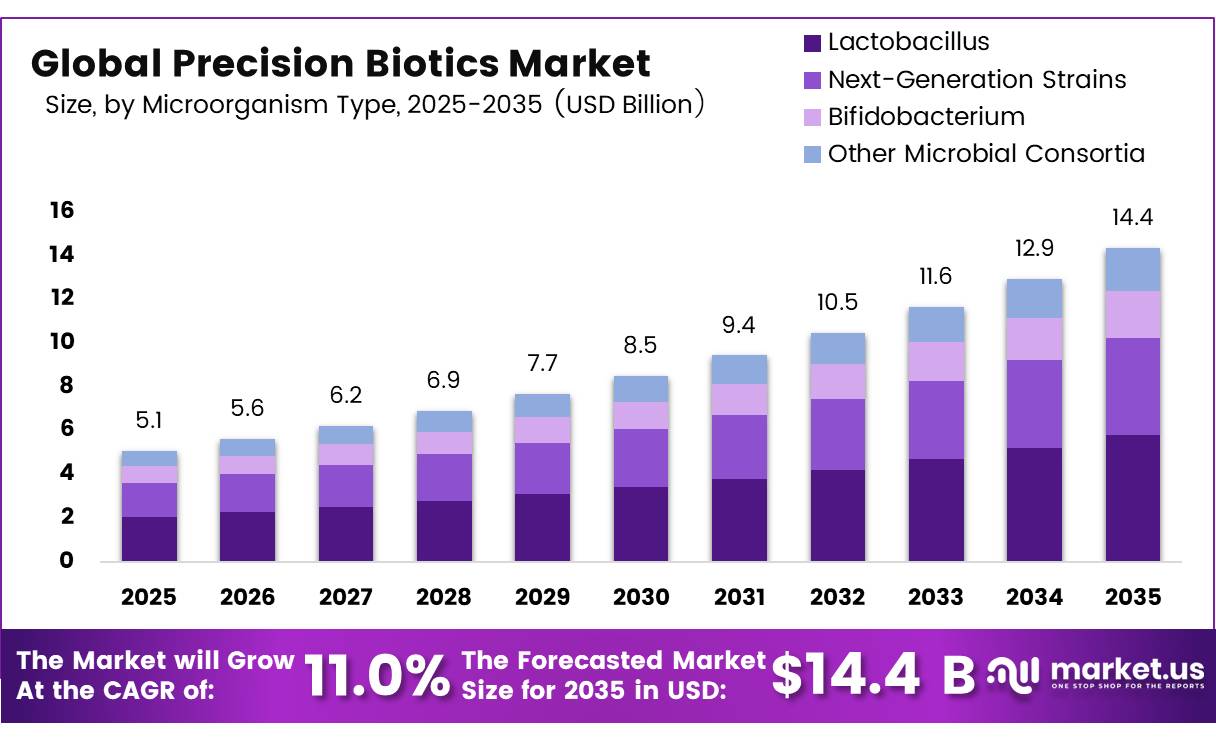
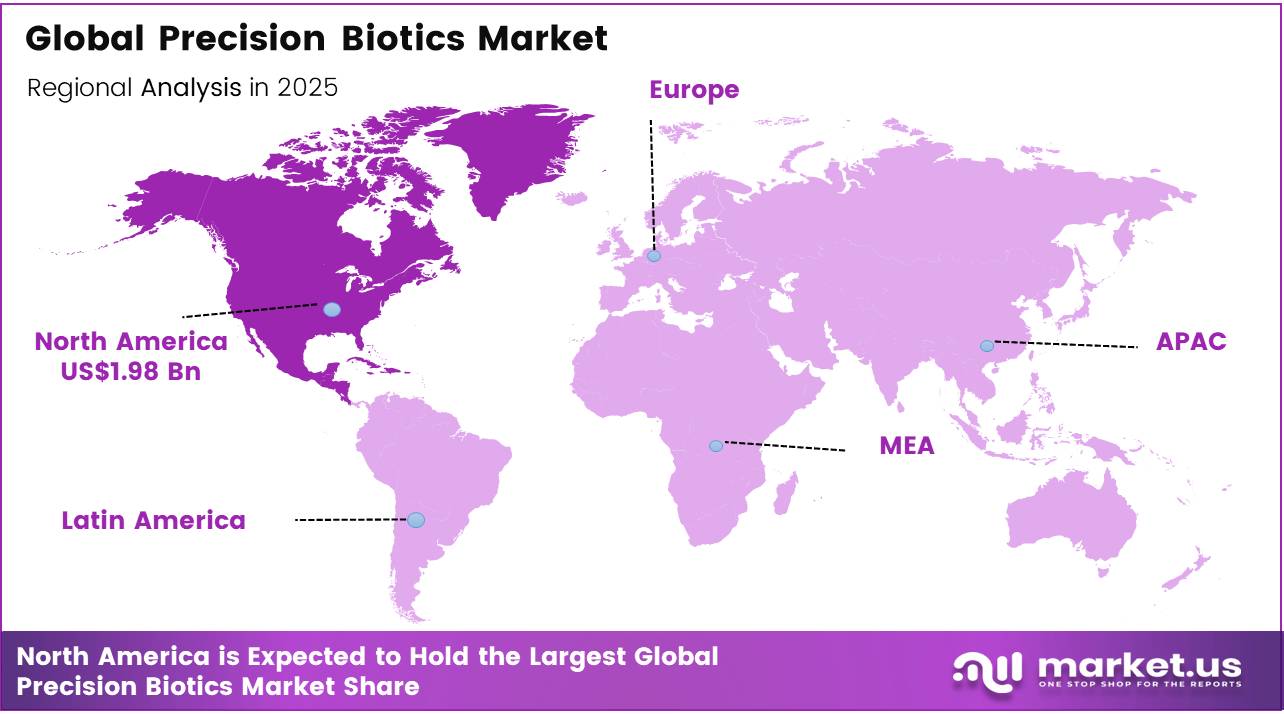
In 2025, the Global Precision Biotics Market was valued at USD 5.1 billion, and between 2026 and 2035, this market is estimated to register a CAGR of 11.0%, reaching about USD14.4 billion by 2035. In 2025, North America held a dominant market position, capturing more than a 39.2% share, holding USD 1.98 Billion revenue.
Precision biotics are targeted feed ingredients designed to influence selected microbial pathways rather than introduce live organisms. Their industrial relevance is increasing in intensive poultry production, where gut stability affects productivity, feed expenditure, and flock resilience.
- A peer-reviewed broiler trial reported a 10% improvement in body weight, an 8.4% improvement in feed conversion, and a 5-percentage-point decline in necrotic-enteritis mortality, supporting their value under disease-pressure conditions.
The industrial scenario is strengthened by rising animal-protein demand and pressure to obtain more output from limited feed resources. OECD-FAO projects global meat production to reach 406 million tonnes, poultry to contribute 62% of additional meat output, and poultry consumption to reach 173 million tonnes. This expansion increases demand for microbiome-directed nutrition across poultry, swine, dairy, and aquaculture systems.
Government-backed research and antimicrobial-reduction policies are widening future opportunities. USDA’s National Institute of Food and Agriculture awarded $7.1 million for agricultural microbiome research across 9 projects, while the European Union targets a 50% reduction in antimicrobial sales for farmed animals and aquaculture. Growth opportunities include precision fermentation, metagenomic screening, AI-assisted formulation, and farm-level diagnostics that can support species-specific products with productivity, welfare, and sustainability benefits.
Key Takeaways
- The global Precision Biotics market was valued at USD 7.6 billion in 2025.
- The global market is projected to grow at a CAGR of 13.9% and is estimated to reach USD 27.9 billion by 2035.
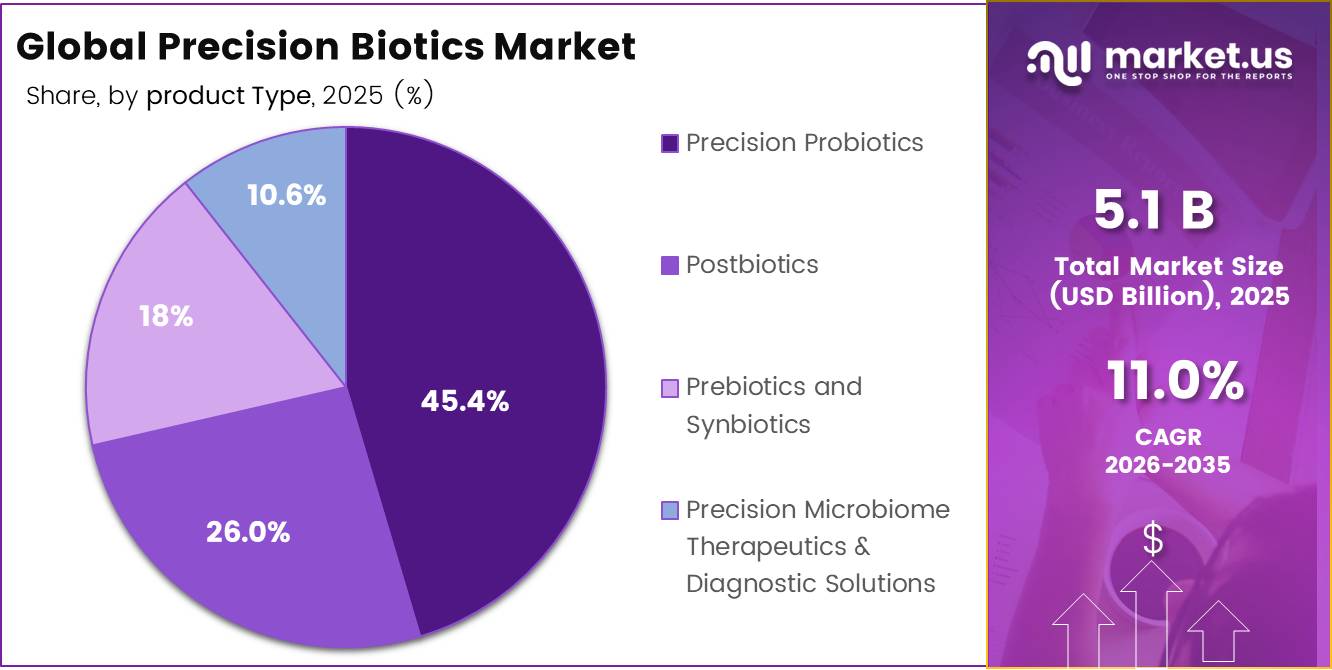
- On the basis of product type, Precision Probiotics dominated the market, constituting 45.4% of the total market share.
- Based on the Microorganism Type, the Lactobacillus dominated the Precision Biotics market, with a substantial market share of around 40.2%.
- Based on the Application, Gastrointestinal & Metabolic Health led the market, comprising 50.1% of the total market.
- Among the end-use industry, the Dietary Supplements & Functional Foods held a major share in the Precision Biotics market, 55.1% of the market share.
- In 2025, the North America was the most dominant region in the Precision Biotics market, accounting for 39.2% of the total global consumption.
Product Type Analysis
Precision Probiotics represents dominant Segment in the Market.
Precision Probiotics led the market with a 45.4% share, supported by their direct role in improving microbial balance, digestion, and feed utilization. Their adoption is reinforced by the scale of animal production, as USDA reports that broiler output expanded by 17.3% and table-egg production increased by 10.3% over its latest long-term comparison period. This expanding production base creates strong demand for targeted probiotic formulations that can support consistent animal performance and simplify integration into existing feed programs.
Postbiotics are emerging as the growing segment because they provide stable microbial metabolites without requiring live organisms, making storage and processing easier. FDA data show that medically important antimicrobial sales declined by 2% in the latest reported period and remained 37% below their historical peak. FDA reporting also covers four major food-producing species, encouraging broader development of non-antibiotic gut-health solutions across livestock systems.
Microorganism Type Analysis
Lactobacillus a significant Microorganism Type.
Lactobacillus led the microorganism category with a 40.2% market share, reflecting its established use in digestive-health products, functional foods, supplements, and targeted microbial formulations. Its familiarity among manufacturers and consumers supports wider formulation acceptance, while its strain diversity allows products to address digestion, intestinal balance, and immune support. NIH states that each person carries around 1,000 microbial species, while the healthy human microbiome contains nearly 8 million microbial genes, underlining the biological scope for strain-specific solutions.
Next-Generation Strains are emerging as the growing segment because developers are moving toward microbes with more targeted metabolic and therapeutic functions. This development is supported by NIH’s microbiome infrastructure, which includes approximately 3,000 reference bacterial genomes, data from over 300 healthy participants, and nearly 14 terabytes of genetic information. These resources strengthen strain discovery, genomic screening, safety assessment, and personalized formulation development.
Application Analysis
Gastrointestinal & Metabolic Health Are the Most Widely Used Application.
Gastrointestinal & Metabolic Health led the application category with a 50.1% market share, reflecting strong demand for precision biotics that support digestive balance, nutrient processing, glucose regulation, and metabolic well-being. The segment benefits from the growing burden of chronic metabolic conditions and greater interest in microbiome-based preventive care. The CDC estimates that 40.1 million people in the United States have diabetes, representing 12.0% of the national population. These conditions create a broad clinical and consumer base for targeted probiotics, postbiotics, microbial therapeutics, and diagnostic solutions.
Neurological & Mental Health is emerging as the growing application segment as research increasingly connects intestinal microorganisms with mood, cognition, stress, and brain signalling. NIMH reports that 59.3 million American adults live with a mental illness, equal to 23.1% of the adult population, while 50.6% of affected adults received treatment. These unmet needs are encouraging research into psychobiotics, microbial metabolites, precision nutrition, and gut-brain diagnostic tools, although wider clinical validation remains necessary.
End Use Industry Analysis
Dietary Supplements & Functional Foods Held a Major Share of the Precision Biotics Market.
Dietary Supplements & Functional Foods led the market with a 55.1% share, supported by familiar formats, preventive-health interest, and easy integration of precision biotics into everyday nutrition. CDC data show that 60.2% of adults used dietary supplements, while 38.7% consumed at least two products. This broad consumer base gives manufacturers a practical route for introducing targeted probiotics, postbiotics, and microbiome-supporting functional foods.
Pharmaceuticals & Biotechnology is the growing segment as microbiome science moves toward clinically validated therapies, engineered organisms, and regulated biological products. FDA activity reflects a supportive innovation environment, with 46 novel medicines approved and 76 biosimilars authorized. This regulatory momentum can help precision-biotic developers advance standardized formulations, clinical testing, and therapeutic applications.
Key Market Segments
By Product Type
- Precision Probiotics
- Prebiotics and Synbiotics
- Postbiotics
- Precision Microbiome Therapeutics & Diagnostic Solutions
By Microorganism Type
- Lactobacillus
- Bifidobacterium
- Next‑Generation Strains
- Other Microbial Consortia
By Application
- Gastrointestinal & Metabolic Health
- Immune & Women’s Health
- Neurological & Mental Health
- Oncology Support
- Other Specialized Therapeutic Uses
By End-use Industry
- Dietary Supplements & Functional Foods
- Pharmaceuticals & Biotechnology
- Cosmetics & Personal Care
- Animal Nutrition & Veterinary Applications
Driver Analysis
Regulatory Maturation of Live Biotherapeutic Products
The classification of live microorganisms as Live Biotherapeutic Products (LBPs) under the FDA’s Center for Biologics Evaluation and Research (CBER) Biologics License Application (BLA) pathway, rather than as dietary supplements, has created a structurally distinct, higher-margin commercial tier within the broader biotics landscape. Rebyota’s approval in November 2022 and Vowst’s approval in April 2023 established the first two commercially licensed rCDI microbiome therapeutics, proving that strain-defined, GMP-manufactured microbial consortia can clear a BLA review and secure payer reimbursement rather than relying on direct-to-consumer wellness spend.
Manufacturing facility requirements now mandate ISO Class 5-7 cleanroom environments, dual-containment HVAC systems with negative pressure differentials of 15 Pa or greater for spore-forming strains, and 24-month-plus stability data under ICH Q1A conditions, which raises capital intensity but simultaneously creates defensible barriers to entry for incumbents who complete this build-out first.
Drivers Impact Analysis
| Driver | (~) % Impact on CAGR | Geographic Relevance | Impact Timeline |
|---|---|---|---|
| Regulatory maturation of Live Biotherapeutic Products unlocking reimbursable, prescription-grade precision biotics | +2.8% | North America core (US FDA/CBER), EU (EMA/CHMP), APAC spill-over (Japan PMDA) | Medium term (2-4 years) |
| Multi-omics and AI-driven strain discovery compressing R&D cycle times and de-risking candidate selection | +2.2% | North America and EU core, APAC (China, South Korea, India) emerging | Short term (≤2 years) |
| Rising burden of gastrointestinal, metabolic, and immune-mediated chronic disease expanding addressable patient pools | +1.9% | Global, with APAC and Latin America spill-over from urbanization-linked disease incidence | Long term (≥4 years) |
| Antimicrobial resistance policy pressure redirecting livestock and clinical nutrition toward microbiome-based alternatives | +1.6% | EU core (antibiotic reduction mandates), North America, APAC corridors (China, Southeast Asia livestock hubs) | Medium term (2-4 years) |
| Shift from generic probiotic SKUs to strain-specific, clinically validated precision formulations altering retail and B2B unit economics | +1.4% | North America and EU core, APAC premiumization (Japan, South Korea, Australia) | Short term (≤2 years) |
| Cold-chain, lyophilization, and encapsulation manufacturing innovation lowering viability-loss and Bill of Materials costs | +1.1% | Global manufacturing base with APAC (India, China) contract manufacturing spill-over | Long term (≥4 years) |
Restraint Analysis
High LBP Development and Clinical Validation Cost Burden
Precision biotics that seek drug-like claims are effectively developed as biological products, with total program costs for complex biologics often cited in the low single-digit billions of dollars per approved product when failures and capital are included, and live biotherapeutics face similar multi-phase clinical, CMC, and facility requirements.
Sponsors must fund multi-country Phase II/III trials with hundreds to thousands of patients to generate statistically robust endpoints beyond the rCDI precedent, pushing clinical budgets into the hundreds of millions of dollars per indication, while anaerobic GMP manufacturing facilities with ISO Class 5–7 cleanrooms, segregated HVAC, and validated lyophilization capacity regularly demand CapEx in the 150–300 million dollar range depending on scale.
Restraint Impact Analysis
| Restraint | (~) % Impact on CAGR | Geographic Relevance | Impact Timeline |
|---|---|---|---|
| High LBP development and clinical validation cost burden | -2.6% | North America, EU, Japan core | Long term (≥ 4 years) |
| Regulatory divergence and uncertainty for microbiome therapeutics | -2.3% | North America, EU, APAC corridors | Medium term (2-4 years) |
| Limited large-scale, long-term clinical evidence for precision strains | -2.0% | Global, with payer focus in NA/EU | Long term (≥ 4 years) |
| GMP manufacturing complexity and cold-chain logistics for live microbes | -1.8% | Global manufacturing hubs, APAC spill-over | Medium term (2-4 years) |
| Strain stability, batch variability, and analytical characterization gaps | -1.5% | Global, early-stage sponsors and CMOs | Short term (≤ 2 years) |
| Reimbursement and pricing pressure vs. supplements and generics | -1.3% | North America core, EU, select APAC | Medium term (2-4 years) |
Opportunity Analysis
Microbiome-Based Companion Diagnostics and Subscription Precision Nutrition
This opportunity sits above current personalized nutrition trends because it hinges on building regulated or quasi‑regulated microbiome companion diagnostics and bundling them with recurring precision biotics subscriptions, turning today’s one‑off probiotic purchases into longitudinal, data‑anchored service relationships rather than simple product sales. Human microbiome markets are projected to reach mid‑single‑digit billions by the mid‑2030s at mid‑teens CAGRs, while probiotics and biotics supplements alone could exceed 70–100 billion dollars by the early 2030s, yet only a small fraction of these flows are presently tied to diagnostic‑guided regimen selection.
Moving even 5–10% of probiotic users in North America, Europe, and APAC urban centers into microbiome‑test‑plus‑subscription bundles—priced at, for example, 200–300 dollars per year versus current 50–100 dollar annual spend on generic supplements—would expand per‑user revenue by 2–3x and drive lifetime value into the low‑hundreds to low‑thousands of dollars depending on retention. This requires deploying validated microbiome panels, optimizing customer acquisition via digital health partnerships, and maintaining CAC/LTV ratios where acquisition costs stay under 25–30% of projected 3‑year revenue, a threshold many D2C health brands have demonstrated is achievable with targeted online funnels and employer‑linked programs.
Opportunity Impact Analysis
| Opportunity | (~) % Potential CAGR | Geographic Relevance | Execution Window |
|---|---|---|---|
| Microbiome-based companion diagnostics and subscription precision nutrition | +2.7% | North America core, EU, APAC urban centers | Medium term (2-4 years) |
| Expansion into oncology, metabolic, and autoimmune therapeutics via co-development with pharma | +2.4% | North America, EU, Japan, South Korea | Long term (≥ 4 years) |
| Precision biotics integration into mainstream insurance, employer wellness, and value-based care | +2.1% | North America core, EU, select APAC | Medium term (2-4 years) |
| White-space in emerging markets via digital-first D2C and localized strain libraries | +1.9% | APAC emerging (India, China, SE Asia), LATAM | Long term (≥ 4 years) |
| Cross-category productization across cosmetics, women’s health, and sports performance | +1.7% | North America, EU, Japan, premium urban markets | Short term (≤ 2 years) |
| Data and IP monetization platforms for strain libraries and microbiome R&D tools | +1.5% | Global R&D hubs, biotech clusters | Medium term (2-4 years) |
Challenges Analysis
Skilled Talent Shortage in Microbiome R&D and GMP
Life sciences broadly, and biopharma manufacturing in particular, face pronounced skilled labor shortages, with analyses indicating tens of thousands of unfilled roles in biopharma alone and an approximate 8% labor gap across key production functions; microbiome therapeutics add a further layer of specialization in microbial ecology, bioinformatics, and anaerobic processing that narrows the pool even more.
Shortages translate into extended hiring cycles, higher wage inflation, and heavy reliance on contractors, which can raise per‑hour costs by 20–30% compared with salaried staff. Talent gaps in clinical operations slow trial start‑up and enrollment; industry commentary notes that trial ramp‑up and close‑out delays attributable to staffing can add several months to timelines, effectively reducing portfolio throughput and pushing revenue recognition out by 1–2 years for affected programs.
To navigate this challenge, precision biotics firms must develop aggressive talent strategies regional hubs, remote models, partnerships with CDMOs but even with mitigation, the structural scarcity of qualified personnel slows scale‑up and increases execution risk, acting as a persistent drag on achievable CAGR until education systems and industry training programs catch up over a multi‑year horizon.
Challenges Impact Analysis
| Challenge | (~) % CAGR Friction | Geographic Relevance | Mitigation Horizon |
|---|---|---|---|
| Anaerobic biomanufacturing capacity constraints | -1.6% | North America, EU, APAC manufacturing hubs | Long term (≥ 4 years) |
| Complex multi-node cold-chain logistics | -1.4% | North America core, EU, APAC logistics corridors | Medium term (2-4 years) |
| Skilled talent shortage in microbiome R&D and GMP | -1.3% | Global life-science clusters | Long term (≥ 4 years) |
| Heterogeneous clinical trial infrastructure and digital data capture | -1.1% | North America, EU, APAC emerging markets | Medium term (2-4 years) |
| Regulatory process volatility and documentation burden | -1.0% | US, EU regulatory hubs, APAC agencies | Long term (≥ 4 years) |
| Performance variability across diverse real-world use environments | -0.9% | Global, agriculture and human-health deployments | Medium term (2-4 years) |
Geopolitical Impact Analysis
Geopolitical Realignment and Supply Chain Fragmentation Reshaping Precision Biotics Manufacturing.
Precision-biotics supply chains are being reshaped by efforts to reduce dependence on overseas pharmaceutical and biological manufacturing. FDA reports that 53% of branded drugs and 69% of generic drugs are produced outside the United States, while only 11% of API manufacturers are U.S.-based. These conditions encourage developers to localize fermentation, strain banking, formulation, and quality testing, although regional production can increase investment and compliance costs.
Europe is responding by treating biotechnology as strategic infrastructure. European Commission data show that the EU bioeconomy supports 17.1 million jobs, carries an estimated value of €2.7 trillion, and its biotechnology sector is expanding by 18% annually. This creates opportunities for precision-biotics companies in regional clinical research, advanced fermentation, microbiome diagnostics, and local manufacturing partnerships while making the market more influenced by domestic funding, biological-resource controls, and country-specific approval systems.
Beyond production capacity, geopolitical fragmentation is also influencing access to microbial strains, clinical data, intellectual property, and regulatory approvals. Precision-biotics companies are therefore building regional partnerships, diversified strain libraries, and localized compliance teams to reduce disruption risks and maintain market access across increasingly distinct regulatory environments.
Regional Analysis
North America Held the Largest Share of the Global Precision Biotics Market
North America led the precision biotics market with a 39.2% share, reflecting strong consumer awareness, advanced microbiome research, and broad adoption of digestive and metabolic health products. The region also carries a substantial addressable patient base, as digestive diseases affect up to 70 million Americans, while adult obesity prevalence stands at 40.3%. These health pressures are encouraging food, supplement, diagnostic, and biotechnology companies to develop more targeted microbial formulations.
Asia Pacific is emerging as the growing region, supported by expanding biotechnology capacity, fermentation expertise, and government-backed commercialization programs. Japan illustrates this momentum through a bioeconomy target of ¥100 trillion, approximately ¥1 trillion allocated to biomanufacturing-related development, and policy roadmaps covering 5 market areas. This support is improving strain discovery, local production, clinical validation, and precision-biotic product development across the region.
Key Regions and Countries Covered
- North America
- The US
- Canada
- Europe
- Germany
- France
- The UK
- Spain
- Italy
- Russia & CIS
- Rest of Europe
- APAC
- China
- Japan
- South Korea
- India
- ASEAN
- Rest of APAC
- Latin America
- Brazil
- Mexico
- Rest of Latin America
- Middle East & Africa
- GCC
- South Africa
- Rest of MEA
Key Players Analysis
Precision Biotics manufacturers focus on strengthening strain-level differentiation, clinical validation, and formulation reliability to maintain competitiveness. A key priority is continuous microbiome innovation, including the development of targeted probiotics, postbiotics, synbiotics, and next-generation microbial strains that support digestive health, metabolic balance, immune function, and specialized therapeutic outcomes.
Vertical integration with research laboratories, ingredient suppliers, diagnostic developers, and healthcare partners helps secure microbial resources, improve quality control, and reduce development risks. Strategic expansion across supplements, functional foods, pharmaceuticals, and veterinary applications enables manufacturers to address a wider customer base and reduce dependence on a single end-use market.
The Major Players In The Industry
- BioGaia AB
- Novonesis Group
- dsm‑firmenich
- Yakult Honsha Co., Ltd.
- Danone S.A.
- Procter & Gamble (P&G)
- Unilever plc
- Metagenics, LLC
- Seed Health, Inc.
- Pendulum Therapeutics
- Sun Genomics
- Viome Life Sciences, Inc.
- Kemin Industries
- Kerry Group plc
- Cargill Incorporated
Key Development
- In August 2025, Novonesis Group received 1 Health Canada product-license approval for ASTARTE™, combining 4 Lactobacillus strains to support 2 women’s-health areas: gastrointestinal and vaginal well-being, strengthening its clinically backed precision-probiotics portfolio across Canada.
- In July 2025, dsm-firmenich reported a 120-adult trial in which 7% of supplemented participants achieved IBS symptom relief, compared with 42% receiving placebo, reinforcing commercial potential for its targeted synbiotic and microencapsulated-butyrate capsule in digestive-health product-development programs.
Report Scope
| Report Features | Description |
|---|---|
| Market Value (2025) | USD 5.1 Bn |
| Forecast Revenue (2035) | USD 14.4 Bn |
| CAGR (2026-2035) | 11.0% |
| Base Year for Estimation | 2025 |
| Historic Period | 2020-2024 |
| Forecast Period | 2026-2035 |
| Report Coverage | Revenue Forecast, Market Dynamics, Competitive Landscape, Recent Developments |
| Segments Covered | By Product Type (Precision Probiotics , Prebiotics and Synbiotics, Postbiotics and Precision Microbiome Therapeutics & Diagnostic Solutions), By Microorganism Type (Lactobacillus, Bifidobacterium, Next‑Generation Strains and Other Microbial Consortia), By Application(Gastrointestinal & Metabolic Health, Immune & Women’s Health, Neurological & Mental Health, Oncology Support and Other Specialized Therapeutic Uses) |
| Regional Analysis | North America – The US & Canada; Europe – Germany, France, The UK, Spain, Italy, Russia & CIS, Rest of Europe; APAC– China, Japan, South Korea, India, ASEAN & Rest of APAC; Latin America– Brazil, Mexico & Rest of Latin America; Middle East & Africa– GCC, South Africa, & Rest of MEA |
| Competitive Landscape | BioGaia AB, Novonesis Group, dsm‑firmenich, Yakult Honsha Co., Ltd., Danone S.A., Procter & Gamble (P&G), Unilever plc, Metagenics, LLC, Seed Health, Inc., Pendulum Therapeutics, Sun Genomics, Viome Life Sciences, Inc., Kemin Industries, Kerry Group plc, Cargill Incorporated. |
| Customization Scope | Customization for segments, region/country-level will be provided. Moreover, additional customization can be done based on the requirements. |
| Purchase Options | We have three licenses to opt for: Single User License, Multi-User License (Up to 5 Users), Corporate Use License (Unlimited Users and Printable PDF) |





































