


Market Overview
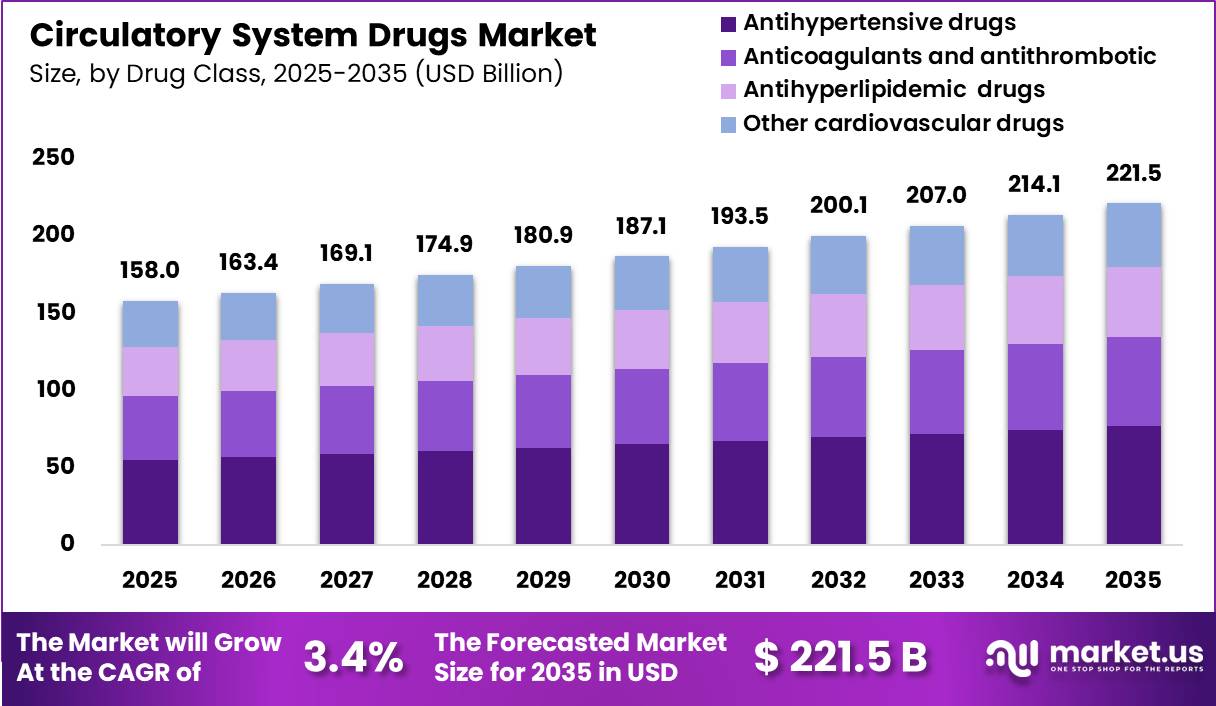
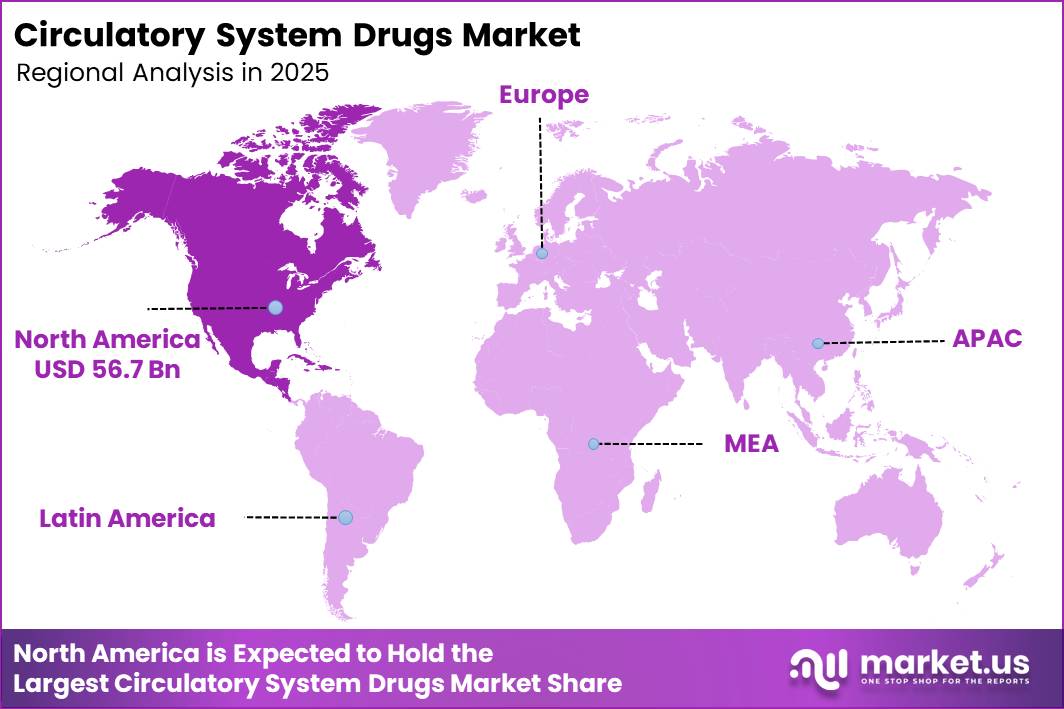
Global Circulatory System Drugs Market size is expected to be worth around US$ 221.5 Billion by 2035 from US$ 158.0 Billion in 2025, growing at a CAGR of 3.4% during the forecast period from 2026 to 2035. In 2025, North America led the market, achieving over 35.9% share with a revenue of US$ 56.7 Billion.
The global Circulatory System Drugs Market continues to expand as cardiovascular diseases remain one of the world’s most significant public health challenges. Medicines used to treat hypertension, heart failure, coronary artery disease, stroke prevention, arrhythmias, and other circulatory disorders are witnessing sustained demand due to rising disease prevalence, population aging, and improved access to healthcare.
According to the World Health Organization (WHO), cardiovascular diseases caused an estimated 19.8 million deaths in 2022, accounting for nearly 32% of all global deaths, with approximately 85% of these deaths resulting from heart attacks and strokes.
More than three-quarters of cardiovascular deaths occur in low- and middle-income countries, highlighting the growing need for affordable and effective drug therapies. WHO also estimates that around 1.4 billion adults aged 30–79 years live with hypertension, one of the leading drivers of circulatory diseases.
Government health agencies continue to promote early diagnosis, preventive treatment, and wider access to essential medicines, including anti-hypertensives, anticoagulants, antiplatelet drugs, statins, and heart failure therapies.
Continuous pharmaceutical innovation, expanding clinical research, increasing generic drug availability, and improved treatment guidelines are further supporting market growth. In addition, healthcare systems worldwide are strengthening cardiovascular prevention programs to reduce hospitalizations and improve long-term patient outcomes, creating favorable opportunities for the continued development of the circulatory system drugs market.
Key Takeaways
- Market Size : Circulatory System Drugs Market size is expected to be worth around US$ 221.5 Billion by 2035 from US$ 158.0 Billion in 2025.
- Market Share : The Market is growing at the CAGR of 3.4% during the forecast period from 2026 to 2035.
- Drug Class Analysis : The antihypertensive drugs segment dominated the circulatory system drugs market in 2025, accounting for 34.8% of the total market share.
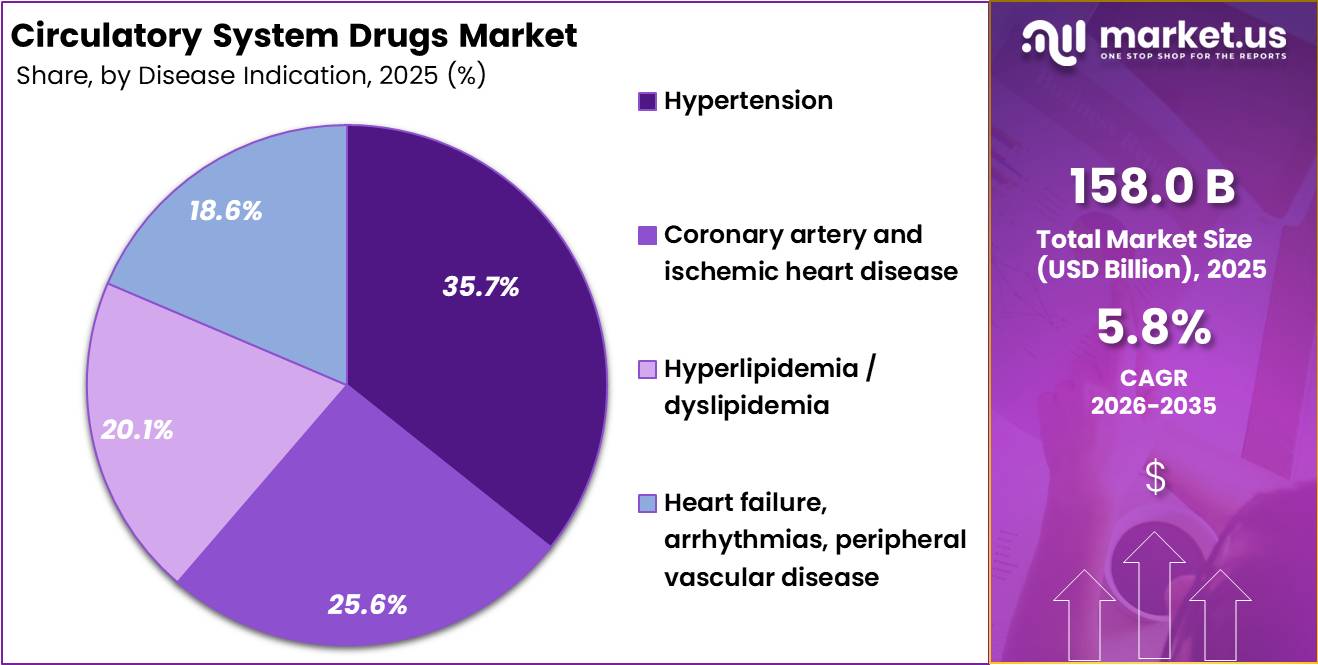
- Disease Indication Analysis : The hypertension segment held the largest share of the circulatory system drugs market accounting for 35.7% of total revenue in 2025.
- Route of Administration Analysis : The oral segment dominated the circulatory system drugs market in 2025, accounting for 80.2% of the total market share.
- Distribution Channel Analysis : The retail/community pharmacies segment led the circulatory system drugs market accounting for 45.6% of the total market share, in 2025.
- Regional Analysis : In 2025, North America dominated the global circulatory system drugs market, accounting for over 35.9% of the total market and generating US$ 56.7 billion in revenue.
Drug Class Analysis
The antihypertensive drugs segment dominated the circulatory system drugs market in 2025, accounting for 34.8% of the total market share. The segment’s leadership is driven by the growing global burden of hypertension, increasing awareness of blood pressure management, and the widespread use of long-term drug therapy.
Antihypertensive medicines, including ACE inhibitors, ARBs, beta-blockers, calcium channel blockers, and diuretics, are commonly prescribed as first-line treatments. Continuous clinical guideline updates and improved patient adherence also support segment growth.
The anticoagulants and antithrombotic segment held 26.1% of the market, supported by increasing cases of stroke, atrial fibrillation, and venous thromboembolism. The antihyperlipidemic drugs segment represented 20.4%, driven by the rising prevalence of high cholesterol and growing use of statins and newer lipid-lowering therapies to reduce cardiovascular risk.
The other cardiovascular drugs segment accounted for 18.7%, including antiarrhythmics, vasodilators, cardiac glycosides, and heart failure therapies. Growing demand for combination therapies, personalized treatment approaches, and innovative cardiovascular medicines is expected to support steady growth across all drug class segments.
Disease Indication Analysis
The hypertension segment held the largest share of the circulatory system drugs market in 2025, accounting for 35.7% of total revenue. The segment is driven by the increasing number of adults diagnosed with high blood pressure, rising obesity rates, sedentary lifestyles, and aging populations. Long-term treatment requirements and strong clinical recommendations for early blood pressure control continue to increase demand for antihypertensive medicines worldwide.
The coronary artery and ischemic heart disease segment accounted for 25.6% of the market due to the growing incidence of heart attacks, angina, and coronary artery disease. Demand for antiplatelet agents, anticoagulants, lipid-lowering drugs, and other cardiovascular therapies remains strong in this category.
The hyperlipidemia/dyslipidemia segment captured 20.1% of the market, supported by increasing cholesterol screening and preventive cardiovascular care. The remaining 18.6% was represented by heart failure, arrhythmias, and peripheral vascular disease, where continuous advances in targeted therapies and improved disease management are supporting market expansion.
Rising awareness of cardiovascular risk factors, better diagnostic capabilities, and greater access to healthcare services are expected to drive growth across all disease indication segments.
Route of Administration Analysis
The oral segment dominated the circulatory system drugs market in 2025, accounting for 80.2% of the total market share. Oral medications remain the preferred route because they are convenient, cost-effective, and suitable for long-term treatment of chronic cardiovascular conditions such as hypertension, hyperlipidemia, heart failure, and coronary artery disease.
High patient compliance, simple dosing schedules, and broad availability of tablets and capsules continue to strengthen this segment. Many widely prescribed cardiovascular medicines are available in oral formulations, making them the standard choice in outpatient care.
The parenteral segment represented a significant share of the market and is primarily used in hospitals and emergency care settings where rapid therapeutic action is required. Injectable anticoagulants, thrombolytic agents, and certain heart failure medications are commonly administered through this route for acute cardiovascular events.
The others segment, including transdermal patches, sublingual tablets, and other specialized delivery methods, accounted for a smaller share but continues to grow with advances in drug delivery technologies. Increasing focus on patient convenience, improved treatment adherence, and the development of innovative formulations is expected to support future growth across all routes of administration.
Distribution Channel Analysis
The retail/community pharmacies segment led the circulatory system drugs market in 2025, accounting for 45.6% of the total market share. The dominance of this segment is supported by easy accessibility, widespread pharmacy networks, and the high volume of prescriptions for chronic cardiovascular conditions.
Patients requiring long-term medications for hypertension, cholesterol management, and heart disease frequently obtain their prescriptions through retail pharmacies, making this the primary distribution channel worldwide.
The hospital pharmacies segment held a substantial share of the market, driven by the treatment of acute cardiovascular conditions, inpatient care, and the administration of specialized injectable therapies. Hospitals also play an important role in initiating treatment following heart attacks, strokes, and major cardiovascular procedures.
The online/mail-order pharmacy segment continues to gain momentum due to increasing digital healthcare adoption, home delivery services, and growing demand for convenient medication refills. The expansion of e-pharmacy platforms, improved insurance coverage for mail-order prescriptions, and greater patient preference for remote healthcare services are contributing to the steady growth of this segment.
Together, these distribution channels ensure broad availability of circulatory system drugs across both acute and chronic care settings.
Market Segmentations
By Drug Class
- Antihypertensive drugs
- Anticoagulants and antithrombotic
- Antihyperlipidemic drugs
- Other cardiovascular drugs
By Disease Indication
- Hypertension
- Coronary artery and ischemic heart disease
- Hyperlipidemia / dyslipidemia
- Heart failure, Arrhythmias, Peripheral Vascular Disease
By Route of Administration
- Oral
- Parenteral
- Others
By Distribution Channel
- Retail / Community Pharmacies
- Hospital Pharmacies
- Online / Mail‑Order
Drivers
Cardiometabolic patient pool expansion across CVD, diabetes, obesity, and hypertension
Cardiovascular disease remains the largest structural demand engine for circulatory drugs because it is still the leading cause of death globally, with WHO estimating 19.8 million deaths in 2022, equal to roughly 32% of all global deaths, and more than 75% of those deaths occurring in low and middle income countries.
In the U.S., CDC reports 919,032 cardiovascular deaths in 2023, or about 1 in every 3 deaths, one cardiovascular death every 34 seconds, and about 805,000 heart attacks annually, while heart disease related healthcare services and medications cost more than $168 billion between 2021 and 2022.
This burden translates directly into prescription depth because diabetes and CVD increasingly overlap: NIH linked evidence shows diabetes affected 537 million people globally in 2021 and may reach 783 million by 2045, while a large meta analysis found CVD in about 32.2% of people with type 2 diabetes and a more recent review identified coronary artery disease in 29.4% of diabetic cardiovascular cases.
For the market, that overlap raises treated prevalence, increases average therapies per patient across antihypertensives, lipid lowering agents, antithrombotics, heart failure drugs, and glucose lowering cardioprotective classes, and shifts business models from single class chronic maintenance to lifetime cardiometabolic portfolio management built on higher refill persistence and broader prescriber touchpoints.
| Driver | (~) % Impact on CAGR Forecast | Geographic Relevance | Impact Timeline |
|---|---|---|---|
| Cardiometabolic patient-pool expansion across CVD, diabetes, obesity, and hypertension | +1.7% | North America core, EU5, China, India, Gulf, urban LATAM | Medium term (2-4 years) |
| GLP-1 cardiovascular-outcomes expansion into secondary prevention pathways | +1.3% | US core, EU, Japan, South Korea, Australia | Short term (≤ 2 years) |
| Guideline-led intensification of lipid, BP, and multi-risk-factor control | +1.1% | EU core, North America, developed APAC, tier-1 China cities | Short term (≤ 2 years) |
| Specialty cardiovascular innovation in HCM, arrhythmia, and advanced lipid control | +0.8% | US core, EU, selective APAC | Medium term (2-4 years) |
| Population aging and chronic polypharmacy increasing refill persistence | +1.4% | Japan, EU, US, South Korea, China urban | Long term (≥ 4 years) |
| Reimbursement reset and Medicare negotiation improving affordability but changing value mix | +0.6% | US core, EU spill-over, India and LATAM generics corridors | Medium term (2-4 years) |
Challenges
Endocrinology workforce squeeze
The global diabetes therapeutics market faces a structural bottleneck in specialist capacity that slows optimization and intensification rather than blocking drug use outright, as endocrinology demand growth outpaces workforce expansion and pushes more complex decision making into already overloaded primary care channels.
Historical modeling from U.S. workforce studies estimated a shortage of roughly 1,500 adult and 100 pediatric endocrinologist full time equivalents, with projections that the gap for adult endocrinologists could widen to 2,700 without sustained training expansion, and newer analyses show training positions for endocrinology increasing about 73% between 2009 and 2025 (223 to 386 slots) while applicant growth lags and some fellowship slots remain unfilled, signalling persistent recruitment challenges.
Parallel work on pediatric endocrinology shows a 64% fellowship match rate in 2024, with nearly one third of positions unfilled despite rising need, and a 2022 survey identified only 685 physician assistants practicing in endocrinology in the U.S., with these PAs more likely to work in private practices, see fewer patients weekly, and earn about 10,000 dollars less annually than peers in other specialties, limiting the speed at which auxiliary roles can absorb excess demand.
At market level, this shortage manifests as longer wait times often measured in months, slower therapy escalation, lower uptake of advanced injectables, more conservative switching behavior, and under use of combination regimens, collectively justifying an estimated 1.0% point drag on global diabetes therapeutics CAGR in 2026 as patient volumes grow faster than the system’s capacity to prescribe and titrate optimally.
Strategic mitigation requires long horizon investments in fellowship expansion, loan forgiveness and compensation reform, formal integration of PAs and NPs into endocrinology workflows, and tele endocrinology scaling so that each specialist can manage larger distributed panels, which is why this friction is best classified as a long term (≥ 4 year) normalization challenge rather than a near term constraint.
| Challenge | (~) % CAGR Friction Drag | Geographic Relevance | Mitigation Horizon |
|---|---|---|---|
| Endocrinology workforce squeeze | -1.0% | US & EU specialty centers, urban LMIC hubs | Long term (≥ 4 years) |
| Socioeconomic access gaps to GLP-1 / SGLT-2 | -1.2% | US payor-fragmented markets, LMIC urban poor | Long term (≥ 4 years) |
| Financial toxicity of lifelong care | -0.9% | US & emerging markets, underinsured segments | Medium term (2-4 years) |
| Prevention–treatment misalignment | -0.7% | Global primary-care systems | Medium term (2-4 years) |
| Policy volatility on drug pricing | -0.8% | US federal programs, OECD policy followers | Medium term (2-4 years) |
| Real-world complexity of regimens | -0.6% | All high-burden regions | Short–medium term (≤ 4 years) |
Restraints
Affordability gap
The single largest restraint on the diabetes drugs market is the conversion gap between diagnosed disease burden and paid therapy access, because diabetes prevalence continues to rise faster than health system financing capacity in many markets, particularly where out of pocket payment remains the dominant purchasing mechanism.
WHO states that about 830 million people worldwide live with diabetes, the majority in low and middle income countries, and more than half of people living with diabetes are not receiving treatment, which means the addressable clinical population is dramatically larger than the monetizable pharmaceutical population.
In practical market terms, this suppresses insulin adherence, delays oral drug escalation, narrows branded penetration, and forces procurement agencies toward the cheapest available molecules, often at the expense of regimen continuity; manufacturers then face lower realized revenue per patient, weaker channel reliability, and a structurally smaller premium segment than epidemiology alone would suggest, justifying an estimated 2.0 percentage point drag on baseline CAGR despite strong underlying disease growth.
| Restraint | (~) % Impact on CAGR Forecast | Geographic Relevance | Impact Timeline |
|---|---|---|---|
| Affordability gap | -2.0% | LMICs, LATAM, Africa, South Asia | Long term |
| Coverage compression | -1.4% | US core, EU core, Japan | Medium term |
| Supply volatility | -1.3% | US, EU, APAC corridors | Short term |
| PBM/rebate distortion | -1.1% | US core | Medium term |
| Adherence drop-off | -0.9% | Global, especially US and LMICs | Medium term |
| Clinical intensification delay | -0.8% | Global primary care markets | Long term |
Opportunities
Resistant hypertension premium tier
This is an opportunity rather than a baseline driver because the 2026 market still prices the vast majority of hypertension care through low cost generics and polypharmacy, while the real white space is a premium therapeutic layer focused on resistant and difficult to control hypertension, which remains disproportionately responsible for stroke, heart failure, and chronic kidney disease costs.
WHO, CDC, and global burden studies confirm that hypertension is a leading contributor to the roughly 17.9 million annual CVD deaths worldwide, with large shares of treated patients failing to meet control targets, particularly in populations with multiple comorbidities.
FDA approval in 2026 of AstraZeneca’s baxdrostat (Baxfendy), an aldosterone synthase inhibitor indicated for hypertension, signals the clinical feasibility and regulatory willingness to support novel mechanisms specifically aimed at patients not adequately controlled on existing agents, rather than simply adding another me too drug to the baseline class mix.
The opportunity is to design a premium “resistant hypertension” tier that targets the 10–15% of hypertensive patients in high resource markets whose blood pressure remains elevated despite at least two standard agents, with these patients typically carrying substantially higher event risk and healthcare utilization, which payers may be willing to address via higher priced, outcomes justified therapies.
If manufacturers can capture even 15–20% of this resistant cohort through add on or switch therapies priced several multiples above generic combinations but with demonstrated reductions in systolic blood pressure, hospitalization, and stroke incidence.
This subsegment can add several billion dollars in incremental annual revenue by the early 2030s and lift the overall circulatory drugs market CAGR by about 1.7% points versus a scenario where these patients continue to cycle through low cost regimens with suboptimal control and persistent downstream cost.
| Opportunity | (~) % Potential CAGR Upside | Geographic Relevance | Execution Window |
|---|---|---|---|
| Cardiometabolic label expansion | +2.4% | North America core, EU, Japan, Gulf | Medium term (2-4 years) |
| Resistant hypertension premium tier | +1.7% | U.S., EU5, China urban, Brazil | Short term (≤ 2 years) |
| Polypill and combo adherence models | +1.5% | India, ASEAN, Africa, LatAm | Medium term (2-4 years) |
| HFpEF obesity crossover play | +1.9% | U.S., EU, China tier-1, South Korea | Medium term (2-4 years) |
| Public-channel genericization roll-up | +1.3% | APAC emerging, Africa, MENA, LatAm | Short term (≤ 2 years) |
| Outcomes-based payer contracts | +1.1% | U.S., Germany, Nordics, UK | Long term (≥ 4 years) |
Regional Analysis
In 2025, North America dominated the global circulatory system drugs market, accounting for over 35.9% of the total market and generating US$ 56.7 billion in revenue.
The region’s leadership is supported by a high prevalence of cardiovascular diseases, widespread access to advanced healthcare services, strong prescription drug adoption, and significant investments in pharmaceutical research and development. The United States remains the largest contributor due to its large patient population affected by hypertension, coronary artery disease, heart failure, and stroke.
The presence of major pharmaceutical manufacturers, continuous introduction of innovative cardiovascular therapies, and favorable reimbursement systems further strengthen regional market growth. In addition, increasing awareness of preventive healthcare and regular cardiovascular screening programs encourage early diagnosis and long-term medication use.
Canada also contributes to regional expansion through universal healthcare coverage, growing use of evidence-based treatment guidelines, and increasing demand for medicines that manage chronic heart conditions.
The rising elderly population, which is more vulnerable to circulatory disorders, continues to drive the need for anti-hypertensives, anticoagulants, lipid-lowering drugs, and heart failure medications. Government initiatives focused on reducing cardiovascular disease burden, along with ongoing clinical trials and regulatory support for new therapies, are expected to sustain market growth.
Strong healthcare infrastructure, high healthcare spending, and continuous innovation are expected to keep North America at the forefront of the circulatory system drugs market over the coming years.
Key Regions and Countries
North America
- The US
- Canada
Europe
- Germany
- France
- The U.K.
- Italy
- Spain
- Russia & CIS
- Rest of Europe
Asia Pacific
- China
- India
- Japan
- South Korea
- ASEAN
- Australia & New Zealand
- Rest of Asia Pacific
Middle East & Africa
- GCC
- South Africa
- Rest of Middle East & Africa
Latin America
- Brazil
- Mexico
- Rest of Latin America
Key Player Analysis
The circulatory system drugs market is highly competitive, with leading pharmaceutical companies focusing on research, product innovation, and expanding treatment options for cardiovascular diseases.
Pfizer Inc. continues to strengthen its position through a broad portfolio of cardiovascular medicines and strategic collaborations aimed at improving patient outcomes. Novartis AG focuses on innovative therapies for heart failure and other cardiovascular conditions, supported by strong clinical research.
AstraZeneca PLC has expanded its presence with advanced medicines for heart, kidney, and metabolic diseases, helping address multiple risk factors together. Bayer AG remains a key player with well-established anticoagulant and cardiovascular products used worldwide. Bristol-Myers Squibb Company and Merck & Co., Inc. (MSD) invest in new drug development and clinical trials to improve treatment effectiveness.
Sanofi S.A. continues to expand its cardiovascular portfolio through innovation and global partnerships. Johnson & Johnson, including its Janssen pharmaceutical business, supports the market with research-driven therapies and a strong international distribution network, contributing to broader patient access and continuous product development.
Top Key Players
- Pfizer Inc.
- Novartis AG
- AstraZeneca PLC
- Bayer AG
- Bristol‑Myers Squibb Company
- Merck & Co. Inc. (MSD)
- Sanofi S.A.
- Johnson & Johnson (incl. Janssen)
- Boehringer Ingelheim GmbH
- F. Hoffmann‑La Roche Ltd.
- Abbott Laboratories
- Gilead Sciences Inc.
- Eli Lilly and Company
- Takeda Pharmaceutical Company Ltd.
- Otsuka Holdings Co. Ltd.
- Others
Recent Developments
- February 2025 – Novartis AG entered into an agreement to acquire Anthos Therapeutics for an upfront payment of USD 925 million, with potential milestone payments of up to USD 2.15 billion. The acquisition strengthens Novartis’ cardiovascular portfolio through abelacimab, a Phase III Factor XI inhibitor being developed for stroke prevention and thromboembolic disorders
- November 2025 – Merck & Co. (MSD) reported positive Phase III CORALreef Lipids results for enlicitide decanoate, an investigational oral PCSK9 inhibitor. The once-daily therapy achieved a 55.8% reduction in LDL cholesterol at Week 24 and demonstrated 97% treatment adherence, supporting its potential as the first approved oral PCSK9 inhibitor.
- November 2025 – Pfizer Inc. completed the acquisition of Metsera, expanding its cardiometabolic and obesity-focused portfolio. The transaction enhances Pfizer’s internal medicine business and supports the development of next-generation therapies targeting obesity-related cardiovascular risk factors.
Report Scope
| Report Features | Description |
|---|---|
| Market Value (2025) | US$ 158.0 Billion |
| Forecast Revenue (2035) | US$ 221.5 Billion |
| CAGR (2026-2035) | 3.4% |
| Base Year for Estimation | 2025 |
| Historic Period | 2020-2024 |
| Forecast Period | 2026-2035 |
| Report Coverage | Revenue Forecast, Market Dynamics, Competitive Landscape, Recent Developments |
| Segments Covered | By Drug Class (Antihypertensive drugs, Anticoagulants and antithrombotic , Antihyperlipidemic drugs, Other cardiovascular drugs), By Disease Indication (Hypertension, Coronary artery and ischemic heart disease, Hyperlipidemia / dyslipidemia, Heart failure, Arrhythmias, Peripheral Vascular Disease), By Route of Administration (Oral, Parenteral, Others), By Distribution Channel (Retail / Community Pharmacies, Hospital Pharmacies, Online / Mail‑Order) |
| Regional Analysis | North America – The US, Canada; Europe – Germany, France, U.K., Italy, Spain, Russia & CIS, Rest of Europe; Asia Pacific – China, India, Japan, South Korea, ASEAN, Australia & New Zealand, Rest of Asia Pacific; Middle East & Africa – GCC, South Africa, Rest of Middle East & Africa; Latin America – Brazil, Mexico, Rest of Latin America |
| Competitive Landscape | Pfizer Inc., Novartis AG, AstraZeneca PLC, Bayer AG, Bristol‑Myers Squibb Company, Merck & Co. Inc. (MSD), Sanofi S.A., Johnson & Johnson (incl. Janssen), Boehringer Ingelheim GmbH, F. Hoffmann‑La Roche Ltd., Abbott Laboratories, Gilead Sciences Inc., Eli Lilly and Company, Takeda Pharmaceutical Company Ltd., Otsuka Holdings Co. Ltd., Others, |
| Customization Scope | Customization for segments, region/country-level will be provided. Moreover, additional customization can be done based on the requirements. |
| Purchase Options | We have three licenses to opt for: Single User License, Multi-User License (Up to 5 Users), Corporate Use License (Unlimited User and Printable PDF) |





































