


Global Veterinary Antimicrobial Susceptibility Testing (AST) Market By Product Type (Custom/Targeted AST Panels, Disk Diffusion (Kirby-Bauer) Discs, Broth Microdilution (MIC) Plates, Culture Media, E-test Gradients and Others), By Application (Clinical Therapy Selection, Antimicrobial Stewardship, Epidemiological Surveillance, Herd/Flock Management and Others), By Animal Type (Production Animal (Cattle, Poultry, Pigs and Others) and Companion Animal (Dogs, Cats, Horses and Others)), By End User (Veterinary Reference Laboratories & Diagnostic Labs, Veterinary Research Institutes & Academic Centers, Veterinary Clinics & Hospitals and Others), Region and Companies – Industry Segment Outlook, Market Assessment, Competition Scenario, Trends and Forecast 2026-2035
- Published date: March 2026
- Report ID: 180328
- Number of Pages: 289
- Format:
-
keyboard_arrow_up
Quick Navigation
Report Overview
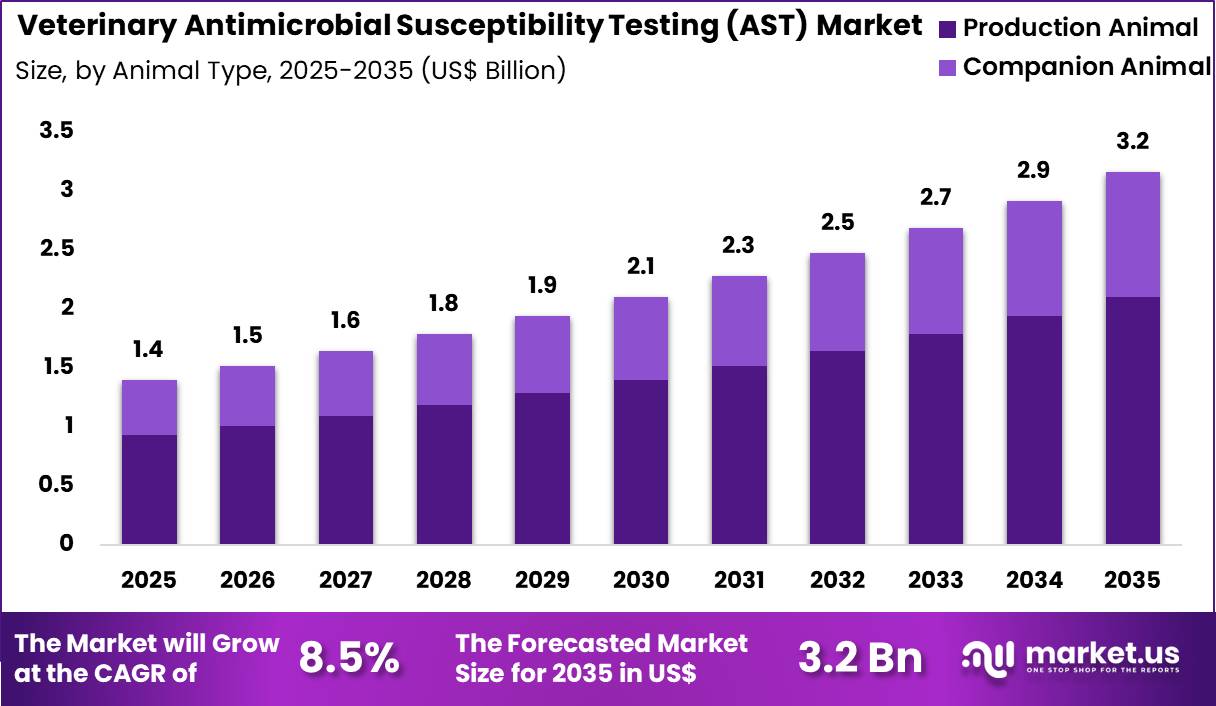
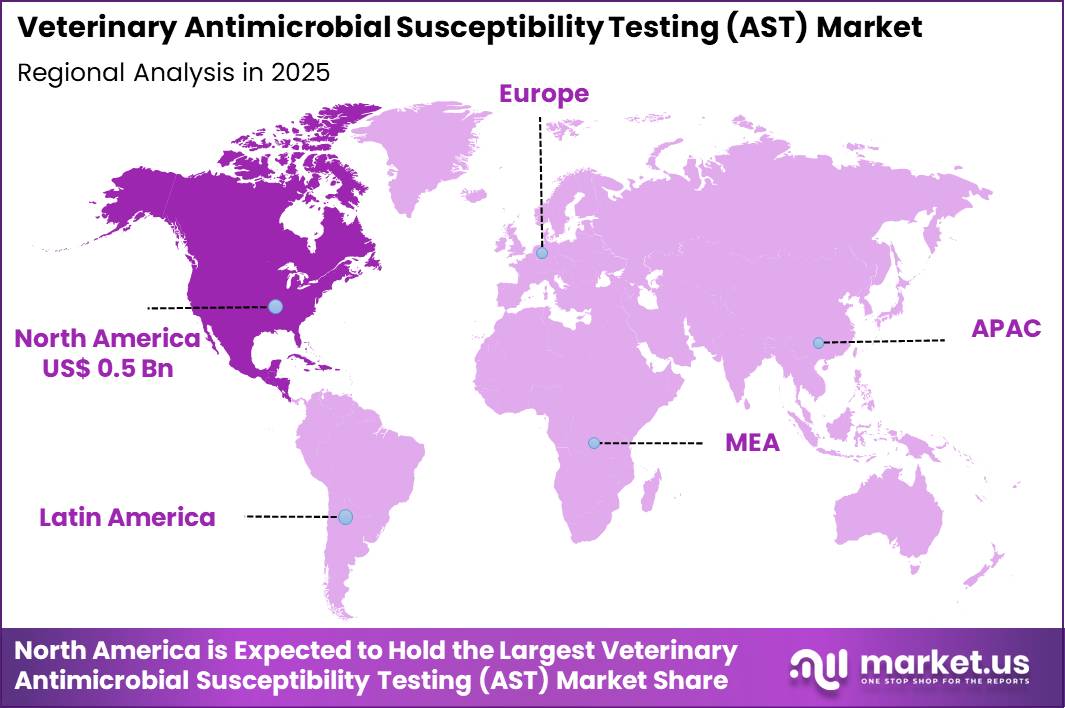
The Global Veterinary Antimicrobial Susceptibility Testing (AST) Market size is expected to be worth around US$ 3.2 Billion by 2035 from US$ 1.4 Billion in 2025, growing at a CAGR of 8.5% during the forecast period 2026-2035. In 2025, North America led the market, achieving over 35.9% share with a revenue of US$ 0.5 Billion.
Rising antimicrobial resistance in veterinary pathogens drives the Veterinary Antimicrobial Susceptibility Testing market as veterinarians and producers demand reliable diagnostics that guide precise antibiotic selection and preserve treatment efficacy.
Clinical laboratories increasingly perform disk diffusion and broth microdilution tests on isolates from companion animals, identifying susceptibility patterns in Staphylococcus pseudintermedius from canine pyoderma and Escherichia coli from feline urinary tract infections to inform targeted therapy.
These methods support food animal applications by testing respiratory pathogens in cattle and swine, such as Mannheimia haemolytica and Actinobacillus pleuropneumoniae, ensuring appropriate antimicrobial use in feedlot and nursery stock to minimize residues in meat and milk.
Poultry practitioners apply AST to monitor Salmonella and E. coli isolates from broiler flocks, enabling evidence-based decisions that reduce prophylactic antibiotic reliance and support flock health programs. Equine veterinarians utilize susceptibility testing for Streptococcus equi and Rhodococcus equi in foals, optimizing treatment for pneumonia and abscesses while preserving antimicrobial stewardship in performance animals.
Manufacturers pursue opportunities to develop automated susceptibility testing platforms that deliver rapid results with standardized interpretation, expanding applications in high-throughput veterinary diagnostic laboratories handling large companion animal caseloads.
Developers advance molecular-based AST methods that detect resistance genes directly from clinical samples, broadening utility in urgent cases requiring immediate therapy guidance. These innovations facilitate integration with veterinary electronic health records, streamlining reporting and trend analysis for resistance surveillance.
Opportunities emerge in portable, point-of-care AST devices that enable on-farm testing for livestock producers, reducing diagnostic turnaround and supporting judicious antimicrobial use. Companies invest in comprehensive panels covering emerging veterinary pathogens and novel resistance mechanisms.
Recent trends emphasize stewardship-focused reporting tools and combination testing with molecular diagnostics, positioning the market for growth in responsible antimicrobial use across companion, production, and equine veterinary practice.
Key Takeaways
- In 2025, the market generated a revenue of US$ 1.4 Billion, with a CAGR of 8.5%, and is expected to reach US$ 3.2 Billion by the year 2035.
- The product type segment is divided into custom/targeted AST panels, disk diffusion (kirby-bauer) discs, broth microdilution (MIC) plates, culture media, e-test gradients and others, with custom/targeted ast panels taking the lead with a market share of 41.3%.
- Considering application, the market is divided into clinical therapy selection, antimicrobial stewardship, epidemiological surveillance, herd/flock management and others. Among these, clinical therapy selection held a significant share of 32.6%.
- Furthermore, concerning the animal type segment, the market is segregated into production animal and companion animal. The production animal sector stands out as the dominant player, holding the largest revenue share of 66.5% in the market.
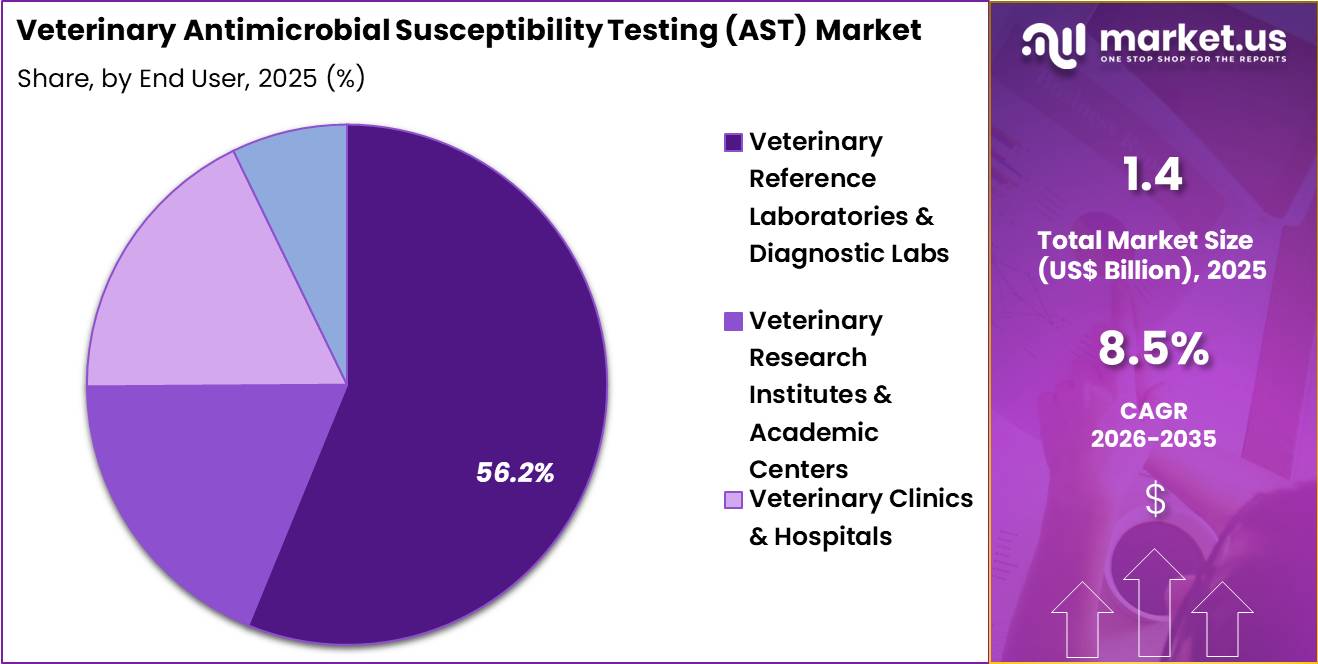
- The end user segment is segregated into veterinary reference laboratories & diagnostic labs, veterinary research institutes & academic centers, veterinary clinics & hospitals and others, with the veterinary reference laboratories & diagnostic labs segment leading the market, holding a revenue share of 56.2%.
- North America led the market by securing a market share of 35.9%.
Product Type Analysis
Custom/targeted AST panels accounted for 41.3% of growth within product type and dominate the veterinary antimicrobial susceptibility testing market due to their ability to provide pathogen-specific and region-specific antimicrobial profiles. Diagnostic laboratories increasingly prefer customized panels to align with local resistance patterns and therapeutic guidelines.
These panels improve diagnostic precision and reduce empirical antibiotic use in livestock and companion animals. Segment growth is projected to strengthen as antimicrobial resistance surveillance becomes a priority in veterinary practice.
Laboratories adopt targeted panels to enhance turnaround time and improve therapy outcomes. Customization supports more accurate minimum inhibitory concentration assessment for prevalent pathogens. Rising regulatory emphasis on responsible antimicrobial usage further drives demand.
Production animal health programs increasingly rely on precise AST data to optimize treatment protocols. The segment is anticipated to expand as veterinary laboratories modernize diagnostic capabilities and integrate automated testing platforms.
Application Analysis
Clinical therapy selection accounted for 32.6% of growth within applications and remains the leading driver due to the increasing need for evidence-based antibiotic prescribing in veterinary medicine. Veterinarians increasingly utilize AST results to select appropriate antimicrobial regimens and avoid treatment failure.
This approach improves recovery rates and reduces antimicrobial misuse. Segment growth is expected to accelerate as stewardship initiatives promote diagnostic-guided therapy over empirical treatment. Livestock producers seek reliable susceptibility data to protect herd health and maintain productivity.
Veterinary clinicians incorporate AST findings into routine infection management protocols. Demand is likely to increase as awareness of antimicrobial resistance risks expands across animal healthcare systems. Improved therapy selection enhances cost efficiency and reduces drug wastage. Ongoing training and guideline updates further support the expansion of this segment.
Animal Type Analysis
Production animals accounted for 66.5% of growth within animal type and dominate due to the large-scale use of antimicrobials in livestock farming. Swine, poultry, and cattle operations rely on susceptibility testing to prevent outbreaks and protect economic output.
Intensive farming environments increase infection risk, which drives demand for accurate AST diagnostics. Segment growth is projected to strengthen as governments implement antimicrobial monitoring programs within agricultural sectors.
Producers adopt AST solutions to comply with food safety regulations and export standards. Targeted antimicrobial use supports herd-level disease control strategies. Demand is anticipated to increase as livestock industries prioritize sustainable production and reduced antimicrobial resistance. AST adoption enhances biosecurity protocols and productivity metrics across commercial farms.
End-User Analysis
Veterinary reference laboratories & diagnostic labs accounted for 56.2% of growth within end users and dominate due to their centralized testing infrastructure and technical expertise. These laboratories process high sample volumes from farms and veterinary clinics, supporting rapid and standardized susceptibility testing.
Segment growth is expected to expand as laboratories adopt automated AST platforms and digital reporting systems. Centralized diagnostics improve data consistency and surveillance accuracy. Laboratories collaborate with regulatory agencies to monitor resistance trends across regions. Demand is likely to rise as advanced diagnostic technologies enhance workflow efficiency.
Veterinary laboratories support antimicrobial stewardship programs by providing validated susceptibility results. Increasing sample submissions from production farms and companion animal clinics reinforce sustained growth within this segment.
Key Market Segments
By Product Type
- Custom/Targeted AST Panels
- Disk Diffusion (Kirby-Bauer) Discs
- Broth Microdilution (MIC) Plates
- Culture Media
- E-test Gradients
- Others
By Application
- Clinical Therapy Selection
- Antimicrobial Stewardship
- Epidemiological Surveillance
- Herd/Flock Management
- Others
By Animal Type
- Production Animal
- Cattle
- Poultry
- Pigs
- Others
- Companion Animal
- Dogs
- Cats
- Horses
- Others
By End User
- Veterinary Reference Laboratories & Diagnostic Labs
- Veterinary Research Institutes & Academic Centers
- Veterinary Clinics & Hospitals
- Others
Drivers
Rising prevalence of antimicrobial resistance in veterinary pathogens is driving the market. Antimicrobial resistance poses a major challenge in animal health, necessitating expanded use of susceptibility testing to guide appropriate therapy. Veterinary practitioners require precise AST results to select effective antimicrobials and avoid treatment failures.
This requirement increases demand for testing services and instruments in clinical and diagnostic laboratories. The emphasis on responsible antimicrobial stewardship in veterinary medicine further accelerates adoption of standardized susceptibility methods. Regulatory frameworks in various regions promote surveillance of resistance patterns in animal populations.
Such surveillance relies heavily on routine AST to monitor trends and inform policy. Livestock sectors, facing high infection risks in intensive production systems, contribute significantly to testing volumes. Companion animal care also sees growing application due to owner expectations for evidence-based treatments.
The overall pressure from AMR emergence sustains investment in advanced AST technologies. This driver maintains consistent market momentum through heightened clinical and preventive needs during the recent period.
Restraints
Limited specific veterinary breakpoints for certain antimicrobials is restraining the market. Interpretation of AST results in veterinary settings often lacks dedicated breakpoints tailored to animal species and pathogens. Human-derived breakpoints are frequently applied as proxies, potentially leading to inaccurate susceptibility classifications. This limitation reduces confidence among veterinarians in test outcomes for certain drug-pathogen combinations.
Laboratories face challenges in providing clinically relevant recommendations without species-specific standards. The absence of comprehensive veterinary breakpoints slows the expansion of testing protocols for emerging or less common infections.
Regulatory bodies continue to develop additional veterinary-specific guidelines, but progress remains gradual. Practitioners may hesitate to order tests when interpretation remains uncertain. This restraint affects the perceived reliability and utility of AST in diverse veterinary applications.
Supply of testing consumables and instruments experiences moderated demand as a result. Overall, the gap in standardized veterinary breakpoints constrains broader market penetration and utilization rates.
Opportunities
Launch of rapid veterinary-specific AST systems is creating growth opportunities. Advancements in rapid phenotypic AST platforms designed for veterinary use present substantial prospects for market expansion. These systems deliver faster results compared to traditional methods, enabling timely treatment decisions in clinical settings.
Opportunities emerge for integration into point-of-care veterinary diagnostics to support on-site testing. Manufacturers can target underserved segments such as large animal practices and aquaculture operations. Enhanced speed and automation improve laboratory efficiency and throughput.
The development fosters partnerships between diagnostic companies and veterinary reference laboratories. Opportunities arise to address AMR surveillance needs through scalable rapid testing solutions. Veterinary education programs can incorporate these technologies to promote adoption.
The innovation supports compliance with antimicrobial stewardship initiatives in animal health. Such developments position the market for accelerated growth through differentiated product offerings.
Impact of Macroeconomic / Geopolitical Factors
Macroeconomic conditions influence the veterinary antimicrobial susceptibility testing market through laboratory budgets, livestock health spending, and regulatory compliance investments. Inflation increases the cost of culture media, reagents, diagnostic panels, and laboratory equipment, which raises operating expenses for veterinary labs.
Higher interest rates restrict capital spending on automated AST systems and advanced diagnostic infrastructure. Geopolitical tensions disrupt global supply chains for antibiotics, testing consumables, and specialized lab components, creating procurement uncertainty.
Current US tariffs on imported diagnostic equipment and laboratory materials increase acquisition costs and compress supplier margins. These pressures can slow adoption among smaller veterinary clinics and regional laboratories.
At the same time, governments and industry stakeholders prioritize antimicrobial stewardship and invest in domestic diagnostic capabilities to reduce resistance risks. Growing concern over antibiotic resistance in animal health continues to support consistent and long term market growth.
Latest Trends
Introduction of VITEK REVEAL antimicrobial susceptibility testing system is driving the market. bioMérieux advanced its microbiology portfolio with the VITEK REVEAL system, focused on rapid AST from positive blood cultures, during 2024. This launch represents a key evolution in AST capabilities applicable to veterinary diagnostics. The system employs volatile molecule detection technology for accelerated results.
Veterinary applications benefit from faster identification of effective antimicrobials in critical infections. The development aligns with efforts to combat resistance through prompt and targeted therapy. Practitioners gain improved tools for managing severe bacterial diseases in animals.
The 2024 introduction highlights ongoing innovation in rapid diagnostic solutions. Integration into existing VITEK platforms facilitates broader accessibility. This trend strengthens the role of automated systems in modern veterinary laboratory workflows. Overall, the VITEK REVEAL launch propels forward progress in veterinary AST performance and adoption.
Regional Analysis
North America is leading the Veterinary Antimicrobial Susceptibility Testing (AST) Market
North America accounted for 35.9% of the Veterinary Antimicrobial Susceptibility Testing (AST) market in 2025, reflecting strong regulatory focus on antimicrobial stewardship across animal health systems. Federal agencies and veterinary associations have actively promoted responsible antibiotic use in food producing and companion animals.
The US Food and Drug Administration reported in its 2023 Summary Report on Antimicrobials Sold or Distributed for Use in Food Producing Animals that domestic sales and distribution of medically important antimicrobials decreased by 36% from 2015 levels, reinforcing the need for targeted therapy supported by laboratory diagnostics.
Veterinary reference laboratories have expanded culture and sensitivity testing services to guide precise treatment decisions. Livestock producers increasingly rely on susceptibility profiling to reduce resistance risks and protect export standards.
Companion animal clinics now integrate rapid diagnostic panels to improve therapeutic accuracy. Academic institutions continue to strengthen surveillance networks that monitor emerging resistance patterns. These combined efforts have accelerated demand for standardized laboratory testing solutions across the region.
The Asia Pacific region is expected to experience the highest CAGR during the forecast period
Asia Pacific is expected to register significant expansion during the forecast period as governments intensify action plans to control antimicrobial resistance in animal agriculture. Authorities across China, India, and Southeast Asia now enforce stricter prescription policies that encourage laboratory guided therapy.
The World Organisation for Animal Health reported in 2022 that over 70% of responding Asia Pacific member countries implemented national action plans on antimicrobial resistance in the veterinary sector, signaling structural commitment to controlled antibiotic use. Veterinary laboratories in urban centers continue to invest in automated culture systems to handle rising sample volumes.
Livestock exporters seek validated diagnostic support to comply with international residue standards. Training programs now equip veterinarians with updated protocols for sensitivity testing interpretation. Private diagnostic providers expand regional networks to serve commercial poultry and swine farms. These developments are expected to strengthen laboratory based antibiotic stewardship practices across the region.
Key Regions and Countries
North America
- US
- Canada
Europe
- Germany
- France
- The UK
- Spain
- Italy
- Russia
- Netherland
- Rest of Europe
Asia Pacific
- China
- Japan
- South Korea
- India
- Australia
- New Zealand
- Singapore
- Thailand
- Vietnam
- Rest of APAC
Latin America
- Brazil
- Mexico
- Rest of Latin America
Middle East & Africa
- South Africa
- Saudi Arabia
- UAE
- Rest of MEA
Key Players Analysis
Key players in the Veterinary Antimicrobial Susceptibility Testing (AST) market grow by expanding standardized test panels and MIC workflows that help labs deliver faster, more actionable antibiotic guidance for veterinarians. They invest in automation, digital result interpretation, and LIS connectivity so reference labs and large clinic networks can scale sample volumes without compromising quality control.
Companies also build demand through antimicrobial stewardship support, including training, interpretive guidance aligned with recognized standards, and consultative services for resistance trend tracking. They strengthen route to market by partnering with veterinary diagnostic laboratories, university hospitals, and public health teams that monitor zoonotic and food animal pathogens.
For example, Thermo Fisher Scientific, headquartered in Waltham, Massachusetts, formed in 2006 through the merger of Thermo Electron and Fisher Scientific, supplies laboratory instruments, consumables, and microbiology solutions used across clinical and animal health testing. Through continuous platform upgrades, broader pathogen coverage, and service led deployments, Thermo Fisher helps customers shorten decision cycles and improve antibiotic selection outcomes in animal care.
Top Key Players
- BioMérieux SA
- Becton, Dickinson and Company (BD)
- Thermo Fisher Scientific
- Bruker Corporation
- Mast Group Ltd
- Condalab
- Bioguard Corporation
- Liofilchem S.r.l.
- HiMedia Laboratories
- Bio-Rad Laboratories
Recent Developments
- In 2025, Zoetis Inc. reported annual revenues of US$ 9.5 billion, representing a 6% organic operational increase. As per the company’s year-end results, growth was supported by the expansion of its Vetscan Imagyst platform, which now incorporates AI-driven diagnostic capabilities to streamline pathogen identification and support antimicrobial stewardship in the US and international veterinary clinics.
- In 2025, IDEXX Laboratories recorded that its Companion Animal Group diagnostics segment, which includes automated AST and culture solutions, achieved a 10% organic revenue increase. According to company financial disclosures, the segment’s performance was bolstered by a 12% growth in the global premium instrument installed base, facilitating broader adoption of evidence-based antimicrobial prescribing.
Report Scope
Report Features Description Market Value (2025) US$ 1.4 Billion Forecast Revenue (2035) US$ 3.2 Billion CAGR (2026-2035) 8.5% Base Year for Estimation 2025 Historic Period 2020-2024 Forecast Period 2026-2035 Report Coverage Revenue Forecast, Market Dynamics, COVID-19 Impact, Competitive Landscape, Recent Developments Segments Covered By Product Type (Custom/Targeted AST Panels, Disk Diffusion (Kirby-Bauer) Discs, Broth Microdilution (MIC) Plates, Culture Media, E-test Gradients and Others), By Application (Clinical Therapy Selection, Antimicrobial Stewardship, Epidemiological Surveillance, Herd/Flock Management and Others), By Animal Type (Production Animal (Cattle, Poultry, Pigs and Others) and Companion Animal (Dogs, Cats, Horses and Others)), By End User (Veterinary Reference Laboratories & Diagnostic Labs, Veterinary Research Institutes & Academic Centers, Veterinary Clinics & Hospitals and Others) Regional Analysis North America – US, Canada; Europe – Germany, France, The UK, Spain, Italy, Russia, Netherlands, Rest of Europe; Asia Pacific – China, Japan, South Korea, India, Australia, New Zealand, Singapore, Thailand, Vietnam, Rest of APAC; Latin America – Brazil, Mexico, Rest of Latin America; Middle East & Africa – South Africa, Saudi Arabia, UAE, Rest of MEA Competitive Landscape BioMérieux, Becton Dickinson, Thermo Fisher Scientific, Bruker, Mast Group, Condalab, Bioguard, Liofilchem, HiMedia, Bio-Rad Laboratories. Customization Scope Customization for segments, region/country-level will be provided. Moreover, additional customization can be done based on the requirements. Purchase Options We have three licenses to opt for: Single User License, Multi-User License (Up to 5 Users), Corporate Use License (Unlimited User and Printable PDF)  Veterinary Antimicrobial Susceptibility Testing (AST) MarketPublished date: March 2026add_shopping_cartBuy Now get_appDownload Sample
 -
-
- BioMérieux SA
- Becton, Dickinson and Company (BD)
- Thermo Fisher Scientific
- Bruker Corporation
- Mast Group Ltd
- Condalab
- Bioguard Corporation
- Liofilchem S.r.l.
- HiMedia Laboratories
- Bio-Rad Laboratories
Our Clients

- 180328
- March 2026






