


Market Overview
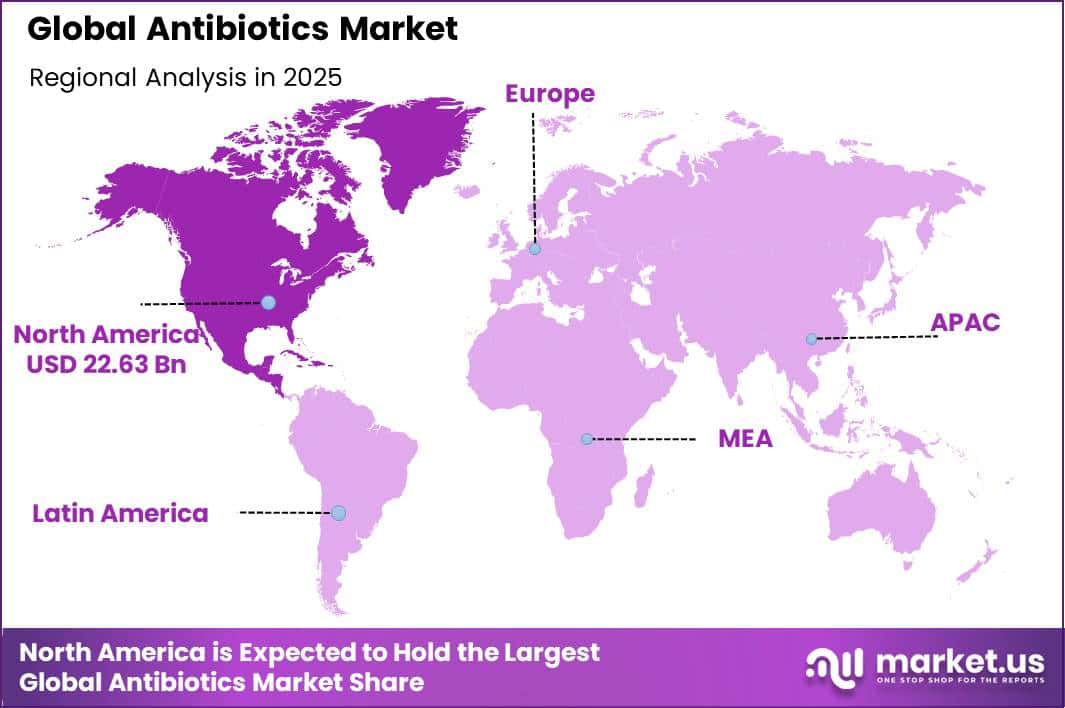
The Global Antibiotics Market size is expected to be worth around US$ 77.4 Billion by 2035 from US$ 51.3 Billion in 2025, growing at a CAGR of 4.2% during the forecast period from 2026 to 2035. In 2025, North America led the market, achieving over 44.1% share with a revenue of US$ 22.63 Billion.
The global antibiotics market represents a critical segment of the pharmaceutical industry focused on developing and supplying medicines used to prevent and treat bacterial infections. Antibiotics remain essential for managing conditions such as respiratory infections, urinary tract infections, bloodstream infections, tuberculosis, and hospital-acquired bacterial diseases.
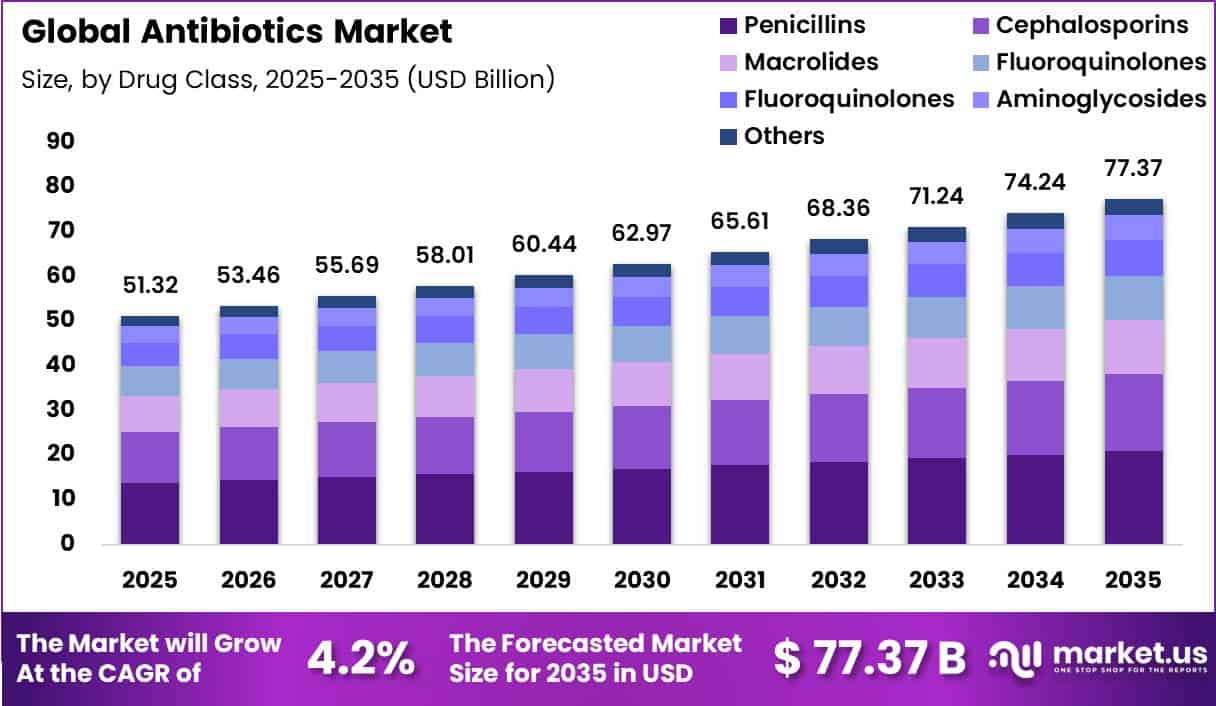
The market continues to evolve due to increasing healthcare demand, rising infectious disease prevalence, and the urgent need for new therapies addressing antimicrobial resistance (AMR). According to the World Health Organization (WHO), antibiotic resistance is increasing globally, with one in six laboratory-confirmed bacterial infections causing common infections found to be resistant to antibiotic treatments in 2023.
Government health organizations are emphasizing responsible antibiotic use, improved surveillance, and innovation in antibiotic development. WHO’s Global Antimicrobial Resistance and Use Surveillance System (GLASS) analyzed data from more than 23 million bacteriologically confirmed infection cases reported by over 100 countries, highlighting the growing challenge of resistant pathogens.
The Centers for Disease Control and Prevention (CDC) states that antibiotics are critical tools for treating bacterial infections, but inappropriate use contributes to antimicrobial resistance and reduces treatment effectiveness.
Growth in the antibiotics market is supported by increasing hospital admissions, expansion of diagnostic capabilities, rising awareness regarding infection control, and research into advanced antibiotics, including narrow-spectrum and next-generation antibacterial agents.
However, antibiotic resistance, regulatory challenges, and limited profitability for new antibiotic discovery remain key industry concerns. WHO estimates that drug-resistant infections could cause significant global health and economic impacts if urgent action is not taken, reinforcing the importance of antibiotic innovation and stewardship programs.
Key Takeaways
- Market Size: The Global Antibiotics Market size was US$ 51.3 billion in 2025. The market is estimated to grow to US$ 77.4 billion by 2035.
- Market Share: The Compound Annual Growth Rate (CAGR) of the market from 2026 to 2035 will be 4.2%.
- Drug Class: Penicillins have the largest market share, accounting for 27.1% of total drug class revenue.
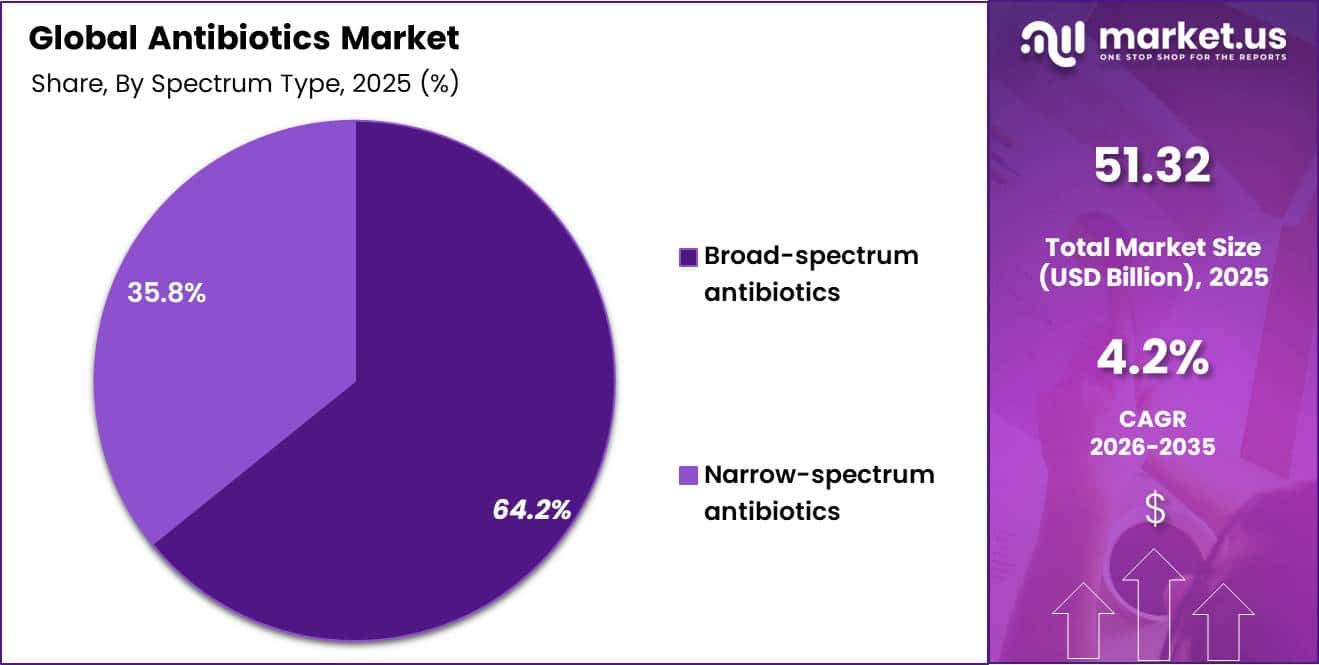
- Spectrum Type: Broad-Spectrum Antibiotics leads the segment, accounting for 64.2% of total spectrum type revenue.
- Indication: Respiratory Tract Infections leads the segment, accounting for 32.2% of total indication revenue.
- Route of Administration: Oral leads the segment, accounting for 57.4% of total route of administration revenue.
- End User: Hospitals lead the segment, accounting for 45.8% of total end-user revenue.
- Regional: North America is the dominant regional market, accounting for 44.1% of global revenue, holding US$ 22.63 billion in revenue in 2025.
Drug Class Analysis
The drug class segment of the global antibiotics market is led by Penicillins, which accounted for 27.1% of the market share in 2025.
Penicillins continue to maintain strong adoption due to their established clinical effectiveness, broad availability, cost-effectiveness, and extensive use in treating common bacterial infections such as respiratory infections, skin infections, and urinary tract infections. Their long history of safety and inclusion in essential medicine lists supports consistent demand across healthcare systems worldwide.
Cephalosporins represented the second-largest segment with a 22.2% share in 2025, driven by their effectiveness against a wide range of bacterial pathogens and increasing utilization in hospital-acquired infection management.
Macrolides captured 15.8%, supported by their role in treating respiratory infections and patients with penicillin allergies. Fluoroquinolones accounted for 12.8%, primarily used for complicated infections requiring broad antibacterial activity.
Tetracyclines held 10.2%, benefiting from applications in respiratory diseases, acne treatment, and atypical bacterial infections. Aminoglycosides contributed 7.2%, mainly used for severe infections requiring potent antibacterial action, while Others accounted for 4.7%, including specialized antibiotic classes such as carbapenems and glycopeptides.
Increasing antimicrobial resistance monitoring and the development of newer antibiotic therapies continue to shape drug class preferences.
Spectrum Type Analysis
The spectrum type segment of the global antibiotics market is dominated by Broad-Spectrum Antibiotics, which held 64.2% of the market share in 2025.
Broad-spectrum antibiotics are widely preferred because they provide activity against multiple bacterial species, making them valuable in emergency care, empiric treatment, and situations where the specific pathogen has not yet been identified. Hospitals frequently rely on these antibiotics for managing severe infections, including pneumonia, sepsis, and complicated bacterial diseases.
The increasing prevalence of multidrug-resistant infections and the need for rapid treatment initiation have supported the continued use of broad-spectrum therapies. However, healthcare organizations are increasingly promoting antimicrobial stewardship programs to reduce unnecessary usage and limit resistance development.
Narrow-Spectrum Antibiotics accounted for 35.8% of the market share in 2025. These antibiotics target specific bacterial groups and are increasingly encouraged when accurate diagnostic testing identifies the causative pathogen.
Narrow-spectrum therapies help minimize disruption of normal microbiota and reduce the risk of antibiotic resistance. Growing adoption of rapid diagnostics, pathogen identification technologies, and personalized treatment approaches is expected to strengthen demand for targeted antibiotic therapies during the forecast period.
Indication Analysis
The indication segment of the global antibiotics market is led by Respiratory Tract Infections, which accounted for 32.2% of the market share in 2025. Respiratory infections remain one of the most common reasons for antibiotic prescriptions globally, including conditions such as bacterial pneumonia, bronchitis, and sinus infections. Increasing cases of community-acquired and hospital-acquired respiratory infections continue to drive antibiotic utilization.
Urinary Tract Infections (UTIs) represent another significant application area due to their high prevalence among both community and hospitalised patients. Antibiotics remain the primary treatment option for bacterial UTIs, particularly complicated infections requiring targeted therapy. Skin and Soft Tissue Infections contribute substantially to market demand, supported by rising cases of wound infections, cellulitis, and surgical site infections.
Bloodstream infections, sepsis, and intra-abdominal infections represent critical indications where rapid antibiotic intervention is essential to reduce mortality risks. Increasing hospitalization rates and growing awareness of early sepsis management support demand in this segment.
Gastrointestinal Infections also contribute through treatment of bacterial diarrhea and other digestive infections. The Others segment includes dental infections, bone infections, sexually transmitted infections, and additional bacterial conditions requiring antimicrobial therapy.
Route of Administration Analysis
The route of administration segment is dominated by Oral antibiotics, which captured 57.4% of the market share in 2025. Oral administration remains the preferred route due to convenience, patient compliance, cost advantages, and suitability for outpatient treatment. Oral antibiotics are extensively prescribed for mild-to-moderate infections, including respiratory infections, urinary tract infections, and skin infections.
The widespread availability of tablets, capsules, and liquid formulations has strengthened oral antibiotic adoption across retail pharmacies, clinics, and homecare settings. Additionally, improvements in oral formulations with enhanced absorption and longer dosing intervals continue supporting market growth.
Parenteral / IV antibiotics represent a major segment, particularly in hospitals and emergency care settings where rapid drug action is required for severe infections such as sepsis, meningitis, and complicated bacterial infections.
Topical antibiotics are commonly used for localized skin infections, wounds, and dermatological conditions. The Others segment includes alternative delivery methods such as inhaled and intramuscular antibiotics used in specific clinical situations. Increasing healthcare access, outpatient treatment expansion, and improved infection management protocols continue influencing route preferences globally.
End-User Analysis
The end-user segment of the global antibiotics market is dominated by Hospitals, which accounted for 45.8% of the market share in 2025. Hospitals represent the largest consumer group due to the high volume of antibiotic prescriptions for severe infections, surgical procedures, intensive care treatment, and management of hospital-acquired infections.
The growing burden of antimicrobial-resistant infections and increasing inpatient admissions continue to drive antibiotic demand within hospital settings.
Clinics and outpatient centres represent a significant segment, supported by increasing diagnosis and treatment of common bacterial infections outside hospital environments. These facilities frequently prescribe oral antibiotics for respiratory infections, urinary infections, and minor bacterial conditions.
Homecare adoption is expanding due to the rising preference for convenient treatment options, aging populations, and the availability of oral antibiotic therapies suitable for self-administration under medical supervision.
Retail and online pharmacies contribute to market accessibility by improving medicine availability and supporting prescription fulfillment. However, stricter antibiotic prescription regulations and antimicrobial stewardship initiatives are influencing purchasing patterns.
Growing emphasis on responsible antibiotic use, digital healthcare platforms, and decentralized care models is expected to reshape end-user dynamics in the coming years.
Key Market Segments
By Drug Class
- Penicillins
- Cephalosporins
- Macrolides
- Fluoroquinolones
- Tetracyclines
- Aminoglycosides
- Others
By Spectrum Type
- Broad-Spectrum Antibiotics
- Narrow-Spectrum Antibiotics
By Indication
- Respiratory Tract Infections
- Urinary Tract Infections
- Skin and Soft Tissue Infections
- Bloodstream/Sepsis & Intra-Abdominal Infections
- Gastrointestinal Infections
- Others
By Route of Administration
- Oral
- Parenteral/IV
- Topical
- Others
By End User
- Hospitals
- Clinics/Outpatient Centers
- Homecare
- Retail/Online Pharmacies
Driver
Rising middle-income antibiotics consumption and infection burden
Estimated global antibiotic consumption increased from roughly 29 to 30 billion defined daily doses (DDDs) in 2016 to about 34 to 35 billion DDDs by 2023, implying approximately 15% to 20% growth in volumes and a more than 10% rise in per capita consumption rates.
When missing data countries are extrapolated, total use in 2023 is projected at close to 49 billion DDDs, and forward-looking models suggest a potential increase of around 50% to approximately 75 billion DDDs by 2030 if current trajectories in rapidly developing nations continue.
This volume expansion is disproportionately concentrated in upper- and lower-middle-income regions across Asia, Latin America, and Africa, where infection prevalence, urban crowding, and uneven primary care access drive a higher baseline of bacterial disease and frequent empiric prescribing.
On the unit economics side, antibiotics typically remain low priced compared with many speciality drugs, but aggregate spend grows as treatment courses per capita and defined daily dose intensity rise, creating a structurally expanding demand pool that favors broad spectrum oral generics in retail channels and parenteral agents in hospital settings.
Commercially, manufacturers with strong distribution in APAC corridors, South Asia, and selected African hubs can capture value through optimized logistics, branded generics strategies, and institutional contracts, while wholesalers adjust inventory policies to higher throughput and shorter reorder cycles; this dynamic plausibly adds more than 2 % points to global CAGR versus a flat volume scenario between 2026 and 2033.
| Driver | (~) % Impact on CAGR Forecast | Geographic Relevance | Impact Timeline |
|---|---|---|---|
| Rising middle-income antibiotics consumption and infection burden | +2.3% | APAC corridors, South Asia, Latin America, Africa | Medium term (2–4 years) |
| Escalating antimicrobial resistance and treatment complexity | +1.9% | Global, highest in South Asia and Sub-Saharan Africa | Long-term (≥ 4 years) |
| Antimicrobial stewardship and inappropriate use reduction | −1.2% | North America core, EU, selected APAC | Medium term (2–4 years) |
| Novel and premium-priced antibiotics approvals | +1.4% | North America core, EU, Japan, high-income APAC | Long-term (≥ 4 years) |
| Universal health coverage and access expansion policies | +1.6% | Low- and middle-income markets (LMICs) | Medium–long term (2–6 years) |
| Pipeline and incentives constraints for new agents | −0.8% | Global | Long-term (≥ 4 years) |
Challenge
Escalating AMR Burden Restricts Antibiotic Market Growth
The accelerating antimicrobial resistance (AMR) burden introduces a structurally rising mismatch between legacy antibiotic efficacy and real-world pathogen profiles, with WHO estimating 1.27 million deaths directly attributable to bacterial AMR in 2019 and contributing to 4.95 million deaths, signalling that significant proportions of hospital bacterial infections in some regions already involve multidrug resistant strains and last-resort agents.
As resistance rates for key classes such as third generation cephalosporins and fluoroquinolones climb toward or above 30% in selected LMIC tertiary care facilities, average treatment courses increasingly require multi drug regimens, prolonged lengths of stay by 3 to 7 days, and higher dose protocols that raise per episode drug consumption by 20% to 40%, but at the same time force stewardship programs to cap broad spectrum use, pulling down achievable volume growth by an estimated 1.6 % points versus an unconstrained demand scenario.
Strategically, companies and health systems must invest in multi-layered AMR responses, including continuous susceptibility testing panels across at least 50 to 100 priority pathogens per national network, expansion of GLASS-style surveillance coverage beyond the current 100-plus country participants, and integration of resistance data into procurement algorithms that rebalance portfolios toward narrow-spectrum and reserve agents.
These measures require recurring digital health budgets in the tens of millions of dollars for mid-size countries and shift portfolio planning from single drug revenue maximization toward system-level outcome optimisation over 5- to 10-year horizons.
| Challenge | (~) % CAGR Friction Drag | Geographic Relevance | Mitigation Horizon |
|---|---|---|---|
| Escalating AMR burden | -1.6% | Global, LMIC-heavy | Long-term (≥ 4 years) |
| Slow novel antibiotic pipeline | -1.3% | North America, EU, APAC R&D hubs | Long-term (≥ 4 years) |
| Stewardship-driven usage tightening | -0.8% | OECD systems, large hospital networks | Medium term (2-4 years) |
| Pricing and reimbursement pressure | -1.0% | North America core, EU payers | Medium term (2-4 years) |
| Manufacturing quality/supply fragility | -0.7% | APAC production corridors, global hospitals | Medium term (2-4 years) |
| Data and surveillance gaps | -0.6% | Africa, South Asia, LatAm | Long term (≥ 4 years) |
Restraints
Escalating antimicrobial resistance and stewardship pressure
Escalating antimicrobial resistance (AMR) is structurally compressing volumes in the global antibiotics market by forcing stewardship programs to move broad-spectrum agents out of first-line use, with hospital-onset antimicrobial-resistant infection rates sitting roughly 15% to 20% above pre 2019 baselines in many systems, according to CDC monitoring and subsequent analyses.
At a macro level, national AMR action plans built around WHO’s global framework are driving formulary restrictions, mandatory de-escalation protocols within 48 to 72 hours, and tighter diagnostic-linked prescribing, which reduce inappropriate utilisation by high single-digit percentages in acute care while shifting demand mix toward reserve and combination therapies.
Quantitatively, this translates into an 8% to 12% volume drag on commoditised broad-spectrum cephalosporins and fluoroquinolones over 5 to 7 years in high-income markets, even as total infection episodes remain flat to slightly rising, effectively capping revenue growth and trimming baseline CAGR by an estimated 1.2 % points through 2030 as prescribers migrate to narrower, shorter course regimens.
Strategically, the combination of capped volumes, enforced shorter treatment durations, often 5 to 7 days instead of historical 10 to 14 day courses, and payer pressure to move from newer branded agents back to cheaper generics in stable indications.
Drives margin compression of 150 to 250 basis points for hospital focused portfolios, reduces the economic upside of new launches, and narrows the viable commercial window before resistance erodes efficacy, pushing boards to defer marginal antibiotic projects, consolidate SKUs, and concentrate capital into a smaller set of high value AMR focused assets.
| Restraint | (~) % Impact on CAGR Forecast | Geographic Relevance | Impact Timeline |
|---|---|---|---|
| Escalating antimicrobial resistance & stewardship pressure | -1.2% | North America, EU, high-income APAC | Long-term (≥ 4 years) |
| Chronic supply chain fragility & API concentration | -0.9% | North America core, EU, LMICs | Medium term (2-4 years) |
| Weak profitability & constrained R&D/CapEx incentives | -0.8% | Global, esp. legacy small-molecule players | Long-term (≥ 4 years) |
| Intensifying regulatory scrutiny & slow approvals | -0.6% | US, EU, Japan | Medium term (2-4 years) |
| National pricing controls & tender pressures | -0.7% | EU, LATAM, Asia LMIC corridors | Long-term (≥ 4 years) |
| Environmental & manufacturing compliance tightening | -0.4% | China, India, EU industrial hubs | Short–Medium term (≤ 4 years) |
Opportunity
Subscription Access Models Transform Antibiotic Revenue Sustainability
This opportunity leverages emerging delinkage concepts in antimicrobial markets, where revenue is decoupled from unit sales, to create predictable subscription contracts for high-value hospital antibiotics rather than relying on volume-driven pricing that currently undermines stewardship.
Unlike baseline drivers such as rising infection incidence or resistance, this model represents a fundamentally new monetization architecture in which health systems or large provider networks commit to multi-year access payments, for example, USD 150 to 300 million per large OECD health system over five years for a cluster of reserve class agents, with strict usage caps embedded into contracts.
If scaled across 25 to 30 major payers globally, such subscriptions could conservatively unlock USD 5 to 7 billion in incremental, low-volatility revenue by 2035, equivalent to roughly 1.5 % points of CAGR upside on a USD 60 billion-plus 2026 baseline, while allowing manufacturers to maintain gross margins in the 55% to 65% range because supply chain footprints are optimised around stable demand.
Operationally, the opportunity lies in packaging portfolios of novel or underutilised agents with embedded stewardship and data-sharing clauses, exploiting upcoming national action plans and public funding programs that explicitly seek new payment mechanisms to sustain small antibiotic innovators and re-attract large pharma to the space.
The white space here is that fewer than a dozen products globally are currently covered by robust delinked schemes, leaving more than 100 hospital critical agents as candidates for subscription bundling, with contractually guaranteed revenue streams that materially change the risk-adjusted net present value of late-stage antibiotic pipelines.
| Opportunity | (~) % Potential CAGR Upside | Geographic Relevance | Execution Window |
|---|---|---|---|
| Subscription-style delinked access models | +1.5% | North America, EU, OECD Asia | Medium term (2-4 years) |
| LMIC access & quality upgrade platforms | +1.2% | Sub-Saharan Africa, South Asia, LATAM | Medium term (2-4 years) |
| One-Health integrated livestock antibiotics | +0.9% | APAC emerging, LATAM, EU agriculture | Long-term (≥ 4 years) |
| Long-acting depot & targeted delivery formats | +1.0% | Global tertiary-care hubs | Medium term (2-4 years) |
| Digital stewardship & diagnostics-linked prescribing | +0.8% | North America core, EU, urban APAC | Short term (≤ 2 years) |
| M&A roll-up of off-patent injectable portfolios | +0.7% | Global hospital segment | Short term (≤ 2 years) |
Regional Analysis
In 2025, North America led the market, achieving over 44.1% share with a revenue of US$ 22.63 billion. The global antibiotics market demonstrates strong regional variation due to differences in disease burden, healthcare infrastructure, antibiotic accessibility, regulatory frameworks, and antimicrobial resistance patterns.
North America represents a major market, supported by advanced healthcare systems, high adoption of innovative antimicrobial therapies, and a strong focus on infection prevention and antimicrobial stewardship programs.
The region continues to witness significant demand from hospitals and outpatient facilities due to the rising incidence of respiratory infections, urinary tract infections, and healthcare-associated infections. Government initiatives and surveillance programs aimed at controlling antibiotic resistance further influence market growth.
Europe holds a significant position in the antibiotics market, driven by well-established healthcare networks, increasing awareness regarding appropriate antibiotic usage, and strong regulatory oversight. European countries are actively implementing antimicrobial resistance action plans to optimize antibiotic prescribing and encourage the development of targeted therapies.
Asia-Pacific is expected to experience substantial growth due to its large population base, increasing healthcare expenditure, expanding hospital infrastructure, and rising prevalence of bacterial infections. Growing access to healthcare services and increasing demand for affordable antibiotics are key factors supporting regional expansion.
Latin America, the Middle East & Africa are also contributing to market growth through improving healthcare accessibility, rising infectious disease management efforts, and investments in medical infrastructure.
However, challenges such as antibiotic misuse, limited diagnostic capabilities, and regulatory gaps continue affecting market development in some countries. Overall, global efforts toward antimicrobial stewardship and improved infection management are shaping regional market trends.
Key Regions and Countries
North America
- The US
- Canada
Europe
- Germany
- France
- The U.K.
- Italy
- Spain
- Russia & CIS
- Rest of Europe
Asia Pacific
- China
- India
- Japan
- South Korea
- ASEAN
- Australia & New Zealand
- Rest of Asia Pacific
Middle East & Africa
- GCC
- South Africa
- Rest of Middle East & Africa
Latin America
- Brazil
- Mexico
- Rest of Latin America
Key Player Analysis
Suppliers in the global antibiotics market seek competitive advantage through novel antibiotic mechanism development targeting multidrug-resistant bacterial pathogens, particularly carbapenem-resistant Enterobacteriaceae, methicillin-resistant Staphylococcus aureus, and extensively drug-resistant tuberculosis.
Where the combination of urgent unmet clinical need and regulatory incentive programs, including FDA QIDP designation and EU PRIME scheme, provides accelerated approval pathways and extended market exclusivity periods that partially offset the historically unfavourable antibiotic development economic model.
Key strategic focus areas include beta-lactam and beta-lactamase inhibitor combination development, restoring cephalosporin and carbapenem efficacy against resistant gram-negative pathogens, novel mechanism antibiotics targeting previously unexploited bacterial cellular processes.
Resistant to existing resistance mechanisms, and antibiotic stewardship program partnership development with hospital infectious disease departments supporting appropriate antibiotic selection and duration guidance that simultaneously protects clinical efficacy and supports premium novel antibiotic institutional formulary adoption.
Companies continue investing in WHO priority pathogen-targeted clinical development programs, CDC antimicrobial resistance initiative partnership engagement, and hospital pharmacy and infectious disease specialist institutional procurement relationship development to secure formulary inclusion for novel antibiotics addressing the most clinically critical resistant infection treatment gaps globally.
The progressive global escalation of antimicrobial resistance, with the WHO declaring AMR among the top ten global public health threats and governments implementing national AMR action plans mandating novel antibiotic development incentives, is creating policy-supported institutional demand for next-generation antibiotic products commanding premium pricing beyond commodity generic antibiotic market dynamics through the forecast period to 2035.
Top Key Players
- AbbVie Inc.
- AstraZeneca plc
- Bayer AG
- Eli Lilly and Company
- GlaxoSmithKline plc (GSK)
- Merck & Co. Inc. (MSD)
- Novartis AG
- Pfizer Inc.
- Roche Holding AG
- Sanofi S.A.
- Johnson & Johnson
- Bristol-Myers Squibb Company
- Boehringer Ingelheim GmbH
- Bayer Specialty Antibiotic Division
- Shionogi & Co. Ltd.
- Other Key Players
Recent Developments
- In January 2026, Pfizer Inc. expanded its cephalosporin antibiotic portfolio with an enhanced ceftazidime-avibactam formulation targeting carbapenem-resistant gram-negative bacterial infection management across North American and European hospital infectious disease department institutional buyers.
- In February 2026, Merck & Co. secured expanded reimbursement authorization for its ceftolozane-tazobactam antibiotic across five additional European national health service hospital formularies, targeting multidrug-resistant Pseudomonas aeruginosa infection management in hospital critical care and pulmonology institutional settings.
- In March 2026, Shionogi & Co. launched its novel cefiderocol siderophore cephalosporin antibiotic across Asian hospital pharmacy institutional buyers, targeting carbapenem-resistant Acinetobacter baumannii and Enterobacteriaceae infections in hospital ICU and infectious disease department procurement programs.
- In May 2026, GSK secured a multi-year antibiotic supply agreement with a leading international hospital procurement consortium covering its gepotidacin novel topoisomerase antibiotic for uncomplicated urinary tract infection management across institutional outpatient clinic and hospital pharmacy distribution networks.
Report Scope
| Report Features | Description |
|---|---|
| Market Value (2025) | US$ 51.3 billion |
| Forecast Revenue (2035) | US$ 77.4 billion |
| CAGR (2026-2035) | 4.2% |
| Base Year for Estimation | 2025 |
| Historic Period | 2020-2024 |
| Forecast Period | 2026-2035 |
| Report Coverage | Revenue Forecast, Market Dynamics, Competitive Landscape, Recent Developments |
| Segments Covered | By Drug Class (Penicillins, Cephalosporins, Macrolides, Fluoroquinolones, Tetracyclines, Aminoglycosides, Others), By Spectrum Type (Broad-Spectrum Antibiotics, Narrow-Spectrum Antibiotics), By Indication (Respiratory Tract Infections, Urinary Tract Infections, Skin and Soft Tissue Infections, Bloodstream/Sepsis & Intra-Abdominal Infections, Gastrointestinal Infections, Others), By Route of Administration (Oral, Parenteral/IV, Topical, Others), By End User (Hospitals, Clinics/Outpatient Centers, Homecare, Retail/Online Pharmacies) |
| Regional Analysis | North America – The US, Canada; Europe – Germany, France, U.K., Italy, Spain, Russia & CIS, Rest of Europe; Asia Pacific – China, India, Japan, South Korea, ASEAN, Australia & New Zealand, Rest of Asia Pacific; Middle East & Africa – GCC, South Africa, Rest of Middle East & Africa; Latin America – Brazil, Mexico, Rest of Latin America |
| Competitive Landscape | AbbVie Inc., AstraZeneca plc, Bayer AG, Eli Lilly and Company, GlaxoSmithKline plc (GSK), Merck & Co. Inc. (MSD), Novartis AG, Pfizer Inc., Roche Holding AG, Sanofi S.A., Johnson & Johnson, Bristol-Myers Squibb Company, Boehringer Ingelheim GmbH, Bayer Specialty Antibiotic Division, Shionogi & Co. Ltd., Other Key Players |
| Customization Scope | Customization for segments, region/country-level will be provided. Moreover, additional customization can be done based on the requirements. |
| Purchase Options | We have three licenses to opt for: Single User License, Multi-User License (Up to 5 Users), Corporate Use License (Unlimited User and Printable PDF) |





































