


Market Overview
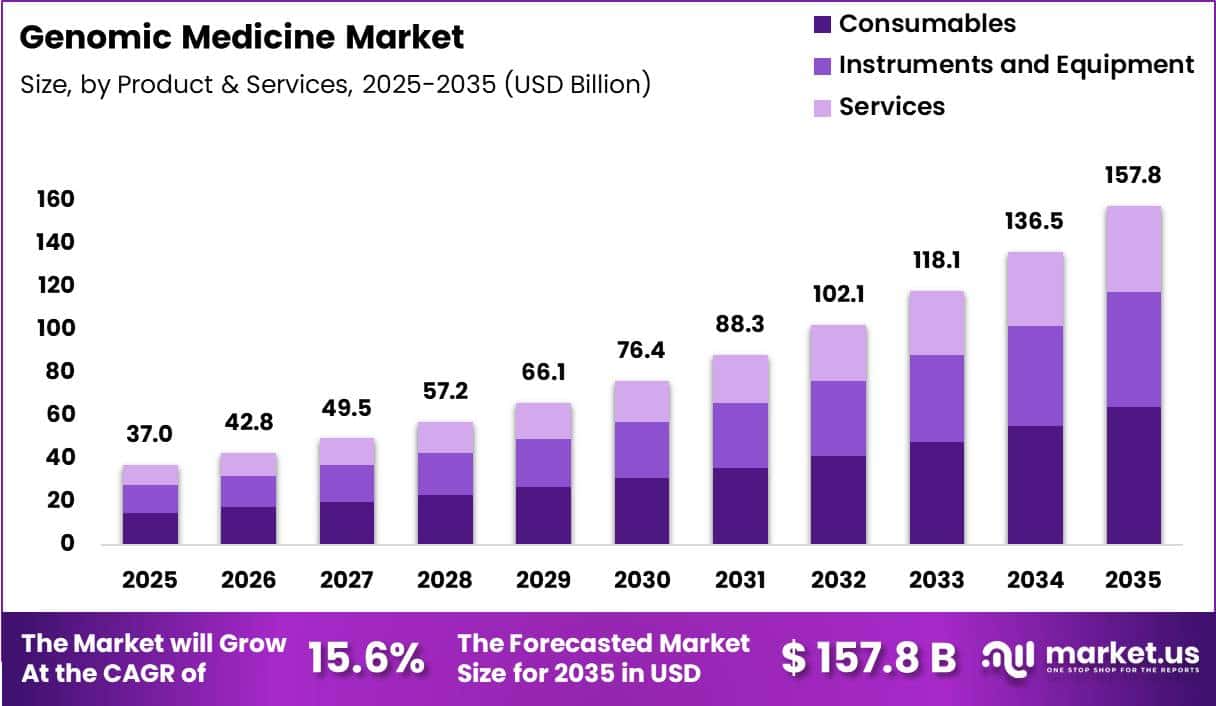
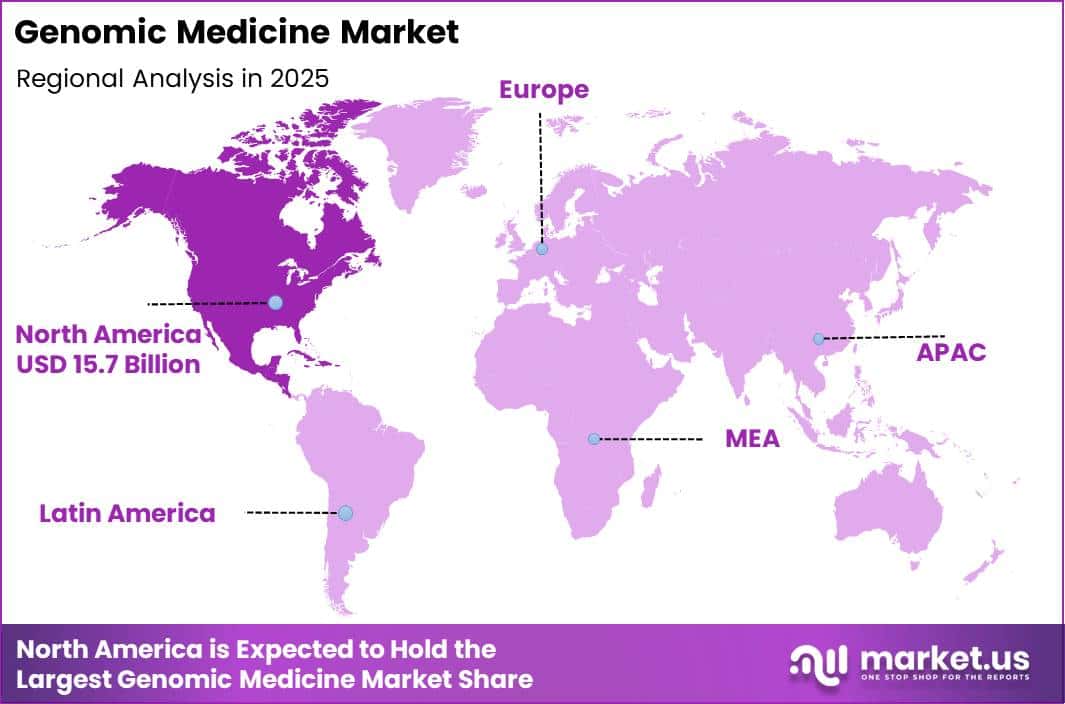
Global Genomic Medicine Market size is expected to be worth around US$ 157.8 Billion by 2035 from US$ 37.0 Billion in 2025, growing at a CAGR of 15.6% during the forecast period from 2026 to 2035. In 2025, North America led the market, achieving over 42.3% share with a revenue of US$ 15.7 Billion.
Genomic medicine is transforming healthcare by enabling more precise diagnosis, prevention, and treatment strategies based on an individual’s genetic profile. According to the World Health Organization (WHO), genomics is increasingly being applied in disease risk assessment, treatment selection, drug development, and personalized care, particularly in oncology and rare disease management.
The organization also reported that more than 6,500 genomic clinical studies have been conducted globally, reflecting the growing importance of genomic technologies in modern medicine. Advances in sequencing technologies and expanding research initiatives continue to accelerate the adoption of genomic medicine worldwide.
The U.S. National Institutes of Health (NIH) announced in 2026 that its All of Us Research Program has become the world’s largest integrated genomics and health database, containing data from more than 747,000 participants, including over 535,000 whole genome sequences and approximately 482,000 linked electronic health records. Researchers have already utilized these resources to support discoveries in precision medicine, pharmacogenomics, and population health studies.
Genomic medicine is also playing a critical role in rare disease diagnosis. NIH estimates that 25–30 million Americans are affected by rare diseases, while only about 500 treatments are currently approved for nearly 7,000 identified rare genetic disorders.
Continuous investments in sequencing capabilities, bioinformatics, and genomic data sharing are expected to further strengthen the integration of genomics into routine clinical practice worldwide.
Key Takeaways
- Market Size : Global Genomic Medicine Market size is expected to be worth around US$ 157.8 Billion by 2035 from US$ 37.0 Billion in 2025.
- Market Share : The Market is growing at a CAGR of 15.6% during the forecast period from 2026 to 2035.
- Product & Services Analysis : The Consumables segment dominated the Genomic Medicine Market in 2025, accounting for 40.5% of the total market share.
- Application Analysis : Oncology emerged as the leading application segment in the Genomic Medicine Market, holding 37.5% of the market share in 2025.
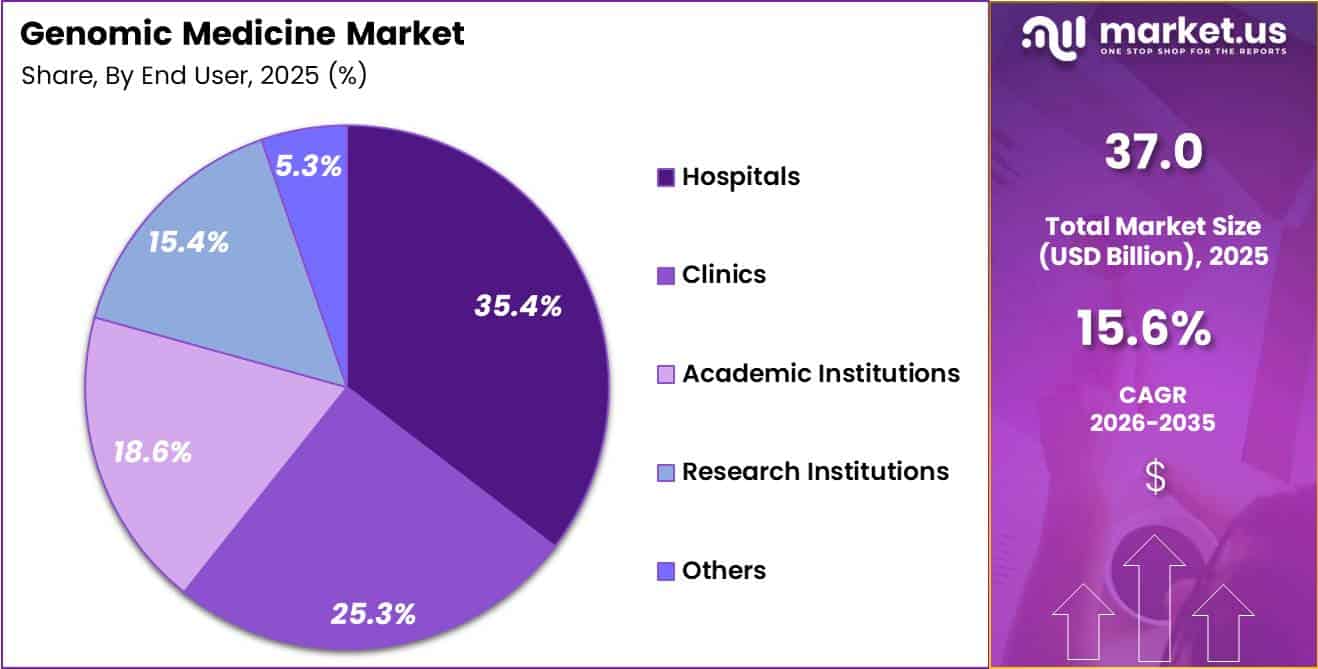
- End User Analysis : Hospitals dominated the Genomic Medicine Market in 2025, accounting for 35.4% of the overall market share.
- Regional Analysis : In 2025, North America led the market, achieving over 42.3% share with a revenue of US$ 15.7 Billion.
Services Analysis
The consumables segment dominated the Genomic Medicine Market in 2025, accounting for 40.5% of the total market share. The strong position of this segment is driven by the continuous demand for reagents, assay kits, sequencing cartridges, sample preparation materials, and laboratory chemicals used in genomic testing and research activities.
Increasing adoption of next-generation sequencing, molecular diagnostics, and precision medicine approaches has further accelerated the consumption of these products across clinical and research settings.
Consumables require frequent replenishment, making them a recurring source of revenue for manufacturers. Growing investments in personalized medicine and genetic testing programs are also supporting segment expansion.
The instruments and equipment segment captured 34.2% of the market in 2025. This category includes sequencing systems, PCR instruments, bioinformatics platforms, and genomic analyzers that enable accurate and high-throughput genetic analysis. Technological advancements and automation are enhancing laboratory efficiency and encouraging adoption.
Meanwhile, the services segment represented 25.3% of the market share. Services such as genomic data interpretation, sequencing support, bioinformatics analysis, genetic counseling, and clinical consultation are gaining importance as healthcare providers seek specialized expertise to improve patient outcomes and streamline precision medicine initiatives.
Application Analysis
Oncology emerged as the leading application segment in the Genomic Medicine Market, holding 37.5% of the market share in 2025. The dominance of this segment is primarily attributed to the growing use of genomic technologies for cancer diagnosis, biomarker identification, treatment selection, and disease monitoring.
Increasing adoption of companion diagnostics and targeted therapies has strengthened the role of genomics in oncology care. Rising cancer incidence worldwide and the need for personalized treatment strategies continue to drive demand for genomic solutions in this field.
Rare genetic disorders accounted for 11.6% of the market, supported by advances in sequencing technologies and increasing efforts to improve early diagnosis. Cardiology represented 14.2% of the market as genomic testing gains importance in identifying inherited cardiovascular conditions and assessing disease risks.
Infectious diseases captured 10.4%, benefiting from genomic surveillance and pathogen identification capabilities. Paediatrics held 8.7%, driven by newborn screening and genetic disorder detection. Endocrinology contributed 6.7%, while respiratory medicine accounted for 5.6% of the market.
The remaining 5.3% was attributed to other applications, including neurology and immunology, reflecting the expanding clinical use of genomic medicine.
End User Analysis
Hospitals dominated the Genomic Medicine Market in 2025, accounting for 35.4% of the overall market share. Their leading position is supported by the increasing integration of genomic testing into routine clinical practice, particularly for oncology, rare diseases, and prenatal diagnostics.
Hospitals possess advanced laboratory infrastructure, skilled healthcare professionals, and access to sophisticated genomic technologies, enabling comprehensive patient management and personalized treatment planning. Growing investments in precision medicine programs and expanding access to molecular diagnostics are further strengthening the segment’s growth.
Research institutions constitute another significant segment, benefiting from increased funding for genomics research, population studies, and translational medicine initiatives. Academic institutions are also playing an important role by conducting genetic research, developing innovative technologies, and training specialized professionals in genomic sciences.
Clinics continue to adopt genomic services to provide personalized healthcare solutions and support preventive medicine strategies. The others category includes diagnostic laboratories, biotechnology companies, and specialized genetic centers that contribute to market development through sequencing services, bioinformatics support, and clinical genomic applications.
Collectively, these end users are accelerating the adoption of genomic medicine across diverse healthcare settings worldwide.
Market Segmentations
By Product & Services
- Instruments and Equipment
- Consumables
- Services
By Application
- Respiratory Medicine
- Cardiology
- Paediatrics
- Oncology
- Infectious Diseases
- Endocrinology
- Rare Genetic Disorders
- Others
By End- User
- Hospitals
- Clinics
- Academic Institutions
- Research Institutions
- Others
Drivers
Multi omics and platform integration in care pathways
The next wave of growth comes from moving genomic medicine from single test ordering into integrated care architectures that combine genomics with transcriptomic, proteomic, phenotype, and longitudinal clinical data.
Nature’s 2025 review highlighted a genomics first approach layered with other omics as increasingly feasible, while Genome.gov’s 2026 precision medicine definition explicitly frames clinical decision making around genomic, environmental, and lifestyle information rather than genetics in isolation.
This matters commercially because integrated platforms support higher revenue per patient episode through bundled analytics, molecular tumor boards, reanalysis subscriptions, and software led orchestration, and they also improve switching costs versus stand alone wet lab offerings.
Over 2026 to 2030, the winning operating model is likely to shift from pure sequencing throughput competition toward end to end clinical utility platforms with interoperable data layers, lower interpretation cost per report, and tighter alignment to hospital workflow and therapy routing decisions.
| Driver | (~) % Impact on CAGR Forecast | Geographic Relevance | Impact Timeline |
|---|---|---|---|
| Reimbursement expansion for clinical genomics | +2.4% | North America core, UK, Western Europe spill-over | Short term (≤ 2 years) |
| Rare disease genome-first diagnosis adoption | +2.1% | UK core, North America, developed APAC | Medium term (2-4 years) |
| Oncology CGP and precision therapy routing | +1.9% | North America core, EU, APAC metro systems | Short term (≤ 2 years) |
| FDA regulatory flexibility for cell and gene products | +1.7% | U.S. core, EU signaling effect, APAC innovation hubs | Medium term (2-4 years) |
| WHO-led precision medicine policy normalization | +1.3% | EU, GCC, Latin America, APAC public systems | Long term (≥ 4 years) |
| Multi-omics and platform integration in care pathways | +1.5% | North America, EU, Japan, South Korea, China tier-1 centers | Medium term (2-4 years) |
Challenges
Clinical Implementation Complexity in Genomic Medicine Integration
Genomic medicine adoption is constrained less by sequencing capability and more by the operational difficulty of embedding genomic outputs into routine clinical workflows across large provider systems. Clinicians typically operate under tight consultation windows of 10 to 20 minutes per patient, forcing genomic insights to compete with immediate diagnostic and treatment decisions rather than function as seamlessly integrated decision inputs.
Even in advanced health systems piloting clinical decision support (CDS) for pharmacogenomics and oncology panels, real world utilization often remains below 20 to 30% of eligible patients. This is driven by inconsistent electronic health record (EHR) integration, fragmented consent workflows, and non standardized variant interpretation pipelines across specialties such as oncology, cardiology, and primary care.
As a result, high value genomic applications identified by agencies such as the CDC and NIH particularly in hereditary cancer syndromes and familial hypercholesterolemia remain significantly under deployed relative to their eligible populations. This creates a structural “latent demand gap” where clinical utility exists but operational friction prevents scale.
At the system level, this under implementation is estimated to reduce effective market growth by approximately 1.8 % points in CAGR, as lower CDS trigger rates and incomplete patient coverage suppress downstream demand for sequencing, companion diagnostics, and targeted therapies.
Addressing this constraint requires standardization of CDS rules, integration of genomic alerts directly into EHR workflows, and formal genomics governance structures within hospitals. Scaling adoption would also depend on workforce enablement, including training programs reaching thousands of clinicians per health system over 3 to 5 years, alongside measurable operational KPIs such as genomic referral rates per 1,000 encounters and CDS to action time reduction.
| Challenge | (~) % CAGR Friction Drag | Geographic Relevance | Mitigation Horizon |
|---|---|---|---|
| Clinical implementation complexity | -1.8% | North America, EU, high-income APAC | Long term (≥ 4 years) |
| Interoperable data infrastructure gaps | -1.5% | North America, EU, APAC corridors | Long term (≥ 4 years) |
| Evidence and reimbursement lag | -1.3% | North America core, EU payers | Medium term (2-4 years) |
| Genomics workforce and skills deficit | -1.1% | Global tertiary care hubs | Long term (≥ 4 years) |
| Ethical, equity, and trust barriers | -1.0% | Global, LMIC focus | Long term (≥ 4 years) |
| Regulatory and trial design complexity | -0.9% | US, EU, East Asia regulators | Medium term (2-4 years) |
Restraints
Fragmented and Tightening Regulatory Oversight in Genomic Tests and Gene Therapies
Regulatory oversight in genomic medicine is becoming more stringent and fragmented across regions and technology classes, creating measurable approval delays and higher compliance costs for genomic diagnostics and gene therapies while still reflecting expanding scientific requirements.
Agencies are increasing requirements around NGS validation, genome editing safety, and clinical evidence standards, while laboratory developed test (LDT) frameworks remain inconsistently defined, adding regulatory uncertainty.
In the United States, FDA guidance on NGS analytical validation and the 2026 draft framework for genome editing therapies increase requirements for off target analysis, sequencing depth, and structural variant reporting. These changes can raise nonclinical program costs by low to mid single digit %s and extend development timelines by 6 to 12 months, particularly for gene edited and in vivo therapies.
Oversight is further complicated by overlapping FDA, CMS (CLIA), and FTC requirements, forcing companies to maintain multi layer compliance systems. This increases regulatory and quality headcount by 20 to 30% in complex genomic testing organizations and significantly expands documentation and audit workload. In some cases, diagnostic pathways are also moving toward device like premarket review expectations, which were previously uncommon for many genomic tests.
For gene and cell therapies, accelerated pathways such as RMAT provide faster approval options but require extensive post market surveillance and real world evidence generation, shifting a meaningful portion of cost into the post approval phase and increasing lifecycle compliance burden.
Globally, regulatory divergence between the US, EU, and other regions limits cross jurisdiction data reuse and forces region specific trial and submission strategies. This increases global launch costs, slows international scaling, and encourages partnerships for smaller firms managing regulatory complexity.
Overall, these dynamics increase costs, extend timelines, and fragment development pathways, slowing global scaling and constraining growth potential in genomic medicine.
| Restraint | (~) % Impact on CAGR Forecast | Geographic Relevance | Impact Timeline |
|---|---|---|---|
| High procedural and testing cost burden | -1.5% | North America, EU, advanced APAC | Medium term (2-4 years) |
| Fragmented and tightening regulatory oversight of genomic tests and gene therapies | -1.2% | North America core, EU, selective APAC | Medium term (2-4 years) |
| Manufacturing and supply chain constraints for CGT and genomic workflows | -1.0% | North America, EU, APAC corridors | Medium term (2-4 years) |
| Reimbursement and payer hesitancy for high-cost genomic interventions | -1.0% | North America, EU, OECD Asia | Long term (≥ 4 years) |
| Data governance, equity, and workforce capability gaps in genomics | -0.8% | EU, North America, emerging APAC & LMICs | Long term (≥ 4 years) |
Opportunity
Low Cost Decentralized Genomic Testing Expansion in Emerging Markets
Low cost decentralized genomic testing is a strategic white space because current genomic medicine remains heavily concentrated in high income geographies with advanced laboratory infrastructure, while low and middle income regions largely remain dependent on limited pilot programs.
Today’s high end sequencing costs, regulatory complexity, and lack of CLIA equivalent lab capacity keep per test prices in many emerging markets above USD 300 to 500, placing routine genomic access beyond the reach of most patients and public health systems.
By 2030 to 2035, continued sequencing cost declines, portable NGS systems, and validated point of care genomic assays could enable decentralized hub and spoke networks of micro labs capable of delivering targeted genomic tests at USD 50 to 100 per test in APAC emerging markets, Latin America, and parts of Africa, while still maintaining acceptable analytical validity under regionally adapted regulatory frameworks.
If these models reach even 5 to 8 % penetration of eligible patients, equivalent to approximately 40 to 60 million tests annually, incremental global revenue could reach USD 3 to 5 billion. Despite higher logistics, training, and quality assurance costs in decentralized settings, operating margins could still stabilize in the 15 to 20 % range due to scale effects and standardized workflows.
Importantly, this expansion would be additive rather than cannibalistic to mature market revenue, as it unlocks previously inaccessible patient populations. As a result, decentralized genomic testing could contribute an estimated 1.7 % point uplift to global genomic medicine CAGR through 2035, driven primarily by emerging market volume expansion and broader clinical adoption of low cost targeted assays.
| Opportunity | (~) % Potential CAGR Upside | Geographic Relevance | Execution Window |
|---|---|---|---|
| Multi-omics chronic disease platforms | +2.3% | North America, EU, APAC tier-1 | Medium term (2-4 years) |
| Value-based genomic care contracts | +1.9% | US, UK, DACH, Nordics | Medium term (2-4 years) |
| Population-scale genomic data co-ops | +2.6% | US, EU, China, GCC | Long term (≥ 4 years) |
| Low-cost decentralized genomic testing | +1.7% | APAC emerging, LatAm, Africa | Long term (≥ 4 years) |
| Genomic-enabled cell/gene therapy bundles | +2.1% | US, EU5, Japan, South Korea | Short term (≤ 2 years) |
| Real-time clinical decision support using genomics | +1.5% | North America core, EU, advanced APAC | Medium term (2-4 years) |
Regional Analysis
North America dominated the Genomic Medicine Market in 2025, accounting for over 42.3% of the global market and generating revenue of US$ 15.7 billion. The region’s leadership is supported by a well-established healthcare infrastructure, strong research capabilities, and widespread adoption of precision medicine technologies.
The United States remains the largest contributor, driven by significant investments in genomics research, increasing use of next-generation sequencing, and growing demand for personalized therapies for cancer, rare diseases, and inherited disorders. Support from government initiatives, academic institutions, and biotechnology companies continues to strengthen genomic medicine development across the region.
Europe represents another important market, supported by national genome programs, favorable regulatory frameworks, and expanding clinical applications of genomic testing. Countries such as the United Kingdom, Germany, and France are investing in large-scale sequencing projects and precision healthcare initiatives to improve patient outcomes.
The Asia-Pacific region is expected to witness the fastest growth during the forecast period due to increasing healthcare expenditure, rising awareness of genetic testing, and expanding biotechnology industries in China, Japan, South Korea, and India.
Governments across the region are encouraging genomic research through funding programs and public-private collaborations. Meanwhile, Latin America and the Middle East & Africa are gradually adopting genomic technologies, supported by improving healthcare access and growing interest in personalized medicine approaches.
Key Regions and Countries
North America
- The US
- Canada
Europe
- Germany
- France
- The U.K.
- Italy
- Spain
- Russia & CIS
- Rest of Europe
Asia Pacific
- China
- India
- Japan
- South Korea
- ASEAN
- Australia & New Zealand
- Rest of Asia Pacific
Middle East & Africa
- GCC
- South Africa
- Rest of Middle East & Africa
Latin America
- Brazil
- Mexico
- Rest of Latin America
Key Player Analysis
The Genomic Medicine Market is highly competitive, with companies focusing on precision medicine, genomic diagnostics, gene editing, and advanced bioinformatics solutions. QIAGEN N.V. remains a leading participant through its extensive portfolio of sequencing technologies, companion diagnostics, and genomic data interpretation platforms, strengthening its presence in clinical genomics and oncology applications.
Congenica Ltd. and Genome Medical Inc. continue to expand access to genomic testing through digital interpretation tools and virtual genetic care services, supporting wider adoption of personalized healthcare.
Deep Genomics and Editas Medicine are key innovators in the field, leveraging artificial intelligence and gene-editing technologies to accelerate the development of therapies for rare and genetic disorders.
Agilent Technologies Inc. and Bio-Rad Laboratories Inc. contribute significantly through advanced laboratory instruments, molecular diagnostics, and genomics research solutions used by hospitals, research institutes, and pharmaceutical companies worldwide.
Aevi Genomic Medicine Inc., with its focus on genetically driven therapies, further supports innovation in targeted treatment development. Collectively, these companies are advancing genomic medicine through continuous research, strategic collaborations, and technology expansion initiatives.
Top Key Players
- Aevi Genomic Medicine Inc.
- QIAGEN N.V.
- Congenica Ltd.
- Genome Medical Inc.
- Deep Genomics
- Agilent Technologies Inc.
- Editas Medicine
- Bio-Rad Laboratories Inc.
- Cleveland Clinic
- BioMed Central Ltd
- Illumina, Inc.
- F. Hoffmann-La Roche Ltd.
- Thermo Fisher Scientific
Recent Developments
- In June 2026, F. Hoffmann-La Roche Ltd. priced AXELIOS 1 at approximately $750,000 per system, positioning it below Illumina’s NovaSeq X range and targeting high-throughput research genomics labs across North America and Europe to expand sequencing adoption.
- In March 2026, Agilent Technologies Inc. signed a definitive agreement to acquire Biocare Medical for $950 million, expanding its clinical pathology and oncology diagnostics portfolio, strengthening antibody and reagent-based genomic and molecular testing solutions in global precision medicine markets.
- In May 2025, QIAGEN N.V. acquired Genoox for $70 million, strengthening its AI-powered clinical genomics interpretation platform (Franklin) to expand NGS data analysis across 4,000+ healthcare organizations in 50+ countries, improving genomic diagnostic speed and scalability in precision medicine workflows.
Report Scope
| Report Features | Description |
|---|---|
| Market Value (2025) | US$ 37.0 Billion |
| Forecast Revenue (2035) | US$ 157.8 Billion |
| CAGR (2026-2035) | 15.6% |
| Base Year for Estimation | 2025 |
| Historic Period | 2020-2024 |
| Forecast Period | 2026-2035 |
| Report Coverage | Revenue Forecast, Market Dynamics, Competitive Landscape, Recent Developments |
| Segments Covered | By Product & Services (Instruments and Equipment, Consumables, Services), By Application (Respiratory Medicine, Cardiology, Paediatrics, Oncology, Infectious Diseases, Endocrinology, Rare Genetic Disorders, Others), By End- User (Hospitals, Clinics, Academic Institutions, Research Institutions, Others) |
| Regional Analysis | North America – The US, Canada; Europe – Germany, France, U.K., Italy, Spain, Russia & CIS, Rest of Europe; Asia Pacific – China, India, Japan, South Korea, ASEAN, Australia & New Zealand, Rest of Asia Pacific; Middle East & Africa – GCC, South Africa, Rest of Middle East & Africa; Latin America – Brazil, Mexico, Rest of Latin America |
| Competitive Landscape | Aevi Genomic Medicine Inc., QIAGEN N.V., Congenica Ltd., Genome Medical Inc., Deep Genomics, Agilent Technologies Inc., Editas Medicine, Bio-Rad Laboratories Inc., Cleveland Clinic, BioMed Central Ltd, Illumina, Inc., F. Hoffmann-La Roche Ltd., Thermo Fisher Scientific |
| Customization Scope | Customization for segments, region/country-level will be provided. Moreover, additional customization can be done based on the requirements. |
| Purchase Options | We have three licenses to opt for: Single User License, Multi-User License (Up to 5 Users), Corporate Use License (Unlimited User and Printable PDF) |





































