


Market Overview
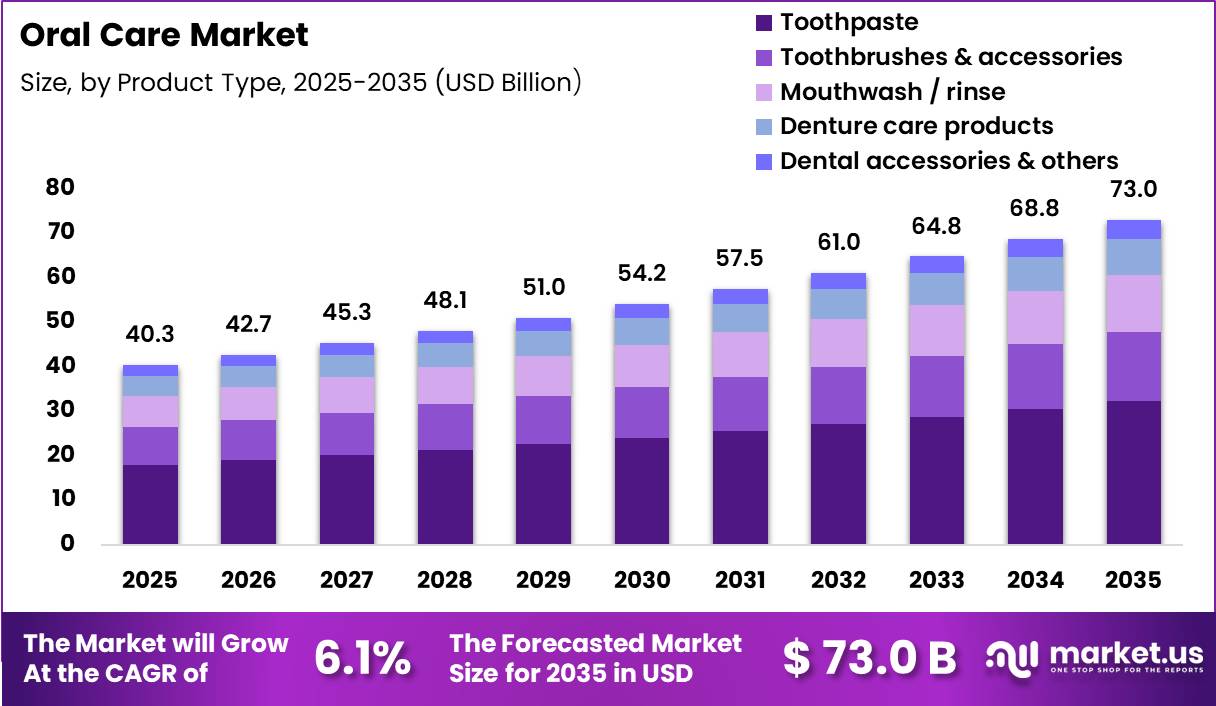
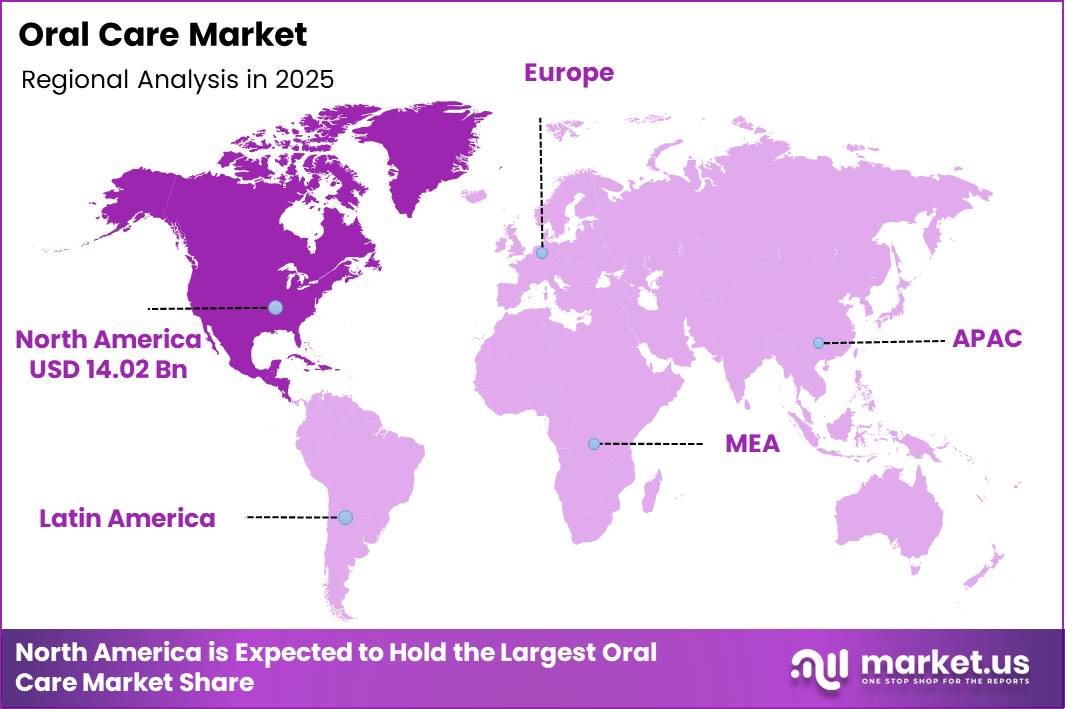
The Global Oral Care Market size is expected to be worth around US$ 73.0 Billion by 2035 from US$ 40.3 Billion in 2025, growing at a CAGR of 6.1% during the forecast period from 2026 to 2035. In 2025, North America led the market, achieving over 34.8% share with a revenue of US$ 14.02 Billion.
The global oral care market continues to expand as oral health becomes a critical component of overall healthcare and preventive wellness. Growing awareness about dental hygiene, increasing adoption of preventive dental products, and rising government-led oral health initiatives are driving demand for toothpaste, toothbrushes, mouthwashes, dental floss, whitening products, and other oral care solutions worldwide.
According to the World Health Organization (WHO), oral diseases affect nearly 3.7 billion people globally, making them among the most common noncommunicable diseases worldwide. WHO also reports that untreated dental caries (tooth decay) in permanent teeth is the most prevalent health condition globally, affecting approximately 2.5 billion people.
Severe gum disease impacts around 1 billion people, while nearly 380,000 new oral cancer cases are diagnosed annually. These statistics highlight the growing need for effective oral care products and preventive dental services.
In the United States, the Centers for Disease Control and Prevention (CDC) reports that 21% of adults aged 20–64 have at least one untreated cavity, while nearly 96% of adults aged 65 years and older have experienced dental caries during their lifetime. The CDC also notes that dental sealants can prevent up to 80% of cavities in back teeth, emphasizing the importance of preventive oral healthcare measures.
Increasing sugar consumption, aging populations, and lifestyle-related risk factors continue to contribute to oral health challenges globally. At the same time, innovations in fluoride-based products, electric toothbrushes, AI-enabled dental diagnostics, and personalised oral care solutions are supporting market growth.
Governments, healthcare organizations, and dental associations are further promoting oral hygiene awareness programs, creating favourable conditions for continued expansion of the oral care industry across both developed and emerging economies.
Key Takeaways
- Market Size: The Global Oral Care Market size was US$ 40.3 billion in 2025. The market is estimated to grow to US$ 73.0 billion by 2035.
- Market Share: The Compound Annual Growth Rate (CAGR) of the market from 2026 to 2035 will be 6.1%.
- Product Type: Toothpaste has the largest market share, accounting for 44.3% of total product type revenue.
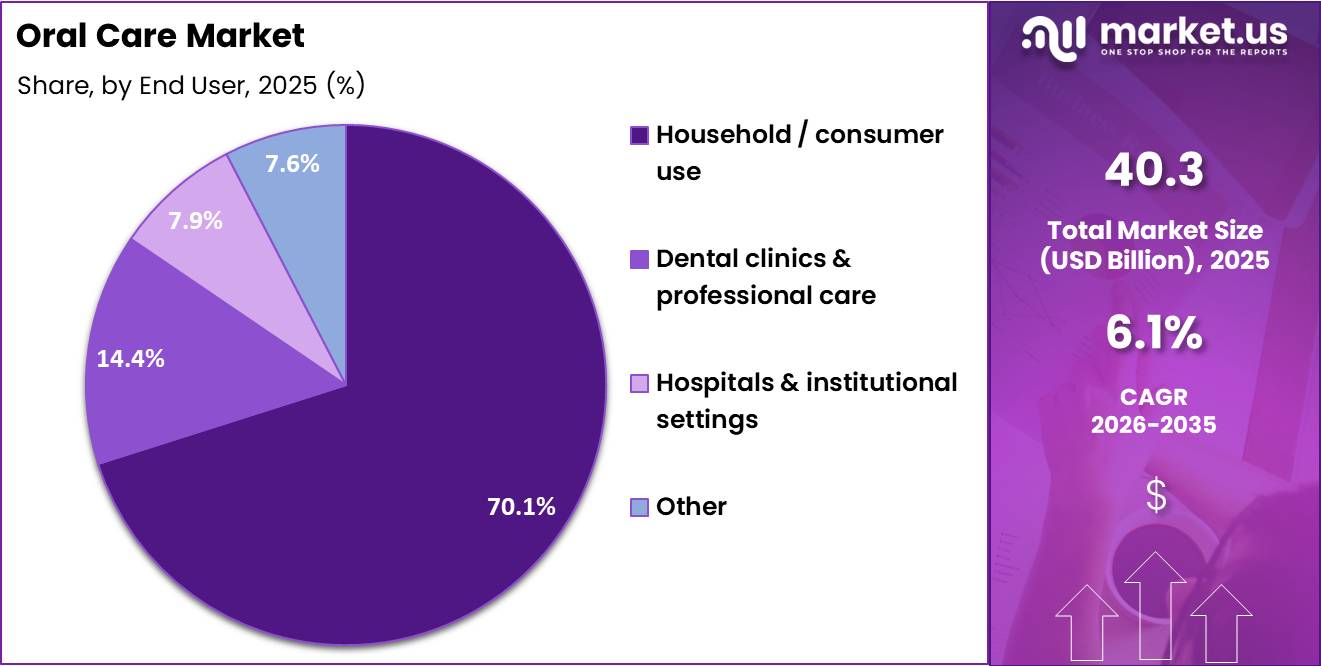
- End User: Household/Consumer Use leads the segment, accounting for 70.1% of total end-user revenue.
- Distribution Channel: Supermarkets & Hypermarkets leads the segment, accounting for 35.2% of total distribution channel revenue.
- Regional: North America is the dominant regional market, accounting for 34.8% of global revenue, holding US$ 14.02 billion in revenue in 2025.
Product Type Analysis
The Toothpaste segment dominates the oral care market, accounting for 44.3% of the market share in 2025. Toothpaste remains the most frequently purchased oral hygiene product due to its essential role in preventing cavities, reducing plaque, strengthening enamel, and maintaining overall oral health. Continuous product innovation, including fluoride, herbal, charcoal, sensitivity relief, whitening, and probiotic formulations, has broadened consumer appeal across different age groups.
Rising awareness of preventive dental care and increasing recommendations from dental professionals further reinforce demand. Manufacturers are also introducing sustainable packaging and specialized products for children and seniors, supporting long-term market expansion.
The Toothbrushes & Accessories segment represents 21.2% of the market, driven by growing adoption of electric toothbrushes and replacement brush heads. Mouthwash / Rinse accounts for 17.5%, benefiting from increasing consumer preference for complete oral hygiene routines and antibacterial protection.
Denture Care Products contribute 11.1%, supported by expanding elderly populations and greater use of removable dental prosthetics. The remaining 5.9% consists of Dental Accessories & Others, including dental floss, whitening products, interdental brushes, oral irrigators, tongue cleaners, and orthodontic care products, reflecting rising demand for comprehensive and preventive oral care solutions.
End-User Analysis
The Household / Consumer Use segment leads the oral care market with 70.1% of the market share in 2025, reflecting the widespread adoption of daily oral hygiene practices among individuals and families. Growing awareness of preventive dental care, increasing disposable incomes, and easy availability of oral care products through retail and online channels continue to strengthen this segment.
Consumers increasingly purchase specialized products for cavity prevention, gum care, whitening, orthodontic care, and sensitivity management, while educational campaigns encourage regular brushing and oral hygiene routines from an early age.
The Dental Clinics & Professional Care segment accounts for 14.4% of the market, supported by rising demand for preventive dental check-ups, cosmetic dentistry, scaling procedures, and professional oral care products recommended by dentists. Hospitals & Institutional Settings contribute 7.9%, primarily driven by oral healthcare provided to surgical, elderly, and medically compromised patients requiring specialized dental support.
The remaining 7.6% falls under Others, including nursing homes, rehabilitation centers, military healthcare facilities, and community oral health programs. Increasing integration of preventive dentistry into primary healthcare and expanding public oral health initiatives continue to create opportunities across all end-user segments.
Distribution Channel Analysis
The Supermarkets & Hypermarkets segment dominates the oral care market, capturing 35.2% of the market share in 2025. Large retail chains remain the preferred purchasing destination because they offer extensive product selections, competitive pricing, promotional discounts, and convenient one-stop shopping experiences.
Consumers also benefit from access to multiple brands, premium products, and private-label offerings, encouraging frequent purchases of toothpaste, toothbrushes, mouthwash, and other oral hygiene essentials. Strong retail penetration in both developed and emerging economies continues to support this segment’s leadership.
Pharmacies & Drug Stores represent the second-largest distribution channel, driven by consumer trust in pharmacist recommendations and demand for therapeutic oral care products such as medicated mouthwashes, sensitivity toothpaste, and gum care solutions. Consumer / Convenience Stores maintain steady sales through quick accessibility and routine purchases of everyday oral hygiene products.
Online / E-commerce continues to record strong growth as consumers increasingly value home delivery, subscription services, product comparisons, and wider availability of premium and specialty brands.
Dental Clinics & Other Professional Channels supply dentist-recommended products, prescription oral care solutions, orthodontic accessories, and professional-grade whitening products, supporting premium product adoption and strengthening the overall distribution network.
Key Market Segments
By Product Type
- Toothpaste
- Toothbrushes & Accessories
- Mouthwash/Rinse
- Denture Care Products
- Dental Accessories & Others (Floss, Whitening, Irrigators)
By End User
- Household/Consumer Use
- Dental Clinics & Professional Care
- Hospitals & Institutional Settings
- Others
By Distribution Channel
- Supermarkets & Hypermarkets
- Pharmacies & Drug Stores
- Consumer/Convenience Stores
- Online/E-Commerce
- Dental Clinics & Other Professional Channels
Drivers
Diabetes Linked Periodontal Management Demand
Diabetes linked periodontal management is emerging as a structural growth driver in oral care due to the well-established bidirectional relationship between diabetes and gum disease.
CDC and NIDCR highlight that people with diabetes are more prone to periodontal infections, while untreated gum disease can negatively affect blood glucose control, creating a reinforcing cycle that increases long-term demand for oral health interventions.
As global diabetes prevalence continues to rise, the addressable population for preventive and supportive oral care expands significantly. This includes antimicrobial mouth rinses, fluoride-based toothpastes, interdental cleaning devices, and dry mouth relief products.
Oral care is therefore shifting from a cosmetic hygiene category toward a chronic disease-adjacent management space where daily routines contribute to systemic health outcomes.
From a market perspective, this shift changes distribution and engagement strategies. Brands can increasingly connect with patients through endocrinologists, diabetes educators, pharmacies, insurer wellness programs, and digital health platforms rather than relying only on traditional retail channels. This medical-adjacent pathway improves adherence and supports higher lifetime value per consumer.
It also enables premium positioning, as formulations targeting gum inflammation control, sensitivity reduction, and xerostomia in diabetic patients can command higher prices based on clinical relevance rather than cosmetic benefits alone.
The strongest impact is expected in high-burden markets such as the U.S., India, China, and Gulf countries. Overall, diabetes linked periodontal care creates a durable, higher-value demand layer that strengthens oral care category resilience and expands its integration into chronic disease management ecosystems.
| Driver | (~) % Impact on CAGR Forecast | Geographic Relevance | Impact Timeline |
|---|---|---|---|
| Preventive oral-health push and fluoride adherence | +1.4% | North America core, EU, GCC, urban APAC | Short term |
| Diabetes-linked periodontal management demands | +1.1% | North America core, EU, India, China, Gulf states | Short term |
| Sugar reduction and enamel-protection consumption shift | +0.9% | EU, North America, LATAM urban, APAC corridors | Medium term |
| Public-policy integration of oral and medical care | +1.0% | U.S. core, Western Europe, selected OECD spill-over | Medium term |
| Ageing population and denture/dry-mouth care expansion | +1.2% | Japan, Western Europe, the U.S., South Korea, and China urban | Medium term |
| Premiumization into therapeutic, sensitivity, and gum-care formats | +1.3% | North America, EU, affluent APAC, Middle East metros | Short term |
Challenges
Chronic Sugar Exposure & Non-Communicable Disease Linkages
Persistent high intake of free sugars, often exceeding 40 to 60 grams per day in urban diets, remains a key upstream driver of dental caries and periodontal disease. This dietary pattern contributes to a global oral disease burden of more than 3.6 billion cases, reinforcing the strong connection between nutrition-related non-communicable diseases NCDs and oral health outcomes. Despite public health efforts, reductions in sugar-driven oral disease have been limited over time.
Policy measures such as sugar taxes and fluoride programs have had only partial reach, and consumption of high-sugar foods like confectionery and baked goods continues to rise in many regions.
As a result, behavioural change at the population scale remains incomplete. From a market perspective, this sustains high underlying demand for oral care products but keeps usage largely reactive rather than preventive.
Consumers often rely on antiseptic mouthwashes or symptom driven treatments instead of structured preventive routines such as consistent fluoride use and interdental care. This limits the adoption of higher value preventive oral care solutions and creates an estimated 1.2 % point drag on long-term category CAGR.
Mitigation requires stronger integration of oral health into broader NCD frameworks, including diabetes and cardiovascular disease prevention strategies.
Key interventions include front-of-pack sugar labelling, consumer education campaigns, and sustained efforts to reduce daily sugar intake by 15 to 20 grams in high-risk groups.
Over the long term, WHO-aligned common risk factor approaches may gradually shift behaviour, but meaningful reductions in disease incidence will depend on sustained policy enforcement and coordinated action across food systems, healthcare providers, and consumer health industries.
| Challenge | (~) % CAGR Friction Drag | Geographic Relevance | Mitigation Horizon |
|---|---|---|---|
| Underfunded oral primary care | -1.4% | LMIC clusters, rural North America, emerging APAC | Long-term (≥ 4 years) |
| Chronic sugar exposure & NCD linkages | -1.2% | Global urban belts, high-sugar consumption zones | Long-term (≥ 4 years) |
| Unequal workforce & chair-time capacity | -1.1% | LMIC urban cores, selected EU/NA underserved | Medium term (2-4 years) |
| Regulatory complexity for novel formats | -0.9% | US FDA, EU MDR hubs, selected APAC | Medium term (2-4 years) |
| Low prevention adherence & behaviour inertia | -1.0% | Global mass-market segments | Long-term (≥ 4 years) |
| Fragmented data, outcomes & reimbursement | -0.8% | UHC transition economies, public payor systems | Medium term (2-4 years) |
Restraints
Tightening Fluoride Regulation and Cosmetic Drug Boundary Oversight
Regulatory tightening around fluoride-containing oral care products and the evolving cosmetic drug boundary is emerging as a structural constraint on innovation and SKU expansion in the oral care industry through 2026 to 2030, particularly in the U.S., EU, and select East Asian markets.
In the United States, FDA actions to reassess ingestible fluoride prescriptions for children and increased scrutiny of systemic fluoride exposure reflect a broader shift toward stricter safety evaluation, more precise dosing guidance, and clearer population-level risk differentiation. This reduces flexibility for manufacturers developing high fluoride or systemically active formulations.
At the same time, modern regulatory frameworks such as MoCRA in the U.S. and comparable product information and GMP requirements in parts of Asia are narrowing the gap between cosmetic and therapeutic oral care products.
Toothpastes and mouthwashes making anti-cavity or antimicrobial claims now face enhanced documentation requirements, including safety substantiation, stability testing, and more rigorous manufacturing controls. These changes increase compliance costs across the value chain.
Smaller brands may see operating expenses rise by 2 to 3 % of sales, while larger manufacturers face 0.5 to 1.5 % increases, alongside additional capital investment needs of 3 to 5 % of annual CapEx for upgraded laboratories and GMP systems.
Margins are also compressed by an estimated 80 to 150 basis points in early implementation phases. Strategically, higher regulatory barriers raise minimum scale requirements for innovation, delay product launches by 12 to 24 months, and concentrate growth in established global SKUs.
Overall, these dynamics are estimated to reduce achievable industry CAGR by approximately 1.2 % points due to higher compliance friction and slower product pipeline turnover.
| Restraint | (~) % Impact on CAGR Forecast | Geographic Relevance | Impact Timeline |
|---|---|---|---|
| Tightening fluoride and cosmetic–drug oversight | -1.2% | North America, EU, East Asia | Medium term (2-4 years) |
| Sugar and NCD fiscal measures dampening mass-market volumes | -1.0% | North America core, EU, BRICS | Long-term (≥ 4 years) |
| Cost inflation in packaging, APIs and compliance | -0.9% | Global, with margin strain in BRICS | Short–Medium (≤ 4 years) |
| Unequal access and public-system budget constraints | -0.8% | Emerging APAC, Africa, LatAm | Long-term (≥ 4 years) |
| Slower adoption of advanced/smart oral devices | -0.7% | North America core, EU, Japan | Medium term (2-4 years) |
| Product information file and documentation burden | -0.5% | East Asia (incl. Taiwan), EU spillover | Short–Medium (≤ 4 years) |
Opportunity
Subscription-Based Preventive Oral Care Platforms
Subscription-based preventive oral care platforms represent a structural shift from traditional FMCG-driven, episodic purchasing toward recurring, service-oriented consumption models. Unlike current retail behavior where consumers buy toothpaste, brushes, and mouthwash irregularly through supermarkets or pharmacies, subscription ecosystems aim to lock in predictable replenishment cycles while improving adherence to preventive oral health routines.
These models typically combine direct-to-consumer (D2C delivery with personalisation engines that tailor product bundles based on user inputs such as brushing habits, sensitivity issues, dietary patterns, and oral health history.
When integrated with connected toothbrushes or app-based tracking, they can generate behavioural feedback loops that encourage consistent hygiene practices. This approach increases per-user consumption intensity, with an estimated uplift of 20 to 30 % in annual unit volumes compared with conventional retail purchasing patterns.
Commercially, scaling subscription penetration to 8 to 12 % of urban households in developed and high-income emerging markets by 2030, with an average revenue per user of USD 60 to 100 annually, could generate USD 10 to 15 billion in incremental revenue. These revenues are also structurally higher margin due to reduced customer acquisition costs over time, improved demand predictability, and optimized inventory planning.
The model remains in an early stage and is not yet a baseline driver, primarily due to limited mainstream adoption, fragmented platforms, and consumer inertia in switching from retail channels. However, expansion through digital engagement, employer wellness partnerships, and payer-linked preventive programs could accelerate uptake.
If scaled successfully, subscription-based oral care could add approximately 2.2 % points to long-term industry CAGR, driven by higher retention, increased product usage frequency, and cross-selling into adjacent preventive dental services and at-home care kits.
| Opportunity | (~) % Potential CAGR Upside | Geographic Relevance | Execution Window |
|---|---|---|---|
| Diabetes-centric oral care ecosystems | +3.0% | North America, EU, APAC urban | Medium term (2-4 years) |
| Subscription-based preventive oral care platforms | +2.2% | North America core, EU, select APAC | Short term (≤ 2 years) |
| Tele-oral care & hybrid dental-home integration | +1.8% | North America, EU, LATAM, APAC | Medium term (2-4 years) |
| Senior-focused oral wellness & assisted care solutions | +1.5% | North America, EU, Japan, China | Long-term (≥ 4 years) |
| Regenerative, minimally invasive oral therapies | +2.8% | Global tier-1 markets | Long-term (≥ 4 years) |
| ESG-compliant, low-sugar & oral-metabolic wellness brands | +1.7% | Global, with EM focus | Short–Medium term (≤ 4 years) |
Regional Analysis
In 2025, North America led the market, achieving over 34.8% share with a revenue of US$ 12.98 billion. North America dominates the global oral care market due to high consumer awareness, well-established dental healthcare infrastructure, and widespread adoption of premium oral hygiene products.
Strong demand for electric toothbrushes, whitening products, therapeutic mouthwashes, and sensitivity toothpaste is supported by regular preventive dental visits and favourable reimbursement for certain dental services. Continuous product innovation and growing preference for sustainable and natural formulations further strengthen regional growth.
Europe represents the second-largest market, driven by comprehensive public oral health programs, high dental care expenditure, and increasing demand for eco-friendly and clinically validated oral care products.
Consumers across Western Europe increasingly prefer premium oral hygiene solutions, while ageing populations contribute to growing demand for denture care and specialized oral health products.
Asia-Pacific is projected to register the fastest growth during the forecast period. Rising disposable incomes, rapid urbanization, expanding middle-class populations, and improving awareness of preventive dental care are driving product adoption across China, Japan, South Korea, and Southeast Asia. Government-led oral health campaigns and expanding retail and e-commerce channels further accelerate market growth.
Latin America continues to experience steady expansion as access to oral healthcare improves and consumer spending on personal care products increases. Meanwhile, the Middle East & Africa market is supported by growing healthcare investments, improving dental infrastructure, rising oral hygiene awareness, and increasing availability of international oral care brands through modern retail networks.
Key Regions and Countries
North America
- The US
- Canada
Europe
- Germany
- France
- The U.K.
- Italy
- Spain
- Russia & CIS
- Rest of Europe
Asia Pacific
- China
- India
- Japan
- South Korea
- ASEAN
- Australia & New Zealand
- Rest of Asia Pacific
Middle East & Africa
- GCC
- South Africa
- Rest of Middle East & Africa
Latin America
- Brazil
- Mexico
- Rest of Latin America
Key Player Analysis
Suppliers in the global oral care market are pursuing competitive advantage through functional formulation innovation focused on sensitivity relief, enamel protection, whitening, gum health, and natural ingredient toothpaste. These premium products are achieving higher retail prices than conventional fluoride toothpaste.
Electric toothbrush platforms are also being enhanced with pressure sensors, Bluetooth connectivity, and smartphone-based brushing feedback, supporting stronger consumer engagement and recurring revenue through replacement brush head subscriptions.
Strategic priorities include developing natural and sustainable oral care portfolios for clean-label and environmentally conscious consumers, expanding premium whitening and cosmetic products, and strengthening e-commerce direct-to-consumer channels through subscription-based oral care bundles.
Companies are also increasing dentist and hygienist recommendation programs, as professional endorsements can strongly influence purchases of therapeutic and premium products. Retailer partnerships are being strengthened to secure premium shelf positioning, while distribution networks are expanding across Asia Pacific, Latin America, and Africa.
Overall, premiumization, greater awareness of oral-systemic health, social media influence, and professional recommendations are expected to increase consumer spending and average revenue per consumer through 2035.
Top Key Players
- Colgate-Palmolive Company
- Procter & Gamble Co.
- Unilever plc
- Haleon/GlaxoSmithKline plc
- Johnson & Johnson
- Church & Dwight Co. Inc.
- Lion Corporation
- Kao Corporation
- Sunstar Group
- Henkel AG & Co. KGaA
- LG Household & Health Care Ltd.
- Dabur India Ltd.
- Dr. Fresh LLC
- Philips Oral Healthcare
- Amway Corporation
- Other Key Players
Recent Developments
- In January 2026, Colgate-Palmolive launched a new natural charcoal and hydroxyapatite toothpaste range across North American and European supermarket retail networks, targeting health-conscious adult consumers seeking natural formulation oral care alternatives commanding premium retail price positioning.
- In February 2026, Haleon/GlaxoSmithKline expanded its Sensodyne sensitivity toothpaste portfolio with a new rapid relief formulation across Asian pharmacy and supermarket distribution channels, targeting growing diagnosed sensitivity patient populations across China, India, and Southeast Asian markets.
- In March 2026, Procter & Gamble secured expanded retail distribution for its Oral-B iO smart electric toothbrush subscription program across European e-commerce platforms, targeting premium oral care consumer demographics seeking connected brushing feedback and brush head auto-replenishment convenience.
Report Scope
| Report Features | Description |
|---|---|
| Market Value (2025) | US$ 40.3 Billion |
| Forecast Revenue (2035) | US$ 73.0 Billion |
| CAGR (2026-2035) | 6.1% |
| Base Year for Estimation | 2025 |
| Historic Period | 2020-2024 |
| Forecast Period | 2026-2035 |
| Report Coverage | Revenue Forecast, Market Dynamics, Competitive Landscape, Recent Developments |
| Segments Covered | By Product Type (Toothpaste, Toothbrushes & Accessories, Mouthwash/Rinse, Denture Care Products, Dental Accessories & Others — Floss, Whitening, Irrigators), By End User (Household/Consumer Use, Dental Clinics & Professional Care, Hospitals & Institutional Settings, Others), By Distribution Channel (Supermarkets & Hypermarkets, Pharmacies & Drug Stores, Consumer/Convenience Stores, Online/E-Commerce, Dental Clinics & Other Professional Channels) |
| Regional Analysis | North America – The US, Canada; Europe – Germany, France, U.K., Italy, Spain, Russia & CIS, Rest of Europe; Asia Pacific – China, India, Japan, South Korea, ASEAN, Australia & New Zealand, Rest of Asia Pacific; Middle East & Africa – GCC, South Africa, Rest of Middle East & Africa; Latin America – Brazil, Mexico, Rest of Latin America |
| Competitive Landscape | Colgate-Palmolive Company, Procter & Gamble Co., Unilever plc, Haleon/GlaxoSmithKline plc, Johnson & Johnson, Church & Dwight Co. Inc., Lion Corporation, Kao Corporation, Sunstar Group, Henkel AG & Co. KGaA, LG Household & Health Care Ltd., Dabur India Ltd., Dr. Fresh LLC, Philips Oral Healthcare, Amway Corporation, Other Key Players |
| Customization Scope | Customization for segments, region/country-level will be provided. Moreover, additional customization can be done based on the requirements. |
| Purchase Options | We have three licenses to opt for: Single User License, Multi-User License (Up to 5 Users), Corporate Use License (Unlimited User and Printable PDF) |





































