


Market Overview
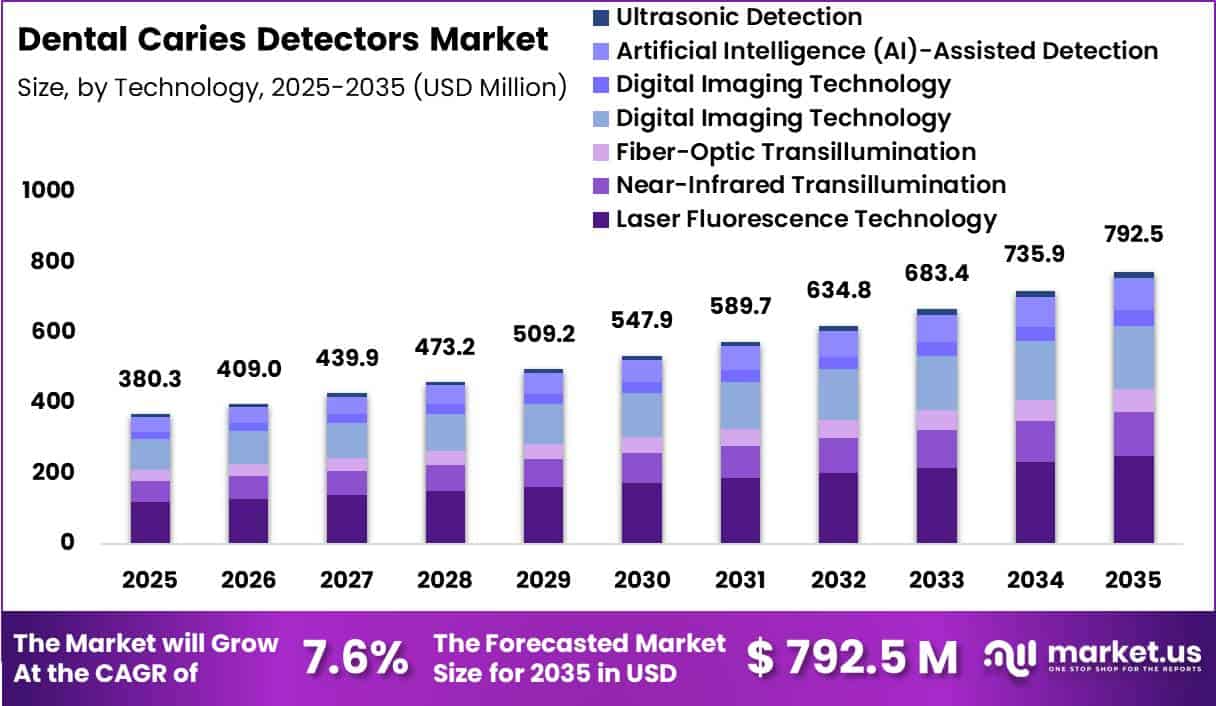
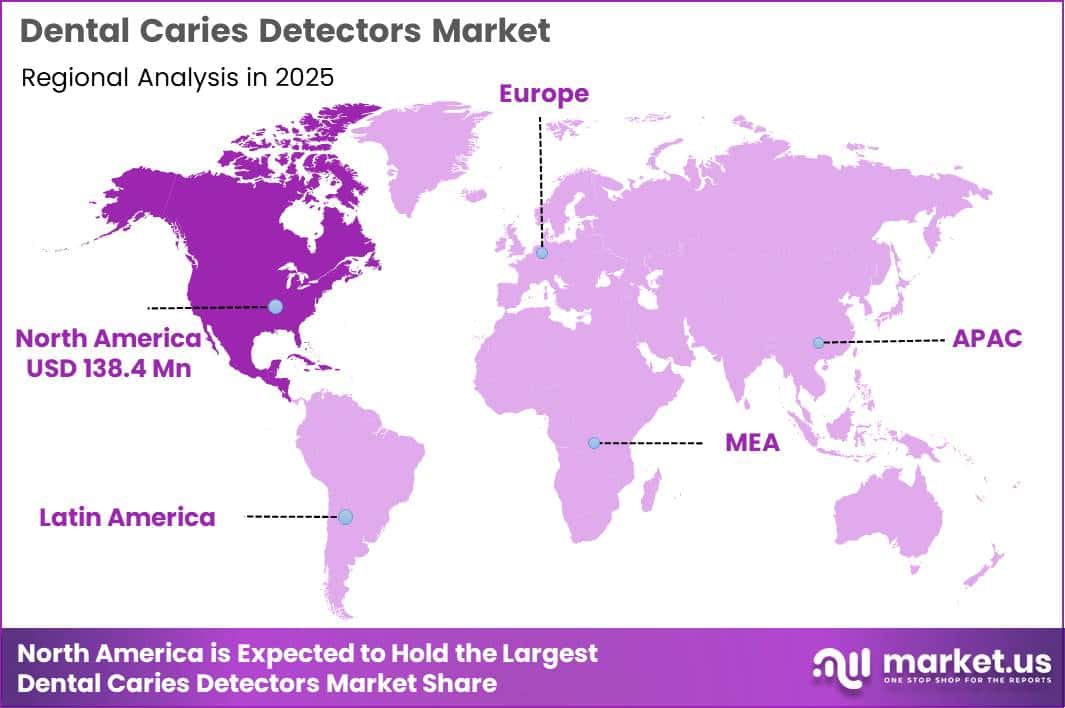
Global Dental Caries Detectors Market size is expected to be worth around US$ 792.5 Million by 2035 from US$ 380.3 Million in 2025, growing at a CAGR of 7.6% during the forecast period from 2026 to 2035. In 2025, North America led the market, achieving over 36.4% share with a revenue of US$ 138.4 Million.
Dental caries remains one of the most prevalent chronic diseases worldwide, creating sustained demand for accurate detection technologies. According to the World Health Organization (WHO), oral diseases affect approximately 3.7 billion people globally, while untreated dental caries in permanent teeth remains the most common health condition worldwide, affecting an estimated 2 billion people.
WHO also reports that around 514 million children suffer from caries in primary teeth, underscoring the need for early diagnosis and preventive interventions. Similarly, the U.S. Centers for Disease Control and Prevention (CDC) states that more than 1 in 4 U.S. adults have untreated tooth decay, highlighting the continued burden of dental disease despite advances in preventive care.
Growing awareness of preventive dentistry, combined with increasing adoption of laser fluorescence devices, near-infrared imaging systems, digital transillumination, and AI-assisted diagnostic tools, is accelerating market expansion.
Government-backed oral health initiatives, technological advancements in non-invasive diagnostic equipment, and rising investments in modern dental clinics are further supporting demand. As clinicians seek to detect lesions at earlier stages and reduce unnecessary restorative procedures, dental caries detection technologies are expected to play an increasingly important role in improving patient outcomes and supporting evidence-based dental practice worldwide.
Key Takeaways
- Market Size: The Dental Caries Detectors Market size was US$ 380.3 Million in 2025.The market is estimated to grow to US$ 792.5 Million by 2035.
- Market Share: The Compound Annual Growth Rate (CAGR) of the market from 2026 to 2035 will be 7.6%.
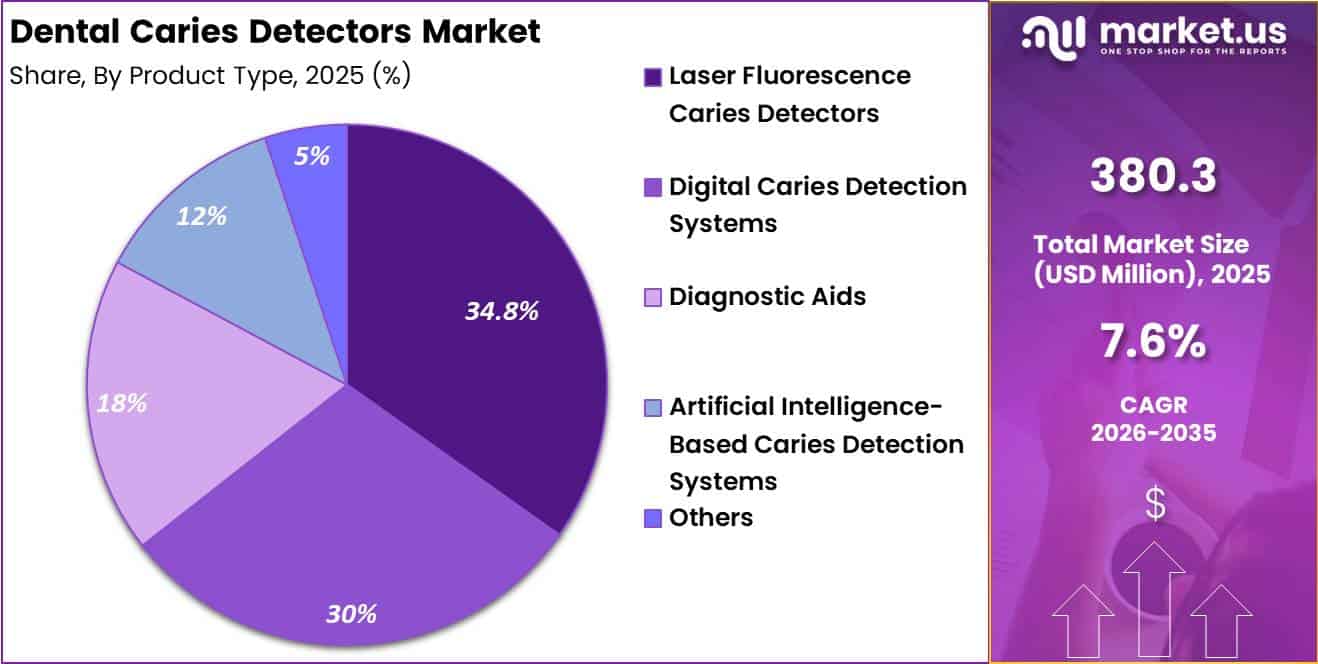
- By Product Type: Laser Fluorescence Caries Detectors has the largest market share, accounting for 34.8% of total sales.
- By Technology: Laser Fluorescence Technology the segment, accounting for 31.7% of total revenue.
- By Application: Occlusal Caries Detection leads the segment, accounting for 28.5% of total revenue.
- By End User: Dental Clinics leads the segment, accounting for 56.7% of total revenue.
- Regional: North America is the dominant regional market,accounting for 36.4% of global sales.
Product Type Analysis
The Laser Fluorescence Caries Detectors segment dominated the Dental Caries Detectors Market, accounting for 34.8% of the market share in 2025. Its leadership is attributed to its high diagnostic accuracy, non-invasive nature, and ability to identify early enamel demineralization before visible cavitation occurs.
These devices are widely adopted in routine dental examinations because they provide immediate quantitative readings, enabling dentists to monitor lesion progression and make informed treatment decisions. Their compatibility with preventive dentistry practices and minimal patient discomfort further support widespread clinical adoption.
The Digital Caries Detection Systems segment captured 29.6% of the market, driven by increasing integration of digital imaging technologies into modern dental workflows and electronic patient records. Diagnostic Aids represented 18.4%, benefiting from continued use of traditional detection tools alongside advanced diagnostic equipment to improve examination accuracy.
Artificial Intelligence-Based Caries Detection Systems accounted for 12.1%, reflecting growing demand for automated image interpretation, improved diagnostic consistency, and clinical decision support powered by machine learning algorithms.
The Others segment, contributing 5.1%, includes emerging optical scanners, hybrid diagnostic platforms, and novel detection technologies that are gradually entering clinical practice. Continuous innovation in diagnostic precision and minimally invasive dentistry is expected to strengthen demand across all product categories over the coming years.
Technology Analysis
The Laser Fluorescence Technology segment held the largest share of the Dental Caries Detectors Market, accounting for 31.7% in 2025. The technology has gained widespread acceptance because it enables early detection of enamel demineralization without exposing patients to ionizing radiation.
Its ability to provide rapid, objective, and repeatable diagnostic measurements makes it highly suitable for preventive dental care and routine clinical assessments. Growing emphasis on conservative treatment approaches and early intervention continues to support its dominant market position.
Digital Imaging Technology accounted for 22.6% of the market, supported by advances in intraoral imaging systems and improved diagnostic visualization. Near-Infrared Transillumination (NIRT) represented 15.8%, benefiting from its radiation-free imaging capability for detecting interproximal lesions that may not be visible through conventional methods.
Artificial Intelligence (AI)-Assisted Detection) contributed 11.4%, driven by increasing implementation of automated diagnostic software that enhances accuracy and workflow efficiency. Fiber-Optic Transillumination (FOTI) captured 8.2%, remaining a valuable adjunctive technology for identifying early-stage caries.
Electrical Conductance Measurement accounted for 5.6%, offering objective evaluation of enamel integrity through conductivity analysis. Ultrasonic Detection represented 2.3%, while Others contributed 2.4%, including emerging multimodal diagnostic technologies under continued clinical evaluation.
Application Analysis
The Occlusal Caries Detection segment dominated the Dental Caries Detectors Market, accounting for 28.5% of the market share in 2025. Occlusal surfaces are among the most common sites for dental caries due to their complex pits and fissures, making early and accurate detection particularly important.
Dental professionals increasingly rely on advanced caries detection systems to identify hidden lesions before extensive structural damage occurs. Growing awareness of preventive dentistry, combined with the demand for minimally invasive restorative procedures, continues to support the widespread adoption of diagnostic technologies for occlusal examinations.
Detection of interproximal caries represents another significant application, as lesions between adjacent teeth are often difficult to diagnose using visual examination alone. Advanced imaging and fluorescence technologies have improved diagnostic confidence in these challenging cases.
Smooth surface caries detection is also expanding with greater emphasis on identifying early enamel demineralization in pediatric and adult patients. The market further includes applications involving secondary or recurrent caries detection, particularly around existing restorations where early diagnosis helps extend restoration longevity.
Growing use of AI-assisted diagnostics and digital imaging is improving clinical efficiency across all application areas by enabling earlier intervention, reducing unnecessary restorative treatments, and supporting personalized preventive dental care strategies.
End User Analysis
The Dental Clinics segment dominated the Dental Caries Detectors Market, capturing 56.7% of the market share in 2025. The dominance of this segment is driven by the large volume of routine dental examinations, preventive care procedures, and restorative treatments performed in private and group dental practices.
Dental clinics increasingly invest in advanced diagnostic technologies to improve early caries detection, enhance patient outcomes, and reduce the need for invasive procedures. Rising patient awareness regarding oral health, coupled with the growing preference for preventive dentistry, continues to strengthen adoption of modern caries detection systems within clinical settings.
Hospitals represent another important end-user segment, particularly for complex dental surgeries, multidisciplinary oral healthcare services, and specialized diagnostic procedures. Large healthcare institutions are increasingly incorporating digital diagnostic technologies into comprehensive dental departments to improve diagnostic accuracy and treatment planning.
Academic and Research Institutes also contribute significantly to market demand through clinical research, technology validation studies, and professional dental education programs. In addition, specialty dental centers and community oral healthcare facilities are gradually adopting advanced caries detection devices to improve access to early diagnosis and preventive treatment.
Continuous technological advancements, increasing investments in digital dentistry, and expanding preventive oral healthcare initiatives are expected to support sustained growth across all end-user segments.
Market Segmentations
By Product Type
- Laser Fluorescence Caries Detectors
- Digital Caries Detection Systems
- Diagnostic Aids
- Artificial Intelligence-Based Caries Detection Systems
- Others
By Technology
- Laser Fluorescence Technology
- Near-Infrared Transillumination (NIRT)
- Fiber-Optic Transillumination (FOTI)
- Digital Imaging Technology
- Electrical Conductance Measurement
- Artificial Intelligence (AI)-Assisted Detection
- Ultrasonic Detection
- Others
By Application
- Occlusal Caries Detection
- Interproximal Caries Detection
- Smooth Surface Caries Detection
- Root Caries Detection
- Early Enamel Lesion Detection
- Secondary/Recurrent Caries Detection
- Research Applications
By End User
- Dental Clinics
- Dental Hospitals
- Academic & Research Institutes
- Dental Diagnostic Centers
- Others
Drivers
Medical Dental Reimbursement Integration Expanding Eligible Workflows
Medical dental reimbursement integration is gradually expanding the addressable clinical settings for dental diagnostics by clarifying when oral health services are reimbursable as part of covered medical treatment.
Recent CMS policy updates for 2024 to 2025 have extended recognition of specific dental examinations, diagnostics, and infection control procedures when they are integral to treatments such as oncology care and end stage renal disease ESRD dialysis preparation, even though routine preventive dental care remains largely excluded under traditional Medicare.
This policy shift is particularly relevant for caries detection technologies because it moves procurement beyond standalone dental practices into medically integrated care environments. Hospital linked dental departments, oncology support pathways, transplant evaluation programs, and other complex care settings increasingly require structured oral diagnostics to reduce infection risk and improve treatment outcomes.
In these environments, imaging based documentation and standardized lesion identification are not optional enhancements but part of clinical compliance and multidisciplinary coordination. From a market perspective, reimbursement adjacency strengthens adoption in enterprise and integrated delivery networks, where purchasing decisions are driven not only by diagnostic performance but also by interoperability, documentation standards, and workflow integration with broader electronic health record systems.
This shifts competitive dynamics toward vendors that can provide traceable, standardized outputs rather than purely point of care tools.As integration deepens, medical dental overlap creates a more stable reimbursement base for oral diagnostics, expanding utilization in high acuity patient populations and supporting gradual workflow expansion across hospitals and specialty clinics.
| Driver | (~) % Impact on CAGR Forecast | Geographic Relevance | Impact Timeline |
|---|---|---|---|
| High untreated caries burden sustaining diagnostic demand | +1.6% | North America core, EU, APAC urban, Latin America spill-over | Short term (≤ 2 years) |
| Early-stage, low-radiation detection shift boosting optical tools | +1.3% | EU, North America, Japan, South Korea, urban China | Medium term (2-4 years) |
| FDA-cleared AI caries software accelerating chairside adoption | +1.8% | North America core, EU fast-follow, Gulf advanced clinics | Short term (≤ 2 years) |
| Medical-dental reimbursement integration expanding eligible workflows | +0.9% | U.S. core, selective OECD follow-through | Medium term (2-4 years) |
| Pediatric and recall-based prevention programs lifting screening volume | +1.1% | North America, Western Europe, APAC metro corridors | Short term (≤ 2 years) |
| Practice ROI pressure favoring earlier detection and case acceptance | +1.4% | North America core, EU private chains, APAC private clinics | Short term (≤ 2 years) |
Challenges
Limited Reimbursement Alignment in Caries Detection Technologies
Limited reimbursement alignment remains a structural barrier for early stage caries detection because many insurance systems classify these technologies as adjunct diagnostics rather than reimbursable clinical procedures. As a result, adoption is often dependent on out of pocket spending or private insurance coverage, which significantly restricts utilization across large patient populations.
In many markets, dental coverage is incomplete or fragmented. Approximately 30 to 50 % of adults lack comprehensive dental insurance, and oral health services are frequently excluded from universal health coverage frameworks.
In the United States, public programs have historically limited dental benefits, and advanced diagnostic tools beyond standard radiographs are often not reimbursed. Similarly, several European systems prioritize emergency and basic restorative care over preventive diagnostic technologies.
This creates a pronounced adoption skew toward high income and privately insured patients, despite the large underlying disease burden. Untreated dental caries remains highly prevalent globally, affecting a substantial share of both children and adults, and oral diseases impact billions of people worldwide, particularly in low and middle income countries.
From a market perspective, this misalignment suppresses demand by an estimated 15 to 20 % versus a fully reimbursed scenario, reducing the uptake of technologies that could otherwise improve early lesion detection and reduce long term restorative costs by 5 to 10 % per patient.
Overall, reimbursement gaps are estimated to create a 1.6 % point drag on CAGR, primarily due to constrained payer recognition and limited coding pathways. Addressing this requires stronger health economic evidence, guideline inclusion, and eventual reimbursement code creation, typically unfolding over multi year policy cycles.
| Challenge | (~) % CAGR Friction Drag | Geographic Relevance | Mitigation Horizon |
|---|---|---|---|
| Fragmented clinical workflow | -1.4% | North America, EU, APAC metros | Medium term (2-4 years) |
| Limited reimbursement alignment | -1.6% | North America core, EU payers | Long term (≥ 4 years) |
| High device utilization gap | -1.1% | Global urban clinics | Medium term (2-4 years) |
| Data integration & AI validation | -1.3% | US, EU, East Asia | Long term (≥ 4 years) |
| Training & talent adoption lag | -0.9% | Global, LMIC-heavy | Medium term (2-4 years) |
| Regulatory evidence & compliance load | -1.0% | US, EU, select APAC hubs | Long term (≥ 4 years) |
Restraints
Fragmented Regulatory and Device Classification Hurdles in Caries Detection
Fragmented regulatory frameworks across regions create a structural constraint on the global scaling of caries detection technologies, particularly as devices increasingly combine optical imaging hardware with AI driven diagnostic software.
These hybrid systems often fall between traditional dental device classifications and software as a medical device rules, resulting in inconsistent regulatory pathways across countries.In India, dental diagnostic devices fall under the Drugs and Cosmetics Act and Medical Devices Rules 2017, where regulatory expectations are still evolving.
While oversight is becoming more formalized, limited harmonization with FDA and EU MDR standards forces manufacturers to repeatedly adapt technical documentation, clinical validation studies, and risk management files for each market. This typically adds 12 to 18 months to launch timelines compared with more standardized regulatory environments.
In Latin America and parts of the Middle East and Africa, uneven enforcement of ISO standards and variable post market surveillance requirements increase uncertainty. Companies often reserve 3 to 5 % of annual regional revenue for compliance contingencies, including additional clinical evidence generation, cybersecurity validation, and software updates.
AI enabled caries detection tools face added complexity due to overlapping device and software regulations, increasing per market regulatory costs to around USD 0.8 to 1.2 million for meaningful expansion.As a result, manufacturers concentrate on a limited number of regulatory friendly markets, reducing global reach by 20 to 30 % versus technical potential.
Overall, these regulatory frictions are estimated to reduce achievable CAGR by approximately 1.4 % points 2026 to 2033 through delayed approvals, higher compliance costs, and slower geographic scaling.
| Restraint | (~) % Impact on CAGR Forecast | Geographic Relevance | Impact Timeline |
|---|---|---|---|
| Limited reimbursement & out-of-pocket burden | -2.0% | North America core, EU, selected APAC | Medium term |
| Fragmented regulatory & device classification hurdles | -1.4% | India, LATAM, MEA, ASEAN | Medium term |
| Capital constraints in small practices | -1.0% | North America periphery, EU periphery, emerging APAC | Short to medium term |
| Clinical adoption inertia & training gaps | -0.9% | Global, strongest in MEA, LATAM, Eastern Europe | Medium term |
| Supply chain volatility in optics & sensors | -0.7% | Global manufacturing hubs (China, EU, US), downstream APAC corridors | Short term |
| Preventive-first policy shift reducing invasive detection demand | -0.6% | EU, selected high-income APAC, North America core | Long term |
Opportunity
Community and Primary Care Caries Screening Networks
Community and primary care caries screening networks represent a major untapped expansion pathway for caries detection technologies, shifting the market from clinic centric diagnostics to population level oral health screening.
Today, most caries detectors are used within dental clinics, which inherently limits reach because a large proportion of dental disease in low and middle income countries remains undiagnosed due to access, affordability, and workforce constraints. WHO estimates that oral diseases affect billions globally, with untreated caries remaining highly prevalent in regions where dental care infrastructure is limited.
This creates a structural gap between disease burden and clinical detection capacity, particularly in APAC, Latin America, and Africa. Expanding screening into community settings such as primary care clinics, school health programs, mobile health units, and community health worker networks could significantly broaden diagnostic reach.
In this model, low cost fluorescence or transillumination based devices can be deployed outside traditional dental settings, enabling earlier detection at scale. Even if reimbursement per screening is 20 to 30 % of a full dental exam, significantly higher screening volumes potentially 3 to 5 times current utilization levels can offset lower per procedure pricing.
From a device strategy perspective, success depends on optimizing for portability, durability, and low operating cost, with ASPs potentially 30 to 40 % lower than premium dental clinic systems. However, higher utilization and cloud based analytics integration can still support 18 to 22 % operating margins in these channels.
Overall, expansion into community screening networks could unlock an estimated 2.2 % points of CAGR upside by 2035, driven by volume expansion into previously underserved populations and a shift toward preventive, decentralized oral health diagnostics.
| Opportunity | (~) % Potential CAGR Upside | Geographic Relevance | Execution Window |
|---|---|---|---|
| Integrated AI chairside diagnostics platforms | +3.0% | North America, EU, high-SDI APAC | Medium term (2-4 years) |
| Community and primary-care caries screening networks | +2.2% | LMICs in APAC, Latin America, Africa | Long term (≥ 4 years) |
| Preventive care subscription and outcome-based bundles | +1.8% | North America core, Western Europe | Medium term (2-4 years) |
| Pediatric school-based screening and digital registries | +2.5% | Global, with emphasis on LMIC urban clusters | Long term (≥ 4 years) |
| Integrated NCD-cohort oral health programs | +1.6% | Global, with initial focus on diabetes-heavy markets | Medium term (2-4 years) |
| Home- and retail-based risk assessment and triage tools | +2.0% | Global, especially APAC and North America | Short term (≤ 2 years) |
Regional Analysis
In 2025, North America led the market, achieving over 36.4% share with a revenue of US$ 138.4 Million.
North America region’s leadership is supported by a well-established dental healthcare infrastructure, high awareness of preventive oral care, and widespread adoption of advanced diagnostic technologies. Dental clinics and hospitals across the United States and Canada increasingly utilize laser fluorescence devices, digital imaging systems, and AI-assisted diagnostic tools to improve the early detection of dental caries.
Favorable reimbursement policies for dental services, growing investments in digital dentistry, and the presence of leading dental equipment manufacturers further strengthen regional market growth.
Europe represented the second-largest regional market, driven by strong public oral health programs, increasing demand for minimally invasive dentistry, and continuous modernization of dental practices. Countries such as Germany, the United Kingdom, France, and Italy are witnessing higher adoption of digital diagnostic solutions supported by favorable healthcare spending and technological advancements.
The Asia-Pacific region is projected to register the fastest growth during the forecast period due to rising dental disease prevalence, expanding access to dental care, increasing healthcare expenditure, and rapid development of private dental clinic networks in China, India, Japan, and South Korea.
Meanwhile, Latin America and the Middle East & Africa are experiencing gradual market expansion, supported by improving oral healthcare awareness, expanding healthcare infrastructure, and greater availability of advanced dental diagnostic technologies.
Key Regions and Countries
North America
- The US
- Canada
Europe
- Germany
- France
- The U.K.
- Italy
- Spain
- Russia & CIS
- Rest of Europe
Asia Pacific
- China
- India
- Japan
- South Korea
- ASEAN
- Australia & New Zealand
- Rest of Asia Pacific
Middle East & Africa
- GCC
- South Africa
- Rest of Middle East & Africa
Latin America
- Brazil
- Mexico
- Rest of Latin America
Key Player Analysis
The Dental Caries Detectors Market is moderately consolidated, with competition shaped by a combination of established dental equipment manufacturers and specialized diagnostic technology providers. The market has reached a relatively mature stage in developed regions, while continued adoption in emerging healthcare systems supports expansion opportunities.
Innovation is increasingly centered on improving diagnostic accuracy through laser fluorescence, digital imaging, optical technologies, and artificial intelligence-assisted detection. Companies are investing in technologies that enable earlier identification of carious lesions, reduce diagnostic variability, and support minimally invasive dentistry while integrating with digital dental workflows.
Market participants can be categorized into three strategic tiers. Large multinational dental technology companies, including Dentsply Sirona, KaVo Dental (Envista), Planmeca Oy, 3Shape A/S, Acteon Group, and Air Techniques, leverage broad product portfolios, global distribution networks, and integrated digital dentistry ecosystems.
Mid-sized dental equipment specialists such as DentLight Inc., BIOLASE Inc., Hu-Friedy Mfg., Kuraray Co., and Centrix Inc. focus on expanding clinical applications and strengthening practitioner adoption through targeted product innovation.
Specialized diagnostic technology developers, including AdDent Inc., Quantum Dental Technologies, DENTMATE Technology, and ORTEK-ECD, compete through niche expertise in caries detection systems and advanced diagnostic solutions.
Competitive differentiation is driven by sustained R&D investment, clinical validation, and strategic collaborations with dental clinics, universities, and research institutions. Companies increasingly focus on integrating caries detection devices with digital imaging platforms, practice management software, and AI-enabled diagnostic tools to improve workflow efficiency.
Product innovation emphasizes enhanced sensitivity, real-time visualization, and interoperability with chairside digital systems. As preventive dentistry gains greater clinical importance, ecosystem-based competition built around connected diagnostics, digital treatment planning, and evidence-based decision support continues to strengthen the competitive positioning of leading manufacturers.
Top Key Players
- AdDent Inc.
- Centrix Inc.
- Dentsply Sirona
- DentLight Inc.
- Air Techniques
- Kuraray Co.
- Hu-Friedy Mfg.
- Acteon Group
- Quantum Dental Technologies
- KaVo Dental (Envista)
- DENTMATE Technology
- ORTEK-ECD
- BIOLASE Inc.
- Planmeca Oy
- 3Shape A/S
Recent Developments
- In March 2025, Planmeca Oy unveiled multiple new digital dentistry solutions at IDS 2025, including the Planmeca Romexis 7 software platform with AI-powered diagnostic features, the Planmeca Onyx intraoral scanner, and expanded imaging technologies that strengthen digital caries detection and diagnostic workflows.
- In July 2025, Planmeca Oy commercially launched Planmeca Romexis 7, introducing built-in artificial intelligence capabilities for anatomy recognition, tooth numbering, implant planning, and enhanced intraoral imaging analysis to improve clinical diagnostic efficiency
- In August 2025, Dentsply Sirona introduced a new Digital Implant Product Selection Guide on its e-commerce platform, expanding its connected digital dentistry ecosystem and supporting clinicians with streamlined digital treatment planning integrated into diagnostic workflows.
- In November 2025, Planmeca Oy launched the Planmeca Creo X high-precision dental 3D printer, designed for manufacturing dental restorations, surgical guides, and diagnostic models, strengthening fully digital dental workflows.
Report Scope
| Report Features | Description |
|---|---|
| Market Value (2025) | US$ 380.3 Million |
| Forecast Revenue (2035) | US$ 792.5 Million |
| CAGR (2026-2035) | 7.6 % |
| Base Year for Estimation | 2025 |
| Historic Period | 2020-2024 |
| Forecast Period | 2026-2035 |
| Report Coverage | Revenue Forecast, Market Dynamics, Competitive Landscape, Recent Developments |
| Segments Covered | By Product Type (Laser Fluorescence Caries Detectors, Digital Caries Detection Systems, Diagnostic Aids, Artificial Intelligence-Based Caries Detection Systems, Others) By Technology (Laser Fluorescence Technology, Near-Infrared Transillumination (NIRT), Fiber-Optic Transillumination (FOTI), Digital Imaging Technology, Electrical Conductance Measurement, Artificial Intelligence (AI)-Assisted Detection, Ultrasonic Detection, Others) By Application (Occlusal Caries Detection, Interproximal Caries Detection, Smooth Surface Caries Detection, Root Caries Detection, Early Enamel Lesion Detection, Secondary/Recurrent Caries Detection, Research Applications) By End User (Dental Clinics, Dental Hospitals, Academic & Research Institutes, Dental Diagnostic Centers, Others) |
| Regional Analysis | North America – The US, Canada; Europe – Germany, France, U.K., Italy, Spain, Russia & CIS, Rest of Europe; Asia Pacific – China, India, Japan, South Korea, ASEAN, Australia & New Zealand, Rest of Asia Pacific; Middle East & Africa – GCC, South Africa, Rest of Middle East & Africa; Latin America – Brazil, Mexico, Rest of Latin America |
| Competitive Landscape | AdDent Inc., Centrix Inc., Dentsply Sirona, DentLight Inc., Air Techniques, Kuraray Co., Hu-Friedy Mfg., Acteon Group, Quantum Dental Technologies, KaVo Dental (Envista), DENTMATE Technology, ORTEK-ECD, BIOLASE Inc., Planmeca Oy, 3Shape A/S |
| Customization Scope | Customization for segments, region/country-level will be provided. Moreover, additional customization can be done based on the requirements. |
| Purchase Options | We have three licenses to opt for: Single User License, Multi-User License (Up to 5 Users), Corporate Use License (Unlimited User and Printable PDF) |





































