


Market Overview
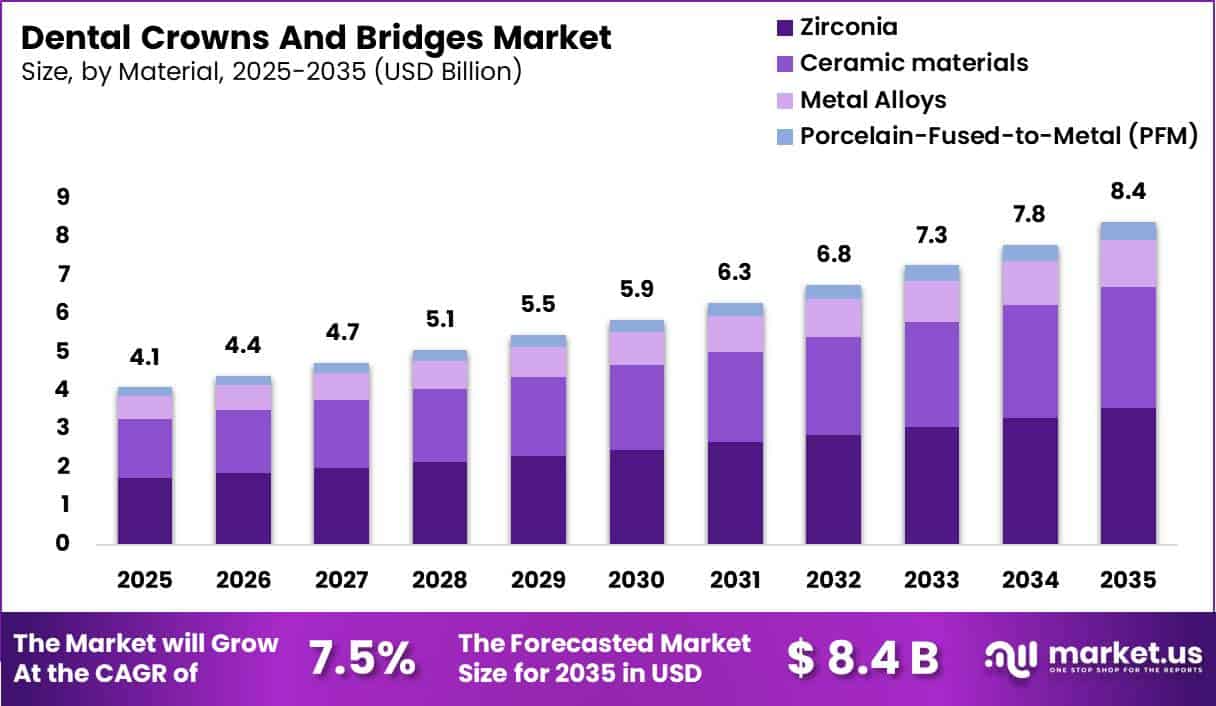
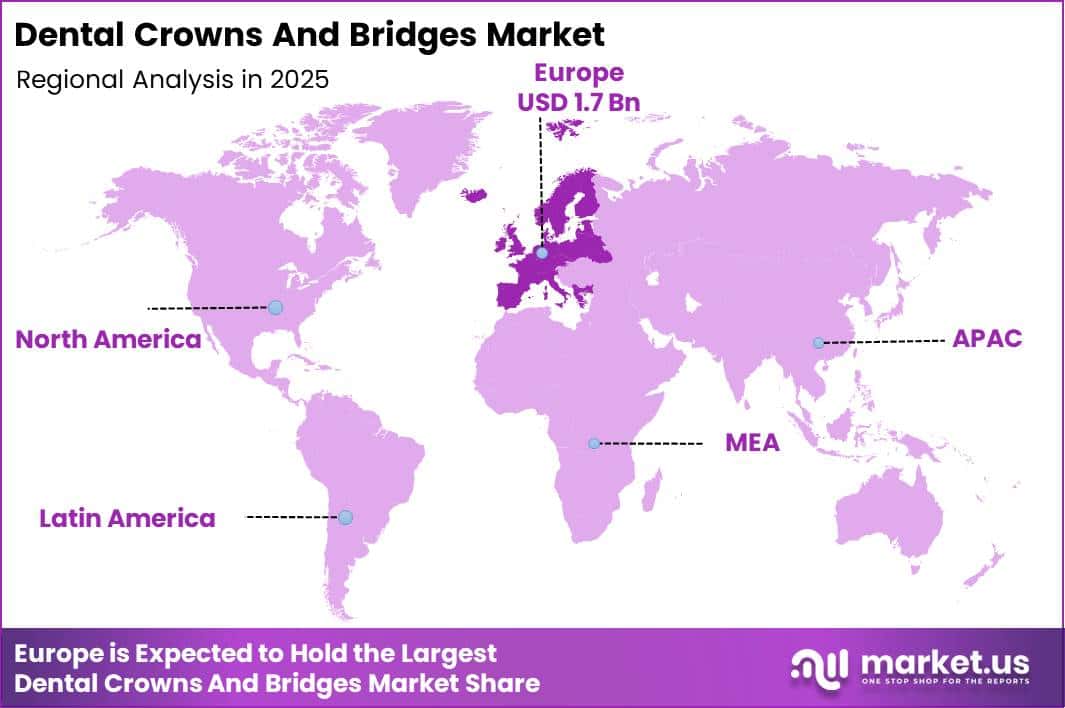
Global Dental Crowns And Bridges Market size is expected to be worth around US$ 8.4 Billion by 2035 from US$ 4.1 Billion in 2025, growing at a CAGR of 7.5% during the forecast period from 2026 to 2035. In 2025, Europe led the market, achieving over 42.4% share with a revenue of US$ 1.7 Billion.
Dental crowns and bridges are widely used fixed dental prosthetic solutions designed to restore damaged or missing teeth, improving both oral function and aesthetics. According to the World Health Organization (WHO), oral diseases affect nearly 3.5 billion people globally, with untreated tooth decay in permanent teeth being one of the most common health conditions worldwide.
The growing burden of dental caries and periodontal diseases has significantly increased the demand for restorative procedures such as crowns and bridges. Crowns are typically used to restore severely decayed, cracked, or weakened teeth, while bridges replace one or more missing teeth by anchoring artificial teeth to adjacent natural teeth or implants.
The U.S. National Institute of Dental and Craniofacial Research (NIDCR) highlights that restorative dental treatments are essential in maintaining oral function, speech, and long-term oral health outcomes. Similarly, the Centers for Disease Control and Prevention (CDC) reports that nearly 90% of adults aged 20–64 have experienced dental caries, reinforcing the need for restorative dental care.
Technological advancements such as CAD/CAM systems, digital impressions, and biocompatible materials like zirconia and ceramics have improved treatment accuracy and reduced procedure time. Increasing awareness of cosmetic dentistry and rising elderly populations are also contributing to higher adoption rates. With growing access to dental care services, crowns and bridges continue to play a crucial role in modern restorative dentistry globally.
Key Takeaways
- Market Size : Dental Crowns And Bridges Market size is expected to be worth around US$ 8.4 Billion by 2035 from US$ 4.1 Billion in 2025.
- Market Share : The Market is growing at a CAGR of 7.5% during the forecast period from 2026 to 2035.
- Material Analysis : Ceramic materials dominated the Dental Crowns and Bridges Market in 2025, accounting for 42.3% of the total market share.
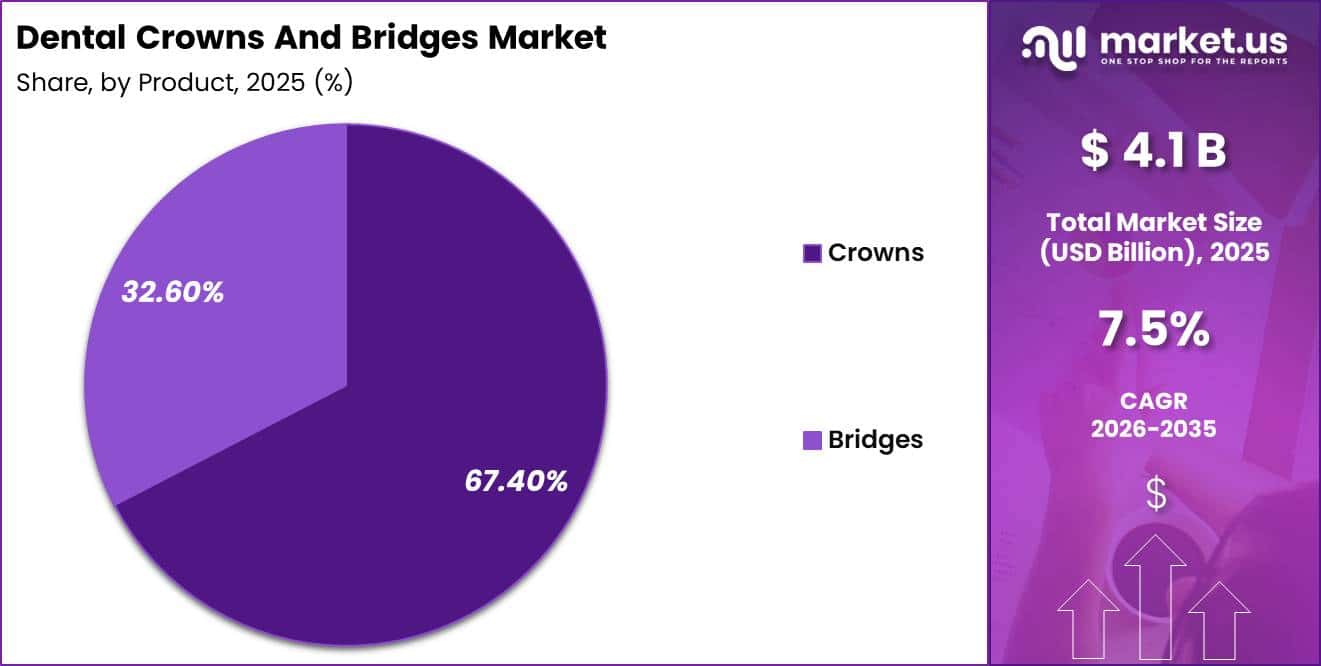
- Product Analysis : Crowns emerged as the leading product segment in the Dental Crowns and Bridges Market, capturing 67.4% of total revenue in 2025.
- Price Range Analysis : The Premium segment dominated the Dental Crowns and Bridges Market in 2025, holding 43.2% of total market revenue.
- End User Analysis : Dental Clinics dominated the Dental Crowns and Bridges Market accounting for 63.7% of the overall market share in 2025.
- Regional Analysis : In 2025, Europe led the market, achieving over 42.4% share with a revenue of US$ 1.7 Billion.
Material Analysis
Ceramic materials dominated the Dental Crowns and Bridges Market in 2025, accounting for 42.3% of the total market share. Their leadership is primarily attributed to superior aesthetics, excellent biocompatibility, and growing patient preference for tooth-colored restorations.
Ceramic crowns and bridges closely resemble natural teeth, making them highly suitable for anterior restorations and cosmetic dental procedures. Improvements in CAD/CAM technology have also enabled faster production and enhanced precision of ceramic prosthetics, further supporting their widespread adoption. The increasing demand for metal-free dental restorations continues to strengthen this segment’s growth.
Zirconia represented 37.6% of the market share in 2025 and remains one of the fastest-growing material categories. Zirconia offers exceptional durability, fracture resistance, and long-term performance, making it suitable for both anterior and posterior restorations. It has become increasingly preferred in implant-supported crowns and bridges.
Metal alloys held 14.5% of the market, supported by their high strength and durability in complex restorative cases. Meanwhile, Porcelain-Fused-to-Metal (PFM) accounted for 5.6%, benefiting from a long clinical history, although its use has gradually declined due to increasing preference for fully ceramic alternatives.
Product Analysis
Crowns emerged as the leading product segment in the Dental Crowns and Bridges Market, capturing 67.4% of total revenue in 2025. Their dominance is driven by the high prevalence of dental caries, tooth fractures, and age-related tooth deterioration. Crowns are extensively used to restore damaged teeth, improve chewing function, and enhance aesthetics.
The increasing adoption of implant-supported restorations and digital dentistry technologies has further accelerated demand for crowns. Advancements in ceramic and zirconia materials have improved the longevity, strength, and appearance of crowns, making them a preferred restorative solution among patients and dentists.
Bridges accounted for 32.6% of the market share in 2025. Dental bridges remain an important treatment option for replacing one or multiple missing teeth, particularly among patients seeking fixed prosthetic solutions without undergoing implant surgery. Bridges help maintain dental alignment, restore oral functionality, and improve overall aesthetics.
Growing awareness regarding oral rehabilitation and the rising elderly population continue to support segment expansion. Additionally, innovations in CAD/CAM manufacturing and improved restorative materials are contributing to better fitting and longer-lasting bridge solutions, strengthening demand across developed and emerging healthcare markets.
Price Range Analysis
The Premium segment dominated the Dental Crowns and Bridges Market in 2025, holding 43.2% of total market revenue. This segment benefits from increasing patient demand for highly aesthetic, durable, and technologically advanced restorative solutions.
Premium crowns and bridges are commonly manufactured using high-quality zirconia, advanced ceramics, and customized CAD/CAM technologies that provide superior precision, functionality, and appearance. Rising disposable incomes, growing cosmetic dentistry trends, and increased willingness to invest in long-term oral health solutions continue to drive growth within this category.
The Value segment accounted for a significant share of the market, supported by patients seeking a balance between affordability and clinical performance. These restorations generally offer reliable durability and acceptable aesthetics while remaining accessible to a broader patient population. Value-based products are widely utilized in private dental practices and mid-tier healthcare facilities.
The Economy segment also maintains a notable presence, particularly in price-sensitive markets and developing regions. Demand in this category is supported by expanding access to dental care services and the need for cost-effective restorative treatments. Government-supported programs and growing awareness of oral healthcare are expected to contribute to continued growth in this segment.
End User Analysis
Dental Clinics dominated the Dental Crowns and Bridges Market in 2025, accounting for 63.7% of the overall market share. Their leading position is attributed to the large volume of restorative procedures performed in outpatient settings, increasing patient preference for specialized dental services, and expanding availability of advanced digital technologies.
Dental clinics are increasingly adopting CAD/CAM systems, intraoral scanners, and same-day restoration techniques, improving treatment efficiency and patient satisfaction. Growing awareness regarding oral aesthetics and preventive dental care has further strengthened demand for crown and bridge procedures in clinical settings.
Hospitals represented an important segment of the market, particularly for patients requiring comprehensive oral rehabilitation, complex dental surgeries, or multidisciplinary treatment approaches. Hospitals often provide restorative services for patients with trauma, congenital conditions, and severe oral diseases, contributing to consistent demand.
Dental laboratories also play a crucial role in the market by manufacturing customized crowns, bridges, and implant-supported prosthetics. The increasing use of digital workflows, 3D printing, and high-precision milling technologies has enhanced laboratory productivity and restoration quality.
Collaboration between dental clinics and laboratories continues to support the growing adoption of personalized and aesthetically advanced restorative solutions worldwide.
Market Segmentations
Material
- Zirconia
- Ceramic materials
- Metal Alloys
- Porcelain-Fused-to-Metal (PFM)
By Product
- Crowns
- Bridges
By Price Range
- Premium
- Value
- Economy
End- User
- Hospitals
- Dental Laboratories
- Dental Clinics
Drivers
Rising Tooth Loss and Caries Expanding Fixed Restoration Demand
Oral diseases affect nearly 3.7 billion people globally, with untreated caries being the most common condition. Severe periodontal disease impacts over 1 billion people, and around 23% of adults aged 60+ experience complete tooth loss (WHO).
This creates a strong underlying disease base for crowns and bridges, as fixed prosthodontics primarily result from caries progression, failed endodontic treatments, fractures, and advanced periodontal disease. Demand is driven more by clinical necessity than discretion, since damaged or missing teeth often require restoration or replacement.
Crowns are increasingly used for heavily restored or structurally weakened teeth, while bridges address partial tooth loss when implants are not feasible due to cost, treatment time, or medical limitations. The impact is strongest in markets with limited insurance coverage, where patients rely on private or mixed pay dentistry.
In these settings, cost sensitive options like crowns and short span bridges are often preferred over full arch implant solutions. Overall, limited access to preventive care and high treatment costs sustain a large unmet need, supporting steady long term demand for fixed restorative dental solutions.
| Driver | (~) % Impact on CAGR Forecast | Geographic Relevance | Impact Timeline |
|---|---|---|---|
| Rising tooth-loss and untreated caries pool expands fixed-restoration demand | +1.6% | North America core, EU, East Asia, urban APAC, Latin America spill-over | Medium term |
| Aging populations and medically complex seniors increase prosthodontic case intensity | +1.2% | North America core, Western Europe, Japan, South Korea, China urban tier-1/2 | Medium term |
| CAD/CAM, intraoral scanning, and chairside workflows compress turnaround and remake costs | +1.5% | North America core, EU, Japan, South Korea, China manufacturing hubs, GCC premium clinics | Short term |
| Zirconia-led material shift improves durability-esthetics value proposition | +1.0% | Global, strongest in North America, EU, East Asia, private-pay urban clinics | Short term |
| Medicare-linked oral-medical integration modestly widens reimbursable treatment pathways | +0.7% | United States core, rural clinic spill-over, transplant/oncology/nephrology referral networks | Short term |
| Diabetes-periodontal burden and systemic-disease screening increase restorative conversion | +0.9% | U.S., EU, Middle East, India, China, Southeast Asia urban corridors | Medium term |
Challenge
High Cost Prosthetic Inputs in Crowns and Bridges Market
Rising costs of ceramics, zirconia blanks, precious metal alloys, and composite resins are creating sustained pressure on crowns and bridges procedures. Between 2022 and 2026, lab material costs per unit have increased by roughly 10–20%, with zirconia blanks reaching USD 60–90 per unit in many North American and EU dental labs, adding about 8–12% to treatment prices compared with 2020 levels.
This inflation is further amplified by higher energy costs for milling and sintering, where electricity expenses for large dental labs have risen by 15–25%, increasing overall lab overhead by USD 15–30 per restoration.
At the same time, consolidation among dental material suppliers has strengthened pricing power, contributing to higher input margins and reduced flexibility for downstream providers. On the demand side, higher out of pocket costs are leading to treatment deferrals of 6–12 months, especially for multi unit bridge cases exceeding USD 1,500–2,000.
This reduces procedure growth potential by an estimated 1.2 %age points annually. Clinics and DSOs are responding with bulk procurement strategies, standardized materials, and mixed material restorations to manage costs, but pricing pressure is expected to persist over the medium term due to ongoing energy and supply chain volatility.
| Challenge | (~) % CAGR Friction Drag | Geographic Relevance | Mitigation Horizon |
|---|---|---|---|
| High-cost prosthetic inputs | -1.2% | North America, EU, urban APAC | Medium term (2-4 years) |
| Uneven digital workflow adoption | -1.0% | EU mixed, APAC corridors, LATAM | Medium term (2-4 years) |
| Public–private reimbursement gaps | -0.9% | North America, EU periphery, emerging Asia | Long term (≥ 4 years) |
| Chronic prosthodontic talent deficit | -0.8% | Global major metros | Long term (≥ 4 years) |
| Regulatory and quality compliance load | -0.7% | North America core, EU regulatory hubs | Medium term (2-4 years) |
| Oral-health access and NCD burden | -0.6% | Low- and middle-income regions | Long term (≥ 4 years) |
Restraints
Regulatory Phase Down of Amalgam and Rising Biocompatibility Standards in Prosthetics
Global policy efforts to phase down dental amalgam are accelerating shifts in restorative dentistry toward higher value materials such as ceramics and composite resins. The WHO oral health strategy aims for 90% of countries to implement amalgam reduction measures by 2030, while FDA and European regulators have progressively tightened restrictions, labeling requirements, and risk communications over the past decade.
This transition increases short term friction in clinical workflows. Dentists must adapt to resin and ceramic based restorations, which require revised bonding protocols, material handling techniques, and occlusal design approaches. As a result, chair time per procedure can increase by 10–15 minutes during the adjustment phase.
Compliance costs also rise at the practice level, including investments in curing lights, isolation systems, and mercury waste management infrastructure, typically adding USD 5,000–10,000 per clinic in affected markets. For manufacturers, stricter biocompatibility requirements extend product development timelines by 6–12 months and increase R&D and testing burdens.
While this regulatory shift temporarily slows procedural efficiency and adoption rates, it ultimately supports a move toward higher value crowns and bridges. In the near term, however, it contributes to an estimated 0.8 %age point reduction in global market CAGR due to transition costs and workflow disruption, particularly in Europe and other highly regulated regions.
| Restraint | (~) % Impact on CAGR Forecast | Geographic Relevance | Impact Timeline |
|---|---|---|---|
| Dental material input-cost inflation & supply volatility | -1.4% | North America core, EU, UK, selective APAC corridors | Short–Medium term |
| Regulatory phase-down of amalgam & biocompatibility standards | -0.8% | EU, Nordics, UK, Canada, selected APAC, urban North America | Medium–Long term |
| Reimbursement gaps, OOP burden & coverage limits | -1.2% | North America core, Latin America, emerging APAC, MEA | Medium term |
| Uneven oral-care access & workforce constraints | -0.9% | MEA, Latin America, rural APAC, underserved pockets in OECD | Long term |
| Lab capacity bottlenecks & digital dentistry adoption lag | -0.7% | EU, North America core, advanced APAC corridors | Short–Medium term |
| Macro-economic pressure on elective and cosmetic procedures | -0.6% | Global, with higher sensitivity in Latin America & emerging APAC | Short term |
Opportunity
Value Based Prosthodontic Bundles in Crowns and Bridges Care
Value based prosthodontic bundles aim to shift crowns and bridges from fragmented fee for service procedures to integrated, outcome linked packages covering diagnostics, treatment, and follow up care.
These bundles are designed for employer plans, commercial insurers, and Medicare Advantage programs, focusing on functional outcomes such as chewing ability, pain reduction, and improved nutrition rather than individual procedure billing.
Current reimbursement systems for crowns and bridges remain highly fragmented, with coverage limits that restrict access despite a large underlying need. A significant proportion of older adults experience partial or complete tooth loss, creating a large eligible population requiring prosthodontic care over time.
By standardizing treatment pathways into bundled contracts, providers and manufacturers can improve predictability in lab utilization, reduce material and administrative inefficiencies, and streamline authorization processes.
This can potentially increase procedure volumes by 15–20% in covered populations and improve margins by 3–5% through operational standardization and reduced overhead.
Overall, this model supports a shift toward value based dental care and could add meaningful growth upside in North America and Europe, where payer systems and data infrastructure are better suited for outcomes based contracting.
| Opportunity | (~) % Potential CAGR Upside | Geographic Relevance | Execution Window |
|---|---|---|---|
| Value-based prosthodontic bundles | +2.2% | North America, EU | Short term (≤ 2 years) |
| Medicaid/Medicare-access restorations | +1.9% | US, select LATAM | Medium term (2-4 years) |
| Rural/low-income restorative hubs | +1.6% | APAC, Africa, India | Medium term (2-4 years) |
| Geriatric functional-aesthetics packages | +2.0% | EU, Japan, North America | Short term (≤ 2 years) |
| Digital chairside crown networks | +2.8% | North America core, EU, urban APAC | Long term (≥ 4 years) |
| Preventive-to-restorative membership plans | +1.5% | Global urban middle class | Medium term (2-4 years) |
Regional Analysis
In 2025, Europe led the market, achieving over 42.4% share with a revenue of US$ 1.7 Billion.
The global dental crowns and bridges market shows strong regional variation, with Europe leading due to its high burden of oral diseases, advanced dental infrastructure, and strong adoption of restorative dentistry.
According to WHO oral health data, more than 50% of adults in the European region are affected by dental caries or periodontal conditions, significantly increasing the need for fixed prosthetic treatments such as crowns and bridges . Europe also benefits from widespread access to dental clinics, reimbursement support in several countries, and high adoption of digital dentistry technologies like CAD/CAM systems.
North America represents another major market, driven by high awareness of cosmetic dentistry, strong insurance coverage, and advanced clinical practices. The region also shows high procedure volumes due to a large aging population and increasing implant-supported restorations.
Asia-Pacific is the fastest-growing region, supported by a large patient base, rising disposable incomes, and increasing dental tourism in countries such as India, China, Thailand, and South Korea. The high prevalence of untreated dental diseases further strengthens demand.
Latin America is experiencing steady growth, particularly in Brazil and Mexico, where improving healthcare access and affordability are boosting restorative procedures. The Middle East and Africa region is emerging gradually, driven by expanding private dental clinics and improving healthcare infrastructure, though access limitations and lower insurance coverage still restrict widespread adoption.
Key Regions and Countries
North America
- The US
- Canada
Europe
- Germany
- France
- The U.K.
- Italy
- Spain
- Russia & CIS
- Rest of Europe
Asia Pacific
- China
- India
- Japan
- South Korea
- ASEAN
- Australia & New Zealand
- Rest of Asia Pacific
Middle East & Africa
- GCC
- South Africa
- Rest of Middle East & Africa
Latin America
- Brazil
- Mexico
- Rest of Latin America
Key Player Analysis
The Dental Crowns and Bridges Market is characterized by the presence of established dental technology and implant manufacturers that compete through innovation, digital workflows, and advanced restorative materials.
Dentsply Sirona remains a prominent participant with its CEREC and Cercon platforms, enabling chairside production of crowns, bridges, and implant restorations through CAD/CAM technology. The company continues to strengthen digital dentistry capabilities to improve treatment efficiency and precision.
3M Company maintains a strong position in restorative dentistry through its crown and bridge materials, including zirconia, impression materials, resin cements, and preformed crowns. Its long-standing expertise in dental materials supports reliable and aesthetic restorative outcomes for clinicians and laboratories.
Implant-focused companies such as BioHorizons, CAMLOG Biotechnologies GmbH, Bicon LLC, and Dentium Co. contribute significantly to the market by offering implant systems, prosthetic components, and abutment solutions used in implant-supported crowns and bridges.
Meanwhile, Avinent Group continues to expand its digital prosthetic portfolio, while Danaher Dental brands support restorative procedures through imaging, treatment planning, and implant technologies. Collectively, these companies emphasize digitalization, biocompatible materials, and integrated restorative solutions to meet growing demand for durable, aesthetic, and patient-specific dental restorations worldwide.
Top Key Players
- 3M Company
- Avinent Group
- Bicon LLC
- BioHorizons
- CAMLOG Biotechnologies GmbH
- Danaher Dental
- Dentium Co.
- Dentsply Sirona
- Henry Schein
- Institut Straumann AG
- Ivoclar Vivadent
- Nobel Biocare Services AG
- Osstem Implants
- Straumann Group
- Zimmer Biomet Holdings Inc.
Recent Developments
- In June 2025, Dentsply Sirona launched the CEREC Cercon 4D Multidimensional Zirconia Abutment Block, a CAD/CAM innovation designed for crowns and implant-supported restorations, featuring ~1100 MPa flexural strength and 0.5 mm minimum wall thickness, improving efficiency in chairside crown and bridge fabrication.
- In March 2025, Avinent Group advanced its digital prosthetic manufacturing capabilities in Europe, focusing on CAD/CAM abutments and zirconia-based restorative components, strengthening crown and bridge precision workflows in dental laboratories.
- In 2025, 3M Dental Materials ecosystem continued expansion of high-strength ceramic and zirconia restorative materials, which remain widely used in indirect restorations such as crowns and bridges due to increasing demand for aesthetic and durable prosthetics in CAD/CAM dentistry.
Report Scope
| Report Features | Description |
|---|---|
| Market Value (2025) | US$ 4.1 Billion |
| Forecast Revenue (2035) | US$ 8.4 Billion |
| CAGR (2026-2035) | 7.5% |
| Base Year for Estimation | 2025 |
| Historic Period | 2020-2024 |
| Forecast Period | 2026-2035 |
| Report Coverage | Revenue Forecast, Market Dynamics, Competitive Landscape, Recent Developments |
| Segments Covered | Material (Zirconia, Ceramic materials, Metal Alloys, Porcelain-Fused-to-Metal (PFM)), By Product (Crowns, Bridges), By Price Range (Premium, Value, Economy), End- User (Hospitals, Dental Laboratories, Dental Clinics) |
| Regional Analysis | North America – The US, Canada; Europe – Germany, France, U.K., Italy, Spain, Russia & CIS, Rest of Europe; Asia Pacific – China, India, Japan, South Korea, ASEAN, Australia & New Zealand, Rest of Asia Pacific; Middle East & Africa – GCC, South Africa, Rest of Middle East & Africa; Latin America – Brazil, Mexico, Rest of Latin America |
| Competitive Landscape | 3M Company, Avinent Group, Bicon LLC, BioHorizons, CAMLOG Biotechnologies GmbH, Danaher Dental, Dentium Co., Dentsply Sirona, Henry Schein, Institut Straumann AG, Ivoclar Vivadent, Nobel Biocare Services AG, Osstem Implants, Straumann Group, Zimmer Biomet Holdings Inc. |
| Customization Scope | Customization for segments, region/country-level will be provided. Moreover, additional customization can be done based on the requirements. |
| Purchase Options | We have three licenses to opt for: Single User License, Multi-User License (Up to 5 Users), Corporate Use License (Unlimited User and Printable PDF) |





































