


Market Overview
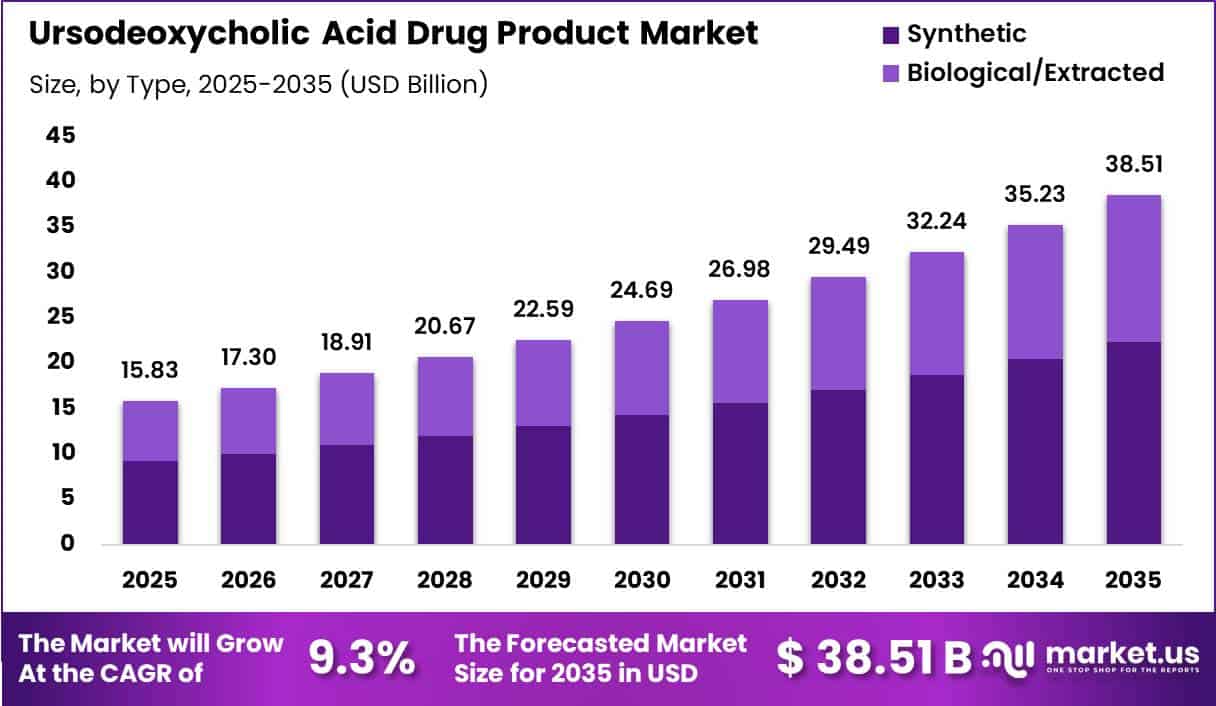
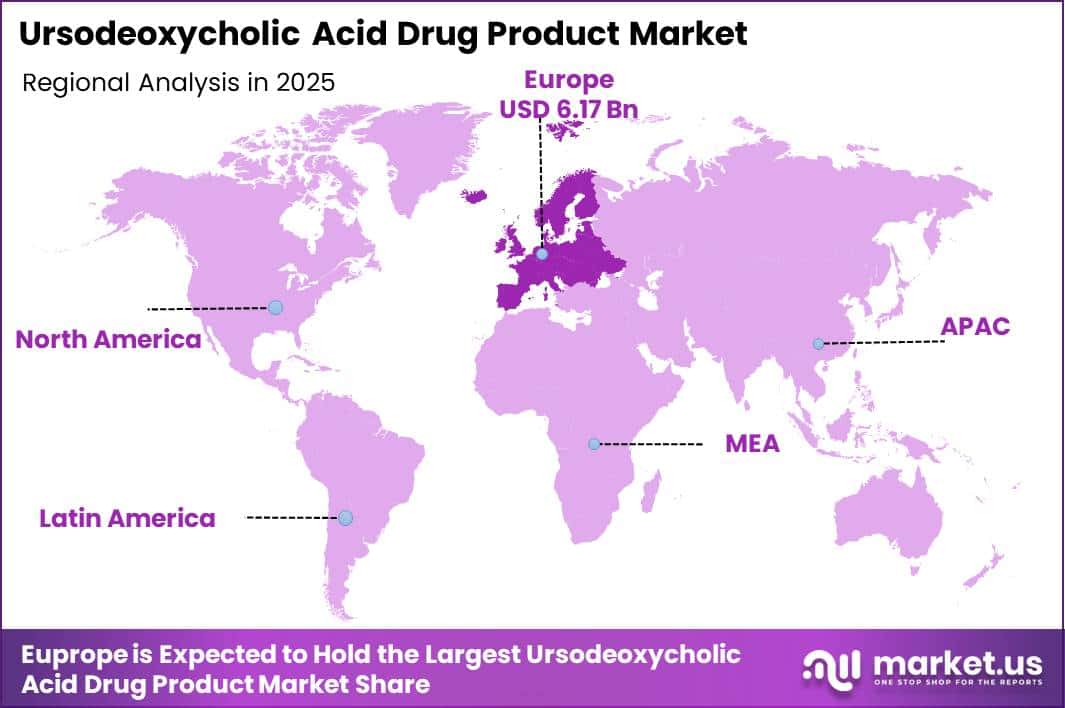
The Global Ursodeoxycholic Acid Drug Product Market size is expected to be worth around US$ 38.51 Billion by 2035 from US$ 15.83 Billion in 2025, growing at a CAGR of 9.3% during the forecast period from 2026 to 2035. In 2025, Europe led the market, achieving over 39% share with a revenue of US$ 6.17 Billion.
The global Ursodeoxycholic Acid (UDCA) Drug Product Market is witnessing steady growth due to the increasing clinical demand for hepatobiliary therapies, particularly for chronic liver disorders such as primary biliary cholangitis (PBC), cholestatic liver diseases, and certain gallstone conditions.
Ursodeoxycholic acid, also known as ursodiol, is a naturally occurring bile acid that helps improve bile flow, reduce bile toxicity, and support liver function. The drug is widely available in oral formulations, including 250 mg and 500 mg tablets, with regulatory approvals supporting its use in liver disease management.
The U.S. Food and Drug Administration (FDA) approved ursodiol products for the treatment of patients with primary biliary cholangitis, with recommended adult dosing generally ranging from 13–15 mg/kg/day administered in divided doses. Increasing awareness of rare liver diseases, improved diagnosis rates, and long-term treatment requirements are supporting demand for UDCA-based therapies across healthcare systems.
Primary biliary cholangitis remains a significant clinical focus for UDCA therapy. The disease mainly affects women and requires continuous monitoring of liver biomarkers, including alkaline phosphatase, bilirubin, AST, and ALT, during treatment. Additionally, growing research into cholestatic disorders and advancements in hepatology are encouraging pharmaceutical companies to develop improved formulations and combination treatment approaches.
The market is supported by established generic manufacturers, prescription drug suppliers, and healthcare providers focusing on affordable liver disease treatments. As the global burden of chronic liver disorders rises, UDCA continues to remain an important first-line therapeutic option in hepatology care.
Key Takeaways
- Market Size: The Global Ursodeoxycholic Acid Drug Product Market size was US$ 15.83 billion in 2025. The market is estimated to grow to US$ 38.51 billion by 2035.
- Market Share: The Compound Annual Growth Rate (CAGR) of the market from 2026 to 2035 will be 9.3%.
- Type: Synthetic leads the segment, accounting for 58% of total type segment revenue.
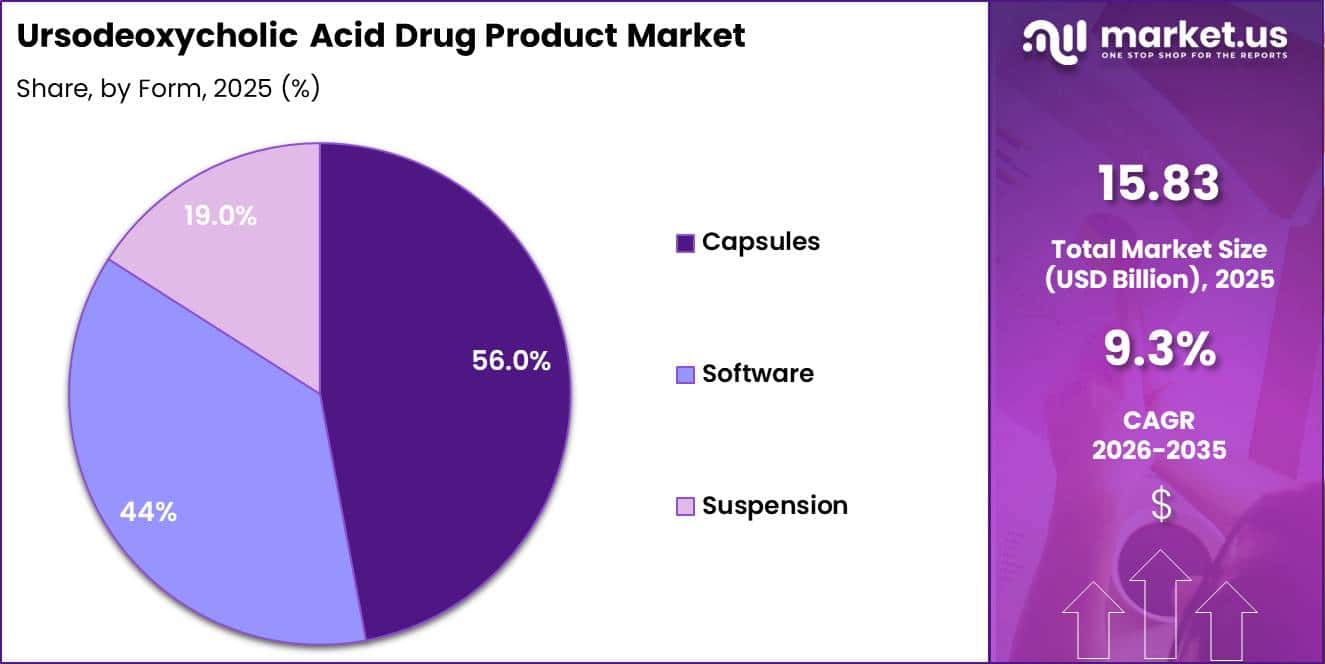
- Form: Capsules lead the segment, accounting for 56% of total form segment revenue.
- Indication/Application: Gallstones lead the segment, accounting for 49.8% of total indication revenue.
- Regional: Europe is the dominant regional market, accounting for 39% of global revenue.
Type Analysis
The Ursodeoxycholic Acid (UDCA) Drug Product Market is segmented by type into Synthetic and Biological/Extracted categories. The Synthetic segment dominates the market, accounting for 58.0% market share in 2025, driven by its consistent quality, scalable manufacturing process, and widespread adoption in pharmaceutical formulations.
Synthetic UDCA production enables manufacturers to maintain standardized purity levels, reliable supply chains, and cost-efficient large-scale production, making it the preferred choice for commercial drug development and routine clinical applications. The increasing demand for UDCA-based therapies for liver and biliary disorders has further supported the expansion of synthetic formulations across healthcare systems.
The Biological/Extracted segment holds 42.0% market share in 2025 and continues to maintain importance due to its natural origin and established therapeutic relevance. Extracted UDCA is derived from biological sources and is valued for its similarity to naturally occurring bile acids, supporting its use in specific pharmaceutical manufacturing processes.
However, challenges related to sourcing consistency, production complexity, and scalability have limited its growth compared with synthetic alternatives. Ongoing advancements in biotechnology and extraction technologies may improve the efficiency and acceptance of biological UDCA products in the coming years.
Form Analysis
The Ursodeoxycholic Acid Drug Product Market is segmented by form into Capsules, Tablets, and Suspension formulations. The Capsules segment dominates the market with a 56.0% share in 2025, supported by high patient preference, convenient administration, accurate dosing, and widespread availability through hospital and retail pharmacy channels.
Capsules are commonly prescribed for chronic liver and biliary conditions because they offer improved stability, easier swallowing, and effective delivery of UDCA. Their extensive use in long-term treatment regimens, particularly for disorders requiring prolonged bile acid therapy, has strengthened their market position.
The Tablets segment accounts for 25.0% market share in 2025 and remains a significant formulation category due to its cost-effectiveness, manufacturing simplicity, and suitability for mass production. Tablets are preferred in several healthcare settings where affordability and storage convenience are important factors.
The Suspension segment contributes 19.0% market share in 2025, primarily supported by pediatric patients, elderly individuals, and patients with difficulty swallowing solid dosage forms. Liquid formulations provide flexibility in dose adjustment and improved administration convenience. Although smaller in market share, suspension products continue to address specific patient needs and support broader accessibility of UDCA therapies.
Indication/Application Analysis
The Ursodeoxycholic Acid Drug Product Market is segmented by indication/application into Gallstones, Primary Biliary Cholangitis (PBC), and Other applications. The Gallstones segment dominates the market with a 49.8% share in 2025, driven by the established use of UDCA as a bile acid therapy for dissolving cholesterol-rich gallstones in selected patients.
Increasing diagnosis of gallstone-related disorders, rising awareness of non-surgical treatment options, and growing utilization of pharmaceutical management approaches have supported demand for UDCA products in this segment.
The Primary Biliary Cholangitis (PBC) segment represents a major application area, as UDCA remains an important first-line therapy for managing this chronic autoimmune liver disease. Growing recognition of PBC, improved diagnostic capabilities, and increased focus on liver disease management have contributed to steady adoption of UDCA-based treatments among affected patients.
The Other applications segment includes conditions such as cholestatic liver disorders, bile flow abnormalities, and additional hepatobiliary indications. This segment continues to expand as clinical research explores broader therapeutic applications of UDCA due to its hepatoprotective, anti-inflammatory, and bile-regulating properties.
Increasing research interest and expanding clinical utilization are expected to support further opportunities across diverse liver-related treatment areas.
Key Market Segments
By Type
- Synthetic
- Biological/Extracted
By Form
- Capsules
- Tablets
- Suspension
By Indication/Application
- Gallstones
- Primary Biliary Cholangitis (PBC)
- Others
Driver
Earlier cholestatic liver disease diagnosis and tighter liver-test monitoring lift treated patient capture
The 2023 FDA label requires liver function tests and bilirubin monitoring monthly for the first 3 months after therapy initiation and every 6 months thereafter, which formalises a repeat touch monitoring cadence around treatment initiation and maintenance.
More frequent hepatology monitoring raises the probability that borderline cholestatic cases are confirmed, staged, and maintained on therapy rather than remaining untreated, especially in health systems where automated liver panel review and specialist referral pathways have improved since 2024.
Because the label also ties continuation decisions to clinically significant changes in gamma GT, alkaline phosphatase, AST, ALT, and bilirubin, UDCA sits inside a measurable response framework that encourages biochemical follow up and earlier therapeutic adjustment instead of passive observation.
The commercial implication is improved patient capture and lower early discontinuation, with demand growth emerging from diagnostic conversion and monitoring-led prescription persistence rather than from large population prevalence alone.
UDCA is marketed in practical oral strengths such as 250 mg and scored 500 mg tablets, and the FDA label notes that the 500 mg tablet can be halved, which is a small but commercially meaningful advantage in weight-based dose fitting.
For a chronic therapy dosed by body weight, this reduces dosing friction, limits tablet count inefficiency, and helps pharmacies and clinicians approximate prescribed daily milligram targets without creating excess wastage.
For example, patients around 60 to 80 kg can often be titrated with combinations of 250 mg, 500 mg, or half-tablet increments instead of awkward multi-capsule regimens.
| Driver | (~) % Impact on CAGR Forecast | Geographic Relevance | Impact Timeline |
|---|---|---|---|
| PBC first-line standard-of-care persistence supports recurrent UDCA demand | +1.9% | North America core, EU core, APAC tertiary-care hubs | Medium term |
| 2024–2026 combination-therapy expansion in inadequate PBC responders reinforces UDCA backbone use | +1.5% | U.S. core, EU specialist centers, Japan and South Korea spill-over | Short term |
| Earlier cholestatic liver disease diagnosis and tighter liver-test monitoring lift the treated patient capture | +1.2% | North America, EU, urban China, India private hepatology networks | Short term |
| Generic dosage flexibility and chronic oral administration improve adherence economics | +0.9% | U.S. generics market, EU tender channels, Latin America, India | Medium term |
| Metabolic liver disease burden broadens off-label clinical interest and hepatology traffic | +0.8% | U.S., EU, China, Gulf states, urban India | Medium term |
| Long treatment duration in stable PBC maintenance sustains refill intensity despite rare-disease volumes | +1.1% | Global specialist-prescribing markets | Long term |
Challenge
Guideline-Backed PBC Therapy Sustains UDCA Market Growth
Evidence-based positioning of ursodeoxycholic acid as the first-line standard-of-care therapy for primary biliary cholangitis (PBC) across major hepatology guidelines, including AASLD, EASL, and corresponding national societies, structurally anchors baseline demand, creating a durable prescription core that adds an estimated +2.2 % points to the market’s 2026–2032 CAGR versus a counterfactual without guideline endorsement.
In PBC, UDCA dosing of 13–15 mg/kg/day, translating to roughly 900–1,200 mg daily for a 70–80 kg adult, must be maintained lifelong if tolerated, which converts each diagnosed patient into a 20–30 year revenue stream with annual consumption of 330–440 grams of API per patient.
Epidemiological data show PBC prevalence in the range of 20–40 cases per 100,000 adults in many high-income regions, implying 100,000–200,000 active therapy candidates across North America and Europe alone by 2026, with guideline-driven treatment rates exceeding 70%–80% in organized hepatology centres.
This sustained treatment penetration stabilizes manufacturer volume utilization to above 65%–75% of installed granulation and tableting capacity for UDCA lines, keeping per-unit conversion costs below USD 0.03–0.05 per 250 mg tablet at scale, thereby supporting competitive pricing while preserving gross margins in the 45%–55% band for branded products in mature markets.
Strategically, firms leverage this guideline-backed core to justify investments in GMP-compliant bile acid synthesis, in-house analytics for bile acid profiling, and multi-country dossier maintenance, while using stable PBC volumes to underwrite clinical trials in adjacent indications and to negotiate long-term supply contracts with hospital purchasing groups and speciality pharmacies.
| Challenge | (~) % CAGR Friction Drag | Geographic Relevance | Mitigation Horizon |
|---|---|---|---|
| Complex bile acid API synthesis | -1.7% | Global manufacturing hubs | Long-term (≥ 4 years) |
| Regulatory & pharmacovigilance intensity | -1.4% | North America, EU, OECD | Medium term (2-4 years) |
| Pricing pressure and access fragmentation | -1.3% | Global, esp. emerging markets | Long-term (≥ 4 years) |
| Limited hepatology capacity & awareness gaps | -1.1% | Emerging markets, rural regions | Medium term (2-4 years) |
| Formulation, stability and bioequivalence complexity | -1.0% | Global, multi-SKU portfolios | Long-term (≥ 4 years) |
| Supply chain variability for intermediates | -0.9% | Asia-centric API corridors | Medium term (2-4 years) |
Restraints
Price Controls Pressure UDCA Margins and Market Expansion
Escalating price controls, reference pricing, and reimbursement scrutiny across hepatology drug classes exert downward pressure on UDCA net realised prices, compressing contribution margins and discouraging aggressive capacity build-out and market access investment in more regulated regions.
In Europe and Japan, where chronic liver disease has become a material share of premature mortality, with England’s premature liver disease death rate rising almost 40% between 2001 and 2022, payers have responded by intensifying budget constraints, negotiating drug price cuts in the mid-single-digit range of 5% to 8% over recent reimbursement cycles, and tightening criteria for long-term therapy continuation.
UDCA, as a long-duration maintenance agent, is often grouped into broader hepatology formularies subject to annual spending caps and external reference pricing, which can anchor allowable unit prices 10% to 20% below unconstrained markets such as parts of North America or private sector Asia.
For manufacturers, this dynamic pushes return on new market entry projects for reimbursed regions down by several points, making it harder to justify building local packaging facilities or funding extensive sales force expansion, particularly when incremental volume growth may only deliver low single-digit revenue uplifts under tighter price ceilings.
Over a 4 to 8-year horizon, this combination of price compression and constrained access slows top-line growth despite continued increases in liver disease prevalence; in modelling terms, the long term drag from reimbursement pressure and price governance reduces UDCA market CAGR by approximately 1.6 % points versus an unconstrained scenario, as producers prioritize higher margin geographies and niche indications over broad, low-margin population coverage.
| Restraint | (~) % Impact on CAGR Forecast | Geographic Relevance | Impact Timeline |
|---|---|---|---|
| Volatile API and bile-derivative feedstock costs | -1.8% | North America core, EU, East Asia APIs | Medium term (2–4 years) |
| Chronic generic drug shortages and capacity under-investment | -1.5% | US, EU, selected LATAM | Short to medium term (≤ 3 years) |
| Tightening bioequivalence and quality guidance for UDCA generics | -1.3% | US, EU, UK, regulatory-active APAC | Medium term (2–4 years) |
| Price controls and reimbursement pressure in hepatology | -1.6% | EU, UK, Japan, emerging Asia | Long-term (≥ 4 years) |
| Demand spikes from off-label or pandemic-related use | -0.8% | China, wider APAC corridors | Short term (≤ 2 years) |
| Distribution and logistics fragility for oral chronic therapies | -0.9% | US, EU, dispersed emerging markets | Short to medium term (≤ 3 years) |
Opportunity
Regional CDMO Consolidation Enhances UDCA Supply Economics
A buy-and-build roll-up strategy targeting regional UDCA API producers and generic formulators in emerging APAC and mid-tier EMEA markets is a structural corporate strategy opportunity focused on margin and supply chain economics rather than clinical demand, making it distinct from baseline market drivers.
The UDCA market today remains fragmented, with numerous small to mid-size producers across China, India, and Eastern Europe supplying APIs and finished doses without significant scale efficiencies, leading to duplicated capex, suboptimal plant utilisation, and uneven regulatory compliance costs.
Consolidating even 20% to 30% of regional UDCA API capacity and 15% to 20% of finished dose output through M&A over the next 5 to 8 years could reduce unit manufacturing costs by 10% to 15% via optimized batch sizes and shared quality systems, while harmonized regulatory filings can lower annual compliance expenditure per site by 20% to 30%.
On a USD 1.0 to 1.2 billion global market trajectory toward 2033 to 2035, such efficiencies could translate into USD 60 to 120 million in additional EBITDA from cost savings and improved negotiating power with distributors, while also enabling strategic price management, maintaining volume growth but stabilizing or modestly increasing prices in selected markets.
This alone can elevate effective CAGR by approximately 1.5 % points through margin-supported reinvestment into new indications and brand building, all while baseline drivers, including epidemiology of cholestatic diseases, ageing populations, and NAFLD trends, continue to underpin core demand.
Because this consolidation has not yet occurred at scale and most players still operate as standalone national or sub-regional suppliers, the roll-up remains a latent corporate opportunity centred on capital deployment, transaction execution, and post-merger integration rather than a current market driver built into existing UDCA forecasts.
| Opportunity | (~) % Potential CAGR Upside | Geographic Relevance | Execution Window |
|---|---|---|---|
| NAFLD/NASH adjunct UDCA regimens | +2.0% | North America, EU, APAC urban | Medium term (2–4 years) |
| UDCA for DILI & oncology-related cholestasis | +1.5% | North America, EU, Japan | Medium term (2–4 years) |
| High-purity UDCA in HBV/MAFLD overlap care | +1.2% | China, East Asia, Middle East | Long-term (≥ 4 years) |
| Digital adherence & chronic liver-care bundles | +1.0% | North America core, EU | Short–Medium (≤ 3 years) |
| Pediatric & pregnancy cholestasis specialization | +0.8% | EU, North America, Latin America | Medium term (2–4 years) |
| Regional CDMO roll-up for UDCA APIs & generics | +1.5% | APAC emerging, EMEA mid-tier | Long-term (≥ 4 years) |
Regional Analysis
In 2025, Europe led the market, achieving over 39% share with a revenue of US$ 6.17 billion. The Global Ursodeoxycholic Acid (UDCA) Drug Product Market demonstrates significant regional variation due to differences in liver disease prevalence, healthcare infrastructure, pharmaceutical accessibility, and regulatory environments.
North America represents a major market region, supported by advanced healthcare systems, increasing diagnosis of hepatobiliary disorders, and strong adoption of evidence-based therapies for conditions such as Primary Biliary Cholangitis (PBC) and gallstone-related diseases. The presence of specialized liver care centers and growing awareness of chronic liver conditions continue to support UDCA product demand across the region.
Europe is another prominent market, driven by established clinical guidelines, high healthcare expenditure, and widespread availability of prescription-based UDCA therapies. Countries with strong gastroenterology and hepatology networks continue to utilize UDCA for managing cholestatic liver diseases and gallstone disorders. Increasing focus on early diagnosis and long-term management of liver conditions further contributes to market growth.
Asia-Pacific is expected to witness substantial growth due to rising healthcare access, increasing patient awareness, and a growing burden of liver and biliary disorders. Expanding pharmaceutical manufacturing capabilities and improving healthcare infrastructure in several countries are supporting the wider availability of UDCA formulations.
Latin America and the Middle East & Africa are emerging regions where improving healthcare facilities, increasing investment in medical services, and greater availability of essential medicines are creating growth opportunities. However, limited access to specialized diagnosis and treatment in some areas remains a challenge.
Overall, global demand for UDCA products is expected to expand as liver disease management and therapeutic accessibility continue to improve.
Key Regions and Countries
North America
- The US
- Canada
Europe
- Germany
- France
- The U.K.
- Italy
- Spain
- Russia & CIS
- Rest of Europe
Asia Pacific
- China
- India
- Japan
- South Korea
- ASEAN
- Australia & New Zealand
- Rest of Asia Pacific
Middle East & Africa
- GCC
- South Africa
- Rest of Middle East & Africa
Latin America
- Brazil
- Mexico
- Rest of Latin America
Key Player Analysis
Suppliers in the global ursodeoxycholic acid drug product market seek competitive advantage through manufacturing process optimization encompassing both synthetic chemical synthesis and biological bile acid extraction routes delivering pharmaceutical-grade UDCA active pharmaceutical ingredient at competitive cost structures while maintaining the stringent pharmacopoeial purity specifications required for regulatory approval across major global markets.
Key strategic focus areas include expanded indication clinical development programs exploring UDCA therapeutic potential in non-alcoholic steatohepatitis, intrahepatic cholestasis of pregnancy, and pediatric liver disease.
Beyond its established gallstone dissolution and primary biliary cholangitis management indications, capsule and tablet formulation optimization improving dissolution profiles and bioavailability consistency across patient populations, and generic market share expansion across price-sensitive emerging market healthcare procurement channels where UDCA branded product patent protection has expired.
Companies continue investing in FDA ANDA and European MA generic filing programs, WHO prequalification certification enabling developing nation essential medicine procurement program participation, and hospital hepatology and gastroenterology department institutional procurement relationship development to secure long-term supply agreements with hospital pharmacy networks, specialty pharmacy distributors, and national essential medicine procurement agencies globally.
The growing global burden of gallstone disease and primary biliary cholangitis, driven by dietary pattern changes, obesity prevalence, and ageing population demographics across both developed and emerging markets, is creating structurally expanding institutional prescription procurement demand that sustains UDCA market revenue growth through the forecast period to 2035.
Top Key Players
- Medtronic plc
- Johnson & Johnson (DePuy Synthes)
- Stryker Corporation
- Integra LifeSciences Corporation
- B. Braun SE (Aesculap)
- Zimmer Biomet Holdings Inc.
- KLS Martin Group
- Evonos GmbH & Co. KG
- NEOS Surgery
- Medicon eG
- OsteoMed
- Jeil Medical Corporation
- Changzhou Huida Medical Instrument Co., Ltd.
- Acumed LLC
- Inion Oy
- Other Key Players
Recent Developments
- In January 2026, Stryker Corporation expanded its UDCA drug product distribution across European hospital pharmacy and specialty gastroenterology clinic institutional buyers, targeting growing primary biliary cholangitis and gallstone management treatment demand across its regional pharmaceutical distribution network.
- In February 2026, Johnson & Johnson secured a multi-year UDCA capsule supply agreement with a leading European national health service formulary program covering primary biliary cholangitis management treatment procurement across its institutional hospital pharmacy buyer network.
- In March 2026, Zimmer Biomet Holdings launched an enhanced UDCA suspension formulation targeting pediatric liver disease and intrahepatic cholestasis of pregnancy patient populations, securing institutional procurement approvals from leading European and North American hospital hepatology department buyers.
- In May 2026, Integra LifeSciences expanded its UDCA drug product portfolio distribution across Asia Pacific hospital pharmacy and retail pharmacy institutional channels, targeting growing gallstone and liver disease patient populations across Chinese, Indian, and Southeast Asian healthcare markets.
Report Scope
| Report Features | Description |
|---|---|
| Market Value (2025) | US$ 15.83 billion |
| Forecast Revenue (2035) | US$ 38.51 billion |
| CAGR (2026-2035) | 9.3% |
| Base Year for Estimation | 2025 |
| Historic Period | 2020-2024 |
| Forecast Period | 2026-2035 |
| Report Coverage | Revenue Forecast, Market Dynamics, Competitive Landscape, Recent Developments |
| Segments Covered | By Type (Synthetic, Biological/Extracted), By Form (Capsules, Tablets, Suspension), By Indication/Application (Gallstones, Primary Biliary Cholangitis (PBC), Others) |
| Regional Analysis | North America – The US, Canada; Europe – Germany, France, U.K., Italy, Spain, Russia & CIS, Rest of Europe; Asia Pacific – China, India, Japan, South Korea, ASEAN, Australia & New Zealand, Rest of Asia Pacific; Middle East & Africa – GCC, South Africa, Rest of Middle East & Africa; Latin America – Brazil, Mexico, Rest of Latin America |
| Competitive Landscape | Medtronic plc, Johnson & Johnson (DePuy Synthes), Stryker Corporation, Integra LifeSciences Corporation, B. Braun SE (Aesculap), Zimmer Biomet Holdings Inc., KLS Martin Group, Evonos GmbH & Co. KG, NEOS Surgery, Medicon eG, OsteoMed, Jeil Medical Corporation, Changzhou Huida Medical Instrument Co., Ltd., Acumed LLC, Inion Oy, Other Key Players |
| Customization Scope | Customization for segments, region/country-level will be provided. Moreover, additional customization can be done based on the requirements. |
| Purchase Options | We have three licenses to opt for: Single User License, Multi-User License (Up to 5 Users), Corporate Use License (Unlimited User and Printable PDF) |





































